Biosafety Containment Supplier Selection Guide
Choosing a Biosafety Containment supplier is not mainly a procurement exercise. For business evaluators, it is a risk decision that affects compliance exposure, project delivery, operating cost, and long-term facility resilience.
The strongest suppliers do more than sell equipment. They demonstrate regulatory fluency, engineering depth, commissioning discipline, service continuity, and the ability to support validated performance throughout the facility lifecycle.
This guide explains how to assess a Biosafety Containment supplier from a commercial and operational perspective. It focuses on the issues evaluators care about most: risk, capability, comparability, and total value.
What business evaluators should really verify before choosing a supplier
When buyers search for a Biosafety Containment supplier, their core intent is usually practical. They want to identify a partner that can meet biosafety requirements without creating hidden compliance, schedule, or maintenance problems later.
That means the first question is not simply whether a supplier offers containment products. The more important question is whether the supplier can support the specific containment strategy required by the facility, process, and regulatory context.
For a business evaluator, the biggest concerns are predictable. Will the supplier help the project pass design review, qualification, and inspection? Can the systems perform reliably under real operating conditions? What is the cost of failure if they cannot?
In high-risk laboratory environments, supplier weakness often appears after installation rather than during tender review. Inadequate integration, poor documentation, inconsistent airflow control, and weak service support can all turn a technically acceptable bid into a costly operational liability.
That is why supplier evaluation should prioritize evidence over claims. Certifications, references, validation records, engineering methodology, and after-sales response capability matter more than polished brochures or broad product lists.
Start with containment scope, not with product catalogs
Before comparing vendors, define what must actually be contained. Different facilities require different levels of protection based on biological agent risk, workflow, pressure cascade design, waste handling, and personnel movement.
A supplier suitable for standard laboratory containment may not be qualified for high-risk applications involving BSL-3 or related high-containment spaces. Likewise, a cabinet manufacturer is not automatically a capable lab engineering partner.
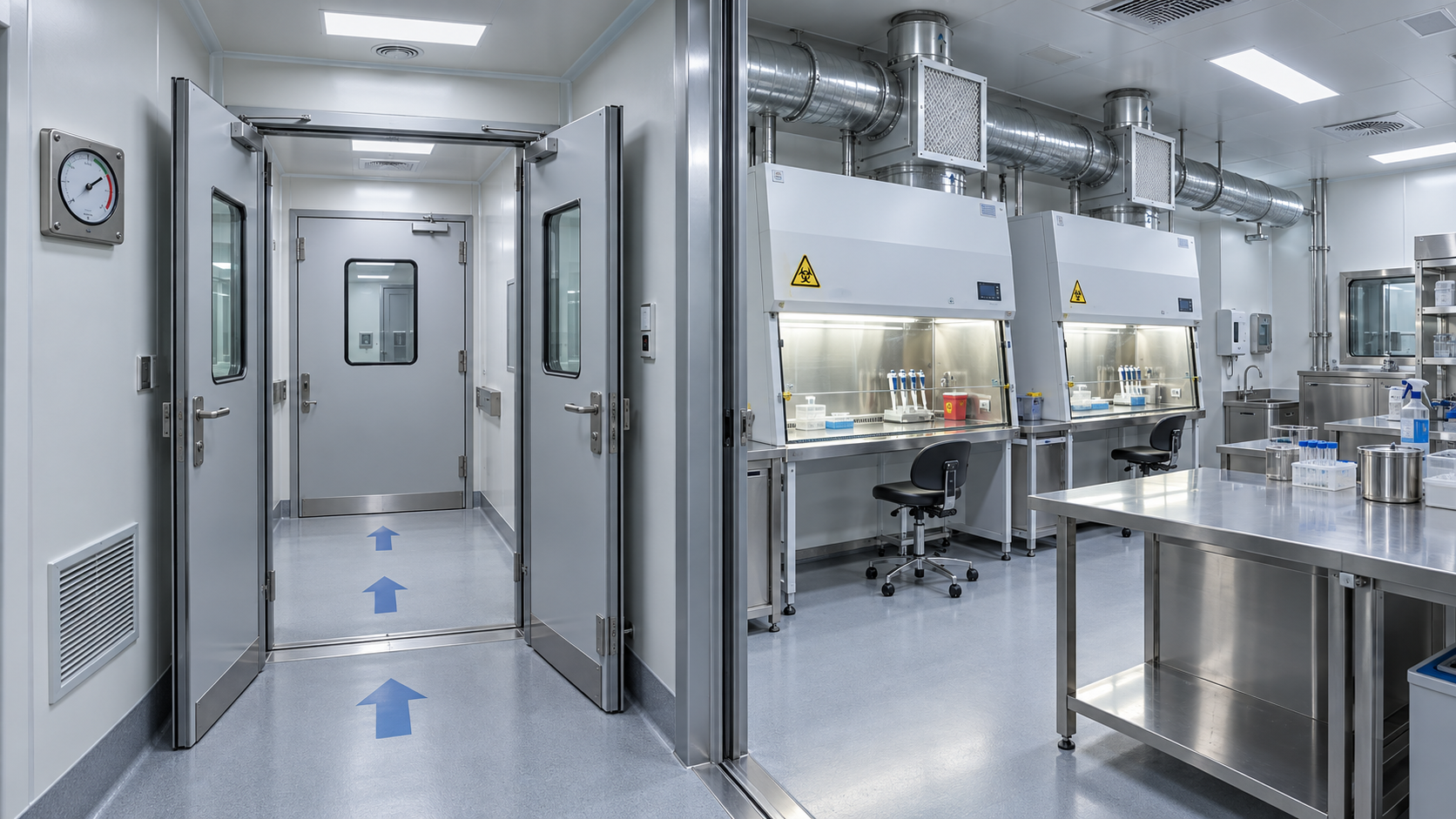
Business evaluators should separate supplier types into clear categories. Some provide standalone devices such as biosafety cabinets, pass boxes, or isolators. Others deliver full containment environments including room pressurization, HVAC integration, decontamination interfaces, and controls.
This distinction matters because lifecycle risk sits at the system level. A low bid on isolated equipment may appear attractive, yet failure often occurs where enclosure systems, airflow controls, alarms, and building infrastructure must function together.
Define the procurement scope in business terms. Are you buying equipment, a validated containment package, or a full engineering solution? The answer determines what kind of Biosafety Containment supplier you should shortlist.
How to judge technical capability beyond basic compliance claims
Most suppliers will say they comply with relevant standards. That statement alone is not enough. Evaluators need to understand how compliance is achieved, documented, tested, and maintained over time.
Ask suppliers to show which standards shape their design approach, such as biosafety guidance, cleanroom classifications where relevant, airflow performance criteria, filtration integrity requirements, and local regulatory obligations for laboratory facilities.
More importantly, request evidence of performance under installed conditions. Factory acceptance testing is useful, but site acceptance, balancing, qualification support, and integrated controls verification are often more decisive for actual containment outcomes.
Strong suppliers can explain pressure regime logic, directional airflow strategy, HEPA filtration arrangement, fail-safe response, decontamination compatibility, and operator safety measures in language that connects engineering decisions to operational risk control.
They should also address maintainability. If filter replacement, seal inspection, room recovery, alarm calibration, or airflow requalification are difficult, the facility inherits future downtime and increased compliance burden.
In practical terms, technical strength means repeatable performance with traceable documentation. If a supplier cannot map design intent to testing protocol and service procedures, the buying organization is accepting unnecessary uncertainty.
Regulatory alignment is a supplier capability, not a paperwork exercise
In biosafety projects, documentation quality is often a leading indicator of supplier maturity. Business evaluators should look beyond certificates and ask whether the supplier understands the approval environment in the target geography and industry.
For example, pharmaceutical research, public health laboratories, hospital-based containment zones, and academic institutes may face different regulatory pathways, internal governance rules, and validation expectations. A capable supplier adapts accordingly.
This includes producing design submittals, as-built records, qualification support packs, maintenance protocols, material traceability where needed, and training documentation that can survive audit or inspection.
Weak documentation creates hidden commercial risk. It can delay handover, complicate validation, extend commissioning timelines, and increase dependence on internal teams to fill supplier gaps after contract award.
Suppliers with real regulatory fluency tend to ask better questions early. They seek clarity on biosafety level, user protocol, cleanability, emergency response, decontamination method, and operator workflow because those details affect both performance and compliance.
For procurement teams, this is a useful signal. Good suppliers reduce ambiguity at the front end. Poor ones wait for change orders later.
Total cost of ownership matters more than upfront purchase price
Price remains important, but the lowest acquisition cost rarely represents the lowest business cost. Biosafety infrastructure is a long-life asset with recurring impacts on energy use, service demands, spare parts, qualification frequency, and downtime exposure.
When comparing a Biosafety Containment supplier, evaluators should ask for a lifecycle cost view. This should include installation complexity, commissioning effort, expected maintenance intervals, consumable replacement, calibration needs, and service contract structure.
Energy performance can also be significant, especially in containment spaces with strict pressure control, high air change rates, and redundancy requirements. Small design differences may materially affect operating expenditure over many years.
Downtime cost is another major variable. If a critical containment component fails, what happens to laboratory throughput, sample integrity, staff scheduling, and compliance status? The supplier’s service model directly affects this risk.
It is also worth examining component standardization. Proprietary parts may improve system optimization in some cases, but they can also increase lead times, reduce sourcing flexibility, and lock the facility into costly support arrangements.
Smart buyers therefore assess value through risk-adjusted ownership cost, not just capital cost. The best supplier is often the one that keeps containment reliable, auditable, and serviceable with fewer disruptions over time.
Questions that reveal whether a supplier can execute in the real world
Commercial presentations often look similar, so evaluators need structured questions that expose execution capability. The goal is to understand how the supplier behaves when design assumptions meet field conditions.
Start with project references that resemble your use case. Ask about facility type, biosafety level, room count, integration scope, local code environment, and whether the supplier handled only products or broader containment engineering responsibilities.
Then review their project process. Who owns design coordination? How are changes managed? What testing is performed before shipment and after installation? Who supports balancing, qualification, and operator training?
Service readiness is another crucial topic. Ask where service engineers are located, what spare parts are stocked regionally, what response times are contractually available, and how remote diagnostics or monitoring are handled.
For high-consequence environments, request failure scenarios. What happens during power loss, exhaust disruption, control instability, or alarm event? Strong suppliers can explain safe-state logic and escalation procedures clearly and confidently.
Finally, assess internal depth. If key expertise resides in one salesperson or one design engineer, continuity risk may be high. Mature suppliers show organizational resilience, not just individual competence.
Red flags that should lower a supplier’s score immediately
Some warning signs are easy to miss during formal procurement. One of the most common is vague language about standards, especially when suppliers rely on broad compliance statements without performance evidence or application-specific detail.
Another red flag is overreliance on subcontractors for core containment functions. Subcontracting is normal in complex projects, but if no party clearly owns containment performance, accountability becomes blurred when problems emerge.
Be cautious when documentation samples are incomplete, inconsistent, or obviously reused across unrelated projects. In regulated environments, weak documentation usually signals weak process control elsewhere as well.
Long spare part lead times, unclear warranty terms, limited commissioning involvement, and generic maintenance plans also deserve attention. These issues may seem secondary during bidding but often become major operational pain points.
Suppliers that resist detailed technical review should also be scored carefully. In biosafety containment, transparency is a strength. If a vendor avoids direct answers on testing, integration, or service obligations, the buyer should assume added risk.
A practical supplier evaluation framework for business teams
To compare suppliers fairly, use a weighted framework that reflects business priorities rather than marketing impressions. This helps procurement, technical, and compliance stakeholders align around the same decision logic.
A useful scorecard can include six categories: technical suitability, regulatory alignment, project execution capability, lifecycle service support, commercial structure, and total cost of ownership. Weighting should reflect the project’s risk profile.
For example, a high-containment laboratory may assign greater weight to validation support, fail-safe design, and service response. A lower-risk upgrade project may place more emphasis on schedule flexibility and integration with existing infrastructure.
Ask each supplier to respond against the same template. Require evidence wherever possible, including reference projects, sample documents, testing protocols, service coverage maps, and escalation procedures. This improves comparability and reduces selection bias.
Cross-functional review is essential. Business evaluators should not work in isolation. Input from EHS, facilities engineering, laboratory operations, commissioning teams, and quality stakeholders often reveals practical issues hidden in commercial proposals.
The final decision should reflect supplier fit, not only supplier rank. A globally recognized vendor may not be the best match if local support is weak or if the proposed solution is too rigid for the facility’s operating model.
Conclusion: choose the supplier that reduces uncertainty across the full facility lifecycle
The right Biosafety Containment supplier helps protect people, processes, and institutional reputation. More importantly for business evaluators, the right supplier lowers uncertainty across design, approval, installation, operation, and audit readiness.
The key is to evaluate suppliers as long-term risk partners, not just equipment sources. Regulatory understanding, engineering integration, documentation discipline, maintainability, and service continuity are what separate a dependable supplier from a risky one.
If you focus on containment scope, performance evidence, lifecycle cost, and execution capability, your selection process will become more defensible and more aligned with real business outcomes.
In a field where failure can carry regulatory, operational, and reputational consequences, the best procurement decision is usually the one that makes future performance easier to prove, maintain, and trust.
Get weekly intelligence in your inbox.
No noise. No sponsored content. Pure intelligence.
 Oct 21, 2026How often is cleanroom certification required under ISO 14644-2?Cleanroom Certification is generally recommended annually under ISO 14644-2. Learn when risk-based extensions apply and which changes trigger earlier testing to plan with confidence.
 Oct 21, 2026FASEB Comments on NIH Draft Policy for Research Involving BiohazardsFASEB comments on NIH’s draft biohazard research policy call for risk-based biosafety oversight. Explore potential implications for laboratories, suppliers, and compliance teams.
 Oct 20, 2026How to disinfect ultrasound machines without damaging surfacesLearn how to disinfect ultrasoundmachines without surface damage. Explore compatible products, wet contact times, and probe care to protect patients and equipment.
 Oct 20, 2026Ultrapure Water in Semiconductor Manufacturing: Reuse and Quality Control InsightsExplore ultrapure water reuse in semiconductor manufacturing, key UPW quality benchmarks and analytical insights to help evaluate suppliers and protect process purity.
 Oct 19, 2026How cooling affects warpage in injection-molded consumer electronics housingsOptimize plastic injection molding for consumer electronics with cooling strategies to reduce housing warpage and improve assembly fit. Discover practical checks for stable, efficient production.
 Oct 18, 2026Can air leaks prevent a dehumidifier from holding its target dew point?Why can't our dehumidifier maintain the target dew point? Discover how air leaks increase moisture loads, spot hidden faults, and find practical fixes to restore reliable dew-point control.
 Oct 17, 2026How semiconductor process water treatment removes trace organicsSee how semiconductor process water treatment removes trace organics with RO, UV oxidation, and polishing. Learn how TOC monitoring helps verify purity and pinpoint contamination.
 Oct 16, 2026How to choose ultra pure water piping materials to limit leachingChoose ultra pure water piping with confidence. Compare PVDF, PFA, and stainless steel, assess leaching risks, and learn how to qualify your system for reliable purity.
 Oct 15, 2026How to size a skid-mounted deionized water system for peak demandCompare deionized water systems skid configurations for peak demand. Learn how to balance production, storage, and pump capacity to prevent shortages and avoid costly oversizing.
 Oct 14, 2026When is collaborative laboratory robotics suitable for sample sorting?Explore when collaborative laboratory robotics suits sample sorting. Discover key checks for safety, traceability, container compatibility, and throughput before choosing your solution.
 Oct 13, 2026How sandwich panel joints affect airtightness in cleanroom systemsCleanroom Systems sandwich panels need reliable joints for airtightness. Discover how gaskets, sealants, and testing help reduce leakage and protect cleanroom pressure control.
 Oct 12, 2026How to verify USP compliance for ultra pure water systemsUltra Pure Water Systems USP compliance: learn how to verify water quality, sampling, sanitization, trends, and validation controls at every point of use.
 Oct 11, 2026How tight temperature control prevents cleanroom process driftCleanroom process temperature control systems prevent costly drift by stabilizing critical conditions, improving repeatability, and protecting sensitive production workflows.
 Oct 10, 2026When does organic contaminant removal require TOC treatment?Organic contaminant removal requires TOC treatment when dissolved organics threaten product quality, equipment reliability, or process control. Learn how to assess risks and choose the right solution.
 Oct 08, 2026What affects lead times for sheet metal bending services in Canada?Sheet metal bending services Canada: discover how material supply, tooling, tolerances, finishing, documentation, and freight affect lead times for reliable project delivery.
 Oct 07, 2026How HVAC design for semiconductor fabs prevents airborne contaminationHVAC design for semiconductor fabs prevents airborne contamination through advanced filtration, pressure cascades, airflow control, and real-time monitoring. Explore key strategies for cleaner, more reliable wafer production.
 Oct 06, 2026How photovoltaic modules waterproof technology prevents moisture damagephotovoltaic modules waterproof technology prevents moisture damage with durable seals, drainage, and junction-box protection. Explore practical selection and testing insights.
 Oct 05, 2026How ISO 14644 Europe requirements affect cleanroom qualificationISO 14644 Europe requirements shape cleanroom qualification, from particle classification and recovery testing to monitoring, GMP alignment, and change control.
 Oct 04, 2026How to assess a pharmaceutical cleanroom solutions supplier’s ISO capabilityPharmaceutical Cleanroom Solutions supplier assessment guide: evaluate ISO 14644 capability, validation evidence, airflow design, documentation, and long-term GMP readiness.
 Oct 03, 2026What EU standards govern the design of BSL-3 laboratories in Europe?BSL-3 laboratories Europe: explore EU directives, EN standards, HVAC containment, commissioning, and practical design strategies for compliant, resilient high-containment facilities.
 Oct 02, 2026How EN 1822 defines HEPA filtration efficiency for cleanroomsHEPA filtration EN 1822 explained: learn how MPPS testing, local leakage limits, and filter classes support reliable cleanroom decisions.
 Oct 01, 2026How pharmaceutical process water systems control microbial riskProcess water systems pharmaceutical teams rely on can control microbial risk through hygienic design, monitoring, and validated sanitization. Explore practical compliance strategies.
 Sep 30, 2026When does a negative pressure laboratory need BSL-3 containment?Negative pressure laboratory or BSL-3? Discover the risk factors, engineering controls, and containment requirements needed for safe, compliant laboratory planning.
 Sep 29, 2026How to evaluate a TOC-zero water treatment supplier for UPW systemsChoose a TOC-zero water treatment supplier with confidence. Compare UPW performance, monitoring, validation, materials, service capability, and lifecycle cost.
 Sep 28, 2026What drives sustainable cooling cost in high-precision facilities?Sustainable cooling cost in high-precision facilities depends on thermal stability, energy, water, controls, and resilience. Explore smarter lifecycle strategies.
 Sep 27, 2026How to compare freight forwarding services for time-critical shipmentsCompare freight forwarding services for time-critical shipments with practical insights on routing, customs, visibility, specialized handling, and contingency planning.
 Sep 26, 2026How environmental integrity in laboratories supports reliable test resultsEnvironmental Integrity in laboratories safeguards samples, instruments, and staff. Discover practical controls for contamination, monitoring, and reliable test results.