Cleanroom Architecture Design for Retrofit Projects
Cleanroom Architecture design for retrofit projects demands a precise balance between legacy constraints, regulatory compliance, and future-ready performance. For project managers and engineering leaders, the challenge is not only upgrading existing facilities, but doing so without compromising contamination control, thermal stability, or operational continuity. This article explores practical design priorities that help transform aging spaces into high-performance cleanroom environments.
Why retrofit cleanrooms are harder than new builds
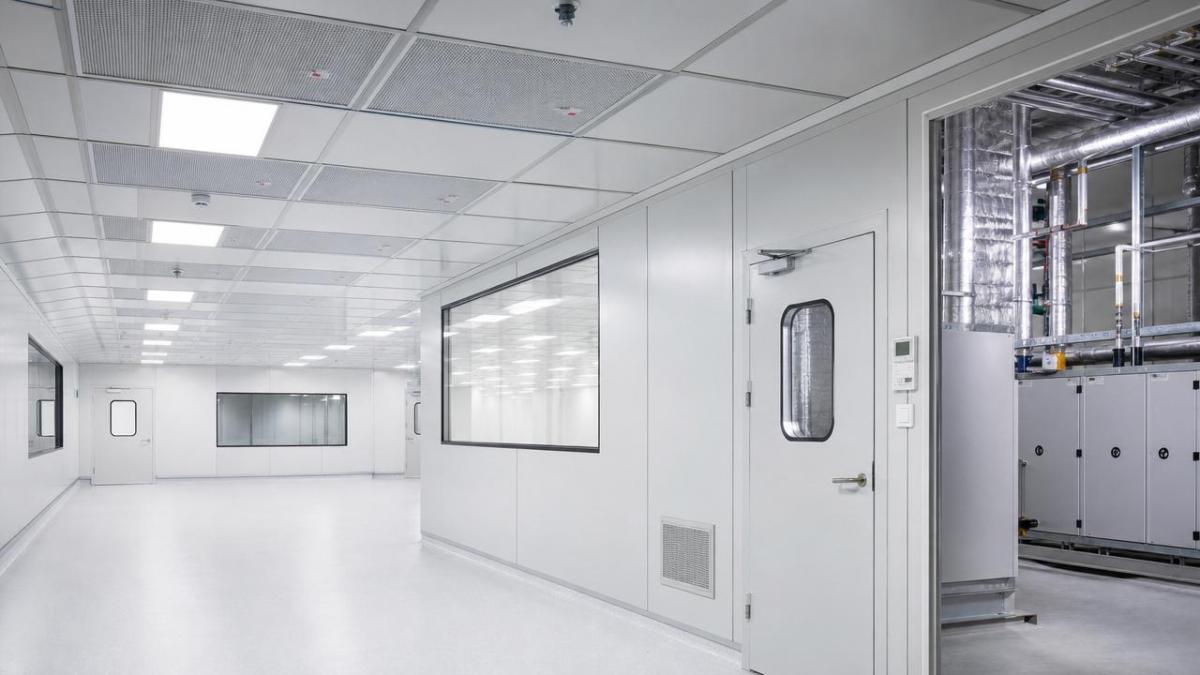
In retrofit work, Cleanroom Architecture design starts with constraints, not freedom. Existing columns, low ceiling voids, legacy duct routes, aging utilities, and occupied production zones all influence what can actually be delivered.
For project managers, this creates a difficult triangle: maintain schedule, control capex, and still meet ISO cleanliness, pressure cascade, and temperature stability targets. A cleanroom retrofit fails when one of these three is ignored.
Across semiconductor, pharma, advanced electronics, medical device, and laboratory environments, retrofit projects usually face the same pressure points:
- Production cannot stop for long, so demolition and installation must be phased around live operations.
- Legacy HVAC systems may lack the static pressure, filtration stages, or control response needed for modern clean space performance.
- Wall, slab, and service penetrations often introduce hidden leakage paths that undermine pressure control and contamination management.
- Regulatory and ESG demands are higher than before, so energy use, monitoring traceability, and maintainability must be designed in from the start.
This is where a benchmarking-led approach matters. G-ICE aligns Cleanroom Architecture design with contamination control, precision HVAC, process utility coordination, biosafety logic where relevant, and smart monitoring strategy, rather than treating architecture as a standalone package.
What should project leaders assess before retrofit design begins?
A strong retrofit begins with a technical due diligence phase. The goal is to define the performance gap between current conditions and target operation, then rank interventions by risk, cost, and shutdown impact.
Core pre-design checks
- Measure actual room envelope leakage, not just drawing assumptions, because pressure instability usually starts at interfaces and penetrations.
- Review floor loading, ceiling suspension points, and structural clearance for FFU grids, service carriers, and maintenance access zones.
- Map all process utilities including chilled water, compressed air, UPW, exhaust, drains, gases, and emergency power dependencies.
- Confirm classification target, occupancy pattern, gowning flow, material flow, and whether future process migration may require stricter zoning.
- Evaluate whether current BMS or environmental monitoring can support continuous differential pressure, particle, temperature, and humidity tracking.
Many teams underestimate the value of this stage because it does not visibly build the cleanroom. In reality, it prevents late redesign, utility clashes, and compliance delays that are far more expensive during installation or qualification.
Which retrofit priorities matter most in Cleanroom Architecture design?
The table below helps project managers rank the main design priorities in retrofit cleanroom programs. It is especially useful when budget does not allow every upgrade at once.
The practical lesson is clear: successful Cleanroom Architecture design is not about choosing premium components alone. It is about protecting the pressure regime, airflow path, and operational logic under real retrofit limitations.
How should architecture, HVAC, and process utilities be coordinated?
In retrofit environments, architecture cannot be separated from mechanical and process systems. A wall location may affect return air velocity. A door swing may alter pressure hold. A utility rack may reduce service access above the ceiling.
Key coordination principles
- Design the room envelope and the air concept together. If ceiling height is limited, evaluate localized unidirectional zones instead of forcing a full-field solution that the structure cannot support.
- Separate critical process heat loads from general room loads. This helps avoid oversizing room air systems to solve equipment cooling problems that should be handled at source.
- Reserve maintenance pathways for filters, valves, sensors, and dampers. Retrofit designs often look efficient on drawings but become costly when service teams cannot safely access components.
- Use staged controls and monitoring logic. A retrofit benefits from trend visibility because legacy performance drift is common during transition periods.
G-ICE typically frames this coordination through five linked domains: contamination control, precision HVAC, process fluids, risk containment where needed, and digital monitoring. That integrated lens reduces the gap between design intent and operational reality.
Retrofit options compared: partial upgrade, hybrid rebuild, or full cleanroom renewal?
For many project leaders, the most important question is not whether to retrofit, but how far the retrofit should go. The comparison below supports investment discussions and scope alignment.
A hybrid rebuild is often the most practical Cleanroom Architecture design route in live facilities. It concentrates investment where contamination, temperature drift, or audit exposure would create the greatest business impact.
What standards and compliance issues should guide design decisions?
Project managers should never leave compliance review to the end of the project. Retrofit cleanroom performance must be traceable to applicable standards, qualification methods, and operational documentation from the beginning.
Common reference frameworks
- ISO 14644 for cleanroom classification, testing logic, and contamination control planning.
- ASHRAE guidance for ventilation effectiveness, thermal control, filtration, and system efficiency.
- SEMI references where semiconductor or advanced electronics process environments require tighter utility and environmental coordination.
- Sector-specific GMP or biosafety requirements when pharmaceutical or laboratory use introduces documentation and containment obligations beyond basic cleanroom design.
Compliance in a retrofit context also means proving maintainability, monitoring integrity, and change control. A room that reaches target particle counts on day one but cannot sustain documented performance is still a weak asset.
Procurement guide: what should you ask suppliers and design partners?
When evaluating Cleanroom Architecture design partners, project leaders need more than a generic proposal. The questions below help expose whether a supplier understands retrofit complexity or only standard new-build delivery.
Procurement checklist
- Can the team quantify existing envelope leakage and explain how pressure stability will be protected after renovation?
- What is the proposed shutdown strategy, and which work packages can be executed during partial occupancy?
- How are FFUs, terminal filters, return air paths, lighting, sprinklers, and service panels coordinated in ceiling space?
- Which monitoring points are included for particle, temperature, humidity, differential pressure, and alarm logging?
- What assumptions drive energy consumption, maintenance intervals, and spare parts planning after handover?
A capable partner should connect architecture to lifecycle operation. G-ICE supports this by benchmarking hardware choices and control strategies against international standards and high-performance industrial operating conditions.
How can project managers control cost without weakening performance?
Cost pressure is real in every retrofit. The wrong response is cutting the visible scope while leaving hidden failure points untouched. The better response is to protect high-risk performance layers and simplify where process criticality allows.
Smart cost control moves
- Focus first on envelope sealing, airflow route integrity, and pressure control. These usually deliver more value than purely cosmetic interior replacement.
- Use risk-based zoning so only process-critical spaces receive the most demanding classifications and environmental tolerances.
- Retain reusable utility infrastructure only after inspection confirms capacity, cleanliness compatibility, and controllability.
- Plan commissioning and qualification early. Late test failures are often more expensive than stronger design coordination up front.
In many facilities, lifecycle cost matters more than first cost. A retrofit that reduces energy waste, improves response stability, and shortens maintenance shutdowns may justify a higher initial package.
FAQ: practical questions about Cleanroom Architecture design for retrofit projects
How do I know whether my existing facility is suitable for a cleanroom retrofit?
Start with structural clearance, utility capacity, envelope condition, and operational downtime tolerance. If the building cannot support filtration distribution, pressure stability, or critical process routing, retrofit may still work, but the scope will need to be more selective or phased.
Which performance indicators matter most after retrofit?
Watch particle class achievement, recovery time, differential pressure stability, temperature and humidity control band, vibration where relevant, and alarm traceability. These indicators show whether Cleanroom Architecture design is functioning in daily operations, not only during handover tests.
What are the most common retrofit mistakes?
Three mistakes appear often: relying on old drawings instead of field verification, treating HVAC upgrades separately from spatial layout, and underestimating leakage at interfaces. Another common issue is ignoring future process change, which forces expensive rework within a few years.
How long does a cleanroom retrofit usually take?
The timeline depends on classification target, utility complexity, and whether the facility remains operational. A phased approach often reduces business interruption, but it increases coordination demands. The most reliable schedules are built after detailed survey, clash review, and shutdown mapping.
Why choose us for retrofit cleanroom planning and technical evaluation?
G-ICE supports project managers and engineering leaders who need Cleanroom Architecture design decisions grounded in performance logic, compliance readiness, and operational practicality. Our advantage is not a single product line. It is the ability to benchmark architecture, HVAC, process utilities, monitoring, and contamination control as one system.
If you are planning a retrofit, you can consult us on classification targets, room pressure strategy, FFU or filtration layout, thermal stability requirements, utility coordination, monitoring architecture, phased delivery planning, and alignment with ISO 14644, ASHRAE, or SEMI-related expectations.
You can also discuss practical project questions such as parameter confirmation, solution comparison, ceiling space constraints, upgrade sequencing, expected delivery windows, documentation scope, and budget-sensitive alternatives. Early technical review usually saves more time and cost than late correction on site.
Get weekly intelligence in your inbox.
No noise. No sponsored content. Pure intelligence.
 Jun 21, 2026How to Choose Linear Motion Systems for Precision and Service LifeLinear motion systems selection starts with process needs. Learn how to compare accuracy, contamination control, thermal behavior, and service life for smarter, longer-lasting performance.
 Jun 21, 2026Advanced Manufacturing Trends Reshaping Cost, Quality, and Lead TimeAdvanced Manufacturing is reshaping cost, quality, and lead time through cleaner environments, real-time monitoring, and smarter control. See the trends driving resilient, high-performance operations.
 Jun 21, 2026Market Forecast Signals to Track Before Setting Next Year’s BudgetMarket Forecast insights to track before setting next year’s budget—spot demand, energy, compliance, and capital signals early to avoid costly inefficiencies and make smarter investment decisions.
 Jun 21, 2026Healthcare Trends to Watch in 2026: AI, Staffing, and Patient AccessHealthcare Trends in 2026: explore how AI, staffing shortages, and patient access are reshaping healthcare operations, compliance, and resilient facility strategy.
 Jun 21, 2026Solar Panel Cost Breakdown: What Changes the Price in 2026Solar panel cost in 2026 depends on more than panel pricing. Discover what drives total installed cost, storage value, labor, design, and hidden risks before you approve a solar project.
 Jun 21, 2026EU Updates EN 14644-1:2026 for Cleanroom TestingEN 14644-1:2026 reshapes cleanroom testing, CE documentation, and EU compliance from 2027. Learn what exporters, testing providers, and procurement teams must review now.
 Jun 21, 2026MFDS Tightens ZLD Certification on TOC ValidationMFDS tightens ZLD certification rules by requiring KOLAS-authorized GLP TOC validation reports from Sept. 1, 2026. Learn how this impacts wastewater reuse equipment exports and compliance planning.
 Jun 21, 2026ASEAN Customs Makes EPCIS Data Mandatory for Cleanroom ExportsASEAN Customs makes EPCIS data mandatory for cleanroom exports from Aug 15, 2026. Learn how GS1 EPCIS v2.3 rules may delay clearance and what exporters must prepare now.
 Jun 21, 2026Japan Starts JIS Label Rule for UPW ImportsJapan starts JIS label rule for UPW imports on Oct. 1, 2026. Learn the new compliance scope, JIS certification, customs risks, and how exporters can avoid shipment delays.
 Jun 21, 2026FDA Sets July 1 Rule for BSL-3/4 Digital Twin InterfacesFDA sets a July 1 rule for BSL-3/4 digital twin interfaces, reshaping compliance, certification, and delivery timelines. See what exporters, buyers, and lab equipment teams must do now.
 Jun 20, 2026The Impact of CBAM on Chillers: Cost Risks and Sourcing ChoicesImpact of CBAM on chillers: learn how carbon rules can raise landed costs, affect supplier choice, and reshape sourcing strategy. Compare bids smarter and reduce compliance risk.
 Jun 20, 2026RGB LED Strips: Common Failures and How to Prevent ThemRGB LED strips often fail from voltage drop, heat, poor connections, and moisture. Learn practical prevention tips to improve reliability and reduce maintenance.
 Jun 20, 2026HVAC Digital Twin: What to Check Before DeploymentHVAC digital twin deployment starts with the right checks. Learn how to assess model fidelity, data quality, control logic, compliance, and cybersecurity before approval.
 Jun 20, 2026How Photovoltaic Modules for Agricultural Use Perform in Harsh Field ConditionsPhotovoltaic modules for agricultural use must endure dust, heat, moisture, and impact. Learn what drives field reliability and how to choose modules for stable farm energy output.
 Jun 20, 2026Energy Efficiency Benchmarks That Matter in 2026Energy efficiency benchmarks for 2026 focus on process stability, thermal precision, airflow, water performance, and compliance—see which metrics truly improve uptime and ROI.
 Jun 20, 2026SAP-Air Pilot Makes EPCIS Data Mandatory for ExportsSAP-Air pilot makes EPCIS data mandatory for exports from Sept. 1, 2026. Learn how GS1 EPCIS v2.3 air-quality and traceability rules may impact customs clearance.
 Jun 20, 2026MFDS Tightens ZLD Certification on TOC TestingMFDS tightens ZLD certification on TOC testing in South Korea, requiring KOLAS-authorized GLP reports. Learn the compliance impact, higher costs, and what exporters must do now.
 Jun 20, 2026METI to Require JIS Class A Labels for 18.2 MΩ·cm UPW SystemsMETI to require JIS Class A labels for 18.2 MΩ·cm UPW systems from 2026. Learn how the new rule impacts Japan market access, compliance, and supplier readiness.
 Jun 20, 2026FDA Mandates Digital Twin Interface for BSL-3/4 EquipmentFDA Mandates Digital Twin Interface for BSL-3/4 Equipment starting July 1, 2026. Learn who is affected, key compliance risks, and what exporters must prepare now.
 Jun 20, 2026EU Battery Rules Tighten: Carbon Labels in August, Passport in 2027EU battery rules tighten with carbon labels from August 2026 and a digital battery passport in 2027. Learn how exporters and suppliers can avoid customs delays and stay market-ready.
 Jun 19, 2026Market Intelligence Trends Reshaping Industrial PlanningMarket Intelligence is reshaping industrial planning by linking compliance, performance, and investment decisions. Discover key trends driving smarter, lower-risk growth.
 Jun 19, 2026Manufacturing Analysis: 5 Signals of Hidden Process RiskManufacturing Analysis reveals 5 early signals of hidden process risk, from rising variation to conflicting data—helping teams protect quality, compliance, and uptime before failure hits.
 Jun 19, 2026Strategic Intelligence Reports: What Makes One Reliable?Strategic Intelligence Reports should do more than summarize trends. Learn the key signs of reliable reports, from transparent data and methodology to actionable insights that support smarter decisions.
 Jun 19, 2026How Voice Picking Systems Reduce Picking ErrorsVoice picking systems help warehouses reduce picking errors with hands-free guidance, location verification, and faster training. Learn how they improve accuracy, workflow, and operational efficiency.
 Jun 19, 2026Hydrogen Energy Costs in 2026: What Shapes ROI?Hydrogen energy costs in 2026 go far beyond production price. Discover what shapes ROI, from power and storage to compliance and site integration, and compare projects with confidence.
 Jun 19, 2026FDA Sets July 1 BSL-3/4 Digital Twin RuleFDA Sets July 1 BSL-3/4 Digital Twin Rule: Learn how the new FDA requirement affects 510(k)/PMA submissions, remote diagnostics, and compliance planning for biosafety equipment manufacturers.
 Jun 19, 2026Japan Sets JIS Class A Label Rule for UPW SystemsJapan Sets JIS Class A Label Rule for UPW Systems: learn how METI’s new Japan UPW energy labeling requirement could affect market access, procurement eligibility, and compliance planning before October 2026.