Chilled Water Piping Design Mistakes That Raise Downtime Risk
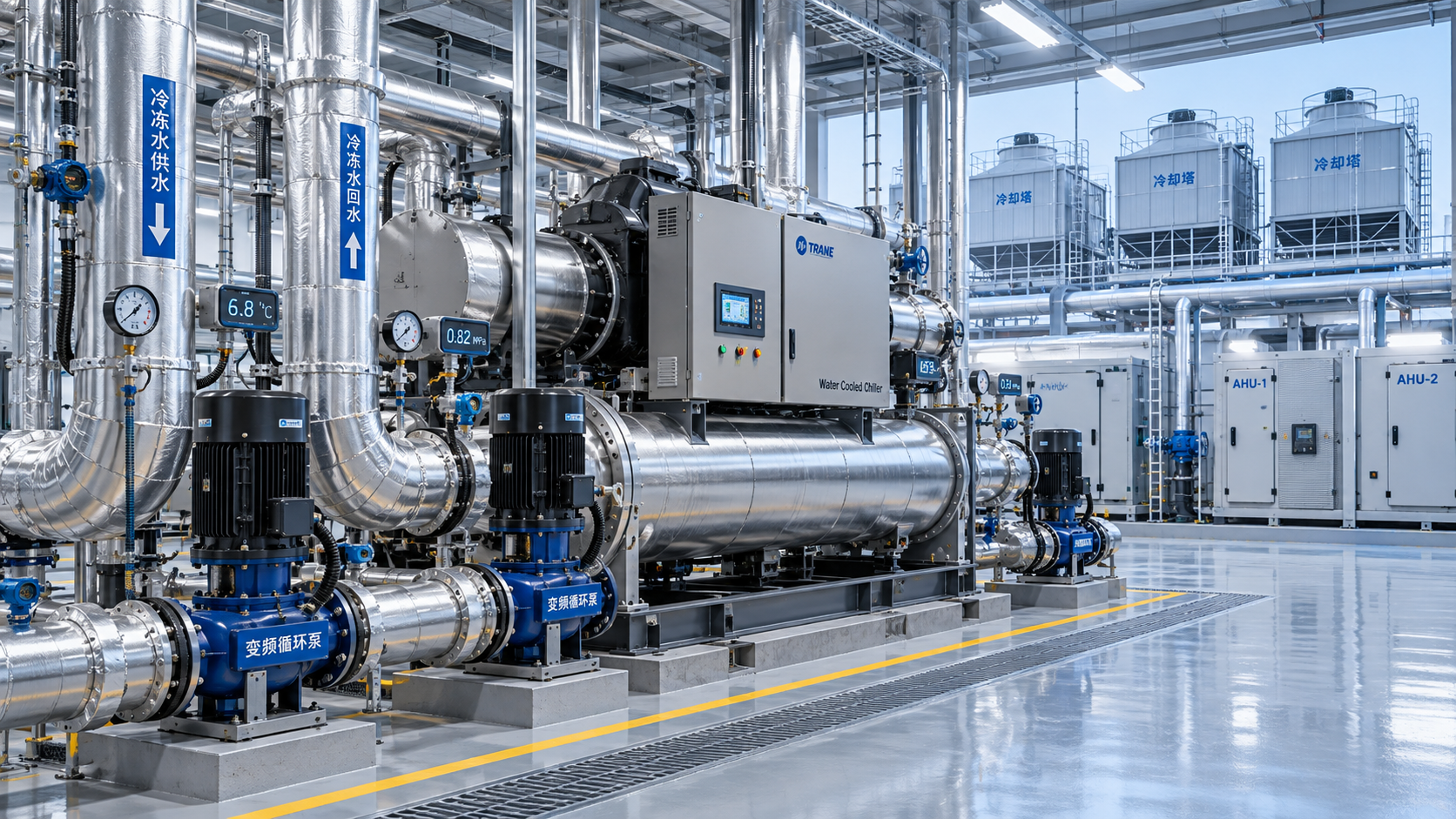
Even high-efficiency cooling plants can suffer costly disruptions when chilled water piping is poorly designed. For project managers and engineering leads, small layout, balancing, or material selection errors can escalate into leaks, unstable temperatures, and unplanned shutdowns. This article highlights the most common chilled water piping design mistakes that increase downtime risk and explains how to avoid them in mission-critical industrial environments.
Why chilled water piping errors are getting more expensive now
A clear industry shift is underway: cooling systems are no longer treated as background utilities. In semiconductor fabs, biopharma facilities, data-intensive labs, advanced manufacturing plants, and regulated institutional buildings, thermal stability is now directly tied to product quality, compliance, and business continuity. That change raises the consequences of every chilled water piping decision made during design, procurement, and installation.
For project managers, this is not just an engineering detail. It is a risk-management issue. Tighter temperature tolerances, higher equipment density, more aggressive energy targets, and growing pressure to compress project schedules mean that chilled water piping mistakes surface faster and cost more to correct. A pipe routing compromise that once caused minor comfort complaints may now trigger process excursions, equipment alarms, condensation events, or line stoppages.
Another important signal is the rise of lifecycle accountability. Owners increasingly expect design teams to deliver not only capacity, but also maintainability, resilience, and measurable uptime. In that environment, flawed chilled water piping design is no longer viewed as a commissioning nuisance. It is increasingly seen as an operational weakness that can undermine sustainability goals, digital monitoring performance, and expansion readiness.
The trend signals project leaders should not ignore
Several market and technical signals explain why chilled water piping deserves closer scrutiny today. First, mission-critical facilities are pushing for finer thermal control while also reducing energy waste. Second, modular construction and fast-track delivery models leave less time to resolve hidden hydraulic problems in the field. Third, more operators are using analytics and digital twins, which quickly reveal poor flow stability, bypass behavior, or temperature drift that older operating models may have overlooked.
These changes affect the design review process. Project teams now need to ask whether chilled water piping supports part-load stability, maintenance isolation, water quality protection, and future capacity changes. If not, the system may technically operate, but still create chronic downtime risk.
The most common chilled water piping design mistakes raising downtime risk
The biggest mistakes are rarely dramatic at first. Most start as coordination gaps, assumptions, or legacy details copied from older projects without considering newer operating demands. Below are the errors that most often turn into downtime-related failures.
1. Oversized or poorly balanced piping networks
Oversizing is often justified as a safety margin, but in chilled water piping it can reduce control quality. Low velocities may encourage air retention, unstable differential pressure, and weak heat transfer response at coils or process loads. At the same time, poorly balanced branch circuits cause some loads to starve while others receive excess flow. The result is uneven cooling, control valve hunting, nuisance alarms, and difficult commissioning.
2. Inadequate separation between design load theory and actual operating conditions
Many facilities spend most of their operating life at part load, not peak load. Yet chilled water piping layouts are still sometimes optimized only for full-load calculations. When low-load conditions dominate, improper bypass arrangements, unstable secondary flow, and poor pump control logic can produce low delta-T syndrome, short cycling, and excessive plant energy use. These issues are not just efficiency problems; they can reduce redundancy effectiveness during upset conditions.
3. Weak attention to air management and high-point venting
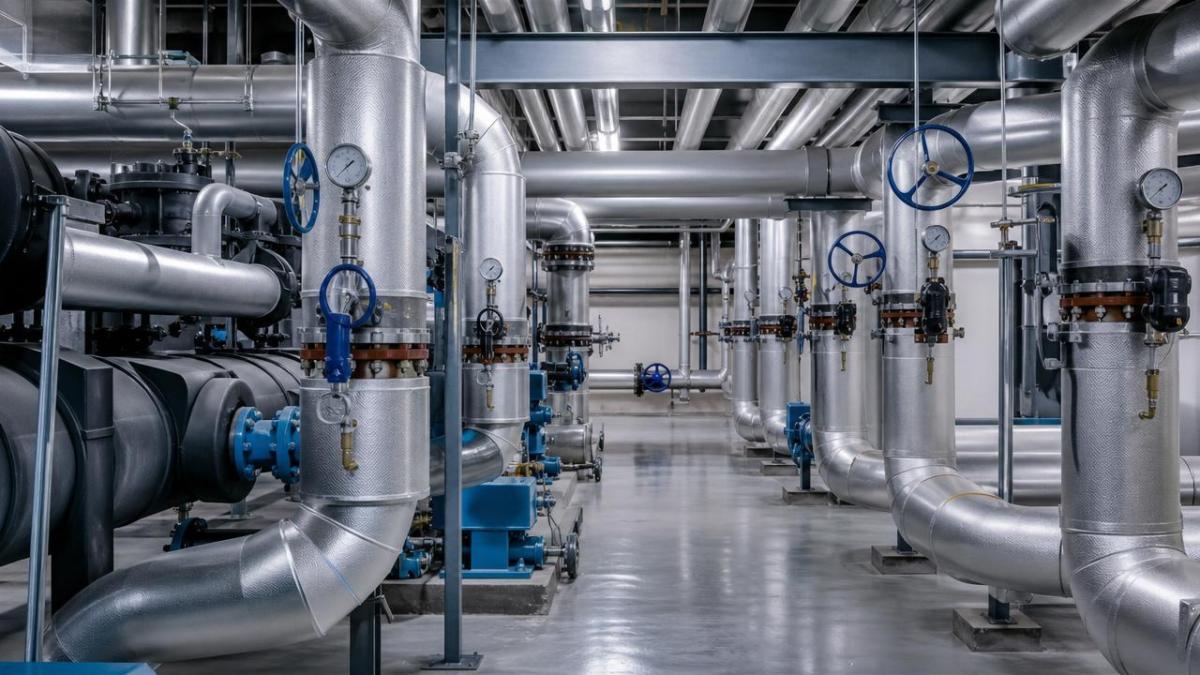
Air trapped in chilled water piping can quietly damage performance. It causes flow noise, erratic readings, corrosion acceleration, and reduced coil effectiveness. In critical environments, localized air pockets can also create uneven temperature response that operators misdiagnose as equipment failure. Designs that neglect high-point vents, proper expansion tank connection, and air separation strategy often create recurring service calls after occupancy.
4. Poor routing decisions that sacrifice maintainability
A chilled water piping system may pass a drawing review yet still be operationally fragile if valves, strainers, sensors, and isolation sections are difficult to access. In many industrial projects, maintenance windows are narrow and shutdown costs are high. If routine cleaning, valve replacement, or leak investigation requires large-area isolation or awkward access, downtime risk rises sharply. Maintainability must be treated as a design parameter, not a post-installation convenience.
5. Incomplete control-valve and differential-pressure coordination
Hydraulic design and controls design are still too often reviewed in separate silos. That creates mismatches between pump control sequences, valve authority, sensor placement, and branch pressure conditions. The symptom may be unstable room temperature, but the root cause often sits in chilled water piping and control interaction. As facilities adopt variable flow strategies, this coordination becomes even more important.
6. Wrong material or insulation choices for the actual environment
Material selection errors frequently emerge from procurement substitutions or incomplete environmental review. Corrosion susceptibility, joint reliability, freeze exposure, vibration, water chemistry, and cleanability all matter. In parallel, poor insulation detailing can create condensation, energy loss, ceiling damage, microbial risk, and hidden degradation around supports and valves. In controlled spaces, these failures can spread beyond the piping system and affect compliance or product integrity.
7. Limited planning for redundancy, sectional isolation, and future expansion
Many owners request N+1 or resilient plant concepts, but the chilled water piping network itself may not fully support that goal. If headers, tie-ins, or valve arrangements do not allow true isolation and reconfiguration, redundancy exists on paper more than in practice. This becomes critical during phased expansion, equipment replacement, or contamination events when operators need flexibility without full shutdown.
Why these mistakes persist despite better tools and standards
The persistence of chilled water piping mistakes is less about lack of knowledge and more about fragmented execution. Mechanical designers may optimize hydraulic logic, while architects compress ceiling space, contractors seek install simplification, controls vendors tune to field conditions, and procurement teams push alternates that change pipe roughness, valve characteristics, or insulation quality. Each decision appears manageable alone, but together they can shift the system away from its intended operating envelope.
There is also a governance issue. On many projects, chilled water piping review focuses on code compliance and constructability, while resilience and maintainability are addressed only informally. For project leaders in high-value facilities, this review model is no longer sufficient. The market is moving toward integrated design verification, operational scenario testing, and earlier facility-team participation.
Who is most affected by chilled water piping design weaknesses
The impact is not limited to mechanical teams. Different stakeholders experience the consequences in different ways, which is why chilled water piping should be managed as a cross-functional project risk.
What leading projects are doing differently
A noticeable direction in advanced industrial projects is the shift from drawing-based acceptance to performance-based validation. Instead of asking only whether chilled water piping matches the specification, stronger teams test whether the network will remain stable under startup, low load, maintenance isolation, and phased growth conditions. This change reflects a broader industry understanding that uptime resilience must be designed, not assumed.
Leading practices include early hydraulic modeling updates when equipment selections change, coordinated valve and sensor review, accessibility verification with operations staff, and insulation detailing that addresses real-site humidity and service conditions. Teams are also using trend data from existing plants to challenge design assumptions before repeating old layouts in new projects.
How project leaders should evaluate chilled water piping decisions now
For decision-makers, the key is to move from component review to scenario review. Instead of asking whether each element is acceptable on its own, ask how the chilled water piping system behaves during likely disruptions and operational transitions. That framing produces better design conversations and clearer accountability.
Practical guidance for reducing downtime risk
If your team is planning a new facility or upgrading an existing plant, several actions offer immediate value. First, review chilled water piping under realistic operating scenarios, not just design-day assumptions. Second, involve operations and maintenance personnel before final routing and valve placement decisions. Third, challenge all substitutions that affect hydraulics, corrosion resistance, insulation integrity, or service accessibility. Fourth, link controls review directly to piping behavior rather than treating them as separate packages.
For existing facilities, trend analysis can uncover hidden design weaknesses. Repeated low delta-T, chronic balancing complaints, seasonal condensation, or difficult maintenance isolation are often signals that chilled water piping deserves strategic re-evaluation rather than repeated tactical fixes.
Conclusion: the next decision is not about more piping, but better judgment
The broader direction of industrial infrastructure is clear: resilience, precision, and lifecycle performance are becoming more important than simple installed capacity. In that context, chilled water piping is gaining strategic weight. Design mistakes that were once tolerated as commissioning inconveniences are now more likely to become uptime, quality, and compliance risks.
For project managers and engineering leads, the best response is to treat chilled water piping as a trend-sensitive decision area shaped by tighter tolerances, digital visibility, and higher continuity expectations. If your organization wants to judge how these changes affect current or upcoming projects, focus on five questions: Is the system stable at part load? Is maintenance isolation practical? Are materials and insulation suited to the real environment? Do controls and hydraulics truly align? And can the network support future growth without fragile workarounds? The teams that answer those questions early are far more likely to reduce downtime risk before it becomes an operational cost.
Get weekly intelligence in your inbox.
No noise. No sponsored content. Pure intelligence.
 Oct 21, 2026How often is cleanroom certification required under ISO 14644-2?Cleanroom Certification is generally recommended annually under ISO 14644-2. Learn when risk-based extensions apply and which changes trigger earlier testing to plan with confidence.
 Oct 21, 2026FASEB Comments on NIH Draft Policy for Research Involving BiohazardsFASEB comments on NIH’s draft biohazard research policy call for risk-based biosafety oversight. Explore potential implications for laboratories, suppliers, and compliance teams.
 Oct 20, 2026How to disinfect ultrasound machines without damaging surfacesLearn how to disinfect ultrasoundmachines without surface damage. Explore compatible products, wet contact times, and probe care to protect patients and equipment.
 Oct 20, 2026Ultrapure Water in Semiconductor Manufacturing: Reuse and Quality Control InsightsExplore ultrapure water reuse in semiconductor manufacturing, key UPW quality benchmarks and analytical insights to help evaluate suppliers and protect process purity.
 Oct 19, 2026How cooling affects warpage in injection-molded consumer electronics housingsOptimize plastic injection molding for consumer electronics with cooling strategies to reduce housing warpage and improve assembly fit. Discover practical checks for stable, efficient production.
 Oct 18, 2026Can air leaks prevent a dehumidifier from holding its target dew point?Why can't our dehumidifier maintain the target dew point? Discover how air leaks increase moisture loads, spot hidden faults, and find practical fixes to restore reliable dew-point control.
 Oct 17, 2026How semiconductor process water treatment removes trace organicsSee how semiconductor process water treatment removes trace organics with RO, UV oxidation, and polishing. Learn how TOC monitoring helps verify purity and pinpoint contamination.
 Oct 16, 2026How to choose ultra pure water piping materials to limit leachingChoose ultra pure water piping with confidence. Compare PVDF, PFA, and stainless steel, assess leaching risks, and learn how to qualify your system for reliable purity.
 Oct 15, 2026How to size a skid-mounted deionized water system for peak demandCompare deionized water systems skid configurations for peak demand. Learn how to balance production, storage, and pump capacity to prevent shortages and avoid costly oversizing.
 Oct 14, 2026When is collaborative laboratory robotics suitable for sample sorting?Explore when collaborative laboratory robotics suits sample sorting. Discover key checks for safety, traceability, container compatibility, and throughput before choosing your solution.
 Oct 13, 2026How sandwich panel joints affect airtightness in cleanroom systemsCleanroom Systems sandwich panels need reliable joints for airtightness. Discover how gaskets, sealants, and testing help reduce leakage and protect cleanroom pressure control.
 Oct 12, 2026How to verify USP compliance for ultra pure water systemsUltra Pure Water Systems USP compliance: learn how to verify water quality, sampling, sanitization, trends, and validation controls at every point of use.
 Oct 11, 2026How tight temperature control prevents cleanroom process driftCleanroom process temperature control systems prevent costly drift by stabilizing critical conditions, improving repeatability, and protecting sensitive production workflows.
 Oct 10, 2026When does organic contaminant removal require TOC treatment?Organic contaminant removal requires TOC treatment when dissolved organics threaten product quality, equipment reliability, or process control. Learn how to assess risks and choose the right solution.
 Oct 08, 2026What affects lead times for sheet metal bending services in Canada?Sheet metal bending services Canada: discover how material supply, tooling, tolerances, finishing, documentation, and freight affect lead times for reliable project delivery.
 Oct 07, 2026How HVAC design for semiconductor fabs prevents airborne contaminationHVAC design for semiconductor fabs prevents airborne contamination through advanced filtration, pressure cascades, airflow control, and real-time monitoring. Explore key strategies for cleaner, more reliable wafer production.
 Oct 06, 2026How photovoltaic modules waterproof technology prevents moisture damagephotovoltaic modules waterproof technology prevents moisture damage with durable seals, drainage, and junction-box protection. Explore practical selection and testing insights.
 Oct 05, 2026How ISO 14644 Europe requirements affect cleanroom qualificationISO 14644 Europe requirements shape cleanroom qualification, from particle classification and recovery testing to monitoring, GMP alignment, and change control.
 Oct 04, 2026How to assess a pharmaceutical cleanroom solutions supplier’s ISO capabilityPharmaceutical Cleanroom Solutions supplier assessment guide: evaluate ISO 14644 capability, validation evidence, airflow design, documentation, and long-term GMP readiness.
 Oct 03, 2026What EU standards govern the design of BSL-3 laboratories in Europe?BSL-3 laboratories Europe: explore EU directives, EN standards, HVAC containment, commissioning, and practical design strategies for compliant, resilient high-containment facilities.
 Oct 02, 2026How EN 1822 defines HEPA filtration efficiency for cleanroomsHEPA filtration EN 1822 explained: learn how MPPS testing, local leakage limits, and filter classes support reliable cleanroom decisions.
 Oct 01, 2026How pharmaceutical process water systems control microbial riskProcess water systems pharmaceutical teams rely on can control microbial risk through hygienic design, monitoring, and validated sanitization. Explore practical compliance strategies.
 Sep 30, 2026When does a negative pressure laboratory need BSL-3 containment?Negative pressure laboratory or BSL-3? Discover the risk factors, engineering controls, and containment requirements needed for safe, compliant laboratory planning.
 Sep 29, 2026How to evaluate a TOC-zero water treatment supplier for UPW systemsChoose a TOC-zero water treatment supplier with confidence. Compare UPW performance, monitoring, validation, materials, service capability, and lifecycle cost.
 Sep 28, 2026What drives sustainable cooling cost in high-precision facilities?Sustainable cooling cost in high-precision facilities depends on thermal stability, energy, water, controls, and resilience. Explore smarter lifecycle strategies.
 Sep 27, 2026How to compare freight forwarding services for time-critical shipmentsCompare freight forwarding services for time-critical shipments with practical insights on routing, customs, visibility, specialized handling, and contingency planning.
 Sep 26, 2026How environmental integrity in laboratories supports reliable test resultsEnvironmental Integrity in laboratories safeguards samples, instruments, and staff. Discover practical controls for contamination, monitoring, and reliable test results.