FDA Updates Import Guidance for BSL-3/4 Decon Systems
On May 8, 2026, the U.S. Food and Drug Administration (FDA) issued an updated technical guidance document titled Import Guidance for BSL-3/4 Laboratory Disinfection and Decontamination Systems (Rev. 2026). The revision mandates full-chain biological inactivation validation for all imported decontamination systems intended for Biosafety Level 3 and 4 laboratories. This requirement directly affects suppliers—particularly those based in China—with BSL-3/4 engineering capabilities, and is relevant to manufacturers, exporters, regulatory affairs professionals, and laboratory infrastructure integrators operating in global biocontainment markets.
Event Overview
On May 8, 2026, the FDA published Import Guidance for BSL-3/4 Laboratory Disinfection and Decontamination Systems (Rev. 2026). The guidance requires that all imported decontamination systems designated for use in BSL-3 or BSL-4 facilities must be accompanied by a full-chain biological inactivation validation report covering pretreatment, cyclic inactivation, and end-point residual testing. Validation must comply with ISO 15714:2025 or an equivalent standard. The requirement takes effect on July 1, 2026.
Industries Affected
Direct Exporters and Trade Enterprises
These entities are directly responsible for customs clearance and regulatory compliance of exported decon systems. Under the new guidance, they must now submit validated documentation—not just product specifications—to U.S. import authorities. Failure to provide compliant validation reports may result in shipment rejection or extended FDA review timelines.
Manufacturers and Engineering Suppliers
Over 200 Chinese enterprises with BSL-3/4 system integration capability are identified as impacted. Manufacturers must now align internal validation protocols with ISO 15714:2025—including test organism selection, cycle parameter mapping, and residual assay methodology—prior to export. Legacy validation data generated under older standards (e.g., ISO 15714:2017) will not satisfy the revised requirement.
Regulatory Affairs and Compliance Service Providers
Firms offering FDA submission support, technical dossier preparation, or third-party validation coordination must update their service scope and documentation templates to reflect the full-chain requirement. The guidance introduces new expectations around traceability between process parameters and biological outcomes—beyond traditional performance qualification.
What Enterprises and Practitioners Should Monitor and Do Now
Track official FDA implementation clarifications
The FDA has not yet published detailed interpretation documents or FAQs related to Rev. 2026. Enterprises should monitor FDA’s CBER and CDER websites for supplementary notices, especially regarding acceptance criteria for ‘equivalent’ standards and transitional arrangements for pending shipments.
Verify validation scope against ISO 15714:2025 requirements
ISO 15714:2025 introduces updated definitions for ‘cycle robustness’, ‘worst-case challenge conditions’, and ‘residual viability detection limits’. Suppliers should audit existing validation reports line-by-line against the 2025 edition—not rely on prior certifications labeled ‘ISO 15714-compliant’ without version verification.
Assess supply chain readiness for documentation handover
Full-chain validation involves coordination across equipment OEMs, sterilant suppliers, and third-party labs. Exporters should confirm whether upstream partners can supply auditable raw data (e.g., temperature/pressure logs, microbial recovery counts) needed to reconstruct the full validation narrative—rather than relying solely on summary certificates.
Prepare for potential lead-time extension in U.S. entry
Given the novelty of the full-chain requirement, FDA field reviewers may request additional information during initial submissions. Exporters should allocate at least four weeks for FDA review cycles post-submission—and avoid scheduling critical deliveries within 30 days of the July 1, 2026, effective date.
Editorial Perspective / Industry Observation
Observably, this guidance signals a shift from outcome-based compliance (i.e., ‘does it work?’) toward process-integrity assurance (i.e., ‘can every step be verified, repeated, and traced?’). Analysis shows the FDA is treating decon systems more like medical devices than general lab equipment—applying principles previously seen in 510(k) or De Novo pathways. It is not yet a formal regulation, but functions as a binding expectation for market access. From an industry perspective, this is less a one-off policy update and more an early indicator of tightening harmonization between U.S. and EU approaches to high-containment infrastructure oversight—especially as WHO and ASEAN members begin reviewing similar frameworks.
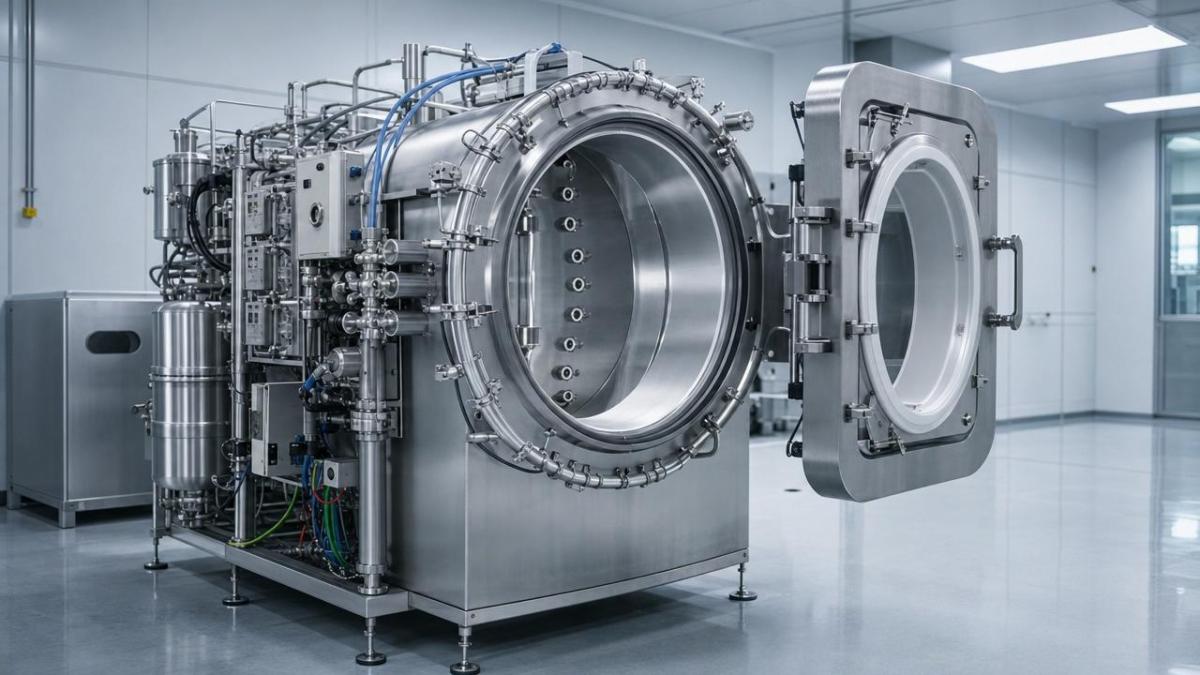
Concluding, this guidance does not introduce new safety thresholds or prohibit existing technologies—but raises the evidentiary bar for demonstrating reliability across the entire deactivation lifecycle. It is best understood not as a barrier, but as a formalization of evolving global expectations for biological risk control in high-consequence environments. Enterprises should treat it as a procedural milestone—not a technical disruption—and prioritize documentation rigor over product redesign.
Source: U.S. Food and Drug Administration (FDA), Import Guidance for BSL-3/4 Laboratory Disinfection and Decontamination Systems (Rev. 2026), issued May 8, 2026.
Note: Implementation details—including enforcement discretion, transitional provisions, and FDA reviewer training status—remain subject to ongoing observation.
Get weekly intelligence in your inbox.
No noise. No sponsored content. Pure intelligence.
 Jun 10, 2026CNC Machining for Automotive Industry: When Precision Improves ThroughputCNC machining for automotive industry boosts more than precision—it improves throughput, reduces rework, and supports faster, more stable vehicle production. Learn how.
 Jun 10, 2026CNC Machining for Medical Devices: Tolerance, Traceability, and Material RisksCNC machining for medical devices demands more than tight tolerances. Learn how traceability, material risk, and clean process control protect quality, compliance, and patient safety.
 Jun 10, 2026Sheet Metal Bending Machine Price: What Drives Total Cost in 2026Sheet metal bending machine price in 2026 depends on more than the quote. Learn what drives total cost, hidden expenses, energy use, and smart ways to compare offers.
 Jun 10, 2026Smart Home Hubs Compared: Matter Support, Range, and Automation LimitsSmart home hubs compared for Matter support, real-world range, and automation limits. Discover what to check before you buy and choose a hub that fits your home.
 Jun 10, 2026Semiconductor Cleanroom Standards: ISO Classes, AMC, and ESD BasicsSemiconductor Cleanroom standards explained: compare ISO classes, AMC control, and ESD basics to improve yield protection, reduce hidden risks, and benchmark fab performance with confidence.
 Jun 10, 2026PSA Opens Dedicated UPW Import Inspection LanePSA Opens Dedicated UPW Import Inspection Lane, cutting average clearance from 5.2 to 3.1 days. See what it means for semiconductor imports, compliance, and delivery planning.
 Jun 10, 2026VDE Rule Tightens Digital Twin Lab Data ControlVDE Rule Tightens Digital Twin Lab Data Control in Germany: learn how the 2026 audit reshapes data sovereignty, cloud use, and compliance choices for vendors and research labs.
 Jun 10, 2026Japan Opens 72-Hour Maglev Chiller Import LaneJapan opens a 72-hour Maglev chiller import lane tied to JIS B 8341-2:2025, PSE/JQA certification, and ±0.01°C proof—see what importers, buyers, and suppliers must do now.
 Jun 10, 2026FDA Makes Durability Reports Mandatory for BSL-4 Bio-Barrier ImportsFDA makes durability reports mandatory for BSL-4 Bio-Barrier imports. Learn how the 10,000-cycle ISO 17025 test rule may impact compliance, shipments, suppliers, and delivery timelines.
 Jun 10, 2026EU ZLD Imports Face Carbon Footprint Disclosure From JulyEU ZLD imports face carbon footprint disclosure from July 2026. Learn how the new EU rule may affect customs compliance, market access, and supply chain readiness.
![]() Jun 09, 2026Energy Storage Battery Selection: Safety, Cycle Life, and Total Cost ComparedEnergy storage battery selection explained: compare safety, cycle life, and total cost to find the best fit for industrial uptime, resilience, and smarter long-term value.
Jun 09, 2026Energy Storage Battery Selection: Safety, Cycle Life, and Total Cost ComparedEnergy storage battery selection explained: compare safety, cycle life, and total cost to find the best fit for industrial uptime, resilience, and smarter long-term value.![]() Jun 09, 2026Plastic Injection Molding Defects: Root Causes, Fixes, and Process Control TipsPlastic injection molding defects explained: discover root causes, practical fixes, and process control tips to reduce scrap, improve part quality, and keep production stable.
Jun 09, 2026Plastic Injection Molding Defects: Root Causes, Fixes, and Process Control TipsPlastic injection molding defects explained: discover root causes, practical fixes, and process control tips to reduce scrap, improve part quality, and keep production stable.![]() Jun 09, 2026Strategic Intelligence in 2026: Signals That Matter for Faster Market DecisionsStrategic Intelligence in 2026 focuses on the few signals that drive faster market decisions. Discover how sharper filtering improves resilience, compliance, and investment confidence.
Jun 09, 2026Strategic Intelligence in 2026: Signals That Matter for Faster Market DecisionsStrategic Intelligence in 2026 focuses on the few signals that drive faster market decisions. Discover how sharper filtering improves resilience, compliance, and investment confidence.![]() Jun 09, 2026Custom Metal Fabrication for Construction: Cost Drivers, Lead Times, and Quality ChecksCustom metal fabrication for construction explained: compare cost drivers, realistic lead times, and critical quality checks to reduce project risk and choose suppliers with confidence.
Jun 09, 2026Custom Metal Fabrication for Construction: Cost Drivers, Lead Times, and Quality ChecksCustom metal fabrication for construction explained: compare cost drivers, realistic lead times, and critical quality checks to reduce project risk and choose suppliers with confidence.![]() Jun 09, 2026High-Tech Industrial Complex Design: Key Planning Risks and Performance PrioritiesHigh-Tech Industrial Complex design starts with early risk visibility. Discover key planning risks, performance priorities, and resilient strategies to improve uptime, compliance, and future scalability.
Jun 09, 2026High-Tech Industrial Complex Design: Key Planning Risks and Performance PrioritiesHigh-Tech Industrial Complex design starts with early risk visibility. Discover key planning risks, performance priorities, and resilient strategies to improve uptime, compliance, and future scalability.![]() Jun 09, 2026EU Starts ZLD Carbon Footprint Disclosure PilotEU Starts ZLD Carbon Footprint Disclosure Pilot: learn how new EU carbon disclosure and CE mark rules may affect ZLD equipment exports, compliance timelines, and market access from Q3 2026.
Jun 09, 2026EU Starts ZLD Carbon Footprint Disclosure PilotEU Starts ZLD Carbon Footprint Disclosure Pilot: learn how new EU carbon disclosure and CE mark rules may affect ZLD equipment exports, compliance timelines, and market access from Q3 2026.![]() Jun 09, 2026FDA Tightens Import Filing for Bio-Barrier PartsFDA Tightens Import Filing for Bio-Barrier Parts: learn how the new ASTM E2996-22 report impacts U.S. shipments, compliance files, certification, and BSL-3/4 project delivery.
Jun 09, 2026FDA Tightens Import Filing for Bio-Barrier PartsFDA Tightens Import Filing for Bio-Barrier Parts: learn how the new ASTM E2996-22 report impacts U.S. shipments, compliance files, certification, and BSL-3/4 project delivery.![]() Jun 09, 2026Japan Opens Fast-Track Imports for Maglev ChillersJapan opens fast-track imports for Maglev Chillers, cutting customs clearance to 72 hours. See how METI’s new policy can speed semiconductor projects, simplify compliance, and reshape precision cooling supply chains.
Jun 09, 2026Japan Opens Fast-Track Imports for Maglev ChillersJapan opens fast-track imports for Maglev Chillers, cutting customs clearance to 72 hours. See how METI’s new policy can speed semiconductor projects, simplify compliance, and reshape precision cooling supply chains.![]() Jun 09, 2026VDE Rule Tightens Data Sovereignty for Digital Twin LabsDigital Twin Lab compliance just changed: Germany’s new VDE rule raises EU market-entry demands on data sovereignty, Smart Sensor, and IIoT Air Monitoring systems. See what exporters must prepare now.
Jun 09, 2026VDE Rule Tightens Data Sovereignty for Digital Twin LabsDigital Twin Lab compliance just changed: Germany’s new VDE rule raises EU market-entry demands on data sovereignty, Smart Sensor, and IIoT Air Monitoring systems. See what exporters must prepare now.![]() Jun 09, 2026PSA Launches Dedicated UPW Inspection Line in SingaporePSA Launches Dedicated UPW Inspection Line in Singapore, speeding 18.2MΩ·cm ultra-pure water customs clearance to 72 hours. Learn the new compliance rules shaping semiconductor and biopharma supply chains.
Jun 09, 2026PSA Launches Dedicated UPW Inspection Line in SingaporePSA Launches Dedicated UPW Inspection Line in Singapore, speeding 18.2MΩ·cm ultra-pure water customs clearance to 72 hours. Learn the new compliance rules shaping semiconductor and biopharma supply chains. Jun 08, 2026PSA Opens UPW Inspection Line at Jurong IslandPSA Opens UPW Inspection Line at Jurong Island, cutting clearance to 28 hours with sterile inspection, ASME BPE-2023 piping, and online monitoring—see what it means for UPW logistics and compliance.
 Jun 08, 2026VDE Sets Real-Time Data Sovereignty Audit for Digital Twin LabsVDE Sets Real-Time Data Sovereignty Audit for Digital Twin Labs in Germany. Learn how the new VDE standard affects compliance, procurement, hosting, and vendor selection.
 Jun 08, 2026Japan Opens 72-Hour Green Lane for Maglev ChillersJapan opens a 72-hour green lane for Maglev Chillers, linking faster customs clearance to ASHRAE precision and COP compliance. See what exporters, buyers, and suppliers must know now.
 Jun 08, 2026FDA Tightens BSL-4 Import Filing for Bio-Barrier PartsFDA Tightens BSL-4 Import Filing for Bio-Barrier Parts: learn the new ISO/IEC 17025 test report rule, import risks, and practical steps for compliant, on-time U.S. delivery.
 Jun 08, 2026Factory Automation Systems for Food Processing: ROI and Scale FactorsFactory automation systems for food processing: discover how to measure ROI, reduce waste, manage utilities, and scale food lines with fewer risks and stronger long-term returns.
 Jun 08, 2026Chilled Water Piping Design Mistakes That Raise Energy LossChilled water piping mistakes can silently raise pump energy, weaken delta-T, and destabilize cooling. Learn the design errors to avoid for better efficiency and control.
 Jun 08, 2026Trade Intelligence Tools for Tracking Supplier and Market ShiftsTrade Intelligence tools help you track supplier risk, market shifts, and compliance trends faster—so you can make smarter sourcing and planning decisions with confidence.