Data Center Cooling Trends 2026: From Air to Liquid
As AI workloads, rack densities, and sustainability pressures rise, data center cooling trends 2026 are moving beyond incremental airflow optimization toward a broader thermal strategy built on liquid cooling, precision control, and measurable energy performance. What was once a niche topic for high-performance computing is now a mainstream infrastructure issue across cloud, colocation, enterprise, life-science, and advanced industrial environments. In practical terms, the shift from air to liquid is not simply a hardware replacement cycle. It changes room design, mechanical plant sizing, water risk management, monitoring architecture, maintenance routines, and compliance planning. For facilities that must balance uptime, PUE targets, carbon reporting, and future rack scalability, understanding data center cooling trends 2026 is increasingly a strategic requirement rather than a technical side note.
What Data Center Cooling Trends 2026 Really Mean
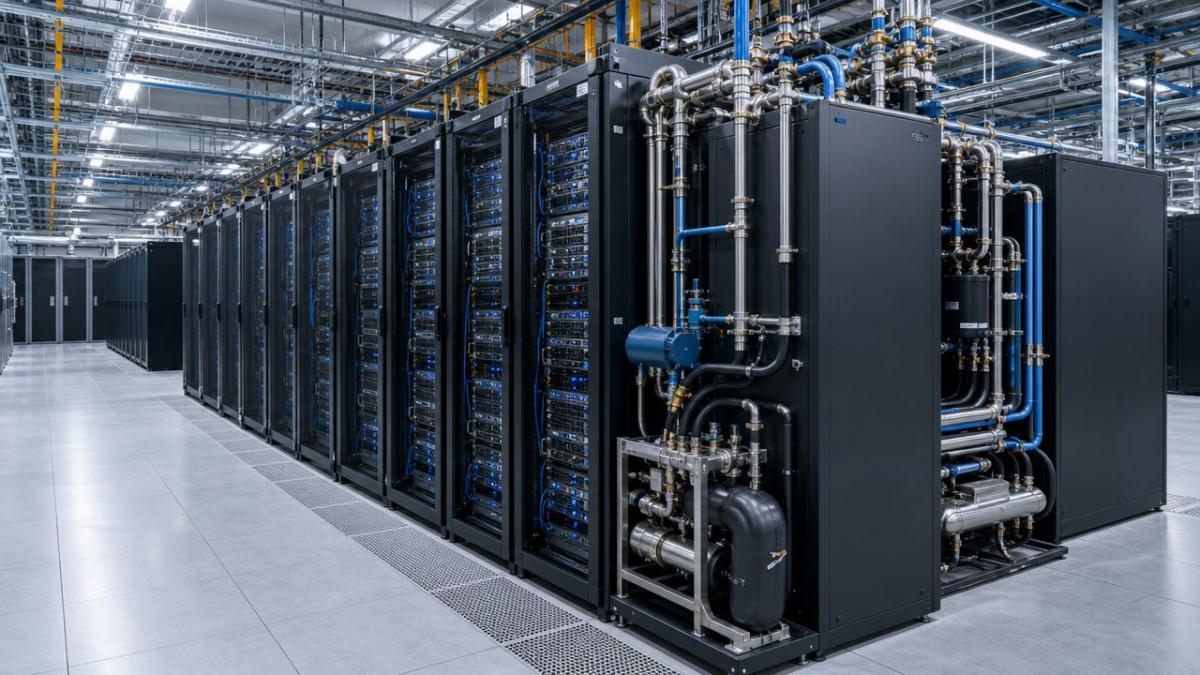
At a basic level, data center cooling trends 2026 describe the industry transition from legacy room-based cooling to workload-aware, high-density thermal management. Traditional computer room air conditioners and raised-floor distribution remain viable for many standard IT loads, but they face limitations as rack densities climb from 5-15 kW toward 30 kW, 50 kW, or even higher in AI clusters. Air is still useful, yet it is no longer sufficient as the default answer for every deployment model.
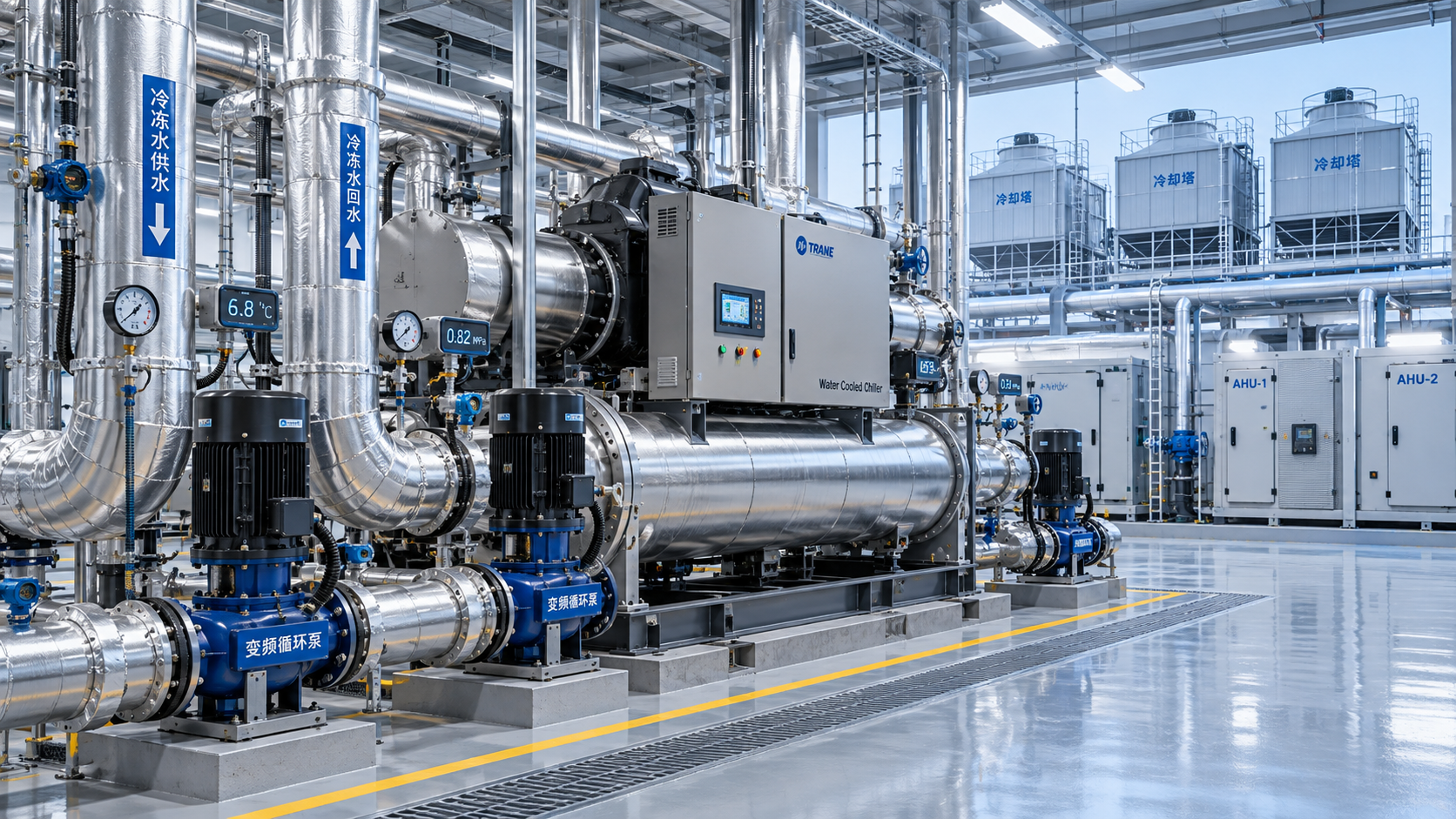
The market is therefore splitting into hybrid architectures. These combine optimized air handling for general white space with direct-to-chip liquid cooling, rear-door heat exchangers, or immersion systems for concentrated heat loads. The most important point is not that air disappears in 2026, but that thermal design becomes zoned, modular, and application specific. This is why discussions around data center cooling trends 2026 often include mechanical redundancy, water treatment quality, leak detection, controls integration, and digital twins alongside cooling hardware itself.
From an engineering perspective, the transition is driven by thermodynamic efficiency. Liquids transport heat far more effectively than air, allowing heat to be removed closer to the source with less fan energy and lower spatial penalty. From an operational perspective, the transition is driven by business continuity: denser compute must run reliably without forcing expensive overbuild across the entire facility.
Industry Signals Shaping the Shift from Air to Liquid
Several converging signals explain why data center cooling trends 2026 are accelerating across the broader industrial and digital infrastructure landscape. These signals affect both new builds and retrofit programs:
- AI and accelerated computing growth: GPU-rich racks generate sustained thermal loads that exceed practical air-cooling limits in many environments.
- Energy efficiency pressure: Operators are under tighter scrutiny on PUE, water usage effectiveness, and carbon intensity.
- Space utilization constraints: Higher compute density is often necessary where floor expansion is slow, costly, or impossible.
- ESG and disclosure requirements: Thermal systems are now examined through both operational and reporting lenses.
- Cooling resilience expectations: Precision monitoring, containment, and fault isolation are becoming standard design expectations.
- Supply chain standardization: More OEMs are shipping liquid-ready IT equipment, manifolds, CDU options, and compatible controls.
These developments have pushed data center cooling trends 2026 into a more mature decision framework. Cooling selection is no longer based solely on lowest first cost. It is increasingly evaluated through lifecycle energy, thermal headroom, retrofit feasibility, maintainability, regulatory alignment, and cross-system interoperability.
Business Value of Data Center Cooling Trends 2026
The practical value behind data center cooling trends 2026 lies in achieving more compute per square meter without undermining reliability. In many facilities, air-only systems require larger fan power, more aggressive aisle containment, and stricter room-level airflow balancing as density rises. That can increase complexity while still leaving thermal bottlenecks unresolved. Liquid strategies address the heat where it is generated, which can reduce dependence on high-volume air movement and create a more predictable thermal envelope.
There is also a meaningful financial dimension. Although some liquid cooling implementations carry higher initial integration cost, they may reduce the need for full building expansion, avoid stranded compute capacity, and improve energy performance over time. In sectors where uptime and process continuity are tightly linked to business output, the ability to support denser compute infrastructure can be more valuable than simple equipment cost comparisons.
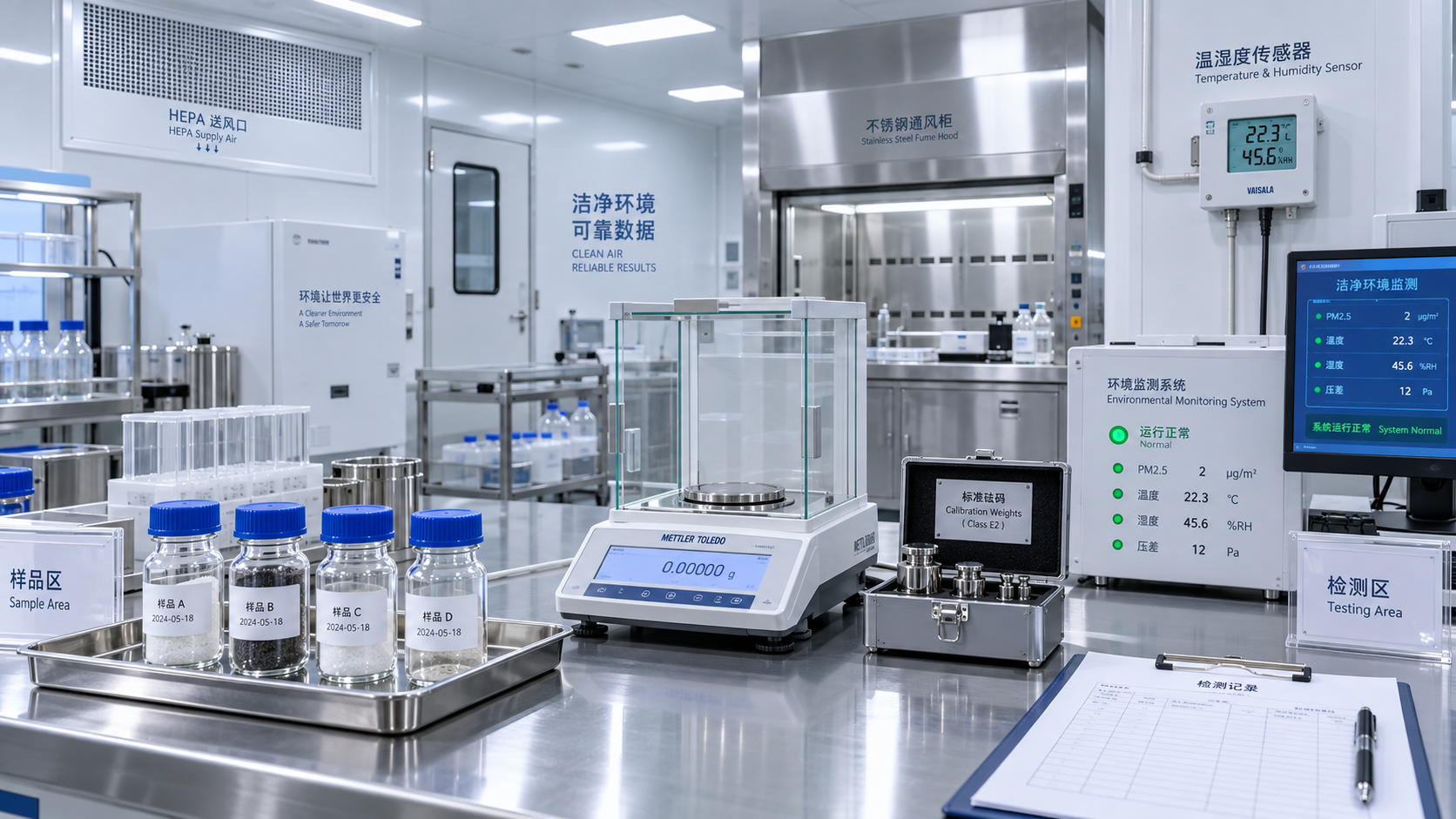
For technically demanding industries, including semiconductor research, pharmaceutical analytics, advanced simulation, and precision manufacturing, the lessons from data center cooling trends 2026 align with broader environmental-control principles: remove variability, monitor continuously, isolate risk, and design systems that remain stable under dynamic load. That is why the conversation increasingly overlaps with precision HVAC, fluid treatment, sensor-rich control layers, and digital performance benchmarking.
Typical Cooling Pathways by Facility Profile
Not every site needs the same thermal architecture. One of the most useful ways to interpret data center cooling trends 2026 is by matching cooling pathways to facility profile, rack density, and operational constraints.
This facility-based view helps avoid a common mistake: treating data center cooling trends 2026 as a single technology verdict. In reality, the strongest designs are often transitional. They keep proven air systems where they still perform well and introduce liquid where thermal intensity justifies it.
Implementation Priorities and Technical Considerations
To turn data center cooling trends 2026 into a workable roadmap, several engineering and governance issues should be assessed early:
- Thermal mapping: Model current and future rack densities rather than sizing to average room load.
- Water loop quality: Fluid cleanliness, corrosion control, and compatibility are essential for long-term reliability.
- Leak detection and isolation: Sensors, drip management, and sectional shutoff strategy must be built into the design.
- Controls integration: Cooling assets should feed into a unified BMS or DCIM layer for real-time visibility and optimization.
- Redundancy logic: N, N+1, or 2N philosophy should be applied to both thermal delivery and supporting fluid infrastructure.
- Standards alignment: Reference recognized frameworks such as ASHRAE guidance and applicable site-specific environmental standards.
Facilities with strict environmental-control expectations can benefit from a methodology similar to other high-performance technical spaces: benchmark actual operating conditions, define narrow acceptable ranges, and use sensor-rich feedback loops to prevent drift. That disciplined approach is central to the success of data center cooling trends 2026, especially when liquid systems are introduced into environments historically designed around air.
Next-Step Planning for 2026 Cooling Decisions
A sensible response to data center cooling trends 2026 starts with an evidence-based review of thermal risk, energy use, and capacity plans. First, identify which racks or zones are expected to exceed practical air-cooling thresholds over the next 24 to 36 months. Second, compare retrofit options such as containment upgrades, rear-door exchangers, direct liquid cooling, and partial hall redesign. Third, evaluate infrastructure dependencies including chilled water plant capability, water treatment, controls, and maintenance readiness.
Where possible, pilot the target architecture in a limited but operationally representative zone. That reveals real integration issues around service access, alarms, fluid balancing, and failover procedures before broader deployment. It also generates the performance data needed for internal approval, ESG documentation, and lifecycle cost modeling.
Ultimately, data center cooling trends 2026 point to a future in which cooling is more precise, more segmented, and more tightly linked to workload behavior. Air remains part of the picture, but liquid is becoming the defining tool for high-density resilience and efficiency. Organizations that prepare early with hybrid-ready design principles, monitored fluid infrastructure, and standards-based environmental control will be better positioned to scale compute without sacrificing uptime, compliance, or operating discipline.
Get weekly intelligence in your inbox.
No noise. No sponsored content. Pure intelligence.
 Oct 21, 2026How often is cleanroom certification required under ISO 14644-2?Cleanroom Certification is generally recommended annually under ISO 14644-2. Learn when risk-based extensions apply and which changes trigger earlier testing to plan with confidence.
 Oct 21, 2026FASEB Comments on NIH Draft Policy for Research Involving BiohazardsFASEB comments on NIH’s draft biohazard research policy call for risk-based biosafety oversight. Explore potential implications for laboratories, suppliers, and compliance teams.
 Oct 20, 2026How to disinfect ultrasound machines without damaging surfacesLearn how to disinfect ultrasoundmachines without surface damage. Explore compatible products, wet contact times, and probe care to protect patients and equipment.
 Oct 20, 2026Ultrapure Water in Semiconductor Manufacturing: Reuse and Quality Control InsightsExplore ultrapure water reuse in semiconductor manufacturing, key UPW quality benchmarks and analytical insights to help evaluate suppliers and protect process purity.
 Oct 19, 2026How cooling affects warpage in injection-molded consumer electronics housingsOptimize plastic injection molding for consumer electronics with cooling strategies to reduce housing warpage and improve assembly fit. Discover practical checks for stable, efficient production.
 Oct 18, 2026Can air leaks prevent a dehumidifier from holding its target dew point?Why can't our dehumidifier maintain the target dew point? Discover how air leaks increase moisture loads, spot hidden faults, and find practical fixes to restore reliable dew-point control.
 Oct 17, 2026How semiconductor process water treatment removes trace organicsSee how semiconductor process water treatment removes trace organics with RO, UV oxidation, and polishing. Learn how TOC monitoring helps verify purity and pinpoint contamination.
 Oct 16, 2026How to choose ultra pure water piping materials to limit leachingChoose ultra pure water piping with confidence. Compare PVDF, PFA, and stainless steel, assess leaching risks, and learn how to qualify your system for reliable purity.
 Oct 15, 2026How to size a skid-mounted deionized water system for peak demandCompare deionized water systems skid configurations for peak demand. Learn how to balance production, storage, and pump capacity to prevent shortages and avoid costly oversizing.
 Oct 14, 2026When is collaborative laboratory robotics suitable for sample sorting?Explore when collaborative laboratory robotics suits sample sorting. Discover key checks for safety, traceability, container compatibility, and throughput before choosing your solution.
 Oct 13, 2026How sandwich panel joints affect airtightness in cleanroom systemsCleanroom Systems sandwich panels need reliable joints for airtightness. Discover how gaskets, sealants, and testing help reduce leakage and protect cleanroom pressure control.
 Oct 12, 2026How to verify USP compliance for ultra pure water systemsUltra Pure Water Systems USP compliance: learn how to verify water quality, sampling, sanitization, trends, and validation controls at every point of use.
 Oct 11, 2026How tight temperature control prevents cleanroom process driftCleanroom process temperature control systems prevent costly drift by stabilizing critical conditions, improving repeatability, and protecting sensitive production workflows.
 Oct 10, 2026When does organic contaminant removal require TOC treatment?Organic contaminant removal requires TOC treatment when dissolved organics threaten product quality, equipment reliability, or process control. Learn how to assess risks and choose the right solution.
 Oct 08, 2026What affects lead times for sheet metal bending services in Canada?Sheet metal bending services Canada: discover how material supply, tooling, tolerances, finishing, documentation, and freight affect lead times for reliable project delivery.
 Oct 07, 2026How HVAC design for semiconductor fabs prevents airborne contaminationHVAC design for semiconductor fabs prevents airborne contamination through advanced filtration, pressure cascades, airflow control, and real-time monitoring. Explore key strategies for cleaner, more reliable wafer production.
 Oct 06, 2026How photovoltaic modules waterproof technology prevents moisture damagephotovoltaic modules waterproof technology prevents moisture damage with durable seals, drainage, and junction-box protection. Explore practical selection and testing insights.
 Oct 05, 2026How ISO 14644 Europe requirements affect cleanroom qualificationISO 14644 Europe requirements shape cleanroom qualification, from particle classification and recovery testing to monitoring, GMP alignment, and change control.
 Oct 04, 2026How to assess a pharmaceutical cleanroom solutions supplier’s ISO capabilityPharmaceutical Cleanroom Solutions supplier assessment guide: evaluate ISO 14644 capability, validation evidence, airflow design, documentation, and long-term GMP readiness.
 Oct 03, 2026What EU standards govern the design of BSL-3 laboratories in Europe?BSL-3 laboratories Europe: explore EU directives, EN standards, HVAC containment, commissioning, and practical design strategies for compliant, resilient high-containment facilities.
 Oct 02, 2026How EN 1822 defines HEPA filtration efficiency for cleanroomsHEPA filtration EN 1822 explained: learn how MPPS testing, local leakage limits, and filter classes support reliable cleanroom decisions.
 Oct 01, 2026How pharmaceutical process water systems control microbial riskProcess water systems pharmaceutical teams rely on can control microbial risk through hygienic design, monitoring, and validated sanitization. Explore practical compliance strategies.
 Sep 30, 2026When does a negative pressure laboratory need BSL-3 containment?Negative pressure laboratory or BSL-3? Discover the risk factors, engineering controls, and containment requirements needed for safe, compliant laboratory planning.
 Sep 29, 2026How to evaluate a TOC-zero water treatment supplier for UPW systemsChoose a TOC-zero water treatment supplier with confidence. Compare UPW performance, monitoring, validation, materials, service capability, and lifecycle cost.
 Sep 28, 2026What drives sustainable cooling cost in high-precision facilities?Sustainable cooling cost in high-precision facilities depends on thermal stability, energy, water, controls, and resilience. Explore smarter lifecycle strategies.
 Sep 27, 2026How to compare freight forwarding services for time-critical shipmentsCompare freight forwarding services for time-critical shipments with practical insights on routing, customs, visibility, specialized handling, and contingency planning.
 Sep 26, 2026How environmental integrity in laboratories supports reliable test resultsEnvironmental Integrity in laboratories safeguards samples, instruments, and staff. Discover practical controls for contamination, monitoring, and reliable test results.