How tight temperature control prevents cleanroom process drift
How Tight Temperature Control Prevents Cleanroom Process Drift
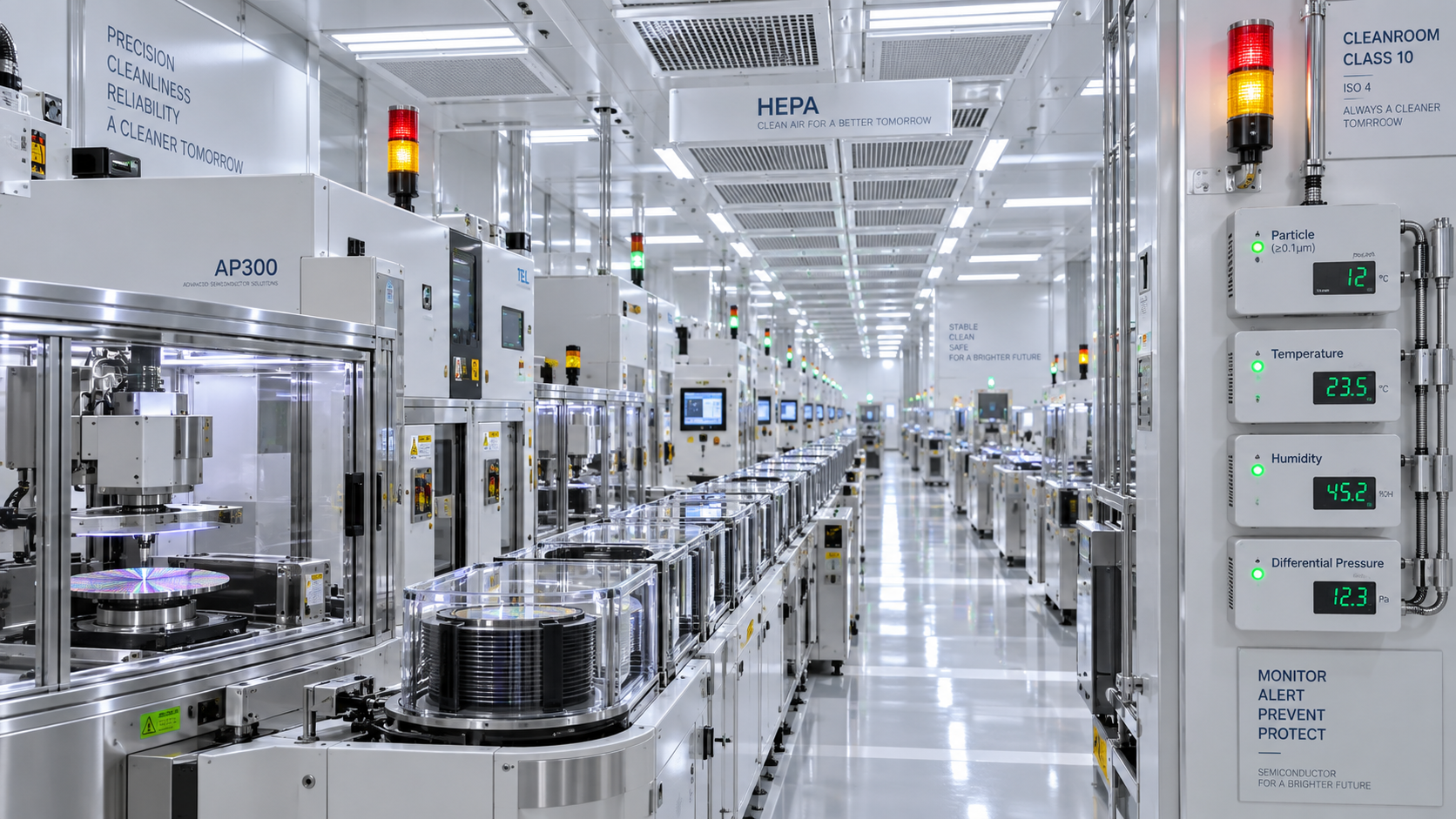
A cleanroom can meet its particle-count target and still deliver inconsistent process results. This is one of the more expensive misunderstandings in controlled-environment design. Air cleanliness, pressure cascade, humidity, and airflow uniformity remain essential, but temperature stability often determines whether those controls translate into repeatable production.
Process drift is rarely caused by one dramatic thermal event. More often, it develops through small, recurring deviations: a supply-air reset that lags behind a production load change, a perimeter zone that warms under solar gain, a tool cluster that rejects more heat during a high-throughput shift, or a chilled-water loop that oscillates around its setpoint. Individually, these deviations may appear minor. Across sensitive lithography, metrology, coating, fill-finish, cell-culture, or quantum-device workflows, they can alter material behavior, measurement repeatability, alignment conditions, and operator-dependent outcomes.
For technical evaluators, cleanroom process temperature control systems should therefore be assessed as precision infrastructure rather than conventional comfort HVAC. The central question is not simply whether a room can reach a nominal temperature. It is whether the facility can hold the required thermal condition at the locations, timescales, and operating states that matter to the process.
Temperature Drift Is a Process Variable, Not Just a Facilities Issue
Temperature affects nearly every physical system inside a high-specification cleanroom. Materials expand and contract. Liquid viscosity changes. Chemical reaction rates can shift. Sensors may move from their calibrated operating condition. Machine frames, optical paths, masks, wafers, substrates, fixtures, and probes respond at different rates because they have different thermal masses and coefficients of expansion.
The result is often a mismatch between what the building automation system reports and what the process experiences. A wall-mounted room sensor can show an acceptable average while a metrology tool, a process bath, or a work surface is exposed to a local gradient. That distinction is particularly important where critical dimensions, overlay, gravimetric dosing, high-resolution imaging, or biological viability are sensitive to the surrounding environment.
Thermal drift can also create secondary contamination and control problems. A warm surface may promote local convection, disturbing the intended airflow pattern. Temperature differences across enclosure surfaces can influence condensation risk when dew-point margins are narrow. Changes in air temperature affect density and can alter air-distribution behavior, especially in rooms relying on carefully balanced unidirectional flow. In facilities with tightly coupled humidity requirements, a temperature correction can also unintentionally change relative humidity unless the control sequence coordinates sensible and latent loads.
This is why “within setpoint” is not always an adequate acceptance criterion. A control strategy must consider mean temperature, spatial uniformity, short-term fluctuation, recovery after disturbance, and the location of measurement. The appropriate tolerance is process-specific. A general manufacturing cleanroom and a precision optical or semiconductor environment should not be evaluated against the same thermal-control expectation merely because both are classified cleanrooms.
Where Drift Usually Enters the System
Most temperature instability is not caused by a single failed component. It emerges at the interface between thermal loads, air distribution, control logic, and operational behavior. A technically sound review starts by identifying those interfaces.
- Variable process loads: Tools do not always reject heat at their nameplate value. Production recipes, standby modes, plasma systems, pumps, vacuum equipment, ovens, and local exhaust operation can change the room load rapidly.
- Airside control interaction: Outside-air treatment, recirculation airflow, cooling-coil response, reheat, and fan-speed modulation may be controlled by separate loops. Poorly coordinated loops can chase one another rather than stabilize the room.
- Sensor placement and quality: A sensor near a supply diffuser, return grille, exterior wall, heat-generating cabinet, or frequently opened door may represent a local condition rather than the process zone.
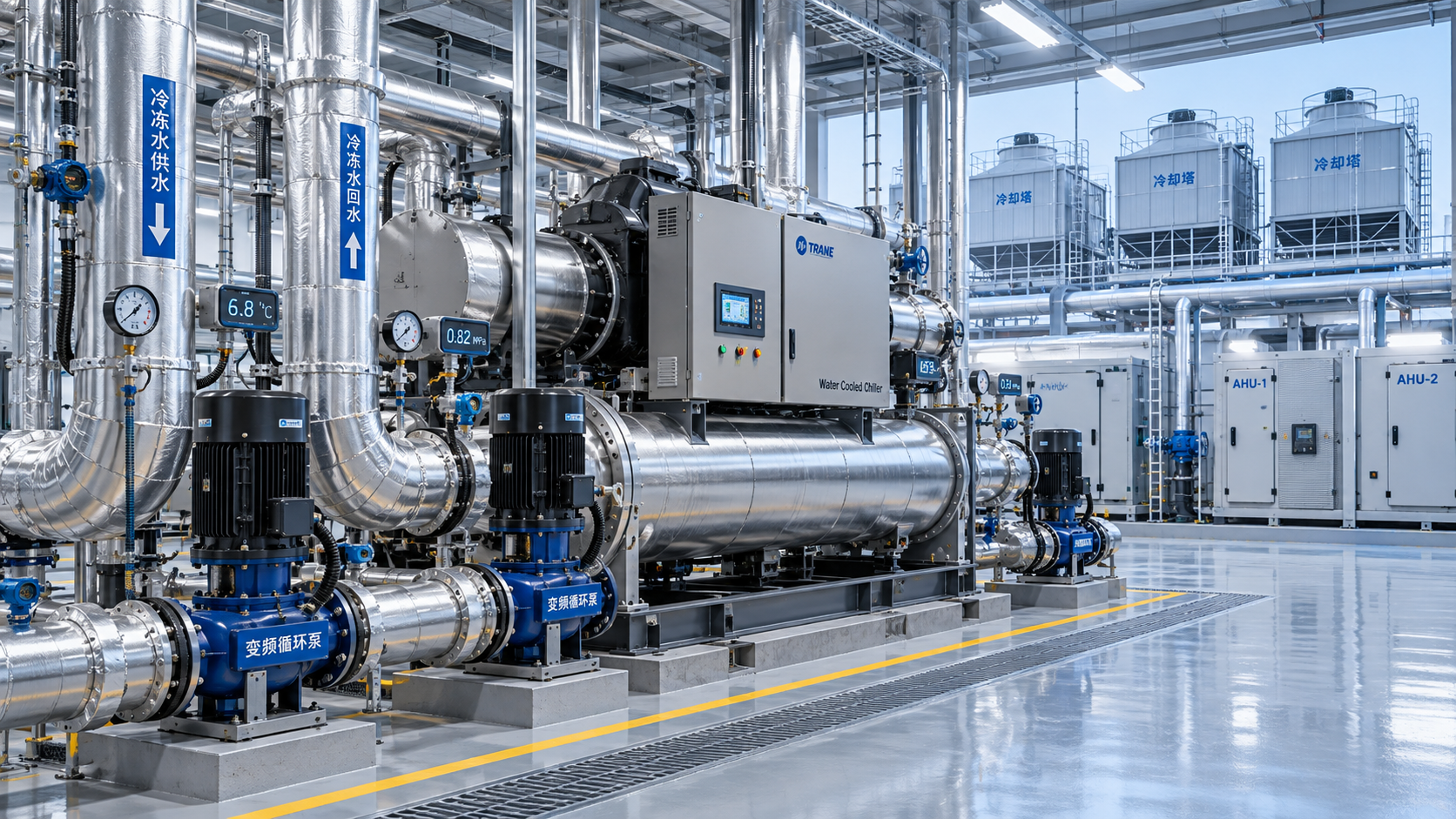
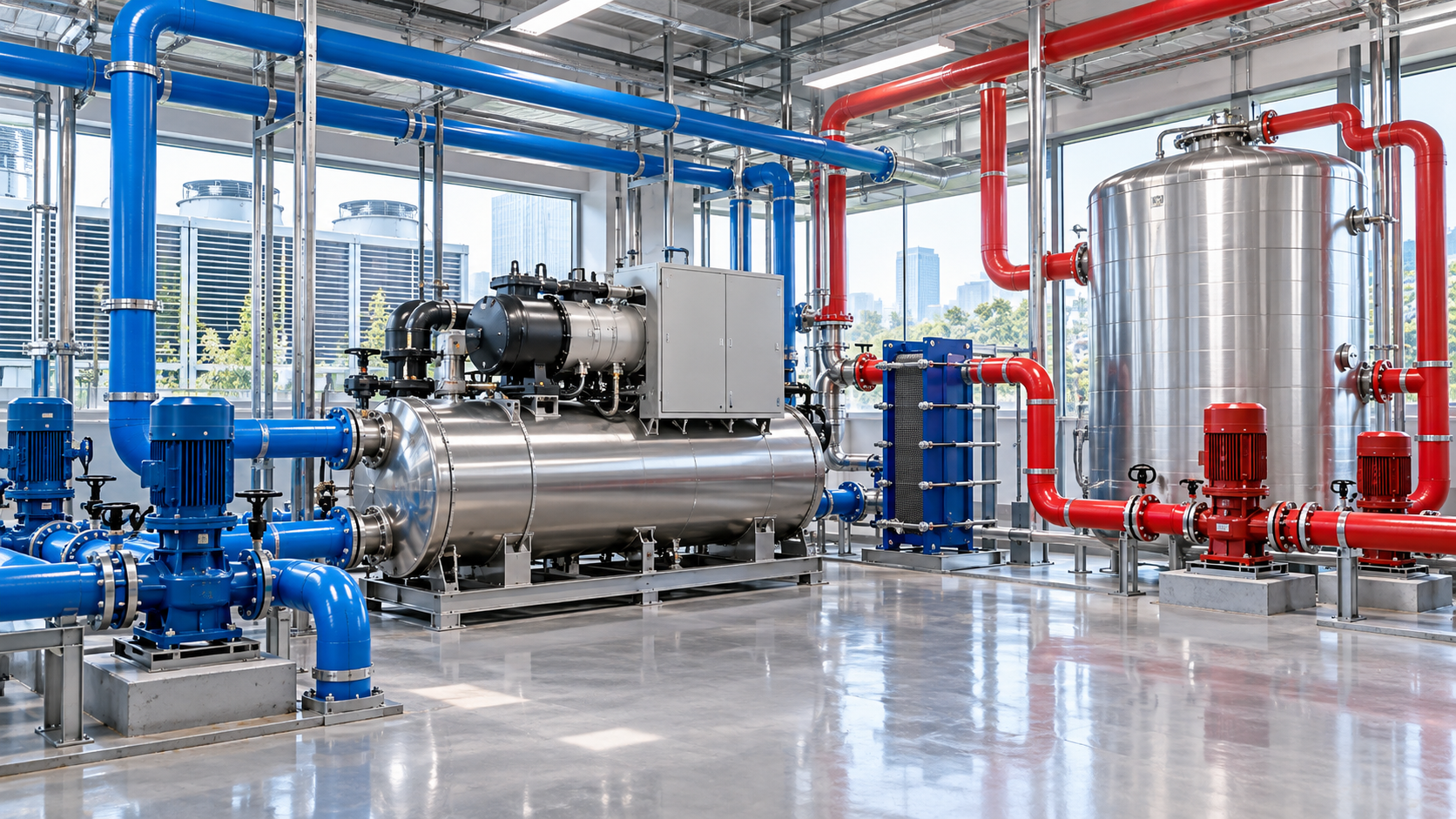
- Hydronic instability: Chilled-water temperature variation, inadequate differential pressure control, valve authority issues, or poorly tuned pumps can appear as unexplained room-temperature hunting.
- Envelope and adjacent-space effects: Solar exposure, unconditioned service chases, loading areas, and neighboring rooms with different setpoints can create persistent perimeter gradients.
- Human and material movement: Door openings, material transfers, maintenance activity, and gowning traffic introduce short-term disturbances that a system must recover from without overcorrection.
In practice, a room that looks stable on a five-minute trend may still be unstable on the timescale relevant to a process. Conversely, an apparently active control loop may be appropriate if it is responding smoothly to genuine production variation. Trend interpretation must be linked to process events, not viewed only as a facilities alarm history.
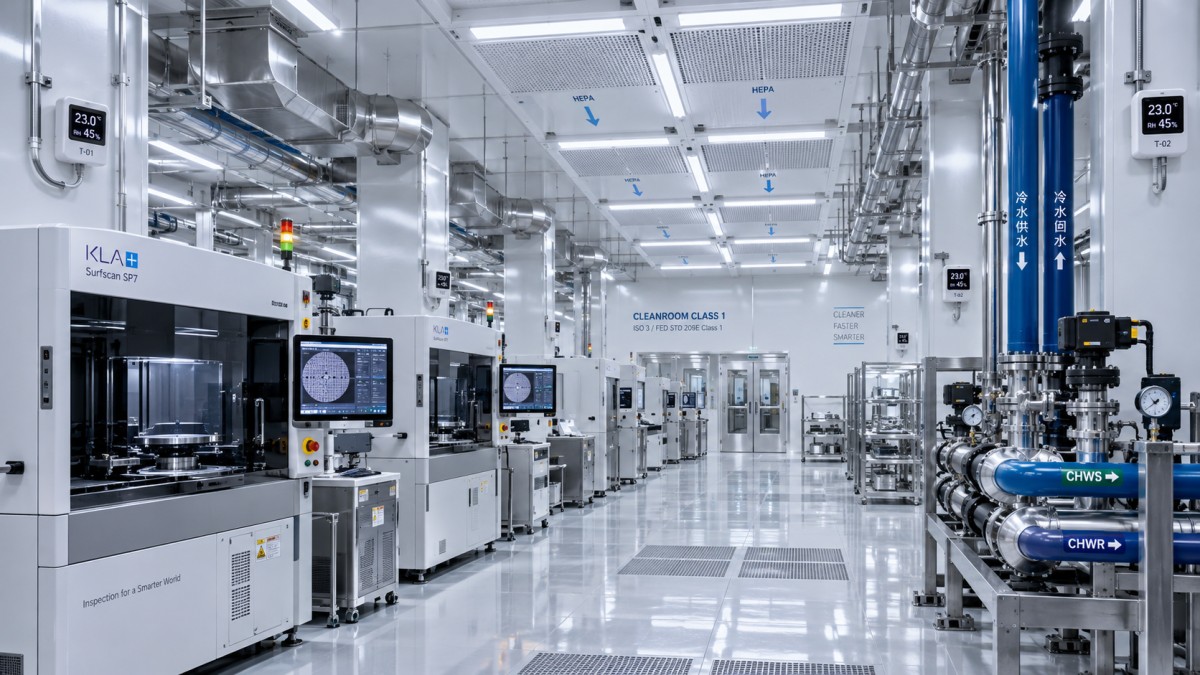
The Difference Between Room Control and Process-Grade Control
A conventional HVAC design often prioritizes occupancy comfort, energy efficiency, and broad room-level conditions. A process-grade cleanroom design begins with a different hierarchy: protect the process condition, maintain contamination-control performance, preserve safety and pressure relationships, then optimize energy use within those constraints.
That does not mean every cleanroom requires extreme precision. It means that the required precision must be explicitly defined, justified, and verified. In some facilities, a relatively broad operating band is acceptable because the product is robust and the room mainly supports cleanliness and operator comfort. In others, the temperature band must be much tighter, possibly with defined limits for local variation and short-duration excursions. G-ICE benchmarking work recognizes this distinction: the thermal requirement should be derived from the process, equipment, and risk profile, rather than copied from a generic cleanroom specification.
The control architecture frequently matters as much as the cooling capacity. Fast or oversized equipment does not automatically produce stable conditions. In fact, excessive control aggressiveness can cause cycling, especially where sensor response is delayed or multiple loops act on the same thermal load. Stable control normally depends on realistic load modeling, appropriate valve and coil selection, sufficient air and water-side authority, carefully commissioned loop tuning, and a clear sequence of operations for normal, reduced-load, upset, and recovery modes.
Standards Set the Context, but They Do Not Replace Process Criteria
Technical evaluators should avoid assuming that a single standard defines all acceptable temperature conditions. ISO 14644 is central to cleanroom classification and ongoing performance considerations, particularly for airborne particle cleanliness. However, its use does not remove the need to establish project-specific environmental criteria. Temperature limits, monitoring requirements, and qualification methods may also arise from product specifications, equipment supplier requirements, quality systems, biosafety needs, customer protocols, or local regulatory expectations.
ASHRAE guidance is valuable for environmental control, load calculation, psychrometrics, energy considerations, and HVAC design practice. Semiconductor-oriented facilities may also reference applicable SEMI documents, especially where equipment interfaces and facility utilities create shared performance risks. Pharmaceutical and life-science projects may need to align temperature-control decisions with contamination-control strategy, validation expectations, and applicable good manufacturing practice requirements. The governing requirement should always be confirmed for the specific site and product pathway.
A useful specification separates three ideas that are often merged incorrectly: the target setpoint, the permitted operating band, and the measurement uncertainty. If sensor accuracy, calibration interval, mounting method, and data resolution are not defined, a very narrow control band can become more aspirational than verifiable. The same applies to claims of exceptionally fine stability. A stated tolerance has meaning only when the sensor network, sampling method, sensor placement, and test duration support it.
What to Examine During Technical Evaluation
The most revealing questions tend to be practical. Where are the highest heat densities? Which process steps are most sensitive to ambient change? Is the specified temperature measured in supply air, return air, occupied zone, equipment inlet, or at the product? How does the system behave during a utility transition, a tool start-up, a filter loading condition, or a door-opening event?
It is also worth examining whether the design accounts for heat released above the ceiling, below raised floors, or within utility chases. These areas can become hidden thermal reservoirs. A room may be stable during steady production but drift after a maintenance shutdown because plenum temperatures recover more slowly than the occupied zone. Similarly, high recirculation rates can improve mixing but may increase fan heat and complicate the sensible-load balance if not properly modeled.
For demanding facilities, environmental mapping should not be treated as a commissioning formality. It can reveal gradients that normal trend screens conceal. Mapping under representative production loads, rather than only in an empty or lightly loaded room, provides more useful evidence. The same principle applies to recovery testing: the relevant outcome is not merely that temperature returns to setpoint, but how quickly and smoothly it returns without compromising pressure, humidity, airflow, or process continuity.
Digital Monitoring Makes Drift Visible Earlier
Continuous environmental monitoring can shift maintenance from reaction to diagnosis. A well-designed platform does more than issue high-temperature alarms. It can compare zones, identify recurring deviations by shift or recipe, correlate room conditions with chilled-water behavior, and distinguish a true load change from a sensor fault. Trend data becomes more useful when it is contextualized with equipment status, airflow changes, door events, and maintenance activity.
This is one reason G-ICE treats smart environmental monitoring and digital-twin control as connected to, rather than separate from, precision industrial HVAC. The goal is not to create a visually impressive dashboard. It is to build an evidence chain from field measurement to control action and, where appropriate, to process-risk review. In high-value environments, unexplained drift should be traceable rather than accepted as normal variation.
Avoiding the Common Design Trap: Tight Setpoints Without a Stable System
A narrow temperature requirement can be reasonable, but it should never be specified in isolation. Tight tolerances drive implications for sensor calibration, duct insulation, coil control, air-distribution layout, chilled-water stability, redundancy strategy, commissioning duration, and operational discipline. They may also affect energy consumption, particularly when simultaneous cooling and reheat are used to resolve poorly coordinated temperature and humidity control.
The better approach is to establish a thermal budget. Identify how much variation can be tolerated from central plant supply, air-handling response, room distribution, localized equipment heat, sensor uncertainty, and transient disturbances. Then assign responsibility for each portion of that budget. This converts a vague demand for “stable temperature” into an engineering basis that can be designed, tested, and maintained.
Before approving a solution, technical teams should request a clear control narrative, sensor schedule, points list, representative sequences of operation, and commissioning plan. They should also ask how the system will perform when one component is unavailable or when the process load changes outside the nominal design case. A design that works only at one steady-state condition is not a resilient cleanroom environment.
A More Defensible Basis for Cleanroom Stability
Tight temperature control prevents process drift because it reduces one of the most persistent sources of hidden variability. It protects dimensional stability, supports repeatable material behavior, preserves the operating assumptions of sensitive tools, and helps maintain balanced contamination-control conditions. But the value comes from disciplined integration, not from a setpoint written on a control screen.
When reviewing cleanroom process temperature control systems, start with the process sensitivity and work outward through measurement, airflow, hydronics, controls, utilities, and verification. Benchmarking against ISO 14644, relevant ASHRAE guidance, applicable SEMI expectations, and project-specific quality requirements can provide structure, but the final criterion must remain tied to actual process risk. That is the point at which environmental control stops being a building service and becomes a measurable part of production assurance.
Get weekly intelligence in your inbox.
No noise. No sponsored content. Pure intelligence.
 Oct 11, 2026How tight temperature control prevents cleanroom process driftCleanroom process temperature control systems prevent costly drift by stabilizing critical conditions, improving repeatability, and protecting sensitive production workflows.
 Oct 10, 2026When does organic contaminant removal require TOC treatment?Organic contaminant removal requires TOC treatment when dissolved organics threaten product quality, equipment reliability, or process control. Learn how to assess risks and choose the right solution.
 Oct 08, 2026What affects lead times for sheet metal bending services in Canada?Sheet metal bending services Canada: discover how material supply, tooling, tolerances, finishing, documentation, and freight affect lead times for reliable project delivery.
 Oct 07, 2026How HVAC design for semiconductor fabs prevents airborne contaminationHVAC design for semiconductor fabs prevents airborne contamination through advanced filtration, pressure cascades, airflow control, and real-time monitoring. Explore key strategies for cleaner, more reliable wafer production.
 Oct 06, 2026How photovoltaic modules waterproof technology prevents moisture damagephotovoltaic modules waterproof technology prevents moisture damage with durable seals, drainage, and junction-box protection. Explore practical selection and testing insights.
 Oct 05, 2026How ISO 14644 Europe requirements affect cleanroom qualificationISO 14644 Europe requirements shape cleanroom qualification, from particle classification and recovery testing to monitoring, GMP alignment, and change control.
 Oct 04, 2026How to assess a pharmaceutical cleanroom solutions supplier’s ISO capabilityPharmaceutical Cleanroom Solutions supplier assessment guide: evaluate ISO 14644 capability, validation evidence, airflow design, documentation, and long-term GMP readiness.
 Oct 03, 2026What EU standards govern the design of BSL-3 laboratories in Europe?BSL-3 laboratories Europe: explore EU directives, EN standards, HVAC containment, commissioning, and practical design strategies for compliant, resilient high-containment facilities.
 Oct 02, 2026How EN 1822 defines HEPA filtration efficiency for cleanroomsHEPA filtration EN 1822 explained: learn how MPPS testing, local leakage limits, and filter classes support reliable cleanroom decisions.
 Oct 01, 2026How pharmaceutical process water systems control microbial riskProcess water systems pharmaceutical teams rely on can control microbial risk through hygienic design, monitoring, and validated sanitization. Explore practical compliance strategies.
 Sep 30, 2026When does a negative pressure laboratory need BSL-3 containment?Negative pressure laboratory or BSL-3? Discover the risk factors, engineering controls, and containment requirements needed for safe, compliant laboratory planning.
 Sep 29, 2026How to evaluate a TOC-zero water treatment supplier for UPW systemsChoose a TOC-zero water treatment supplier with confidence. Compare UPW performance, monitoring, validation, materials, service capability, and lifecycle cost.
 Sep 28, 2026What drives sustainable cooling cost in high-precision facilities?Sustainable cooling cost in high-precision facilities depends on thermal stability, energy, water, controls, and resilience. Explore smarter lifecycle strategies.
 Sep 27, 2026How to compare freight forwarding services for time-critical shipmentsCompare freight forwarding services for time-critical shipments with practical insights on routing, customs, visibility, specialized handling, and contingency planning.
 Sep 26, 2026How environmental integrity in laboratories supports reliable test resultsEnvironmental Integrity in laboratories safeguards samples, instruments, and staff. Discover practical controls for contamination, monitoring, and reliable test results.
 Sep 25, 2026Healthcare trends reshaping laboratory automation investmentHealthcare Trends are reshaping laboratory automation investment. Explore how resilient infrastructure, data integrity, and smart monitoring improve scalable performance.
 Sep 24, 2026When chemical wastewater treatment systems need zero-liquid dischargeWastewater treatment systems for chemicals: learn when zero-liquid discharge reduces risk, recovers water, and supports resilient chemical operations.
 Sep 23, 2026How regulatory frameworks documentation supports audit-ready carbon trackingRegulatory Frameworks documentation creates audit-ready carbon tracking with traceable evidence, controlled methods, and compliant operational decisions.
 Sep 22, 2026How cleanroom architecture controls contamination risks in pharma productionCleanroom Architecture for pharmaceutical production: discover how airflow zoning, pressure cascades, cleanable finishes, and separated flows reduce contamination risks and strengthen GMP compliance.
 Sep 21, 2026What ultra pure water specifications matter most in Middle East projects?Ultra pure water Middle East projects demand resilient specifications. Explore point-of-use quality, feedwater variability, heat control, monitoring, and reliable distribution design.
 Sep 20, 2026How Process Environment Control systems prevent airborne contaminationProcess Environment Control systems prevent airborne contamination through managed airflow, pressure, filtration, and monitoring. Discover practical strategies for safer, compliant operations.
 Sep 19, 2026When does heat recovery make sustainable cooling worth the investment?Sustainable cooling technology heat recovery: learn when reliable heat demand, temperature matching, and lifecycle savings make recovery a smart investment.
 Sep 18, 2026How to set alarm limits for semiconductor cleanroom monitoringSemiconductor cleanroom monitoring: learn how to set risk-based alarm limits for particles, humidity, pressure, and airflow to protect yield and reduce nuisance alerts.
 Sep 17, 2026How plastic injection molding affects ESD protection in cleanroomsPlastic injection molding affects ESD protection in cleanrooms. Learn how resin choice, molding consistency, grounding, and particle control support reliable compliance.
 Sep 16, 2026What to verify before choosing an industrial air quality monitoring supplierIndustrial air quality monitoring supplier checklist: verify measurement accuracy, calibration traceability, data integration, compliance support, and lifecycle service before you buy.
 Sep 15, 2026Smart HVAC investment insights for North American heat recovery projectsSmart HVAC investment insights North America: evaluate heat recovery, lifecycle costs, controls, and performance for resilient project decisions.
 Sep 14, 2026How SEMI standards shape water treatment design for semiconductor fabsSemiconductor water treatment SEMI guidance shapes resilient UPW design, contamination control, monitoring, reclaim strategy, and fab-ready validation.