What drives sustainable cooling cost in high-precision facilities?
The sustainable cooling cost of a high-precision facility is set by the interaction between thermal stability requirements and the operating conditions needed to maintain them. The purchase price of a chiller, cooling tower, dry cooler, or air-handling unit is visible at approval stage, yet it is often a smaller part of the economic exposure than electricity, water treatment, maintenance access, process interruption, and the capacity held in reserve for abnormal conditions.
A facility maintaining tight temperature control for lithography, metrology, sterile production, analytical laboratories, or quantum research cannot be evaluated like a conventional comfort-cooling project. A modest average load can still require expensive infrastructure when the allowable temperature drift is narrow, humidity must remain controlled, heat rejection is constrained, or a short excursion can invalidate product, data, or qualification status. Sustainable cooling cost therefore reflects the cost of delivering the required condition reliably over time, with the least avoidable use of energy, water, materials, and emergency intervention.
Start with the temperature band, not the nameplate capacity
Cooling capacity is frequently treated as the primary procurement metric because it is easy to compare. It is not sufficient for a precision environment. Two systems with the same nominal capacity can have very different annual cost because their actual part-load behavior, control resolution, chilled-water temperature range, and response to process swings differ.
The first distinction is between space cooling and process cooling. Space cooling mainly offsets envelope heat gain, occupants, lighting, and ventilation air. Process cooling must often absorb highly variable loads from tools, lasers, vacuum equipment, power electronics, cleanroom fan systems, or chemical processes. When these loads are combined on one loop without careful hydraulic and control design, fast process changes can appear as supply-temperature instability across the wider facility. The resulting response may be unnecessary chiller loading, reheat, valve hunting, or a need to operate at a colder leaving-water temperature than the process itself requires.
A narrower temperature tolerance does not automatically justify a lower chilled-water setpoint. Lowering the setpoint increases compressor lift and can reduce chiller efficiency, while also raising the risk of condensation at coils, piping, valves, and poorly insulated connections. The correct question is whether each load truly needs low-temperature water, or whether stable delivery at a higher temperature can meet the process condition. Separating low-temperature loads from medium-temperature loads can reduce lifetime energy demand even when the initial pipework and controls are more involved.
The energy model must represent real operating hours
Annual energy expense is driven less by full-load efficiency than by the hours spent at partial load, the local climate, and the way auxiliary equipment is sequenced. High-precision facilities often operate continuously, but their cooling profile is rarely flat. Tool utilization changes, cleanroom airflow may be reduced during limited occupancy periods, seasonal wet-bulb conditions alter tower performance, and redundancy capacity can leave installed equipment lightly loaded for long periods.
Part-load performance must be reviewed together with pumps, cooling-tower fans, dry-cooler fans, heat exchangers, and air-side equipment. A high-efficiency chiller does not guarantee a low system cost if constant-speed pumps maintain excessive differential pressure or if tower fans run without a control strategy tied to condenser-water conditions. Conversely, aggressive fan-energy reduction can raise condensing temperature and force compressors to work harder. The lowest-cost operating point comes from coordinated control of the whole heat-rejection chain, not from optimizing one device in isolation.
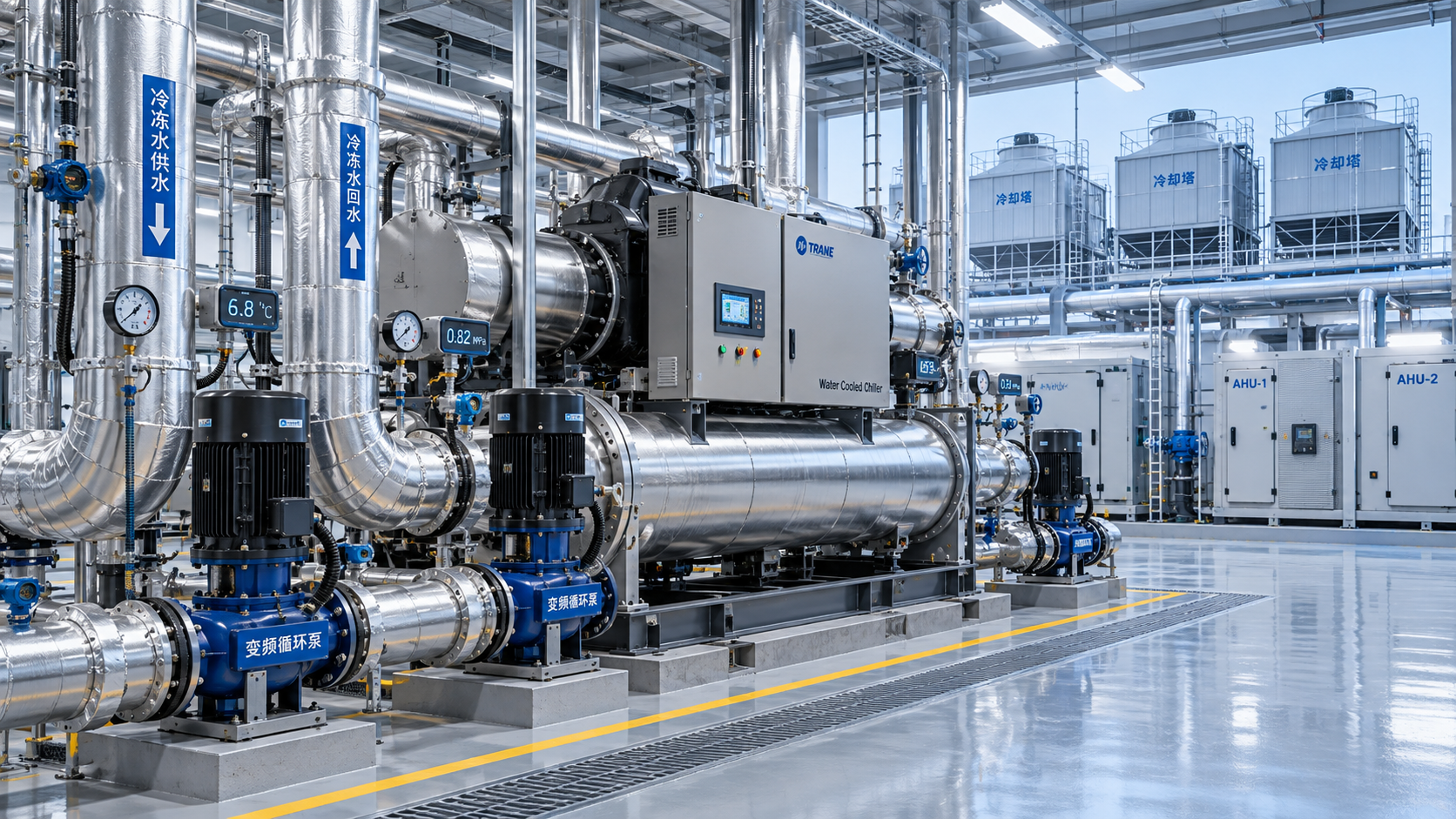
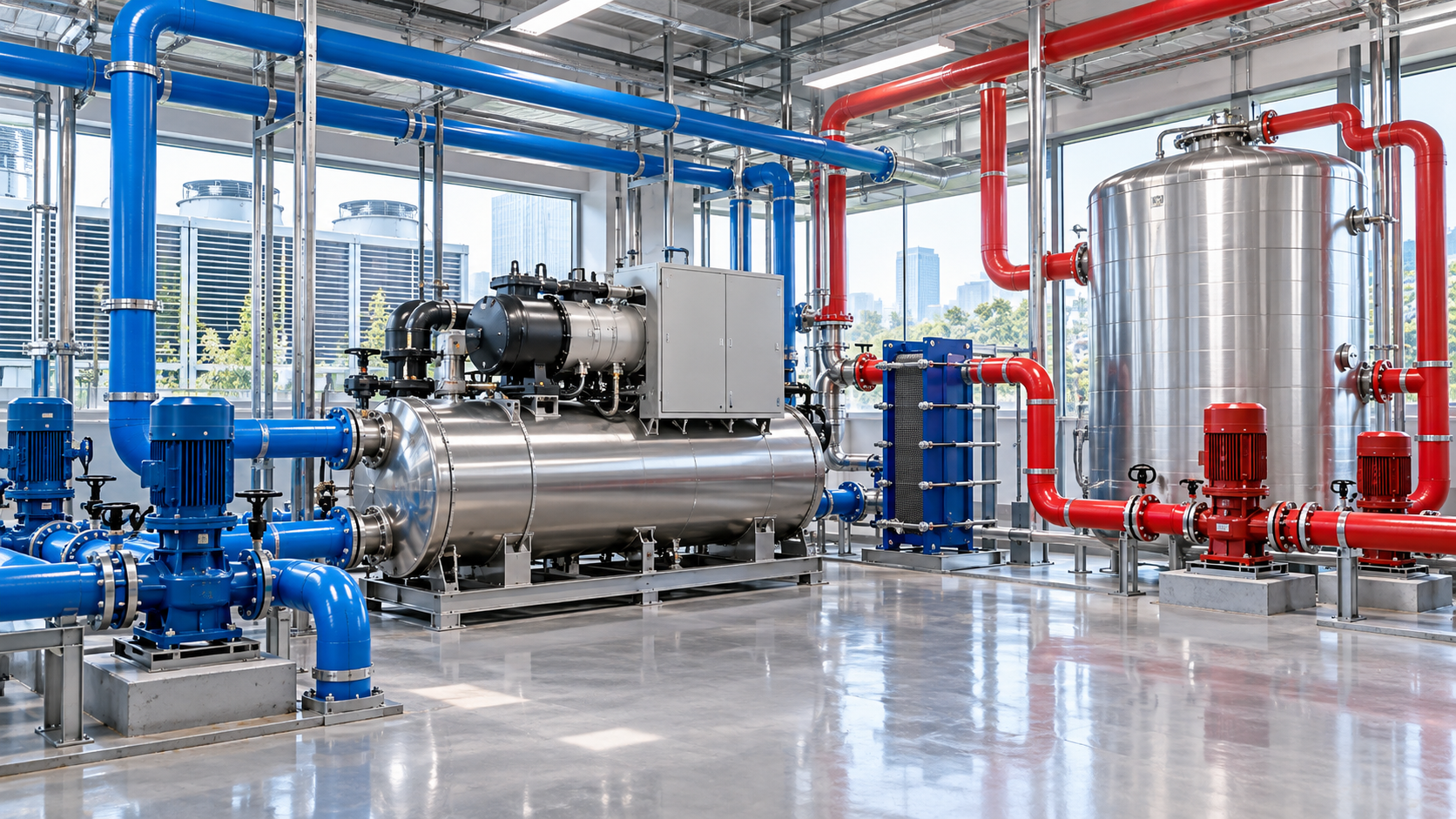
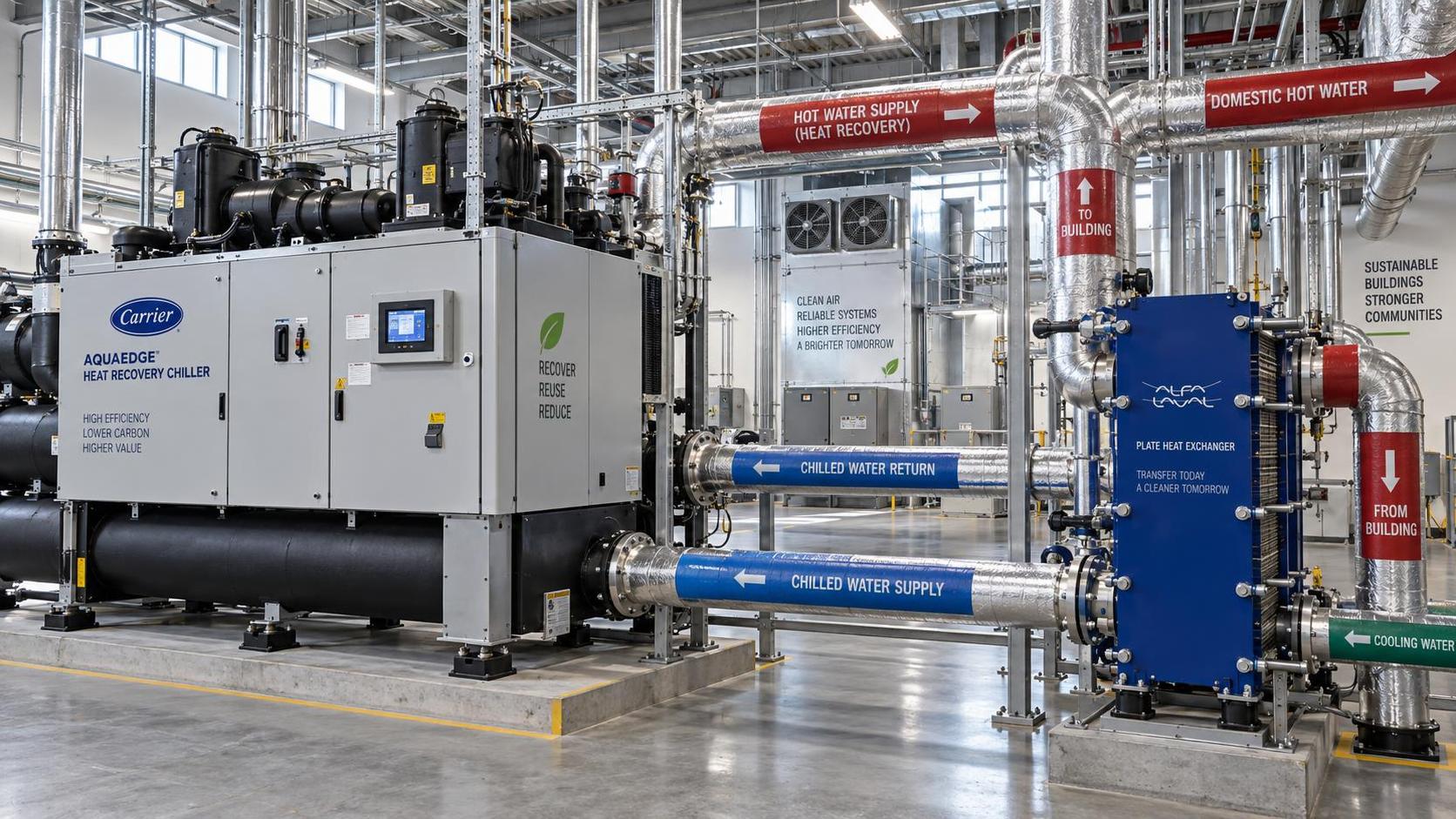
Climate hours deserve the same attention as design-day conditions. Air-cooled equipment avoids cooling-tower water use and some water-treatment obligations, but it may consume more electricity during hot ambient periods. Water-cooled chillers can offer favorable compressor conditions where tower operation is practical, while introducing evaporation, blowdown, chemical treatment, drift management, basin hygiene, freeze protection, and water-quality monitoring. Dry or adiabatic cooling can be attractive where water availability is limited, but adiabatic media, pumps, seasonal maintenance, and local water constraints belong in the comparison.
Water is a costed utility, not a side calculation
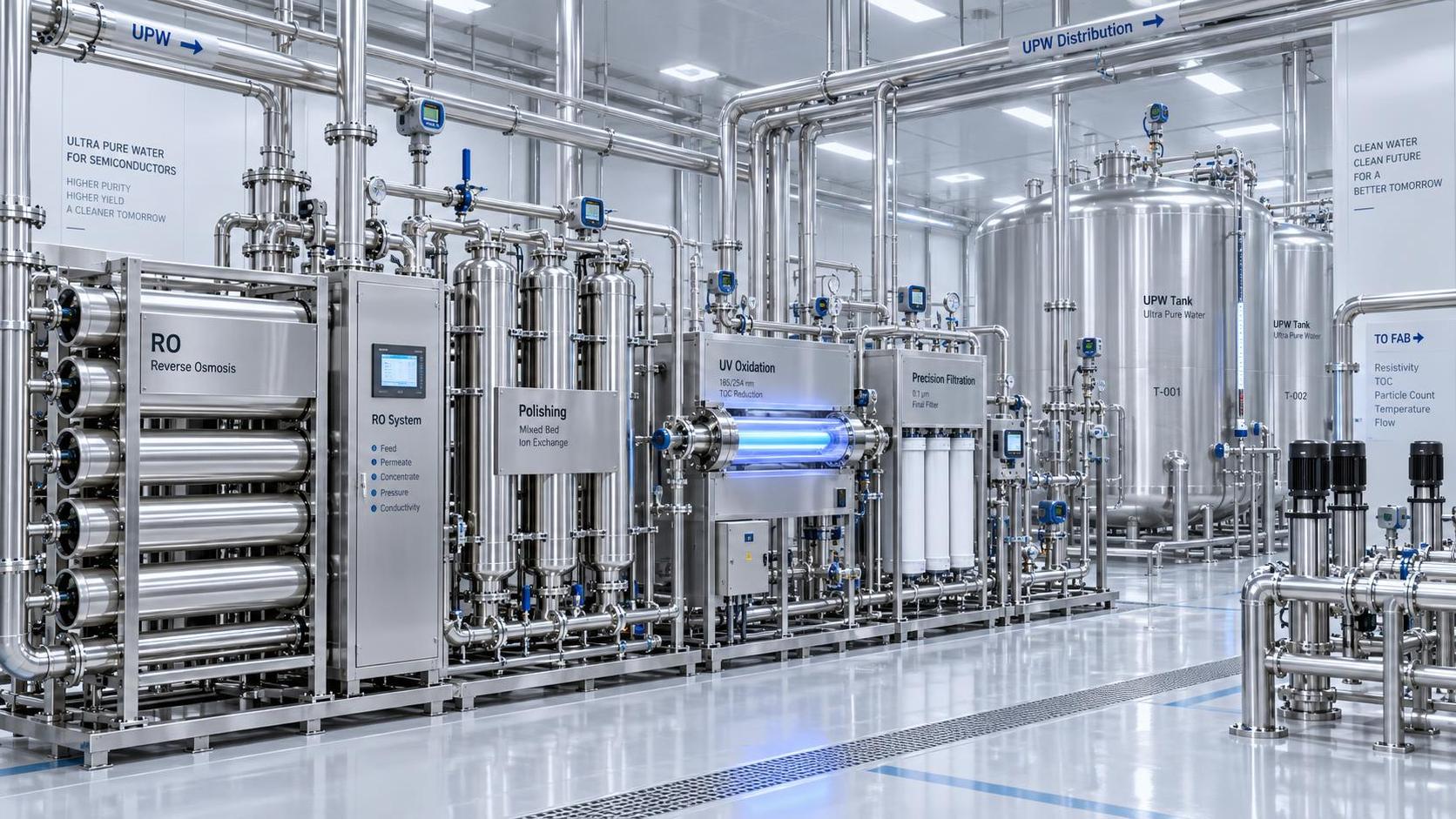
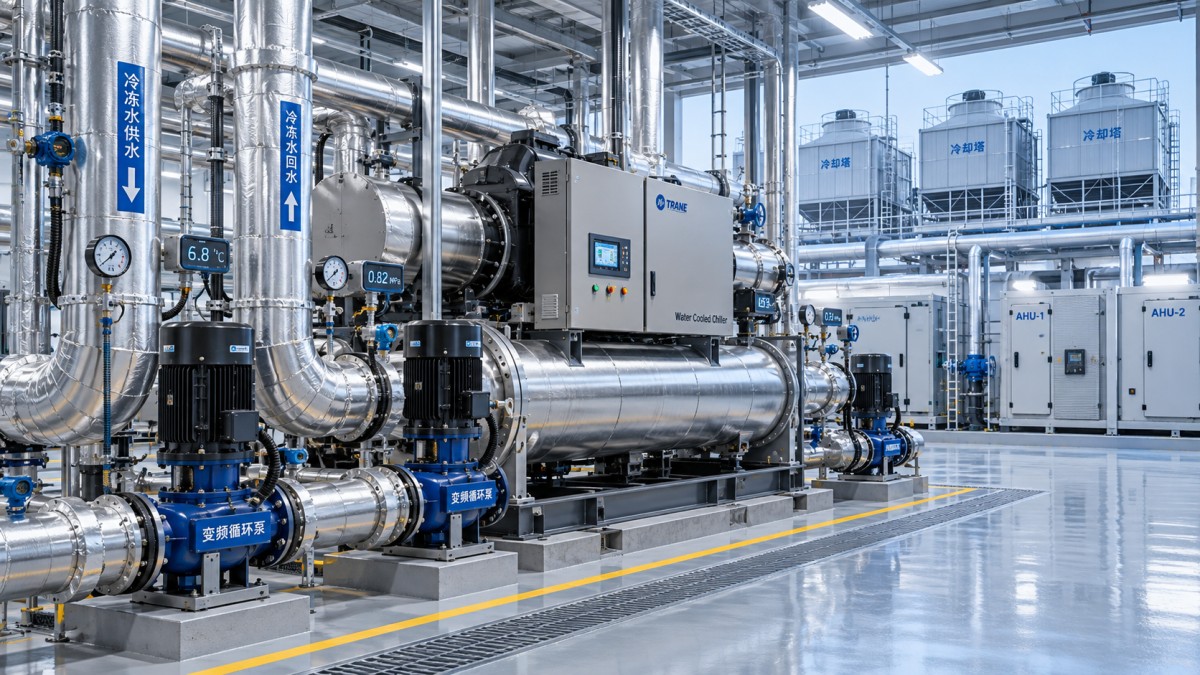
Water-cooled systems are sometimes approved using a simplified estimate that considers only supply and discharge tariffs. That approach misses several cost drivers. Makeup-water quality affects scale formation, corrosion potential, microbiological control, filtration demand, and the frequency of cleaning. Blowdown is necessary to limit dissolved solids in many tower arrangements, yet excessive blowdown increases both water and treatment cost. Insufficient blowdown can reduce heat-transfer performance and shorten component life.
The material selection of the condenser-water circuit affects this balance. Open-loop conditions can be more demanding than closed chilled-water loops. Basin coatings, heat-exchanger metallurgy, pipe material, gasket compatibility, filtration, and chemical program assumptions must match the actual water source and operating temperatures. A system that is efficient on a commissioning worksheet can lose performance steadily when fouling adds approach temperature at the tower or heat exchanger. That extra approach forces a higher condensing temperature, which becomes a recurring electricity cost.
Water risk is also operational. A temporary supply restriction, discharge limitation, treatment upset, or basin contamination event can reduce available heat rejection. Where precision loads have limited tolerance for temperature drift, the value of water independence or stored thermal capacity may exceed the apparent efficiency advantage of the lowest first-cost configuration. This is not an argument for one cooling architecture; it is a reason to price the operating constraints that distinguish the alternatives.
Precision is purchased through the control architecture
Temperature stability at the point of use depends on more than central plant capacity. Sensor location, sensor accuracy, calibration practice, valve authority, pipe insulation continuity, bypass arrangement, buffer volume, and control-loop tuning all affect delivered stability. A central chilled-water supply sensor can show a stable value while a distant process tool experiences variation caused by pipe heat gain, rapidly changing branch flow, or a poorly controlled local heat exchanger.
Control systems should distinguish a true load change from measurement noise or short hydraulic disturbances. Overly aggressive control can make pumps and valves oscillate, increasing wear while destabilizing flow. Slow control can allow excursions that force local equipment to compensate with electric heaters or compressor cycling. The associated cost may be hidden because it appears in several electrical panels rather than in the central cooling meter.
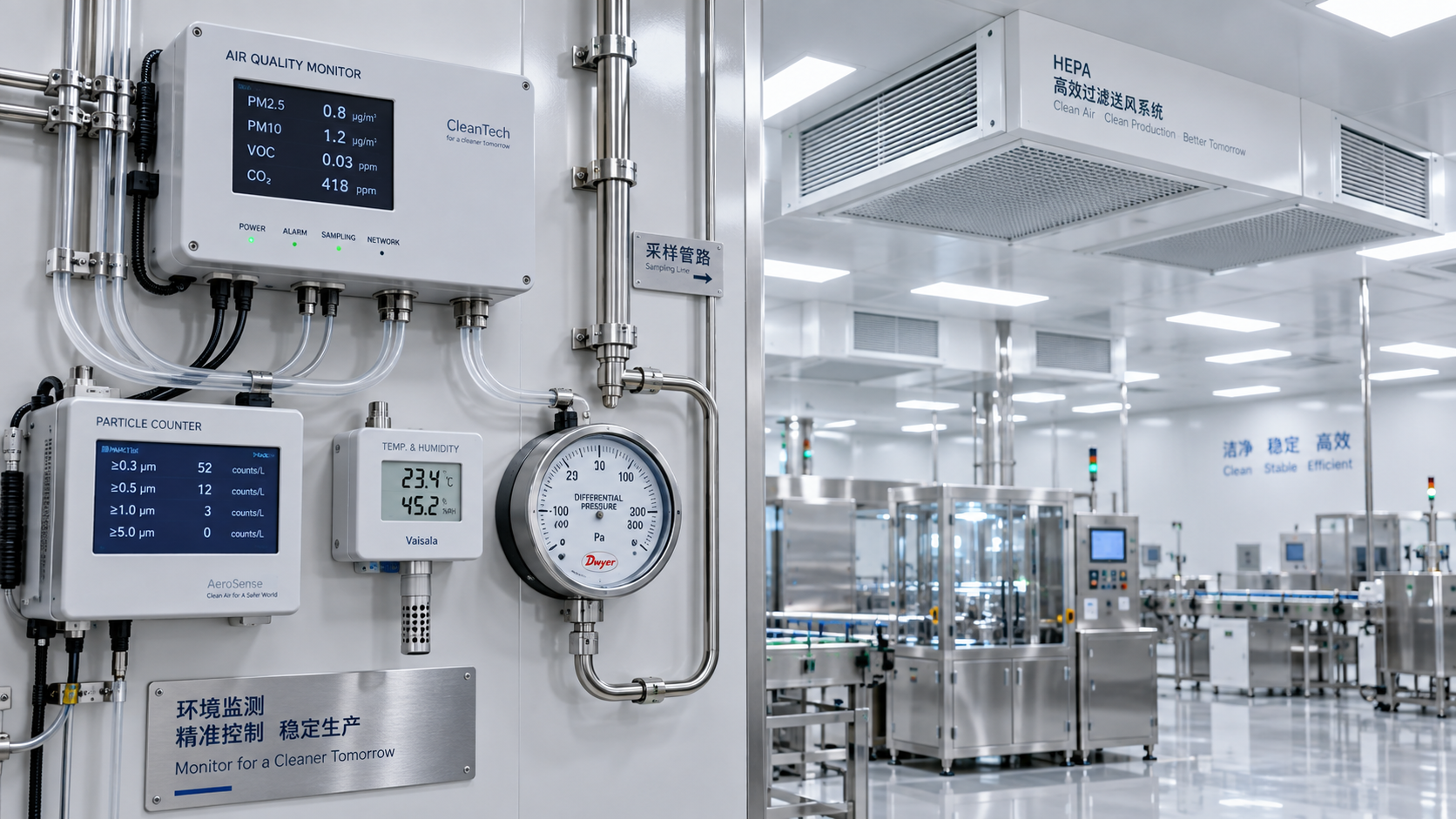
Metering should follow the system boundary being evaluated. Whole-facility electrical data cannot reveal whether a high energy bill comes from low chiller efficiency, excessive cleanroom airflow, simultaneous cooling and reheat, uncontrolled bypass flow, fouled heat transfer surfaces, or a process load that has changed since design. Useful measurement points usually include chilled-water supply and return temperatures, flow, differential pressure, condenser-water temperatures where applicable, equipment electrical demand, makeup water, and cooling-tower blowdown. The purpose is not to collect every available signal. It is to establish enough context to separate thermal demand from conversion losses and control losses.
Redundancy has a cost curve
Resilience is necessary in facilities where temperature excursions have high consequences, but spare capacity is not free simply because it is idle. Redundant chillers, pumps, cooling cells, electrical feeds, and controls add capital cost, footprint, testing obligations, and maintenance scope. They can also worsen part-load efficiency if the sequence keeps too many machines running lightly loaded or if standby equipment is never exercised under meaningful conditions.
The economic issue is not whether redundancy should exist. It is whether the redundancy arrangement protects the actual failure modes. A second chiller does little for continuity if both chillers depend on one vulnerable electrical path, one untreated water source, one common header isolation point, or a control network that cannot maintain a safe operating mode after a communications failure. A lower installed redundancy level with well-isolated distribution may protect a critical process better than apparent capacity duplication concentrated in one plant room.
Maintenance strategy changes the equation as well. Equipment that requires a full shutdown for cleaning, tube inspection, actuator replacement, or sensor calibration creates a different operational burden from equipment that can be isolated without affecting protected loads. Access clearance, lifting routes, drain points, valve placement, and the ability to commission a bypass should be reviewed before construction. These details are inexpensive in drawings and disruptive after pipework, electrical containment, and cleanroom boundaries are complete.
Heat rejection choices should be tested against the process profile
Humidity control often distorts the cooling budget
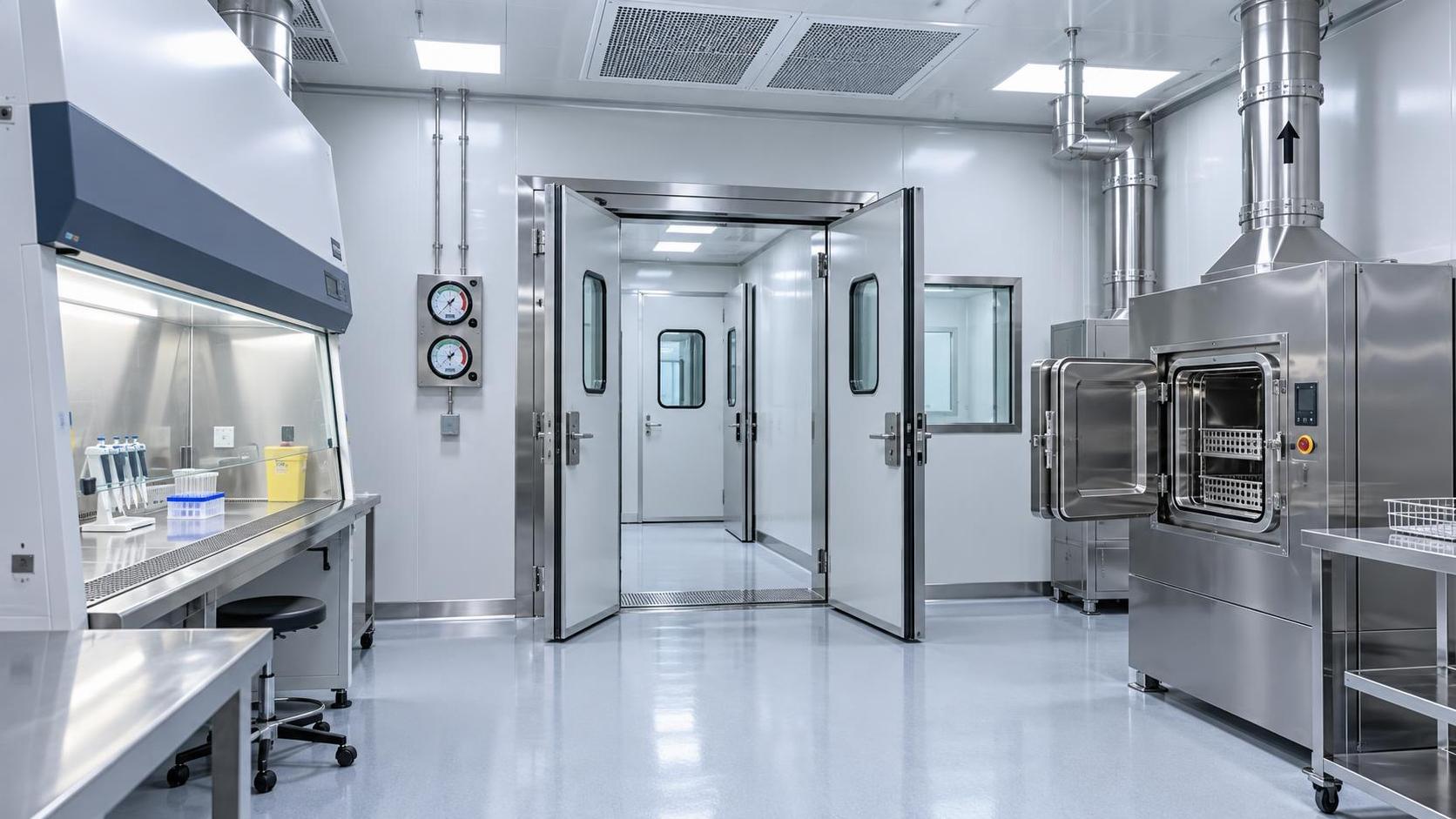
In cleanrooms and controlled laboratories, the cooling plant frequently supports dehumidification as well as sensible heat removal. Cooling air below its dew point removes moisture, but the air may then require reheat before supply to the space. If this sequence is driven by poorly coordinated setpoints, the facility can cool and reheat simultaneously for long periods. The central plant appears heavily loaded even though the process sensible load has not increased.
Outdoor-air treatment is especially important. A dedicated approach to conditioning ventilation air can reduce the burden placed on recirculating air handlers, but only when the interfaces are clear. Conflicting humidity sensors, unsealed duct leakage paths, heat gains from fan motors, and uninsulated condensate components can undermine the expected result. Pressure-control requirements also matter: excessive exhaust or supply offsets can increase outdoor-air demand and force unnecessary moisture removal.
Cost estimates should therefore state whether humidity is controlled centrally, locally, or through a combination of coils, desiccant equipment, heat recovery, and reheat. Without that definition, comparing chiller capacity alone creates an illusion of equivalence between systems with very different annual energy profiles.
Lifecycle cost is shaped before equipment arrives on site
Installation quality determines whether design efficiency survives handover. Pipe supports that compress insulation, missing vapor seals, poor flange insulation, unbalanced branches, inappropriate flexible connectors, and inaccessible strainers can create heat gain, condensation, pressure losses, and difficult maintenance. These are not cosmetic defects in precision cooling loops. They alter pump energy, delivered temperature, and recovery time after disturbances.
Commissioning should verify more than rotation direction and start-stop operation. The sequence needs to be observed across representative loads, including low-load operation, transition between machines, heat-rejection changes, loss of a primary component, and recovery after a controlled interruption. Trend data from these tests exposes unstable setpoints, excessive cycling, and bypass flow that static acceptance tests can miss.
Before final approval, the cost model should align equipment selections, control sequences, water assumptions, electrical tariffs, maintenance access, and process consequences on the same operating scenario. A design with a modestly higher installed cost can be economically preferable when it avoids permanent low-temperature operation, uncontrolled water exposure, difficult service isolation, or repeated excursions that demand conservative operating margins. Sustainable cooling cost is ultimately the cost of maintaining a specified environment without consuming more resources, reserve capacity, or operational attention than that environment genuinely requires.
Get weekly intelligence in your inbox.
No noise. No sponsored content. Pure intelligence.
 Sep 28, 2026What drives sustainable cooling cost in high-precision facilities?Sustainable cooling cost in high-precision facilities depends on thermal stability, energy, water, controls, and resilience. Explore smarter lifecycle strategies.
 Sep 27, 2026How to compare freight forwarding services for time-critical shipmentsCompare freight forwarding services for time-critical shipments with practical insights on routing, customs, visibility, specialized handling, and contingency planning.
 Sep 26, 2026How environmental integrity in laboratories supports reliable test resultsEnvironmental Integrity in laboratories safeguards samples, instruments, and staff. Discover practical controls for contamination, monitoring, and reliable test results.
 Sep 25, 2026Healthcare trends reshaping laboratory automation investmentHealthcare Trends are reshaping laboratory automation investment. Explore how resilient infrastructure, data integrity, and smart monitoring improve scalable performance.
 Sep 24, 2026When chemical wastewater treatment systems need zero-liquid dischargeWastewater treatment systems for chemicals: learn when zero-liquid discharge reduces risk, recovers water, and supports resilient chemical operations.
 Sep 23, 2026How regulatory frameworks documentation supports audit-ready carbon trackingRegulatory Frameworks documentation creates audit-ready carbon tracking with traceable evidence, controlled methods, and compliant operational decisions.
 Sep 22, 2026How cleanroom architecture controls contamination risks in pharma productionCleanroom Architecture for pharmaceutical production: discover how airflow zoning, pressure cascades, cleanable finishes, and separated flows reduce contamination risks and strengthen GMP compliance.
 Sep 21, 2026What ultra pure water specifications matter most in Middle East projects?Ultra pure water Middle East projects demand resilient specifications. Explore point-of-use quality, feedwater variability, heat control, monitoring, and reliable distribution design.
 Sep 20, 2026How Process Environment Control systems prevent airborne contaminationProcess Environment Control systems prevent airborne contamination through managed airflow, pressure, filtration, and monitoring. Discover practical strategies for safer, compliant operations.
 Sep 19, 2026When does heat recovery make sustainable cooling worth the investment?Sustainable cooling technology heat recovery: learn when reliable heat demand, temperature matching, and lifecycle savings make recovery a smart investment.
 Sep 18, 2026How to set alarm limits for semiconductor cleanroom monitoringSemiconductor cleanroom monitoring: learn how to set risk-based alarm limits for particles, humidity, pressure, and airflow to protect yield and reduce nuisance alerts.
 Sep 17, 2026How plastic injection molding affects ESD protection in cleanroomsPlastic injection molding affects ESD protection in cleanrooms. Learn how resin choice, molding consistency, grounding, and particle control support reliable compliance.
 Sep 16, 2026What to verify before choosing an industrial air quality monitoring supplierIndustrial air quality monitoring supplier checklist: verify measurement accuracy, calibration traceability, data integration, compliance support, and lifecycle service before you buy.
 Sep 15, 2026Smart HVAC investment insights for North American heat recovery projectsSmart HVAC investment insights North America: evaluate heat recovery, lifecycle costs, controls, and performance for resilient project decisions.
 Sep 14, 2026How SEMI standards shape water treatment design for semiconductor fabsSemiconductor water treatment SEMI guidance shapes resilient UPW design, contamination control, monitoring, reclaim strategy, and fab-ready validation.
 Sep 13, 2026What drives Biosafety Containment Systems cost in BSL-3 projects?Biosafety Containment Systems cost in BSL-3 projects depends on HVAC, layout, decontamination, controls, and commissioning. Discover how to build a credible budget.
 Sep 12, 2026How to qualify a fine chemical process solutions supplier for purity controlFine Chemical Process Solutions supplier qualification guide: evaluate purity control, traceability, contamination prevention, and safety for reliable high-purity production.
 Sep 11, 2026What drives cleanroom certification cost for ISO Class 1–9 projects?Cleanroom certification cost depends on ISO Class 1–9 requirements, test scope, HVAC readiness, documentation, and retesting. Explore practical budgeting insights to control project risk.
 Sep 10, 2026When should Procurement Directors prioritize heat recovery payback?Procurement Directors: learn when heat recovery delivers reliable payback, lower lifecycle costs, and safe performance in controlled industrial environments.
 Sep 09, 2026How to select an environmental monitoring system for cleanroomsEnvironmental monitoring system selection for cleanrooms: compare sensors, alarms, data integrity, integration, and installation to ensure reliable control.
 Sep 08, 2026How temperature stability affects semiconductor manufacturing yieldSemiconductor manufacturing temperature stability directly affects yield, overlay, metrology, and process control. Explore practical HVAC, monitoring, and zoning strategies.
 Sep 07, 2026How to prepare for a Regulatory Frameworks audit of cleanroom controlsRegulatory Frameworks audit readiness for cleanroom controls: build traceable evidence, verify alarms and monitoring, and close compliance gaps with confidence.
 Sep 07, 2026How to choose reverse osmosis systems with the right recovery rateReverse osmosis systems: learn how to select the right recovery rate for reliable water quality, lower scaling risk, efficient concentrate control, and stable long-term performance.
 Sep 05, 2026How does a negative pressure room work to contain airborne contaminants?How does a negative pressure room work? Discover how inward airflow, controlled exhaust, monitoring, and room design help contain airborne contaminants safely.
 Sep 04, 2026How Should Semiconductor Facilities Select Vibration Isolation Systems?Vibration isolation semiconductor guide: learn how to match tool limits, site vibration, utilities, and cleanroom needs for stable, high-yield fab performance.
 Sep 04, 2026What TOC Limits Should Be Set and Monitored for a UPW Loop?What are our TOC limits for the UPW loop? Learn how to set defensible TOC thresholds, monitor trends, protect critical processes, and improve water-quality control.
 Sep 04, 2026What Are the Best Retrofit Options for Upgrading Existing Pharmaceutical Cleanrooms?What are the best retrofit options to upgrade existing pharma cleanrooms? Explore FFUs, HVAC modernization, pressure cascades, monitoring, and sealed finishes for compliant performance.