Strategic Intelligence Reports: What Makes One Reliable?
Strategic Intelligence Reports: What Makes One Reliable?
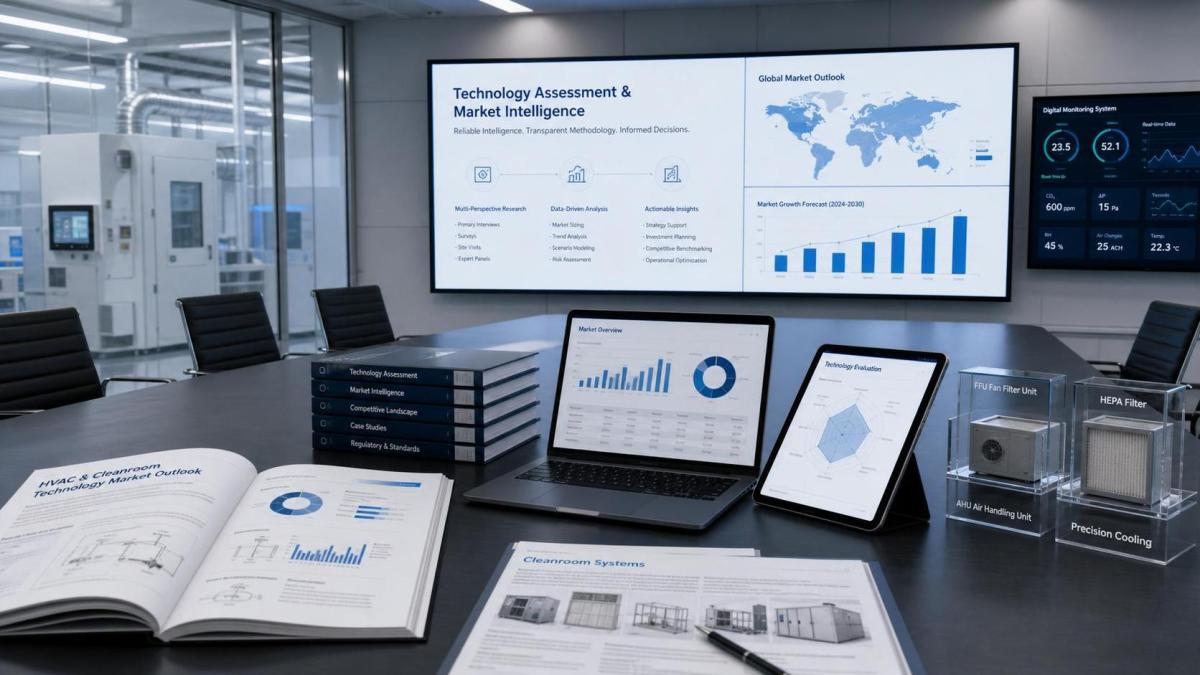
Strategic Intelligence Reports are often treated as decision shortcuts. In reality, they only help when the evidence behind them is strong.
That matters even more in technical sectors. Cleanrooms, precision HVAC, biosafety, UPW, and digital monitoring systems leave very little room for guesswork.
A weak report may look polished. Yet polished formatting is not the same as reliable intelligence.
In practical evaluation work, reliable Strategic Intelligence Reports should reduce uncertainty. They should not simply repackage industry noise into attractive charts.
The best reports combine verified data, transparent methodology, regulatory awareness, and usable recommendations. That mix is what turns information into decision support.
This becomes especially important when capital budgets are large, compliance risk is high, and system failure affects product quality or business continuity.
Why Reliability Matters More Than Volume
Many Strategic Intelligence Reports promise wide market coverage. That sounds useful, but scale alone does not make a report trustworthy.
A 200-page document can still be thin on evidence. Meanwhile, a shorter report may offer far better decision value.
From a selection standpoint, reliability matters because reports often shape vendor shortlists, budget assumptions, and risk discussions at senior levels.
If benchmark logic is weak, the entire evaluation process drifts. Teams may compare the wrong suppliers, overlook standards, or misread operating costs.
This is common in high-control environments. Small technical differences can create major outcomes in contamination control, thermal stability, water purity, and biosafety containment.
So the real question is not whether Strategic Intelligence Reports contain data. The question is whether that data can stand up to scrutiny.
Core Signals of Reliable Strategic Intelligence Reports
Reliable Strategic Intelligence Reports usually reveal their quality early. You can often spot it by checking a few structural signals.
1. Transparent data sources
Credible reports explain where the data comes from. They distinguish primary interviews, field audits, test data, procurement records, and public regulatory sources.
If source categories are vague, confidence should drop. Phrases like “industry experts say” are not enough for serious evaluation.
2. Clear methodology
Strong Strategic Intelligence Reports show how findings were built. They explain sample scope, scoring logic, time frame, exclusions, and normalization methods.
Without that, rankings become hard to trust. A score is only meaningful when the path to it is visible.
3. Regulatory alignment
In advanced industrial sectors, market analysis without standards context is incomplete. Reliable reports connect findings to ISO 14644, ASHRAE, SEMI, GMP, or biosafety frameworks where relevant.
That is where institutions like G-ICE add value. Benchmarking only becomes useful when performance is tied to technical and compliance reality.
4. Actionable interpretation
Reliable Strategic Intelligence Reports do more than describe trends. They help readers judge trade-offs, timing, supplier fit, and implementation risk.
That also means separating signal from hype. Not every innovation is mature enough for procurement or retrofit decisions.
How to Test Report Credibility Before Using It
A reliable evaluation process starts with a simple habit. Do not accept Strategic Intelligence Reports at face value.
Instead, use a quick credibility screen before the report enters a vendor decision or planning discussion.
- Check whether the publication date matches current market conditions.
- Review whether assumptions reflect your region, facility type, and regulatory environment.
- Look for named standards, measurable benchmarks, and comparison criteria.
- See whether suppliers are assessed on lifecycle performance, not only upfront price.
- Confirm whether qualitative opinions are separated from verified quantitative findings.
This screening step is especially useful in fast-evolving segments. Thermal management, digital twins, and contamination monitoring can shift quickly with technology and regulation.
More importantly, the screen helps identify reports that sound strategic but remain too generic for actual procurement use.
What Weak Strategic Intelligence Reports Usually Miss
Low-quality Strategic Intelligence Reports often fail in predictable ways. The warning signs are usually visible once you know where to look.
They ignore operating context
A report may rank systems highly without considering particle load, temperature tolerance, water quality targets, or containment level requirements.
They overuse market averages
Average figures hide risk. In mission-critical infrastructure, median performance is often less useful than variance, stability, and failure behavior.
They blur vendor claims and evidence
Marketing language can enter Strategic Intelligence Reports when analyst independence is weak. That creates hidden bias in technology scoring and supplier positioning.
They stop at trends
Trend summaries are useful, but only up to a point. Real decisions need scenario analysis, cost implications, compliance exposure, and deployment readiness.
In other words, weak reports describe the market. Reliable Strategic Intelligence Reports help you act within it.
A Practical Comparison Framework
When several Strategic Intelligence Reports cover the same category, a comparison table can quickly reveal which one deserves more weight.
This kind of comparison keeps evaluation grounded. It also helps internal teams explain why one report should guide decisions more than another.
Why Sector Depth Changes the Value of Intelligence
Not all industries need the same level of analytical depth. But in controlled environments, generic reporting rarely goes far enough.
That is why sector-specific Strategic Intelligence Reports are often more dependable for infrastructure and compliance-heavy decisions.
For example, selecting an FFU system requires more than supplier awareness. It requires benchmark data tied to airflow stability, energy use, cleanliness targets, and facility integration.
The same applies to magnetic-levitation chillers, TOC-zero water skids, containment labs, and smart monitoring platforms.
In these cases, reliable Strategic Intelligence Reports should connect technical performance with standards, lifecycle economics, and operational resilience.
That deeper view is often the difference between a sound selection and an expensive correction later.
How to Use Strategic Intelligence Reports in Real Decisions
The strongest approach is to treat Strategic Intelligence Reports as one input, not the only input.
In actual business review cycles, they work best when combined with technical validation, internal operating data, and supplier due diligence.
- Use the report to define the market landscape and shortlist serious options.
- Match its benchmarks against your facility requirements and compliance obligations.
- Test claims through site references, audits, pilot data, or engineering review.
- Recheck assumptions before final procurement, especially for fast-changing technologies.
This process keeps decisions practical. It also prevents overreliance on polished research that lacks operational depth.
Ultimately, reliable Strategic Intelligence Reports should make teams faster, sharper, and more confident. If a report cannot do that, it is not strategic enough.
Before using any report as a decision anchor, pressure-test its evidence, context, and relevance. That final check is often where the best choices begin.
Get weekly intelligence in your inbox.
No noise. No sponsored content. Pure intelligence.
 Sep 19, 2026When does heat recovery make sustainable cooling worth the investment?Sustainable cooling technology heat recovery: learn when reliable heat demand, temperature matching, and lifecycle savings make recovery a smart investment.
 Sep 18, 2026How to set alarm limits for semiconductor cleanroom monitoringSemiconductor cleanroom monitoring: learn how to set risk-based alarm limits for particles, humidity, pressure, and airflow to protect yield and reduce nuisance alerts.
 Sep 17, 2026How plastic injection molding affects ESD protection in cleanroomsPlastic injection molding affects ESD protection in cleanrooms. Learn how resin choice, molding consistency, grounding, and particle control support reliable compliance.
 Sep 16, 2026What to verify before choosing an industrial air quality monitoring supplierIndustrial air quality monitoring supplier checklist: verify measurement accuracy, calibration traceability, data integration, compliance support, and lifecycle service before you buy.
 Sep 15, 2026Smart HVAC investment insights for North American heat recovery projectsSmart HVAC investment insights North America: evaluate heat recovery, lifecycle costs, controls, and performance for resilient project decisions.
 Sep 14, 2026How SEMI standards shape water treatment design for semiconductor fabsSemiconductor water treatment SEMI guidance shapes resilient UPW design, contamination control, monitoring, reclaim strategy, and fab-ready validation.
 Sep 13, 2026What drives Biosafety Containment Systems cost in BSL-3 projects?Biosafety Containment Systems cost in BSL-3 projects depends on HVAC, layout, decontamination, controls, and commissioning. Discover how to build a credible budget.
 Sep 12, 2026How to qualify a fine chemical process solutions supplier for purity controlFine Chemical Process Solutions supplier qualification guide: evaluate purity control, traceability, contamination prevention, and safety for reliable high-purity production.
 Sep 11, 2026What drives cleanroom certification cost for ISO Class 1–9 projects?Cleanroom certification cost depends on ISO Class 1–9 requirements, test scope, HVAC readiness, documentation, and retesting. Explore practical budgeting insights to control project risk.
 Sep 10, 2026When should Procurement Directors prioritize heat recovery payback?Procurement Directors: learn when heat recovery delivers reliable payback, lower lifecycle costs, and safe performance in controlled industrial environments.
 Sep 09, 2026How to select an environmental monitoring system for cleanroomsEnvironmental monitoring system selection for cleanrooms: compare sensors, alarms, data integrity, integration, and installation to ensure reliable control.
 Sep 08, 2026How temperature stability affects semiconductor manufacturing yieldSemiconductor manufacturing temperature stability directly affects yield, overlay, metrology, and process control. Explore practical HVAC, monitoring, and zoning strategies.
 Sep 07, 2026How to prepare for a Regulatory Frameworks audit of cleanroom controlsRegulatory Frameworks audit readiness for cleanroom controls: build traceable evidence, verify alarms and monitoring, and close compliance gaps with confidence.
 Sep 07, 2026How to choose reverse osmosis systems with the right recovery rateReverse osmosis systems: learn how to select the right recovery rate for reliable water quality, lower scaling risk, efficient concentrate control, and stable long-term performance.
 Sep 05, 2026How does a negative pressure room work to contain airborne contaminants?How does a negative pressure room work? Discover how inward airflow, controlled exhaust, monitoring, and room design help contain airborne contaminants safely.
 Sep 04, 2026How Should Semiconductor Facilities Select Vibration Isolation Systems?Vibration isolation semiconductor guide: learn how to match tool limits, site vibration, utilities, and cleanroom needs for stable, high-yield fab performance.
 Sep 04, 2026What TOC Limits Should Be Set and Monitored for a UPW Loop?What are our TOC limits for the UPW loop? Learn how to set defensible TOC thresholds, monitor trends, protect critical processes, and improve water-quality control.
 Sep 04, 2026What Are the Best Retrofit Options for Upgrading Existing Pharmaceutical Cleanrooms?What are the best retrofit options to upgrade existing pharma cleanrooms? Explore FFUs, HVAC modernization, pressure cascades, monitoring, and sealed finishes for compliant performance.
 Sep 04, 2026How Does a Negative Air Pressure Room Protect Adjacent Areas?What is a negative air pressure room? Learn how controlled airflow contains airborne hazards, protects adjacent spaces, and supports safer facility operations.
 Sep 04, 2026What Is ISO Class 1 Cleanroom Classification, and Where Is It Used?What is ISO Class 1? Explore its ultra-low particle limits, critical cleanroom design factors, verification methods, and uses in semiconductor, optics, and quantum manufacturing.
 Sep 04, 2026How Long After a UPW Deviation Does Yield Impact Typically Appear?What is the typical time lag from UPW deviation to yield impact? Learn how contamination, process sensitivity, exposure windows, and testing stages shape detection timing.
 Sep 04, 2026What Testing Data Should Engineers Review Before Approving a UPW Material?What testing data should be reviewed before approving a UPW material? Explore extractables, TOC, particle release, ionic leaching, corrosion, and reliability data for confident approval.
 Sep 04, 2026How Should Pharmaceutical Cleanrooms Choose Climate Control Systems?Which climate control systems are recommended for pharmaceutical cleanroom environments? Explore HVAC, humidity, pressure, HEPA filtration, and GMP-ready monitoring strategies.
 Sep 04, 2026Airtight Door Problems in Medical Spaces and How Buyers Prevent ThemA problem-solving guide for airtight door procurement, covering sealing performance, sensors, wall coordination, cleaning, maintenance, and acceptance risk.
 Sep 04, 2026What drives cleanroom design cost for ISO Class 7 projects?Cleanroom design cost for ISO Class 7 projects depends on HVAC, filtration, utilities, validation, and lifecycle strategy. Learn how to control budgets without compromising compliance or performance.
 Sep 03, 2026When do heat pipe heat exchangers suit pharmaceutical cleanrooms?Heat Pipe Heat Exchangers for pharmaceutical plants: discover when they support cleanroom energy recovery, airflow separation, humidity control, and GMP-ready HVAC design.
 Sep 02, 2026What determines biosafety cabinets price across different modelsBiosafety cabinets price varies by class, airflow design, filtration, size, certification, and installation. Compare models confidently to choose safe, cost-effective containment.