Magnetic-Levitation Centrifugal Chillers Cost vs Efficiency
For financial approvers evaluating high-performance cooling assets, Magnetic-Levitation Centrifugal Chillers present a critical cost-versus-efficiency decision. While upfront investment is often higher, their reduced energy use, lower maintenance demands, and longer lifecycle value can significantly improve total cost of ownership. This article examines where the financial returns justify the premium and how to assess these systems against long-term operational and compliance priorities.
In advanced industrial environments, cooling is not a background utility. It is a financial lever tied to uptime, process stability, compliance exposure, and long-term asset planning. For semiconductor fabs, pharmaceutical facilities, precision laboratories, and high-load cleanroom campuses, chiller decisions often influence 10 to 20 years of operating cost.
That is why Magnetic-Levitation Centrifugal Chillers deserve closer scrutiny from budget owners, capital committees, and ESG-focused decision makers. The initial premium may be justified, but only when efficiency gains, maintenance savings, part-load performance, and risk reduction are measured against the facility’s real operating profile.
Why Magnetic-Levitation Centrifugal Chillers Change the Cost Equation
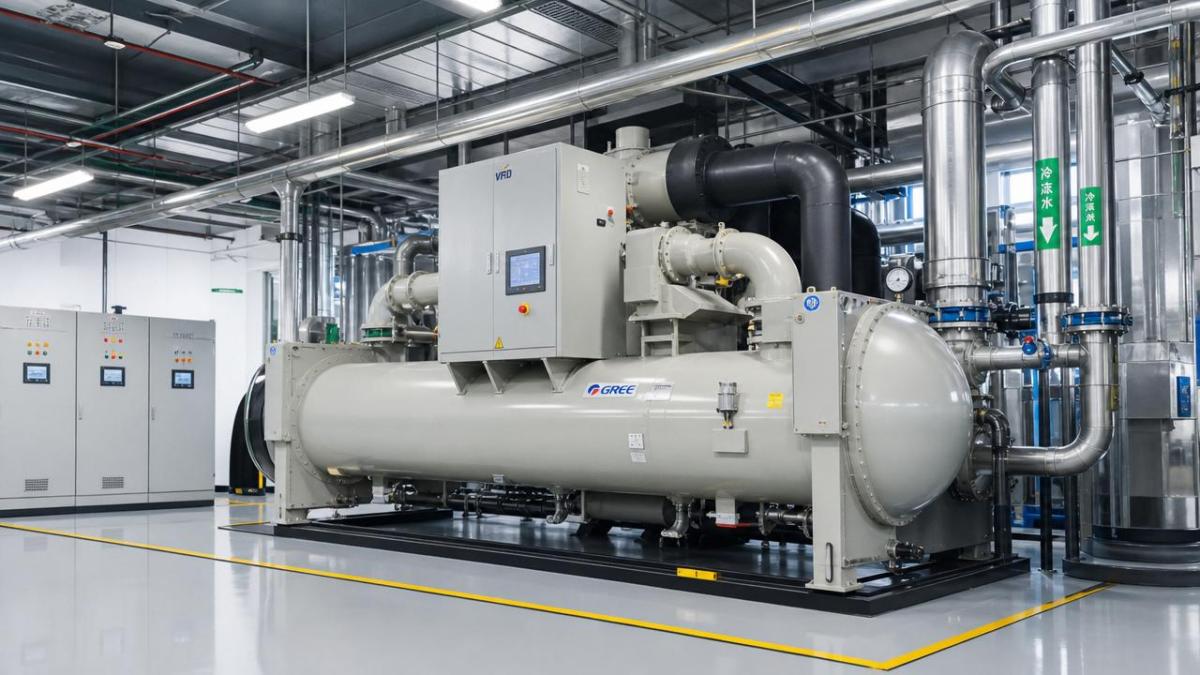
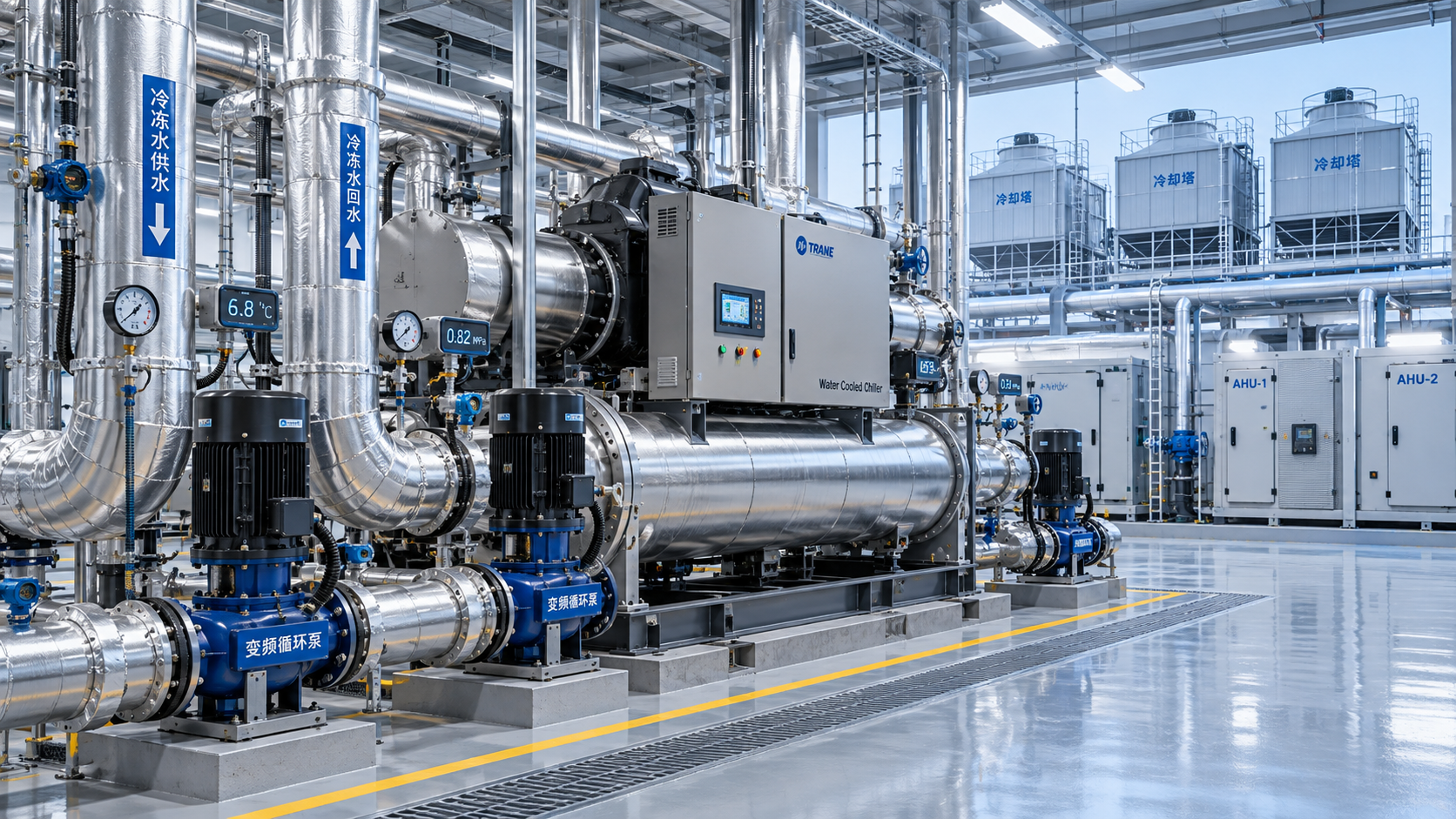
Magnetic-Levitation Centrifugal Chillers use oil-free magnetic bearings to support the compressor shaft. This removes mechanical friction found in conventional bearing systems and reduces wear at startup, shutdown, and variable load operation. For financial approvers, that design detail matters because it affects three cost centers at once: energy, maintenance, and lifecycle reliability.
In many industrial HVAC and thermal management applications, chillers rarely operate at 100% load for long periods. Actual load profiles often stay in the 35% to 75% range across most of the year. Magnetic-bearing systems tend to deliver their strongest efficiency advantage in exactly that range, where variable-speed performance has a direct impact on annual electricity spend.
Where the financial advantage usually comes from
The most visible savings come from reduced power consumption. Depending on load profile, climate, control strategy, and plant integration quality, a facility may see energy reductions in a typical range of 15% to 30% compared with older fixed-speed or oil-lubricated centrifugal systems. In high-hour facilities running 6,000 to 8,400 hours per year, that delta becomes material quickly.
The second savings layer is maintenance. Oil-free operation removes oil management tasks, reduces contamination risk in the refrigerant circuit, and limits wear-related interventions. That can cut planned maintenance frequency, simplify service windows, and reduce indirect labor costs for technical teams that already support cleanrooms, process cooling loops, and environmental compliance systems.
The third layer is operational stability. In regulated environments where temperature drift, airflow integrity, or process interruption can trigger batch loss or qualification issues, even one major failure event may cost more than the price difference between chiller technologies. Financial evaluation should therefore include avoided disruption, not just utility savings.
Typical comparison points for capital review
Before approving a replacement or new installation, finance teams should compare at least 4 dimensions: first cost, annual energy cost, annual maintenance cost, and expected service life. A fifth factor, often overlooked, is process risk cost tied to unplanned downtime. In mission-critical facilities, this can outweigh mechanical savings.
The table below provides a practical decision framework for comparing Magnetic-Levitation Centrifugal Chillers with conventional centrifugal alternatives in institutional and industrial environments.
The key takeaway is not that one technology always wins. It is that Magnetic-Levitation Centrifugal Chillers become financially compelling when annual runtime is high, load varies significantly, and process continuity carries measurable value. In low-utilization or non-critical buildings, the premium may be harder to recover within a 3 to 5 year budget horizon.
How Financial Approvers Should Evaluate Payback and Total Cost of Ownership
A sound approval process should move beyond equipment price and use a total cost of ownership model. For most industrial cooling assets, the major spending categories over 15 years include purchase price, installation, controls integration, electricity, maintenance, unplanned repair, and end-of-life replacement timing. Energy alone may represent 50% to 70% of lifecycle cost in electricity-intensive regions.
A practical 5-step financial review model
- Define annual operating hours, usually within a 4,000 to 8,400 hour range.
- Measure or estimate average load profile, not just design peak tonnage.
- Estimate local electricity cost over 10 to 15 years, including likely tariff shifts.
- Add maintenance and outage risk costs, including service response constraints.
- Compare simple payback, net operating savings, and strategic compliance value.
This approach is particularly relevant for G-ICE-aligned environments, where thermal stability and contamination control are integrated performance targets. A chiller does not operate in isolation. It affects air handling units, process loop stability, cleanroom pressure control, digital twin optimization, and often ESG reporting through energy intensity metrics.
Simple payback is useful, but not sufficient
Many finance teams start with simple payback, often targeting 3 to 7 years. That is reasonable for screening, but insufficient for high-specification facilities. If a premium chiller reduces annual energy spend by 18%, cuts maintenance labor by 20%, and extends major service intervals, the cumulative benefit after year 7 may far exceed the early payback threshold.
Moreover, some projects should be justified through resilience and compliance economics. In a pharmaceutical or semiconductor setting, temperature excursions beyond defined process tolerances can trigger requalification, material waste, or delayed production. Even if the probability is low, the financial consequence is high enough to include in procurement scoring.
The table below outlines a procurement-oriented cost model that financial approvers can adapt during bid evaluation and internal approval reviews.
For financial approvers, the most common mistake is to compare only line-item purchase price. The better method is to compare cost per delivered cooling value over the full operating horizon. In facilities with tight environmental tolerances, better controls integration and lower performance drift can create savings that are not visible in a quotation spreadsheet.
Best-Fit Applications and Situations Where the Premium Is Justified
Not every project needs Magnetic-Levitation Centrifugal Chillers. The strongest business case appears in high-load, high-hour, or high-consequence environments. That includes semiconductor support plants, sterile pharmaceutical production, biosafety research infrastructure, data-dense R&D facilities, and precision manufacturing spaces where thermal variation affects yield.
Facilities that often see stronger returns
- Campuses operating 24/7 or more than 6,500 hours annually
- Sites with variable loads across 30% to 80% for most of the year
- Cleanroom and process facilities where oil-free performance reduces system contamination concerns
- Projects with corporate carbon-reduction targets or audited energy KPIs
- Retrofits where lower vibration and smaller maintenance windows reduce operational disruption
In contrast, lower-duty commercial environments with short annual runtime may not recover the premium fast enough. If a site operates only 2,000 to 3,000 hours per year and has low process sensitivity, the capital committee may prefer a lower-cost solution with acceptable efficiency rather than an advanced system with delayed financial return.
Criticality should influence the capital threshold
A useful way to screen projects is to classify them into 3 tiers: standard utility cooling, business-critical comfort/process support, and mission-critical environmental control. The higher the criticality, the more weight should be assigned to reliability, part-load stability, controls integration, and serviceability rather than lowest bid price.
This is especially relevant in facilities aligned with ISO 14644, ASHRAE guidance, or SEMI-related operating requirements. While these standards do not automatically mandate one chiller technology, they increase the value of stable thermal management, predictable performance, and lower contamination risk within interconnected environmental systems.
Key Procurement Questions Before Approval
Financial approvers should ask for more than a technical brochure. To properly evaluate Magnetic-Levitation Centrifugal Chillers, procurement teams need a bid package that translates engineering performance into budget impact, risk reduction, and measurable operating outcomes.
Questions that improve decision quality
- What is the expected efficiency at 25%, 50%, 75%, and 100% load?
- How many annual maintenance visits are assumed in the service model?
- What redundancy strategy is included: N, N+1, or partial standby?
- How does the system integrate with BMS, analytics, or digital twin monitoring?
- What are the commissioning, training, and acceptance test requirements?
- What is the realistic service response window for mission-critical facilities?
These questions matter because two systems with similar rated capacity can produce very different financial outcomes. One may have a lower purchase price, while the other delivers better low-load efficiency, fewer service interventions, and stronger operating transparency through continuous monitoring. For an approval committee, that difference can reshape the investment case.
Common approval pitfalls
One frequent mistake is to use peak design tonnage as the primary comparison point. Another is to ignore installation quality, hydraulic balance, and controls logic, even though these factors can materially affect delivered efficiency. A third is to assume every premium technology suits every project, regardless of load profile or service support conditions.
A stronger governance process uses 6 checkpoints: capacity fit, annual load behavior, service model, controls compatibility, compliance relevance, and 10-year operating cost. That framework helps finance teams approve with confidence instead of relying on broad efficiency claims.
Implementation, Risk Control, and Long-Term Value Protection
Even the best-performing chiller can underdeliver if implementation is weak. For high-value industrial projects, the approval decision should cover the full deployment path: design review, installation, commissioning, controls integration, operator training, and post-start optimization. In many cases, the first 90 to 180 days determine whether projected savings are actually captured.
What protects ROI after purchase
- Load-based sequencing logic to prevent inefficient cycling
- Commissioning records tied to actual operating setpoints
- Continuous monitoring of kW per ton or equivalent performance indicators
- Documented preventive service intervals and spare parts planning
- Periodic review of thermal stability versus process requirements
For G-ICE-type operating environments, long-term value also depends on system interoperability. Chillers increasingly feed data into environmental monitoring platforms, energy dashboards, and digital twins. When performance data is visible and actionable, finance teams gain a better basis for validating savings, supporting audits, and planning future upgrades across the broader climate-control ecosystem.
FAQ for financial approvers
Is the higher capex always justified? No. The business case is strongest where energy use is high, part-load operation dominates, and downtime has measurable financial impact.
What payback range is realistic? Many projects target 3 to 7 years, but the right answer depends on hours, tariff structure, service cost, and process criticality.
Do Magnetic-Levitation Centrifugal Chillers support ESG goals? Often yes, because lower energy demand can reduce operational emissions intensity, especially in electricity-heavy sites.
Should finance teams require performance verification? Yes. Post-commissioning data review over the first 3 to 6 months helps confirm that expected efficiency and stability are being achieved under real load conditions.
Magnetic-Levitation Centrifugal Chillers are not simply a premium mechanical option. In the right industrial setting, they are a long-term cost-control and risk-management asset. Their value becomes clearest when financial approvers evaluate them through lifecycle cost, part-load efficiency, maintenance reduction, operational resilience, and compliance alignment rather than first cost alone.
If your facility operates mission-critical cooling infrastructure, a structured review can reveal whether the efficiency premium translates into measurable savings and lower exposure over 10 to 15 years. Contact us to discuss your operating profile, obtain a tailored evaluation framework, and explore the right cooling strategy for your high-performance environment.
Get weekly intelligence in your inbox.
No noise. No sponsored content. Pure intelligence.
 Oct 21, 2026How often is cleanroom certification required under ISO 14644-2?Cleanroom Certification is generally recommended annually under ISO 14644-2. Learn when risk-based extensions apply and which changes trigger earlier testing to plan with confidence.
 Oct 21, 2026FASEB Comments on NIH Draft Policy for Research Involving BiohazardsFASEB comments on NIH’s draft biohazard research policy call for risk-based biosafety oversight. Explore potential implications for laboratories, suppliers, and compliance teams.
 Oct 20, 2026How to disinfect ultrasound machines without damaging surfacesLearn how to disinfect ultrasoundmachines without surface damage. Explore compatible products, wet contact times, and probe care to protect patients and equipment.
 Oct 20, 2026Ultrapure Water in Semiconductor Manufacturing: Reuse and Quality Control InsightsExplore ultrapure water reuse in semiconductor manufacturing, key UPW quality benchmarks and analytical insights to help evaluate suppliers and protect process purity.
 Oct 19, 2026How cooling affects warpage in injection-molded consumer electronics housingsOptimize plastic injection molding for consumer electronics with cooling strategies to reduce housing warpage and improve assembly fit. Discover practical checks for stable, efficient production.
 Oct 18, 2026Can air leaks prevent a dehumidifier from holding its target dew point?Why can't our dehumidifier maintain the target dew point? Discover how air leaks increase moisture loads, spot hidden faults, and find practical fixes to restore reliable dew-point control.
 Oct 17, 2026How semiconductor process water treatment removes trace organicsSee how semiconductor process water treatment removes trace organics with RO, UV oxidation, and polishing. Learn how TOC monitoring helps verify purity and pinpoint contamination.
 Oct 16, 2026How to choose ultra pure water piping materials to limit leachingChoose ultra pure water piping with confidence. Compare PVDF, PFA, and stainless steel, assess leaching risks, and learn how to qualify your system for reliable purity.
 Oct 15, 2026How to size a skid-mounted deionized water system for peak demandCompare deionized water systems skid configurations for peak demand. Learn how to balance production, storage, and pump capacity to prevent shortages and avoid costly oversizing.
 Oct 14, 2026When is collaborative laboratory robotics suitable for sample sorting?Explore when collaborative laboratory robotics suits sample sorting. Discover key checks for safety, traceability, container compatibility, and throughput before choosing your solution.
 Oct 13, 2026How sandwich panel joints affect airtightness in cleanroom systemsCleanroom Systems sandwich panels need reliable joints for airtightness. Discover how gaskets, sealants, and testing help reduce leakage and protect cleanroom pressure control.
 Oct 12, 2026How to verify USP compliance for ultra pure water systemsUltra Pure Water Systems USP compliance: learn how to verify water quality, sampling, sanitization, trends, and validation controls at every point of use.
 Oct 11, 2026How tight temperature control prevents cleanroom process driftCleanroom process temperature control systems prevent costly drift by stabilizing critical conditions, improving repeatability, and protecting sensitive production workflows.
 Oct 10, 2026When does organic contaminant removal require TOC treatment?Organic contaminant removal requires TOC treatment when dissolved organics threaten product quality, equipment reliability, or process control. Learn how to assess risks and choose the right solution.
 Oct 08, 2026What affects lead times for sheet metal bending services in Canada?Sheet metal bending services Canada: discover how material supply, tooling, tolerances, finishing, documentation, and freight affect lead times for reliable project delivery.
 Oct 07, 2026How HVAC design for semiconductor fabs prevents airborne contaminationHVAC design for semiconductor fabs prevents airborne contamination through advanced filtration, pressure cascades, airflow control, and real-time monitoring. Explore key strategies for cleaner, more reliable wafer production.
 Oct 06, 2026How photovoltaic modules waterproof technology prevents moisture damagephotovoltaic modules waterproof technology prevents moisture damage with durable seals, drainage, and junction-box protection. Explore practical selection and testing insights.
 Oct 05, 2026How ISO 14644 Europe requirements affect cleanroom qualificationISO 14644 Europe requirements shape cleanroom qualification, from particle classification and recovery testing to monitoring, GMP alignment, and change control.
 Oct 04, 2026How to assess a pharmaceutical cleanroom solutions supplier’s ISO capabilityPharmaceutical Cleanroom Solutions supplier assessment guide: evaluate ISO 14644 capability, validation evidence, airflow design, documentation, and long-term GMP readiness.
 Oct 03, 2026What EU standards govern the design of BSL-3 laboratories in Europe?BSL-3 laboratories Europe: explore EU directives, EN standards, HVAC containment, commissioning, and practical design strategies for compliant, resilient high-containment facilities.
 Oct 02, 2026How EN 1822 defines HEPA filtration efficiency for cleanroomsHEPA filtration EN 1822 explained: learn how MPPS testing, local leakage limits, and filter classes support reliable cleanroom decisions.
 Oct 01, 2026How pharmaceutical process water systems control microbial riskProcess water systems pharmaceutical teams rely on can control microbial risk through hygienic design, monitoring, and validated sanitization. Explore practical compliance strategies.
 Sep 30, 2026When does a negative pressure laboratory need BSL-3 containment?Negative pressure laboratory or BSL-3? Discover the risk factors, engineering controls, and containment requirements needed for safe, compliant laboratory planning.
 Sep 29, 2026How to evaluate a TOC-zero water treatment supplier for UPW systemsChoose a TOC-zero water treatment supplier with confidence. Compare UPW performance, monitoring, validation, materials, service capability, and lifecycle cost.
 Sep 28, 2026What drives sustainable cooling cost in high-precision facilities?Sustainable cooling cost in high-precision facilities depends on thermal stability, energy, water, controls, and resilience. Explore smarter lifecycle strategies.
 Sep 27, 2026How to compare freight forwarding services for time-critical shipmentsCompare freight forwarding services for time-critical shipments with practical insights on routing, customs, visibility, specialized handling, and contingency planning.
 Sep 26, 2026How environmental integrity in laboratories supports reliable test resultsEnvironmental Integrity in laboratories safeguards samples, instruments, and staff. Discover practical controls for contamination, monitoring, and reliable test results.