Pharmaceutical Cleanroom Validation Step by Step
Pharmaceutical Cleanroom validation is the foundation of safe drug production, helping operators confirm that every controlled space meets strict performance, contamination, and compliance requirements. This step-by-step guide explains the validation process in practical terms, so users can better understand key checks, avoid common errors, and support consistent cleanroom operation under demanding pharmaceutical standards.
What operators really need to know about pharmaceutical cleanroom validation
When people search for Pharmaceutical Cleanroom validation, they usually want more than a definition. They want to know what must be checked, why it matters, and how to avoid failures.
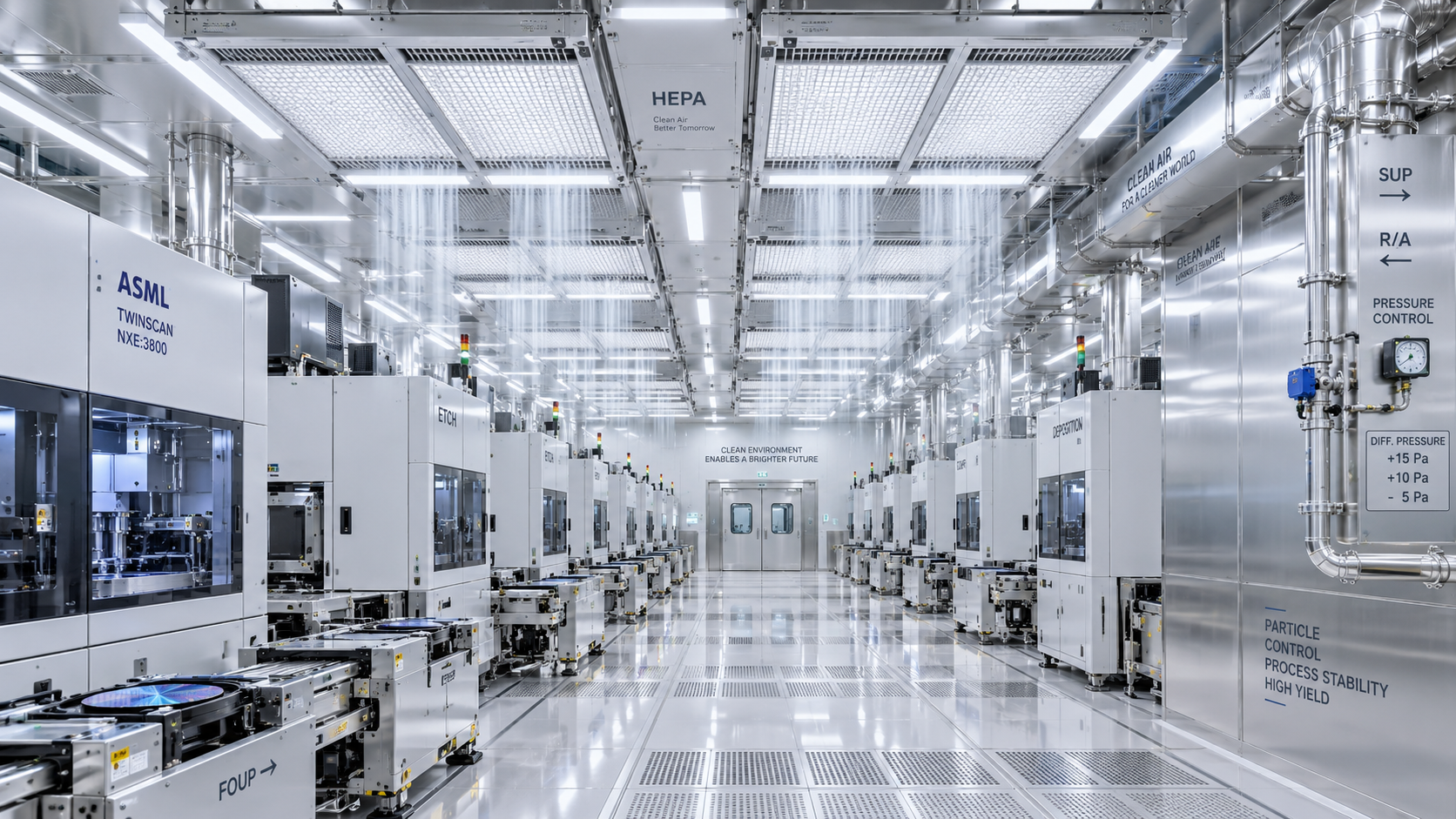
For operators, the key point is simple. Validation proves that a cleanroom can consistently control airborne particles, airflow, pressure, temperature, humidity, and contamination risks during actual use.
In pharmaceutical production, this is not just a paperwork exercise. It supports product quality, patient safety, batch reliability, and regulatory compliance under GMP expectations and related cleanroom standards.
If validation is weak, a room may look clean but still perform poorly. Hidden airflow problems, poor pressure control, or bad recovery behavior can create real contamination risks.
That is why operators should understand the process step by step. Even if engineering or quality teams lead the project, daily users strongly influence whether the validated state is maintained.
What is the core purpose of pharmaceutical cleanroom validation?
The core purpose is to demonstrate documented evidence that the cleanroom performs as intended for its pharmaceutical process, equipment layout, occupancy pattern, and contamination control strategy.
Validation is not only about meeting a class on paper. It also confirms that the room works under real operating conditions, with personnel movement, process heat loads, and normal production behavior.
For users and operators, this means the validated cleanroom should support stable operations rather than create constant alarms, repeated deviations, or unclear environmental results.
A well-validated cleanroom helps teams answer important questions. Is airflow protecting critical zones? Are pressure cascades stable? Can the room recover after a door opening or intervention?
These answers help operators work with confidence. Instead of reacting to unexplained issues, they can understand what normal performance looks like and what signs suggest loss of control.
The step-by-step validation process from an operator’s perspective
Although validation programs may differ by site, most pharmaceutical cleanroom validation projects follow a structured sequence. Understanding that sequence helps operators support testing and interpret results correctly.
Step one is defining the user requirement and cleanroom purpose. The team must identify product sensitivity, process risks, room classification targets, occupancy levels, and environmental control needs.
Step two is design review. Engineers and quality teams compare the room design against process requirements, GMP expectations, and technical standards such as ISO 14644.
At this stage, operators can help by explaining real workflows. If the test plan ignores actual door use, material transfers, or staffing patterns, final validation may not reflect reality.
Step three is installation qualification, often called IQ. This confirms that cleanroom systems were installed correctly, with the right filters, instruments, finishes, ducts, and supporting documentation.
Step four is operational qualification, or OQ. This verifies that systems operate within defined limits, including airflow volume, air change rates, pressure differentials, temperature, humidity, and alarm functions.
Step five is performance qualification, or PQ. This is where the room is tested under conditions closer to routine use, showing it can consistently meet cleanroom performance requirements.
After successful qualification, the room enters ongoing monitoring and periodic requalification. Validation is therefore not a one-time event. It is a controlled lifecycle that must be maintained.
Which tests are usually included in pharmaceutical cleanroom validation?
Operators often hear test names without fully understanding their purpose. Knowing the practical meaning of each test makes validation easier to follow and more useful in daily work.
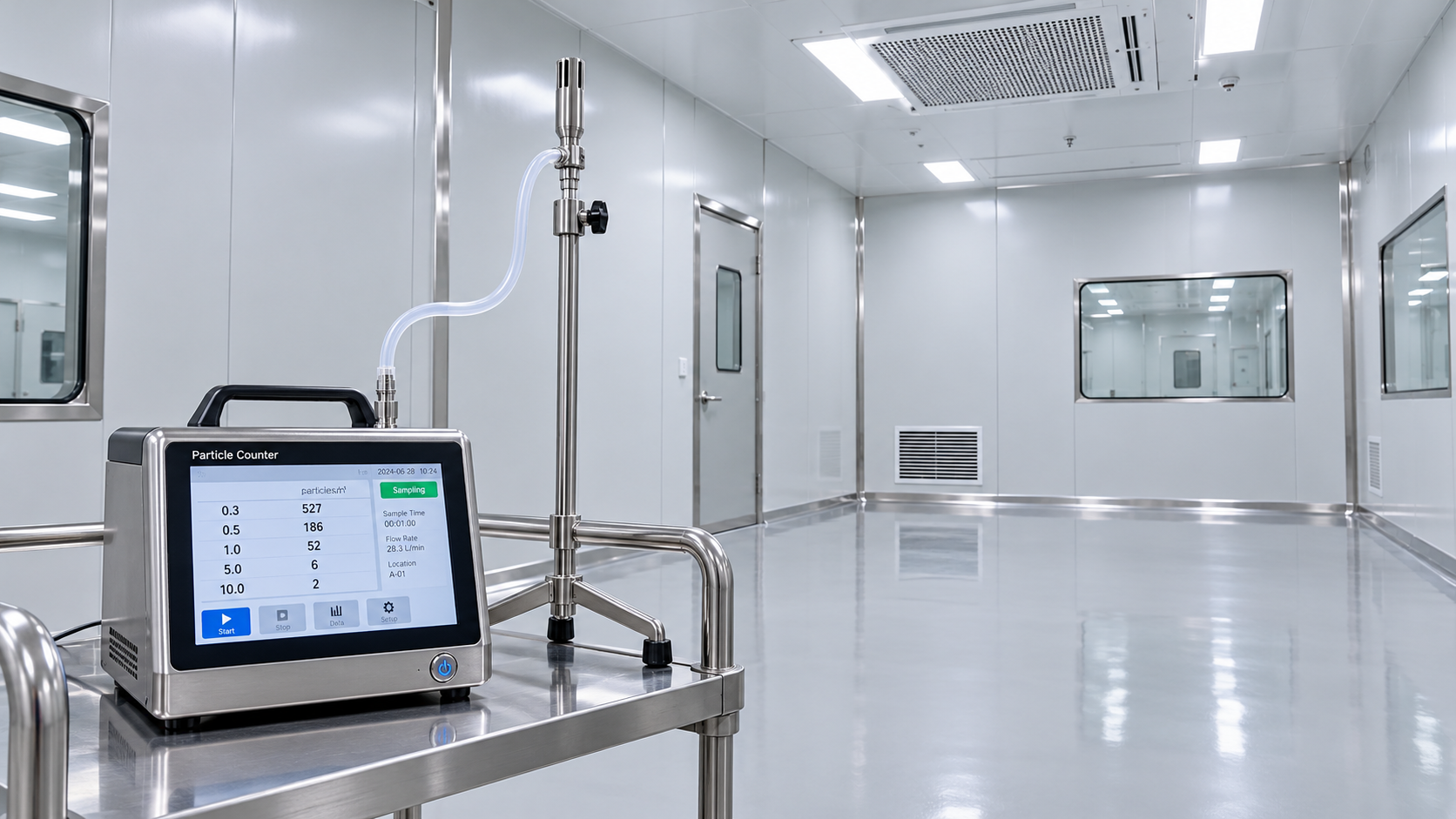
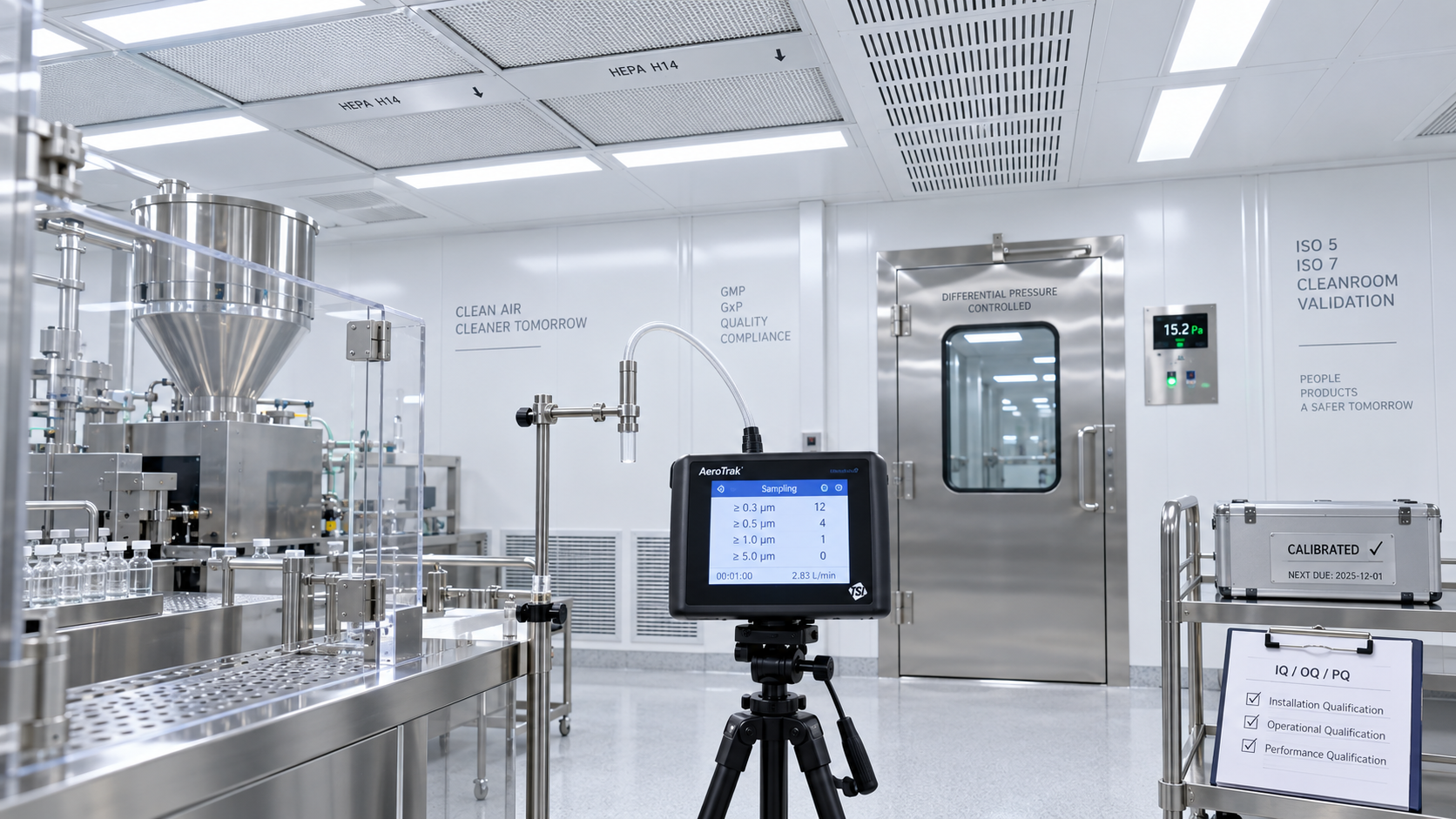
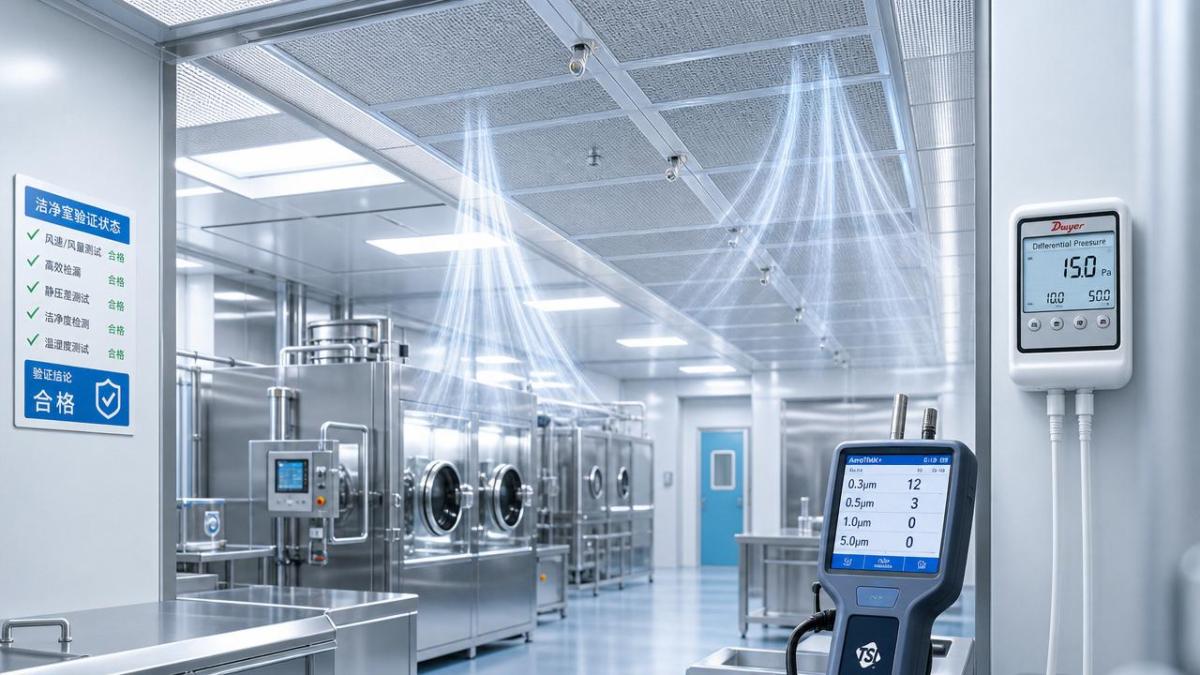
Airborne particle counting is one of the most recognized tests. It measures the concentration of particles in the room and confirms whether the cleanroom meets its required classification.
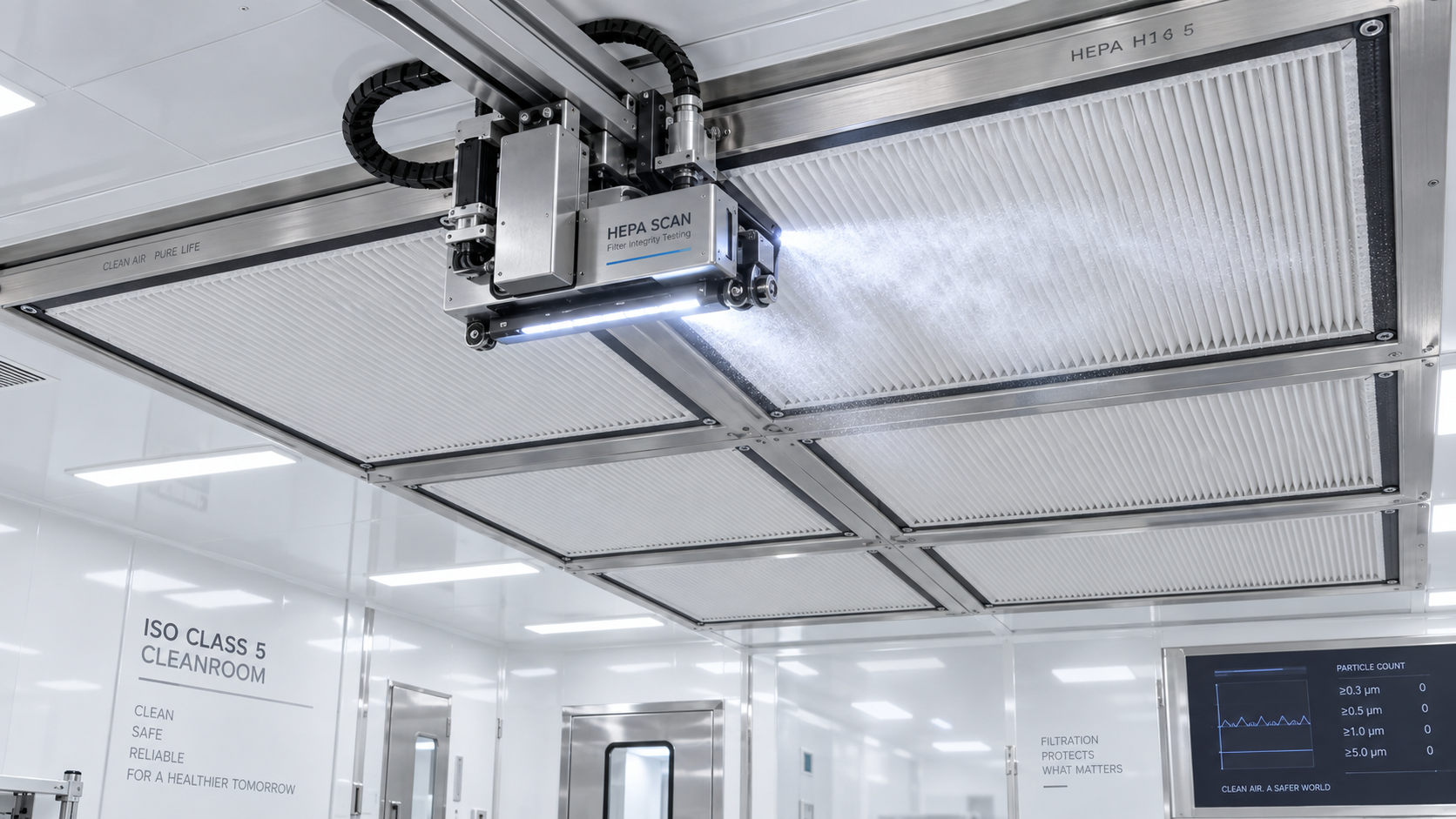
HEPA filter integrity testing checks whether filters and their seals are free from leaks. A damaged or poorly sealed filter can allow contamination to bypass the filtration barrier.
Airflow volume and air velocity tests confirm that sufficient clean air is being delivered. In unidirectional areas, correct airflow speed is especially important for protecting exposed product zones.
Airflow visualization, often called smoke studies, shows how air actually moves. This test is highly valuable because it reveals turbulence, dead zones, backflow, or operator interference.
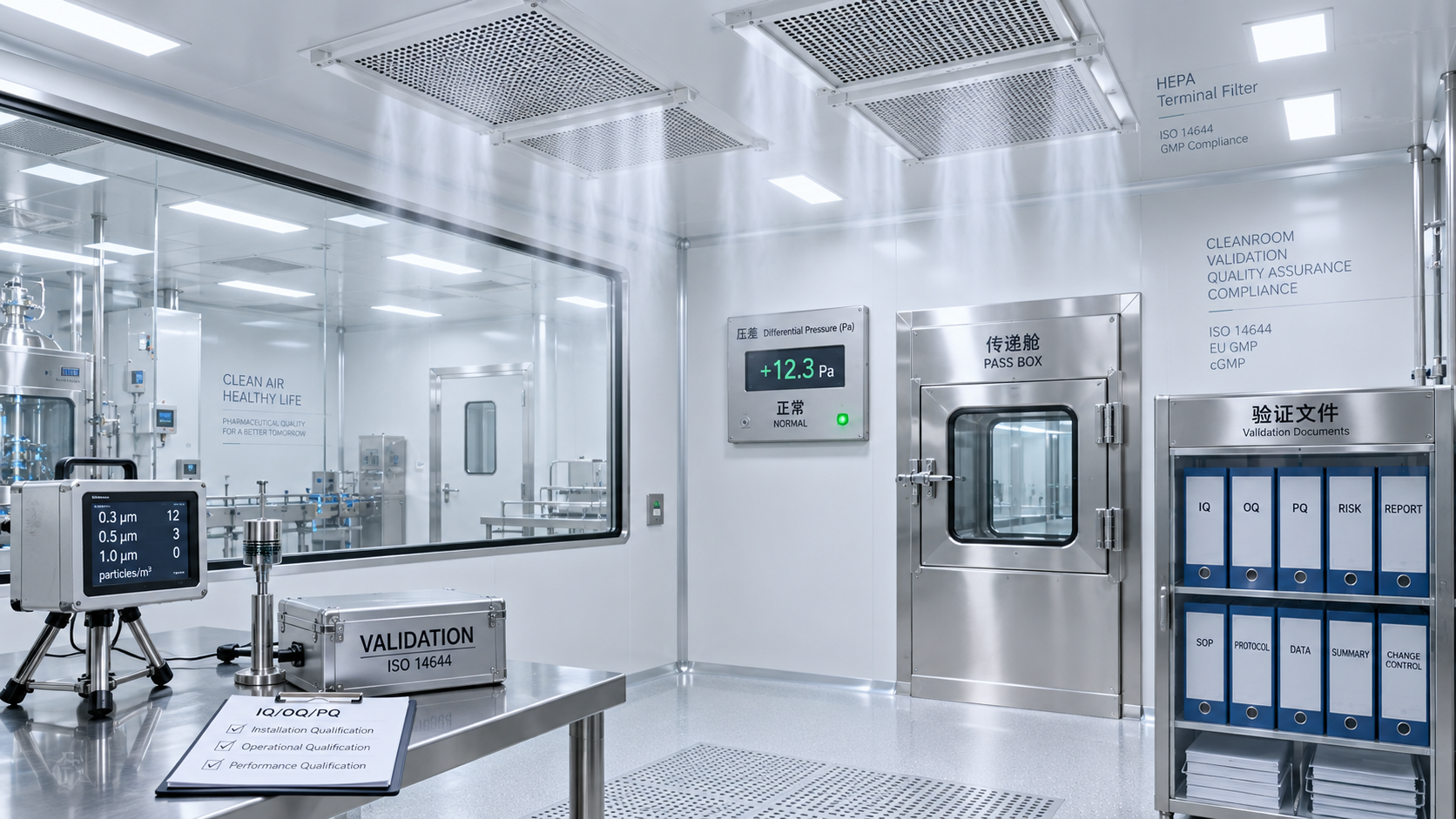
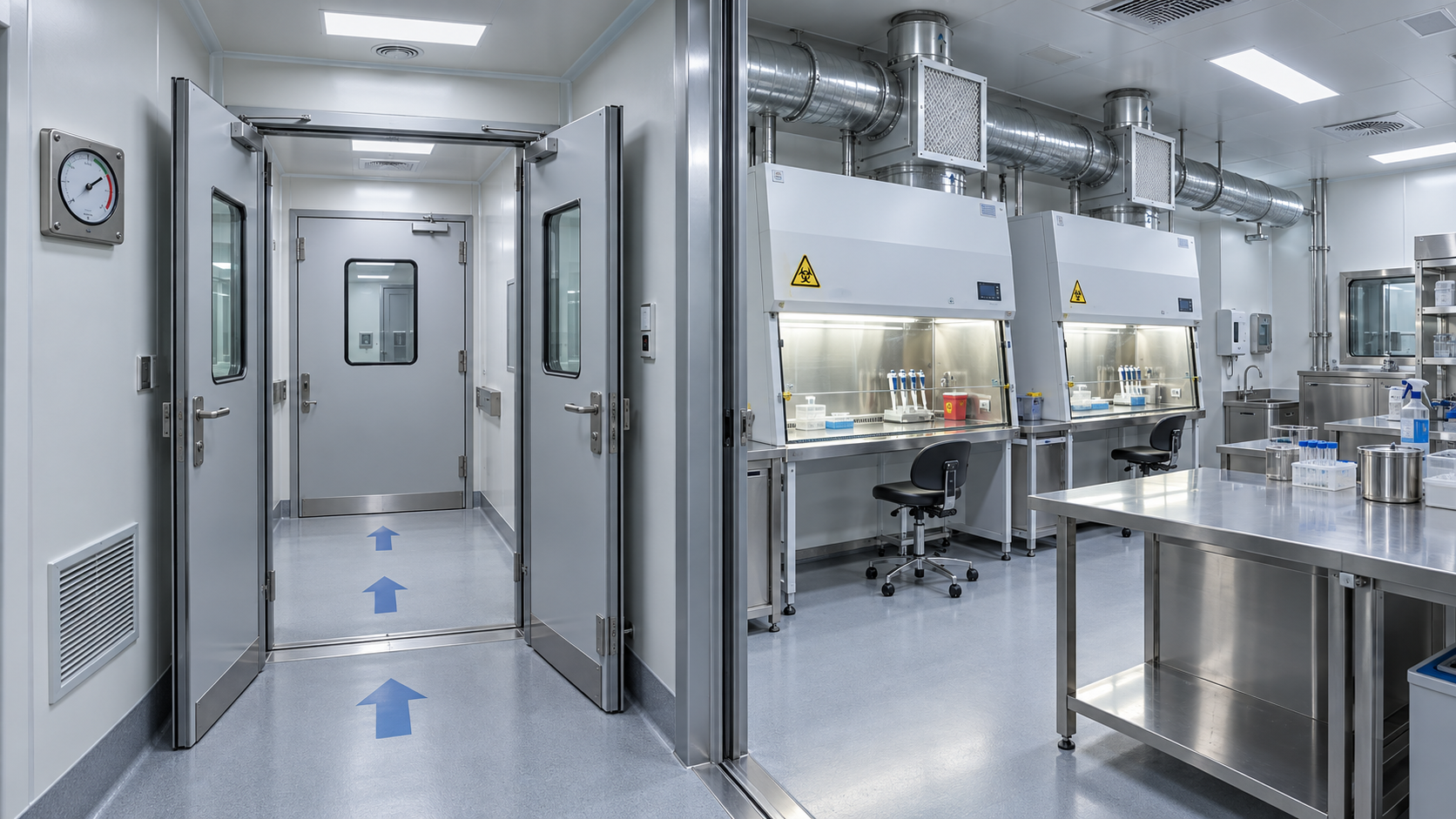
Room pressure differential testing confirms that pressure cascades are maintained between cleaner and less-clean areas. Stable pressure helps prevent contamination migration through doors and gaps.
Temperature and humidity testing ensures environmental conditions remain within specified limits. These values may affect operators, materials, equipment performance, and certain pharmaceutical processes.
Recovery testing measures how quickly the room returns to acceptable cleanliness after a contamination event or challenge. This gives useful insight into practical resilience during routine operations.
Noise, lighting, and alarm checks may also be included, depending on facility standards. While not all are classification tests, they still affect safe and effective cleanroom use.
How operators can prepare before validation testing starts
Many validation problems begin long before the actual test. Good preparation reduces delays, prevents repeat work, and helps ensure test results reflect realistic and controlled conditions.
First, confirm the room is physically complete and cleaned. Construction residue, unpacked items, temporary tools, or maintenance materials can distort particle counts and create unnecessary failures.
Second, make sure equipment status is clear. Installed process machines, benches, and carts should match the approved layout because airflow patterns often change when layouts change.
Third, verify that standard operating procedures are available and understood. Testing in an unrealistic room setup gives limited value if daily practices later differ from validated conditions.
Fourth, coordinate personnel behavior during testing. Operators should know when to enter, where to stand, how doors will be used, and what interventions are allowed during each test.
Finally, review monitoring instruments and calibration status. Reliable validation depends on reliable measurement, so expired calibration or poor probe placement can undermine the entire exercise.
Common validation failures and what usually causes them
When a Pharmaceutical Cleanroom validation test fails, the issue is often not mysterious. In many cases, the root cause comes from design mismatch, operational habits, or weak preparation.
One common problem is excessive particle counts. This may result from poor cleaning, excessive personnel movement, material shedding, filter leaks, or equipment that generates particles during operation.
Another frequent issue is unstable pressure differential. Causes include incorrect damper settings, leaking doors, blocked return paths, or unplanned changes in adjacent rooms.
Smoke studies may reveal turbulence around filling lines, doors, or operator positions. This often happens when equipment placement or user movement disrupts intended airflow protection.
Recovery test failure can indicate inadequate air change rates, poor airflow distribution, or hidden contamination sources. It may also show that room use exceeds the original design assumption.
Temperature and humidity drift may come from control tuning problems, sensor placement issues, high process heat, or HVAC capacity limits under occupied conditions.
For operators, the lesson is important. Validation failure is not always an engineering-only issue. Real behavior inside the room can directly affect performance and must be considered seriously.
Why documentation matters as much as technical performance
A cleanroom may perform well, but without proper records, the validated state cannot be demonstrated. In pharmaceutical environments, undocumented control is treated as uncontrolled performance.
Validation documentation typically includes protocols, approved test methods, instrument calibration records, raw data, deviations, investigation findings, final reports, and change control references.
Operators do not need to write every technical report, but they should understand why traceable records matter. Missing entries, unclear status labels, or undocumented room changes create compliance risk.
Accurate documentation also supports troubleshooting. When environmental trends shift, historical reports help teams compare current behavior against original validated performance and identify what changed.
This is especially valuable after maintenance, filter replacement, layout adjustments, or process expansion. Small modifications can affect airflow and pressure much more than users expect.
How to maintain the validated state after initial qualification
Initial success does not guarantee continued compliance. A pharmaceutical cleanroom stays reliable only when operators, maintenance teams, and quality staff protect the validated condition every day.
Routine environmental monitoring is the first safeguard. Scheduled particle monitoring, pressure checks, temperature review, humidity records, and alarm response all help detect early drift.
Good gowning and discipline are equally important. Rapid movement, poor material transfer practice, blocked air returns, and unnecessary door opening can gradually weaken cleanroom control.
Preventive maintenance must also be respected. Filters, fans, sensors, dampers, and control systems need scheduled checks because aging components may degrade cleanroom performance before obvious failure appears.
Change control is another critical rule. Any change to equipment, occupancy, room layout, airflow devices, or operational patterns should be reviewed for requalification impact.
Periodic requalification confirms that the room still meets its approved requirements. This may occur annually, semiannually, or according to site risk assessment and regulatory expectations.
Practical tips for operators during daily cleanroom use
Operators have more influence on cleanroom performance than many realize. Small routine actions can either support validation or slowly push the room away from controlled conditions.
Keep airflow paths open. Do not place bins, trolleys, packaging, or tools in front of supply filters or return grilles unless the layout specifically allows it.
Follow approved movement patterns. Sudden leaning into critical zones, unnecessary crossing, or crowding near exposed product can interrupt protective airflow and increase contamination risk.
Watch pressure and alarm indicators with purpose. Do not treat repeated alerts as normal background noise. Frequent alarms often point to real control issues that deserve investigation.
Report unusual room behavior early. Examples include difficult door closing, visible turbulence, unexplained dust, persistent temperature shifts, or different sound from air handling components.
Stay aligned with approved cleaning methods and frequencies. Even a technically strong room can fail expectations if cleaning chemistry, tools, or sequence are poorly controlled.
Conclusion: validation is a practical control tool, not just a compliance task
Pharmaceutical Cleanroom validation is best understood as proof that a controlled space can protect product quality under real operating conditions, not merely under ideal test assumptions.
For operators, the most useful mindset is practical. Know what is being tested, what normal room behavior looks like, and how daily actions affect the validated state.
When validation is planned well, tested correctly, documented clearly, and maintained through disciplined operation, the cleanroom becomes more stable, more predictable, and safer for pharmaceutical production.
That is the real value of pharmaceutical cleanroom validation. It turns invisible environmental control into visible operational confidence, helping teams prevent problems before product quality is at risk.
Get weekly intelligence in your inbox.
No noise. No sponsored content. Pure intelligence.
 Oct 21, 2026How often is cleanroom certification required under ISO 14644-2?Cleanroom Certification is generally recommended annually under ISO 14644-2. Learn when risk-based extensions apply and which changes trigger earlier testing to plan with confidence.
 Oct 21, 2026FASEB Comments on NIH Draft Policy for Research Involving BiohazardsFASEB comments on NIH’s draft biohazard research policy call for risk-based biosafety oversight. Explore potential implications for laboratories, suppliers, and compliance teams.
 Oct 20, 2026How to disinfect ultrasound machines without damaging surfacesLearn how to disinfect ultrasoundmachines without surface damage. Explore compatible products, wet contact times, and probe care to protect patients and equipment.
 Oct 20, 2026Ultrapure Water in Semiconductor Manufacturing: Reuse and Quality Control InsightsExplore ultrapure water reuse in semiconductor manufacturing, key UPW quality benchmarks and analytical insights to help evaluate suppliers and protect process purity.
 Oct 19, 2026How cooling affects warpage in injection-molded consumer electronics housingsOptimize plastic injection molding for consumer electronics with cooling strategies to reduce housing warpage and improve assembly fit. Discover practical checks for stable, efficient production.
 Oct 18, 2026Can air leaks prevent a dehumidifier from holding its target dew point?Why can't our dehumidifier maintain the target dew point? Discover how air leaks increase moisture loads, spot hidden faults, and find practical fixes to restore reliable dew-point control.
 Oct 17, 2026How semiconductor process water treatment removes trace organicsSee how semiconductor process water treatment removes trace organics with RO, UV oxidation, and polishing. Learn how TOC monitoring helps verify purity and pinpoint contamination.
 Oct 16, 2026How to choose ultra pure water piping materials to limit leachingChoose ultra pure water piping with confidence. Compare PVDF, PFA, and stainless steel, assess leaching risks, and learn how to qualify your system for reliable purity.
 Oct 15, 2026How to size a skid-mounted deionized water system for peak demandCompare deionized water systems skid configurations for peak demand. Learn how to balance production, storage, and pump capacity to prevent shortages and avoid costly oversizing.
 Oct 14, 2026When is collaborative laboratory robotics suitable for sample sorting?Explore when collaborative laboratory robotics suits sample sorting. Discover key checks for safety, traceability, container compatibility, and throughput before choosing your solution.
 Oct 13, 2026How sandwich panel joints affect airtightness in cleanroom systemsCleanroom Systems sandwich panels need reliable joints for airtightness. Discover how gaskets, sealants, and testing help reduce leakage and protect cleanroom pressure control.
 Oct 12, 2026How to verify USP compliance for ultra pure water systemsUltra Pure Water Systems USP compliance: learn how to verify water quality, sampling, sanitization, trends, and validation controls at every point of use.
 Oct 11, 2026How tight temperature control prevents cleanroom process driftCleanroom process temperature control systems prevent costly drift by stabilizing critical conditions, improving repeatability, and protecting sensitive production workflows.
 Oct 10, 2026When does organic contaminant removal require TOC treatment?Organic contaminant removal requires TOC treatment when dissolved organics threaten product quality, equipment reliability, or process control. Learn how to assess risks and choose the right solution.
 Oct 08, 2026What affects lead times for sheet metal bending services in Canada?Sheet metal bending services Canada: discover how material supply, tooling, tolerances, finishing, documentation, and freight affect lead times for reliable project delivery.
 Oct 07, 2026How HVAC design for semiconductor fabs prevents airborne contaminationHVAC design for semiconductor fabs prevents airborne contamination through advanced filtration, pressure cascades, airflow control, and real-time monitoring. Explore key strategies for cleaner, more reliable wafer production.
 Oct 06, 2026How photovoltaic modules waterproof technology prevents moisture damagephotovoltaic modules waterproof technology prevents moisture damage with durable seals, drainage, and junction-box protection. Explore practical selection and testing insights.
 Oct 05, 2026How ISO 14644 Europe requirements affect cleanroom qualificationISO 14644 Europe requirements shape cleanroom qualification, from particle classification and recovery testing to monitoring, GMP alignment, and change control.
 Oct 04, 2026How to assess a pharmaceutical cleanroom solutions supplier’s ISO capabilityPharmaceutical Cleanroom Solutions supplier assessment guide: evaluate ISO 14644 capability, validation evidence, airflow design, documentation, and long-term GMP readiness.
 Oct 03, 2026What EU standards govern the design of BSL-3 laboratories in Europe?BSL-3 laboratories Europe: explore EU directives, EN standards, HVAC containment, commissioning, and practical design strategies for compliant, resilient high-containment facilities.
 Oct 02, 2026How EN 1822 defines HEPA filtration efficiency for cleanroomsHEPA filtration EN 1822 explained: learn how MPPS testing, local leakage limits, and filter classes support reliable cleanroom decisions.
 Oct 01, 2026How pharmaceutical process water systems control microbial riskProcess water systems pharmaceutical teams rely on can control microbial risk through hygienic design, monitoring, and validated sanitization. Explore practical compliance strategies.
 Sep 30, 2026When does a negative pressure laboratory need BSL-3 containment?Negative pressure laboratory or BSL-3? Discover the risk factors, engineering controls, and containment requirements needed for safe, compliant laboratory planning.
 Sep 29, 2026How to evaluate a TOC-zero water treatment supplier for UPW systemsChoose a TOC-zero water treatment supplier with confidence. Compare UPW performance, monitoring, validation, materials, service capability, and lifecycle cost.
 Sep 28, 2026What drives sustainable cooling cost in high-precision facilities?Sustainable cooling cost in high-precision facilities depends on thermal stability, energy, water, controls, and resilience. Explore smarter lifecycle strategies.
 Sep 27, 2026How to compare freight forwarding services for time-critical shipmentsCompare freight forwarding services for time-critical shipments with practical insights on routing, customs, visibility, specialized handling, and contingency planning.
 Sep 26, 2026How environmental integrity in laboratories supports reliable test resultsEnvironmental Integrity in laboratories safeguards samples, instruments, and staff. Discover practical controls for contamination, monitoring, and reliable test results.