Semiconductor Cleanroom Design for ISO Class 1 Goals
Why does Semiconductor Cleanroom design for ISO Class 1 demand a different engineering mindset?
Semiconductor Cleanroom design for ISO Class 1 goals demands far more than low particle counts. It requires coordinated control of air, heat, motion, pressure, chemistry, and maintenance access.
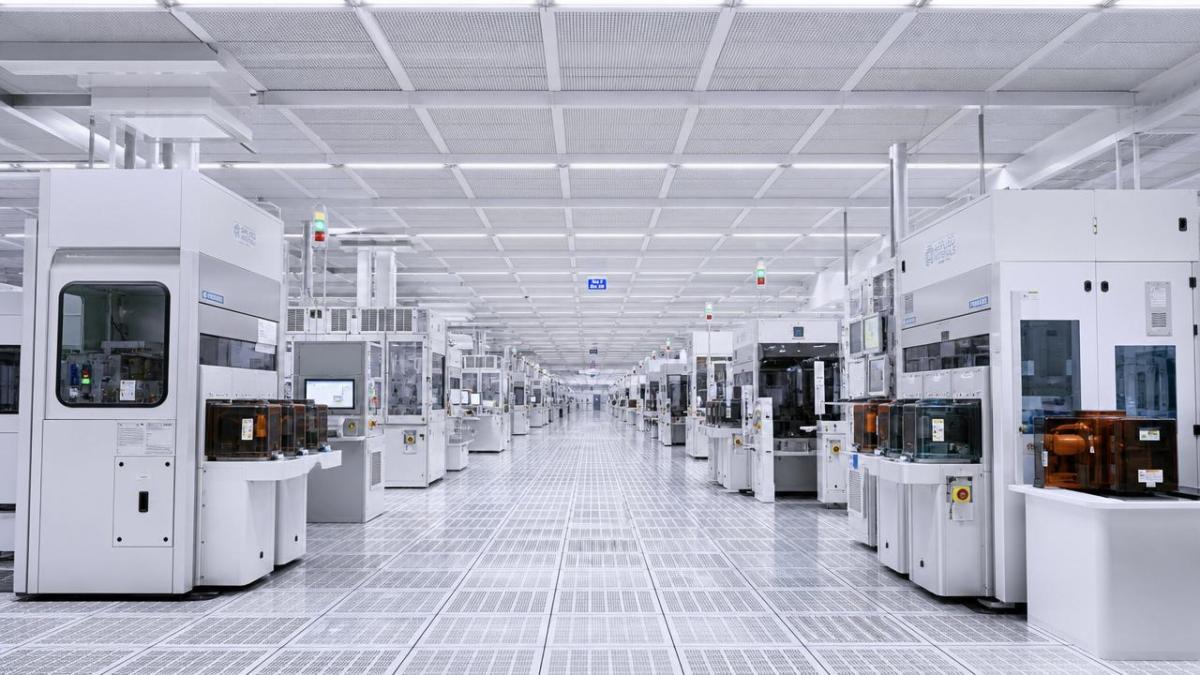
At this level, a single design compromise can affect yield, tool uptime, and process stability. Airborne particles are only one part of the contamination equation.
Molecular contamination, vibration, electrostatic discharge, temperature drift, and utility interruptions also shape production performance. That is why Semiconductor Cleanroom design must be systems-driven.
For advanced fabs, ISO Class 1 is usually tied to lithography, wafer inspection, metrology, and other sensitive process zones. These areas demand tight environmental repeatability every hour.
A high-quality Semiconductor Cleanroom design aligns architecture, HVAC, filtration, structural engineering, and digital monitoring. It also supports ISO 14644, ASHRAE, and SEMI expectations.
What environmental parameters matter most beyond particle control?
Many projects focus first on HEPA or ULPA filtration. That is necessary, but Semiconductor Cleanroom design for ISO Class 1 succeeds only when multiple parameters are stabilized together.
1. Airflow uniformity
Unidirectional airflow must remain consistent across process-critical zones. Dead spots, turbulence near tools, and uneven return paths can trap particles above wafers.
Ceiling coverage, FFU selection, plenum pressure balance, and raised-floor or low-wall return strategies should be modeled early. Computational fluid dynamics often helps reduce hidden risk.
2. Temperature and humidity stability
Subtle thermal drift can affect overlay accuracy, tool calibration, and material behavior. Semiconductor Cleanroom design often targets tighter performance than comfort-oriented buildings can deliver.
Humidity control also influences static generation, corrosion, and chemical process repeatability. Stable conditions matter more than average conditions.
3. Vibration and acoustic control
Sensitive semiconductor tools can be disrupted by building vibration, fan energy, piping resonance, and nearby traffic. Structural slabs, isolated equipment pads, and duct design are critical.
4. Pressure cascade integrity
A correct pressure hierarchy protects cleaner zones from adjacent spaces. Airlocks, gowning areas, chases, and sub-fabs must be integrated, not treated as separate rooms.
5. AMC and utility purity
Airborne molecular contamination can damage process chemistry even when particles are controlled. UPW, gases, exhaust, and material choices must support ultra-clean manufacturing conditions.
How should Semiconductor Cleanroom design be planned from layout to utilities?
Effective Semiconductor Cleanroom design starts with process flow, not just room geometry. Layout decisions determine contamination pathways, maintenance complexity, and future expansion options.
A practical approach is to divide design into functional layers. Each layer should support contamination control without creating operational bottlenecks.
- Process zoning for lithography, etch, deposition, metrology, and support spaces
- Personnel and material flows separated to reduce cross-contamination
- Interstitial space or service chases for maintenance without entering critical rooms
- Sub-fab coordination for exhaust, process piping, pumps, and vibration sources
- Utility redundancy for chilled water, power quality, compressed dry air, and UPW
In advanced facilities, Semiconductor Cleanroom design often uses modular bays and chase concepts. This supports staged commissioning and lowers disruption during tool changes.
Utility integration should never be deferred. Pipe routing, valve access, drainage, and leak detection must be planned with cleanability and response time in mind.
Digital monitoring also belongs in early design. Sensor placement for particles, pressure, temperature, humidity, and AMC should reflect actual process risk zones.
How do you evaluate airflow strategies, filtration, and energy performance together?
One common mistake is assuming that higher air change rates always mean better cleanliness. In Semiconductor Cleanroom design, excess airflow can increase energy demand and turbulence.
The better target is controlled, predictable airflow matched to process sensitivity. That requires balancing filtration efficiency, fan energy, heat loads, and room geometry.
Key evaluation points
- ULPA or high-efficiency terminal filtration appropriate for ISO Class 1 zones
- FFU layout optimized for coverage, maintenance, and pressure stability
- Low-turbulence airflow near tool load ports and wafer transfer areas
- Heat removal strategy coordinated with process tools and ceiling density
- Variable control logic that protects cleanliness while reducing partial-load energy use
High-performance chillers, efficient fans, and precise controls can improve both stability and lifecycle cost. This is where G-ICE benchmarking is valuable for comparing engineering options.
The goal is not minimum energy at any cost. The goal is resilient Semiconductor Cleanroom design that preserves process yield while avoiding unnecessary operating waste.
What risks and misconceptions often weaken ISO Class 1 cleanroom projects?
Several issues repeatedly affect project outcomes. Most of them appear early, during concept design, procurement alignment, or commissioning assumptions.
Frequent risks
- Designing for certification only, not for actual process behavior under production load
- Ignoring AMC, chemical compatibility, or material off-gassing in finishes and sealants
- Underestimating vibration from mechanical rooms, pumps, or adjacent buildings
- Treating the sub-fab as separate from Semiconductor Cleanroom design decisions
- Failing to plan commissioning, rebalancing, and continuous environmental verification
Another misconception is that ISO Class 1 means every room must reach the same level. In practice, risk-based zoning is often smarter and more cost effective.
Critical process islands can receive stricter controls, while surrounding areas are engineered to support them. That improves efficiency without weakening contamination control.
What should be considered for cost, schedule, commissioning, and long-term reliability?
Semiconductor Cleanroom design decisions shape capital expense and operating expense for years. Shortcuts during early planning often create expensive operational corrections later.
Budgeting should include more than cleanroom envelopes and air systems. It should also include controls integration, validation, spare capacity, and maintainability.
Commissioning should be staged. Factory acceptance, site testing, airflow visualization, particle mapping, and integrated system verification all add confidence before production ramp-up.
Long-term reliability depends on monitoring trends, not only alarms. Predictive insight helps detect filter loading, pressure drift, valve instability, and thermal imbalance before yield is affected.
How can Semiconductor Cleanroom design be judged more effectively during project review?
A stronger review process asks whether the cleanroom will perform under real process conditions, not only whether drawings look technically complete.
Use a practical checklist during design evaluation:
- Are critical process zones clearly identified and protected?
- Does airflow remain uniform around actual tool arrangements?
- Are vibration, AMC, and utility purity addressed explicitly?
- Do controls support both stability and energy optimization?
- Can the facility be expanded, serviced, and recommissioned efficiently?
The best Semiconductor Cleanroom design creates invisible reliability. It protects wafers, supports strict standards, and remains adaptable as process technology evolves.
For next steps, compare environmental targets, tool sensitivity, and utility architecture together. Then benchmark options against ISO 14644, ASHRAE, SEMI, and proven high-performance reference models.
That approach reduces design uncertainty and helps build an ISO Class 1 environment that performs consistently from qualification through long-term operation.
Get weekly intelligence in your inbox.
No noise. No sponsored content. Pure intelligence.
 Jun 23, 2026Patient Monitors: Key Features to Compare Before Hospital ProcurementPatientmonitors comparison guide for hospitals: evaluate accuracy, interoperability, alarm safety, scalability, and serviceability before procurement to reduce risk and improve ROI.
 Jun 23, 2026Vehicle to Grid in 2026: Grid Revenue, Battery Wear, and Policy ShiftsVehicle to grid in 2026: explore real grid revenue, battery wear tradeoffs, and policy shifts shaping smarter fleet energy strategies and resilient facility planning.
 Jun 23, 20263PL Logistics Costs Explained: When Outsourcing Improves Margin3PLlogistics costs explained: learn when outsourcing warehousing, fulfillment, and transport can cut fixed overhead, improve scalability, and protect margin with smarter cost control.
 Jun 23, 2026Sheet Metal Bending for HVAC Systems: Tolerance Limits That Affect FitSheet metal bending for HVAC systems directly affects duct fit, sealing, and lifecycle performance. Learn the tolerance limits that reduce leakage, rework, and installation risk.
 Jun 23, 2026How Returnable Transport Packaging Cuts Damage in Automotive Parts ShippingReturnable transport packaging for automotive parts cuts damage by improving stability, cleanliness, and handling control. See how lane-specific design lowers risk and supports smarter logistics.
 Jun 23, 2026MFDS Tightens ZLD TOC Proof Rules for KoreaMFDS tightens ZLD TOC proof rules for Korea from Oct 1, 2026. Learn how KOLAS-only reports may affect certification, export timing, and compliance planning.
 Jun 23, 2026ASEAN Customs Makes EPCIS Data Mandatory for CleanTech ExportsASEAN Customs EPCIS mandate reshapes CleanTech exports: learn how AMC Filtration, Smart Sensor, and IIoT Air Monitoring suppliers can avoid delays and stay shipment-ready.
 Jun 23, 2026Japan Sets JIS Class A Label Rule for UPW SystemsJapan sets JIS Class A label rule for UPW systems from July 1, 2026. Learn how JIS B 8601-2025 testing affects exports, procurement, certification, and market access in Japan.
 Jun 23, 2026FDA Sets July 1 API Rule for BSL-3/4 Lab SystemsFDA sets a July 1 API rule for BSL-3/4 lab systems, requiring RESTful API and FHIR 4.0.1 support. Learn how it affects exports, procurement, and compliance readiness.
 Jun 23, 2026EU Adopts EN ISO 14644-1:2026 for Cleanroom ExportsEU Adopts EN ISO 14644-1:2026 for Cleanroom Exports: learn how the new EU cleanroom standard affects shipments, third-party test reports, and compliance before Dec 1, 2026.
 Jun 22, 2026Energy Intelligence Reports in 2026: Which Signals Matter for Planning?Energy Intelligence Reports in 2026 reveal the signals that shape cost, resilience, compliance, and operational stability—helping planners turn volatility into smarter decisions.
 Jun 22, 2026Precision Engineering Services Europe: Key Checks Before Supplier ApprovalPrecision engineering services Europe: discover the 7 essential checks before approving a supplier, from tolerance control and traceability to quality systems and delivery reliability.
 Jun 22, 2026Commercial LED Lighting Upgrades: What Cuts Energy Bills Fastest?Commercial LED lighting upgrades can cut energy bills fast. Discover which retrofits, controls, and priority zones deliver the quickest ROI for warehouses, offices, and industrial facilities.
 Jun 22, 2026Adiabatic Cooling Systems vs Conventional Cooling: Cost and Water Trade-OffsAdiabatic cooling systems vs conventional cooling: compare energy savings, water trade-offs, ESG impact, and lifecycle cost to choose the best-fit solution.
 Jun 22, 2026How to Compare PCB Assembly Services for Low-Defect Productionpcb assembly services comparison guide for low-defect production. Learn how to assess process control, inspection, traceability, and quality systems to choose a reliable supplier.
 Jun 22, 2026MFDS Tightens ZLD TOC Validation for ImportsMFDS tightens ZLD TOC validation for imports from Sept. 1, 2026. Learn how KOLAS lab reports, spectra, and calibration records will affect certification, lead times, and Korea market access.
 Jun 22, 2026ASEAN Customs Makes EPCIS Uploads MandatoryASEAN Customs makes EPCIS uploads mandatory from July 15, 2026. Learn how CCPCS impacts cleanroom equipment, FFUs, AMC filtration units, and shipment compliance.
 Jun 22, 2026Japan Mandates JIS Class A Label for 18.2 MΩ·cm UPW SystemsJapan mandates JIS Class A labeling for 18.2 MΩ·cm UPW systems from July 2026. See who is affected, key compliance risks, and how importers and chip project bidders should prepare.
 Jun 22, 2026FDA Mandates API Compatibility for BSL-3/4 Lab EquipmentFDA mandates API compatibility for BSL-3/4 lab equipment starting July 1, 2026. Learn how RESTful API and MQTT rules affect 510(k), exports, compliance, and project delivery.
 Jun 22, 2026EN 14644-1:2026 Takes Effect for EU Cleanroom CertificationEN 14644-1:2026 now reshapes EU cleanroom certification for ISO Class 1–9 facilities. Learn how re-testing, report updates, and CE conformity documentation could impact exporters and compliance timelines.
 Jun 21, 2026How to Choose Linear Motion Systems for Precision and Service LifeLinear motion systems selection starts with process needs. Learn how to compare accuracy, contamination control, thermal behavior, and service life for smarter, longer-lasting performance.
 Jun 21, 2026Advanced Manufacturing Trends Reshaping Cost, Quality, and Lead TimeAdvanced Manufacturing is reshaping cost, quality, and lead time through cleaner environments, real-time monitoring, and smarter control. See the trends driving resilient, high-performance operations.
 Jun 21, 2026Market Forecast Signals to Track Before Setting Next Year’s BudgetMarket Forecast insights to track before setting next year’s budget—spot demand, energy, compliance, and capital signals early to avoid costly inefficiencies and make smarter investment decisions.
 Jun 21, 2026Healthcare Trends to Watch in 2026: AI, Staffing, and Patient AccessHealthcare Trends in 2026: explore how AI, staffing shortages, and patient access are reshaping healthcare operations, compliance, and resilient facility strategy.
 Jun 21, 2026Solar Panel Cost Breakdown: What Changes the Price in 2026Solar panel cost in 2026 depends on more than panel pricing. Discover what drives total installed cost, storage value, labor, design, and hidden risks before you approve a solar project.
 Jun 21, 2026EU Updates EN 14644-1:2026 for Cleanroom TestingEN 14644-1:2026 reshapes cleanroom testing, CE documentation, and EU compliance from 2027. Learn what exporters, testing providers, and procurement teams must review now.
 Jun 21, 2026MFDS Tightens ZLD Certification on TOC ValidationMFDS tightens ZLD certification rules by requiring KOLAS-authorized GLP TOC validation reports from Sept. 1, 2026. Learn how this impacts wastewater reuse equipment exports and compliance planning.