Future of District Heating: What Cuts Energy Loss First
As energy costs, carbon targets, and infrastructure resilience rise on the boardroom agenda, the future of district heating is no longer a policy debate but a strategic investment question.
The first priority is not adding every new technology at once. It is identifying what cuts energy loss first, then sequencing upgrades for measurable operational value.
Across campuses, industrial parks, hospitals, and mixed-use districts, the future of district heating depends on lower network temperatures, smarter controls, better insulation, and stronger system visibility.
This article outlines a practical path to evaluate loss reduction, protect compliance, and improve asset performance without treating heating networks as isolated utility infrastructure.
Why the Future of District Heating Needs a Clear Loss-Reduction Order
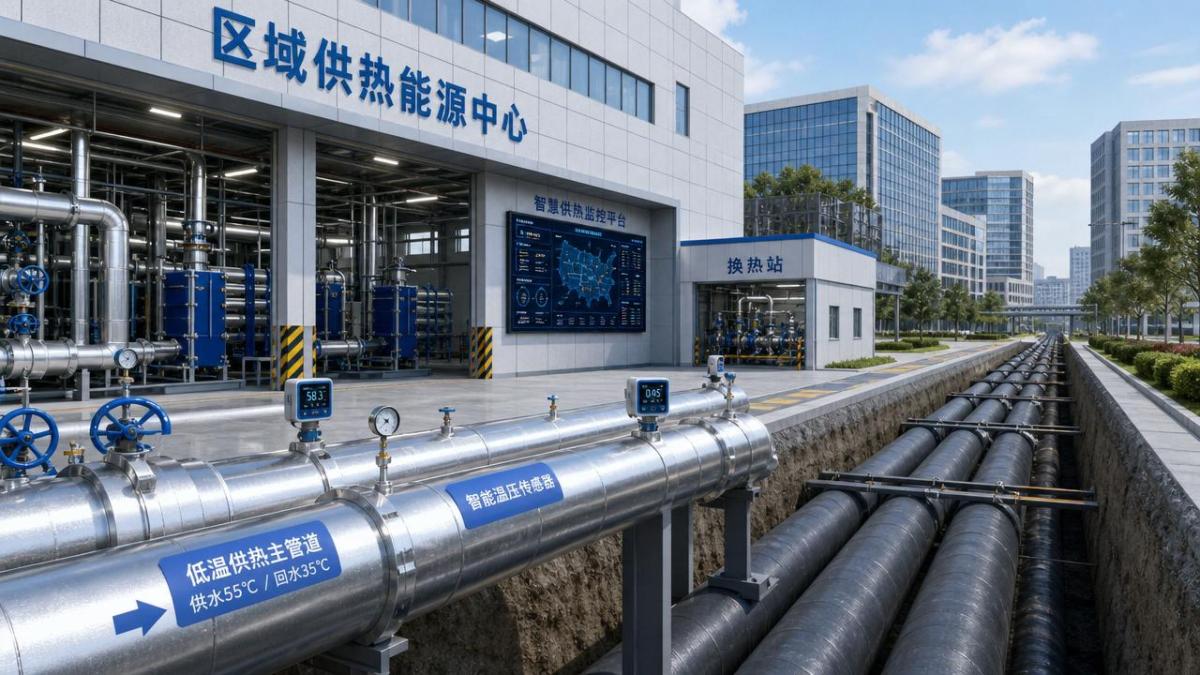
In most legacy networks, energy loss comes from a few recurring causes. High supply temperatures, weak pipe insulation, hydraulic imbalance, and poor return temperature control usually dominate the waste profile.
That is why the future of district heating should be assessed as a sequence. The best first move is the one that reduces distribution loss quickly and unlocks later efficiency gains.
For advanced infrastructure programs, this also supports digital governance. G-ICE benchmarking logic applies well here: pair thermodynamic performance with standards-based monitoring, traceability, and operational control.
A checklist approach prevents capital from drifting toward visible equipment while hidden losses remain untreated underground or at poorly controlled substations.
Priority Checks That Cut Energy Loss First
Use the following checks in order. Each item addresses a primary loss mechanism and helps define the future of district heating through measurable system improvement.
- Lower network supply temperature where building-side emitters and process loads allow, because every unnecessary degree increases heat loss, pumping stress, and integration barriers for low-carbon sources.
- Stabilize and reduce return temperature, since poor delta-T performance wastes generation capacity and raises circulating volume, making the future of district heating less efficient and more expensive.
- Survey buried and exposed pipes for insulation degradation, moisture ingress, and thermal bridges, because physical network losses often remain hidden until infrared inspection reveals chronic leakage zones.
- Rebalance hydraulics across loops and substations so flow matches real demand, preventing overcirculation, pressure instability, and local overheating that quietly drive avoidable system losses.
- Install smart metering and high-resolution sensors for flow, supply, return, pressure, and ambient conditions, enabling data-driven correction instead of seasonal guesswork or complaint-based maintenance.
- Upgrade substation heat exchangers, valves, and control logic where transfer performance is weak, because end-point inefficiency often forces higher network temperatures than necessary.
- Assess variable-speed pumping and differential pressure optimization, as many networks waste electricity and induce unstable thermal behavior through fixed-speed operation and poor pressure zoning.
- Verify compatibility with heat pumps, waste heat recovery, and thermal storage, because the future of district heating increasingly depends on lower-temperature, flexible, multi-source architectures.
What Usually Delivers the Fastest Energy-Loss Reduction
In many projects, lowering operating temperature is the fastest lever. Distribution loss falls immediately when pipe temperature drops, especially across long networks with aging insulation.
However, temperature reduction only works when return control improves too. If substations return water too hot, the network loses efficiency even after expensive source-side upgrades.
The second fast win is insulation repair in high-loss sections. This is especially true around valves, joints, service entries, plant rooms, and above-ground transition points.
The third fast win is better controls. Advanced forecasting, weather compensation, and digital twins can reduce overheating hours and identify persistent anomalies before they become embedded losses.
Together, these three steps often define the practical future of district heating more than headline generation technologies alone.
Application Notes for Different Operating Environments
Industrial parks and high-tech campuses
These sites often combine comfort heating with process-adjacent thermal loads. The future of district heating here must protect precision conditions while reducing network loss.
Check whether waste heat from chillers, compressors, or cleanroom support systems can feed low-temperature loops. Monitor thermal stability closely where environmental tolerances are tight.
Hospitals and research facilities
Resilience matters as much as efficiency. Loss reduction should not weaken redundancy, sterilization support, or regulated indoor conditions during maintenance or source switching.
Focus on substation control quality, backup scenarios, and documented performance verification. In these environments, unstable return temperature can become both an energy and compliance problem.
Mixed-use urban districts
Load diversity creates opportunities and complexity. Residential peaks, commercial schedules, and seasonal demand shifts require zoning strategies instead of one uniform operating profile.
The future of district heating in cities benefits from modular expansion, staged temperature reduction, and tenant-level data visibility that supports fair allocation and faster fault detection.
Commonly Overlooked Issues That Keep Losses High
Many networks focus on generation efficiency while ignoring distribution behavior. A high-efficiency plant cannot compensate for overheated water circulating through an unbalanced network.
Another frequent mistake is using annual averages to judge performance. Losses often spike during shoulder seasons, nighttime setbacks, or partial-load operation.
Control interoperability is also underestimated. If meters, pumps, substations, and supervisory platforms do not share clean data, optimization remains fragmented.
Asset age alone is not the right indicator. Some older pipe sections perform acceptably, while newer substations create high return temperatures because of poor commissioning.
Finally, carbon strategy can be misread. The future of district heating is not only about cleaner heat sources. It also requires lower thermal losses before electrification or heat recovery scales effectively.
A Practical Execution Path
Start with a heat-loss map. Combine pipe age, route type, thermal imaging, flow data, and supply-return trends to locate the largest avoidable losses.
- Rank opportunities by payback speed, operational risk, and carbon impact rather than by equipment category alone.
- Pilot lower-temperature operation in one controllable zone before rolling changes across the full network.
- Set delta-T, heat-loss, and pumping-intensity targets that can be trended monthly and audited seasonally.
- Use digital monitoring to verify post-upgrade performance instead of assuming savings from design values.
Where possible, align this work with broader HVAC, chilled water, or campus energy programs. Shared controls and thermal integration often improve the investment case.
This systems view is central to the future of district heating, especially where industrial climate control and environmental performance are already strategic priorities.
FAQ on the Future of District Heating
Is pipe replacement always the first answer?
No. The first answer is often lower operating temperature, return temperature correction, and targeted insulation repair. Full replacement should follow verified loss mapping.
Can digital controls alone solve energy loss?
Not alone. Controls reveal and reduce waste, but physical issues such as poor insulation, leaking valves, or oversized flow paths still require mechanical correction.
Why is return temperature so important?
High return temperature reduces usable delta-T, increases flow demand, and limits integration of heat pumps, waste heat, and storage. It is a core metric for the future of district heating.
Conclusion and Next Action
The future of district heating will be shaped less by slogans and more by disciplined loss reduction. Lower temperatures, better return performance, repaired insulation, and data-rich control create the strongest first results.
Begin with a network-level audit, identify the top three loss drivers, and validate each improvement with monitored outcomes. That sequence builds efficiency, resilience, and long-term asset value together.
When the hidden losses are addressed first, the future of district heating becomes more flexible, more bankable, and far better prepared for low-carbon industrial and urban growth.
Get weekly intelligence in your inbox.
No noise. No sponsored content. Pure intelligence.
 Oct 21, 2026How often is cleanroom certification required under ISO 14644-2?Cleanroom Certification is generally recommended annually under ISO 14644-2. Learn when risk-based extensions apply and which changes trigger earlier testing to plan with confidence.
 Oct 21, 2026FASEB Comments on NIH Draft Policy for Research Involving BiohazardsFASEB comments on NIH’s draft biohazard research policy call for risk-based biosafety oversight. Explore potential implications for laboratories, suppliers, and compliance teams.
 Oct 20, 2026How to disinfect ultrasound machines without damaging surfacesLearn how to disinfect ultrasoundmachines without surface damage. Explore compatible products, wet contact times, and probe care to protect patients and equipment.
 Oct 20, 2026Ultrapure Water in Semiconductor Manufacturing: Reuse and Quality Control InsightsExplore ultrapure water reuse in semiconductor manufacturing, key UPW quality benchmarks and analytical insights to help evaluate suppliers and protect process purity.
 Oct 19, 2026How cooling affects warpage in injection-molded consumer electronics housingsOptimize plastic injection molding for consumer electronics with cooling strategies to reduce housing warpage and improve assembly fit. Discover practical checks for stable, efficient production.
 Oct 18, 2026Can air leaks prevent a dehumidifier from holding its target dew point?Why can't our dehumidifier maintain the target dew point? Discover how air leaks increase moisture loads, spot hidden faults, and find practical fixes to restore reliable dew-point control.
 Oct 17, 2026How semiconductor process water treatment removes trace organicsSee how semiconductor process water treatment removes trace organics with RO, UV oxidation, and polishing. Learn how TOC monitoring helps verify purity and pinpoint contamination.
 Oct 16, 2026How to choose ultra pure water piping materials to limit leachingChoose ultra pure water piping with confidence. Compare PVDF, PFA, and stainless steel, assess leaching risks, and learn how to qualify your system for reliable purity.
 Oct 15, 2026How to size a skid-mounted deionized water system for peak demandCompare deionized water systems skid configurations for peak demand. Learn how to balance production, storage, and pump capacity to prevent shortages and avoid costly oversizing.
 Oct 14, 2026When is collaborative laboratory robotics suitable for sample sorting?Explore when collaborative laboratory robotics suits sample sorting. Discover key checks for safety, traceability, container compatibility, and throughput before choosing your solution.
 Oct 13, 2026How sandwich panel joints affect airtightness in cleanroom systemsCleanroom Systems sandwich panels need reliable joints for airtightness. Discover how gaskets, sealants, and testing help reduce leakage and protect cleanroom pressure control.
 Oct 12, 2026How to verify USP compliance for ultra pure water systemsUltra Pure Water Systems USP compliance: learn how to verify water quality, sampling, sanitization, trends, and validation controls at every point of use.
 Oct 11, 2026How tight temperature control prevents cleanroom process driftCleanroom process temperature control systems prevent costly drift by stabilizing critical conditions, improving repeatability, and protecting sensitive production workflows.
 Oct 10, 2026When does organic contaminant removal require TOC treatment?Organic contaminant removal requires TOC treatment when dissolved organics threaten product quality, equipment reliability, or process control. Learn how to assess risks and choose the right solution.
 Oct 08, 2026What affects lead times for sheet metal bending services in Canada?Sheet metal bending services Canada: discover how material supply, tooling, tolerances, finishing, documentation, and freight affect lead times for reliable project delivery.
 Oct 07, 2026How HVAC design for semiconductor fabs prevents airborne contaminationHVAC design for semiconductor fabs prevents airborne contamination through advanced filtration, pressure cascades, airflow control, and real-time monitoring. Explore key strategies for cleaner, more reliable wafer production.
 Oct 06, 2026How photovoltaic modules waterproof technology prevents moisture damagephotovoltaic modules waterproof technology prevents moisture damage with durable seals, drainage, and junction-box protection. Explore practical selection and testing insights.
 Oct 05, 2026How ISO 14644 Europe requirements affect cleanroom qualificationISO 14644 Europe requirements shape cleanroom qualification, from particle classification and recovery testing to monitoring, GMP alignment, and change control.
 Oct 04, 2026How to assess a pharmaceutical cleanroom solutions supplier’s ISO capabilityPharmaceutical Cleanroom Solutions supplier assessment guide: evaluate ISO 14644 capability, validation evidence, airflow design, documentation, and long-term GMP readiness.
 Oct 03, 2026What EU standards govern the design of BSL-3 laboratories in Europe?BSL-3 laboratories Europe: explore EU directives, EN standards, HVAC containment, commissioning, and practical design strategies for compliant, resilient high-containment facilities.
 Oct 02, 2026How EN 1822 defines HEPA filtration efficiency for cleanroomsHEPA filtration EN 1822 explained: learn how MPPS testing, local leakage limits, and filter classes support reliable cleanroom decisions.
 Oct 01, 2026How pharmaceutical process water systems control microbial riskProcess water systems pharmaceutical teams rely on can control microbial risk through hygienic design, monitoring, and validated sanitization. Explore practical compliance strategies.
 Sep 30, 2026When does a negative pressure laboratory need BSL-3 containment?Negative pressure laboratory or BSL-3? Discover the risk factors, engineering controls, and containment requirements needed for safe, compliant laboratory planning.
 Sep 29, 2026How to evaluate a TOC-zero water treatment supplier for UPW systemsChoose a TOC-zero water treatment supplier with confidence. Compare UPW performance, monitoring, validation, materials, service capability, and lifecycle cost.
 Sep 28, 2026What drives sustainable cooling cost in high-precision facilities?Sustainable cooling cost in high-precision facilities depends on thermal stability, energy, water, controls, and resilience. Explore smarter lifecycle strategies.
 Sep 27, 2026How to compare freight forwarding services for time-critical shipmentsCompare freight forwarding services for time-critical shipments with practical insights on routing, customs, visibility, specialized handling, and contingency planning.
 Sep 26, 2026How environmental integrity in laboratories supports reliable test resultsEnvironmental Integrity in laboratories safeguards samples, instruments, and staff. Discover practical controls for contamination, monitoring, and reliable test results.