China Releases AI Terminal Intelligence Grading Standard
On May 11, 2026, China’s Ministry of Industry and Information Technology (MIIT) and other agencies jointly issued the national guideline Artificial Intelligence Terminal Intelligence Grading (GB/Z 177—2026). This standard introduces mandatory classification criteria—including AI interoperability, inference response latency, and local decision-making capability—for eight categories of intelligent terminals, notably intelligent sensors. It directly affects export compliance pathways for industrial IoT monitoring equipment used in cleanrooms and sensing nodes in digital twin laboratories, with implications for EU CE and US FCC certification frameworks.
Event Overview
On May 11, 2026, the guideline Artificial Intelligence Terminal Intelligence Grading (GB/Z 177—2026) was officially released by MIIT and co-issuing authorities. It is the first national-level document to define mandatory intelligence grading metrics for intelligent sensors and seven other terminal types. Key metrics include AI interoperability requirements, maximum allowable inference response latency, and thresholds for local decision-making autonomy. The standard has been incorporated into China’s official export compliance guidance. Publicly confirmed information indicates that EU CE and US FCC certification bodies may reference this framework in future evaluations.
Industries Affected
Export-oriented manufacturers of IIoT monitoring devices
These enterprises produce intelligent sensors deployed in regulated environments such as semiconductor cleanrooms and pharmaceutical manufacturing facilities. They are affected because the new standard now defines mandatory AI interoperability and latency benchmarks for export-ready products. Compliance is required before inclusion in China’s export compliance guidance—and potentially before acceptance in third-country conformity assessments.
Suppliers of sensing nodes for digital twin laboratory systems
Vendors providing edge-sensing hardware used in research-grade digital twin platforms face revised technical qualification expectations. The standard explicitly includes ‘sensing nodes’ among the eight covered terminal types and sets minimum local decision-making levels—impacting firmware architecture, on-device model selection, and data handling protocols.
Contract manufacturers producing AI-integrated embedded terminals
Original design manufacturers (ODMs) and electronics manufacturing services (EMS) providers integrating AI accelerators or inference engines into sensor modules must now align production test procedures with GB/Z 177—2026’s grading tiers. This affects validation workflows, especially for latency-bound applications like real-time anomaly detection in industrial settings.
What Enterprises and Practitioners Should Monitor and Do Now
Track official implementation timelines and supplementary technical documents
The standard is published as a GB/Z (guideline) rather than a GB (mandatory national standard). Current more appropriate interpretation is that it establishes a binding framework for export compliance—but full enforcement mechanisms, testing protocols, and tier-specific pass/fail thresholds remain pending. Stakeholders should monitor MIIT’s official announcements and any forthcoming technical interpretations or conformity assessment guidelines.
Identify high-risk product categories and target markets
Products falling under ‘intelligent sensors’ and ‘digital twin sensing nodes’—especially those destined for EU or U.S. markets where CE/FCC alignment is anticipated—are at highest near-term exposure. Exporters should cross-map current product specifications against the three defined intelligence tiers (Basic, Intermediate, Advanced) in GB/Z 177—2026 to flag potential gaps in interoperability interfaces or on-device inference latency.
Distinguish between policy signal and operational requirement
Analysis shows this standard functions primarily as a regulatory signal: it signals intent to harmonize AI-capable terminal evaluation across trade gateways, but does not yet replace existing CE or FCC technical annexes. Enterprises should avoid premature re-engineering; instead, prioritize documentation alignment (e.g., updating technical files to reference GB/Z 177—2026 tiers) and initiate internal readiness assessments for interoperability testing infrastructure.
Prepare supply chain and vendor communication protocols
Manufacturers relying on third-party AI inference chips, SDKs, or middleware must verify whether their suppliers have begun benchmarking against GB/Z 177—2026’s latency and interoperability definitions. Proactive engagement with component vendors—especially those providing edge AI stacks—is recommended to assess roadmap compatibility and co-develop verification test cases.
Editorial Perspective / Industry Observation
Observably, GB/Z 177—2026 marks the first formal effort to classify AI capabilities at the terminal layer using measurable, cross-product metrics—not just functional descriptions. It is better understood as an institutional signal than an immediate compliance mandate: while embedded in export guidance, its influence on overseas certifications remains prospective and contingent on adoption by international conformity bodies. From an industry perspective, its significance lies less in immediate enforcement and more in establishing a reference taxonomy—potentially shaping how AI-enabled hardware is specified, tested, and compared across global B2B procurement channels. Continued attention is warranted as CE and FCC responses unfold over the next 12–18 months.
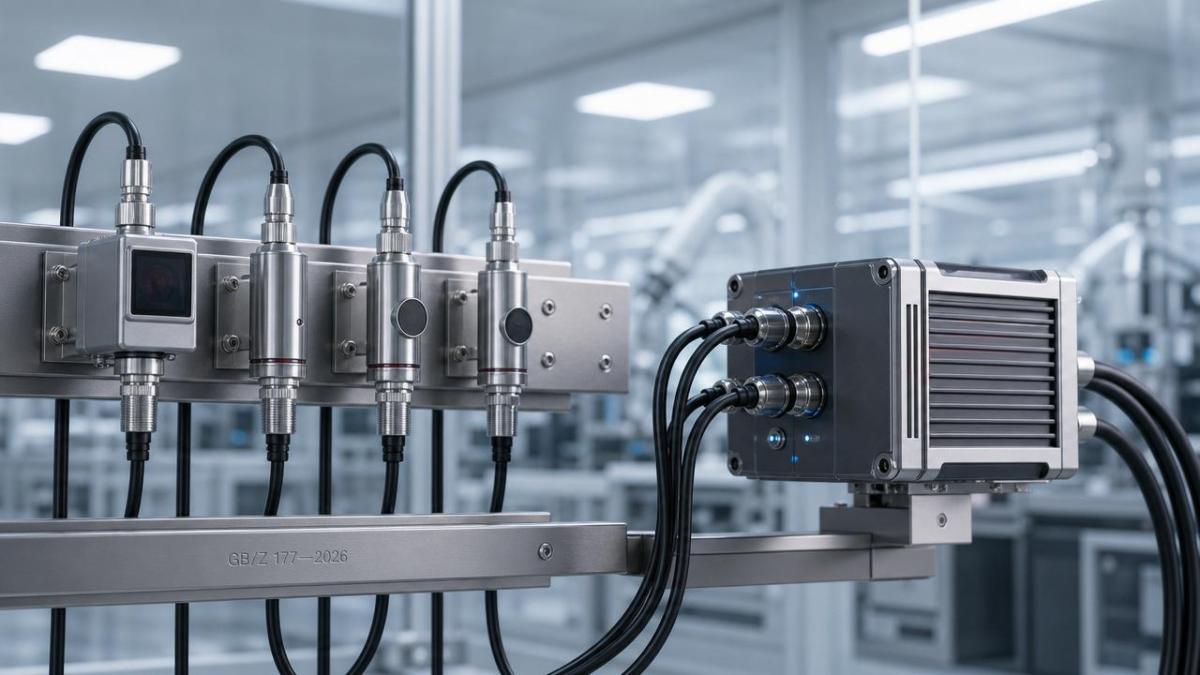
In summary, the release of GB/Z 177—2026 reflects a structural shift toward standardized evaluation of AI functionality in edge hardware—not merely software or cloud services. Its practical impact is currently concentrated in export documentation and pre-market technical alignment, rather than product redesign. For stakeholders, the most rational approach is to treat it as a forward-looking benchmark: monitor official clarifications, map existing portfolios to its tiers, and engage early with certification partners and component suppliers—without assuming immediate regulatory substitution.
Source: Official release by China’s Ministry of Industry and Information Technology (MIIT), May 11, 2026; public notice on inclusion in China’s Export Compliance Guidance. Note: CE and FCC alignment status remains unconfirmed and is subject to ongoing observation.
Get weekly intelligence in your inbox.
No noise. No sponsored content. Pure intelligence.
 Oct 21, 2026How often is cleanroom certification required under ISO 14644-2?Cleanroom Certification is generally recommended annually under ISO 14644-2. Learn when risk-based extensions apply and which changes trigger earlier testing to plan with confidence.
 Oct 21, 2026FASEB Comments on NIH Draft Policy for Research Involving BiohazardsFASEB comments on NIH’s draft biohazard research policy call for risk-based biosafety oversight. Explore potential implications for laboratories, suppliers, and compliance teams.
 Oct 20, 2026How to disinfect ultrasound machines without damaging surfacesLearn how to disinfect ultrasoundmachines without surface damage. Explore compatible products, wet contact times, and probe care to protect patients and equipment.
 Oct 20, 2026Ultrapure Water in Semiconductor Manufacturing: Reuse and Quality Control InsightsExplore ultrapure water reuse in semiconductor manufacturing, key UPW quality benchmarks and analytical insights to help evaluate suppliers and protect process purity.
 Oct 19, 2026How cooling affects warpage in injection-molded consumer electronics housingsOptimize plastic injection molding for consumer electronics with cooling strategies to reduce housing warpage and improve assembly fit. Discover practical checks for stable, efficient production.
 Oct 18, 2026Can air leaks prevent a dehumidifier from holding its target dew point?Why can't our dehumidifier maintain the target dew point? Discover how air leaks increase moisture loads, spot hidden faults, and find practical fixes to restore reliable dew-point control.
 Oct 17, 2026How semiconductor process water treatment removes trace organicsSee how semiconductor process water treatment removes trace organics with RO, UV oxidation, and polishing. Learn how TOC monitoring helps verify purity and pinpoint contamination.
 Oct 16, 2026How to choose ultra pure water piping materials to limit leachingChoose ultra pure water piping with confidence. Compare PVDF, PFA, and stainless steel, assess leaching risks, and learn how to qualify your system for reliable purity.
 Oct 15, 2026How to size a skid-mounted deionized water system for peak demandCompare deionized water systems skid configurations for peak demand. Learn how to balance production, storage, and pump capacity to prevent shortages and avoid costly oversizing.
 Oct 14, 2026When is collaborative laboratory robotics suitable for sample sorting?Explore when collaborative laboratory robotics suits sample sorting. Discover key checks for safety, traceability, container compatibility, and throughput before choosing your solution.
 Oct 13, 2026How sandwich panel joints affect airtightness in cleanroom systemsCleanroom Systems sandwich panels need reliable joints for airtightness. Discover how gaskets, sealants, and testing help reduce leakage and protect cleanroom pressure control.
 Oct 12, 2026How to verify USP compliance for ultra pure water systemsUltra Pure Water Systems USP compliance: learn how to verify water quality, sampling, sanitization, trends, and validation controls at every point of use.
 Oct 11, 2026How tight temperature control prevents cleanroom process driftCleanroom process temperature control systems prevent costly drift by stabilizing critical conditions, improving repeatability, and protecting sensitive production workflows.
 Oct 10, 2026When does organic contaminant removal require TOC treatment?Organic contaminant removal requires TOC treatment when dissolved organics threaten product quality, equipment reliability, or process control. Learn how to assess risks and choose the right solution.
 Oct 08, 2026What affects lead times for sheet metal bending services in Canada?Sheet metal bending services Canada: discover how material supply, tooling, tolerances, finishing, documentation, and freight affect lead times for reliable project delivery.
 Oct 07, 2026How HVAC design for semiconductor fabs prevents airborne contaminationHVAC design for semiconductor fabs prevents airborne contamination through advanced filtration, pressure cascades, airflow control, and real-time monitoring. Explore key strategies for cleaner, more reliable wafer production.
 Oct 06, 2026How photovoltaic modules waterproof technology prevents moisture damagephotovoltaic modules waterproof technology prevents moisture damage with durable seals, drainage, and junction-box protection. Explore practical selection and testing insights.
 Oct 05, 2026How ISO 14644 Europe requirements affect cleanroom qualificationISO 14644 Europe requirements shape cleanroom qualification, from particle classification and recovery testing to monitoring, GMP alignment, and change control.
 Oct 04, 2026How to assess a pharmaceutical cleanroom solutions supplier’s ISO capabilityPharmaceutical Cleanroom Solutions supplier assessment guide: evaluate ISO 14644 capability, validation evidence, airflow design, documentation, and long-term GMP readiness.
 Oct 03, 2026What EU standards govern the design of BSL-3 laboratories in Europe?BSL-3 laboratories Europe: explore EU directives, EN standards, HVAC containment, commissioning, and practical design strategies for compliant, resilient high-containment facilities.
 Oct 02, 2026How EN 1822 defines HEPA filtration efficiency for cleanroomsHEPA filtration EN 1822 explained: learn how MPPS testing, local leakage limits, and filter classes support reliable cleanroom decisions.
 Oct 01, 2026How pharmaceutical process water systems control microbial riskProcess water systems pharmaceutical teams rely on can control microbial risk through hygienic design, monitoring, and validated sanitization. Explore practical compliance strategies.
 Sep 30, 2026When does a negative pressure laboratory need BSL-3 containment?Negative pressure laboratory or BSL-3? Discover the risk factors, engineering controls, and containment requirements needed for safe, compliant laboratory planning.
 Sep 29, 2026How to evaluate a TOC-zero water treatment supplier for UPW systemsChoose a TOC-zero water treatment supplier with confidence. Compare UPW performance, monitoring, validation, materials, service capability, and lifecycle cost.
 Sep 28, 2026What drives sustainable cooling cost in high-precision facilities?Sustainable cooling cost in high-precision facilities depends on thermal stability, energy, water, controls, and resilience. Explore smarter lifecycle strategies.
 Sep 27, 2026How to compare freight forwarding services for time-critical shipmentsCompare freight forwarding services for time-critical shipments with practical insights on routing, customs, visibility, specialized handling, and contingency planning.
 Sep 26, 2026How environmental integrity in laboratories supports reliable test resultsEnvironmental Integrity in laboratories safeguards samples, instruments, and staff. Discover practical controls for contamination, monitoring, and reliable test results.