HVAC Supply Chain Resilience: Where Delays Still Hit Hard
HVAC supply chain resilience is no longer a back-office concern for project leaders. It remains a frontline project risk with direct impact on schedule certainty, capital efficiency, qualification timing, and compliance performance.
In industrial, laboratory, and controlled-environment programs, one delayed air handler, valve package, VFD, filter train, or chiller can stall entire commissioning sequences. That is why HVAC supply chain resilience now belongs inside technical planning, not only procurement reporting.
For facilities guided by ISO 14644, ASHRAE, SEMI, and biosafety requirements, resilience means more than sourcing alternatives. It means protecting validation logic, environmental stability, digital controls integration, and the long operating life of critical systems.
Why a checklist approach improves HVAC supply chain resilience
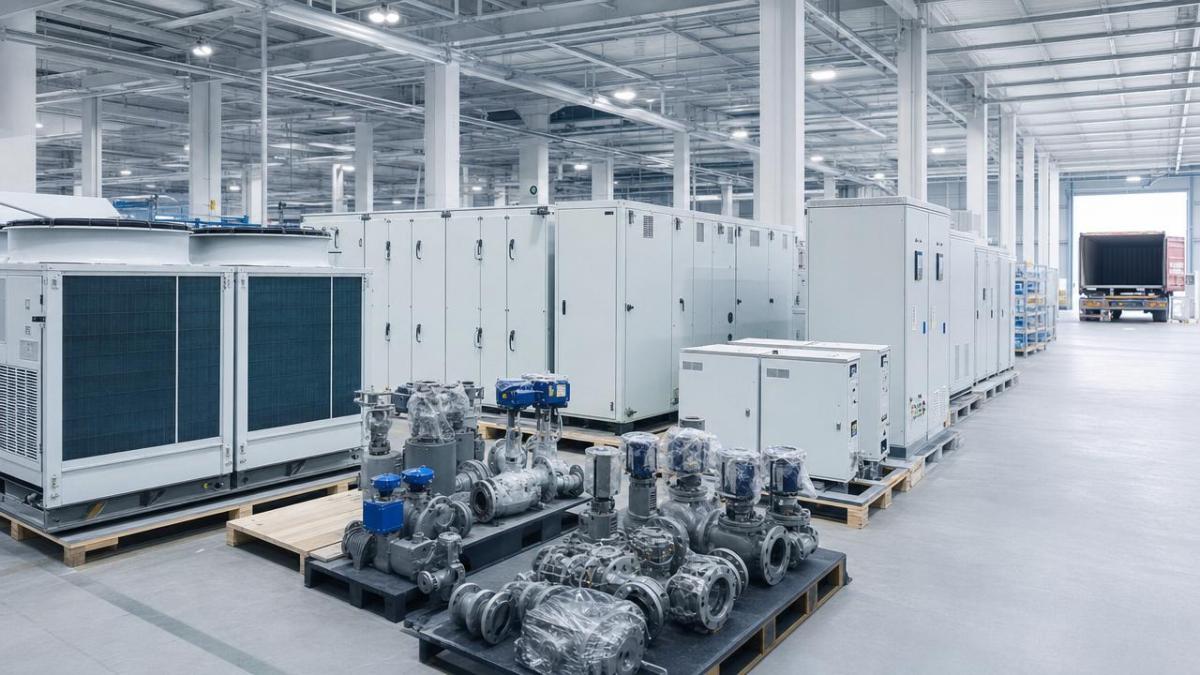
Supply risk in HVAC is rarely caused by one headline shortage alone. Delays now come from fragmented sub-tier dependencies, firmware bottlenecks, freight volatility, material substitutions, and approval cycles that appear late in execution.
A checklist structure helps teams test HVAC supply chain resilience at the component, package, and system level. It also forces earlier decisions on technical equivalency, lead-time exposure, installation sequence, and acceptance criteria.
This matters across the broader industrial sector, especially where cleanrooms, thermal precision, process exhaust, containment, or energy reporting are involved. Resilience is strongest when design, logistics, controls, and compliance are reviewed together.
Core checklist: where delays still hit hard
- Map long-lead equipment first, including chillers, custom AHUs, fan wall arrays, heat recovery modules, VFDs, BMS panels, and high-spec filtration assemblies tied to room certification.
- Break each package into subcomponents, because motors, coils, semiconductors, actuators, sensors, and control boards often create hidden delays after the main equipment appears released.
- Verify approved equals early, not after procurement. Technical substitutions can affect pressure drop, acoustics, control logic, cleanability, corrosion resistance, and documented compliance pathways.
- Check controls compatibility across BAS, PLC, and digital twin platforms. HVAC supply chain resilience fails quickly when gateways, firmware versions, or protocol support arrive misaligned with site standards.
- Prioritize validation-critical items such as HEPA housings, terminal units, balancing devices, and sensors used for monitoring differential pressure, temperature stability, humidity, and airflow visualization.
- Sequence by commissioning logic, not purchase date alone. A single missing actuator, damper, or network switch can block functional testing of much larger installed systems.
- Audit fabrication capacity and factory test windows. Delivery dates may look acceptable until FAT slots, witness approvals, or export documentation compress the actual release timeline.
- Review material exposure for stainless steel, copper, insulation, and specialty coatings. Material volatility still affects custom equipment cost, delivery confidence, and fabrication rework risk.
- Lock dimensional coordination before manufacture. HVAC supply chain resilience weakens when late BIM conflicts force casing changes, access revisions, or split shipments for large airside equipment.
- Protect spare parts strategy from day one. Filters, drives, sensors, belts, seals, and boards should be tied to startup and first-year operations, not treated as a later maintenance issue.
- Stress-test logistics routes for oversized or sensitive equipment. Port congestion, customs review, shock exposure, and weather delays still hit chillers, skids, and containment assemblies hard.
- Document escalation triggers with dates, alternates, and decision rights. Without structured intervention points, HVAC supply chain resilience becomes a passive status exercise rather than active risk control.
Scenario notes across industrial applications
Cleanrooms and semiconductor support spaces
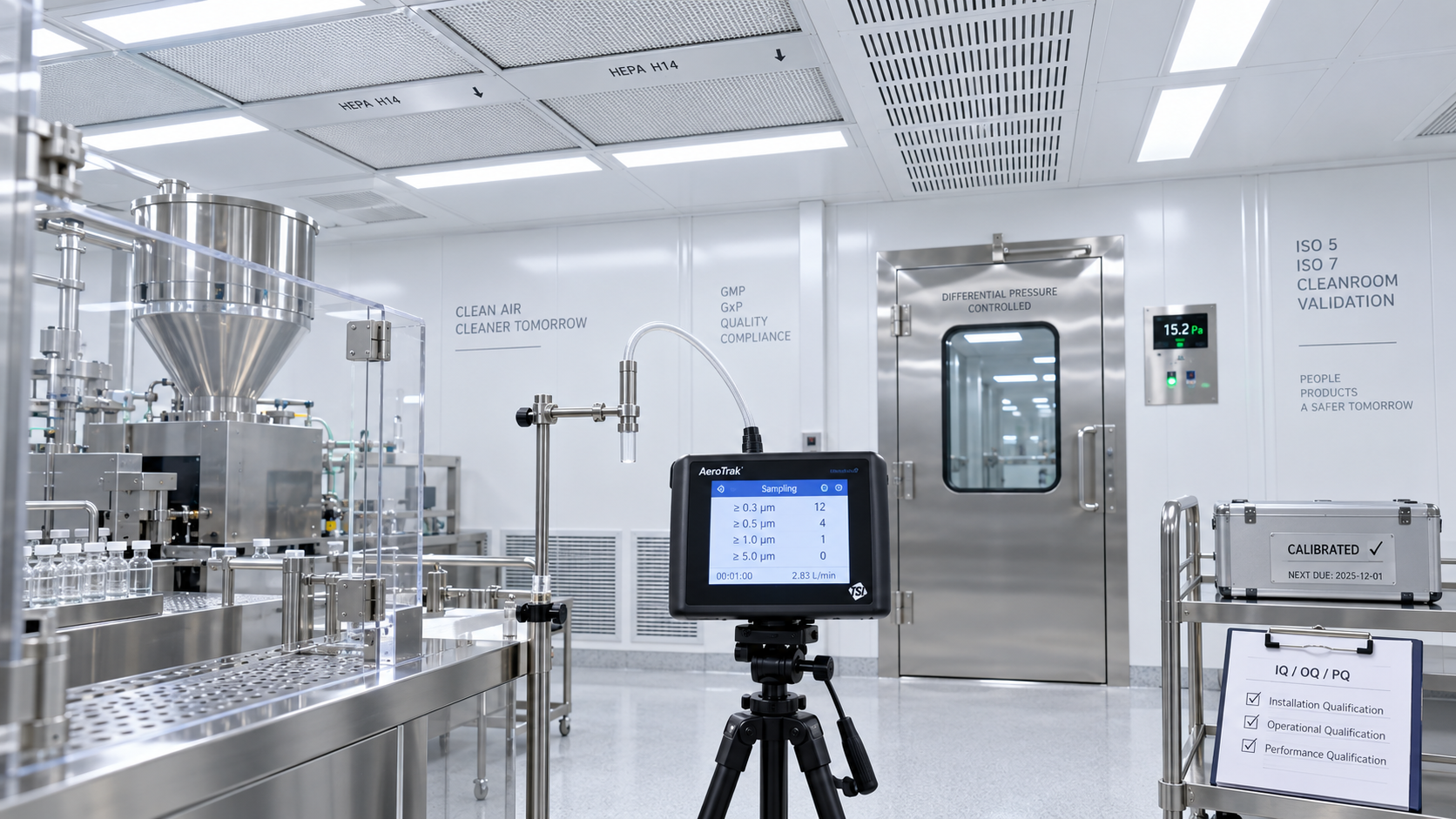
In contamination-controlled facilities, delays often cluster around FFUs, HEPA modules, airflow control devices, and precision thermal components. Even small substitutions can alter airflow patterns, noise levels, and room recovery performance.
HVAC supply chain resilience here depends on protecting certification intent. Filter media origin, fan motor type, vibration performance, and controls response should be reviewed against ISO 14644 and site qualification protocols.
Pharmaceutical and biosafety environments
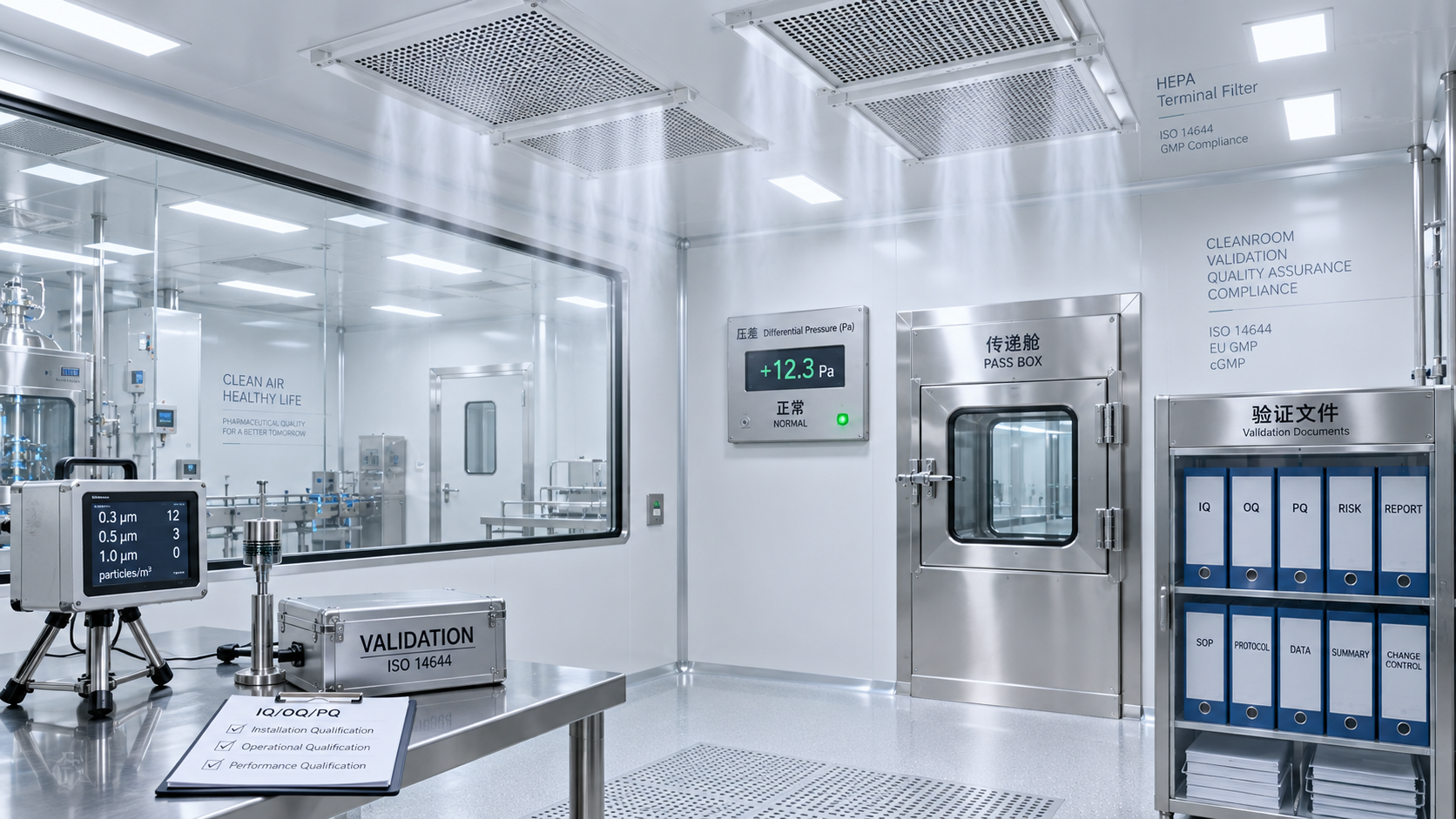
For GMP or containment spaces, equipment lead time is only part of the issue. Surface finish, cleanability, pressure cascade stability, and documented traceability can make seemingly available alternatives unusable.
Strong HVAC supply chain resilience requires tighter review of damper leakage class, control sequence validation, decontamination compatibility, and alarm integration. The risk is not only delay, but failed qualification after installation.
Data-intensive and precision thermal facilities
Facilities supporting advanced computing, test environments, or critical electronics often depend on narrow thermal tolerances. Delays in chillers, CRAH-related components, valves, and sensor networks can destabilize startup planning quickly.
In these settings, HVAC supply chain resilience should include redundancy strategy, controls latency review, and sensor calibration planning. Thermal stability depends as much on integrated tuning as on delivered hardware.
Commonly overlooked risks
Late approvals on submittals and equivalency packages
A technically acceptable product can still miss the schedule if review cycles run too long. HVAC supply chain resilience must include internal approval timing, not just supplier promises.
Firmware, cybersecurity, and network dependencies
Controllers may ship, but not with approved firmware or security settings. That gap can delay integration, remote visibility, and acceptance testing across smart environmental monitoring systems.
Underestimating TAB and sensor readiness
Testing, adjusting, and balancing often slips when sensors, ports, trend points, or final filter conditions are not ready. The result is a commissioning bottleneck that appears after mechanical completion.
Misaligned incoterms and site receiving constraints
Equipment can arrive on time but still fail to move to installation. Storage limits, lifting plans, packaging sequence, and customs paperwork should be treated as part of HVAC supply chain resilience.
Ignoring first-year consumables and critical spares
Projects sometimes achieve handover with no resilient operating buffer. Filters, transducers, control boards, and seals should be secured before occupancy and stabilization begin.
Practical execution steps that strengthen resilience
- Create a live risk register for every HVAC package, linking lead time, approval status, sub-tier exposure, FAT date, ship date, and commissioning dependency.
- Run monthly design-to-supply reviews and increase frequency when fabrication begins, especially for custom airside equipment and controls-heavy thermal systems.
- Prequalify alternates with documented performance criteria, dimensional limits, control compatibility, and compliance evidence before any schedule disruption occurs.
- Reserve factory witness slots and shipping windows early, then tie those dates to site readiness and installation access plans.
- Use milestone-based escalation, with clear trigger thresholds for redesign, split delivery, temporary operation strategy, or approved substitute release.
Where digital oversight is available, connect supplier milestones to project dashboards. Visualizing lead-time drift against validation and startup dates makes HVAC supply chain resilience measurable and actionable.
Conclusion and next actions
HVAC supply chain resilience is no longer about reacting to rare disruptions. It is about managing persistent friction across equipment, controls, approvals, logistics, and qualification pathways.
The most reliable approach is simple: identify critical packages early, test hidden dependencies, protect validation logic, and escalate before schedule pressure becomes operational risk.
Start with one project-specific checklist, rank the top ten HVAC exposure points, and review them against commissioning sequence this week. That single step often reveals where delays still hit hardest—and where resilience can be built fast.
Get weekly intelligence in your inbox.
No noise. No sponsored content. Pure intelligence.
 Oct 21, 2026How often is cleanroom certification required under ISO 14644-2?Cleanroom Certification is generally recommended annually under ISO 14644-2. Learn when risk-based extensions apply and which changes trigger earlier testing to plan with confidence.
 Oct 21, 2026FASEB Comments on NIH Draft Policy for Research Involving BiohazardsFASEB comments on NIH’s draft biohazard research policy call for risk-based biosafety oversight. Explore potential implications for laboratories, suppliers, and compliance teams.
 Oct 20, 2026How to disinfect ultrasound machines without damaging surfacesLearn how to disinfect ultrasoundmachines without surface damage. Explore compatible products, wet contact times, and probe care to protect patients and equipment.
 Oct 20, 2026Ultrapure Water in Semiconductor Manufacturing: Reuse and Quality Control InsightsExplore ultrapure water reuse in semiconductor manufacturing, key UPW quality benchmarks and analytical insights to help evaluate suppliers and protect process purity.
 Oct 19, 2026How cooling affects warpage in injection-molded consumer electronics housingsOptimize plastic injection molding for consumer electronics with cooling strategies to reduce housing warpage and improve assembly fit. Discover practical checks for stable, efficient production.
 Oct 18, 2026Can air leaks prevent a dehumidifier from holding its target dew point?Why can't our dehumidifier maintain the target dew point? Discover how air leaks increase moisture loads, spot hidden faults, and find practical fixes to restore reliable dew-point control.
 Oct 17, 2026How semiconductor process water treatment removes trace organicsSee how semiconductor process water treatment removes trace organics with RO, UV oxidation, and polishing. Learn how TOC monitoring helps verify purity and pinpoint contamination.
 Oct 16, 2026How to choose ultra pure water piping materials to limit leachingChoose ultra pure water piping with confidence. Compare PVDF, PFA, and stainless steel, assess leaching risks, and learn how to qualify your system for reliable purity.
 Oct 15, 2026How to size a skid-mounted deionized water system for peak demandCompare deionized water systems skid configurations for peak demand. Learn how to balance production, storage, and pump capacity to prevent shortages and avoid costly oversizing.
 Oct 14, 2026When is collaborative laboratory robotics suitable for sample sorting?Explore when collaborative laboratory robotics suits sample sorting. Discover key checks for safety, traceability, container compatibility, and throughput before choosing your solution.
 Oct 13, 2026How sandwich panel joints affect airtightness in cleanroom systemsCleanroom Systems sandwich panels need reliable joints for airtightness. Discover how gaskets, sealants, and testing help reduce leakage and protect cleanroom pressure control.
 Oct 12, 2026How to verify USP compliance for ultra pure water systemsUltra Pure Water Systems USP compliance: learn how to verify water quality, sampling, sanitization, trends, and validation controls at every point of use.
 Oct 11, 2026How tight temperature control prevents cleanroom process driftCleanroom process temperature control systems prevent costly drift by stabilizing critical conditions, improving repeatability, and protecting sensitive production workflows.
 Oct 10, 2026When does organic contaminant removal require TOC treatment?Organic contaminant removal requires TOC treatment when dissolved organics threaten product quality, equipment reliability, or process control. Learn how to assess risks and choose the right solution.
 Oct 08, 2026What affects lead times for sheet metal bending services in Canada?Sheet metal bending services Canada: discover how material supply, tooling, tolerances, finishing, documentation, and freight affect lead times for reliable project delivery.
 Oct 07, 2026How HVAC design for semiconductor fabs prevents airborne contaminationHVAC design for semiconductor fabs prevents airborne contamination through advanced filtration, pressure cascades, airflow control, and real-time monitoring. Explore key strategies for cleaner, more reliable wafer production.
 Oct 06, 2026How photovoltaic modules waterproof technology prevents moisture damagephotovoltaic modules waterproof technology prevents moisture damage with durable seals, drainage, and junction-box protection. Explore practical selection and testing insights.
 Oct 05, 2026How ISO 14644 Europe requirements affect cleanroom qualificationISO 14644 Europe requirements shape cleanroom qualification, from particle classification and recovery testing to monitoring, GMP alignment, and change control.
 Oct 04, 2026How to assess a pharmaceutical cleanroom solutions supplier’s ISO capabilityPharmaceutical Cleanroom Solutions supplier assessment guide: evaluate ISO 14644 capability, validation evidence, airflow design, documentation, and long-term GMP readiness.
 Oct 03, 2026What EU standards govern the design of BSL-3 laboratories in Europe?BSL-3 laboratories Europe: explore EU directives, EN standards, HVAC containment, commissioning, and practical design strategies for compliant, resilient high-containment facilities.
 Oct 02, 2026How EN 1822 defines HEPA filtration efficiency for cleanroomsHEPA filtration EN 1822 explained: learn how MPPS testing, local leakage limits, and filter classes support reliable cleanroom decisions.
 Oct 01, 2026How pharmaceutical process water systems control microbial riskProcess water systems pharmaceutical teams rely on can control microbial risk through hygienic design, monitoring, and validated sanitization. Explore practical compliance strategies.
 Sep 30, 2026When does a negative pressure laboratory need BSL-3 containment?Negative pressure laboratory or BSL-3? Discover the risk factors, engineering controls, and containment requirements needed for safe, compliant laboratory planning.
 Sep 29, 2026How to evaluate a TOC-zero water treatment supplier for UPW systemsChoose a TOC-zero water treatment supplier with confidence. Compare UPW performance, monitoring, validation, materials, service capability, and lifecycle cost.
 Sep 28, 2026What drives sustainable cooling cost in high-precision facilities?Sustainable cooling cost in high-precision facilities depends on thermal stability, energy, water, controls, and resilience. Explore smarter lifecycle strategies.
 Sep 27, 2026How to compare freight forwarding services for time-critical shipmentsCompare freight forwarding services for time-critical shipments with practical insights on routing, customs, visibility, specialized handling, and contingency planning.
 Sep 26, 2026How environmental integrity in laboratories supports reliable test resultsEnvironmental Integrity in laboratories safeguards samples, instruments, and staff. Discover practical controls for contamination, monitoring, and reliable test results.