ISO 14644 Compliance Checklist for New Cleanroom Projects
Launching a new cleanroom project without a clear ISO 14644 Compliance roadmap can trigger expensive redesigns, delayed qualification, and avoidable regulatory exposure. For project managers and engineering leaders, the practical priority is not simply understanding the standard, but translating it into design decisions, procurement controls, testing milestones, and documentation discipline from the earliest project phase.
The core search intent behind “ISO 14644 Compliance Checklist for New Cleanroom Projects” is highly actionable. Readers want a working checklist they can use to reduce risk, coordinate stakeholders, and confirm that the cleanroom will meet classification and operational targets at handover. They are looking for a project-facing guide, not a generic explanation of contamination control theory.
For this audience, the biggest concerns are predictable: which ISO 14644 requirements affect project scope first, where compliance failures usually happen, how to align HVAC, layout, materials, and testing, and what evidence must exist before commissioning. The most valuable content therefore focuses on decisions, sequencing, risk points, and acceptance criteria.
This article prioritizes those needs. Instead of broadly summarizing all cleanroom concepts, it concentrates on the compliance items that influence schedule, budget, validation success, and operational readiness for new builds and major retrofits.
What project managers should verify first in an ISO 14644 Compliance plan
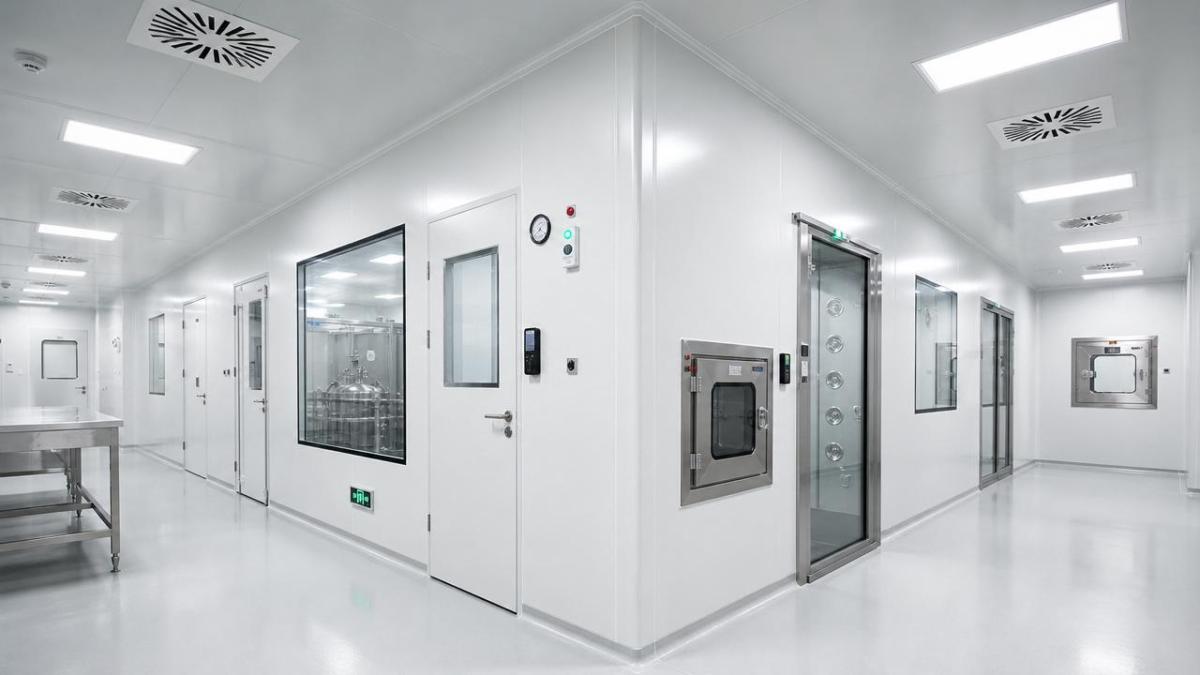
At the beginning of a new cleanroom project, the most important question is simple: what cleanroom performance must the facility reliably achieve in operation? Without that answer, design teams tend to overspecify some systems and overlook others.
ISO 14644 Compliance starts with a defined cleanliness objective, tied to process needs rather than assumptions. Project leaders should confirm the required ISO class, occupancy mode, process sensitivity, and whether classification applies “as-built,” “at-rest,” or “operational.”
This early definition affects room zoning, air change strategy, pressure cascades, filtration stages, finishes, airflow patterns, monitoring points, and testing protocols. If the classification basis is vague at concept stage, downstream coordination becomes unstable.
A practical first checkpoint is to establish a cleanroom requirements specification. This document should connect process risk, product sensitivity, personnel flow, material transfer, and environmental parameters into one approved design reference.
For engineering teams, this is where ISO 14644 Compliance becomes manageable. A documented target allows procurement, construction, and commissioning teams to work against measurable criteria instead of interpreting standards independently.
Checklist item 1: Define the cleanroom classification and operational state clearly
New projects often run into trouble because the required ISO class is selected too late or copied from another facility without confirming process relevance. Classification must reflect the contamination tolerance of the intended operation.
Project managers should verify the target ISO class for each critical room, airlock, and support area. Not all spaces require the same classification, and overclassifying non-critical zones increases capital and operating cost without proportional value.
It is also essential to define the occupancy condition for each compliance test. A room that passes particle counts in the as-built state may not meet expectations under at-rest or operational conditions.
When the operational state is not clarified, teams may complete construction successfully yet still fail acceptance because airflow, personnel behavior, or process equipment introduces unexpected contamination loads.
At this stage, document the room-by-room classification matrix, acceptance criteria, intended use, and the rationale behind each classification. This becomes the baseline for later audits, qualification, and change control.
Checklist item 2: Align layout, zoning, and material flow with contamination control
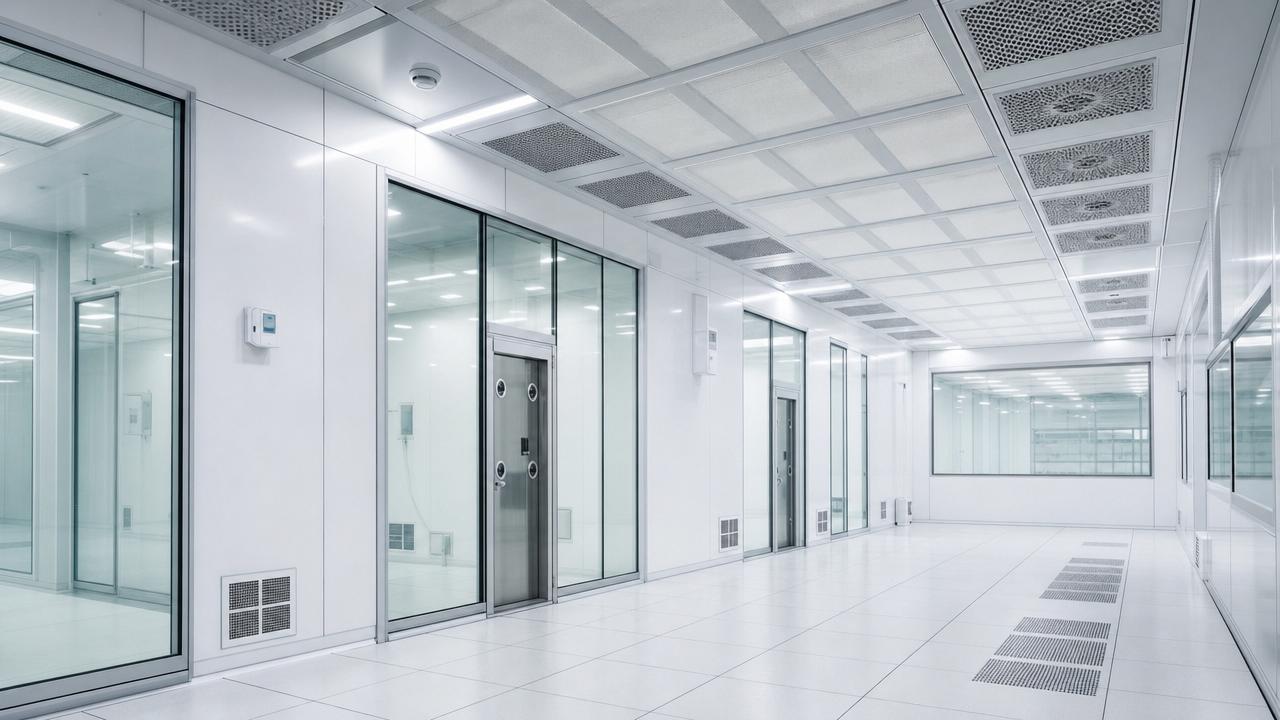
ISO 14644 Compliance is not achieved by filtration equipment alone. The physical layout must support controlled movement of people, equipment, waste, and product through the facility without creating cross-contamination pathways.
Project leaders should review whether personnel entry, gowning, material transfer, and exit routes are separated logically. Clean-to-less-clean directional flow is often easy to describe on drawings but difficult to maintain in real operations.
Zoning should include clear transitions between unclassified, controlled, and critical areas. Airlocks, pass boxes, staging spaces, and pressure differentials must work together with operational procedures rather than compensating for poor layout planning.
A common design risk appears when process utility access, maintenance access, and operator movement intersect in the same corridor or room edge. These conflicts can undermine both cleanliness and maintainability.
Before final design freeze, teams should conduct a contamination-focused workflow review. This should test real movements, not just idealized diagrams, and identify where personnel congestion or material handling may compromise compliance.
Checklist item 3: Confirm HVAC and airflow strategy supports the target ISO class
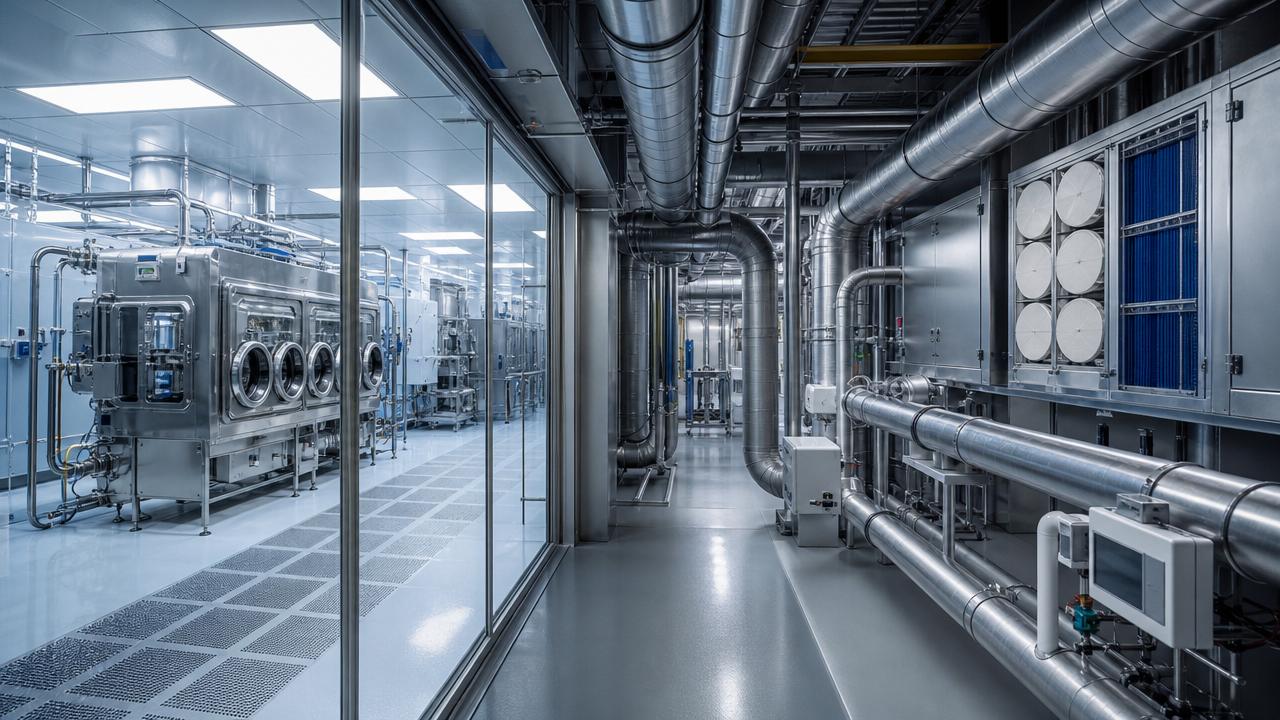
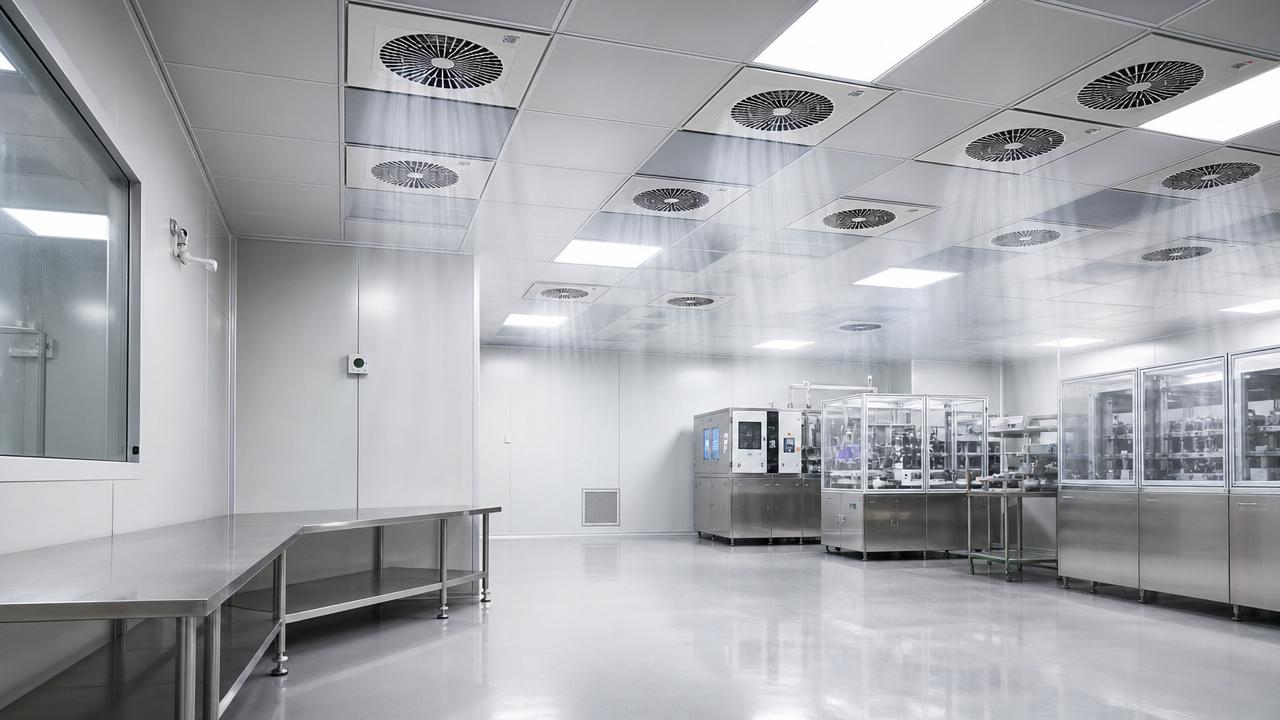
For most new cleanroom projects, HVAC design is the largest technical driver of ISO 14644 Compliance. If airflow strategy is not matched to room function, even well-built spaces can struggle to achieve stable classification.
Project managers should verify whether the design uses turbulent mixed flow, unidirectional flow, or a hybrid strategy. The choice should be based on process sensitivity, room geometry, heat load, equipment density, and required recovery performance.
Key review points include supply air volume, return air arrangement, air change rates, terminal filtration grade, fan filter unit coverage where relevant, and the control logic used to maintain room pressure and temperature stability.
Pressure cascades deserve special attention. Differential pressure should support containment of contamination while still allowing practical door operation and occupant comfort. Poorly coordinated pressure schemes often create instability between adjacent rooms.
Engineering teams should also test whether the airflow design remains effective after process tools, benches, partitions, and utility drops are installed. A compliant CFD review or mock-up can expose dead zones and turbulence risks early.
Checklist item 4: Select construction materials and details that reduce particle generation
Many compliance problems begin with finishes and detailing choices that seem minor during procurement. ISO 14644 Compliance depends not only on air cleanliness but also on how surfaces behave during cleaning, operation, and maintenance.
Walls, ceilings, flooring, sealants, doors, glazing, and penetrations should be smooth, cleanable, low-shedding, and resistant to the project’s cleaning chemicals and process environment. Joints should be minimized and easy to sanitize.
Project managers should require submittal reviews that evaluate contamination performance, not just general durability or aesthetics. Construction details around corners, light fixtures, access panels, and service penetrations are frequent weak points.
Another common failure occurs when late field modifications leave exposed edges, unsealed openings, or incompatible patch materials. These defects can become recurring particle sources after handover.
A practical checklist step is to include cleanroom-specific inspection hold points during installation. This prevents rework and ensures that workmanship quality supports long-term classification performance.
Checklist item 5: Build a testing and commissioning sequence around ISO 14644 requirements
Testing should not be treated as an end-of-project event. In successful cleanroom projects, commissioning is staged so that system performance is verified progressively, reducing the chance of discovering major failures at final qualification.
Project managers should align pre-functional checks, TAB activities, HEPA or ULPA integrity testing, pressure verification, airflow visualization, recovery assessment, and airborne particle counting into a clear commissioning matrix.
ISO 14644 Compliance depends on more than passing one particle test. The room must demonstrate stable environmental performance under defined conditions, supported by calibrated instruments and documented test procedures.
Acceptance criteria, sampling locations, sample volumes, test states, and re-test conditions should be agreed before commissioning begins. This avoids disputes between contractor, consultant, validation team, and end user during handover.
It is also wise to identify which failures can be corrected through balancing or controls tuning, and which indicate deeper design issues. That distinction protects schedule planning and prevents false confidence late in the project.
Checklist item 6: Control documentation, training, and traceability from day one
Even when physical systems perform well, projects can still stall if records are incomplete. For project leaders, documentation is a compliance deliverable, not administrative overhead.
Essential records typically include the user requirement specification, basis of design, room data sheets, equipment submittals, material certificates, installation records, calibration reports, FAT and SAT results, commissioning reports, and final test documentation.
These records should be organized according to a traceable structure that links each critical requirement to the corresponding design feature, installed component, and verification result. This reduces confusion during audits and qualification reviews.
Training is equally important. Operators, maintenance staff, and facility teams should understand the environmental logic of the cleanroom, including door discipline, gowning, cleaning methods, filter change practices, and alarm response.
Without operational readiness, a room may meet ISO 14644 Compliance at handover but drift out of control quickly after occupancy. Good projects therefore treat human factors as part of the compliance framework.
Where ISO 14644 Compliance projects most often fail
For new cleanroom builds, the most frequent failure pattern is late-stage discovery that the facility was designed to a vague cleanliness objective. This leads to reactive upgrades in airflow, filtration, or layout that are expensive and disruptive.
Another common problem is fragmented responsibility. Architects, HVAC engineers, process planners, contractors, and validation specialists may each assume another party is controlling compliance interpretation. The result is technical gaps between disciplines.
Teams also underestimate the impact of process equipment. Heat loads, exhaust demand, vibration, maintenance access, and localized particle generation can all undermine performance if not incorporated into the compliance strategy early.
Finally, some projects focus narrowly on initial classification tests and overlook long-term operability. If maintenance access is poor, cleaning is difficult, or controls are unstable, sustaining compliance becomes costly after occupancy.
Project managers can reduce these risks by using a phase-gated checklist with formal sign-off at concept design, detailed design, procurement, construction, commissioning, and operational readiness stages.
A practical ISO 14644 Compliance checklist for new project teams
Use the following checklist as a governance tool across the project lifecycle. Confirm required ISO class by room, occupancy state, process sensitivity, and contamination control rationale before design development begins.
Verify zoning, personnel flow, material flow, pressure relationships, and airlock strategy against actual operations. Confirm HVAC concept, filtration stages, air distribution, temperature and humidity tolerances, and controllability under full load conditions.
Review finish materials, detailing, penetration sealing, and cleanability requirements during submittal and installation. Establish hold points for construction quality inspections focused on particle generation and surface integrity.
Approve a commissioning plan that defines test methods, instruments, acceptance criteria, responsibilities, and re-test rules. Make sure particle counting, airflow performance, filter integrity, pressure verification, and recovery testing are coordinated.
Complete documentation turnover, operator training, SOP alignment, and post-handover monitoring plans. If any of these items are unresolved, the project is not fully ready, even if the cleanroom passes initial testing.
Why this matters beyond compliance
For project managers and engineering leaders, ISO 14644 Compliance is not only a technical obligation. It is a business protection mechanism that reduces rework, shortens qualification time, supports customer confidence, and strengthens lifecycle operating reliability.
In sectors where contamination control directly affects yield, product quality, biosafety, or research integrity, early compliance planning has measurable commercial value. It influences startup timing, asset utilization, maintenance burden, and audit readiness.
That is why the best cleanroom projects do not treat ISO 14644 as a final test hurdle. They use it as a design and execution framework from the first planning workshop onward.
If your team is launching a new cleanroom, the right question is not whether ISO 14644 Compliance will be checked at the end. It is whether every major design and delivery decision is already being made with compliance in view.
Get weekly intelligence in your inbox.
No noise. No sponsored content. Pure intelligence.
![]() Jun 02, 2026Maglev Chillers Gain as ±0.01°C Becomes FocusMaglev chillers with ±0.01°C control are gaining buyer focus as biopharma cooling standards evolve, signaling new opportunities for suppliers and procurement teams.
Jun 02, 2026Maglev Chillers Gain as ±0.01°C Becomes FocusMaglev chillers with ±0.01°C control are gaining buyer focus as biopharma cooling standards evolve, signaling new opportunities for suppliers and procurement teams. Jun 02, 2026China Eases UPW Module Export ReviewsChina eases UPW module export reviews under the 2026 hazardous waste exclusion list, helping semiconductor suppliers cut compliance costs and speed delivery.
 Jun 02, 2026FDA Tightens BSL-3/4 Import Rules for Decon SystemsFDA BSL-3/4 import rules now require ISO/IEC 17025 validation for Decon Systems. Learn how importers and suppliers can prepare before enforcement.
 Jun 02, 2026IEC Adds IIoT Calibration to Cleanroom ReviewIEC adds IIoT calibration to cleanroom review, introducing real-time NIST-traceable drift compensation requirements for ISO Class 1–9 certification.
 Jun 02, 2026ECHA SCIP Rule Adds AMC Regeneration DataECHA SCIP Rule Adds AMC Regeneration Data requirements for AMC filtration exporters, helping suppliers reduce EU customs risks and strengthen cleanroom compliance readiness.
 Jun 02, 2026Electric Wheelchairs: Battery Range vs. Daily UseElectric wheelchairs require more than big battery claims. Learn how range, comfort, terrain, and charging habits affect daily mobility before you choose.
 Jun 02, 2026Lathe Turning for Industrial Machinery: Tolerance ChecklistLathe turning for industrial machinery requires precise tolerance control. Explore key checks for runout, surface finish, thermal stability, and traceable quality.
 Jun 02, 2026Cleanroom Architecture Design for ISO Class StabilityCleanroom Architecture design strategies for ISO Class stability—optimize airflow, pressure, materials, monitoring, and energy to reduce contamination risk and protect critical operations.
 Jun 02, 2026Environmental Integrity Policies: Compliance Risks in 2026Environmental Integrity policies are critical in 2026. Learn key compliance risks, audit-ready evidence, and practical steps to protect cleanrooms, labs, and high-risk facilities.
 Jun 02, 2026SaaS Intelligence Reports: 2026 Metrics That MatterSaaS Intelligence Reports reveal the 2026 metrics leaders need to improve resilience, compliance, ESG performance, and predictive operational control.
 Jun 01, 2026Market Intelligence Reports: Signals That Support 2026 Expansion PlansMarket Intelligence Reports reveal the technical, regulatory, and ESG signals leaders need to plan resilient 2026 expansions with lower risk and stronger ROI.
 Jun 01, 2026Matter Compatible Devices: Setup Risks in Mixed Smart HomesMatter compatible devices can simplify mixed smart homes, but setup risks remain. Learn how to avoid pairing issues, network gaps, feature limits, and automation conflicts.
 Jun 01, 2026USB C Docking Stations: Power Delivery Limits to Check FirstUSB C docking stations can make or break workstation stability. Learn the key power delivery limits to check before buying for safer, smoother daily operation.
 Jun 01, 2026Healthcare Analytics in 2026: Data Quality Checks Before DeploymentHealthcare Analytics in 2026 demands trusted data before deployment. Learn key quality checks for completeness, traceability, compliance, and safer go-live decisions.
 Jun 01, 2026OEM Machined Parts: Tolerance Risks That Raise Assembly CostsOEMmachinedparts tolerance risks can drive rework, delays, and hidden assembly costs. Learn how to control specs, suppliers, and sourcing decisions.
 Jun 01, 2026China Excludes UPW Regeneration Modules from Hazardous Waste RulesChina exempts UPW regeneration modules from hazardous waste rules—key update for semiconductor suppliers, fabs & logistics firms. Learn implications & compliance steps.
 Jun 01, 2026Blue Bee Expo 2026: Maglev Chiller Export Orders Surge 210%; ±0.01°C Control Now Key EU/US Procurement CriterionBlue Bee Expo 2026: Maglev chiller export orders surge 210%; ±0.01°C control & Digital Twin validation now mandatory for EU/US tenders.
 Jun 01, 2026ECHA Updates SCIP Rules: AMC Filtration Exporters Must Disclose Regeneration ParametersAMC filtration exporters must now disclose adsorbent regeneration parameters in SCIP submissions—key for EU compliance. Act before 1 July 2026.
 Jun 01, 2026IEC Revises IEC 60335-2-102: New Mandatory Real-Time Calibration for IIoT Air Monitoring in Class 1–9 SystemsIEC 60335-2-102 revision mandates real-time IIoT air monitoring calibration for Class 1–9 cleanroom systems—act now to ensure compliance, certification & market access.
 Jun 01, 2026FDA Tightens Import Rules for BSL-3/4 Decon SystemsFDA tightens import rules for BSL-3/4 decon systems: Full-cycle biological validation now mandatory for U.S. market access—act before May 30, 2026.
 May 31, 2026Corrugated Plastic Boxes for Retail Packaging: When to Use ThemCorrugated plastic boxes for retail packaging offer durable, reusable, moisture-resistant solutions. Learn when they outperform cartons and how to choose the right design.
 May 31, 2026OEM Machined Parts: Tolerance Risks to CheckOEM machined parts can hide tolerance risks that cause leaks, vibration, contamination, or compliance issues. Learn key checks before supplier approval.
 May 31, 2026Solar Panels Wholesale Cost Guide 2026Solar panels wholesale cost guide for 2026: compare pricing, landed costs, certifications, and supplier risks to buy smarter and protect long-term ROI.
 May 31, 2026Medical Grade Silicone: Key Safety ChecksMedical grade silicone safety checks for QC teams: verify compliance, traceability, compatibility, and performance to reduce contamination risk and downtime.
 May 31, 2026How to Size Fan Filter Units for ISO CleanroomsFan Filter Units sizing guide for ISO cleanrooms: learn how to balance airflow, coverage, pressure, heat load, and energy cost for reliable contamination control.
 May 31, 2026Blue Bee Expo Nanjing 2026 Closes: Maglev Chillers See 210% Overseas Order GrowthMaglev chillers drive 210% overseas order growth at Blue Bee Expo Nanjing 2026 — discover how ±0.01°C precision & ASHRAE 188-2024 Annex J compliance are reshaping global HVAC procurement.
 May 31, 2026FDA Updates BSL-3/4 Lab Equipment Import Rules for Decon SystemsFDA updates BSL-3/4 lab equipment import rules for decon systems—new VHP/GHP validation requirements take effect immediately. Act now to avoid shipment delays.