Magnetic-Levitation Centrifugal Chillers: Payback or Premium?
Do Magnetic-Levitation Centrifugal Chillers deliver measurable ROI, or are they simply a premium capital expense? The answer depends on operating profile, energy pricing, redundancy strategy, and maintenance philosophy.
In precision facilities, cooling stability affects uptime, yield, compliance, and asset life. That makes Magnetic-Levitation Centrifugal Chillers more than a mechanical purchase.
This article examines payback, premium risk, lifecycle economics, and decision criteria for Magnetic-Levitation Centrifugal Chillers across high-performance industrial environments.
What are Magnetic-Levitation Centrifugal Chillers, and why do they attract premium pricing?
Magnetic-Levitation Centrifugal Chillers use oil-free magnetic bearings to suspend the compressor shaft. This reduces friction, lowers wear, and improves part-load efficiency.
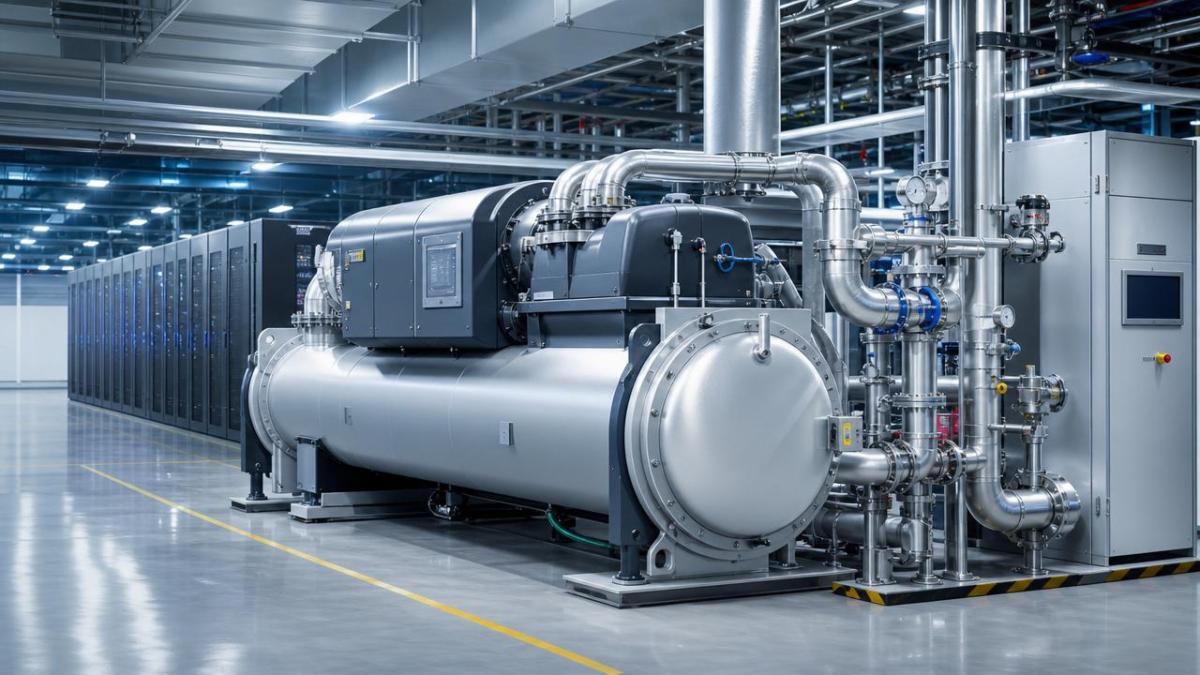
They are often paired with variable-speed drives and advanced controls. That combination supports rapid response under changing thermal loads.
The premium usually comes from higher engineering complexity, specialized components, and tighter performance tolerances. Initial cost is often higher than conventional screw or bearing-based centrifugal systems.
However, purchase price alone can be misleading. In semiconductor, pharmaceutical, data-intensive, and critical HVAC applications, lifecycle value often outweighs first cost.
Magnetic-Levitation Centrifugal Chillers are especially relevant where temperature stability, low vibration, quiet operation, and reduced maintenance matter.
Why oil-free design matters
Oil management can reduce heat-transfer performance in traditional chillers. Oil-free operation helps maintain cleaner heat exchangers and steadier efficiency over time.
That benefit becomes important in facilities pursuing strict process consistency, ISO-aligned environmental control, or energy benchmarking under ESG programs.
Do Magnetic-Levitation Centrifugal Chillers really shorten payback periods?
They can, but only under the right operating conditions. Payback improves when facilities run long hours, face high electricity prices, or experience variable part-load demand.
Many cooling plants operate below full load most of the year. Magnetic-Levitation Centrifugal Chillers often perform best in that reality, not only at design peak.
A meaningful payback model should include more than energy savings. It should also assess maintenance labor, consumables, downtime exposure, and control integration value.
Typical ROI drivers
- Lower kWh consumption during part-load operation
- Reduced oil-related maintenance tasks
- Fewer vibration-related mechanical issues
- Improved control accuracy for sensitive processes
- Potential utility incentives for efficient equipment
In favorable cases, payback may fall within three to seven years. In low-utilization facilities, the premium may remain difficult to recover.
This is why load profile analysis matters more than headline efficiency claims. Annualized performance is the real financial test.
Which applications benefit most from Magnetic-Levitation Centrifugal Chillers?
Magnetic-Levitation Centrifugal Chillers are not universal answers. They create the strongest value in facilities where process continuity and precise thermal control affect output quality.
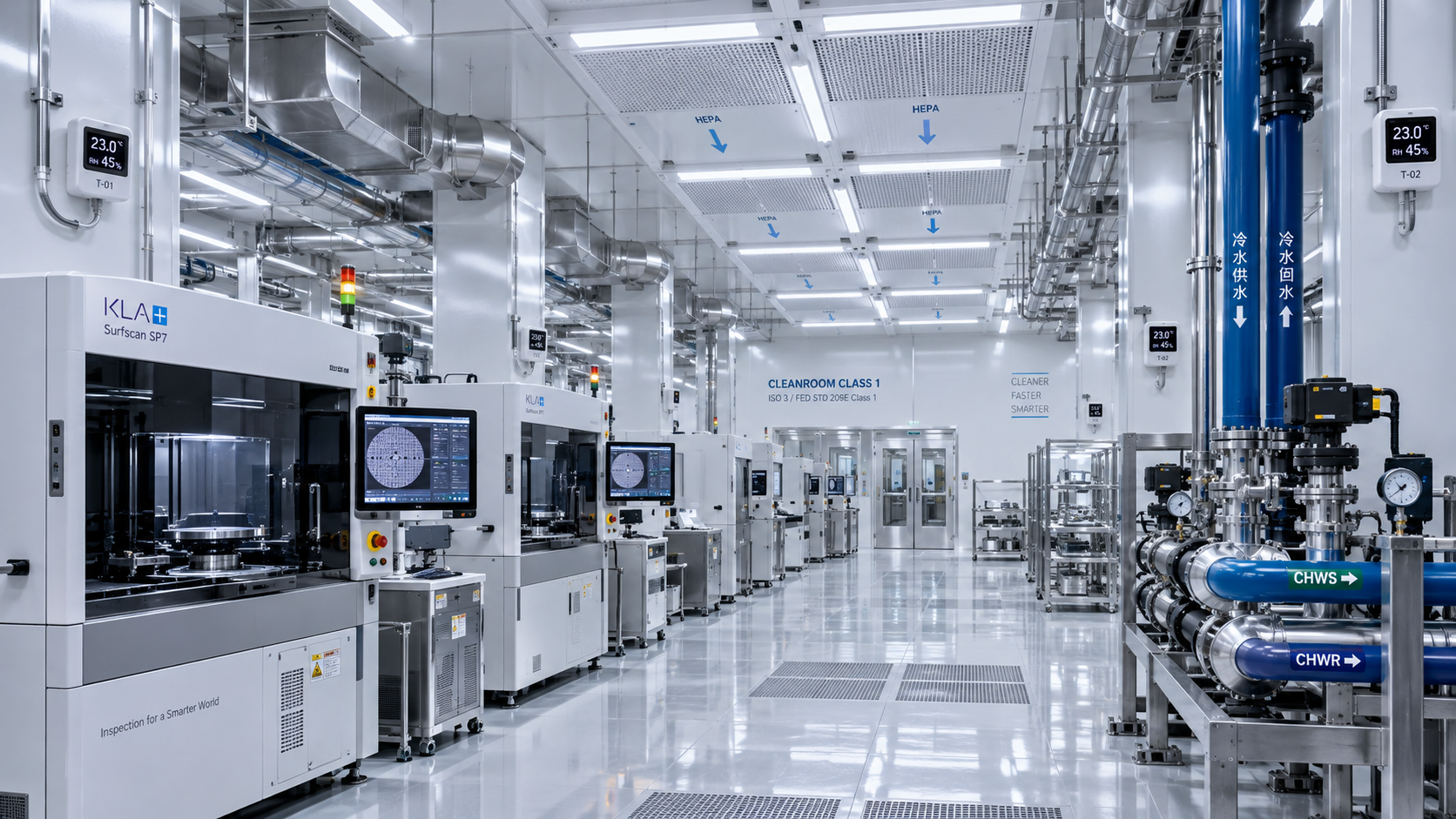
Examples include advanced cleanrooms, biopharmaceutical production, high-spec laboratories, electronics manufacturing, and large institutional campuses with variable cooling demand.
Best-fit scenarios
- Facilities with 24/7 or near-continuous operation
- Plants with frequent load swings across seasons or shifts
- Sites where downtime costs exceed energy costs
- Projects targeting low noise and low vibration
- Programs with carbon reduction or energy disclosure goals
In comprehensive industrial environments, thermal control supports more than comfort. It protects process windows, contamination control, and equipment reliability.
For that reason, Magnetic-Levitation Centrifugal Chillers can deliver indirect value not captured in simple energy spreadsheets.
How do Magnetic-Levitation Centrifugal Chillers compare with traditional chiller options?
Comparison should be based on operating behavior, not labels. Traditional screw chillers may offer lower first cost and simpler service familiarity.
Conventional centrifugal units may still perform well in stable, high-load conditions. But Magnetic-Levitation Centrifugal Chillers often lead in part-load efficiency and low-maintenance operation.
The right answer depends on plant architecture, redundancy philosophy, technician support, and energy tariffs. No technology is automatically superior in every duty cycle.
What hidden costs or risks should be reviewed before approval?
A premium technology can underperform financially if the evaluation is incomplete. Risk review should cover integration, service readiness, controls, and operational assumptions.
Common decision mistakes
- Using nameplate efficiency instead of annual operating profiles
- Ignoring water-side design and pump energy interactions
- Assuming all service teams support magnetic bearing systems equally
- Missing electrical quality requirements or startup conditions
- Undervaluing downtime risk in critical production environments
Magnetic-Levitation Centrifugal Chillers also rely on sophisticated controls. Commissioning quality strongly influences whether expected efficiency is actually achieved.
Another hidden issue is oversizing. An oversized high-efficiency chiller may never reach its economic potential, regardless of technology class.
How should lifecycle value be calculated for Magnetic-Levitation Centrifugal Chillers?
A strong model combines capex, opex, reliability, and strategic value. That is especially important in facilities where cooling affects product quality or regulatory performance.
Use a multi-year framework rather than a single-year energy estimate. Ten to twenty years is common for serious asset evaluation.
Recommended evaluation checklist
- Annual cooling load by hour or season
- Projected utility rate escalation
- Maintenance labor and spare parts assumptions
- Process loss exposure from unplanned outages
- Control system compatibility and commissioning scope
- Carbon accounting or ESG reporting benefits
- Residual value and replacement timing
This method shows whether Magnetic-Levitation Centrifugal Chillers are a payback engine or a premium with limited return.
FAQ summary table
Magnetic-Levitation Centrifugal Chillers are neither automatic bargains nor unjustified luxuries. Their value emerges when efficiency, reliability, and process sensitivity are analyzed together.
In high-performance industrial settings, the real question is not simple capex. It is whether the cooling asset strengthens operational continuity and long-term cost control.
Before approval, build a lifecycle model, validate part-load performance, and review commissioning depth. That practical step reveals whether Magnetic-Levitation Centrifugal Chillers mean payback or premium.
Get weekly intelligence in your inbox.
No noise. No sponsored content. Pure intelligence.
 Oct 21, 2026How often is cleanroom certification required under ISO 14644-2?Cleanroom Certification is generally recommended annually under ISO 14644-2. Learn when risk-based extensions apply and which changes trigger earlier testing to plan with confidence.
 Oct 21, 2026FASEB Comments on NIH Draft Policy for Research Involving BiohazardsFASEB comments on NIH’s draft biohazard research policy call for risk-based biosafety oversight. Explore potential implications for laboratories, suppliers, and compliance teams.
 Oct 20, 2026How to disinfect ultrasound machines without damaging surfacesLearn how to disinfect ultrasoundmachines without surface damage. Explore compatible products, wet contact times, and probe care to protect patients and equipment.
 Oct 20, 2026Ultrapure Water in Semiconductor Manufacturing: Reuse and Quality Control InsightsExplore ultrapure water reuse in semiconductor manufacturing, key UPW quality benchmarks and analytical insights to help evaluate suppliers and protect process purity.
 Oct 19, 2026How cooling affects warpage in injection-molded consumer electronics housingsOptimize plastic injection molding for consumer electronics with cooling strategies to reduce housing warpage and improve assembly fit. Discover practical checks for stable, efficient production.
 Oct 18, 2026Can air leaks prevent a dehumidifier from holding its target dew point?Why can't our dehumidifier maintain the target dew point? Discover how air leaks increase moisture loads, spot hidden faults, and find practical fixes to restore reliable dew-point control.
 Oct 17, 2026How semiconductor process water treatment removes trace organicsSee how semiconductor process water treatment removes trace organics with RO, UV oxidation, and polishing. Learn how TOC monitoring helps verify purity and pinpoint contamination.
 Oct 16, 2026How to choose ultra pure water piping materials to limit leachingChoose ultra pure water piping with confidence. Compare PVDF, PFA, and stainless steel, assess leaching risks, and learn how to qualify your system for reliable purity.
 Oct 15, 2026How to size a skid-mounted deionized water system for peak demandCompare deionized water systems skid configurations for peak demand. Learn how to balance production, storage, and pump capacity to prevent shortages and avoid costly oversizing.
 Oct 14, 2026When is collaborative laboratory robotics suitable for sample sorting?Explore when collaborative laboratory robotics suits sample sorting. Discover key checks for safety, traceability, container compatibility, and throughput before choosing your solution.
 Oct 13, 2026How sandwich panel joints affect airtightness in cleanroom systemsCleanroom Systems sandwich panels need reliable joints for airtightness. Discover how gaskets, sealants, and testing help reduce leakage and protect cleanroom pressure control.
 Oct 12, 2026How to verify USP compliance for ultra pure water systemsUltra Pure Water Systems USP compliance: learn how to verify water quality, sampling, sanitization, trends, and validation controls at every point of use.
 Oct 11, 2026How tight temperature control prevents cleanroom process driftCleanroom process temperature control systems prevent costly drift by stabilizing critical conditions, improving repeatability, and protecting sensitive production workflows.
 Oct 10, 2026When does organic contaminant removal require TOC treatment?Organic contaminant removal requires TOC treatment when dissolved organics threaten product quality, equipment reliability, or process control. Learn how to assess risks and choose the right solution.
 Oct 08, 2026What affects lead times for sheet metal bending services in Canada?Sheet metal bending services Canada: discover how material supply, tooling, tolerances, finishing, documentation, and freight affect lead times for reliable project delivery.
 Oct 07, 2026How HVAC design for semiconductor fabs prevents airborne contaminationHVAC design for semiconductor fabs prevents airborne contamination through advanced filtration, pressure cascades, airflow control, and real-time monitoring. Explore key strategies for cleaner, more reliable wafer production.
 Oct 06, 2026How photovoltaic modules waterproof technology prevents moisture damagephotovoltaic modules waterproof technology prevents moisture damage with durable seals, drainage, and junction-box protection. Explore practical selection and testing insights.
 Oct 05, 2026How ISO 14644 Europe requirements affect cleanroom qualificationISO 14644 Europe requirements shape cleanroom qualification, from particle classification and recovery testing to monitoring, GMP alignment, and change control.
 Oct 04, 2026How to assess a pharmaceutical cleanroom solutions supplier’s ISO capabilityPharmaceutical Cleanroom Solutions supplier assessment guide: evaluate ISO 14644 capability, validation evidence, airflow design, documentation, and long-term GMP readiness.
 Oct 03, 2026What EU standards govern the design of BSL-3 laboratories in Europe?BSL-3 laboratories Europe: explore EU directives, EN standards, HVAC containment, commissioning, and practical design strategies for compliant, resilient high-containment facilities.
 Oct 02, 2026How EN 1822 defines HEPA filtration efficiency for cleanroomsHEPA filtration EN 1822 explained: learn how MPPS testing, local leakage limits, and filter classes support reliable cleanroom decisions.
 Oct 01, 2026How pharmaceutical process water systems control microbial riskProcess water systems pharmaceutical teams rely on can control microbial risk through hygienic design, monitoring, and validated sanitization. Explore practical compliance strategies.
 Sep 30, 2026When does a negative pressure laboratory need BSL-3 containment?Negative pressure laboratory or BSL-3? Discover the risk factors, engineering controls, and containment requirements needed for safe, compliant laboratory planning.
 Sep 29, 2026How to evaluate a TOC-zero water treatment supplier for UPW systemsChoose a TOC-zero water treatment supplier with confidence. Compare UPW performance, monitoring, validation, materials, service capability, and lifecycle cost.
 Sep 28, 2026What drives sustainable cooling cost in high-precision facilities?Sustainable cooling cost in high-precision facilities depends on thermal stability, energy, water, controls, and resilience. Explore smarter lifecycle strategies.
 Sep 27, 2026How to compare freight forwarding services for time-critical shipmentsCompare freight forwarding services for time-critical shipments with practical insights on routing, customs, visibility, specialized handling, and contingency planning.
 Sep 26, 2026How environmental integrity in laboratories supports reliable test resultsEnvironmental Integrity in laboratories safeguards samples, instruments, and staff. Discover practical controls for contamination, monitoring, and reliable test results.