How to Read SEMI Standards Before Buying Fab Equipment
Before investing in fab equipment, understanding SEMI Standards is essential for aligning performance, safety, and long-term ROI. For most buyers and technical evaluators, the real question is not “What do all SEMI standards say?” but “Which standards materially affect this equipment, this process, and this facility?” The fastest way to read SEMI requirements effectively is to treat them as a procurement risk filter: identify the standards tied to safety, contamination control, utilities, interoperability, and installation conditions, then verify how the supplier proves compliance. Done well, this reduces rework, shortens qualification time, and protects both production yield and regulatory readiness.
What buyers actually need to know before reading SEMI standards

If you are reviewing fab equipment for a semiconductor cleanroom, you do not need to read every SEMI document in full before making a decision. What you do need is a practical method for extracting the parts that influence equipment selection, site readiness, operating risk, and total cost of ownership.
The core search intent behind this topic is usually one of these:
- Technical evaluation: determine whether a tool can be safely installed and operated in a specific fab environment
- Procurement due diligence: confirm whether a supplier’s “SEMI compliant” claim is meaningful or vague
- Project planning: understand hidden facility requirements before purchase, such as exhaust, vibration, chilled water, power quality, leak detection, or cleanroom integration
- Risk control: avoid buying equipment that later fails qualification, EHS review, or contamination performance targets
In practice, readers care most about five issues:
- Which SEMI standards apply to this equipment category?
- Which clauses affect installation cost, lead time, and utility infrastructure?
- How can compliance be verified through supplier documentation and testing?
- What gaps commonly appear between standard language and actual site conditions?
- How do these standards influence ROI, uptime, safety, and future scalability?
That means the most useful article is not a generic overview of SEMI. It should help readers read standards selectively, ask better supplier questions, and make better buy/no-buy decisions.
Start with the right reading sequence, not with the full standard library
SEMI standards can feel overwhelming because they cover safety, communication, mechanical interfaces, environmental performance, and materials. A better approach is to read them in the same order that procurement risk appears during a fab project.
Use this sequence:
- Define the equipment and process role. Is it lithography support equipment, wet bench, HVAC-related support infrastructure, UPW interface equipment, gas handling, metrology, or a contamination-sensitive process tool?
- Map the likely standards family. Some standards govern safety and ergonomics, others focus on equipment communication, reliability, environmental conditions, or facility interface requirements.
- Read the scope section first. This tells you whether the standard is mandatory for your use case or simply relevant background.
- Jump to definitions and normative references. Many misunderstandings start here. If a standard references other documents, those references often contain the actual acceptance logic.
- Identify test methods, tolerances, and supplier evidence requirements. These sections matter far more than broad intent statements.
- Translate requirements into procurement checkpoints. Every important clause should become a vendor question, submittal item, FAT/SAT criterion, or contract attachment.
This process is especially important in facilities where precision HVAC, contamination control, and process stability are tightly linked. A tool that appears compliant on paper may still create risk if the real operating envelope depends on tighter room temperature stability, cleaner utility interfaces, or better vibration isolation mounts than the facility currently provides.
Which SEMI requirements matter most before a fab equipment purchase
Not every requirement carries the same business weight. For buyers, project engineers, and decision-makers, the most important areas are the ones that can delay commissioning, increase facility retrofits, or affect yield.
1. Safety and EHS requirements
These are often the first non-negotiable gate. Review whether the equipment design aligns with applicable SEMI safety expectations related to electrical hazards, moving parts, chemical exposure, exhaust handling, emergency stop logic, and maintenance access.
For example, if the tool uses refrigerants, toxic gases, solvents, or high-voltage components, do not stop at a supplier’s generic compliance statement. Ask for:
- hazard analysis documentation
- alarm logic and interlock descriptions
- refrigerant leak detection provisions where relevant
- maintenance clearance requirements
- exhaust and make-up air design assumptions
These factors often sit at the intersection of SEMI expectations and broader regulatory frameworks, including local fire code, occupational safety requirements, and facility EHS procedures.
2. Contamination control and cleanroom compatibility
For semiconductor environments, contamination is not a side issue. It is a purchasing criterion. Buyers should verify whether the equipment introduces particles, outgassing, vibration, thermal disturbance, or fluid leakage that could compromise process integrity.
Look for evidence related to:
- materials compatibility with semiconductor cleanroom conditions
- particle generation control
- airflow interaction with laminar or unidirectional flow zones
- surface finish and cleanability
- drainage, leak containment, and access for sanitation or preventive maintenance
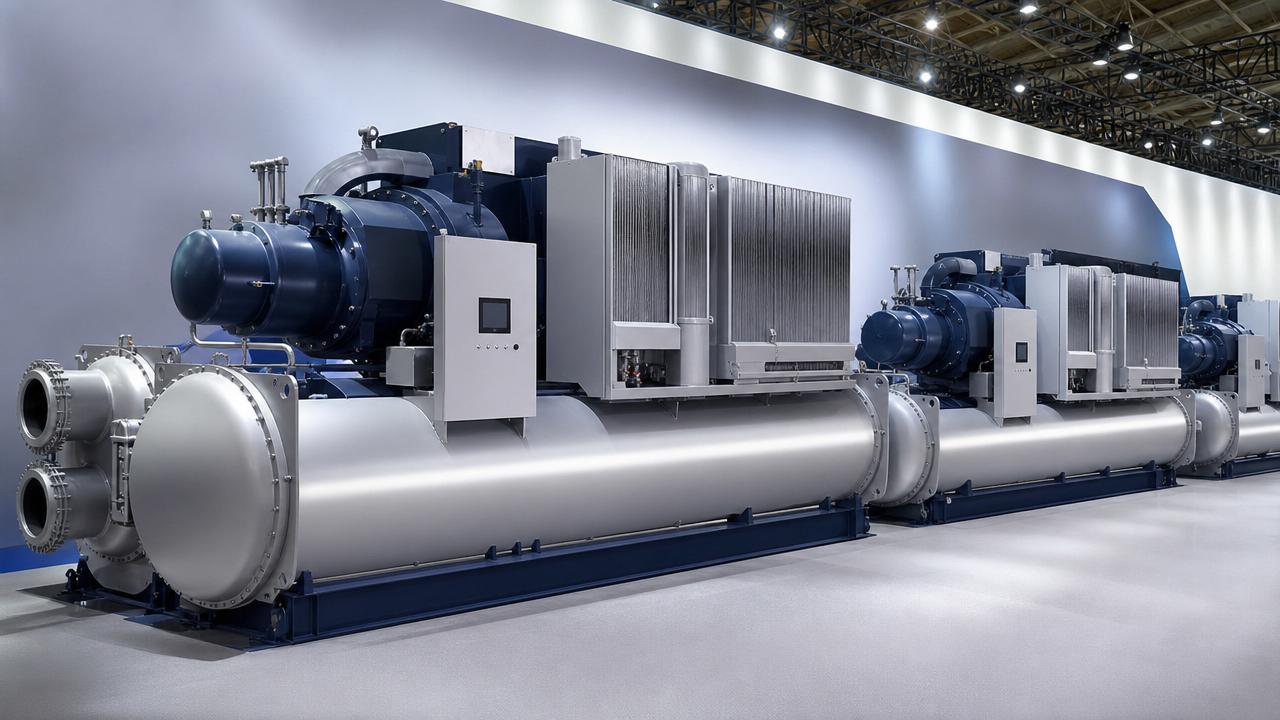
This is particularly relevant when support systems such as fan filter units, chillers, process cooling modules, or enclosure-integrated components are part of the package.
3. Facility interface and utility requirements
Many equipment buying mistakes happen here. A tool may meet process needs but still trigger expensive upgrades because its utility demands were not reviewed against site capability.
Before purchase, extract all assumptions related to:
- power quality and voltage tolerance
- process cooling water and temperature stability
- chilled water loads and peak versus steady-state demand
- compressed dry air, vacuum, gas, and exhaust requirements
- floor loading, footprint, and service envelope
- vibration sensitivity and the need for vibration isolation mounts
For advanced fabs, even small mismatches in thermal management assumptions can have serious downstream effects. A tool designed around extremely stable water temperature or room conditions may not perform as expected in a facility that cannot hold those tolerances continuously.
4. Equipment communication and integration
If your fab relies on host communication, MES integration, remote diagnostics, or smart environmental monitoring, standards related to equipment data exchange can influence both startup speed and long-term automation value.
Review whether the supplier can clearly document:
- interface protocols
- data tags and event architecture
- alarm reporting structure
- cybersecurity considerations for connected equipment
- integration readiness with factory control systems or digital twin platforms
Do not assume that “supports standard communication” means plug-and-play integration. In many projects, interface customization becomes a hidden cost center.
How to translate a SEMI standard into a real procurement checklist
The best way to read a standard before buying equipment is to turn its relevant clauses into decision items. This helps technical teams and commercial teams evaluate the same tool from a shared framework.
A practical checklist should include:
- Applicability: Which SEMI documents apply to this tool, and which do not?
- Compliance evidence: Is there a declaration, third-party assessment, internal test report, or design review record?
- Boundary conditions: Under what room class, utility quality, and operating load were tests performed?
- Exceptions: Are there deviations, optional features, or site-dependent requirements?
- Installation impact: What additional infrastructure, training, or environmental controls are required?
- Acceptance criteria: What will be checked during FAT, SAT, IQ, OQ, or site qualification?
This checklist should be attached to supplier RFQs and technical bid evaluations. It should also be reviewed by EHS, facilities, process engineering, quality, and project management, not just procurement.
For strategic buyers, this step creates measurable value. It exposes where a lower upfront equipment price could lead to higher retrofit cost, longer installation windows, or reduced operational resilience.
How to spot weak or misleading supplier compliance claims
One of the most common problems in fab procurement is vague language such as “designed in accordance with SEMI standards” or “SEMI-ready.” These statements are not useless, but they are not enough for decision-making.
Be cautious when:
- the supplier does not specify the exact SEMI standards or revision versions
- compliance is declared without test data or design documentation
- performance claims were validated under conditions unlike your facility
- critical options are excluded from the compliance statement
- installation prerequisites are buried in manuals rather than quoted upfront
Ask direct questions such as:
- Which SEMI standards were used for design validation?
- Which requirements were verified by test, analysis, or engineering judgment?
- What assumptions were made about room cleanliness, vibration, airflow, and utility stability?
- What additional site measures are required to maintain compliant operation?
- Can you provide clause-by-clause responses for critical requirements?
Strong suppliers usually welcome this level of review because it reduces ambiguity during installation and acceptance.
Why SEMI literacy improves ROI, not just compliance
For enterprise decision-makers, reading SEMI standards is not merely a technical exercise. It is a capital protection measure.
Better SEMI interpretation can improve ROI by helping teams:
- avoid under-scoped facility upgrades
- reduce change orders during construction or tool hook-up
- improve startup reliability and shorten qualification time
- protect yield through stronger contamination control
- prevent safety incidents and compliance setbacks
- standardize future procurement across multiple sites
This is especially relevant in sectors where environmental precision is mission-critical. In high-spec fabs and advanced industrial environments, equipment performance is inseparable from the surrounding thermal, airflow, water quality, and monitoring architecture. A purchasing team that understands this relationship can make better decisions than one focused only on nameplate capacity or initial quote price.
A simple decision framework for technical teams and buyers
If you need a fast internal framework, use this one before issuing a purchase order:
- Identify the critical standards tied to safety, contamination, utilities, and integration.
- Read for impact, not volume: focus on scope, limits, tests, exceptions, and installation assumptions.
- Convert clauses into supplier questions and acceptance criteria.
- Compare supplier claims against your actual facility conditions, not generic operating conditions.
- Quantify hidden costs such as HVAC modifications, leak detection, exhaust upgrades, vibration isolation, or monitoring integration.
- Make the buy decision only after cross-functional review by facilities, EHS, engineering, quality, and procurement.
This approach is often more effective than trying to become a standards expert overnight. It creates a repeatable process for reading SEMI standards in a way that supports commercial clarity and operational success.
In summary, the right way to read SEMI standards before buying fab equipment is to focus on what directly affects safety, contamination control, facility compatibility, integration, and lifecycle cost. Buyers and evaluators should not aim to memorize every standard; they should aim to identify applicable requirements, verify supplier evidence, and test those claims against real site conditions. That is what turns SEMI knowledge into better procurement outcomes, lower project risk, and more reliable fab performance.
Get weekly intelligence in your inbox.
No noise. No sponsored content. Pure intelligence.
 May 31, 2026Corrugated Plastic Boxes for Retail Packaging: When to Use ThemCorrugated plastic boxes for retail packaging offer durable, reusable, moisture-resistant solutions. Learn when they outperform cartons and how to choose the right design.
 May 31, 2026OEM Machined Parts: Tolerance Risks to CheckOEM machined parts can hide tolerance risks that cause leaks, vibration, contamination, or compliance issues. Learn key checks before supplier approval.
 May 31, 2026Solar Panels Wholesale Cost Guide 2026Solar panels wholesale cost guide for 2026: compare pricing, landed costs, certifications, and supplier risks to buy smarter and protect long-term ROI.
 May 31, 2026Medical Grade Silicone: Key Safety ChecksMedical grade silicone safety checks for QC teams: verify compliance, traceability, compatibility, and performance to reduce contamination risk and downtime.
 May 31, 2026How to Size Fan Filter Units for ISO CleanroomsFan Filter Units sizing guide for ISO cleanrooms: learn how to balance airflow, coverage, pressure, heat load, and energy cost for reliable contamination control.
 May 31, 2026Blue Bee Expo Nanjing 2026 Closes: Maglev Chillers See 210% Overseas Order GrowthMaglev chillers drive 210% overseas order growth at Blue Bee Expo Nanjing 2026 — discover how ±0.01°C precision & ASHRAE 188-2024 Annex J compliance are reshaping global HVAC procurement.
 May 31, 2026FDA Updates BSL-3/4 Lab Equipment Import Rules for Decon SystemsFDA updates BSL-3/4 lab equipment import rules for decon systems—new VHP/GHP validation requirements take effect immediately. Act now to avoid shipment delays.
 May 31, 2026IEC Launches Revision of ISO Class 1–9 Cleanroom Standards with IIoT Air Monitoring Calibration RequirementIEC mandates IIoT air monitoring calibration for ISO Class 1–9 cleanrooms—key for pharma, semiconductor & biotech exporters. Act now to align with 2027 enforcement.
 May 31, 2026China Excludes UPW Resin Modules from Hazardous Waste RulesUPW resin modules now exempt from China’s hazardous waste rules—boosting export efficiency for semiconductor, pharma & electronics firms. Key update for global supply chains.
 May 31, 2026EU Adds DBDPE to SVHC Candidate List: AMC Filtration Exporters Must Update SDS and SCIPEU adds DBDPE to SVHC list—AMC filtration exporters must update SDS & submit SCIP notifications by 5 May 2026. Act now to avoid delays, audits, and lost tenders.
 May 30, 2026Industrial HVAC Tender Alerts: What to Track in 2026industrial hvac tender alerts in 2026 reveal project signals, compliance risks, and market opportunities—learn what to track to bid smarter and plan ahead.
 May 30, 2026Wireless EV Charging: Efficiency Losses ExplainedWireless EV charging efficiency losses explained: compare plug-in systems, key loss points, cost impacts, and procurement tips for smarter fleet decisions.
 May 30, 2026Solar Panels Wholesale USA: Price vs Warranty ChecksSolar panels wholesale USA buyers: learn how to compare price, warranty, supplier stability, landed cost, and documents to protect margins and buy with confidence.
 May 30, 20265 Axis Milling Cost Drivers to Check Before Quoting5 axis milling costs depend on material, tolerances, finish, inspection, and volume. Learn what to check before quoting to reduce risk and secure better value.
 May 30, 2026Surgical Instruments: Cleaning Risks Before SterilizationSurgical instruments cleaning risks before sterilization: uncover hidden residues, biofilms, water quality issues, and control steps that protect safety and audit readiness.
 May 30, 20262026 Blue Bee Expo Closes in Nanjing: Maglev Chillers’ Overseas Orders Surge 210%Maglev Chillers surge 210% in overseas orders at 2026 Blue Bee Expo Nanjing — discover how precision thermal stability is reshaping global HVAC procurement.
 May 30, 2026IEC Launches Global Revision of Cleanroom Standards with IIoT Air Monitoring Calibration RequirementIEC’s new cleanroom standards mandate IIoT air monitoring calibration—NIST-traceable, blockchain-verified, ≤72h intervals. Critical for semiconductor, biopharma & medtech.
 May 30, 2026China Releases 2026 UPW Export Technical White PaperChina's 2026 UPW Export Technical White Paper sets new global benchmarks for 18.2 MΩ·cm ultra-pure water systems—TOC ≤0.3 ppb, particles ≤5/mL, Si ≤0.05 ppb. Key for semiconductor exporters & ASEAN fabs.
 May 30, 2026US EPA Tightens AMC Filtration Import Rules: New Semiconductor-Grade Amine LimitsUS EPA tightens AMC filtration import rules: new ≤0.05 ppt amine limits for semiconductor-grade systems—act now to avoid CBP delays and secure market access.
 May 30, 2026EU Proposes Mandatory Certification for Digital Twin Lab SystemsEU proposes mandatory certification for Digital Twin Lab systems—key for IIoT, smart manufacturing & environmental monitoring vendors targeting the EU market from 2027.
 May 29, 2026Precision Casting Defects: Temperature Control Checks Before ProductionPrecision casting defects often start with temperature drift. Learn pre-production checks for furnaces, molds, ladles, and environments to cut scrap and improve quality.
 May 29, 2026SaaS Trends 2026: Cost Signals Before Scaling Industrial SoftwareSaaS Trends 2026 reveal how industrial software teams can spot cost, integration, governance, and ROI signals before scaling critical facility platforms.
 May 29, 2026Smartmanufacturing in 2026: Digital Twin Use Cases That Cut Process RiskSmartmanufacturing in 2026 uses digital twins to cut process risk, improve cleanroom control, optimize utilities, and protect high-value operations.
 May 29, 2026Impact of 5G on Smart HVAC: Faster Fault Detection and Energy ControlExplore the impact of 5g on smart hvac, from faster fault detection to real-time energy control, helping critical facilities cut costs and improve resilience.
 May 29, 2026Factory Automation Solutions for Smart Manufacturing: Selection Criteria That Reduce DowntimeFactory automation solutions for smart manufacturing help reduce downtime with smarter selection criteria for interoperability, stability, cybersecurity, and predictive maintenance.
 May 29, 2026IEC Launches Global Revision of ISO Class 1–9 Cleanroom Standards with New IIoT Air Monitoring Calibration RequirementsIEC revises ISO Class 1–9 cleanroom standards: New IIoT air monitoring calibration rules demand remote, NIST-traceable 6-month calibrations — act now to future-proof your FFUs, sensors & systems.
 May 29, 20262026 Blue Bee Exhibition Closes in Nanjing: Maglev Chiller Export Orders Surge 210%Maglev chiller export orders surge 210% at 2026 Blue Bee Exhibition Nanjing—key for BSL-3 labs & semiconductor HVAC. Discover why precision ±0.01°C control and COP ≥7.2 are reshaping global thermal infrastructure demand.