Blue Bee Expo Nanjing 2026 Closes: Maglev Chillers See 210% Overseas Order Growth
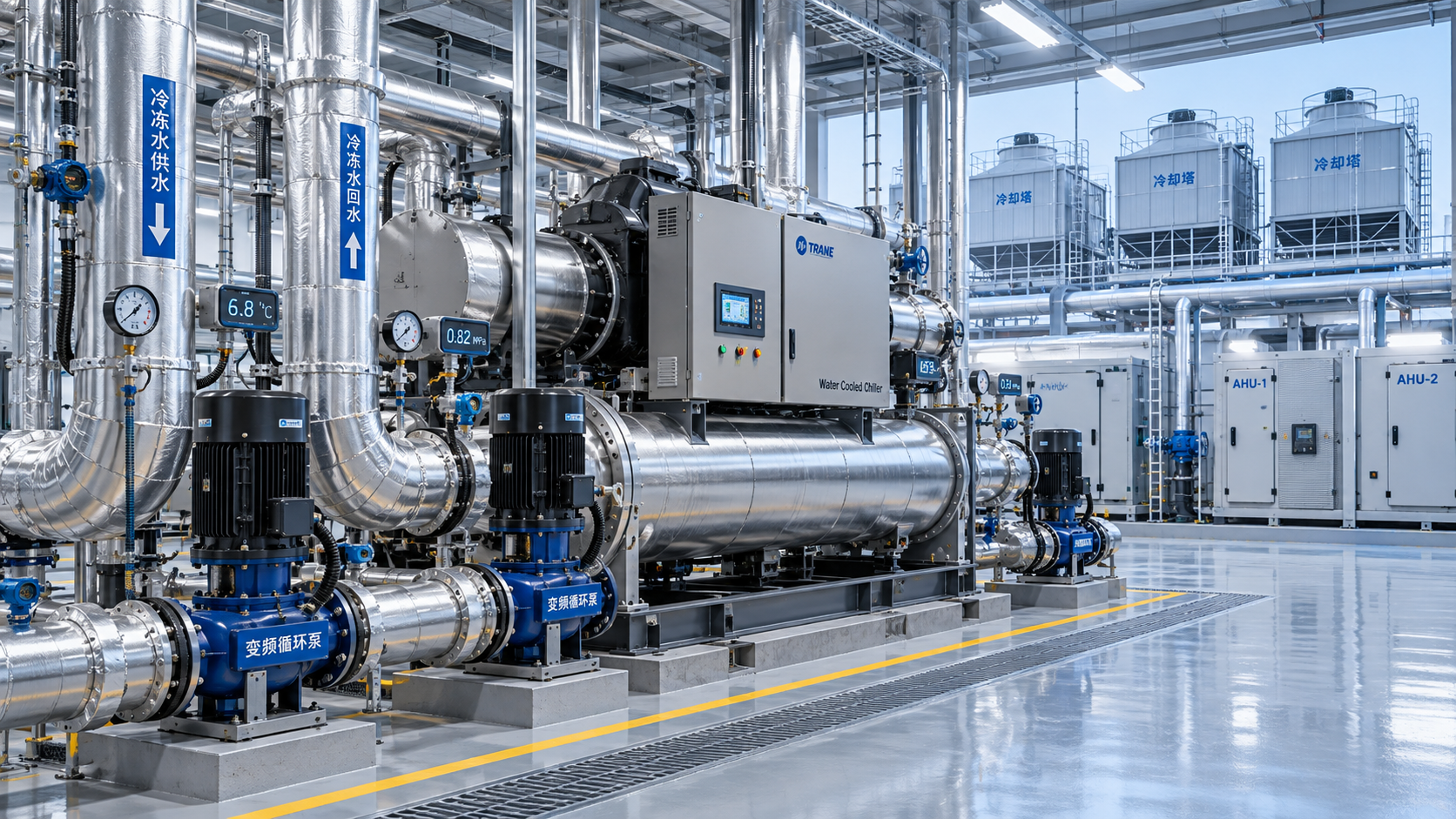
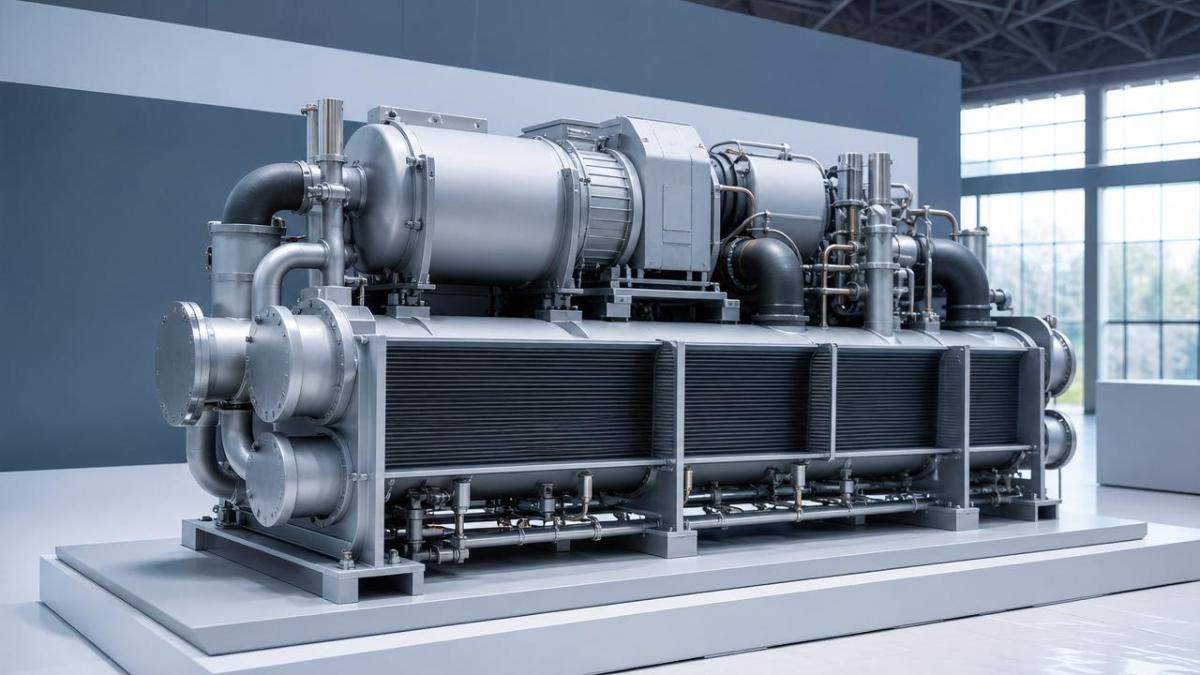
On May 28, 2026, the Blue Bee Expo concluded in Nanjing — marking a notable inflection point for precision thermal management equipment in global HVAC markets. With Maglev chillers featuring magnetic levitation compressors and dual-loop PID micro-disturbance compensation algorithms drawing concentrated buyer interest from Germany, South Korea, and Singapore — particularly around ±0.01°C temperature control redundancy — the event signals shifting technical expectations among overseas clients. Industries reliant on ultra-stable thermal environments, including semiconductor fabrication, pharmaceutical R&D, and high-performance data centers, should monitor this development closely.
Event Overview
The Blue Bee Expo Nanjing 2026 closed on May 28, 2026. Maglev chillers emerged as the most discussed product category at the exhibition. Buyers from Germany, South Korea, and Singapore actively inquired about ±0.01°C temperature control redundancy configurations. Of orders signed onsite, 73% explicitly required thermal digital twin interfaces compliant with ASHRAE 188-2024 Annex J.
Industries Affected
Direct Exporters & OEM Integrators
These firms face heightened demand for interoperable thermal logic systems. The 73% requirement for ASHRAE 188-2024 Annex J–compliant digital twin interfaces indicates that overseas procurement decisions are now contingent on standardized thermal data modeling capabilities — not just hardware performance.
Thermal System Component Manufacturers
Suppliers of precision sensors, redundant control modules, and real-time PID tuning hardware may see revised specification requests. The focus on ±0.01°C redundancy implies tighter tolerances in sensor calibration, actuator response time, and failover logic validation — all influencing component-level design briefs.
Digital Twin Platform Providers & Integration Services
Companies offering thermal digital twin deployment or ASHRAE-compliant interface layer development are encountering direct demand signals. The explicit reference to Annex J suggests clients expect plug-and-play compatibility between physical chillers and existing building management or process simulation platforms.
Supply Chain & Logistics Service Providers
Increased order volume (210% YoY growth cited) combined with stricter technical documentation requirements — such as certified thermal model metadata, interface protocol schematics, and redundancy validation reports — may affect customs clearance timelines and certification handover workflows.
What Enterprises and Practitioners Should Monitor and Act On
Track ASHRAE 188-2024 Annex J Implementation Guidance
While ASHRAE 188-2024 is published, Annex J remains implementation-stage guidance — not yet codified into mandatory testing or certification regimes. Enterprises should monitor updates from ASHRAE’s Technical Committee 90.1 and national standards bodies (e.g., DIN, BSI) for formal adoption timelines.
Prioritize Interface Documentation and Interoperability Testing
Overseas buyers are no longer evaluating chillers solely on COP or noise levels. They are requesting verifiable interface schematics, API documentation, and proof of successful handshake tests with common digital twin platforms (e.g., Siemens Desigo, Schneider EcoStruxure). Preparing these materials early reduces bid-cycle friction.
Assess Redundancy Architecture Beyond Single-Point Failure
The ±0.01°C requirement reflects demand for *thermal stability continuity*, not just backup hardware. Analysis shows this entails coordinated redundancy across sensing, control logic, actuation, and power delivery — requiring cross-functional engineering alignment, not just component substitution.
Review Thermal Model Metadata Requirements
Compliance with Annex J hinges on structured thermal model metadata (e.g., thermal mass coefficients, heat transfer coefficients, time constants). Firms should audit internal model documentation practices and confirm whether their current thermal simulation outputs meet ASHRAE’s prescribed schema for digital twin ingestion.
Editorial Perspective / Industry Observation
Observably, this event reflects a structural shift: thermal equipment procurement is increasingly governed by software-defined performance criteria rather than standalone mechanical specs. The 210% order growth is less an indicator of market expansion and more a signal of accelerated specification convergence among lead adopters in Europe and Asia. From an industry perspective, the emphasis on ±0.01°C redundancy and ASHRAE 188-2024 Annex J interfaces is better understood as a leading-edge demand signal — not yet mainstream, but gaining traction among technically sophisticated end users. It is currently more indicative of emerging technical consensus than established regulatory or commercial baseline.
This development warrants sustained attention because it reveals how digital twin integration is reshaping procurement gateways — moving beyond pilot projects into contractual specifications. As more clients treat thermal digital twin readiness as non-negotiable, the line between ‘hardware supplier’ and ‘thermal system intelligence partner’ continues to blur.
Concluding, the Blue Bee Expo Nanjing 2026 outcome is best interpreted not as a sudden market pivot, but as evidence of maturing expectations among high-value thermal infrastructure buyers. Current relevance lies in its specificity: it identifies concrete technical thresholds (±0.01°C, Annex J compliance) that are now entering commercial negotiation — making them actionable reference points for engineering, sales, and supply chain planning — rather than abstract R&D goals.
Source: Official Blue Bee Expo 2026 Nanjing post-event summary (publicly released May 28, 2026).
Noted for ongoing observation: Formal adoption status of ASHRAE 188-2024 Annex J by major national standards bodies and regional certification authorities.
Get weekly intelligence in your inbox.
No noise. No sponsored content. Pure intelligence.
 Oct 21, 2026How often is cleanroom certification required under ISO 14644-2?Cleanroom Certification is generally recommended annually under ISO 14644-2. Learn when risk-based extensions apply and which changes trigger earlier testing to plan with confidence.
 Oct 21, 2026FASEB Comments on NIH Draft Policy for Research Involving BiohazardsFASEB comments on NIH’s draft biohazard research policy call for risk-based biosafety oversight. Explore potential implications for laboratories, suppliers, and compliance teams.
 Oct 20, 2026How to disinfect ultrasound machines without damaging surfacesLearn how to disinfect ultrasoundmachines without surface damage. Explore compatible products, wet contact times, and probe care to protect patients and equipment.
 Oct 20, 2026Ultrapure Water in Semiconductor Manufacturing: Reuse and Quality Control InsightsExplore ultrapure water reuse in semiconductor manufacturing, key UPW quality benchmarks and analytical insights to help evaluate suppliers and protect process purity.
 Oct 19, 2026How cooling affects warpage in injection-molded consumer electronics housingsOptimize plastic injection molding for consumer electronics with cooling strategies to reduce housing warpage and improve assembly fit. Discover practical checks for stable, efficient production.
 Oct 18, 2026Can air leaks prevent a dehumidifier from holding its target dew point?Why can't our dehumidifier maintain the target dew point? Discover how air leaks increase moisture loads, spot hidden faults, and find practical fixes to restore reliable dew-point control.
 Oct 17, 2026How semiconductor process water treatment removes trace organicsSee how semiconductor process water treatment removes trace organics with RO, UV oxidation, and polishing. Learn how TOC monitoring helps verify purity and pinpoint contamination.
 Oct 16, 2026How to choose ultra pure water piping materials to limit leachingChoose ultra pure water piping with confidence. Compare PVDF, PFA, and stainless steel, assess leaching risks, and learn how to qualify your system for reliable purity.
 Oct 15, 2026How to size a skid-mounted deionized water system for peak demandCompare deionized water systems skid configurations for peak demand. Learn how to balance production, storage, and pump capacity to prevent shortages and avoid costly oversizing.
 Oct 14, 2026When is collaborative laboratory robotics suitable for sample sorting?Explore when collaborative laboratory robotics suits sample sorting. Discover key checks for safety, traceability, container compatibility, and throughput before choosing your solution.
 Oct 13, 2026How sandwich panel joints affect airtightness in cleanroom systemsCleanroom Systems sandwich panels need reliable joints for airtightness. Discover how gaskets, sealants, and testing help reduce leakage and protect cleanroom pressure control.
 Oct 12, 2026How to verify USP compliance for ultra pure water systemsUltra Pure Water Systems USP compliance: learn how to verify water quality, sampling, sanitization, trends, and validation controls at every point of use.
 Oct 11, 2026How tight temperature control prevents cleanroom process driftCleanroom process temperature control systems prevent costly drift by stabilizing critical conditions, improving repeatability, and protecting sensitive production workflows.
 Oct 10, 2026When does organic contaminant removal require TOC treatment?Organic contaminant removal requires TOC treatment when dissolved organics threaten product quality, equipment reliability, or process control. Learn how to assess risks and choose the right solution.
 Oct 08, 2026What affects lead times for sheet metal bending services in Canada?Sheet metal bending services Canada: discover how material supply, tooling, tolerances, finishing, documentation, and freight affect lead times for reliable project delivery.
 Oct 07, 2026How HVAC design for semiconductor fabs prevents airborne contaminationHVAC design for semiconductor fabs prevents airborne contamination through advanced filtration, pressure cascades, airflow control, and real-time monitoring. Explore key strategies for cleaner, more reliable wafer production.
 Oct 06, 2026How photovoltaic modules waterproof technology prevents moisture damagephotovoltaic modules waterproof technology prevents moisture damage with durable seals, drainage, and junction-box protection. Explore practical selection and testing insights.
 Oct 05, 2026How ISO 14644 Europe requirements affect cleanroom qualificationISO 14644 Europe requirements shape cleanroom qualification, from particle classification and recovery testing to monitoring, GMP alignment, and change control.
 Oct 04, 2026How to assess a pharmaceutical cleanroom solutions supplier’s ISO capabilityPharmaceutical Cleanroom Solutions supplier assessment guide: evaluate ISO 14644 capability, validation evidence, airflow design, documentation, and long-term GMP readiness.
 Oct 03, 2026What EU standards govern the design of BSL-3 laboratories in Europe?BSL-3 laboratories Europe: explore EU directives, EN standards, HVAC containment, commissioning, and practical design strategies for compliant, resilient high-containment facilities.
 Oct 02, 2026How EN 1822 defines HEPA filtration efficiency for cleanroomsHEPA filtration EN 1822 explained: learn how MPPS testing, local leakage limits, and filter classes support reliable cleanroom decisions.
 Oct 01, 2026How pharmaceutical process water systems control microbial riskProcess water systems pharmaceutical teams rely on can control microbial risk through hygienic design, monitoring, and validated sanitization. Explore practical compliance strategies.
 Sep 30, 2026When does a negative pressure laboratory need BSL-3 containment?Negative pressure laboratory or BSL-3? Discover the risk factors, engineering controls, and containment requirements needed for safe, compliant laboratory planning.
 Sep 29, 2026How to evaluate a TOC-zero water treatment supplier for UPW systemsChoose a TOC-zero water treatment supplier with confidence. Compare UPW performance, monitoring, validation, materials, service capability, and lifecycle cost.
 Sep 28, 2026What drives sustainable cooling cost in high-precision facilities?Sustainable cooling cost in high-precision facilities depends on thermal stability, energy, water, controls, and resilience. Explore smarter lifecycle strategies.
 Sep 27, 2026How to compare freight forwarding services for time-critical shipmentsCompare freight forwarding services for time-critical shipments with practical insights on routing, customs, visibility, specialized handling, and contingency planning.
 Sep 26, 2026How environmental integrity in laboratories supports reliable test resultsEnvironmental Integrity in laboratories safeguards samples, instruments, and staff. Discover practical controls for contamination, monitoring, and reliable test results.