ASHRAE Standards Certification: Key Audit Gaps to Fix
For business evaluators assessing high-performance facilities, ASHRAE Standards certification is more than a compliance badge—it shows whether HVAC, thermal control, and environmental systems can survive formal audit pressure.
In complex industrial settings, certification findings often expose hidden weaknesses in controls, records, maintenance logic, and performance consistency. Fixing those gaps early reduces operational risk and protects long-term asset value.
This guide explains the most common audit failures, what they mean in practice, and how to prepare facilities for stronger ASHRAE Standards certification outcomes.
What does ASHRAE Standards certification actually prove?
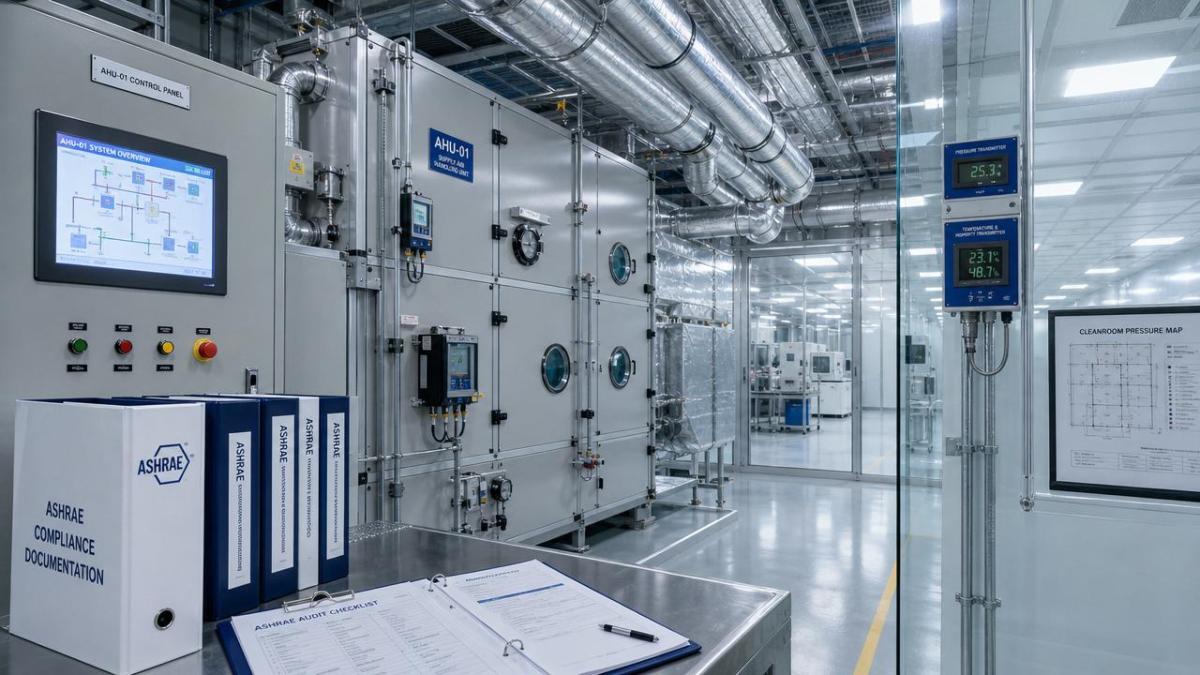
ASHRAE Standards certification does not simply confirm that equipment exists. It demonstrates that environmental systems align with recognized performance, safety, energy, and operational expectations.
In broad industrial applications, auditors usually examine how design intent, installed systems, and actual operating data fit together. Certification strength depends on that alignment.
For advanced facilities, this may include:
- temperature stability under variable loads
- ventilation effectiveness and airflow balancing
- filtration performance and contamination control
- energy efficiency documentation
- control sequence verification
- alarm response and operational traceability
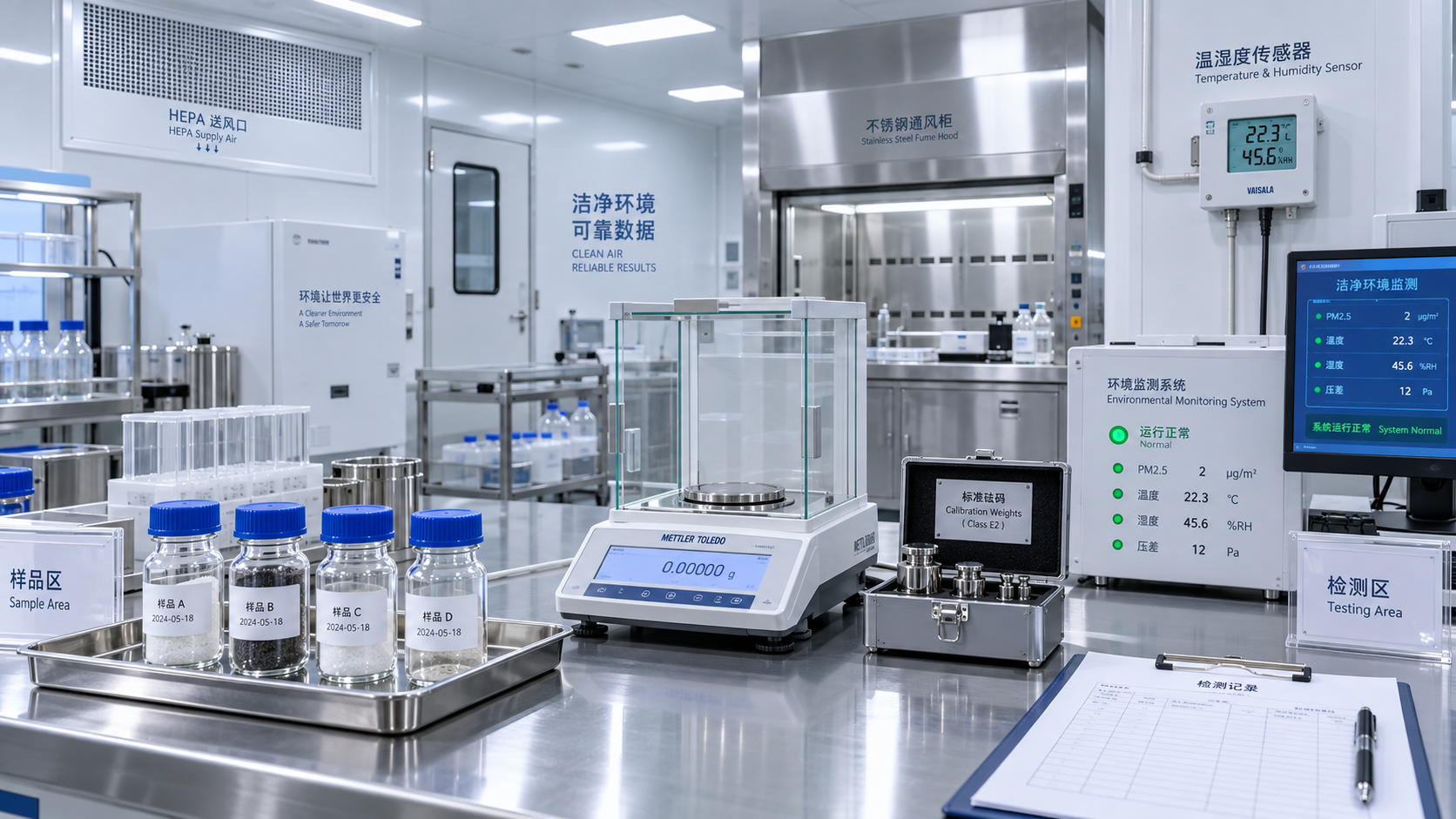
A strong certification file tells auditors that environmental integrity is repeatable, not accidental. That distinction matters in semiconductor, pharmaceutical, laboratory, and precision manufacturing environments.
Which audit gaps appear most often during ASHRAE Standards certification reviews?
The most frequent issues are rarely dramatic equipment failures. More often, they are proof gaps between system capability and documented evidence.
1. Incomplete design basis records
Auditors need to see why a system was designed a certain way. Missing load assumptions, airflow targets, or humidity logic creates doubt about compliance intent.
2. Weak commissioning evidence
Many sites complete startup checks but lack structured commissioning records. Without witnessed testing, trend review, and issue closure logs, claims remain unverified.
3. Control sequences that differ from field operation
A common ASHRAE Standards certification problem appears when written sequences say one thing, while the building automation system behaves differently under actual demand conditions.
4. Calibration and sensor traceability problems
Temperature, pressure, airflow, and humidity readings are only credible when instruments are calibrated, traceable, and matched to the required accuracy band.
5. Maintenance logs without performance interpretation
Replacing filters or belts is helpful, but audits look deeper. They ask whether maintenance actions preserved design conditions and prevented drift.
6. Exception handling that is not documented
Temporary overrides, alarm bypasses, and emergency workarounds often happen in real facilities. Problems begin when these events leave no formal decision trail.
How can you tell whether performance misalignment will threaten certification?
Performance misalignment means the facility may function, yet still fail audit logic. The issue is not only output. It is whether output matches standard-based expectations consistently.
Warning signs usually include:
- stable operation only at partial occupancy
- frequent manual control intervention
- seasonal humidity drift
- uneven pressure cascade behavior
- energy use far above modeled assumptions
- alarm floods masking meaningful failures
In precision environments, small deviations can become major audit findings. A slight pressure imbalance may affect contamination control. Minor thermal swings may disrupt process stability.
The best approach is to compare three layers together: design criteria, trend data, and field observation. If any layer conflicts, ASHRAE Standards certification readiness is weaker than expected.
What documentation should be ready before an ASHRAE Standards certification audit?
Documentation should tell a coherent technical story. Auditors should be able to follow requirements, installation choices, testing evidence, and operational controls without major gaps.
Priority records usually include:
- design basis and owner performance requirements
- HVAC schematics, control narratives, and as-built drawings
- equipment submittals and critical component specifications
- commissioning plans, test scripts, and issue logs
- TAB reports and airflow verification records
- sensor calibration certificates and traceability references
- preventive maintenance records with dates and observations
- alarm history, override reports, and corrective action closure
Many organizations have these files, but not in audit-ready form. Consolidation matters. If evidence is scattered across teams, confidence drops quickly during review.
For multidisciplinary facilities, digital repositories help connect HVAC, cleanroom, water, containment, and monitoring records into one defensible certification narrative.
How do high-performance facilities differ from ordinary buildings in certification risk?
The core standards framework may be familiar, but risk intensity is very different. In high-performance facilities, tolerance bands are tighter and operational consequences are higher.
A comfort-oriented office can sometimes absorb small environmental drift. A biosafety suite, advanced cleanroom, or ultra-stable thermal zone often cannot.
This is why ASHRAE Standards certification in advanced industrial environments needs deeper operational proof, not just static compliance paperwork.
What are the fastest ways to close certification gaps before formal review?
The fastest path is not rushing paperwork. It is building a short-cycle correction plan tied to evidence, performance, and accountability.
Start with a mock audit
Review documents, field conditions, and control trends against the expected audit scope. Mock findings reveal missing proof before outside reviewers arrive.
Prioritize high-risk systems first
Focus on systems tied to thermal stability, pressurization, filtration, and monitored compliance. These usually generate the most consequential findings.
Reconcile drawings, sequences, and live settings
If the BAS, as-built files, and field devices disagree, correct that mismatch immediately. Auditors often detect these inconsistencies quickly.
Use trend data as proof
A well-labeled trend set can validate recovery times, stability, setback control, and alarm handling. Data-backed evidence strengthens ASHRAE Standards certification credibility.
Close the loop on every exception
Each deviation should show cause, interim control, corrective action, and completion status. An open issue without ownership invites a finding.
FAQ: Which issues deserve the closest attention?
ASHRAE Standards certification becomes easier when facilities treat audit readiness as an operating discipline, not a last-minute project.
The most costly failures usually come from small unresolved gaps: undocumented sequence changes, unverified sensors, incomplete testing, and poor exception tracking.
A practical next step is to perform a focused gap assessment across documentation, commissioning, controls, and trend evidence. That creates a clear correction path before formal certification review begins.
Get weekly intelligence in your inbox.
No noise. No sponsored content. Pure intelligence.
 Oct 21, 2026How often is cleanroom certification required under ISO 14644-2?Cleanroom Certification is generally recommended annually under ISO 14644-2. Learn when risk-based extensions apply and which changes trigger earlier testing to plan with confidence.
 Oct 21, 2026FASEB Comments on NIH Draft Policy for Research Involving BiohazardsFASEB comments on NIH’s draft biohazard research policy call for risk-based biosafety oversight. Explore potential implications for laboratories, suppliers, and compliance teams.
 Oct 20, 2026How to disinfect ultrasound machines without damaging surfacesLearn how to disinfect ultrasoundmachines without surface damage. Explore compatible products, wet contact times, and probe care to protect patients and equipment.
 Oct 20, 2026Ultrapure Water in Semiconductor Manufacturing: Reuse and Quality Control InsightsExplore ultrapure water reuse in semiconductor manufacturing, key UPW quality benchmarks and analytical insights to help evaluate suppliers and protect process purity.
 Oct 19, 2026How cooling affects warpage in injection-molded consumer electronics housingsOptimize plastic injection molding for consumer electronics with cooling strategies to reduce housing warpage and improve assembly fit. Discover practical checks for stable, efficient production.
 Oct 18, 2026Can air leaks prevent a dehumidifier from holding its target dew point?Why can't our dehumidifier maintain the target dew point? Discover how air leaks increase moisture loads, spot hidden faults, and find practical fixes to restore reliable dew-point control.
 Oct 17, 2026How semiconductor process water treatment removes trace organicsSee how semiconductor process water treatment removes trace organics with RO, UV oxidation, and polishing. Learn how TOC monitoring helps verify purity and pinpoint contamination.
 Oct 16, 2026How to choose ultra pure water piping materials to limit leachingChoose ultra pure water piping with confidence. Compare PVDF, PFA, and stainless steel, assess leaching risks, and learn how to qualify your system for reliable purity.
 Oct 15, 2026How to size a skid-mounted deionized water system for peak demandCompare deionized water systems skid configurations for peak demand. Learn how to balance production, storage, and pump capacity to prevent shortages and avoid costly oversizing.
 Oct 14, 2026When is collaborative laboratory robotics suitable for sample sorting?Explore when collaborative laboratory robotics suits sample sorting. Discover key checks for safety, traceability, container compatibility, and throughput before choosing your solution.
 Oct 13, 2026How sandwich panel joints affect airtightness in cleanroom systemsCleanroom Systems sandwich panels need reliable joints for airtightness. Discover how gaskets, sealants, and testing help reduce leakage and protect cleanroom pressure control.
 Oct 12, 2026How to verify USP compliance for ultra pure water systemsUltra Pure Water Systems USP compliance: learn how to verify water quality, sampling, sanitization, trends, and validation controls at every point of use.
 Oct 11, 2026How tight temperature control prevents cleanroom process driftCleanroom process temperature control systems prevent costly drift by stabilizing critical conditions, improving repeatability, and protecting sensitive production workflows.
 Oct 10, 2026When does organic contaminant removal require TOC treatment?Organic contaminant removal requires TOC treatment when dissolved organics threaten product quality, equipment reliability, or process control. Learn how to assess risks and choose the right solution.
 Oct 08, 2026What affects lead times for sheet metal bending services in Canada?Sheet metal bending services Canada: discover how material supply, tooling, tolerances, finishing, documentation, and freight affect lead times for reliable project delivery.
 Oct 07, 2026How HVAC design for semiconductor fabs prevents airborne contaminationHVAC design for semiconductor fabs prevents airborne contamination through advanced filtration, pressure cascades, airflow control, and real-time monitoring. Explore key strategies for cleaner, more reliable wafer production.
 Oct 06, 2026How photovoltaic modules waterproof technology prevents moisture damagephotovoltaic modules waterproof technology prevents moisture damage with durable seals, drainage, and junction-box protection. Explore practical selection and testing insights.
 Oct 05, 2026How ISO 14644 Europe requirements affect cleanroom qualificationISO 14644 Europe requirements shape cleanroom qualification, from particle classification and recovery testing to monitoring, GMP alignment, and change control.
 Oct 04, 2026How to assess a pharmaceutical cleanroom solutions supplier’s ISO capabilityPharmaceutical Cleanroom Solutions supplier assessment guide: evaluate ISO 14644 capability, validation evidence, airflow design, documentation, and long-term GMP readiness.
 Oct 03, 2026What EU standards govern the design of BSL-3 laboratories in Europe?BSL-3 laboratories Europe: explore EU directives, EN standards, HVAC containment, commissioning, and practical design strategies for compliant, resilient high-containment facilities.
 Oct 02, 2026How EN 1822 defines HEPA filtration efficiency for cleanroomsHEPA filtration EN 1822 explained: learn how MPPS testing, local leakage limits, and filter classes support reliable cleanroom decisions.
 Oct 01, 2026How pharmaceutical process water systems control microbial riskProcess water systems pharmaceutical teams rely on can control microbial risk through hygienic design, monitoring, and validated sanitization. Explore practical compliance strategies.
 Sep 30, 2026When does a negative pressure laboratory need BSL-3 containment?Negative pressure laboratory or BSL-3? Discover the risk factors, engineering controls, and containment requirements needed for safe, compliant laboratory planning.
 Sep 29, 2026How to evaluate a TOC-zero water treatment supplier for UPW systemsChoose a TOC-zero water treatment supplier with confidence. Compare UPW performance, monitoring, validation, materials, service capability, and lifecycle cost.
 Sep 28, 2026What drives sustainable cooling cost in high-precision facilities?Sustainable cooling cost in high-precision facilities depends on thermal stability, energy, water, controls, and resilience. Explore smarter lifecycle strategies.
 Sep 27, 2026How to compare freight forwarding services for time-critical shipmentsCompare freight forwarding services for time-critical shipments with practical insights on routing, customs, visibility, specialized handling, and contingency planning.
 Sep 26, 2026How environmental integrity in laboratories supports reliable test resultsEnvironmental Integrity in laboratories safeguards samples, instruments, and staff. Discover practical controls for contamination, monitoring, and reliable test results.