ASHRAE Standards for Cleanrooms: What Actually Affects System Design
ASHRAE Standards shape far more than airflow targets in cleanroom projects—they influence filtration strategy, pressure cascades, thermal stability, energy performance, and compliance risk. For technical evaluators comparing system options, understanding which ASHRAE requirements truly affect design decisions is essential to balancing contamination control, operational reliability, and lifecycle efficiency in high-performance facilities.
Which ASHRAE Standards Actually Change Cleanroom System Design?
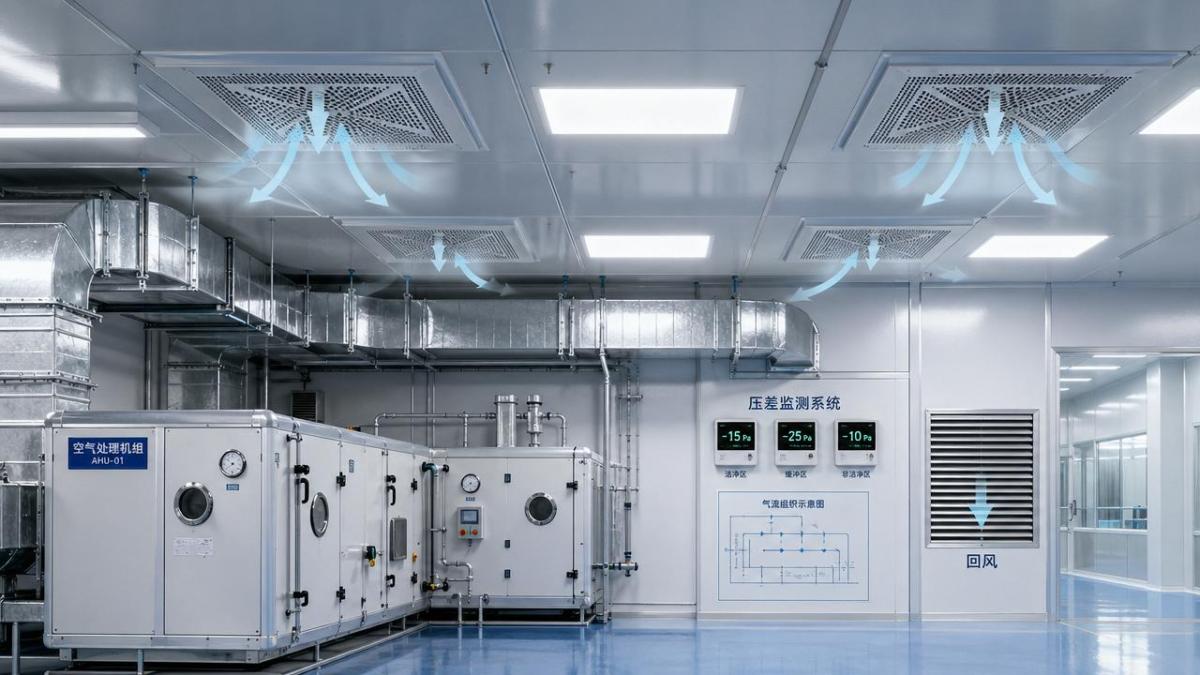
For technical evaluation teams, the first mistake is to treat ASHRAE Standards as a single checklist. In practice, different standards affect different parts of a cleanroom project. Some drive HVAC configuration, some influence filter selection and air distribution, and others shape operating cost, monitoring logic, or failure response. The design impact is not uniform, and the most expensive errors usually happen when teams overemphasize air change rates while underestimating thermal control, humidity stability, and maintainability.
In semiconductor, pharmaceutical, life science, precision manufacturing, and advanced research environments, cleanroom performance is rarely judged by particle counts alone. A technically sound design also has to stabilize room pressurization, maintain process-sensitive temperature bands, support recovery after door openings, and align with broader energy and sustainability expectations. This is where ASHRAE Standards become design-active rather than merely compliance-oriented.
From a procurement and benchmarking perspective, technical evaluators should focus on the standards that materially influence five decisions:
- How much air must be supplied, recirculated, conditioned, and monitored under real operating conditions.
- What level of filtration and fan arrangement is appropriate for the target cleanliness class and process sensitivity.
- How pressure relationships between rooms, corridors, and support areas should be maintained and alarmed.
- Which thermal and humidity tolerances are realistic without oversizing chillers, coils, and control valves.
- How to balance resilience, energy intensity, and maintenance access over the facility lifecycle.
The standards cluster that evaluators should map early
ASHRAE Standards do not replace ISO 14644, GMP requirements, or biosafety guidance. Instead, they interact with them. A cleanroom project often sits at the intersection of contamination control, thermal engineering, and compliance management. G-ICE typically recommends a mapping exercise at concept stage so that project teams can identify which standards are design-defining and which are only verification references.
The table below summarizes where ASHRAE Standards most often influence cleanroom system design decisions across industrial environments.
The key takeaway is that ASHRAE Standards affect not only equipment sizing but also design philosophy. A system that passes particle testing can still fail operationally if pressure decay is too fast, humidity swings are too large, or control loops are too slow for the process risk profile.
Why airflow alone is not enough in cleanroom evaluation
Many project reviews still begin with a simple question: how many air changes per hour are required? That question matters, but it is incomplete. Airflow volume only becomes meaningful when linked to cleanliness target, heat load, operator density, process emissions, leakage paths, and recovery expectations after disturbances. Excess airflow may improve dilution but also increase fan energy, turbulence, filter loading, and humidity control difficulty.
ASHRAE Standards become most useful when they help evaluators move from nominal airflow assumptions to system behavior analysis. In practical terms, this means asking whether the proposed arrangement can maintain directional airflow, avoid short-circuiting, and support pressure hierarchy between critical and less critical zones. For high-specification facilities, airflow must be coordinated with terminal filtration, ceiling coverage, return location, and local heat plume effects from tools or personnel.
Design variables that often matter more than nominal ACH
- Filter-face velocity and ceiling coverage, especially in unidirectional zones where turbulence control is more important than bulk airflow.
- Room leakage and door-opening frequency, which can undermine pressure cascade performance even in systems with large supply volume.
- Sensible and latent load diversity, because humidity instability often appears before particle compliance is lost.
- Return air pathway design, since poor return placement can produce dead zones or contamination recirculation pockets.
- Control response time, particularly where process equipment introduces intermittent thermal spikes or exhaust imbalance.
For technical evaluators, this is the point where a supplier’s proposal should be tested beyond brochure values. G-ICE benchmarking typically compares design intent against realistic disturbance scenarios, such as shift changes, filter loading over time, startup transitions, and partial occupancy. Those scenarios reveal whether a design aligned with ASHRAE Standards will remain robust after commissioning.
What should technical evaluators compare when reviewing suppliers?
Supplier comparison becomes difficult when proposals use different assumptions for cleanliness, temperature tolerance, or redundancy. One vendor may promise lower installed cost by reducing filtration stages, another may oversize fans to compensate for poor air distribution, and a third may quote an efficient chiller plant while ignoring reheat penalties. ASHRAE Standards provide a useful framework for comparing these proposals on consistent engineering grounds.
The table below can be used as a practical cleanroom procurement guide when screening system options against ASHRAE Standards and lifecycle performance expectations.
Using this comparison logic helps evaluators avoid a common trap: selecting systems that look compliant on paper but create hidden penalties in utility cost, recovery time, or maintenance disruption. In advanced facilities, the best option is usually not the one with the highest airflow, but the one with the most balanced control architecture.
Where G-ICE adds value during technical benchmarking
G-ICE supports technical evaluators by connecting ASHRAE Standards with real-world industrial performance. That includes benchmarking FFU-based cleanroom layouts, centralized AHU configurations, precision thermal management, UPW-adjacent utility loads, biosafety containment integration, and digital monitoring strategies. The goal is not to force a single system concept, but to clarify which variables will most affect resilience, compliance exposure, and lifecycle efficiency.
How ASHRAE Standards influence cost, risk, and alternatives
Cost decisions in cleanroom projects are often distorted by narrow CAPEX comparisons. A lower-cost air handler or reduced filter bank may appear attractive until the facility experiences unstable humidity, excessive energy draw, or frequent intervention to maintain pressure relationships. Technical evaluators should therefore interpret ASHRAE Standards not only as compliance inputs, but as tools for avoiding avoidable lifecycle cost.
Common trade-offs to evaluate
- Centralized AHU versus distributed recirculation. Central systems may simplify maintenance and humidity treatment, while distributed units can improve zoning flexibility. The right choice depends on process segregation, ceiling space, and future expansion plans.
- Higher filtration redundancy versus lower pressure drop. More filtration stages may improve contamination risk control, but pressure drop directly affects fan energy and maintenance frequency.
- Tight temperature tolerances versus practical controllability. Extremely narrow setpoints require stronger sensor strategy, valve authority, control tuning, and often more stable chilled water conditions.
- Full-time design airflow versus dynamic turndown. Demand-based strategies can reduce energy use, but only if contamination control and pressure stability are preserved under part-load conditions.
Alternative approaches should never be judged in isolation. A lower-airflow design may still satisfy the cleanliness objective if paired with better airflow patterning, improved local capture, stronger pressure management, and more intelligent controls. Conversely, a high-volume design can still underperform if thermal loads are poorly characterized or if return paths encourage mixing in critical zones.
What are the most common misconceptions about ASHRAE Standards in cleanrooms?
Do ASHRAE Standards define cleanroom class by themselves?
No. Cleanroom classification is generally tied to standards such as ISO 14644, while ASHRAE Standards influence the HVAC and environmental control framework that helps the room achieve and maintain target conditions. Technical evaluators should avoid assuming that compliance with one family of standards automatically proves compliance with another.
Is more airflow always safer?
Not necessarily. More airflow can increase dilution, but it may also create turbulence, raise fan power, and complicate humidity control. Safety and cleanliness depend on airflow quality, directionality, recovery behavior, and room integrity as much as on volume. This is why ASHRAE Standards are most valuable when interpreted together with process and room-use conditions.
Can one design approach work across semiconductor, pharma, and advanced labs?
Only at a very high level. The engineering logic may overlap, but sensitivity to molecular contamination, humidity excursion, biosafety pressure control, or equipment heat load differs by application. A robust evaluation should separate what is universal from what is process-specific. That is especially important for organizations managing mixed portfolios across manufacturing and research sites.
Should evaluators focus more on commissioning or on design intent?
Both matter, and they should reinforce each other. Strong design intent without rigorous commissioning leaves performance unproven. Strong commissioning of a weak concept only documents limitations. A better strategy is to define measurable targets early, then verify that the installed system meets them under realistic operating modes, upset conditions, and maintenance scenarios.
Why choose us for cleanroom system evaluation and benchmarking?
G-ICE helps technical evaluators move beyond generic compliance language and into performance-based decision making. Our multidisciplinary framework connects Advanced Cleanroom Systems, Precision Industrial HVAC, UPW and process utility interfaces, biosafety containment priorities, and digital environmental monitoring into a single benchmarking view. That is especially useful when ASHRAE Standards must be interpreted alongside ISO, SEMI, internal quality protocols, and aggressive uptime targets.
You can consult us on specific decision points such as:
- Parameter confirmation for airflow, pressure differential, temperature, humidity, and filtration architecture.
- System selection between centralized HVAC, FFU-based layouts, hybrid recirculation, or containment-driven room strategies.
- Delivery planning, including phased implementation, retrofit constraints, and utility interface coordination.
- Customized scheme comparison for high-precision manufacturing, pharmaceutical processing, advanced laboratories, and research infrastructure.
- Compliance and documentation support where ASHRAE Standards intersect with ISO 14644, SEMI guidance, or internal validation requirements.
- Budget and quotation discussion based on lifecycle trade-offs, not only first-cost assumptions.
If your team is reviewing a new cleanroom build, capacity expansion, or facility retrofit, contact G-ICE with your target cleanliness level, thermal tolerance, process profile, and operating constraints. We can help structure a practical comparison of system options, identify which ASHRAE Standards most affect your design path, and clarify the technical risks before procurement decisions are locked in.
Get weekly intelligence in your inbox.
No noise. No sponsored content. Pure intelligence.
![]() Jun 04, 2026GLOC 2026 Opens With New IIoT Air Monitoring BenchmarkGLOC 2026 opens with a new IIoT air monitoring benchmark as the Space-Earth Calibration Framework names ground networks a gold reference for satellite remote sensing—see what it means for standards and procurement.
Jun 04, 2026GLOC 2026 Opens With New IIoT Air Monitoring BenchmarkGLOC 2026 opens with a new IIoT air monitoring benchmark as the Space-Earth Calibration Framework names ground networks a gold reference for satellite remote sensing—see what it means for standards and procurement.![]() Jun 04, 2026IEC Draft Adds FFU Particle Response Test to ISO 14644-1IEC Draft Adds FFU Particle Response Test to ISO 14644-1: learn how the proposed sub-100 nm particle response rule could reshape cleanroom certification, exports, and semiconductor supply chains.
Jun 04, 2026IEC Draft Adds FFU Particle Response Test to ISO 14644-1IEC Draft Adds FFU Particle Response Test to ISO 14644-1: learn how the proposed sub-100 nm particle response rule could reshape cleanroom certification, exports, and semiconductor supply chains.![]() Jun 04, 2026China Opens Fast-Track UPW Exports to RCEPChina opens fast-track UPW exports to RCEP, easing customs for compliant ultrapure water systems. See who benefits, key port rules, and compliance steps to ship faster.
Jun 04, 2026China Opens Fast-Track UPW Exports to RCEPChina opens fast-track UPW exports to RCEP, easing customs for compliant ultrapure water systems. See who benefits, key port rules, and compliance steps to ship faster.![]() Jun 04, 2026FDA Tightens BSL-3/4 Decon Import RulesFDA Tightens BSL-3/4 Decon Import Rules: learn how the new FDA requirement for ISO/IEC 17025 validation packages will impact BSL-3/4 decontamination system imports, suppliers, and delivery plans.
Jun 04, 2026FDA Tightens BSL-3/4 Decon Import RulesFDA Tightens BSL-3/4 Decon Import Rules: learn how the new FDA requirement for ISO/IEC 17025 validation packages will impact BSL-3/4 decontamination system imports, suppliers, and delivery plans.![]() Jun 04, 2026ECHA Rule Tightens AMC Filter Media Batch DisclosureECHA rule tightens AMC filter media batch disclosure under SCIP. Learn how recycled-content filters, importers, and cleanroom suppliers can protect EU market access and stay compliant.
Jun 04, 2026ECHA Rule Tightens AMC Filter Media Batch DisclosureECHA rule tightens AMC filter media batch disclosure under SCIP. Learn how recycled-content filters, importers, and cleanroom suppliers can protect EU market access and stay compliant.![]() Jun 04, 20265 Axis Milling Machine for Defense: When Precision Becomes Risk Control5 axis milling machine for defense turns precision into risk control—improving compliance, traceability, and part reliability in demanding defense manufacturing. Learn why it matters.
Jun 04, 20265 Axis Milling Machine for Defense: When Precision Becomes Risk Control5 axis milling machine for defense turns precision into risk control—improving compliance, traceability, and part reliability in demanding defense manufacturing. Learn why it matters.![]() Jun 04, 2026Point of Sale Terminals for Carbon Tracking: What Matters MostPoint of sale terminals for carbon tracking: learn which features, integrations, and audit controls matter most to improve ESG reporting, data accuracy, and operational sustainability.
Jun 04, 2026Point of Sale Terminals for Carbon Tracking: What Matters MostPoint of sale terminals for carbon tracking: learn which features, integrations, and audit controls matter most to improve ESG reporting, data accuracy, and operational sustainability.![]() Jun 04, 2026Low Volume Manufacturing Cost Tradeoffs for IIoT Air Monitoring DevicesLow volume manufacturing tradeoffs for IIoT air monitoring devices: learn how cost, compliance, calibration, and scalability affect pilot success, audit readiness, and long-term ROI.
Jun 04, 2026Low Volume Manufacturing Cost Tradeoffs for IIoT Air Monitoring DevicesLow volume manufacturing tradeoffs for IIoT air monitoring devices: learn how cost, compliance, calibration, and scalability affect pilot success, audit readiness, and long-term ROI.![]() Jun 04, 2026Supply Chain Software Risks That Delay Lab Automation ProjectsSupply chain software risks can derail lab automation projects through poor sequencing, compliance gaps, and missed digital dependencies. Learn how to prevent costly delays.
Jun 04, 2026Supply Chain Software Risks That Delay Lab Automation ProjectsSupply chain software risks can derail lab automation projects through poor sequencing, compliance gaps, and missed digital dependencies. Learn how to prevent costly delays.![]() Jun 04, 2026How BMS Boards Improve Smart Sensor Reliability in 2026BMS boards improve smart sensor reliability in 2026 by stabilizing power, reducing drift, and protecting critical cleanroom and lab monitoring systems. Learn what to check before you buy.
Jun 04, 2026How BMS Boards Improve Smart Sensor Reliability in 2026BMS boards improve smart sensor reliability in 2026 by stabilizing power, reducing drift, and protecting critical cleanroom and lab monitoring systems. Learn what to check before you buy. Jun 03, 2026IIoT Air Monitoring Sets Satellite Calibration BarIIoT Air Monitoring gains new relevance as GLOC2026 protocol ties PM2.5, NO2 and VOC data to satellite calibration, opening opportunities for sensor and compliance providers.
 Jun 03, 2026ECHA Sets New SCIP Rules for AMC FiltersECHA’s new SCIP rules for AMC filters may reshape EU market access. Learn what batch-level regeneration data exporters and manufacturers must prepare before Oct. 1, 2026.
 Jun 03, 2026China Opens RCEP Green Lane for UPW ExportsChina’s RCEP green lane for 18.2 MΩ·cm UPW exports may streamline qualified module clearance, helping exporters, buyers, and logistics teams plan smarter.
 Jun 03, 2026FDA Tightens BSL-3/4 Decon ImportsFDA BSL-3/4 decon imports now require full-cycle biological inactivation validation. Learn how suppliers, manufacturers, and logistics teams can prepare.
 Jun 03, 2026IEC Draft Makes IIoT Air Calibration MandatoryIEC Draft makes IIoT air calibration mandatory for ISO Class 1–9 cleanrooms, reshaping export compliance, lab reporting, and delivery planning.
 Jun 03, 2026Solar Charge Controllers: MPPT vs PWM PaybackSolar charge controllers compared: discover when MPPT beats PWM on payback, uptime, battery life, and lifecycle cost for resilient off-grid and industrial power systems.
 Jun 03, 2026Cleanroom Architecture for Quantum Computing: ESD RisksCleanroom Architecture for quantum computing requires ESD-smart zoning, grounding, materials, humidity control, and monitoring to protect sensitive devices and improve yield.
 Jun 03, 2026Hazardous-Material IBCs: Checks Before FillingIntermediate bulk containers for hazardous materials require smarter pre-fill checks. Learn how to verify identity, compatibility, cleanliness, valves, and records before filling.
 Jun 03, 2026Intermediate Bulk Containers: Costly Sizing MistakesIntermediate bulk containers can hide costly sizing mistakes. Learn how smarter IBC selection cuts waste, improves safety, and boosts storage and logistics efficiency.
 Jun 03, 2026Decision Support Analytics: 2026 Risk Signals to TrackDecision Support Analytics helps leaders track 2026 risk signals, prioritize action, reduce compliance exposure, and protect high-precision operations.
![]() Jun 02, 2026Maglev Chillers Gain as ±0.01°C Becomes FocusMaglev chillers with ±0.01°C control are gaining buyer focus as biopharma cooling standards evolve, signaling new opportunities for suppliers and procurement teams.
Jun 02, 2026Maglev Chillers Gain as ±0.01°C Becomes FocusMaglev chillers with ±0.01°C control are gaining buyer focus as biopharma cooling standards evolve, signaling new opportunities for suppliers and procurement teams. Jun 02, 2026China Eases UPW Module Export ReviewsChina eases UPW module export reviews under the 2026 hazardous waste exclusion list, helping semiconductor suppliers cut compliance costs and speed delivery.
 Jun 02, 2026FDA Tightens BSL-3/4 Import Rules for Decon SystemsFDA BSL-3/4 import rules now require ISO/IEC 17025 validation for Decon Systems. Learn how importers and suppliers can prepare before enforcement.
 Jun 02, 2026IEC Adds IIoT Calibration to Cleanroom ReviewIEC adds IIoT calibration to cleanroom review, introducing real-time NIST-traceable drift compensation requirements for ISO Class 1–9 certification.
 Jun 02, 2026ECHA SCIP Rule Adds AMC Regeneration DataECHA SCIP Rule Adds AMC Regeneration Data requirements for AMC filtration exporters, helping suppliers reduce EU customs risks and strengthen cleanroom compliance readiness.
 Jun 02, 2026Electric Wheelchairs: Battery Range vs. Daily UseElectric wheelchairs require more than big battery claims. Learn how range, comfort, terrain, and charging habits affect daily mobility before you choose.
 Jun 02, 2026Lathe Turning for Industrial Machinery: Tolerance ChecklistLathe turning for industrial machinery requires precise tolerance control. Explore key checks for runout, surface finish, thermal stability, and traceable quality.