Electric Wheelchairs: Battery Range vs. Daily Use
Electric Wheelchairs: Battery Range vs. Daily Use
Choosing between battery range and daily comfort is one of the most important decisions when comparing electric wheelchairs.
A model with an impressive mileage rating may still fall short if it does not match your routine, terrain, body support needs, or charging habits.
For everyday users, the real question is not just how far a wheelchair can travel on paper.
It is how reliably it supports shopping trips, medical visits, work, and home mobility without creating range anxiety.
What does battery range really mean for electric wheelchairs?
Battery range describes the estimated distance electric wheelchairs can travel on a full charge under controlled test conditions.
That number is useful, but it is not a promise for every road, room, ramp, or routine.
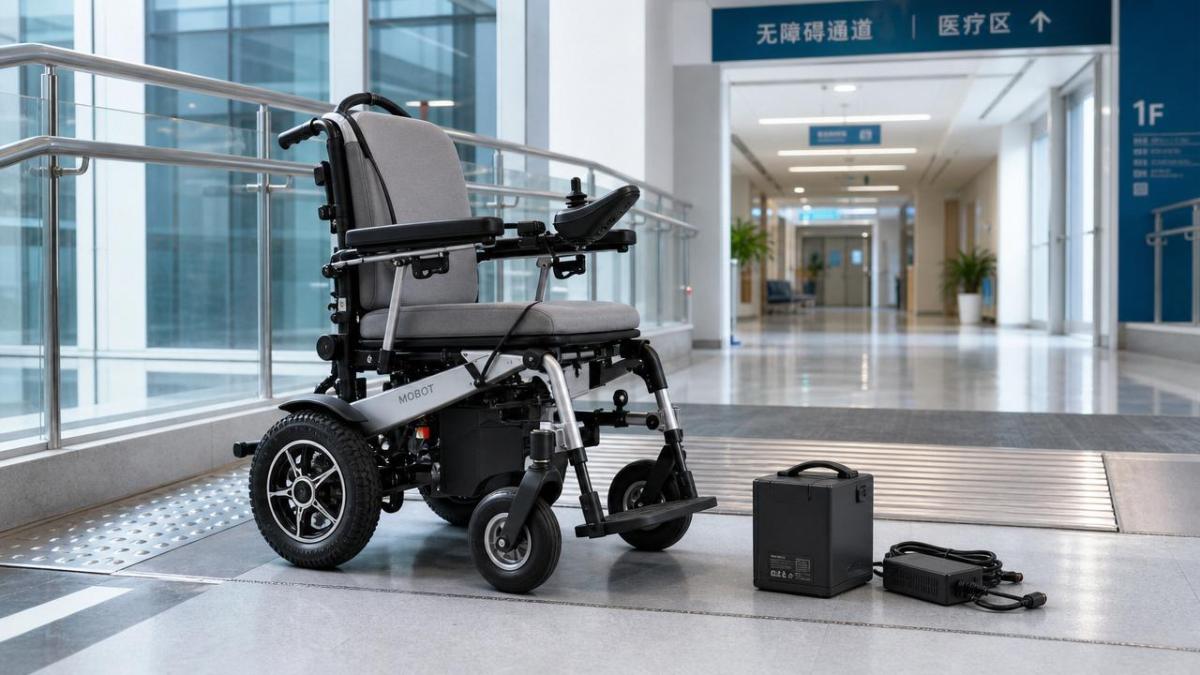
Most published range figures assume moderate speed, smooth ground, stable temperature, and a user weight within the recommended limit.
Real life is less controlled, especially when electric wheelchairs move across carpets, thresholds, slopes, elevators, sidewalks, and transit stations.
Range also depends on battery chemistry, motor efficiency, tire type, controller settings, and how often the chair starts and stops.
A 15-mile rating may feel generous in a flat apartment complex.
The same rating may feel limited on hilly streets or long medical campus corridors.
Key takeaway
Treat range as a planning number, not a fixed outcome.
The best electric wheelchairs leave enough reserve after normal daily use, not only after ideal test conditions.
How much daily range do most users actually need?
Daily range should begin with a simple mobility map.
List the places visited each week, then estimate the longest continuous travel day.
Many indoor-focused electric wheelchairs only need enough power for home movement, nearby appointments, and short errands.
Outdoor-heavy routines need more reserve because surfaces are less predictable and energy demand rises quickly.
A practical rule is to choose a chair that exceeds your normal daily distance by at least 30%.
That margin helps cover detours, elevator delays, weather changes, battery aging, or an unexpected second trip.
- Home-focused use: compact electric wheelchairs with moderate battery capacity may be enough.
- Community errands: choose stronger batteries, stable wheels, and dependable braking.
- Work or campus use: prioritize real-world range, seating support, and service access.
- Travel use: confirm airline battery rules, folding design, and charger compatibility.
Battery range is important, but it should never be separated from route type.
A chair used in a hospital, industrial facility, hotel, airport, or laboratory building faces different mobility demands.
Long corridors favor endurance, while tight interiors favor turning radius and precise control.
Which factors reduce the stated range of electric wheelchairs?
Several everyday conditions can reduce the practical range of electric wheelchairs.
Understanding them prevents disappointment and supports better product comparison.
User weight and carried items
Higher total load requires more motor output.
Shopping bags, oxygen equipment, backpacks, or accessories can slightly reduce the available travel distance.
Terrain and slope
Inclines, ramps, uneven pavement, and thick carpet demand more energy than smooth indoor flooring.
For outdoor electric wheelchairs, tire grip and motor torque matter as much as battery capacity.
Temperature and battery age
Cold weather can reduce battery performance.
Older batteries also lose capacity, even when they are charged correctly.
Driving style
Frequent acceleration, sudden braking, and high-speed use shorten operating time.
Smooth driving usually improves range and comfort.
Should comfort ever outweigh battery range?
Yes, comfort can matter more than maximum range when electric wheelchairs are used for long seated periods.
A chair that travels far but causes pain may not support real independence.
Daily comfort includes seat width, cushion quality, back support, armrest height, foot positioning, and joystick placement.
It also includes vibration control, suspension, stability, and the effort needed to transfer in and out.
For many users, electric wheelchairs are not only transport devices.
They are seating systems used during meals, conversations, work tasks, and medical waiting periods.
A slightly shorter range may be acceptable if the chair provides reliable posture and safer everyday handling.
However, comfort should not hide a battery that barely covers the day.
The right balance is enough range plus seating that remains supportive after several hours.
How should electric wheelchairs be compared before purchase?
A useful comparison looks beyond brochure mileage.
It should connect range, use pattern, charging access, maintenance, and long-term ownership cost.
In large facilities, reliable mobility resembles environmental control planning.
Both depend on measured performance, predictable operating conditions, and system reserves for unexpected variation.
That is why electric wheelchairs should be evaluated through actual daily conditions, not isolated specifications.
What mistakes create battery range anxiety?
Range anxiety often comes from small planning errors, not only weak batteries.
These mistakes are common when comparing electric wheelchairs for the first time.
- Choosing the highest advertised range without testing comfort.
- Ignoring hills, curb cuts, carpets, and outdoor surfaces.
- Forgetting that batteries weaken over time.
- Using a charger only after the battery is nearly empty.
- Adding accessories without considering extra weight.
- Assuming travel-friendly electric wheelchairs always have long range.
Good charging habits reduce stress.
Charge according to the battery type, store the chair properly, and avoid repeated deep discharge when possible.
If daily travel is unpredictable, consider a model with removable batteries or easier access to approved replacements.
FAQ: quick answers about electric wheelchairs and daily range
Are lithium batteries better for electric wheelchairs?
Lithium batteries are usually lighter and can offer efficient performance.
They are common in portable electric wheelchairs, but specifications and safety approvals still matter.
Is a heavier chair always more powerful?
Not always.
Weight may indicate stronger structure, but motor design, battery quality, and controller efficiency are also important.
Can electric wheelchairs be used in rain?
Many models tolerate light exposure, but they are not waterproof by default.
Check the manual before using electric wheelchairs in wet conditions.
How long should a battery last?
Battery lifespan depends on chemistry, charging habits, storage temperature, and use intensity.
Performance usually declines gradually, so replacement planning is part of ownership.
Should range be tested before committing?
Yes, whenever possible.
Test electric wheelchairs on surfaces similar to your normal environment, including ramps and tight spaces.
Conclusion: choose dependable daily mobility, not only maximum mileage
The best electric wheelchairs are not defined by the largest battery number alone.
They are defined by dependable daily performance, comfortable seating, safe handling, and realistic charging routines.
Start with your longest ordinary day, then add reserve for terrain, weather, delays, and battery aging.
Compare electric wheelchairs through real use cases, not isolated claims.
Measure your routes, confirm charging access, test comfort, and review service support before making a decision.
That approach turns range from a worry into a practical planning tool for safer everyday mobility.
Get weekly intelligence in your inbox.
No noise. No sponsored content. Pure intelligence.
 Oct 21, 2026How often is cleanroom certification required under ISO 14644-2?Cleanroom Certification is generally recommended annually under ISO 14644-2. Learn when risk-based extensions apply and which changes trigger earlier testing to plan with confidence.
 Oct 21, 2026FASEB Comments on NIH Draft Policy for Research Involving BiohazardsFASEB comments on NIH’s draft biohazard research policy call for risk-based biosafety oversight. Explore potential implications for laboratories, suppliers, and compliance teams.
 Oct 20, 2026How to disinfect ultrasound machines without damaging surfacesLearn how to disinfect ultrasoundmachines without surface damage. Explore compatible products, wet contact times, and probe care to protect patients and equipment.
 Oct 20, 2026Ultrapure Water in Semiconductor Manufacturing: Reuse and Quality Control InsightsExplore ultrapure water reuse in semiconductor manufacturing, key UPW quality benchmarks and analytical insights to help evaluate suppliers and protect process purity.
 Oct 19, 2026How cooling affects warpage in injection-molded consumer electronics housingsOptimize plastic injection molding for consumer electronics with cooling strategies to reduce housing warpage and improve assembly fit. Discover practical checks for stable, efficient production.
 Oct 18, 2026Can air leaks prevent a dehumidifier from holding its target dew point?Why can't our dehumidifier maintain the target dew point? Discover how air leaks increase moisture loads, spot hidden faults, and find practical fixes to restore reliable dew-point control.
 Oct 17, 2026How semiconductor process water treatment removes trace organicsSee how semiconductor process water treatment removes trace organics with RO, UV oxidation, and polishing. Learn how TOC monitoring helps verify purity and pinpoint contamination.
 Oct 16, 2026How to choose ultra pure water piping materials to limit leachingChoose ultra pure water piping with confidence. Compare PVDF, PFA, and stainless steel, assess leaching risks, and learn how to qualify your system for reliable purity.
 Oct 15, 2026How to size a skid-mounted deionized water system for peak demandCompare deionized water systems skid configurations for peak demand. Learn how to balance production, storage, and pump capacity to prevent shortages and avoid costly oversizing.
 Oct 14, 2026When is collaborative laboratory robotics suitable for sample sorting?Explore when collaborative laboratory robotics suits sample sorting. Discover key checks for safety, traceability, container compatibility, and throughput before choosing your solution.
 Oct 13, 2026How sandwich panel joints affect airtightness in cleanroom systemsCleanroom Systems sandwich panels need reliable joints for airtightness. Discover how gaskets, sealants, and testing help reduce leakage and protect cleanroom pressure control.
 Oct 12, 2026How to verify USP compliance for ultra pure water systemsUltra Pure Water Systems USP compliance: learn how to verify water quality, sampling, sanitization, trends, and validation controls at every point of use.
 Oct 11, 2026How tight temperature control prevents cleanroom process driftCleanroom process temperature control systems prevent costly drift by stabilizing critical conditions, improving repeatability, and protecting sensitive production workflows.
 Oct 10, 2026When does organic contaminant removal require TOC treatment?Organic contaminant removal requires TOC treatment when dissolved organics threaten product quality, equipment reliability, or process control. Learn how to assess risks and choose the right solution.
 Oct 08, 2026What affects lead times for sheet metal bending services in Canada?Sheet metal bending services Canada: discover how material supply, tooling, tolerances, finishing, documentation, and freight affect lead times for reliable project delivery.
 Oct 07, 2026How HVAC design for semiconductor fabs prevents airborne contaminationHVAC design for semiconductor fabs prevents airborne contamination through advanced filtration, pressure cascades, airflow control, and real-time monitoring. Explore key strategies for cleaner, more reliable wafer production.
 Oct 06, 2026How photovoltaic modules waterproof technology prevents moisture damagephotovoltaic modules waterproof technology prevents moisture damage with durable seals, drainage, and junction-box protection. Explore practical selection and testing insights.
 Oct 05, 2026How ISO 14644 Europe requirements affect cleanroom qualificationISO 14644 Europe requirements shape cleanroom qualification, from particle classification and recovery testing to monitoring, GMP alignment, and change control.
 Oct 04, 2026How to assess a pharmaceutical cleanroom solutions supplier’s ISO capabilityPharmaceutical Cleanroom Solutions supplier assessment guide: evaluate ISO 14644 capability, validation evidence, airflow design, documentation, and long-term GMP readiness.
 Oct 03, 2026What EU standards govern the design of BSL-3 laboratories in Europe?BSL-3 laboratories Europe: explore EU directives, EN standards, HVAC containment, commissioning, and practical design strategies for compliant, resilient high-containment facilities.
 Oct 02, 2026How EN 1822 defines HEPA filtration efficiency for cleanroomsHEPA filtration EN 1822 explained: learn how MPPS testing, local leakage limits, and filter classes support reliable cleanroom decisions.
 Oct 01, 2026How pharmaceutical process water systems control microbial riskProcess water systems pharmaceutical teams rely on can control microbial risk through hygienic design, monitoring, and validated sanitization. Explore practical compliance strategies.
 Sep 30, 2026When does a negative pressure laboratory need BSL-3 containment?Negative pressure laboratory or BSL-3? Discover the risk factors, engineering controls, and containment requirements needed for safe, compliant laboratory planning.
 Sep 29, 2026How to evaluate a TOC-zero water treatment supplier for UPW systemsChoose a TOC-zero water treatment supplier with confidence. Compare UPW performance, monitoring, validation, materials, service capability, and lifecycle cost.
 Sep 28, 2026What drives sustainable cooling cost in high-precision facilities?Sustainable cooling cost in high-precision facilities depends on thermal stability, energy, water, controls, and resilience. Explore smarter lifecycle strategies.
 Sep 27, 2026How to compare freight forwarding services for time-critical shipmentsCompare freight forwarding services for time-critical shipments with practical insights on routing, customs, visibility, specialized handling, and contingency planning.
 Sep 26, 2026How environmental integrity in laboratories supports reliable test resultsEnvironmental Integrity in laboratories safeguards samples, instruments, and staff. Discover practical controls for contamination, monitoring, and reliable test results.