Intermediate Bulk Containers: Costly Sizing Mistakes
Intermediate Bulk Containers: Costly Sizing Mistakes
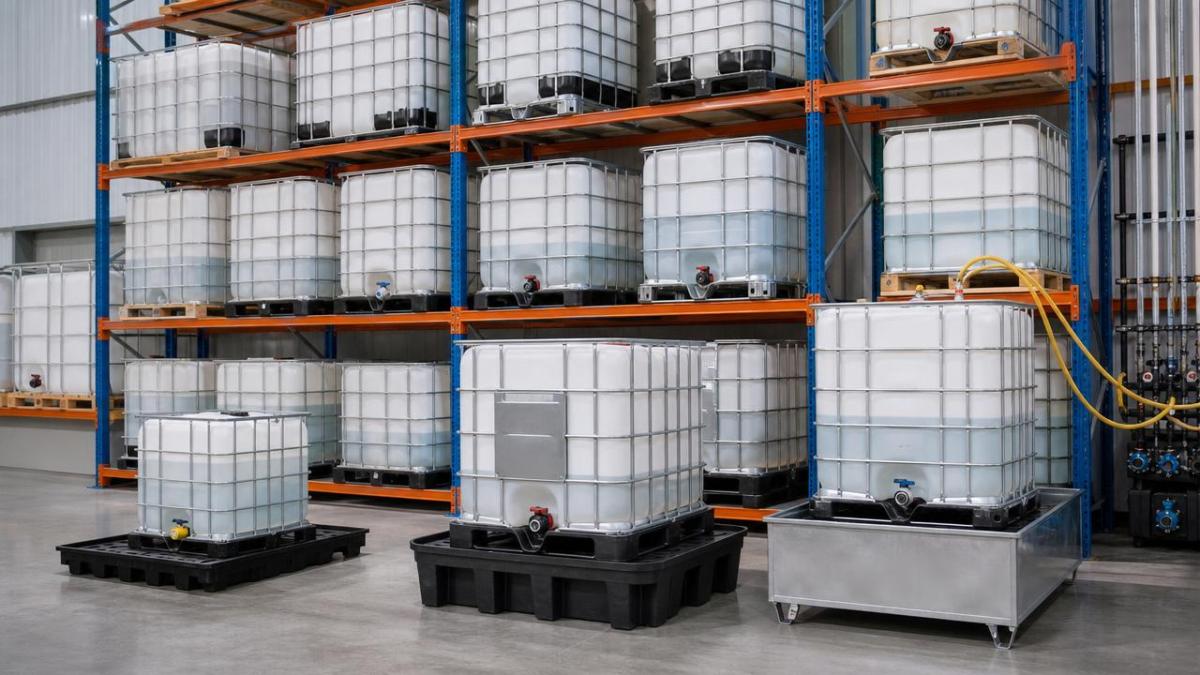
Choosing the wrong size of intermediate bulk containers can quietly inflate costs, weaken handling efficiency, and create compliance exposure across industrial operations.
For chemicals, process fluids, cleanroom materials, and environmental-control supplies, IBC sizing is no longer a simple logistics decision.
It affects storage density, transport utilization, product stability, contamination control, and the total cost of ownership.
As industrial sites demand cleaner, safer, and more traceable materials, intermediate bulk containers are becoming strategic infrastructure assets.
Sizing Errors Are Becoming More Expensive
The traditional approach was simple: choose the largest container that appears compatible with the product and handling route.
That approach now creates hidden penalties, especially where space, cleanliness, safety, and traceability requirements are tightening.
Intermediate bulk containers sit between drums and tankers, but that middle position requires careful sizing judgment.
A 1,000-liter IBC may look efficient, yet become costly when turnover is slow or residues increase.
A smaller container may improve freshness, but increase handling frequency, label workload, and pallet movements.
The market signal is clear: container selection is shifting from volume purchasing toward application-specific capacity planning.
Trend Signals Behind Smarter IBC Selection
Several industry shifts explain why intermediate bulk containers need more precise sizing decisions.
These signals are especially visible in high-control environments, where material movement affects process stability and compliance confidence.
In such conditions, intermediate bulk containers must support both logistics efficiency and environmental integrity.
Why the Wrong Size Raises Total Cost
Sizing mistakes rarely appear as one large expense. They accumulate through storage, labor, product loss, and corrective actions.
- Excess headspace can accelerate oxidation, moisture ingress, or vapor accumulation.
- Slow consumption increases shelf-life pressure and quality inspection frequency.
- Oversized intermediate bulk containers may exceed safe manual access assumptions.
- Undersized IBCs increase forklift trips, receiving events, and documentation cycles.
- Poor stacking compatibility reduces cubic utilization in warehouses and vehicles.
The most damaging mistake is treating nominal capacity as usable capacity.
Intermediate bulk containers require allowances for expansion, safe filling limits, discharge geometry, and residue management.
A container that looks correct on a spreadsheet may fail during filling, transport, dispensing, or cleaning.
Common Sizing Mistakes Across Industrial Uses
Mistake 1: Matching Size Only to Purchase Volume
Bulk buying can reduce unit price, but it may increase waste if consumption does not match container turnover.
Intermediate bulk containers should be sized around realistic drawdown cycles, not only annual demand.
For sensitive chemicals or cleanroom fluids, a shorter open-container period often protects product integrity.
Mistake 2: Ignoring Density and Weight Limits
A 1,000-liter container does not mean 1,000 kilograms. Dense liquids can overload pallets, racks, and handling systems.
Intermediate bulk containers must be evaluated by gross weight, specific gravity, and dynamic transport stress.
Weight errors also affect stacking safety, spill response planning, and vehicle load distribution.
Mistake 3: Overlooking Discharge Efficiency
Some products do not fully drain from standard container geometry. Residue becomes trapped value and disposal cost.
Viscous fluids, slurries, and temperature-sensitive materials require special attention to outlet position and bottom design.
Correctly sized intermediate bulk containers reduce heel volume and improve batch consistency.
Mistake 4: Forgetting Cleanroom and Contamination Needs
In controlled environments, container size affects unpacking time, surface area, particle transfer, and staging space.
Oversized intermediate bulk containers may remain exposed longer than quality controls allow.
Smaller, sealed, compatible units may support cleaner transfers and more predictable material consumption.
Operational Impacts Across the Supply Chain
Wrongly sized intermediate bulk containers affect more than purchasing price. They change how materials move through a facility.
Receiving may need more staging space. Storage may lose rack compatibility. Production may face slower dispensing.
Waste handling may also become more complex when residues, rinse water, or contaminated liners increase.
- Storage impact: lost pallet positions and inefficient vertical stacking.
- Handling impact: more forklift travel or unsafe access points.
- Quality impact: longer exposure after opening and higher inspection frequency.
- Compliance impact: harder segregation, labeling, and spill containment planning.
- ESG impact: increased waste, cleaning chemicals, and return transport emissions.
These impacts explain why intermediate bulk containers should be reviewed with facility, process, and compliance data together.
Key Criteria for Better Intermediate Bulk Containers
A better sizing decision starts with mapping product behavior against real operating conditions.
This structured view prevents intermediate bulk containers from being selected by habit or supplier default.
It also supports benchmarking against safety, environmental, and operational performance goals.
How Digital Monitoring Changes IBC Sizing
Smart environmental monitoring is making container sizing more data-driven.
Level sensors, batch records, and warehouse systems can reveal real drawdown patterns.
This data shows whether intermediate bulk containers are too large, too small, or poorly positioned.
Digital twins can simulate storage density, movement frequency, and replenishment timing before capacity changes are made.
For climate-control and ultra-pure process environments, this improves both material assurance and operational resilience.
Practical Response Strategy for Future Demand
The next phase of IBC selection should focus on flexible capacity planning.
Instead of standardizing on one size, build a portfolio of intermediate bulk containers for different risk profiles.
- Classify products by sensitivity, hazard, viscosity, and consumption speed.
- Compare actual fill levels with transport and storage constraints.
- Measure residue after discharge and convert it into annual cost.
- Review returnable, single-use, and liner-based options by lifecycle impact.
- Pilot alternative IBC sizes before full-scale standard changes.
This approach keeps intermediate bulk containers aligned with changing production volumes and compliance expectations.
It also reduces the risk of locking operations into a container size that no longer fits demand.
What to Watch Before the Next Contract
Before renewing supply agreements, review whether container size still matches operational reality.
These questions turn sizing from a one-time specification into a measurable performance lever.
Building a Leaner and Safer IBC Program
Intermediate bulk containers should support safer storage, cleaner dispensing, lower waste, and more predictable logistics.
The most effective programs combine capacity data, compatibility review, and operational feedback.
Small changes in IBC size can unlock meaningful improvements in labor, freight, compliance, and sustainability.
Start with the highest-volume or highest-risk fluids, then compare current intermediate bulk containers against actual usage data.
Document fill levels, turnover time, residue, handling delays, and any quality deviations.
Use those findings to define a sizing standard that reflects real process needs, not historical purchasing habits.
The right intermediate bulk containers reduce hidden cost while strengthening environmental control, safety, and long-term operational scalability.
Get weekly intelligence in your inbox.
No noise. No sponsored content. Pure intelligence.
 Oct 21, 2026How often is cleanroom certification required under ISO 14644-2?Cleanroom Certification is generally recommended annually under ISO 14644-2. Learn when risk-based extensions apply and which changes trigger earlier testing to plan with confidence.
 Oct 21, 2026FASEB Comments on NIH Draft Policy for Research Involving BiohazardsFASEB comments on NIH’s draft biohazard research policy call for risk-based biosafety oversight. Explore potential implications for laboratories, suppliers, and compliance teams.
 Oct 20, 2026How to disinfect ultrasound machines without damaging surfacesLearn how to disinfect ultrasoundmachines without surface damage. Explore compatible products, wet contact times, and probe care to protect patients and equipment.
 Oct 20, 2026Ultrapure Water in Semiconductor Manufacturing: Reuse and Quality Control InsightsExplore ultrapure water reuse in semiconductor manufacturing, key UPW quality benchmarks and analytical insights to help evaluate suppliers and protect process purity.
 Oct 19, 2026How cooling affects warpage in injection-molded consumer electronics housingsOptimize plastic injection molding for consumer electronics with cooling strategies to reduce housing warpage and improve assembly fit. Discover practical checks for stable, efficient production.
 Oct 18, 2026Can air leaks prevent a dehumidifier from holding its target dew point?Why can't our dehumidifier maintain the target dew point? Discover how air leaks increase moisture loads, spot hidden faults, and find practical fixes to restore reliable dew-point control.
 Oct 17, 2026How semiconductor process water treatment removes trace organicsSee how semiconductor process water treatment removes trace organics with RO, UV oxidation, and polishing. Learn how TOC monitoring helps verify purity and pinpoint contamination.
 Oct 16, 2026How to choose ultra pure water piping materials to limit leachingChoose ultra pure water piping with confidence. Compare PVDF, PFA, and stainless steel, assess leaching risks, and learn how to qualify your system for reliable purity.
 Oct 15, 2026How to size a skid-mounted deionized water system for peak demandCompare deionized water systems skid configurations for peak demand. Learn how to balance production, storage, and pump capacity to prevent shortages and avoid costly oversizing.
 Oct 14, 2026When is collaborative laboratory robotics suitable for sample sorting?Explore when collaborative laboratory robotics suits sample sorting. Discover key checks for safety, traceability, container compatibility, and throughput before choosing your solution.
 Oct 13, 2026How sandwich panel joints affect airtightness in cleanroom systemsCleanroom Systems sandwich panels need reliable joints for airtightness. Discover how gaskets, sealants, and testing help reduce leakage and protect cleanroom pressure control.
 Oct 12, 2026How to verify USP compliance for ultra pure water systemsUltra Pure Water Systems USP compliance: learn how to verify water quality, sampling, sanitization, trends, and validation controls at every point of use.
 Oct 11, 2026How tight temperature control prevents cleanroom process driftCleanroom process temperature control systems prevent costly drift by stabilizing critical conditions, improving repeatability, and protecting sensitive production workflows.
 Oct 10, 2026When does organic contaminant removal require TOC treatment?Organic contaminant removal requires TOC treatment when dissolved organics threaten product quality, equipment reliability, or process control. Learn how to assess risks and choose the right solution.
 Oct 08, 2026What affects lead times for sheet metal bending services in Canada?Sheet metal bending services Canada: discover how material supply, tooling, tolerances, finishing, documentation, and freight affect lead times for reliable project delivery.
 Oct 07, 2026How HVAC design for semiconductor fabs prevents airborne contaminationHVAC design for semiconductor fabs prevents airborne contamination through advanced filtration, pressure cascades, airflow control, and real-time monitoring. Explore key strategies for cleaner, more reliable wafer production.
 Oct 06, 2026How photovoltaic modules waterproof technology prevents moisture damagephotovoltaic modules waterproof technology prevents moisture damage with durable seals, drainage, and junction-box protection. Explore practical selection and testing insights.
 Oct 05, 2026How ISO 14644 Europe requirements affect cleanroom qualificationISO 14644 Europe requirements shape cleanroom qualification, from particle classification and recovery testing to monitoring, GMP alignment, and change control.
 Oct 04, 2026How to assess a pharmaceutical cleanroom solutions supplier’s ISO capabilityPharmaceutical Cleanroom Solutions supplier assessment guide: evaluate ISO 14644 capability, validation evidence, airflow design, documentation, and long-term GMP readiness.
 Oct 03, 2026What EU standards govern the design of BSL-3 laboratories in Europe?BSL-3 laboratories Europe: explore EU directives, EN standards, HVAC containment, commissioning, and practical design strategies for compliant, resilient high-containment facilities.
 Oct 02, 2026How EN 1822 defines HEPA filtration efficiency for cleanroomsHEPA filtration EN 1822 explained: learn how MPPS testing, local leakage limits, and filter classes support reliable cleanroom decisions.
 Oct 01, 2026How pharmaceutical process water systems control microbial riskProcess water systems pharmaceutical teams rely on can control microbial risk through hygienic design, monitoring, and validated sanitization. Explore practical compliance strategies.
 Sep 30, 2026When does a negative pressure laboratory need BSL-3 containment?Negative pressure laboratory or BSL-3? Discover the risk factors, engineering controls, and containment requirements needed for safe, compliant laboratory planning.
 Sep 29, 2026How to evaluate a TOC-zero water treatment supplier for UPW systemsChoose a TOC-zero water treatment supplier with confidence. Compare UPW performance, monitoring, validation, materials, service capability, and lifecycle cost.
 Sep 28, 2026What drives sustainable cooling cost in high-precision facilities?Sustainable cooling cost in high-precision facilities depends on thermal stability, energy, water, controls, and resilience. Explore smarter lifecycle strategies.
 Sep 27, 2026How to compare freight forwarding services for time-critical shipmentsCompare freight forwarding services for time-critical shipments with practical insights on routing, customs, visibility, specialized handling, and contingency planning.
 Sep 26, 2026How environmental integrity in laboratories supports reliable test resultsEnvironmental Integrity in laboratories safeguards samples, instruments, and staff. Discover practical controls for contamination, monitoring, and reliable test results.