ASHRAE Standards for Cleanrooms: Key Design Checks for 2026
As regulatory expectations and process tolerances tighten in 2026, understanding ASHRAE Standards for cleanrooms is critical for project managers and engineering leads. From airflow balance and pressure cascades to energy efficiency and contamination control, the right design checks can reduce compliance risk, protect product quality, and improve lifecycle performance. This guide highlights the priorities that matter most before approval, construction, and commissioning.
For project leaders in semiconductor, pharmaceutical, advanced electronics, biotech, and precision manufacturing programs, cleanroom design is no longer just a mechanical package. It is a risk-control framework tied to yield, validation, uptime, and ESG performance. In practice, ASHRAE Standards for cleanrooms influence early design assumptions, owner requirements, cross-discipline coordination, and long-term operating cost.
Organizations such as G-ICE increasingly evaluate cleanroom infrastructure against international benchmarks including ASHRAE, ISO 14644, and related environmental control criteria. That means project managers must review not only temperature and humidity targets, but also airflow strategy, pressure hierarchy, filtration efficiency, energy recovery, controls logic, and commissioning evidence before a project moves into procurement or handover.
Why ASHRAE Design Checks Matter More in 2026
The 2026 environment raises the stakes for design decisions made 6 to 18 months earlier. Cleanrooms serving ISO Class 1 to ISO Class 8 applications face tighter process windows, more audit scrutiny, and stronger pressure to reduce energy intensity. A small omission in air balance or controls integration can delay qualification by 2 to 6 weeks and create expensive rework during commissioning.
ASHRAE Standards for cleanrooms are especially relevant where process sensitivity intersects with high air change rates, narrow thermal tolerance, and contamination risk. In advanced fabs or sterile fill lines, a drift of even 0.5°C, a humidity deviation of 5% RH, or an unstable pressure cascade can affect product quality, operator safety, or process repeatability.
Three drivers project teams cannot ignore
- Regulatory alignment: owner specifications increasingly require traceable compliance with ASHRAE, ISO 14644, and internal validation protocols.
- Lifecycle economics: HVAC often represents 30% to 60% of cleanroom energy use, making design efficiency a board-level issue.
- Operational resilience: modern facilities demand stable performance across 24/7 operations, maintenance events, and variable process loads.
Where project risk usually appears
Most risk does not start at final inspection. It starts when basis-of-design documents fail to define airflow visualization criteria, room recovery time, room pressurization logic, filter access zones, or control redundancy. By the time these gaps appear on site, contractors may already have released equipment, ductwork, or FFU layouts for fabrication.
For project managers, the practical question is simple: what should be checked before approval? The answer is a short list of technical gates that connect owner intent to construction reality.
Core Technical Checks for ASHRAE Standards for Cleanrooms
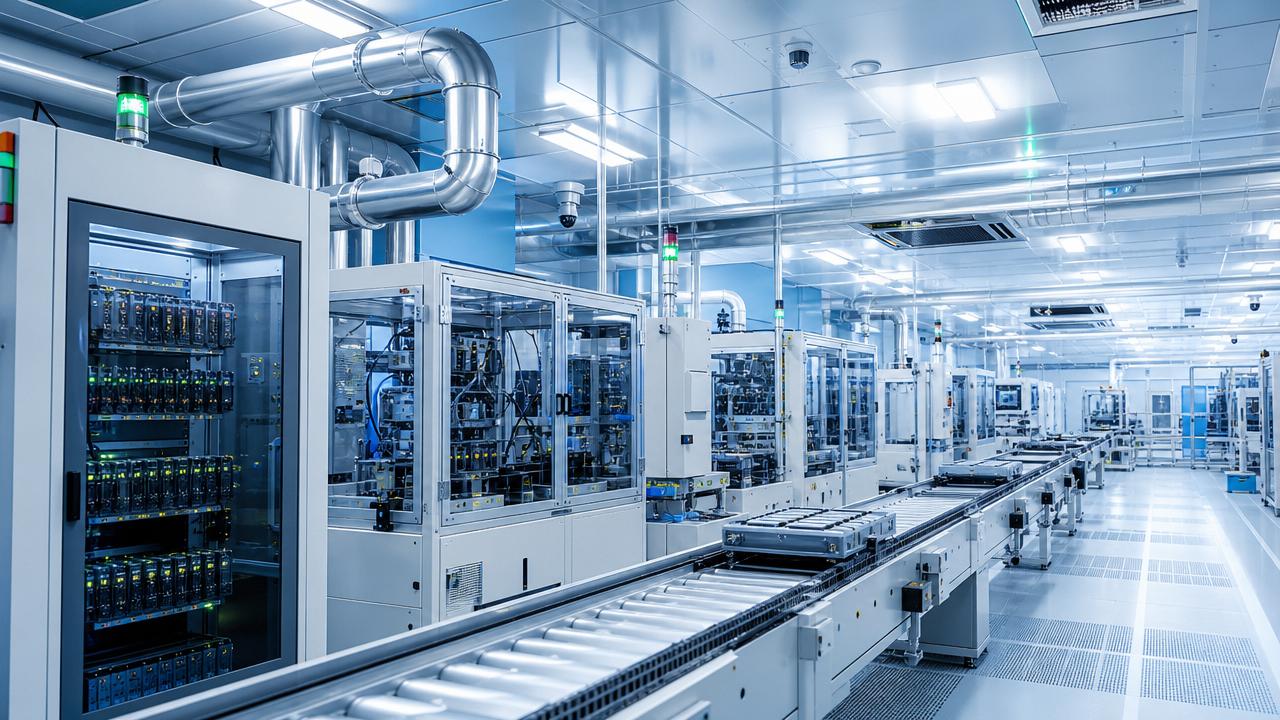
The following design checks are the ones most likely to affect compliance, commissioning speed, and operational performance. They also provide a useful review structure for multidisciplinary teams covering architecture, HVAC, process, controls, and validation.
1. Airflow pattern and air change strategy
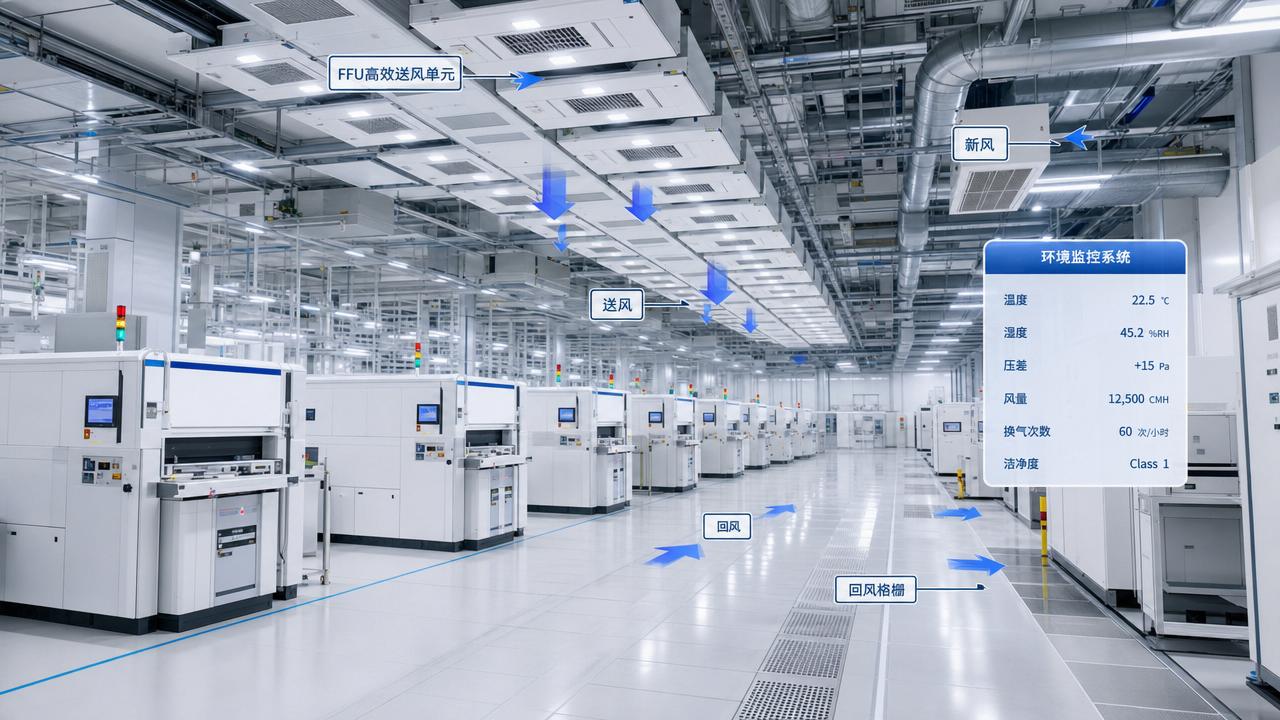
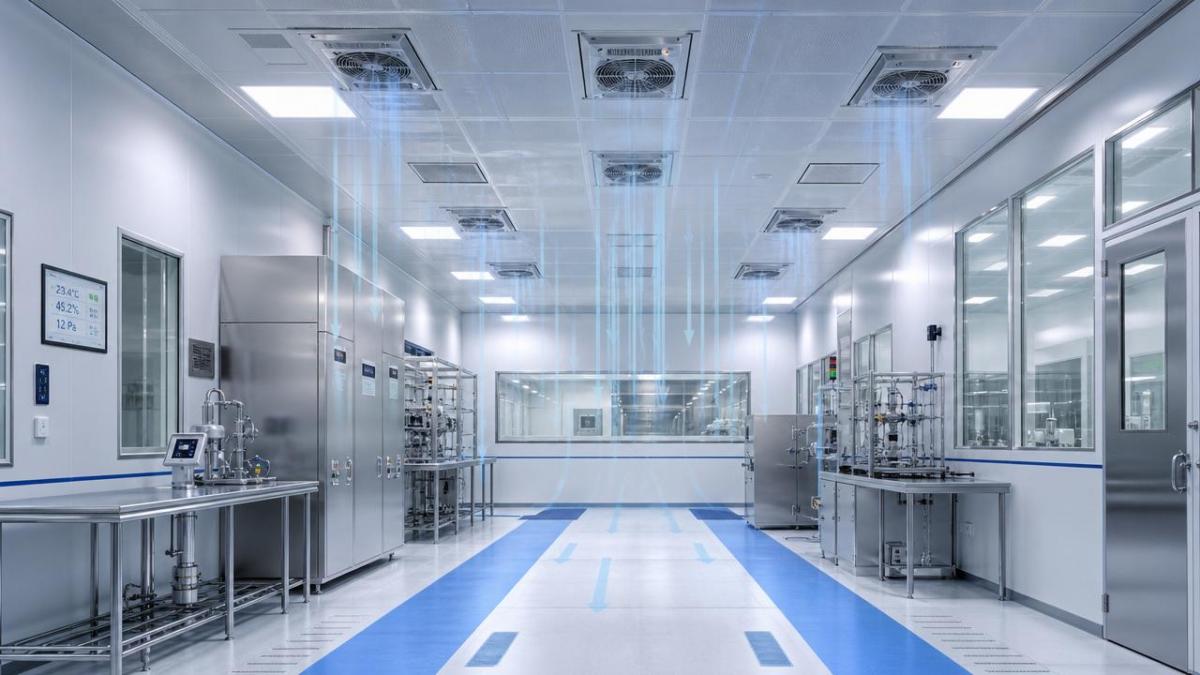
Cleanroom airflow should match the contamination control objective, not just a generic air change target. Unidirectional zones may require highly uniform vertical flow, while mixed-flow spaces may rely on carefully placed terminals and return paths. Typical ranges can vary widely, from about 20 to more than 300 air changes per hour depending on cleanliness class, heat load, occupancy, and process type.
Design reviews should confirm diffuser or FFU placement, return grille location, obstruction mapping, and expected airflow visualization outcomes. If the ceiling plan changes late due to lighting, sprinklers, or utilities, airflow performance may change as well. That is why coordination models should be frozen before procurement.
2. Pressure cascade and room zoning
A pressure cascade is one of the most visible signs of whether the cleanroom concept is coherent. For many facilities, differential pressures of approximately 5 Pa to 15 Pa between adjacent spaces are common design references, though exact values depend on risk, doors, leak paths, and process containment requirements.
Project teams should check door opening frequency, material transfer routes, airlocks, pass-throughs, and exhaust offsets. A pressure scheme that looks correct on paper may fail in operation if envelope leakage is high or if one room switches between occupied and unoccupied modes without coordinated control logic.
3. Temperature and humidity control stability
Not every cleanroom needs ultra-tight environmental control, but every cleanroom needs control aligned with process sensitivity. Typical design bands might be 20°C to 24°C and 40% to 60% RH for general applications. More critical manufacturing may require tighter thermal control, sometimes within ±0.5°C or better in localized zones.
Checks should include sensible and latent load assumptions, seasonal ambient conditions, dehumidification strategy, reheating logic, sensor location, and control response time. If make-up air and recirculation are not modeled correctly, systems may short-cycle or drift during startup and shift changes.
The table below helps project managers compare core design checkpoints and the operational consequence of missing them during review.
The key takeaway is that ASHRAE Standards for cleanrooms should be translated into measurable design checks. Teams that define pass-fail criteria early usually reduce commissioning disputes and avoid late changes to balancing, controls, or room envelope details.
4. Filtration, leakage control, and maintenance access
HEPA or ULPA filter performance depends on more than efficiency rating. Project managers should verify terminal layout, upstream cleanliness, scan testing provisions, gasket integrity, and maintenance access. If filters cannot be replaced safely or tested thoroughly, the design introduces future downtime and operational risk.
Review points should include ceiling grid compatibility, terminal pressure drop, fan redundancy, and whether access is from the service chase, plenum, or clean side. In high-value production environments, maintainability can be just as important as initial qualification.
5. Exhaust, make-up air, and process integration
Many cleanroom failures come from poor integration between HVAC and process exhaust. If tools, biosafety cabinets, wet benches, or solvent processes pull more exhaust than expected, the room may lose pressure stability. Design checks should include diversity assumptions, upset scenarios, and the control response when one exhaust branch trips offline.
In mixed-use industrial facilities, this issue is common where process engineers finalize equipment schedules after mechanical design is already 70% complete. A disciplined change-control process is essential.
Energy Efficiency Without Compromising Cleanroom Performance
One of the biggest 2026 priorities is balancing environmental control with energy performance. Cleanrooms are energy-intensive by nature, but not every room needs the same airflow volume, fan speed, or conditioning strategy at every hour of the day. Smart design can cut waste without weakening contamination control.
High-impact efficiency opportunities
- Right-size air change rates by room function instead of applying one conservative standard everywhere.
- Use variable speed control for fans and chilled water systems where process stability allows.
- Segment occupancy and setback modes for support spaces, gowning rooms, and buffer zones.
- Review heat recovery and coil selection carefully, especially where humidity control drives reheat energy.
In many projects, a 10% to 20% fan energy reduction can be technically achievable through better pressure drop management, cleaner duct routing, and optimized FFU or AHU control. However, savings should never be accepted without verifying particle control, recovery time, and pressure stability under realistic operating conditions.
What project managers should ask during review
- Are airflow setpoints based on process risk or inherited from a previous project?
- Has the team modeled occupied, unoccupied, startup, and maintenance modes?
- Are sensor calibrations, trends, and alarms integrated into the BMS from day one?
- Will the selected control sequence preserve pressure cascades during load shifts?
The matrix below is useful when comparing design options during procurement, especially when multiple contractors propose different HVAC and controls concepts for the same cleanroom scope.
For B2B buyers, the most reliable procurement decisions compare first cost against 5-year operating impact, maintainability, and validation risk. This is where ASHRAE Standards for cleanrooms become a commercial tool, not just a technical reference.
Commissioning, Documentation, and Handover Controls
Even a strong design can underperform if commissioning is rushed or poorly documented. For project managers, the handover phase should verify that the installed system performs as designed under both steady-state and dynamic conditions. A typical cleanroom commissioning pathway includes 4 stages: prefunctional checks, functional performance testing, environmental verification, and integrated handover documentation.
Minimum documentation package to request
- Approved basis-of-design and final control sequences
- Airflow and TAB reports with room-by-room values
- Pressure cascade verification records
- Filter integrity testing evidence and maintenance instructions
- Alarm list, setpoint matrix, and sensor calibration schedule
- OQ or equivalent performance support documents where applicable
Frequent handover mistakes
A common issue is treating balancing as a one-time event rather than a condition that depends on final process connections, occupied states, and room envelope readiness. Another is accepting generic O&M manuals without site-specific control logic or recovery procedures. These gaps can add 30 to 90 days of performance uncertainty after occupancy.
For high-specification environments benchmarked by organizations like G-ICE, digital trend visibility is increasingly important. Trending pressure, temperature, humidity, fan status, and alarm events over the first 2 to 8 weeks helps owners detect drift before it affects audits or production yield.
Common Misjudgments in Cleanroom Projects
Many teams know the standards but still miss the project-level implications. The following misjudgments are especially common in fast-track industrial programs.
Assuming cleanliness class alone defines HVAC design
ISO class is important, but it does not replace process-specific risk assessment. Two ISO Class 7 rooms may need very different airflow, exhaust, material flow, and control response depending on whether the process is electronics assembly, powder handling, or sterile support.
Buying on equipment price rather than control outcome
The least expensive AHU, FFU, or chiller package is not always the least expensive facility. If the system cannot maintain stable conditions during 24/7 operation, the hidden cost appears in rebalancing, downtime, failed batches, or operator intervention.
Leaving commissioning criteria too late
Acceptance criteria should be drafted during design development, not after installation. That includes pressure ranges, particle objectives, response times, alarm delays, trend retention periods, and test responsibilities. Clear criteria reduce disputes across consultants, contractors, and owner teams.
A Practical Review Framework for Project Managers
If you need a concise approach, use a 6-point review before design release: define room performance targets, verify airflow concept, validate pressure hierarchy, confirm thermal and humidity control, check maintainability, and align commissioning evidence. This framework works well across semiconductor, pharmaceutical, research, and precision industrial environments.
ASHRAE Standards for cleanrooms are most valuable when converted into practical decision gates. The earlier those gates are embedded into design reviews and procurement packages, the lower the chance of cost escalation and late-stage redesign.
For organizations managing advanced environmental-control programs, G-ICE-style benchmarking can help align cleanroom systems with operational targets, compliance expectations, and long-term sustainability goals. If you are planning a new facility, retrofit, or performance upgrade, now is the right time to review your design assumptions, compare solution paths, and secure a cleaner commissioning process.
Contact us to discuss your cleanroom application, request a tailored design review checklist, or explore more solutions for contamination control, precision HVAC, and high-performance facility delivery.
Get weekly intelligence in your inbox.
No noise. No sponsored content. Pure intelligence.
 May 30, 2026Industrial HVAC Tender Alerts: What to Track in 2026industrial hvac tender alerts in 2026 reveal project signals, compliance risks, and market opportunities—learn what to track to bid smarter and plan ahead.
 May 30, 2026Wireless EV Charging: Efficiency Losses ExplainedWireless EV charging efficiency losses explained: compare plug-in systems, key loss points, cost impacts, and procurement tips for smarter fleet decisions.
 May 30, 2026Solar Panels Wholesale USA: Price vs Warranty ChecksSolar panels wholesale USA buyers: learn how to compare price, warranty, supplier stability, landed cost, and documents to protect margins and buy with confidence.
 May 30, 20265 Axis Milling Cost Drivers to Check Before Quoting5 axis milling costs depend on material, tolerances, finish, inspection, and volume. Learn what to check before quoting to reduce risk and secure better value.
 May 30, 2026Surgical Instruments: Cleaning Risks Before SterilizationSurgical instruments cleaning risks before sterilization: uncover hidden residues, biofilms, water quality issues, and control steps that protect safety and audit readiness.
 May 30, 20262026 Blue Bee Expo Closes in Nanjing: Maglev Chillers’ Overseas Orders Surge 210%Maglev Chillers surge 210% in overseas orders at 2026 Blue Bee Expo Nanjing — discover how precision thermal stability is reshaping global HVAC procurement.
 May 30, 2026IEC Launches Global Revision of Cleanroom Standards with IIoT Air Monitoring Calibration RequirementIEC’s new cleanroom standards mandate IIoT air monitoring calibration—NIST-traceable, blockchain-verified, ≤72h intervals. Critical for semiconductor, biopharma & medtech.
 May 30, 2026China Releases 2026 UPW Export Technical White PaperChina's 2026 UPW Export Technical White Paper sets new global benchmarks for 18.2 MΩ·cm ultra-pure water systems—TOC ≤0.3 ppb, particles ≤5/mL, Si ≤0.05 ppb. Key for semiconductor exporters & ASEAN fabs.
 May 30, 2026US EPA Tightens AMC Filtration Import Rules: New Semiconductor-Grade Amine LimitsUS EPA tightens AMC filtration import rules: new ≤0.05 ppt amine limits for semiconductor-grade systems—act now to avoid CBP delays and secure market access.
 May 30, 2026EU Proposes Mandatory Certification for Digital Twin Lab SystemsEU proposes mandatory certification for Digital Twin Lab systems—key for IIoT, smart manufacturing & environmental monitoring vendors targeting the EU market from 2027.
 May 29, 2026Precision Casting Defects: Temperature Control Checks Before ProductionPrecision casting defects often start with temperature drift. Learn pre-production checks for furnaces, molds, ladles, and environments to cut scrap and improve quality.
 May 29, 2026SaaS Trends 2026: Cost Signals Before Scaling Industrial SoftwareSaaS Trends 2026 reveal how industrial software teams can spot cost, integration, governance, and ROI signals before scaling critical facility platforms.
 May 29, 2026Smartmanufacturing in 2026: Digital Twin Use Cases That Cut Process RiskSmartmanufacturing in 2026 uses digital twins to cut process risk, improve cleanroom control, optimize utilities, and protect high-value operations.
 May 29, 2026Impact of 5G on Smart HVAC: Faster Fault Detection and Energy ControlExplore the impact of 5g on smart hvac, from faster fault detection to real-time energy control, helping critical facilities cut costs and improve resilience.
 May 29, 2026Factory Automation Solutions for Smart Manufacturing: Selection Criteria That Reduce DowntimeFactory automation solutions for smart manufacturing help reduce downtime with smarter selection criteria for interoperability, stability, cybersecurity, and predictive maintenance.
 May 29, 2026IEC Launches Global Revision of ISO Class 1–9 Cleanroom Standards with New IIoT Air Monitoring Calibration RequirementsIEC revises ISO Class 1–9 cleanroom standards: New IIoT air monitoring calibration rules demand remote, NIST-traceable 6-month calibrations — act now to future-proof your FFUs, sensors & systems.
 May 29, 20262026 Blue Bee Exhibition Closes in Nanjing: Maglev Chiller Export Orders Surge 210%Maglev chiller export orders surge 210% at 2026 Blue Bee Exhibition Nanjing—key for BSL-3 labs & semiconductor HVAC. Discover why precision ±0.01°C control and COP ≥7.2 are reshaping global thermal infrastructure demand.
 May 29, 2026China Releases 2026 UPW Export Technical GuidelinesChina's 2026 UPW Export Technical Guidelines introduce mandatory TOC, ZLD, and resistivity standards—key for semiconductor, pharma & advanced manufacturing exporters. Act now.
 May 29, 2026US EPA Tightens AMC Filtration Import Rules for Semiconductor-Grade AminesUS EPA tightens AMC filtration import rules for semiconductor-grade amines—0.05 ppb limit effective Sep 1, 2026. Ensure compliance now to avoid shipment delays.
 May 29, 2026EU Proposes Mandatory Certification for Digital Twin Lab SystemsEU mandates Digital Twin Lab certification from Q1 2027—learn how IIoT Air Monitoring, model provenance & Carbon Tracking impact your exports.
 May 28, 2026Raw Material Volatility and HVAC Cost Planning in 2026Impact of raw material on HVAC is reshaping 2026 budget planning. Learn how procurement teams can control cost volatility, reduce sourcing risk, and build smarter HVAC purchasing strategies.
 May 28, 2026Smart HVAC Investment Insights: Payback vs Control GainsSmart HVAC investment insights for finance leaders: compare payback with control gains, compliance resilience, and downtime risk to justify higher-value upgrades.
 May 28, 2026HVAC Regulatory Compliance News: 2026 Changes to TrackHVAC regulatory compliance news for 2026: track energy, IAQ, cleanroom, biosafety, and refrigerant changes. See key risks, audit impacts, and smart prep steps now.
 May 28, 2026HVAC in Semiconductor Fabs: Meeting ISO Class TargetsHVAC in semiconductor fabs drives ISO Class compliance, particle control, and thermal stability. Learn key design factors, common risks, and how to improve yield with smarter cleanroom control.
 May 28, 2026Data Center Cooling Trends 2026: What Cuts Energy RiskData center cooling trends 2026 reveal which strategies cut energy risk, improve uptime, and support high-density growth. See what enterprise leaders should prioritize now.
 May 28, 2026World's First Supercritical CO₂ Geothermal Heat Extraction Project Launches in China, Opening New Export Pathways for Heat Recovery SystemsSupercritical CO₂ geothermal heat extraction breakthrough in China unlocks new export opportunities for ESD-compatible, BSL-3-ready heat recovery systems.
 May 28, 2026EU Proposes Mandatory Digital Twin Lab Certification for Smart Sensor ExportsEU's proposed Digital Twin Lab certification mandates smart sensor data trustworthiness for cleanroom exports — key for Chinese IIoT and digital twin solution providers targeting the EU market.