Raw Material Volatility and HVAC Cost Planning in 2026
For procurement teams planning 2026 HVAC budgets, the impact of raw material on hvac is no longer a background issue but a direct cost driver. From copper and aluminum to steel and electronic components, price volatility is reshaping supplier negotiations, lead times, and total project value. This article explores how buyers can anticipate risk, control spending, and build more resilient sourcing strategies.
In industrial HVAC, especially for cleanrooms, biocontainment, semiconductor fabs, pharmaceutical plants, and precision thermal environments, a small movement in commodity pricing can trigger a much larger shift in installed system cost. Buyers are no longer purchasing only chillers, AHUs, ductwork, controls, or filtration packages. They are purchasing exposure to metals markets, electronics supply chains, compliance requirements, and project delivery risk.
For procurement leaders working with technically demanding environments, the challenge is not simply finding a lower unit price. It is understanding how the impact of raw material on hvac affects capex timing, specification decisions, sourcing leverage, lifecycle cost, and vendor selection. In 2026, that means budgeting with more scenario planning, tighter supplier review, and stronger coordination between engineering, finance, and operations.
Why Raw Material Volatility Matters More for HVAC in 2026
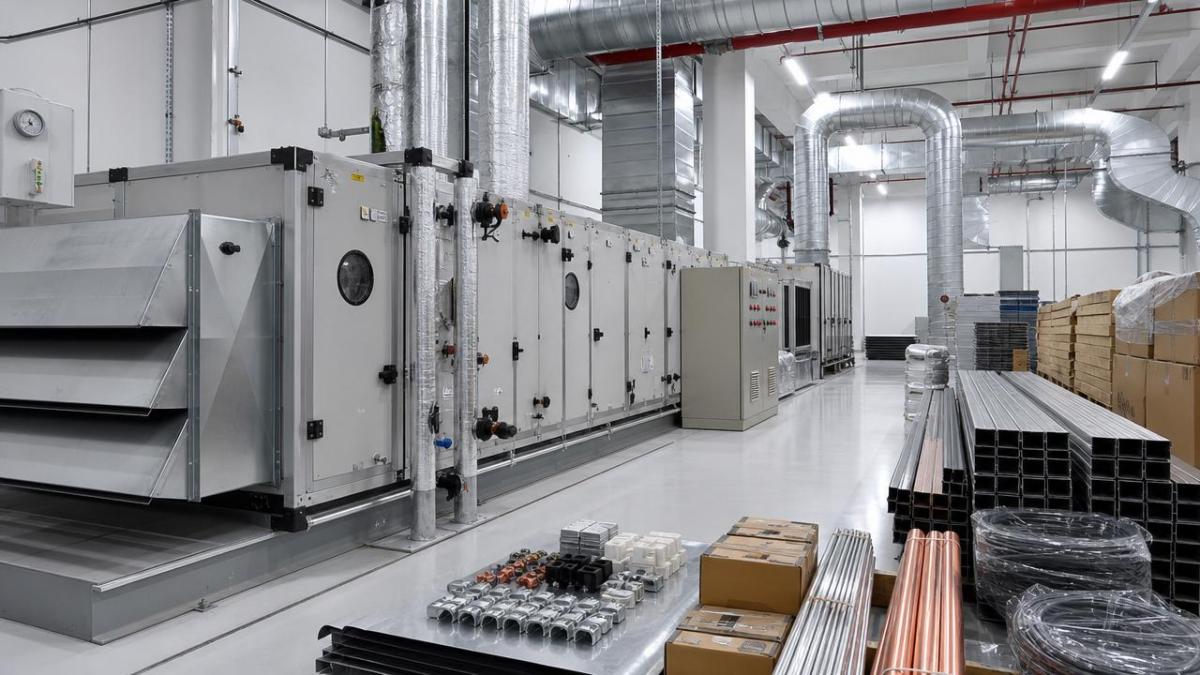
Industrial HVAC systems are material-intensive assemblies. Copper is critical in coils and refrigerant circuits. Aluminum supports fins, casings, and some heat exchanger designs. Steel appears in frames, ducts, housings, piping supports, and structural modules. Electronic components shape VFDs, PLCs, sensors, and smart controls. When 4 core input categories move at the same time, cost pressure compounds quickly.
This matters even more in facilities operating under ISO 14644, ASHRAE guidance, or SEMI-related expectations, where substitutions cannot be made casually. In a comfort-cooling project, a buyer may accept a broader design tolerance. In an ISO Class 1 to ISO Class 8 environment, or in a facility targeting temperature stability within ±0.01°C to ±0.5°C, material choices directly influence thermal stability, cleanliness, corrosion resistance, and validation effort.
The main cost transmission channels
The impact of raw material on hvac is rarely visible in one line item alone. It flows through multiple layers of the procurement stack. Material inflation may increase base equipment price by 5% to 15%, but it can also extend lead times by 2 to 8 weeks, raise shipping cost, and reduce supplier flexibility on payment terms or warranty concessions.
- Coil cost increases when copper tube and aluminum fin prices rise together.
- Sheet metal inflation affects AHUs, duct sections, terminal housings, and fan cabinets.
- Electronics shortages disrupt BMS interfaces, inverters, and high-precision control loops.
- Insulation and polymer price shifts alter total installed cost, not just equipment price.
Why high-spec projects feel the pressure first
High-performance environments typically use tighter tolerances, more redundancy, and higher-grade materials. A standard air handler may allow wider component alternatives. A cleanroom AHU serving semiconductor lithography, sterile fill-finish production, or advanced lab spaces often requires stricter casing leakage levels, enhanced filtration stages, corrosion-resistant finishes, and more sensors per control zone.
That means procurement teams in advanced industrial projects can see stronger sensitivity to raw material swings than buyers in generic commercial HVAC. A 7% change in coil-related input cost may have a limited effect on a basic rooftop unit but a much larger effect on a custom, low-leakage, multi-stage filtration, precision-controlled system with long validation cycles.
Hidden budget effects buyers often miss
- Re-bid frequency increases when quotations remain valid for only 7 to 15 days.
- Engineering revisions consume internal labor if suppliers propose alternate materials.
- Commissioning schedules slip when controls or specialty fans arrive 3 to 6 weeks late.
- Contingency reserves must expand from a typical 3% to 5% toward 8% to 12% in volatile phases.
The table below shows how key material groups influence different parts of an industrial HVAC package and why procurement teams should track exposure by subsystem rather than only by final quoted price.
The practical takeaway is clear: the impact of raw material on hvac is not uniform across product families. Buyers should request cost exposure breakdowns by coil package, casing, controls, and fabricated metal content, especially for custom systems in regulated industrial environments.
How Procurement Teams Should Build 2026 HVAC Budgets
A workable 2026 budget needs more than a single forecast number. Procurement teams should use at least 3 budget scenarios: baseline, pressure, and high-volatility. In many industrial projects, that means carrying a contingency range rather than one fixed allowance. The right reserve may differ for chillers, cleanroom AHUs, FFU-related airside packages, duct fabrication, and controls.
This approach is especially important when procurement supports phased projects over 6 to 18 months. Quoting one package in Q1 and releasing another in Q3 can expose the project to very different metal and component conditions. Budget discipline comes from timing strategy, not only negotiation skill.
Use category-based contingency instead of one blended percentage
A common budgeting mistake is applying the same escalation factor to all HVAC items. In reality, a controls-heavy package may have higher electronics risk, while a ductwork package may have stronger steel exposure. For high-purity and mission-critical facilities, buyers should break major HVAC procurement into at least 5 categories and assign separate volatility assumptions.
- Cooling equipment: often sensitive to copper, compressor content, and controls.
- Airside systems: strongly affected by steel, filters, fans, insulation, and fabrication labor.
- Precision controls: exposed to semiconductors, sensors, boards, and communications hardware.
- Piping packages: linked to copper, steel, valve availability, and insulation cost.
- Validation-related spares: influenced by both material pricing and import lead time.
Track quote validity and release timing
Quote validity periods have become a strategic issue. Some vendors hold pricing for 30 to 60 days, while others limit exposure to 7 to 14 days for commodity-sensitive items. Procurement should map package release dates against supplier validity windows, factory production slots, and milestone dependencies such as civil readiness, utility availability, and FAT scheduling.
Where timing risk is high, partial early buy strategies can help. For example, buyers may lock long-lead coils, fans, drives, or control panels first, then release final fabricated assemblies after layout confirmation. This does not remove the impact of raw material on hvac, but it can isolate the most volatile cost elements.
A practical 5-step budgeting workflow
- Segment the HVAC scope into equipment, fabricated metal, controls, piping, and filtration.
- Assign each segment a volatility rating: low, medium, or high.
- Apply different contingency bands, such as 3% to 5%, 6% to 8%, and 9% to 12%.
- Align purchasing windows with project milestones and supplier lead times.
- Review assumptions every 30 to 45 days until release.
The next table gives a simple budgeting framework procurement teams can adapt for industrial HVAC projects requiring stringent environmental control.
The pattern across these packages is that budgeting accuracy improves when exposure is mapped to actual subsystem content. Procurement teams that rely only on a total package quote often react too late, especially when engineered equipment has limited substitution flexibility.
Supplier Negotiation Tactics When Material Costs Are Unstable
Volatile markets do not eliminate negotiation leverage, but they change where leverage comes from. The strongest buyers in 2026 will not focus only on discount percentage. They will negotiate around transparency, timing, alternates, escalation triggers, and service commitments. In many cases, those points are worth more than a small upfront reduction.
Ask for cost visibility, not just a lump-sum quote
For custom industrial HVAC, a quote should indicate whether price sensitivity is concentrated in coils, controls, fabricated steel, or imported assemblies. Procurement does not need a supplier’s full cost sheet, but it should request a structured explanation of the top 3 to 5 drivers. This helps buyers judge whether a 10-day quote validity is reasonable or whether an alternate release strategy is needed.
This is also where the impact of raw material on hvac becomes a negotiation tool. If a supplier claims broad volatility, ask which materials create the risk, what share of the equipment they represent, and which items can be secured early. Specific questions usually produce better commercial outcomes than generic pressure on price.
Build commercial terms around risk sharing
For larger orders, buyers may consider indexed clauses, split purchase orders, or milestone-based locking. A framework agreement can freeze labor, engineering, and overhead while allowing only defined commodity-linked elements to float. Another option is a phased PO structure that secures long-lead materials first and final assembly later.
- Lock drawings within 2 to 3 weeks to avoid redesign-related repricing.
- Define approved alternates before order release, especially for sensors and drives.
- Set documentation deadlines for lead-time alerts, such as notice within 5 business days.
- Include spare part lists for startup-critical components, not only recommended maintenance items.
Questions every buyer should ask
- Which 3 materials most affect this quote?
- How long is pricing valid, and what triggers repricing?
- Which components have lead times above 8 weeks?
- What alternates preserve compliance with project standards?
- Which items should be purchased as startup spares?
Suppliers serving highly regulated sectors should also be assessed on documentation discipline. If a vendor cannot clearly map substitutions, validation impacts, coating changes, or control architecture differences, low headline pricing may create higher downstream cost. That is particularly true in projects where FAT, SAT, cleanroom performance, or process stability must be documented in detail.
Reducing Total Cost Without Undermining Performance
The right response to material volatility is not indiscriminate cost cutting. In mission-critical HVAC, poor substitutions can increase operating cost, contamination risk, maintenance frequency, and downtime. Procurement should work with engineering teams to identify value changes that lower exposure while preserving compliance and thermal performance.
Focus on specification discipline
Over-specification often amplifies raw material sensitivity. For example, requesting premium finishes, redundant instrumentation, or uncommon casing configurations in every zone may add cost without equal operational benefit. A better method is to rank spaces by criticality: process core, support corridor, utility area, and secondary zone. Then apply performance levels according to actual risk.
A 4-tier approach can be useful. Tier 1 areas such as sterile filling suites or advanced semiconductor process zones may justify the most stringent airflow, filtration, and thermal stability requirements. Tier 3 or Tier 4 support spaces may allow more standardized components with shorter lead times and lower commodity exposure.
Evaluate lifecycle cost, not purchase price alone
When the impact of raw material on hvac raises capex, some buyers shift toward lower-cost equipment without checking operating consequences. That can be expensive over 5 to 10 years. A lower first-cost fan wall, drive package, or chiller selection may consume more energy, require more service visits, or create less stable process conditions. For facilities running 24/7, even a 3% to 7% efficiency gap can outweigh a moderate material-driven price difference.
Maintenance access is another overlooked cost. Compact equipment that saves metal content but complicates filter replacement, coil cleaning, or actuator service can increase labor time every quarter. In controlled environments, that also means more disruption to validated operations.
Where smart standardization helps
- Standardize sensor families and communication protocols across 2 to 4 building zones.
- Reduce one-off panel designs where a repeatable controls architecture can work.
- Use repeatable filter dimensions and fan module formats where process needs allow.
- Align spare strategy across similar AHUs, MAUs, or chilled-water control assemblies.
These measures lower procurement complexity and can reduce vulnerability to isolated component shortages. They also improve service readiness, especially for multinational operators managing multiple sites under similar environmental standards.
A 2026 Sourcing Framework for Resilient Industrial HVAC Procurement
For buyers in advanced manufacturing, life sciences, data-intensive cooling, and environmental control infrastructure, resilience should become part of the specification. A strong sourcing framework balances price, lead time, compliance, serviceability, and material exposure. It also recognizes that procurement decisions affect commissioning success and long-term operational stability.
Recommended supplier evaluation dimensions
Beyond technical compliance, buyers should score suppliers on 6 practical dimensions: pricing transparency, supply chain visibility, alternate component management, documentation quality, production slot reliability, and after-sales support. This is particularly relevant for custom HVAC packages serving cleanrooms, UPW support areas, biosafety spaces, and digital twin-enabled monitoring environments.
A procurement team may still award to the lowest evaluated bidder, but only after checking how that bidder handles volatility. A low initial quote with weak change control or poor long-lead communication can create larger cost variance later.
Minimum review checklist before award
- Confirm compliance with required project standards and environmental tolerances.
- Identify components with lead times longer than the installation float.
- Review substitution protocol for coils, drives, sensors, and control hardware.
- Match warranty coverage to mission-critical uptime expectations.
- Validate commissioning support, documentation handover, and spare part availability.
- Check whether the supplier can support multi-phase expansion over 12 to 24 months.
In practical terms, the impact of raw material on hvac should now be a standing line in procurement governance. It belongs in budget review meetings, supplier scorecards, tender clarifications, and post-award risk tracking. The more technical the facility, the more important this discipline becomes.
Raw material volatility will continue to shape HVAC sourcing in 2026, but it does not have to erode budget control or project confidence. Buyers who segment cost exposure, plan around lead times, negotiate transparent terms, and protect performance-critical specifications can reduce both financial and operational risk. For organizations building or upgrading precision-controlled environments, a disciplined sourcing strategy is now part of system reliability itself.
If you are evaluating industrial HVAC solutions for cleanrooms, high-risk labs, precision thermal spaces, or advanced manufacturing facilities, now is the right time to review your procurement assumptions and supplier structure. Contact us to discuss your project scope, get a customized sourcing approach, or learn more about resilient environmental control solutions for 2026.
Get weekly intelligence in your inbox.
No noise. No sponsored content. Pure intelligence.
 Oct 21, 2026How often is cleanroom certification required under ISO 14644-2?Cleanroom Certification is generally recommended annually under ISO 14644-2. Learn when risk-based extensions apply and which changes trigger earlier testing to plan with confidence.
 Oct 21, 2026FASEB Comments on NIH Draft Policy for Research Involving BiohazardsFASEB comments on NIH’s draft biohazard research policy call for risk-based biosafety oversight. Explore potential implications for laboratories, suppliers, and compliance teams.
 Oct 20, 2026How to disinfect ultrasound machines without damaging surfacesLearn how to disinfect ultrasoundmachines without surface damage. Explore compatible products, wet contact times, and probe care to protect patients and equipment.
 Oct 20, 2026Ultrapure Water in Semiconductor Manufacturing: Reuse and Quality Control InsightsExplore ultrapure water reuse in semiconductor manufacturing, key UPW quality benchmarks and analytical insights to help evaluate suppliers and protect process purity.
 Oct 19, 2026How cooling affects warpage in injection-molded consumer electronics housingsOptimize plastic injection molding for consumer electronics with cooling strategies to reduce housing warpage and improve assembly fit. Discover practical checks for stable, efficient production.
 Oct 18, 2026Can air leaks prevent a dehumidifier from holding its target dew point?Why can't our dehumidifier maintain the target dew point? Discover how air leaks increase moisture loads, spot hidden faults, and find practical fixes to restore reliable dew-point control.
 Oct 17, 2026How semiconductor process water treatment removes trace organicsSee how semiconductor process water treatment removes trace organics with RO, UV oxidation, and polishing. Learn how TOC monitoring helps verify purity and pinpoint contamination.
 Oct 16, 2026How to choose ultra pure water piping materials to limit leachingChoose ultra pure water piping with confidence. Compare PVDF, PFA, and stainless steel, assess leaching risks, and learn how to qualify your system for reliable purity.
 Oct 15, 2026How to size a skid-mounted deionized water system for peak demandCompare deionized water systems skid configurations for peak demand. Learn how to balance production, storage, and pump capacity to prevent shortages and avoid costly oversizing.
 Oct 14, 2026When is collaborative laboratory robotics suitable for sample sorting?Explore when collaborative laboratory robotics suits sample sorting. Discover key checks for safety, traceability, container compatibility, and throughput before choosing your solution.
 Oct 13, 2026How sandwich panel joints affect airtightness in cleanroom systemsCleanroom Systems sandwich panels need reliable joints for airtightness. Discover how gaskets, sealants, and testing help reduce leakage and protect cleanroom pressure control.
 Oct 12, 2026How to verify USP compliance for ultra pure water systemsUltra Pure Water Systems USP compliance: learn how to verify water quality, sampling, sanitization, trends, and validation controls at every point of use.
 Oct 11, 2026How tight temperature control prevents cleanroom process driftCleanroom process temperature control systems prevent costly drift by stabilizing critical conditions, improving repeatability, and protecting sensitive production workflows.
 Oct 10, 2026When does organic contaminant removal require TOC treatment?Organic contaminant removal requires TOC treatment when dissolved organics threaten product quality, equipment reliability, or process control. Learn how to assess risks and choose the right solution.
 Oct 08, 2026What affects lead times for sheet metal bending services in Canada?Sheet metal bending services Canada: discover how material supply, tooling, tolerances, finishing, documentation, and freight affect lead times for reliable project delivery.
 Oct 07, 2026How HVAC design for semiconductor fabs prevents airborne contaminationHVAC design for semiconductor fabs prevents airborne contamination through advanced filtration, pressure cascades, airflow control, and real-time monitoring. Explore key strategies for cleaner, more reliable wafer production.
 Oct 06, 2026How photovoltaic modules waterproof technology prevents moisture damagephotovoltaic modules waterproof technology prevents moisture damage with durable seals, drainage, and junction-box protection. Explore practical selection and testing insights.
 Oct 05, 2026How ISO 14644 Europe requirements affect cleanroom qualificationISO 14644 Europe requirements shape cleanroom qualification, from particle classification and recovery testing to monitoring, GMP alignment, and change control.
 Oct 04, 2026How to assess a pharmaceutical cleanroom solutions supplier’s ISO capabilityPharmaceutical Cleanroom Solutions supplier assessment guide: evaluate ISO 14644 capability, validation evidence, airflow design, documentation, and long-term GMP readiness.
 Oct 03, 2026What EU standards govern the design of BSL-3 laboratories in Europe?BSL-3 laboratories Europe: explore EU directives, EN standards, HVAC containment, commissioning, and practical design strategies for compliant, resilient high-containment facilities.
 Oct 02, 2026How EN 1822 defines HEPA filtration efficiency for cleanroomsHEPA filtration EN 1822 explained: learn how MPPS testing, local leakage limits, and filter classes support reliable cleanroom decisions.
 Oct 01, 2026How pharmaceutical process water systems control microbial riskProcess water systems pharmaceutical teams rely on can control microbial risk through hygienic design, monitoring, and validated sanitization. Explore practical compliance strategies.
 Sep 30, 2026When does a negative pressure laboratory need BSL-3 containment?Negative pressure laboratory or BSL-3? Discover the risk factors, engineering controls, and containment requirements needed for safe, compliant laboratory planning.
 Sep 29, 2026How to evaluate a TOC-zero water treatment supplier for UPW systemsChoose a TOC-zero water treatment supplier with confidence. Compare UPW performance, monitoring, validation, materials, service capability, and lifecycle cost.
 Sep 28, 2026What drives sustainable cooling cost in high-precision facilities?Sustainable cooling cost in high-precision facilities depends on thermal stability, energy, water, controls, and resilience. Explore smarter lifecycle strategies.
 Sep 27, 2026How to compare freight forwarding services for time-critical shipmentsCompare freight forwarding services for time-critical shipments with practical insights on routing, customs, visibility, specialized handling, and contingency planning.
 Sep 26, 2026How environmental integrity in laboratories supports reliable test resultsEnvironmental Integrity in laboratories safeguards samples, instruments, and staff. Discover practical controls for contamination, monitoring, and reliable test results.