Data Center Cooling Trends 2026: What Cuts Energy Risk
Data center cooling trends 2026 are no longer just an engineering topic—they are a boardroom priority tied to energy risk, uptime, and ESG performance. For enterprise decision-makers, understanding which cooling strategies reduce power volatility, improve thermal resilience, and support high-density computing is essential to protecting both operational continuity and long-term capital efficiency.
Across enterprise IT, advanced manufacturing, pharmaceutical processing, and research environments, cooling is moving from a background utility to a strategic control layer. As rack densities rise from legacy ranges of 5–10 kW to 20–80 kW and, in some AI deployments, beyond 100 kW per rack, the wrong thermal design can amplify energy costs, water exposure, and downtime risk in a single budget cycle.
For institutional buyers, the real question is not which trend looks innovative, but which cooling decisions cut energy risk over the next 3–7 years. That requires evaluating thermal architecture, part-load efficiency, controls integration, compliance alignment, and upgrade flexibility with the same rigor applied to power redundancy, biosafety, or cleanroom containment.
Why data center cooling trends 2026 matter at board level
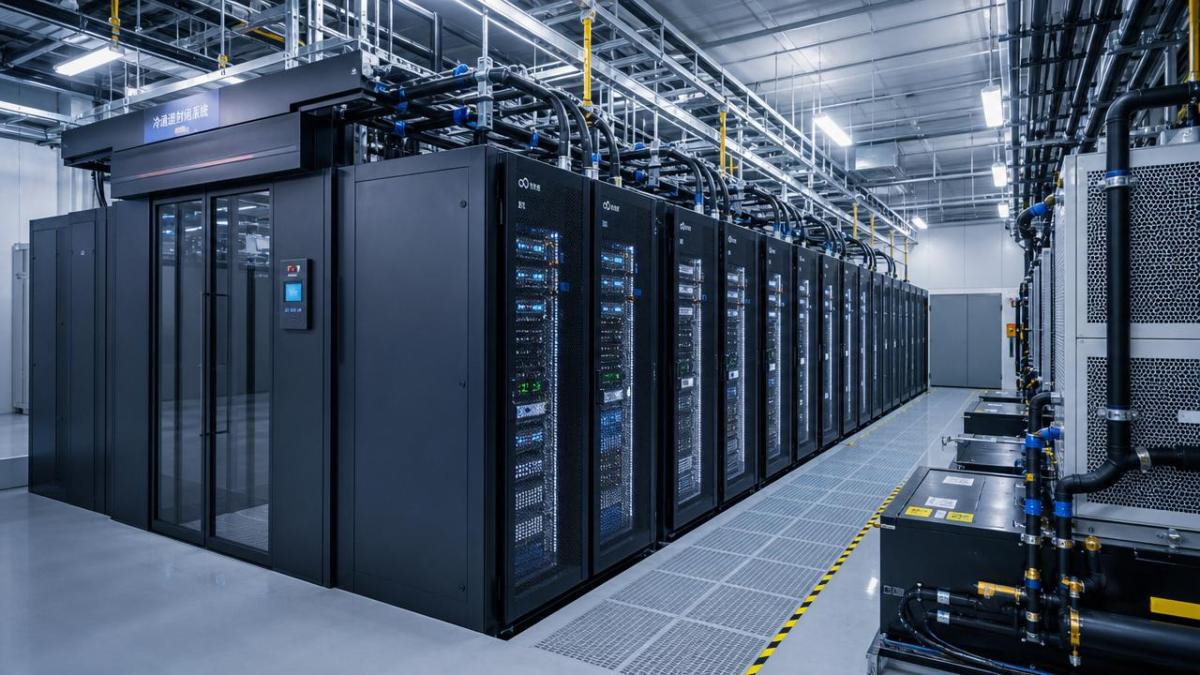
The most important shift in data center cooling trends 2026 is that energy risk is no longer limited to utility price volatility. It now includes peak demand charges, grid instability, carbon reporting pressure, and the financial impact of heat-related derating. In facilities serving semiconductor, life science, and high-availability digital workloads, thermal failure can disrupt multiple business lines within minutes.
Cooling often represents 25%–40% of total data center energy use, depending on climate zone, IT density, and system age. That means even a 0.05 to 0.15 improvement in annualized efficiency can materially affect operating expenditure. For executive teams, cooling design is increasingly evaluated alongside resilience metrics such as uptime targets, recovery windows, and ESG reporting commitments.
Three business pressures behind the trend
- Higher-density computing, especially AI and analytics clusters, pushing localized heat loads above traditional air-cooling comfort zones.
- More stringent sustainability targets, including reduced PUE, lower water intensity, and better reporting visibility.
- Greater intolerance for downtime in regulated or mission-critical environments, where thermal excursions can affect product integrity, research continuity, or customer SLAs.
Where enterprise buyers misjudge risk
A common mistake is to compare equipment efficiency only at full load. In real operations, many facilities run at 40%–70% loading for long periods, and controls quality becomes as important as nameplate performance. Another error is treating thermal upgrades as isolated mechanical projects rather than part of a broader environmental-control strategy tied to monitoring, digital twins, redundancy zoning, and maintenance access.
This is especially relevant for organizations influenced by standards-based procurement. Whether a site aligns with ASHRAE thermal guidance, ISO-led environmental controls, or internal ESG frameworks, cooling choices should be judged by measurable behavior across seasonal and workload variations, not by a single design-day condition.
Which cooling strategies are reducing energy risk in 2026
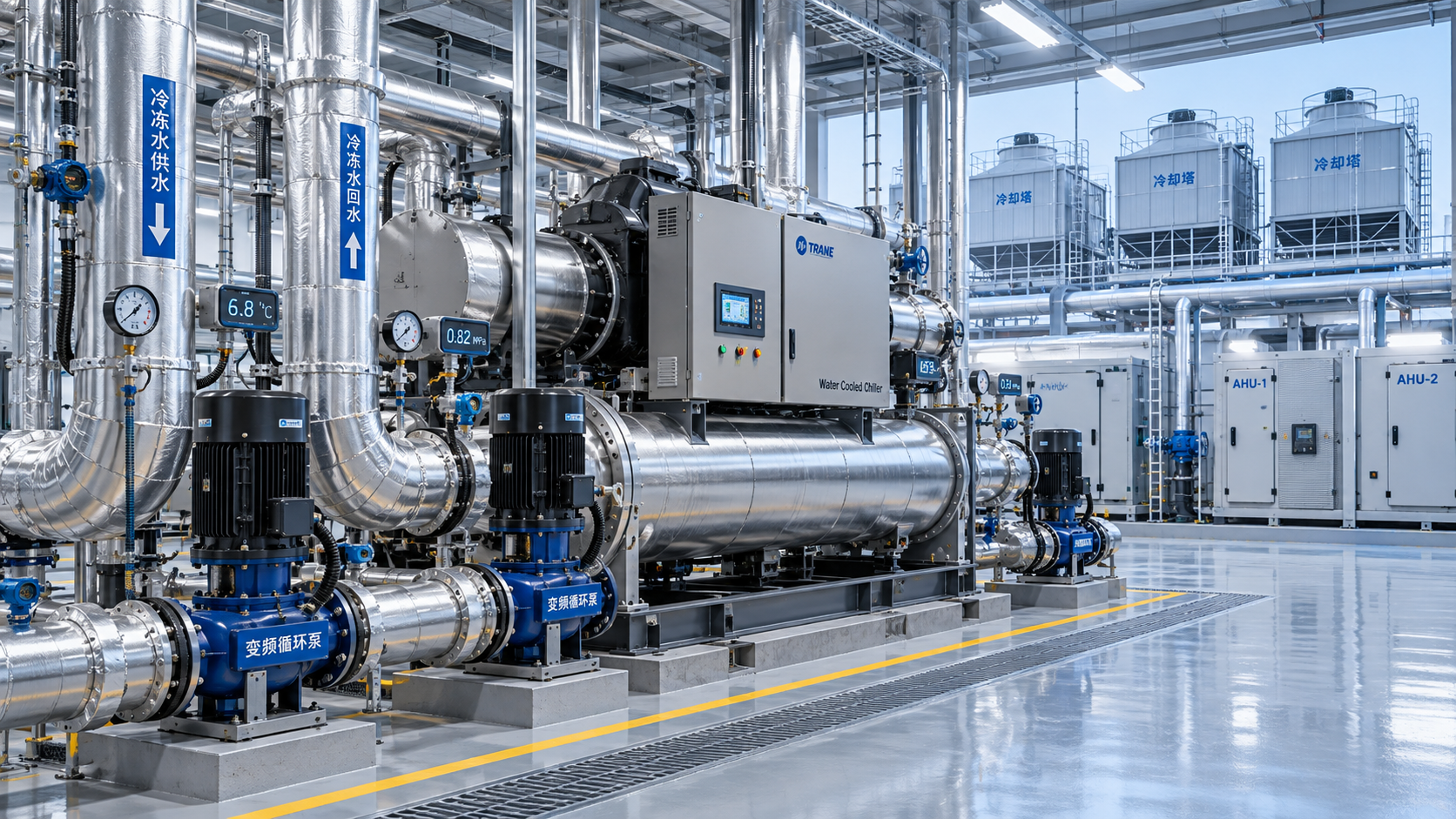
Not every trend is equally useful. The strongest performers in data center cooling trends 2026 are the approaches that lower total risk across four dimensions: energy cost, thermal stability, scalability, and operational maintainability. For many enterprise portfolios, the optimal answer is hybrid rather than absolute, combining high-efficiency air management with targeted liquid cooling and advanced controls.
Comparing major cooling approaches
The table below outlines how common architectures compare when evaluated for high-density enterprise environments, retrofit practicality, and energy exposure. The ranges are typical planning references rather than universal performance guarantees.
The key takeaway is that containment and airflow optimization still matter in 2026, but they are no longer sufficient for every workload. Air remains viable for many enterprise halls, while liquid-assisted strategies are becoming the practical answer for concentrated compute clusters where thermal density and energy exposure intersect.
The rise of hybrid thermal architectures
A hybrid model typically separates the white space into at least 2 thermal classes: standard racks cooled by optimized air systems and high-density rows supported by liquid interfaces. This reduces the capital shock of full conversion while keeping future expansion open. For organizations with mixed workloads, that phased model often delivers better 24–36 month payback logic than an all-or-nothing redesign.
Hybrid systems are particularly relevant to industrial and institutional campuses already managing precision HVAC, process cooling, or contamination-controlled spaces. They align well with a broader environmental-control philosophy where chiller plants, pumps, sensors, and supervisory controls are coordinated rather than isolated.
What technical choices cut power volatility and thermal risk
When buyers ask what cuts energy risk most effectively, the answer usually lies in system behavior rather than equipment labels. The best-performing facilities reduce variability at several levels: heat capture, chilled-water efficiency, fan energy, control sequencing, and continuous monitoring. This is where data center cooling trends 2026 overlap strongly with smart infrastructure practice.
Five design priorities for enterprise projects
- Match cooling topology to projected rack density bands, not only current average loads.
- Prioritize part-load efficiency across chillers, CRAH/CRAC units, pumps, and fans.
- Use containment and airflow discipline before adding excess mechanical capacity.
- Integrate sensors for supply, return, pressure, humidity, and leak detection at defined intervals.
- Design for maintainability, including valve access, service clearance, bypass paths, and spare strategy.
Controls and digital visibility
Controls are becoming one of the highest-value investments because they turn static design into adaptive operation. With sensor refresh intervals of 5–60 seconds and rack-level thermal mapping, operators can identify hot spots, stranded capacity, and airflow imbalance before they become outages. Digital twin methods are also gaining traction for modeling expansion scenarios, maintenance windows, and seasonal optimization.
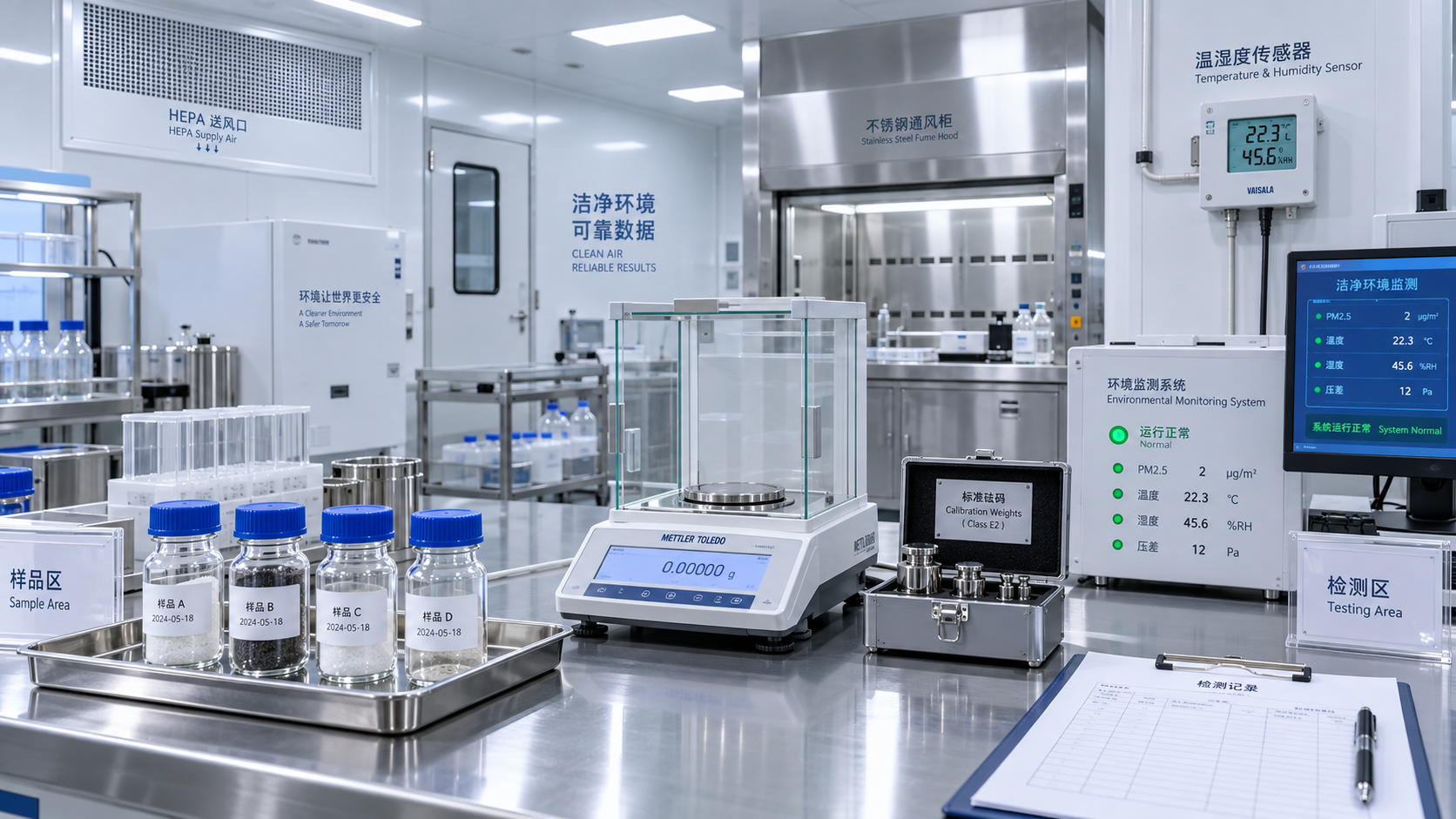
For G-ICE-aligned decision frameworks, this matters beyond pure IT uptime. Facilities that already benchmark environmental systems against ASHRAE, SEMI, or precision process standards understand that invisible deviations accumulate into major risk. Cooling telemetry, when integrated with building management and energy dashboards, supports more disciplined capex timing and ESG reporting integrity.
Procurement factors that should be scored early
Before issuing an RFP, buyers should translate data center cooling trends 2026 into measurable bid criteria. Scoring should not stop at cooling capacity. It should include density tolerance, partial-load behavior, redundancy logic, water-risk controls, and implementation complexity. A structured matrix helps reduce attractive but operationally weak proposals.
A disciplined evaluation process usually reveals that the cheapest installed option is not the lowest-risk option. Systems that hold stable temperatures, support phased density growth, and expose clear performance data tend to deliver stronger lifecycle value even if first-cost is modestly higher.
How to implement cooling upgrades without creating new operational risk
Execution quality is decisive. Many failures in data center cooling trends 2026 adoption happen not because the technology is wrong, but because sequencing, commissioning, and operational alignment are weak. An effective rollout should balance uptime, validation, and future scalability, especially in campuses with clean utilities, process HVAC, or mission-critical research infrastructure.
A practical 4-stage implementation path
- Assessment: map current loads, hot spots, airflow losses, and plant constraints over at least 2–4 operating weeks.
- Scenario design: compare air optimization, hybrid retrofit, and liquid-ready options against 3-year and 7-year demand forecasts.
- Pilot deployment: validate on one room, row, or compute cluster with defined thresholds for inlet temperature stability and energy use.
- Scale and govern: standardize controls, training, maintenance procedures, and reporting dashboards before wider rollout.
Commissioning and acceptance checks
Acceptance should include more than cooling capacity confirmation. At minimum, enterprise teams should test thermal response under simulated load steps, alarm functionality, valve and pump behavior, containment leakage points, and failover during utility or control disturbances. In many projects, a 3-part acceptance model covering thermal stability, control visibility, and maintainability is more useful than a single pass/fail handover.
Training is equally important. If operators are unfamiliar with liquid distribution units, sensor calibration routines, or dynamic setpoint optimization, efficiency gains may disappear within 6–12 months. Strong suppliers support post-handover tuning, documentation discipline, and periodic performance review rather than treating commissioning as the end of the project.
Common misconceptions in 2026 planning
- Assuming liquid cooling is necessary for every facility, even where loads remain below 15–20 kW per rack.
- Believing a lower setpoint always improves safety, when overcooling can raise energy use without solving airflow flaws.
- Evaluating sustainability only through electricity, while ignoring water use, maintenance burden, and asset replacement cycles.
- Delaying control upgrades while investing heavily in mechanical equipment, which limits achievable efficiency gains.
What enterprise leaders should prioritize next
For most organizations, the best response to data center cooling trends 2026 is not chasing novelty. It is building a resilient cooling roadmap with clear thresholds: what can remain air-cooled, what should become liquid-ready, what telemetry is missing, and where energy volatility is most financially exposed. Decision-makers should require engineering teams and solution partners to quantify both performance range and operational complexity.
In practice, the strongest cooling strategies are those that integrate thermal engineering with environmental control, standards alignment, and lifecycle governance. That is especially true for enterprises operating across digital infrastructure, advanced manufacturing, laboratory, or regulated industrial campuses where temperature stability, contamination control, and uptime are interconnected.
If your organization is evaluating containment upgrades, liquid-cooling readiness, chiller modernization, or data-driven thermal controls, now is the right time to benchmark options against future density and energy-risk scenarios. Contact us to discuss your facility profile, get a tailored assessment, and explore more resilient cooling solutions for 2026 and beyond.
Get weekly intelligence in your inbox.
No noise. No sponsored content. Pure intelligence.
 Oct 21, 2026How often is cleanroom certification required under ISO 14644-2?Cleanroom Certification is generally recommended annually under ISO 14644-2. Learn when risk-based extensions apply and which changes trigger earlier testing to plan with confidence.
 Oct 21, 2026FASEB Comments on NIH Draft Policy for Research Involving BiohazardsFASEB comments on NIH’s draft biohazard research policy call for risk-based biosafety oversight. Explore potential implications for laboratories, suppliers, and compliance teams.
 Oct 20, 2026How to disinfect ultrasound machines without damaging surfacesLearn how to disinfect ultrasoundmachines without surface damage. Explore compatible products, wet contact times, and probe care to protect patients and equipment.
 Oct 20, 2026Ultrapure Water in Semiconductor Manufacturing: Reuse and Quality Control InsightsExplore ultrapure water reuse in semiconductor manufacturing, key UPW quality benchmarks and analytical insights to help evaluate suppliers and protect process purity.
 Oct 19, 2026How cooling affects warpage in injection-molded consumer electronics housingsOptimize plastic injection molding for consumer electronics with cooling strategies to reduce housing warpage and improve assembly fit. Discover practical checks for stable, efficient production.
 Oct 18, 2026Can air leaks prevent a dehumidifier from holding its target dew point?Why can't our dehumidifier maintain the target dew point? Discover how air leaks increase moisture loads, spot hidden faults, and find practical fixes to restore reliable dew-point control.
 Oct 17, 2026How semiconductor process water treatment removes trace organicsSee how semiconductor process water treatment removes trace organics with RO, UV oxidation, and polishing. Learn how TOC monitoring helps verify purity and pinpoint contamination.
 Oct 16, 2026How to choose ultra pure water piping materials to limit leachingChoose ultra pure water piping with confidence. Compare PVDF, PFA, and stainless steel, assess leaching risks, and learn how to qualify your system for reliable purity.
 Oct 15, 2026How to size a skid-mounted deionized water system for peak demandCompare deionized water systems skid configurations for peak demand. Learn how to balance production, storage, and pump capacity to prevent shortages and avoid costly oversizing.
 Oct 14, 2026When is collaborative laboratory robotics suitable for sample sorting?Explore when collaborative laboratory robotics suits sample sorting. Discover key checks for safety, traceability, container compatibility, and throughput before choosing your solution.
 Oct 13, 2026How sandwich panel joints affect airtightness in cleanroom systemsCleanroom Systems sandwich panels need reliable joints for airtightness. Discover how gaskets, sealants, and testing help reduce leakage and protect cleanroom pressure control.
 Oct 12, 2026How to verify USP compliance for ultra pure water systemsUltra Pure Water Systems USP compliance: learn how to verify water quality, sampling, sanitization, trends, and validation controls at every point of use.
 Oct 11, 2026How tight temperature control prevents cleanroom process driftCleanroom process temperature control systems prevent costly drift by stabilizing critical conditions, improving repeatability, and protecting sensitive production workflows.
 Oct 10, 2026When does organic contaminant removal require TOC treatment?Organic contaminant removal requires TOC treatment when dissolved organics threaten product quality, equipment reliability, or process control. Learn how to assess risks and choose the right solution.
 Oct 08, 2026What affects lead times for sheet metal bending services in Canada?Sheet metal bending services Canada: discover how material supply, tooling, tolerances, finishing, documentation, and freight affect lead times for reliable project delivery.
 Oct 07, 2026How HVAC design for semiconductor fabs prevents airborne contaminationHVAC design for semiconductor fabs prevents airborne contamination through advanced filtration, pressure cascades, airflow control, and real-time monitoring. Explore key strategies for cleaner, more reliable wafer production.
 Oct 06, 2026How photovoltaic modules waterproof technology prevents moisture damagephotovoltaic modules waterproof technology prevents moisture damage with durable seals, drainage, and junction-box protection. Explore practical selection and testing insights.
 Oct 05, 2026How ISO 14644 Europe requirements affect cleanroom qualificationISO 14644 Europe requirements shape cleanroom qualification, from particle classification and recovery testing to monitoring, GMP alignment, and change control.
 Oct 04, 2026How to assess a pharmaceutical cleanroom solutions supplier’s ISO capabilityPharmaceutical Cleanroom Solutions supplier assessment guide: evaluate ISO 14644 capability, validation evidence, airflow design, documentation, and long-term GMP readiness.
 Oct 03, 2026What EU standards govern the design of BSL-3 laboratories in Europe?BSL-3 laboratories Europe: explore EU directives, EN standards, HVAC containment, commissioning, and practical design strategies for compliant, resilient high-containment facilities.
 Oct 02, 2026How EN 1822 defines HEPA filtration efficiency for cleanroomsHEPA filtration EN 1822 explained: learn how MPPS testing, local leakage limits, and filter classes support reliable cleanroom decisions.
 Oct 01, 2026How pharmaceutical process water systems control microbial riskProcess water systems pharmaceutical teams rely on can control microbial risk through hygienic design, monitoring, and validated sanitization. Explore practical compliance strategies.
 Sep 30, 2026When does a negative pressure laboratory need BSL-3 containment?Negative pressure laboratory or BSL-3? Discover the risk factors, engineering controls, and containment requirements needed for safe, compliant laboratory planning.
 Sep 29, 2026How to evaluate a TOC-zero water treatment supplier for UPW systemsChoose a TOC-zero water treatment supplier with confidence. Compare UPW performance, monitoring, validation, materials, service capability, and lifecycle cost.
 Sep 28, 2026What drives sustainable cooling cost in high-precision facilities?Sustainable cooling cost in high-precision facilities depends on thermal stability, energy, water, controls, and resilience. Explore smarter lifecycle strategies.
 Sep 27, 2026How to compare freight forwarding services for time-critical shipmentsCompare freight forwarding services for time-critical shipments with practical insights on routing, customs, visibility, specialized handling, and contingency planning.
 Sep 26, 2026How environmental integrity in laboratories supports reliable test resultsEnvironmental Integrity in laboratories safeguards samples, instruments, and staff. Discover practical controls for contamination, monitoring, and reliable test results.