How Copper Prices Affect HVAC Project Costs in 2026
How Copper Prices Affect HVAC Project Costs in 2026
In 2026, the hvac copper price impact will be a critical concern for procurement teams managing project budgets, supplier negotiations, and long-term capital planning. As copper remains essential in coils, tubing, and wiring, even small price shifts can significantly affect total HVAC system costs. Understanding these market dynamics helps buyers reduce risk, improve sourcing decisions, and protect project margins in increasingly cost-sensitive industrial environments.
If you buy HVAC equipment for industrial plants, cleanrooms, labs, hospitals, or large institutional projects, copper is not a side issue. It sits inside chilled water coils, condenser coils, refrigerant lines, motors, transformers, control wiring, and often the accessories nobody notices until a quotation changes. The problem for procurement is that copper rarely shows up as a single line item with enough transparency. You usually feel it through revised equipment pricing, shorter quote validity, substitution requests, or sudden pressure to approve faster.
This is the practical checklist I would use before locking any 2026 HVAC purchase package.
Start with where copper actually sits in your scope
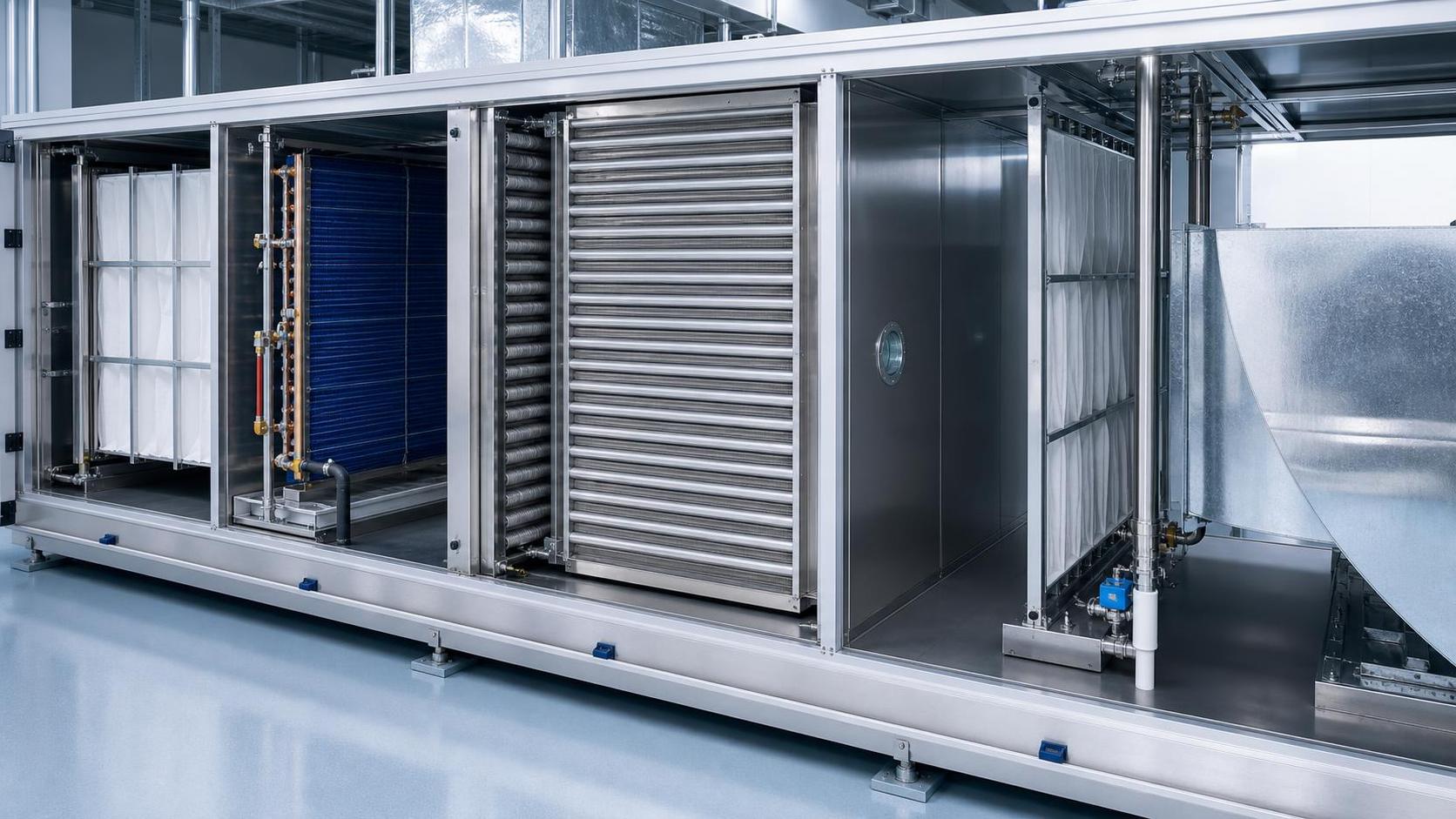
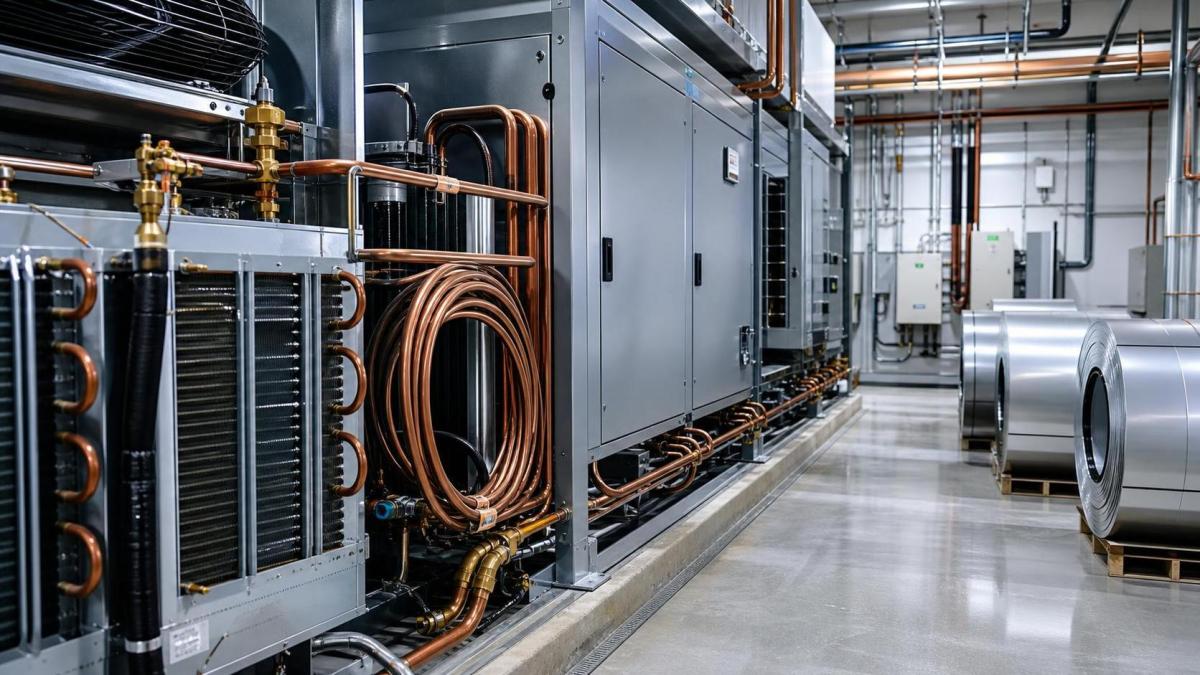
Many buyers underestimate the hvac copper price impact because they only think about refrigerant tubing. In real projects, exposure is broader than that. Air handling units, chillers, VRF systems, CRAC units, fan coils, heat exchangers, control panels, cable assemblies, and field installation materials can all carry copper-related cost movement.
Before comparing bids, mark each package as one of three types:
- High copper sensitivity: DX systems, VRF/VRV, condenser-heavy equipment, projects with long refrigerant piping runs.
- Moderate sensitivity: chilled water systems where copper is significant in coils and electrical content, but piping may be partly non-copper depending on design.
- Lower direct sensitivity: some central plant packages where steel, controls, insulation, and mechanical structure drive more of the total cost.
That classification matters because it changes how hard you should push on price-lock timing and alternates. It also keeps teams from spending weeks negotiating tiny savings on the wrong package.
Check quote validity before you check the unit price
In unstable metals markets, a low price with a seven-day validity window may be worse than a slightly higher price held for 30 or 45 days. Procurement teams often focus on the headline number and miss the commercial trigger buried in the notes: raw material surcharge subject to confirmation at order entry, price review prior to production release, or copper adjustment applicable if commodity indices move beyond a stated band.
Ask suppliers to answer these points in writing:
- How long is the quoted price firm?
- What event allows a price adjustment: order date, drawing approval, production start, or shipment?
- Is any copper surcharge formula defined, or is it discretionary?
- Which components are covered by the firm price, and which are excluded?
If they cannot answer clearly, treat that as cost risk, not just a paperwork gap.
Do not compare bids without normalizing material assumptions
A common mistake is comparing Vendor A and Vendor B as if both are offering the same copper content and performance basis. They often are not. One bidder may use thicker wall tubing, different coil circuitry, heavier electrical scope, or a different heat exchanger design. Another may propose aluminum alternatives in places where your engineering team assumed copper.
For procurement, this means the cheapest bid may simply have less metal, different durability expectations, or a different maintenance profile. In corrosion-sensitive environments, coastal installations, pharmaceutical process areas, and high-cleanliness spaces, those differences are not minor.
At minimum, normalize these points before cost ranking:
Separate equipment cost from installed cost
This is where budget forecasts often go wrong. Copper inflation does not only affect factory-built equipment. It also flows into field piping, brazing materials, cable trays, terminations, wastage allowances, and contractor risk pricing. If your project has extensive refrigerant distribution or retrofit work in a live facility, the installed-cost effect can be larger than the equipment increase itself.
For capital planning, ask estimators to break the package into three buckets: factory equipment, site materials, and labor-related exposure driven by material volatility. That structure gives finance and project controls something usable. A single blended number does not.
Watch for “value engineering” that quietly shifts risk to operations
When copper prices rise, alternate proposals arrive quickly. Some are sensible. Some are just short-term cost relief disguised as engineering optimization. If a supplier proposes a material change, ask what happens to cleanability, corrosion resistance, pressure rating, maintainability, spare part availability, and warranty handling.
This matters more in critical environments. Facilities designed around ISO 14644 cleanliness targets, ASHRAE guidance, SEMI-driven process stability, or tightly controlled thermal tolerances do not have much room for casual substitutions. A cheaper coil or line-set option that works in comfort cooling may be a poor decision in a semiconductor support area or a validated pharmaceutical utility zone. Suitability always needs project-specific engineering review; where documents are unclear, mark it as 【待核实】 instead of letting purchasing assumptions drive design.
Negotiate timing, not just price
Some of the best savings in a volatile copper market come from schedule decisions. If a supplier can lock raw material allocation at purchase order release, delaying approvals may cost more than a small commercial concession. On the other hand, ordering too early without frozen loads, layout, or controls scope can create expensive rework.
The useful question is simple: what design information must be final before you should commit, and what can be left open without reopening copper-sensitive pricing? Experienced buyers push vendors to split those milestones. That can let you secure major components while holding minor accessories for later.
Test your supplier base for concentration risk
Copper volatility becomes more dangerous when the project is dependent on one OEM, one approved coil source, or one regional installer with buying power over field materials. Procurement should map where supplier concentration exists before the tender closes, not after.
A short risk screen helps:
- How many technically acceptable manufacturers are approved?
- Can field piping and cable materials be sourced independently of the equipment vendor?
- Does the project require country-specific approvals or documentation that narrow the source list?
- Are import lead times or trade restrictions likely to interfere? Country-specific conclusions should be checked against current rules【待核实】.
When choices are limited, your negotiating leverage around surcharges is usually weaker. Budget for that reality early.
Use total cost logic for strategic systems
Procurement teams under budget pressure sometimes overreact to copper-driven first-cost increases. That is understandable, but not always smart. A slightly more expensive HVAC package with better energy performance, stronger reliability, and easier service access may still be the better buy, especially in facilities where downtime is expensive.
For mission-critical infrastructure, I would not approve a material-driven downgrade until three questions are answered clearly:
- What is the actual capital delta attributable to copper-sensitive content?
- What operational penalty follows from the lower-cost option, if any?
- Would a future expansion, retrofit, or validation event become harder because of today’s substitution?
If those answers are vague, the savings may not be real.
Build a procurement file that survives commercial disputes
This is less glamorous, but it saves money. In copper-sensitive buys, keep a clean record of revision dates, validity windows, material exclusions, alternate approvals, and clarification responses. When price revisions happen, the dispute is rarely about copper alone. It is usually about whether the trigger was contractually defined.
A disciplined file also helps when internal stakeholders ask why a budget moved between concept estimate, bid tabulation, and final award. You need a traceable explanation, especially on complex HVAC scopes tied to clean manufacturing, regulated labs, or ESG reporting frameworks where design changes attract broader review.
A practical close
The hvac copper price impact in 2026 is not just a market story. For buyers, it shows up in quote duration, installation estimates, substitute materials, lead-time pressure, and contract wording. The teams that handle it well do a few basic things consistently: they map where copper sits in the scope, separate equipment cost from installed cost, normalize technical assumptions before comparing bids, and refuse vague surcharge language.
If you are buying for a critical facility, keep the standard higher. A cheaper package that weakens maintainability, compliance review, or thermal stability can cost more later than the copper increase you were trying to avoid. That is the check worth doing before any purchase order leaves the desk.
Get weekly intelligence in your inbox.
No noise. No sponsored content. Pure intelligence.
 Sep 15, 2026Smart HVAC investment insights for North American heat recovery projectsSmart HVAC investment insights North America: evaluate heat recovery, lifecycle costs, controls, and performance for resilient project decisions.
 Sep 14, 2026How SEMI standards shape water treatment design for semiconductor fabsSemiconductor water treatment SEMI guidance shapes resilient UPW design, contamination control, monitoring, reclaim strategy, and fab-ready validation.
 Sep 13, 2026What drives Biosafety Containment Systems cost in BSL-3 projects?Biosafety Containment Systems cost in BSL-3 projects depends on HVAC, layout, decontamination, controls, and commissioning. Discover how to build a credible budget.
 Sep 12, 2026How to qualify a fine chemical process solutions supplier for purity controlFine Chemical Process Solutions supplier qualification guide: evaluate purity control, traceability, contamination prevention, and safety for reliable high-purity production.
 Sep 11, 2026What drives cleanroom certification cost for ISO Class 1–9 projects?Cleanroom certification cost depends on ISO Class 1–9 requirements, test scope, HVAC readiness, documentation, and retesting. Explore practical budgeting insights to control project risk.
 Sep 10, 2026When should Procurement Directors prioritize heat recovery payback?Procurement Directors: learn when heat recovery delivers reliable payback, lower lifecycle costs, and safe performance in controlled industrial environments.
 Sep 09, 2026How to select an environmental monitoring system for cleanroomsEnvironmental monitoring system selection for cleanrooms: compare sensors, alarms, data integrity, integration, and installation to ensure reliable control.
 Sep 08, 2026How temperature stability affects semiconductor manufacturing yieldSemiconductor manufacturing temperature stability directly affects yield, overlay, metrology, and process control. Explore practical HVAC, monitoring, and zoning strategies.
 Sep 07, 2026How to prepare for a Regulatory Frameworks audit of cleanroom controlsRegulatory Frameworks audit readiness for cleanroom controls: build traceable evidence, verify alarms and monitoring, and close compliance gaps with confidence.
 Sep 07, 2026How to choose reverse osmosis systems with the right recovery rateReverse osmosis systems: learn how to select the right recovery rate for reliable water quality, lower scaling risk, efficient concentrate control, and stable long-term performance.
 Sep 05, 2026How does a negative pressure room work to contain airborne contaminants?How does a negative pressure room work? Discover how inward airflow, controlled exhaust, monitoring, and room design help contain airborne contaminants safely.
 Sep 04, 2026What TOC Limits Should Be Set and Monitored for a UPW Loop?What are our TOC limits for the UPW loop? Learn how to set defensible TOC thresholds, monitor trends, protect critical processes, and improve water-quality control.
 Sep 04, 2026What Are the Best Retrofit Options for Upgrading Existing Pharmaceutical Cleanrooms?What are the best retrofit options to upgrade existing pharma cleanrooms? Explore FFUs, HVAC modernization, pressure cascades, monitoring, and sealed finishes for compliant performance.
 Sep 04, 2026How Does a Negative Air Pressure Room Protect Adjacent Areas?What is a negative air pressure room? Learn how controlled airflow contains airborne hazards, protects adjacent spaces, and supports safer facility operations.
 Sep 04, 2026What Is ISO Class 1 Cleanroom Classification, and Where Is It Used?What is ISO Class 1? Explore its ultra-low particle limits, critical cleanroom design factors, verification methods, and uses in semiconductor, optics, and quantum manufacturing.
 Sep 04, 2026How Long After a UPW Deviation Does Yield Impact Typically Appear?What is the typical time lag from UPW deviation to yield impact? Learn how contamination, process sensitivity, exposure windows, and testing stages shape detection timing.
 Sep 04, 2026What Testing Data Should Engineers Review Before Approving a UPW Material?What testing data should be reviewed before approving a UPW material? Explore extractables, TOC, particle release, ionic leaching, corrosion, and reliability data for confident approval.
 Sep 04, 2026How Should Pharmaceutical Cleanrooms Choose Climate Control Systems?Which climate control systems are recommended for pharmaceutical cleanroom environments? Explore HVAC, humidity, pressure, HEPA filtration, and GMP-ready monitoring strategies.
 Sep 04, 2026Airtight Door Problems in Medical Spaces and How Buyers Prevent ThemA problem-solving guide for airtight door procurement, covering sealing performance, sensors, wall coordination, cleaning, maintenance, and acceptance risk.
 Sep 04, 2026What drives cleanroom design cost for ISO Class 7 projects?Cleanroom design cost for ISO Class 7 projects depends on HVAC, filtration, utilities, validation, and lifecycle strategy. Learn how to control budgets without compromising compliance or performance.
 Sep 03, 2026When do heat pipe heat exchangers suit pharmaceutical cleanrooms?Heat Pipe Heat Exchangers for pharmaceutical plants: discover when they support cleanroom energy recovery, airflow separation, humidity control, and GMP-ready HVAC design.
 Sep 02, 2026What determines biosafety cabinets price across different modelsBiosafety cabinets price varies by class, airflow design, filtration, size, certification, and installation. Compare models confidently to choose safe, cost-effective containment.
 Sep 01, 2026When does thermal energy storage cut peak-demand costs in plants?Thermal energy storage for industrial plants can cut peak-demand costs when tariffs, load profiles, and controls align. Explore practical savings, resilience, and integration factors.
 Aug 31, 2026How a digital environmental monitoring system supports audit-ready cleanroomsDigital environmental monitoring system strategies for audit-ready cleanrooms: improve traceability, alarm response, data integrity, and compliance confidence.
 Aug 30, 2026When does next-gen thermal management closed loop reduce chiller energy use?Next-gen thermal management closed loop systems can cut chiller energy by reducing lift, optimizing flows, enabling heat recovery, and improving controls. Discover when savings are real.
 Aug 29, 2026How chilled water piping layout affects pump energy useChilled water piping layout directly affects pump energy, control stability, and lifecycle costs. Explore practical design insights for efficient, reliable systems.
 Aug 28, 2026When thermal energy storage systems cut peak cooling costs in pharma plantsThermal Energy Storage Systems for pharmaceutical plants cut peak cooling costs, support compliance, and strengthen resilience. Explore the business case.