How temperature stability affects semiconductor manufacturing yield
How Temperature Stability Affects Semiconductor Manufacturing Yield
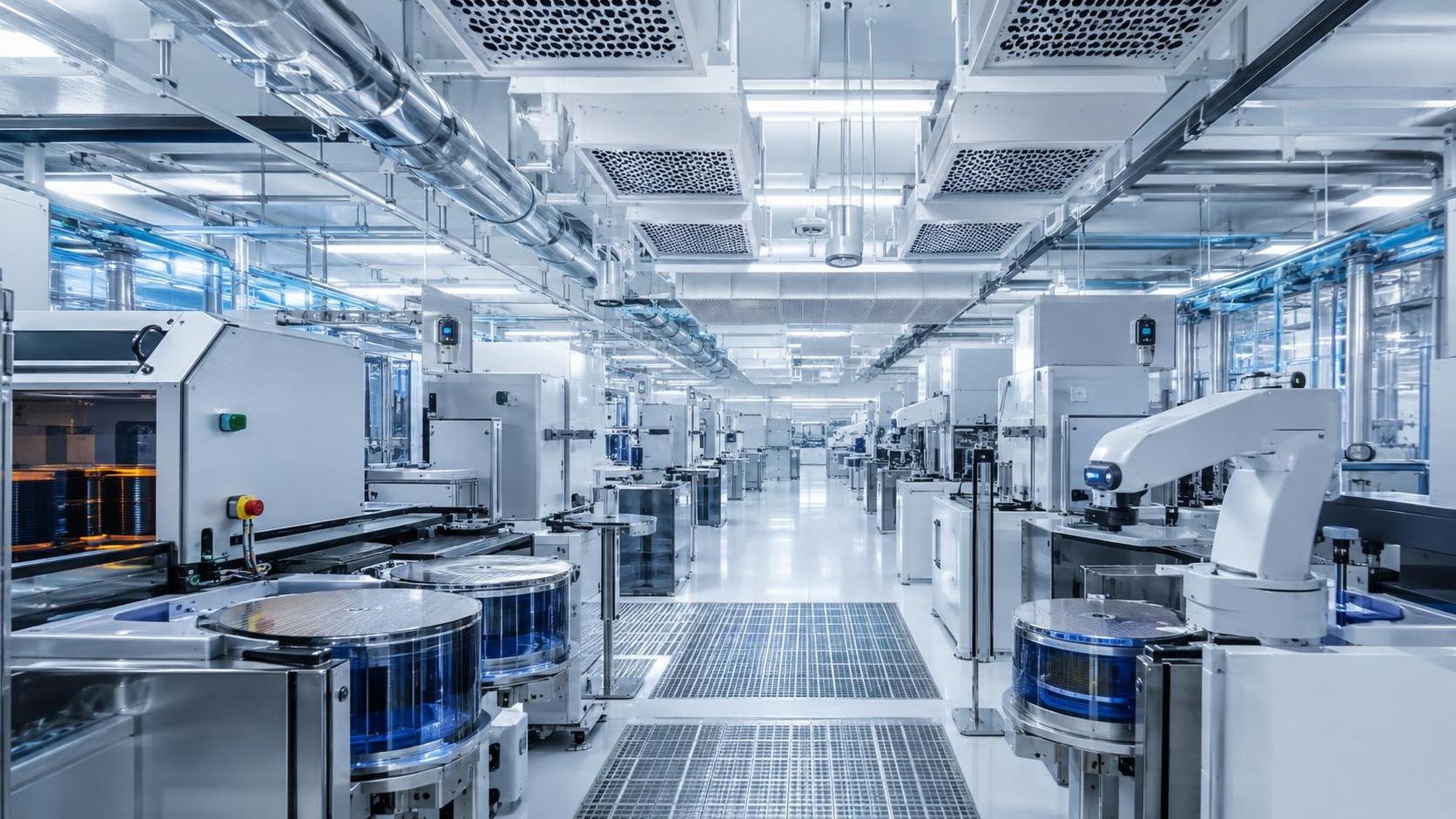
In advanced fabrication, temperature is not merely a facility utility parameter. It is part of the process window. A fab may meet a nominal room-temperature setpoint while still experiencing enough spatial variation, short-cycle drift, or local thermal disturbance to affect overlay, critical dimensions, film properties, and measurement consistency. That distinction matters because yield loss rarely announces itself as “an HVAC problem.” It often first appears as a marginal lithography excursion, a recurring tool-to-tool offset, unstable metrology data, or an unexplained increase in rework.
Semiconductor manufacturing temperature stability therefore has to be evaluated as a chain: central cooling generation, distribution piping, air-handling response, fan-filter-unit behavior, tool heat rejection, airflow patterns, sensor placement, control logic, and maintenance discipline. A highly capable chiller does not guarantee a stable process environment if a local cleanroom zone is being disturbed by pressure imbalance, a poorly tuned valve loop, or a heat load that changes faster than the air system can respond.
For technical evaluation teams, the practical question is not simply, “What temperature can the building maintain?” It is, “How consistently can the relevant process environment remain within the tolerance required by each production step, across time, location, and operating condition?”
Why Small Thermal Deviations Become Yield Problems
Semiconductor processes are sensitive because materials, equipment structures, chemicals, and measurement systems all respond to temperature. Silicon wafers expand and contract. Reticles, stages, masks, chambers, optics, and metrology fixtures do the same, though not necessarily at the same rate. A temperature shift that seems insignificant in a conventional industrial setting can matter when pattern placement, focus margin, and layer-to-layer alignment are being controlled at very fine scales.
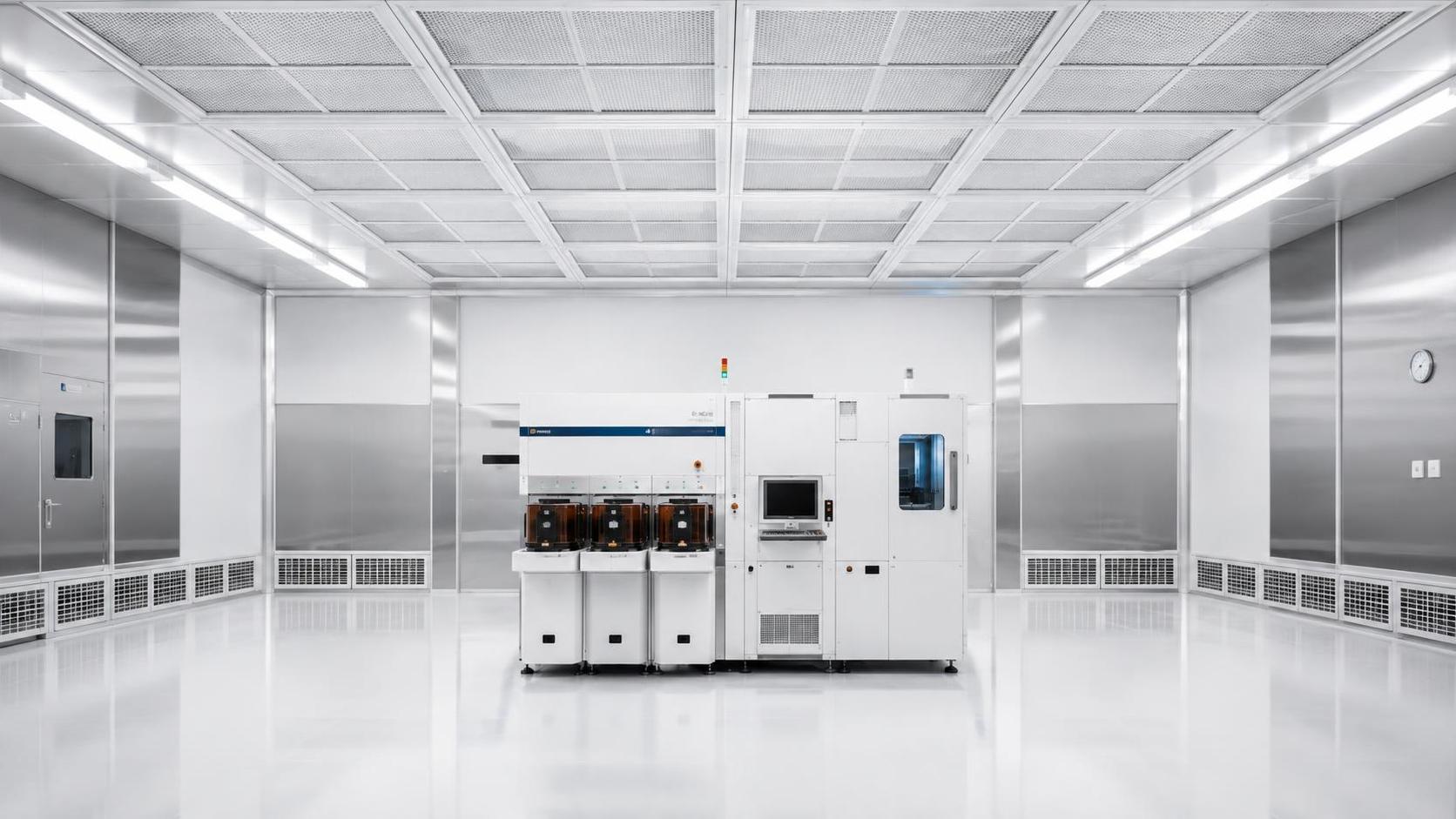
Lithography makes this relationship especially visible. The exposure tool itself may have tightly managed internal thermal control, but surrounding room conditions still influence wafer handling, reticle storage, track operation, tool recovery after maintenance, and the thermal state of materials entering the process. If wafers arrive at a different temperature from the tool’s expected condition, temporary dimensional changes or thermal equilibration effects can complicate overlay control. The impact is not always immediate or uniform; it may emerge as a time-dependent pattern during a lot run.
Thin-film deposition and etch operations create a different concern. Chamber temperature control is normally central to process repeatability, yet the facility environment can affect supporting subsystems, chemical delivery lines, cooling-water temperature, exhaust behavior, and maintenance conditions. In plasma processes, for example, a stable recipe does not necessarily produce stable results when wafer temperature, electrostatic-chuck performance, coolant conditions, or chamber recovery behavior are drifting. The room is not the only thermal variable, but it can be the variable that causes several others to move together.
Metrology is another area where teams can underestimate thermal effects. Measurement tools are often specified for controlled ambient conditions because optical systems, mechanical stages, and reference standards require time to stabilize. If the measurement environment changes through the day, engineers may spend valuable time determining whether a reported shift is a real process excursion or an instrument-environment interaction. That uncertainty slows corrective action and can widen the practical process-control window.
Temperature Stability Is More Than a Setpoint
A single room-temperature number can be misleading. A process bay may average at the intended setpoint while individual locations experience meaningful departures. This often occurs near equipment exhausts, service corridors, exterior walls, high-density tool clusters, loading areas, ceiling obstructions, or areas affected by make-up air. The average looks acceptable; the wafer path does not.
Three dimensions should be separated during evaluation:
- Temporal stability: how much temperature changes over minutes, hours, shifts, and seasonal operating conditions.
- Spatial uniformity: how much conditions differ between zones, tool fronts, return-air locations, and points along material movement routes.
- Thermal recovery: how quickly the system returns to controlled conditions after a disturbance, such as tool startup, a maintenance door opening, a utility changeover, or an abnormal heat load.
The third point is frequently missed. A room that is stable under steady load may not be robust under real fab conditions. Tool installation, preventive maintenance, batch changes, personnel activity, filter replacement, and utility switching all introduce disturbances. If recovery is slow or oscillatory, the facility can repeatedly push sensitive processes toward the edge of their acceptable operating range.
In highly demanding environments, thermal specifications may be discussed in fractions of a degree, sometimes approaching very narrow tolerances such as ±0.01°C for selected critical applications. That figure should not be treated as a universal cleanroom requirement. The appropriate tolerance depends on the process node, tool design, metrology sensitivity, material flow, and the manufacturer’s operating specifications. Applying an extreme room-control target everywhere can add cost and complexity without improving yield. The better approach is to identify where thermal precision genuinely protects the process and where a broader control band is acceptable.
The HVAC Factors That Usually Matter Most
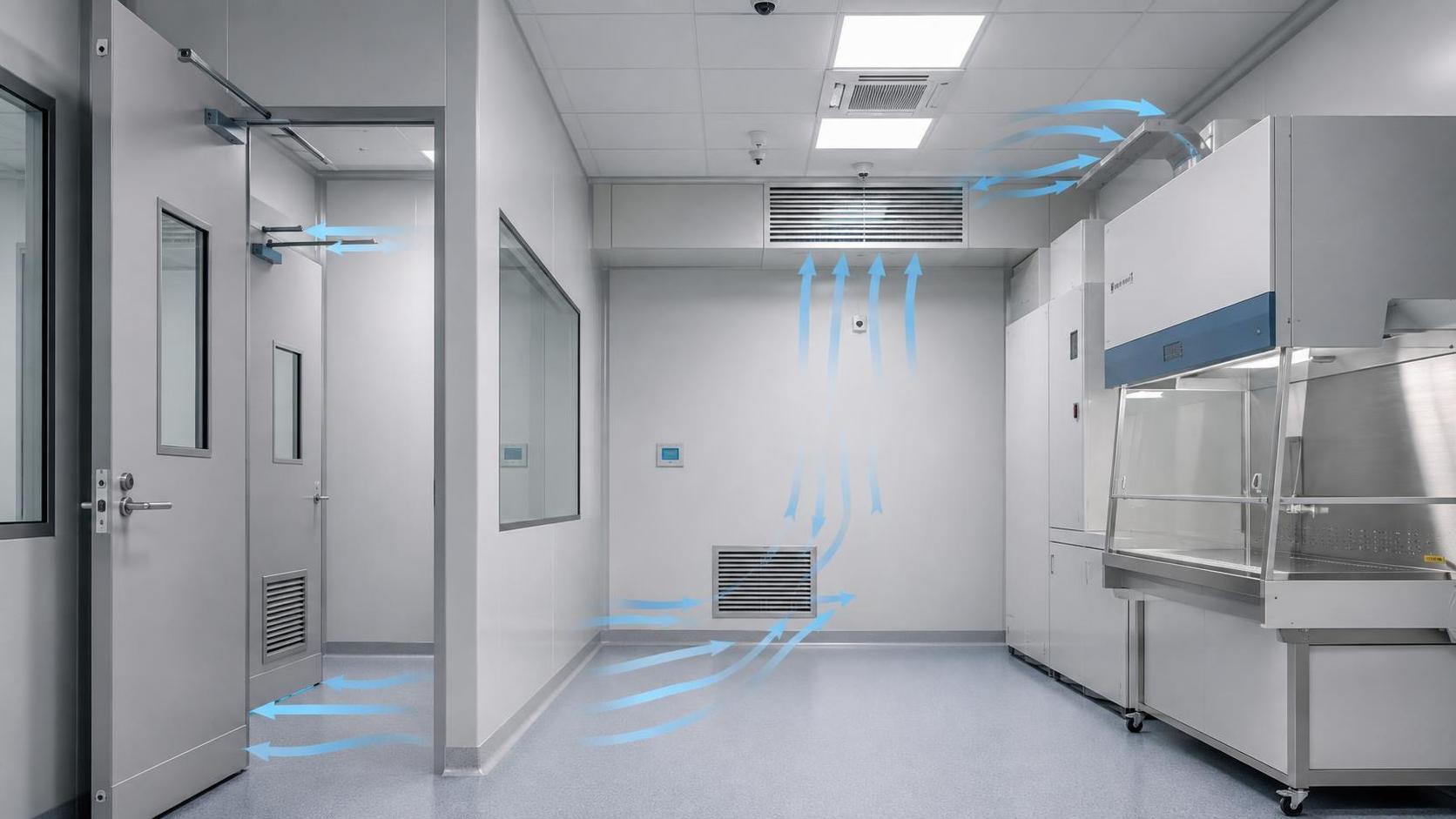
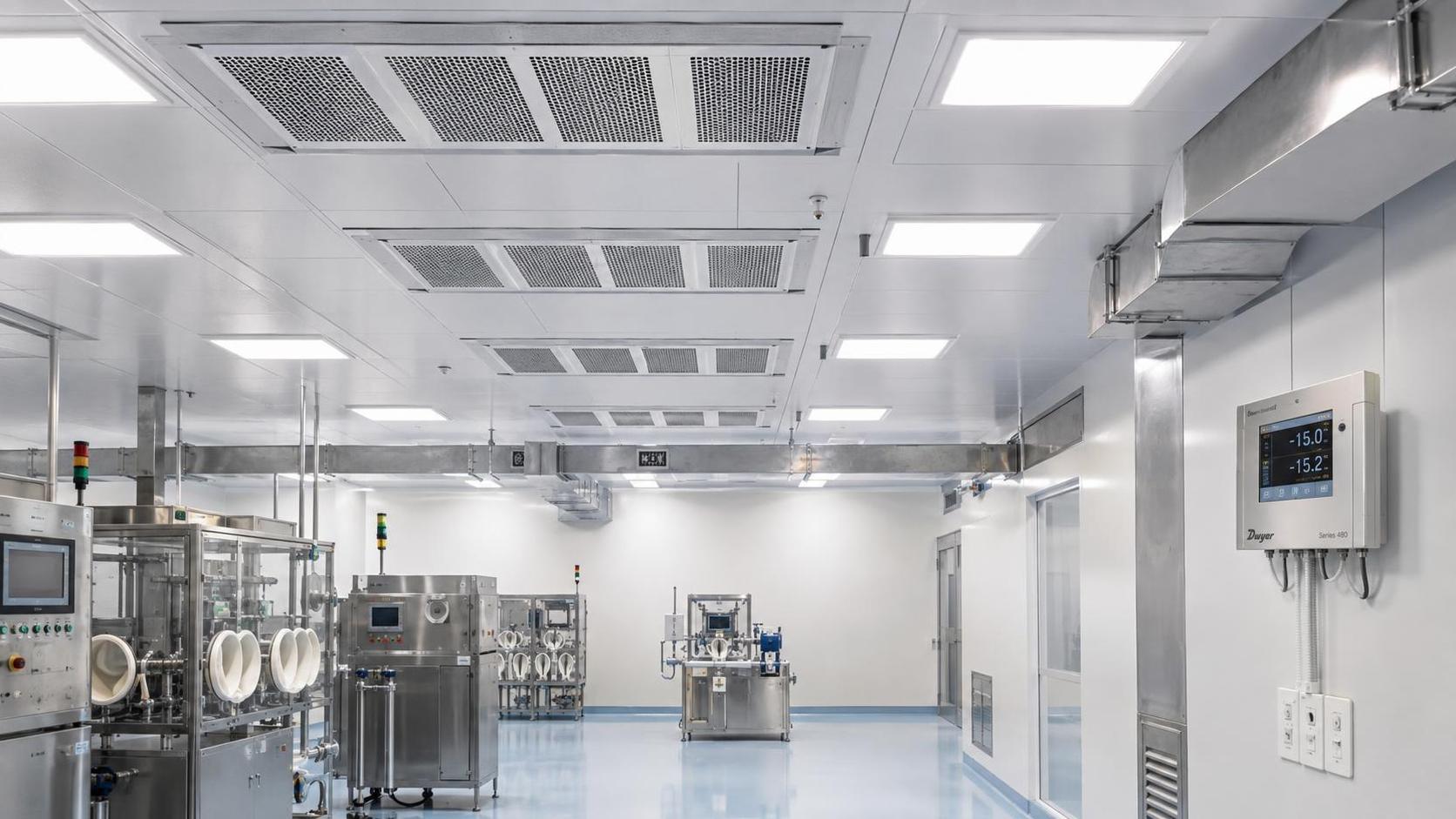
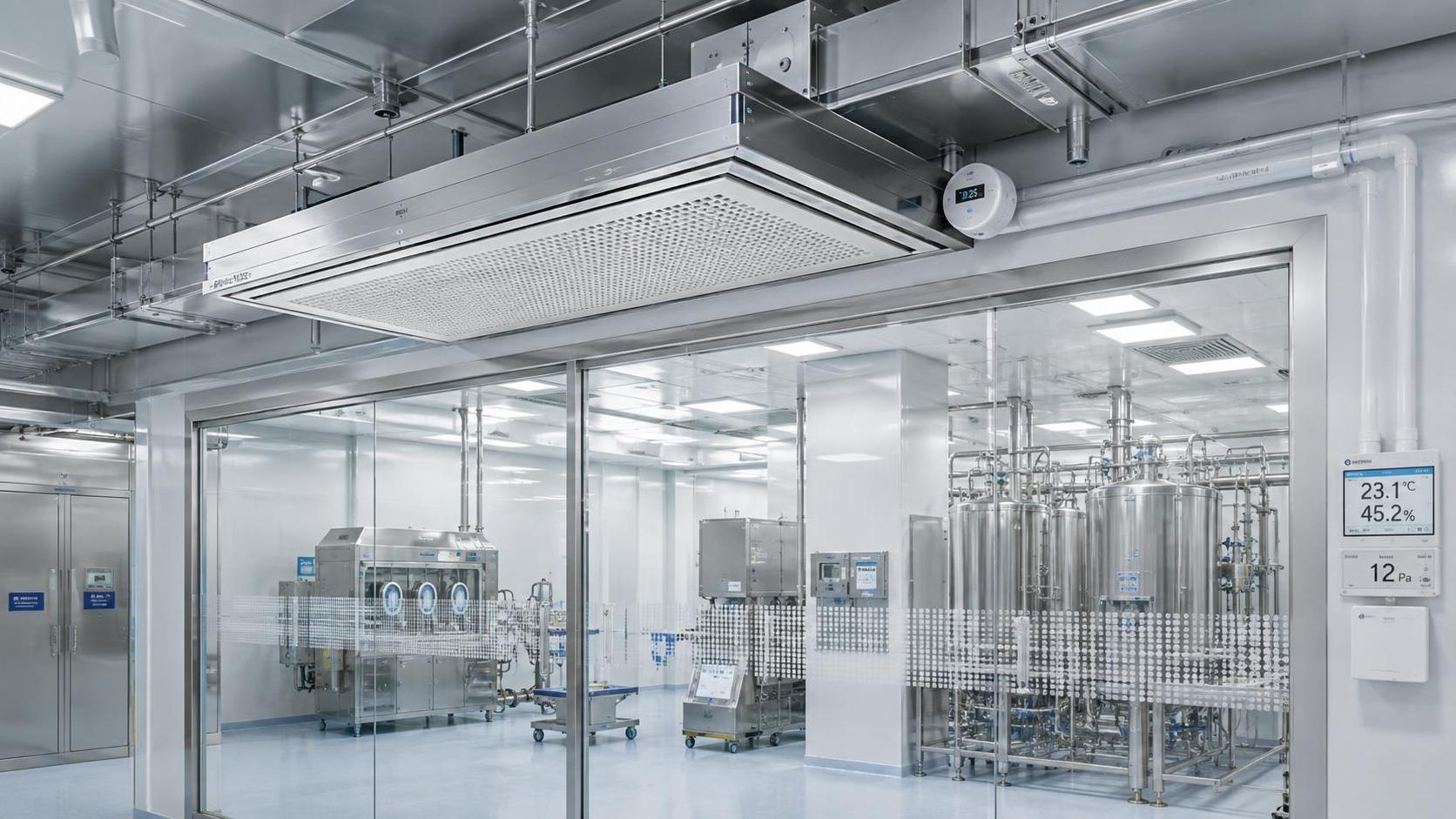
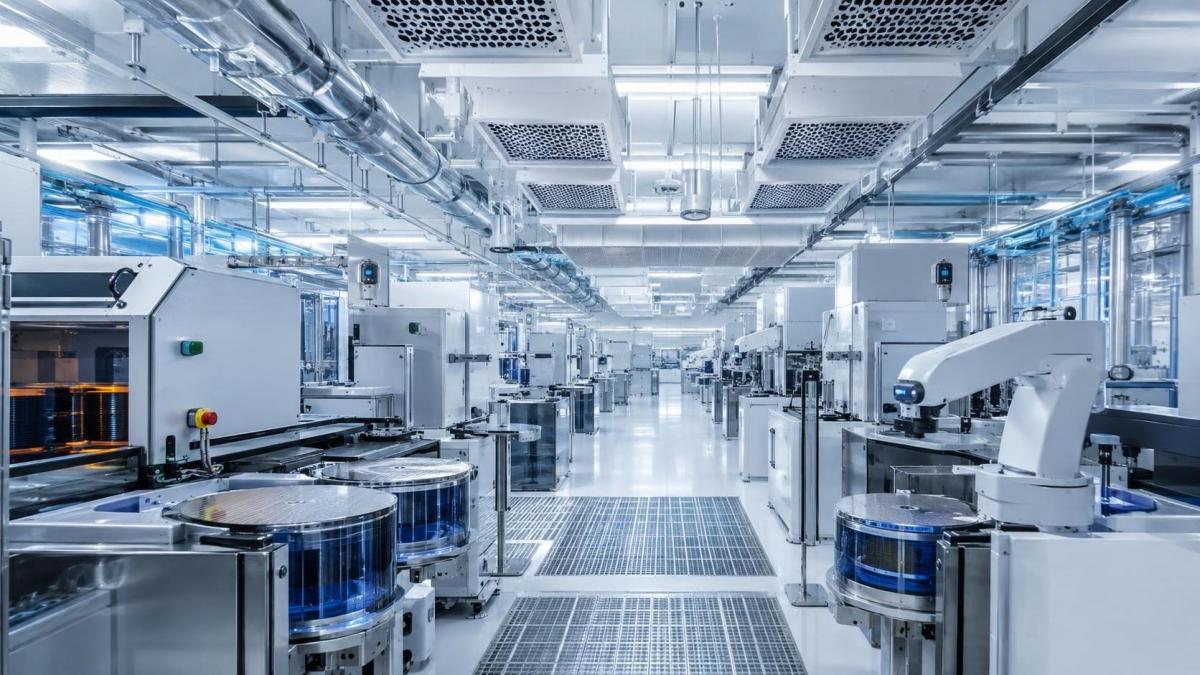
Cleanroom HVAC is often discussed in terms of air cleanliness and air-change performance, but airflow and temperature cannot be separated in a semiconductor facility. The same air distribution system that supports particle control also determines how heat is introduced, removed, mixed, and returned. A design that appears adequate on a cleanroom classification drawing may still produce local thermal stratification or unstable recirculation around process equipment.
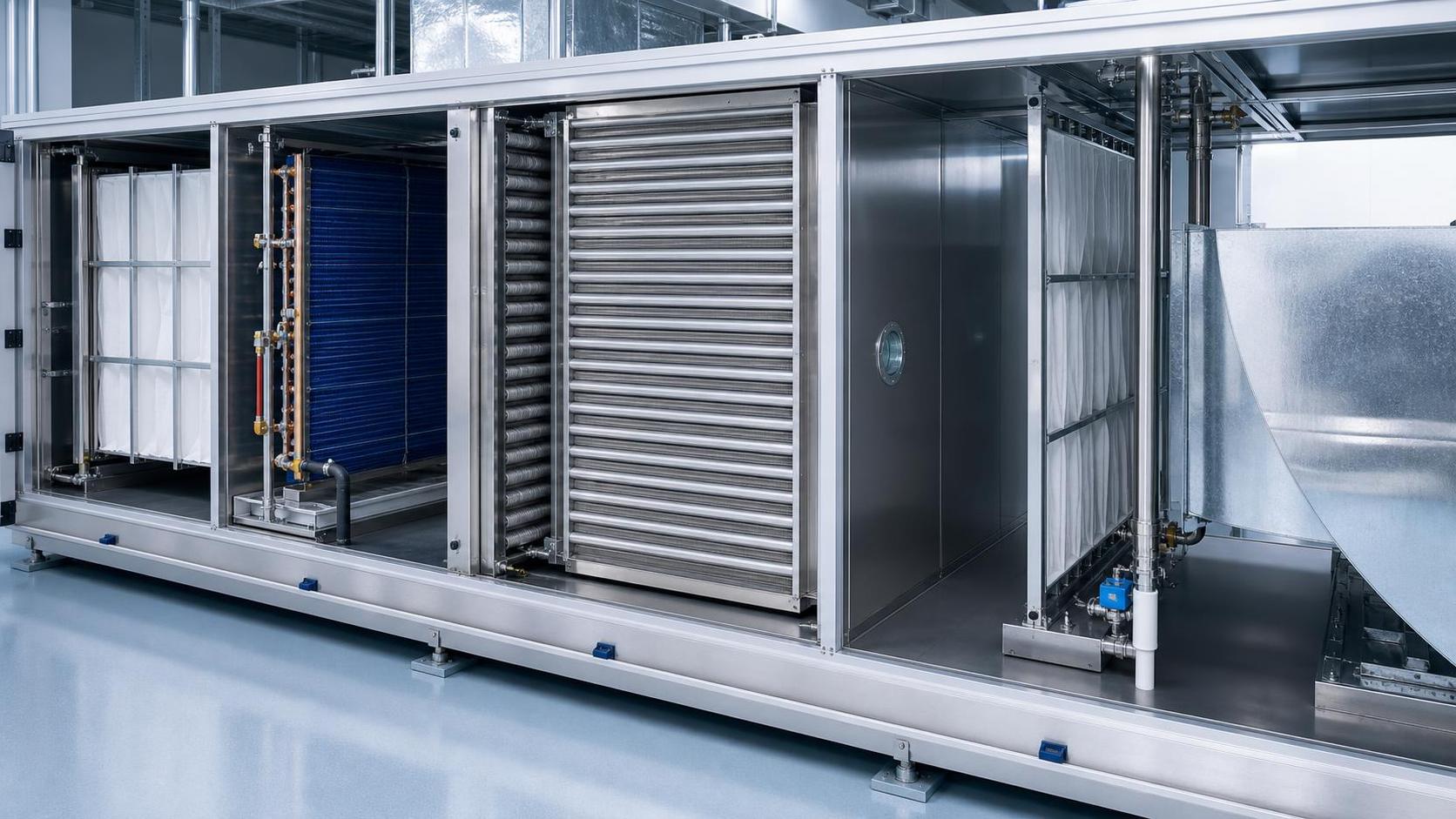
Supply-air temperature control is only one layer. The thermal behavior of the air-handling unit, chilled-water loop, coils, control valves, variable-frequency drives, and sensors determines whether the supply condition remains steady when load changes. Valve hunting, poorly sequenced cooling stages, oversized equipment operating at low load, or inadequate sensor response can create small but persistent cycling. Those fluctuations may be damped before they appear at a wall thermostat, yet still affect a sensitive area close to the supply path.
Airflow organization matters just as much. Fan Filter Units (FFUs) can support highly uniform downward airflow in appropriate cleanroom designs, but their thermal effect depends on fan heat, filter loading, airflow balance, ceiling layout, and return-air configuration. A change in FFU operating speed may solve a particle-control concern while altering local heat distribution. Engineering teams should avoid treating airflow, pressure, cleanliness, and thermal stability as isolated disciplines.
Tool heat loads also deserve a more critical review than a nameplate calculation alone. Actual heat rejection varies by production state, maintenance state, recipe, auxiliary equipment status, and utilization. A high-density bay can experience local thermal peaks that are not captured by broad facility-level load assumptions. In these areas, the question is often whether the control system can detect and respond to local changes before they migrate into adjacent process zones.
Where chilled water and process cooling enter the yield discussion
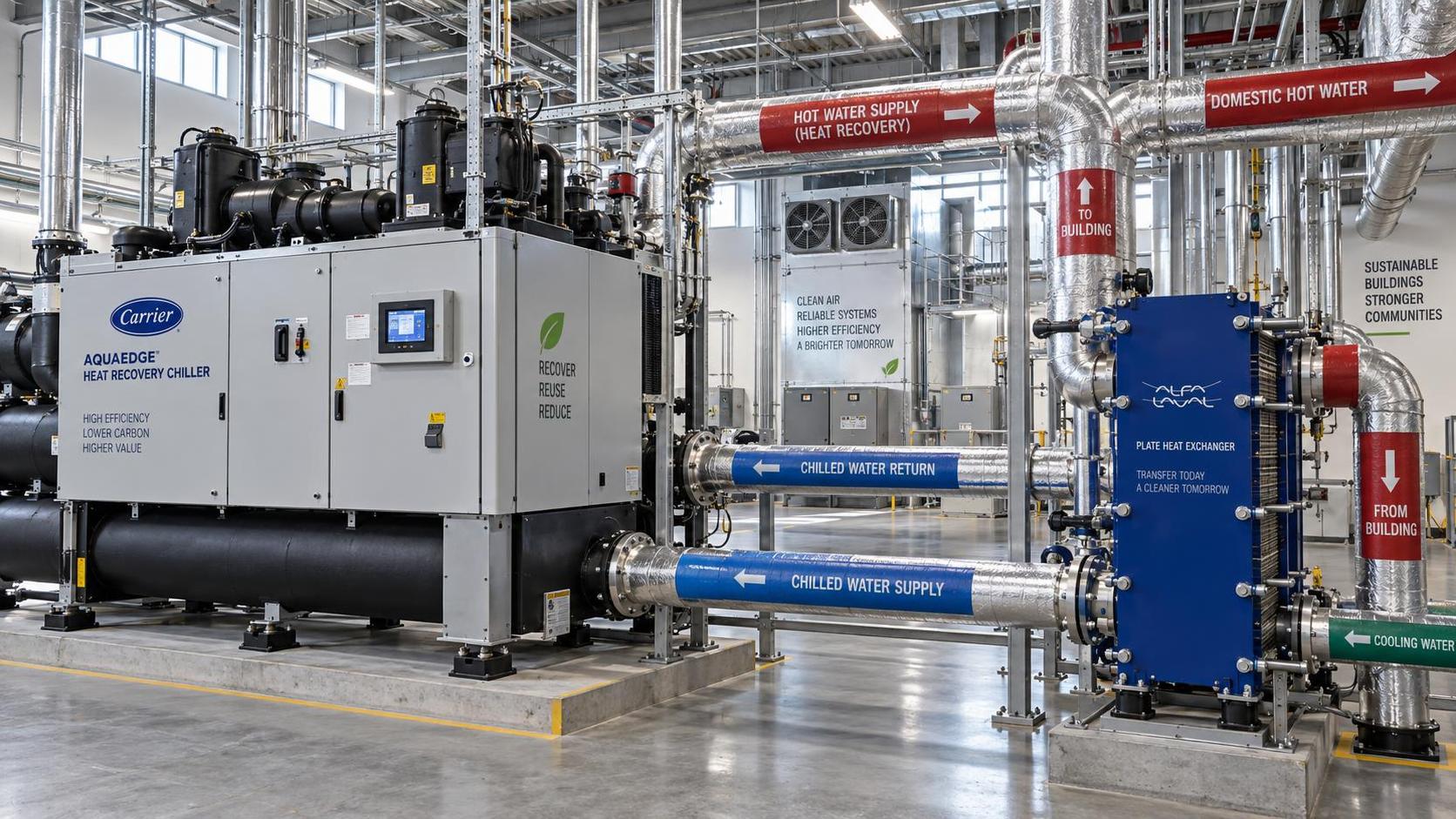
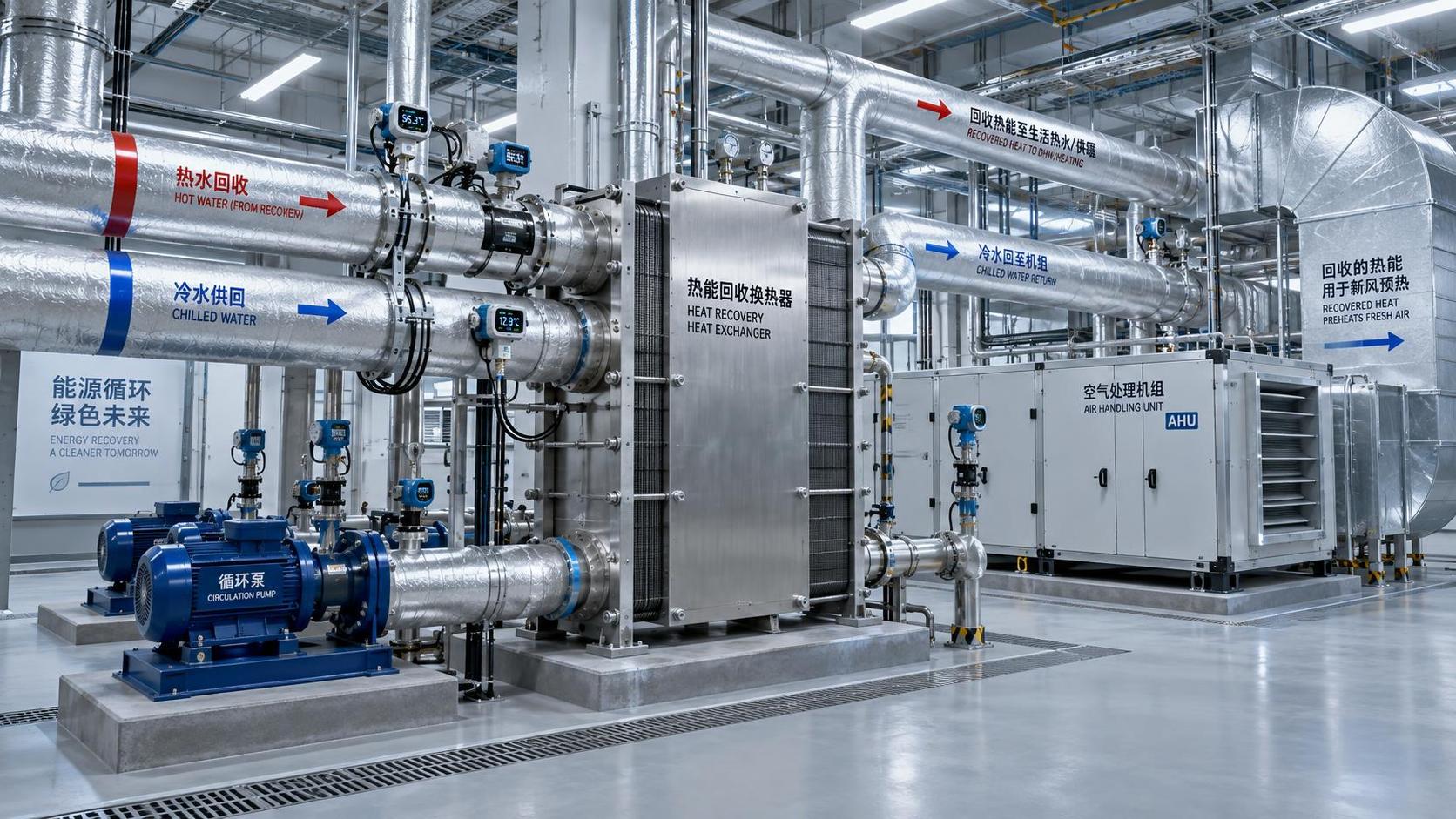
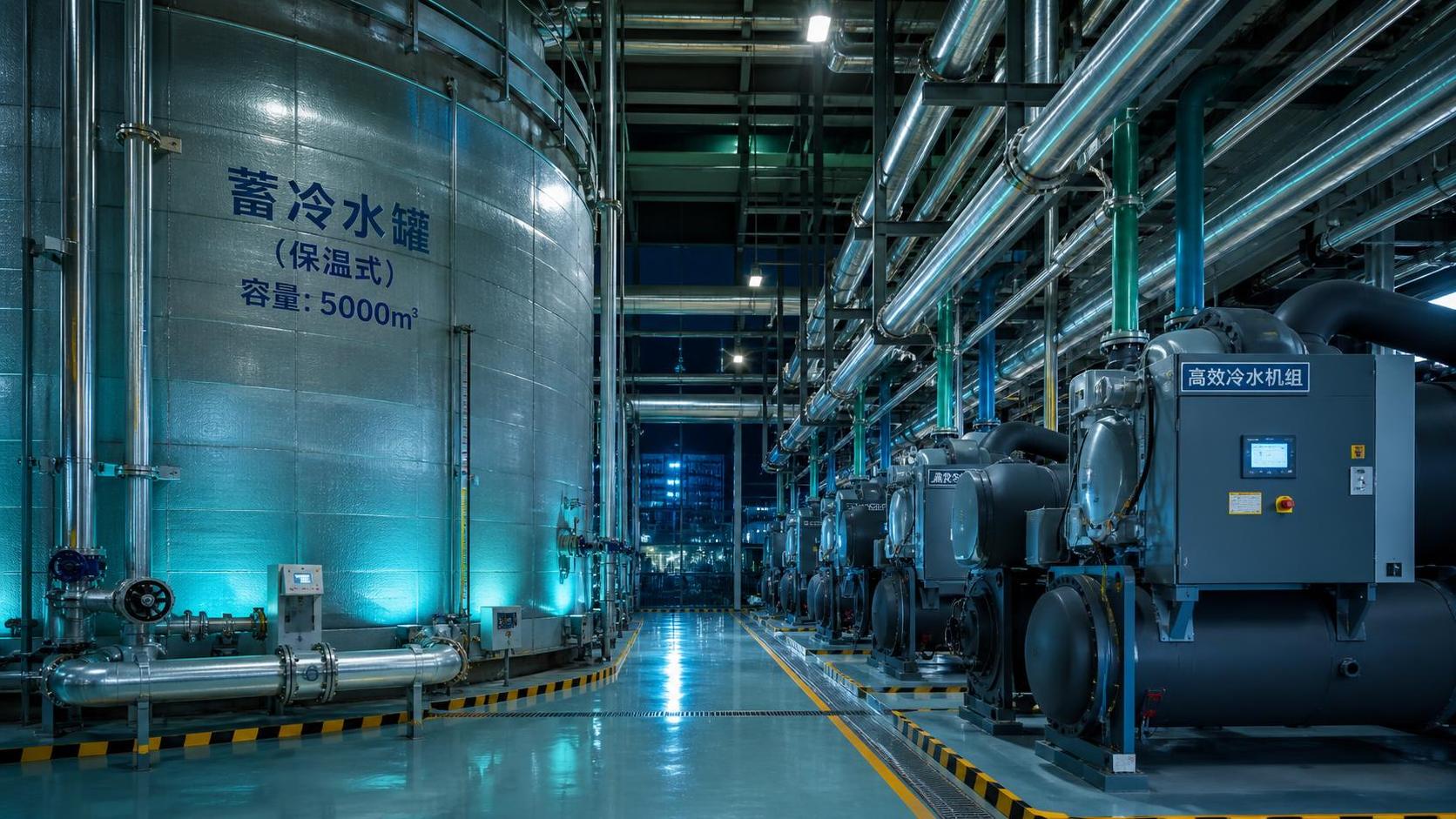
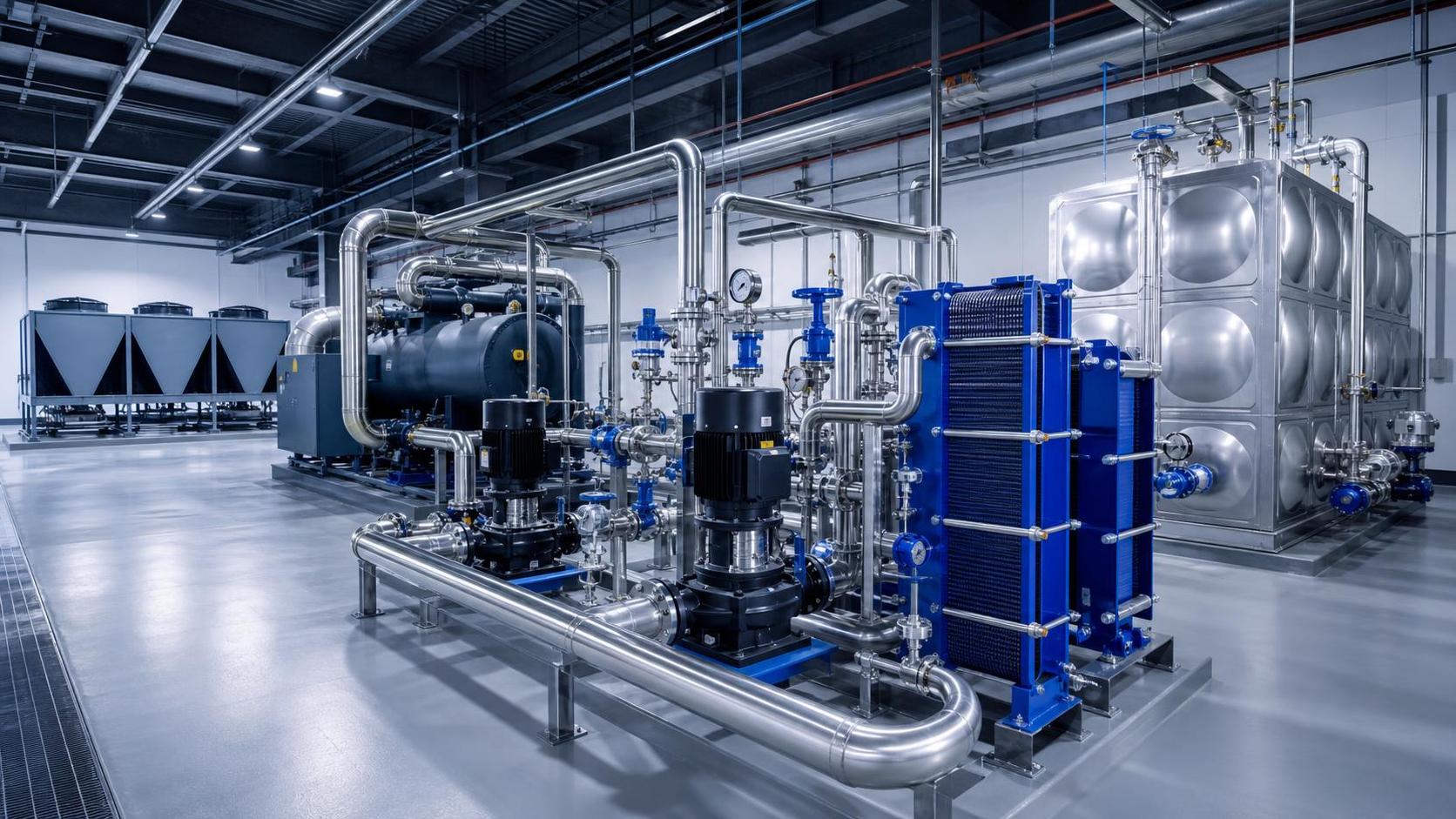
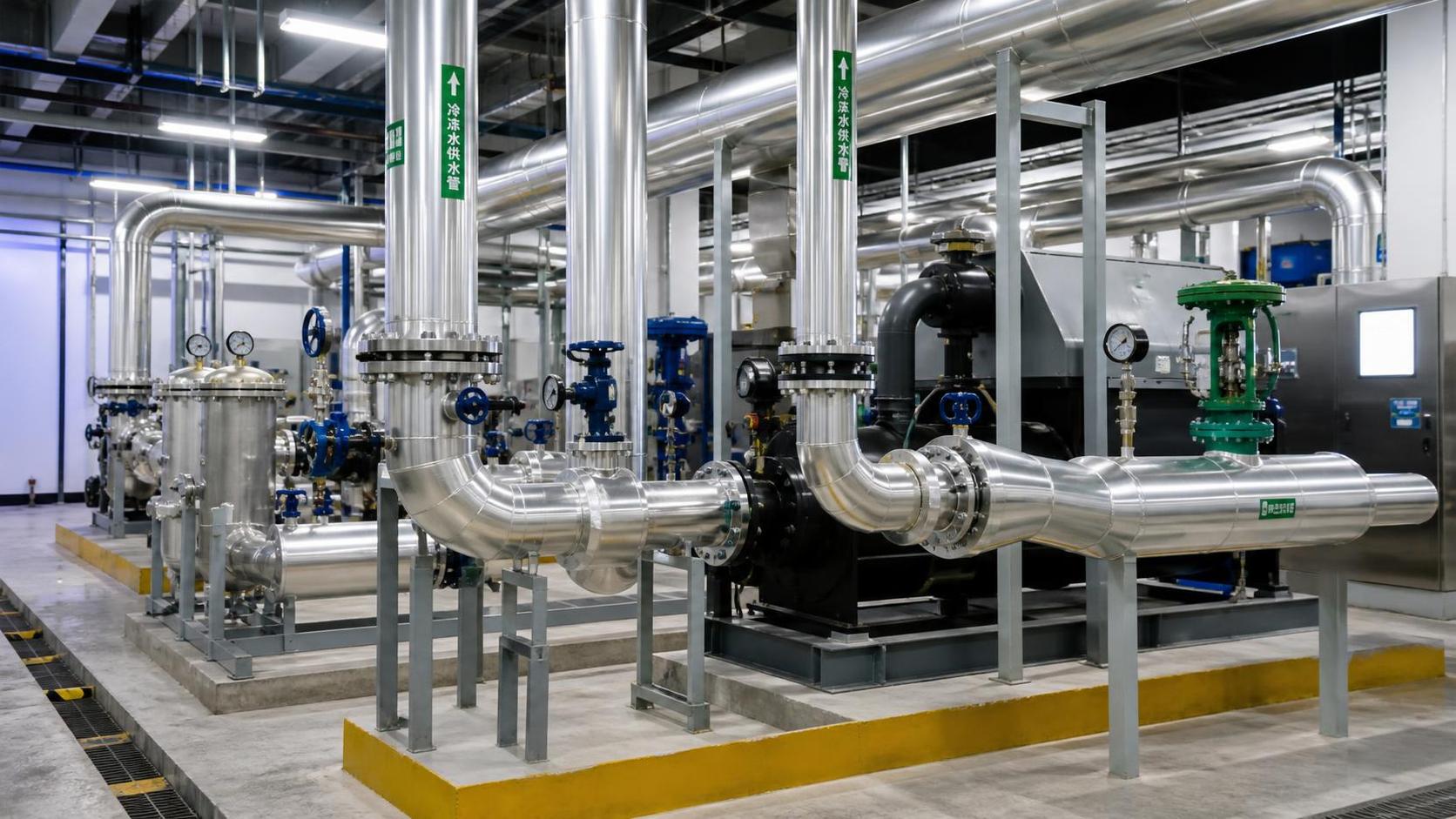
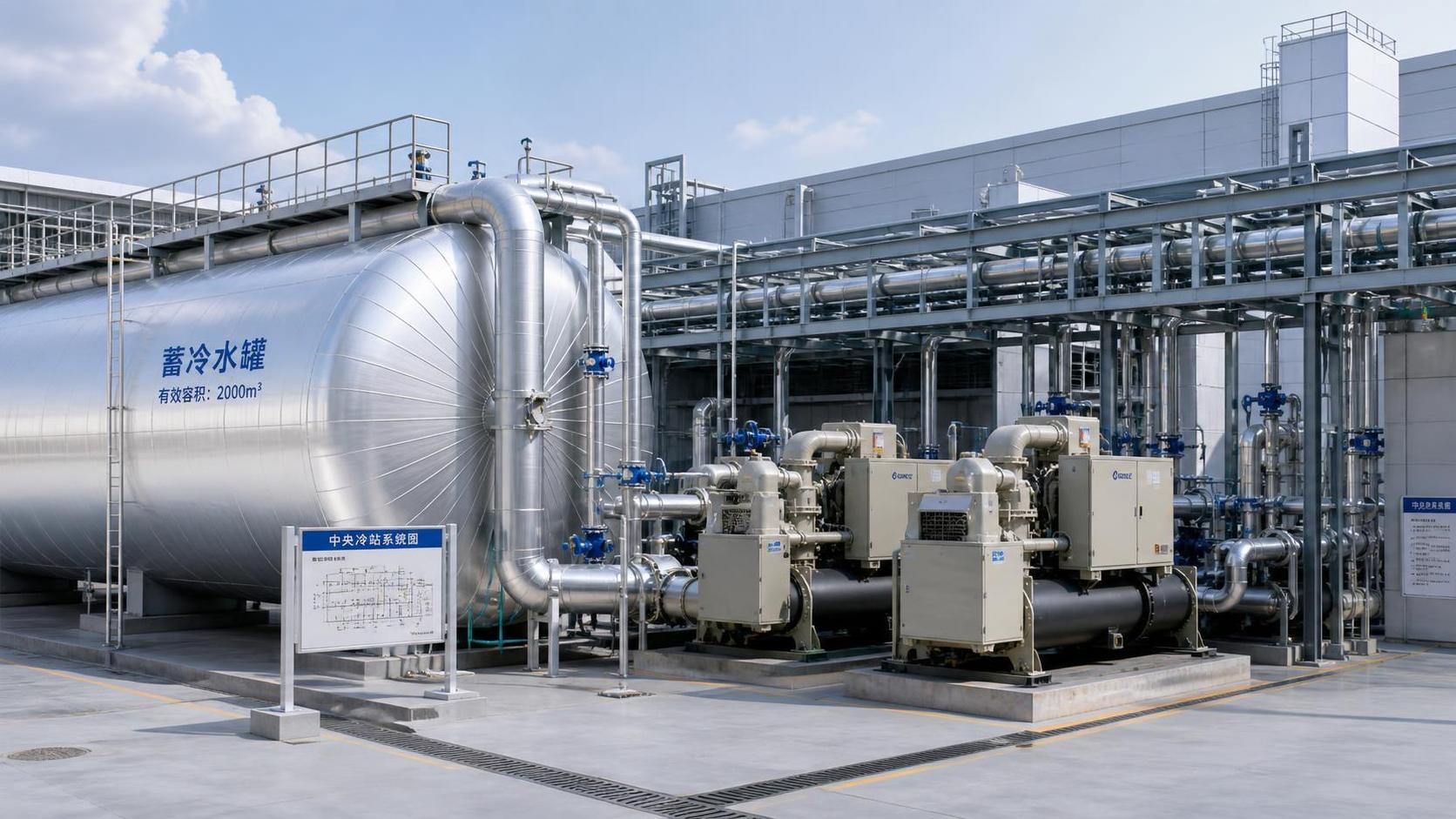
Precision air control cannot compensate for unstable process cooling. Chilled water may serve air handlers, while separate loops can support tool cooling, heat exchangers, vacuum systems, and other utility loads. Their temperature control, hydraulic balance, redundancy strategy, water quality, and response to changing demand should be reviewed independently. A stable room with fluctuating process coolant can still generate process variation; conversely, a stable coolant loop cannot fully protect material handling and metrology from a poorly controlled ambient environment.
This is why an integrated infrastructure view is useful. Organizations such as Global Industrial-Climate & Environment-Control (G-ICE) frame precision thermal management alongside cleanroom contamination control, ultra-pure water systems, and smart environmental monitoring rather than as a standalone mechanical package. That perspective is appropriate for fabs because operational boundaries are not as clean as organizational charts suggest. Utilities, airflow, process tools, and environmental data eventually meet at the wafer.
Monitoring Must Reveal the Right Disturbance
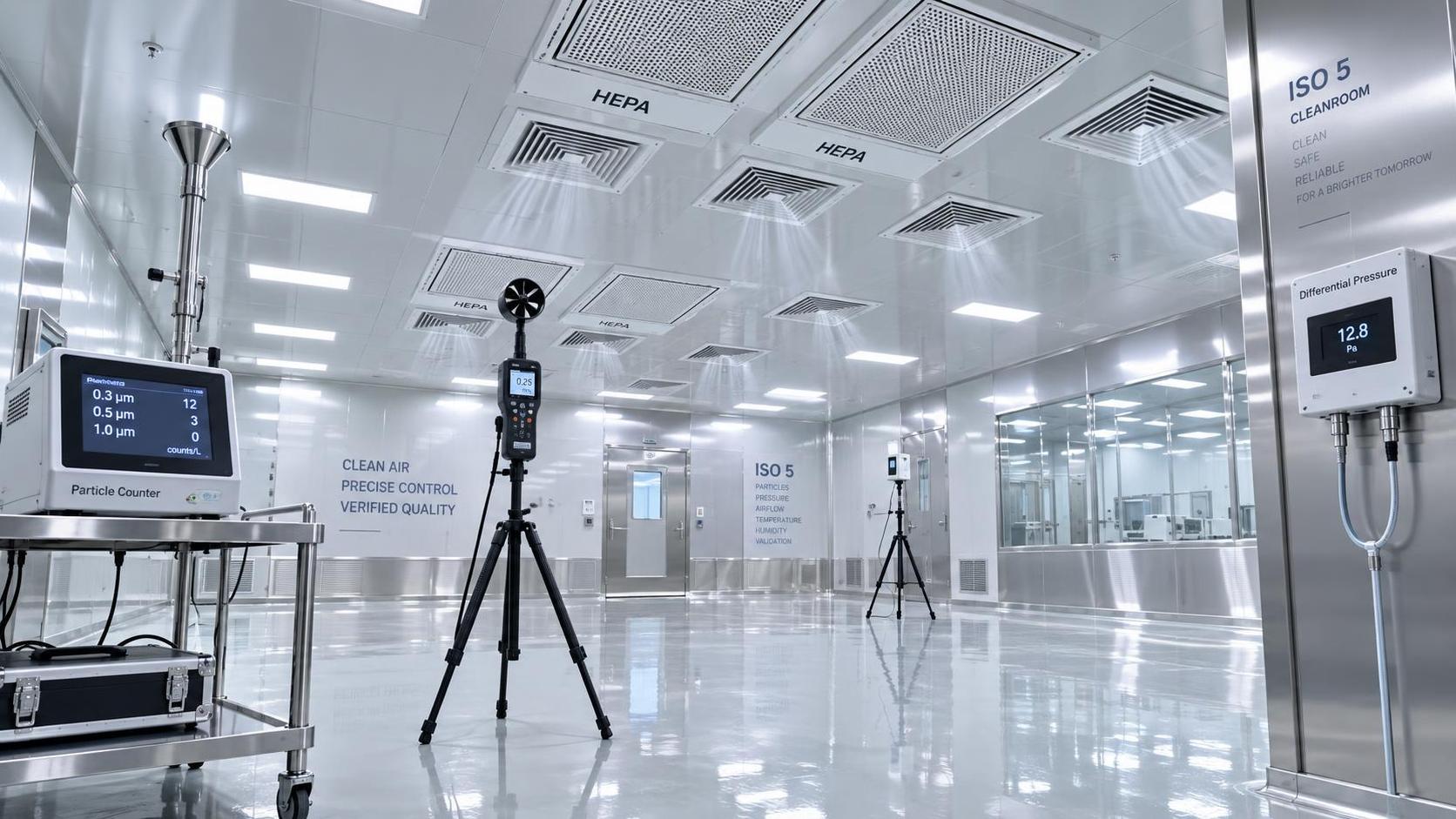
A common monitoring mistake is relying on too few sensors in locations chosen for convenience rather than process relevance. A sensor mounted on a representative wall may confirm general room comfort but fail to detect conditions at a tool interface, beneath a supply field, near a return path, or along a critical wafer-transfer route. It can also be affected by radiant heat, direct airflow, nearby equipment, or maintenance activity.
A useful monitoring plan starts with thermal-risk mapping. Identify sensitive tools and metrology areas; trace material movement; locate high and variable heat loads; review supply and return geometry; then determine which measurement points will distinguish a local event from a facility-wide event. Sensor accuracy is important, but calibration traceability, placement, sampling interval, data retention, and alarm logic are equally important. A highly accurate sensor in the wrong location produces precise but unhelpful data.
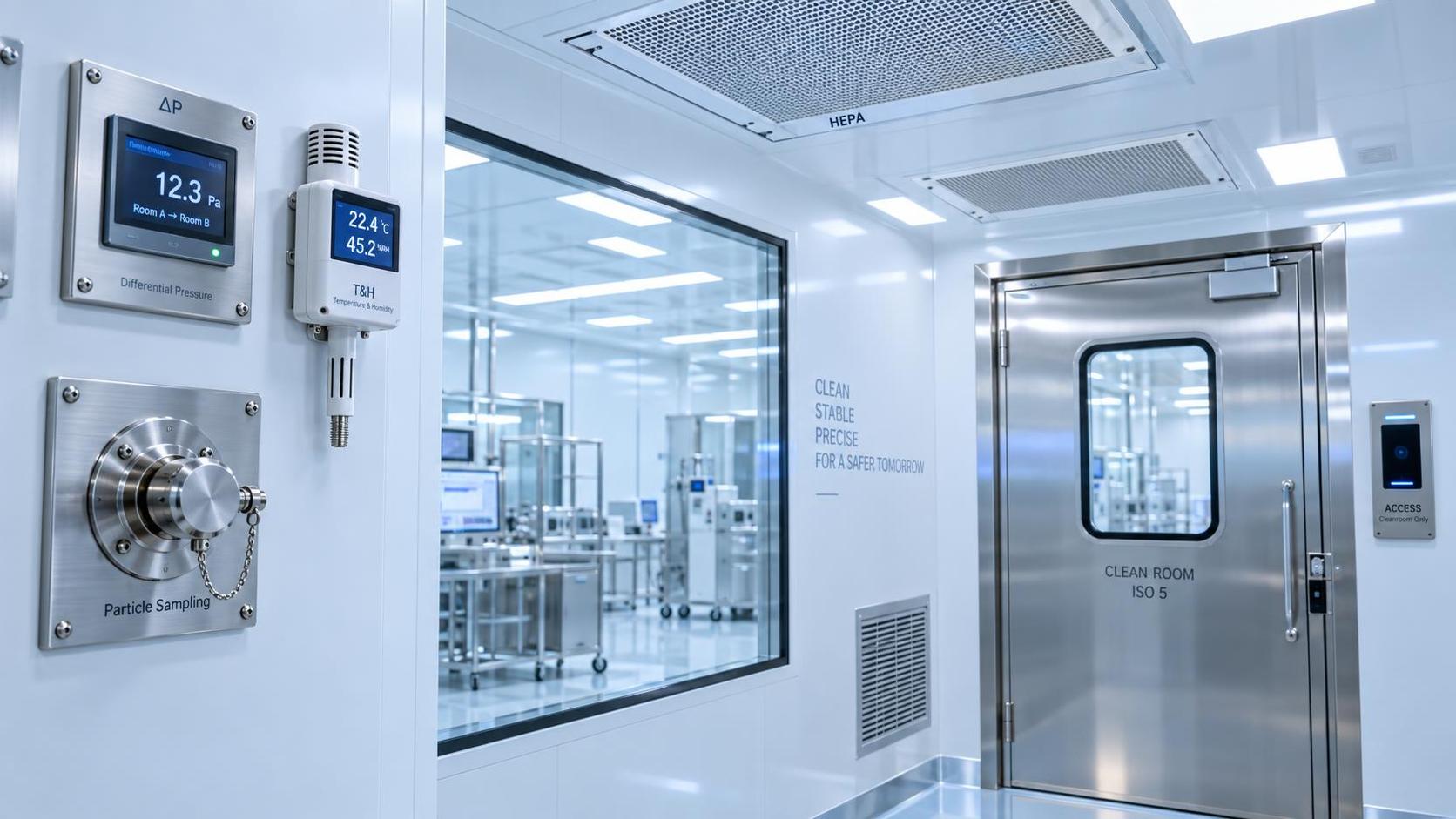
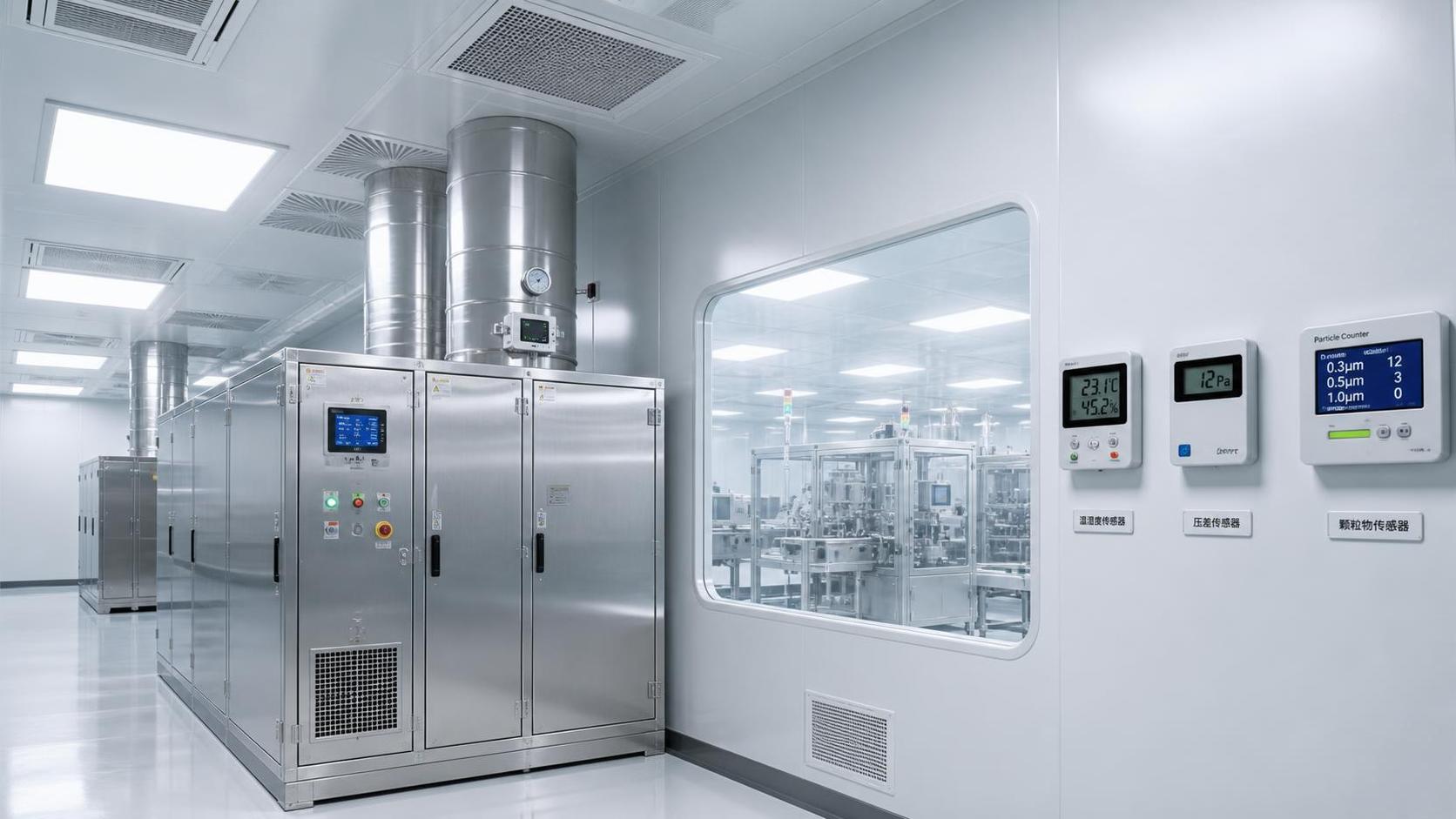
Real-time environmental monitoring becomes more valuable when it can correlate temperature with humidity, differential pressure, airflow, chilled-water supply and return conditions, tool state, and production events. Digital-twin approaches can support this work when the model is maintained with actual operating data and used to test operational scenarios. They are not substitutes for commissioning or field measurement. Their value lies in helping teams see relationships that are difficult to identify from isolated building-management alarms.
Standards Provide a Framework, Not a Fab-Specific Recipe
ISO 14644 is central to cleanroom classification and operational control, particularly in relation to airborne particulate cleanliness. It should not be interpreted as a complete temperature-stability specification for every semiconductor process. Likewise, ASHRAE guidance is valuable for HVAC design and operating practice, while SEMI standards and guidance may be relevant to equipment interfaces, facilities, safety, and manufacturing practices. The governing requirement for a particular bay or tool often comes from a combination of process needs, equipment supplier specifications, internal manufacturing controls, and applicable site standards.
That distinction prevents two expensive errors. One is under-designing a critical area because the general cleanroom classification has been met. The other is over-designing the entire facility to the most stringent tolerance associated with one limited process. Technical reviewers should ask for a requirement hierarchy: which parameters are regulatory, which are tool-required, which are process-derived, and which are internal reliability margins? Without that hierarchy, performance targets tend to become vague and difficult to verify.
What to Test Before Accepting a Thermal-Control Strategy
Commissioning should not stop at demonstrating that a room can reach its setpoint. Acceptance testing needs to examine representative production conditions, including realistic equipment loads and selected disturbance scenarios. Where practical, trend data should be reviewed over enough time to capture load changes rather than a short, favorable snapshot.
- Compare temperature at representative process locations, not only at central room sensors.
- Review peak-to-peak variation and control behavior over time, rather than relying only on daily averages.
- Test recovery following anticipated operating events, including major tool-state changes where safe and feasible.
- Check whether airflow balancing changes alter local thermal conditions near sensitive equipment.
- Verify the relationship between facility alarms and process-relevant measurements so that alarms are actionable.
- Document sensor calibration, measurement uncertainty, and the method used to demonstrate compliance with the selected tolerance.
One practical warning: do not use a single successful balancing report as proof of long-term stability. Filters load, control valves wear, sensor drift occurs, process tools change, and maintenance teams make adjustments. A thermal-control design is only as reliable as its operating and verification routine. Periodic requalification should be risk-based, with closer attention to areas where yield sensitivity and thermal density are highest.
The Most Useful Decision Is Usually a Zoned One
The strongest semiconductor facilities do not necessarily pursue the same temperature tolerance everywhere. They match control precision to process consequence. Lithography support spaces, advanced metrology, highly sensitive process bays, and critical utility interfaces may justify tighter monitoring and more responsive control. Less sensitive support areas may require a different balance between stability, energy use, maintainability, and capital cost.
That zoning decision must be made with process engineers, facilities teams, cleanroom designers, and equipment stakeholders in the same discussion. If the process team defines the tolerance without understanding recovery limitations, the target may be impractical. If the facilities team sets the target based only on mechanical capability, it may not protect yield. Semiconductor manufacturing temperature stability becomes dependable when those two views are translated into measurable conditions at the wafer, the tool, and the utility interface—not merely at the thermostat.
- Contamination Control
- Thermal Management
- Smart Environmental Monitoring
- Fan Filter Units
- SEMI Standards
- Precision Thermal Management
- Cleanroom Contamination Control
- Cleanroom HVAC
- Environmental monitoring
- Process cooling
- Ultra-pure water systems
- ISO 14644
- Cleanroom Classification
- Thermal Stability
- semiconductor manufacturing temperature stability
Get weekly intelligence in your inbox.
No noise. No sponsored content. Pure intelligence.
 Sep 15, 2026Smart HVAC investment insights for North American heat recovery projectsSmart HVAC investment insights North America: evaluate heat recovery, lifecycle costs, controls, and performance for resilient project decisions.
 Sep 14, 2026How SEMI standards shape water treatment design for semiconductor fabsSemiconductor water treatment SEMI guidance shapes resilient UPW design, contamination control, monitoring, reclaim strategy, and fab-ready validation.
 Sep 13, 2026What drives Biosafety Containment Systems cost in BSL-3 projects?Biosafety Containment Systems cost in BSL-3 projects depends on HVAC, layout, decontamination, controls, and commissioning. Discover how to build a credible budget.
 Sep 12, 2026How to qualify a fine chemical process solutions supplier for purity controlFine Chemical Process Solutions supplier qualification guide: evaluate purity control, traceability, contamination prevention, and safety for reliable high-purity production.
 Sep 11, 2026What drives cleanroom certification cost for ISO Class 1–9 projects?Cleanroom certification cost depends on ISO Class 1–9 requirements, test scope, HVAC readiness, documentation, and retesting. Explore practical budgeting insights to control project risk.
 Sep 10, 2026When should Procurement Directors prioritize heat recovery payback?Procurement Directors: learn when heat recovery delivers reliable payback, lower lifecycle costs, and safe performance in controlled industrial environments.
 Sep 09, 2026How to select an environmental monitoring system for cleanroomsEnvironmental monitoring system selection for cleanrooms: compare sensors, alarms, data integrity, integration, and installation to ensure reliable control.
 Sep 08, 2026How temperature stability affects semiconductor manufacturing yieldSemiconductor manufacturing temperature stability directly affects yield, overlay, metrology, and process control. Explore practical HVAC, monitoring, and zoning strategies.
 Sep 07, 2026How to prepare for a Regulatory Frameworks audit of cleanroom controlsRegulatory Frameworks audit readiness for cleanroom controls: build traceable evidence, verify alarms and monitoring, and close compliance gaps with confidence.
 Sep 07, 2026How to choose reverse osmosis systems with the right recovery rateReverse osmosis systems: learn how to select the right recovery rate for reliable water quality, lower scaling risk, efficient concentrate control, and stable long-term performance.
 Sep 05, 2026How does a negative pressure room work to contain airborne contaminants?How does a negative pressure room work? Discover how inward airflow, controlled exhaust, monitoring, and room design help contain airborne contaminants safely.
 Sep 04, 2026What TOC Limits Should Be Set and Monitored for a UPW Loop?What are our TOC limits for the UPW loop? Learn how to set defensible TOC thresholds, monitor trends, protect critical processes, and improve water-quality control.
 Sep 04, 2026What Are the Best Retrofit Options for Upgrading Existing Pharmaceutical Cleanrooms?What are the best retrofit options to upgrade existing pharma cleanrooms? Explore FFUs, HVAC modernization, pressure cascades, monitoring, and sealed finishes for compliant performance.
 Sep 04, 2026How Does a Negative Air Pressure Room Protect Adjacent Areas?What is a negative air pressure room? Learn how controlled airflow contains airborne hazards, protects adjacent spaces, and supports safer facility operations.
 Sep 04, 2026What Is ISO Class 1 Cleanroom Classification, and Where Is It Used?What is ISO Class 1? Explore its ultra-low particle limits, critical cleanroom design factors, verification methods, and uses in semiconductor, optics, and quantum manufacturing.
 Sep 04, 2026How Long After a UPW Deviation Does Yield Impact Typically Appear?What is the typical time lag from UPW deviation to yield impact? Learn how contamination, process sensitivity, exposure windows, and testing stages shape detection timing.
 Sep 04, 2026What Testing Data Should Engineers Review Before Approving a UPW Material?What testing data should be reviewed before approving a UPW material? Explore extractables, TOC, particle release, ionic leaching, corrosion, and reliability data for confident approval.
 Sep 04, 2026How Should Pharmaceutical Cleanrooms Choose Climate Control Systems?Which climate control systems are recommended for pharmaceutical cleanroom environments? Explore HVAC, humidity, pressure, HEPA filtration, and GMP-ready monitoring strategies.
 Sep 04, 2026Airtight Door Problems in Medical Spaces and How Buyers Prevent ThemA problem-solving guide for airtight door procurement, covering sealing performance, sensors, wall coordination, cleaning, maintenance, and acceptance risk.
 Sep 04, 2026What drives cleanroom design cost for ISO Class 7 projects?Cleanroom design cost for ISO Class 7 projects depends on HVAC, filtration, utilities, validation, and lifecycle strategy. Learn how to control budgets without compromising compliance or performance.
 Sep 03, 2026When do heat pipe heat exchangers suit pharmaceutical cleanrooms?Heat Pipe Heat Exchangers for pharmaceutical plants: discover when they support cleanroom energy recovery, airflow separation, humidity control, and GMP-ready HVAC design.
 Sep 02, 2026What determines biosafety cabinets price across different modelsBiosafety cabinets price varies by class, airflow design, filtration, size, certification, and installation. Compare models confidently to choose safe, cost-effective containment.
 Sep 01, 2026When does thermal energy storage cut peak-demand costs in plants?Thermal energy storage for industrial plants can cut peak-demand costs when tariffs, load profiles, and controls align. Explore practical savings, resilience, and integration factors.
 Aug 31, 2026How a digital environmental monitoring system supports audit-ready cleanroomsDigital environmental monitoring system strategies for audit-ready cleanrooms: improve traceability, alarm response, data integrity, and compliance confidence.
 Aug 30, 2026When does next-gen thermal management closed loop reduce chiller energy use?Next-gen thermal management closed loop systems can cut chiller energy by reducing lift, optimizing flows, enabling heat recovery, and improving controls. Discover when savings are real.
 Aug 29, 2026How chilled water piping layout affects pump energy useChilled water piping layout directly affects pump energy, control stability, and lifecycle costs. Explore practical design insights for efficient, reliable systems.
 Aug 28, 2026When thermal energy storage systems cut peak cooling costs in pharma plantsThermal Energy Storage Systems for pharmaceutical plants cut peak cooling costs, support compliance, and strengthen resilience. Explore the business case.