OEM Machined Parts: Tolerance Risks That Raise Assembly Costs
For critical industrial assemblies, OEMmachinedparts can quietly decide whether production stays controlled or absorbs rework, delay, and dispute costs.
In HVAC, cleanroom, UPW, biosafety, and monitoring systems, small tolerance gaps can become costly assembly risks.
This article explains tolerance exposure, cost impact, supplier controls, and practical evaluation steps for better sourcing decisions.
Tolerance Fundamentals in OEMmachinedparts
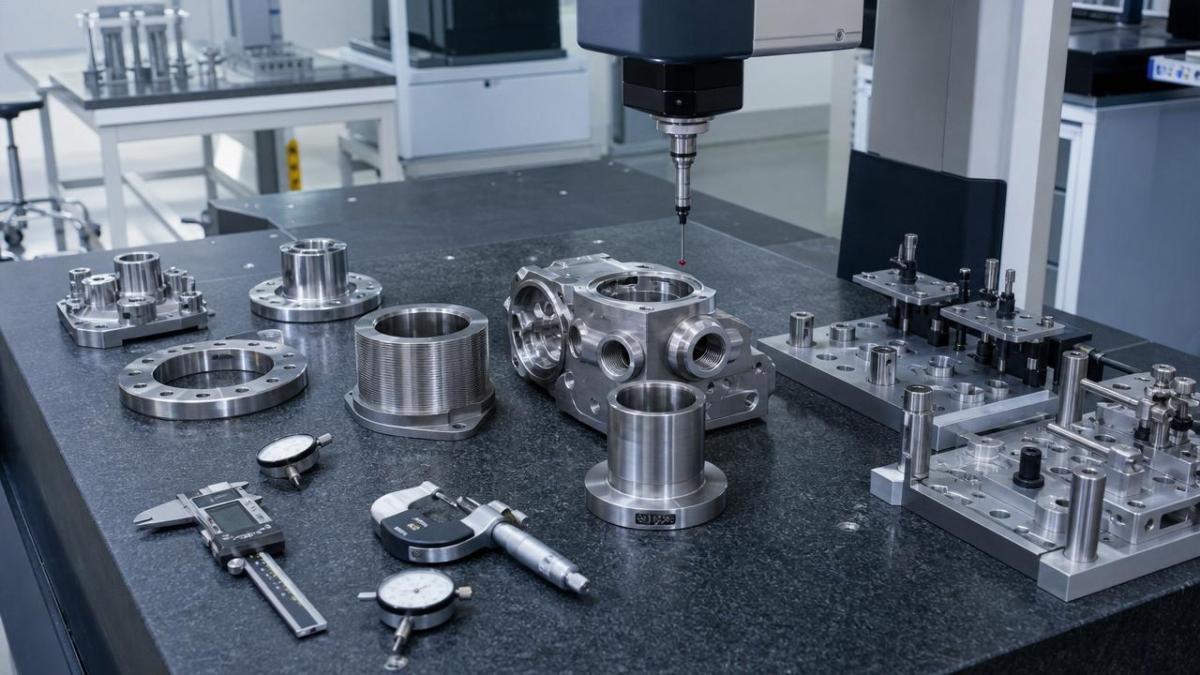
OEMmachinedparts are custom components manufactured to match an original equipment design, interface, and performance requirement.
Their value depends on more than material grade, surface finish, or visible geometry.
The real risk often sits inside dimensional tolerance, geometric tolerance, and repeatability across production batches.
A drawing may specify diameter, flatness, perpendicularity, concentricity, and profile limits.
If these limits are interpreted loosely, OEMmachinedparts may pass incoming inspection but fail during real assembly.
That failure can appear as poor sealing, shaft misalignment, excessive vibration, air leakage, or inconsistent sensor positioning.
Tolerance is not simply a number on a drawing.
It is a cost boundary that controls fit, function, inspection effort, and lifecycle reliability.
Dimensional and geometric exposure
Dimensional tolerance controls size, while geometric tolerance controls shape, orientation, and location.
For OEMmachinedparts, both categories must be reviewed together.
A bore may meet diameter tolerance yet still create alignment issues if its true position is unstable.
A flange may meet thickness tolerance but leak if flatness exceeds the gasket compression window.
These issues increase adjustment time and reduce confidence in batch consistency.
Industry Signals Behind Rising Assembly Costs
High-spec industrial systems now operate with narrower performance margins and stricter documentation expectations.
Cleanroom airflow modules, precision chillers, UPW skids, and containment equipment depend on reliable mechanical interfaces.
When OEMmachinedparts vary between lots, downstream teams compensate through sorting, shimming, polishing, or manual adjustment.
Those actions rarely appear in the quoted unit price.
They appear later as labor variance, missed shipments, nonconformance reports, and field service events.
OEMmachinedparts used in regulated or validated environments also carry documentation risk.
If measurement records are incomplete, conformity becomes harder to prove during audits or supplier reviews.
This is especially important where ISO 14644, ASHRAE guidance, SEMI practices, or internal validation protocols apply.
How Tolerance Risk Enters the Cost Model
The purchase price of OEMmachinedparts is only one part of the economic picture.
Assembly cost rises when tolerances are specified poorly, inspected inconsistently, or achieved through unstable processes.
The most common hidden driver is tolerance stack-up.
Each part may remain within print, yet the assembled system may exceed its functional clearance window.
This creates costly debate because no single component may appear clearly defective.
Key cost pathways
- Rework caused by tight or loose fits.
- Inspection expansion after repeated nonconformance.
- Production pauses while root cause is investigated.
- Expedited freight for replacement OEMmachinedparts.
- Field repair when tolerance issues escape assembly.
Surface finish also affects cost, even when dimensions look correct.
Rough sealing faces can damage elastomers or create micro-leak paths in fluid systems.
Sharp edges can shed particles, which is unacceptable near cleanroom airflow or ultra-pure water circuits.
Therefore, OEMmachinedparts should be evaluated by function, not by isolated dimensions alone.
Typical Application Areas and Tolerance Priorities
Tolerance priorities change by application environment.
A bracket, manifold, impeller hub, and sensor mount may each demand different controls.
The table below summarizes common industrial scenarios for OEMmachinedparts and their main risk focus.
In each setting, OEMmachinedparts influence more than mechanical fit.
They affect contamination control, airflow stability, process purity, biosafety performance, and digital monitoring accuracy.
The best tolerance strategy starts from the assembly function and works backward to the drawing.
Supplier Controls That Reduce Tolerance Failure
Reliable OEMmachinedparts require a controlled production system, not only skilled machining.
Capability depends on equipment condition, fixture design, tool wear management, inspection planning, and change control.
A supplier may produce acceptable samples but struggle during repeat production.
This is why first article approval should not replace process capability review.
Controls to verify before release
- Confirm critical-to-function dimensions on the drawing.
- Review GD&T interpretation with actual assembly references.
- Require calibrated measurement equipment and traceable records.
- Ask for capability data on repeated OEMmachinedparts features.
- Define acceptable deburring, cleaning, and packaging conditions.
- Control material substitutions and machining route changes.
Inspection should match the risk profile of the component.
CMM reports may be essential for complex geometry, while gauges may suit repetitive bore or slot checks.
For OEMmachinedparts in sealing or rotating applications, functional testing can reveal problems missed by dimensional inspection.
Practical Specification and Review Guidance
Overly tight tolerances increase machining cost without always improving assembly quality.
Overly loose tolerances reduce purchase price but shift cost into rework and troubleshooting.
A balanced specification assigns tight limits only where function demands them.
Non-critical features should use practical general tolerances that reflect manufacturing reality.
Recommended review sequence
- Map each OEMmachinedparts interface to its assembly function.
- Identify tolerance stack-up across mating components.
- Separate cosmetic features from safety, sealing, or alignment features.
- Define inspection frequency for critical dimensions.
- Set escalation rules for drift, deviation, and corrective action.
Drawings should avoid ambiguous notes such as “make to fit” or “typical unless stated.”
Ambiguity creates inconsistent interpretation between engineering, machining, inspection, and assembly.
For OEMmachinedparts with repeated orders, revision control is equally important.
A small drawing update can invalidate old fixtures, gauges, programs, or inspection templates.
Assembly Economics and Total Cost of Ownership
Total cost of ownership includes quotation price, inspection burden, line performance, scrap, warranty, and supplier management effort.
OEMmachinedparts with stable tolerances can reduce these indirect costs.
They support predictable build time, cleaner validation records, and fewer emergency engineering interventions.
For advanced environmental systems, this stability has strategic value.
A chilled-water module, containment door, or UPW manifold cannot be judged only by component price.
Its value depends on how consistently it supports system-level performance.
When OEMmachinedparts reduce uncertainty, they also reduce schedule risk and quality dispute exposure.
Action Steps for Better Sourcing Decisions
Start by reviewing existing nonconformance data and assembly pain points.
Then connect each issue to a drawing feature, process control, or inspection method.
This evidence-based approach prevents tolerance discussions from becoming opinion-driven negotiations.
For new OEMmachinedparts, build a release checklist before awarding volume production.
- Confirm critical features and acceptance criteria.
- Request first article reports with measurement traceability.
- Review process capability for high-risk dimensions.
- Validate packaging for cleanliness and damage prevention.
- Define response timing for deviations and corrective actions.
The next step is to compare suppliers using total assembly impact, not unit price alone.
Strong OEMmachinedparts sourcing evaluates tolerance discipline, documentation quality, and repeatability across production lots.
That discipline protects build schedules, system reliability, and long-term operating cost.
Before releasing the next order, align drawings, inspection plans, and supplier controls around real assembly risk.
That single step can turn OEMmachinedparts from a hidden cost driver into a stable performance asset.
Get weekly intelligence in your inbox.
No noise. No sponsored content. Pure intelligence.
 Oct 21, 2026How often is cleanroom certification required under ISO 14644-2?Cleanroom Certification is generally recommended annually under ISO 14644-2. Learn when risk-based extensions apply and which changes trigger earlier testing to plan with confidence.
 Oct 21, 2026FASEB Comments on NIH Draft Policy for Research Involving BiohazardsFASEB comments on NIH’s draft biohazard research policy call for risk-based biosafety oversight. Explore potential implications for laboratories, suppliers, and compliance teams.
 Oct 20, 2026How to disinfect ultrasound machines without damaging surfacesLearn how to disinfect ultrasoundmachines without surface damage. Explore compatible products, wet contact times, and probe care to protect patients and equipment.
 Oct 20, 2026Ultrapure Water in Semiconductor Manufacturing: Reuse and Quality Control InsightsExplore ultrapure water reuse in semiconductor manufacturing, key UPW quality benchmarks and analytical insights to help evaluate suppliers and protect process purity.
 Oct 19, 2026How cooling affects warpage in injection-molded consumer electronics housingsOptimize plastic injection molding for consumer electronics with cooling strategies to reduce housing warpage and improve assembly fit. Discover practical checks for stable, efficient production.
 Oct 18, 2026Can air leaks prevent a dehumidifier from holding its target dew point?Why can't our dehumidifier maintain the target dew point? Discover how air leaks increase moisture loads, spot hidden faults, and find practical fixes to restore reliable dew-point control.
 Oct 17, 2026How semiconductor process water treatment removes trace organicsSee how semiconductor process water treatment removes trace organics with RO, UV oxidation, and polishing. Learn how TOC monitoring helps verify purity and pinpoint contamination.
 Oct 16, 2026How to choose ultra pure water piping materials to limit leachingChoose ultra pure water piping with confidence. Compare PVDF, PFA, and stainless steel, assess leaching risks, and learn how to qualify your system for reliable purity.
 Oct 15, 2026How to size a skid-mounted deionized water system for peak demandCompare deionized water systems skid configurations for peak demand. Learn how to balance production, storage, and pump capacity to prevent shortages and avoid costly oversizing.
 Oct 14, 2026When is collaborative laboratory robotics suitable for sample sorting?Explore when collaborative laboratory robotics suits sample sorting. Discover key checks for safety, traceability, container compatibility, and throughput before choosing your solution.
 Oct 13, 2026How sandwich panel joints affect airtightness in cleanroom systemsCleanroom Systems sandwich panels need reliable joints for airtightness. Discover how gaskets, sealants, and testing help reduce leakage and protect cleanroom pressure control.
 Oct 12, 2026How to verify USP compliance for ultra pure water systemsUltra Pure Water Systems USP compliance: learn how to verify water quality, sampling, sanitization, trends, and validation controls at every point of use.
 Oct 11, 2026How tight temperature control prevents cleanroom process driftCleanroom process temperature control systems prevent costly drift by stabilizing critical conditions, improving repeatability, and protecting sensitive production workflows.
 Oct 10, 2026When does organic contaminant removal require TOC treatment?Organic contaminant removal requires TOC treatment when dissolved organics threaten product quality, equipment reliability, or process control. Learn how to assess risks and choose the right solution.
 Oct 08, 2026What affects lead times for sheet metal bending services in Canada?Sheet metal bending services Canada: discover how material supply, tooling, tolerances, finishing, documentation, and freight affect lead times for reliable project delivery.
 Oct 07, 2026How HVAC design for semiconductor fabs prevents airborne contaminationHVAC design for semiconductor fabs prevents airborne contamination through advanced filtration, pressure cascades, airflow control, and real-time monitoring. Explore key strategies for cleaner, more reliable wafer production.
 Oct 06, 2026How photovoltaic modules waterproof technology prevents moisture damagephotovoltaic modules waterproof technology prevents moisture damage with durable seals, drainage, and junction-box protection. Explore practical selection and testing insights.
 Oct 05, 2026How ISO 14644 Europe requirements affect cleanroom qualificationISO 14644 Europe requirements shape cleanroom qualification, from particle classification and recovery testing to monitoring, GMP alignment, and change control.
 Oct 04, 2026How to assess a pharmaceutical cleanroom solutions supplier’s ISO capabilityPharmaceutical Cleanroom Solutions supplier assessment guide: evaluate ISO 14644 capability, validation evidence, airflow design, documentation, and long-term GMP readiness.
 Oct 03, 2026What EU standards govern the design of BSL-3 laboratories in Europe?BSL-3 laboratories Europe: explore EU directives, EN standards, HVAC containment, commissioning, and practical design strategies for compliant, resilient high-containment facilities.
 Oct 02, 2026How EN 1822 defines HEPA filtration efficiency for cleanroomsHEPA filtration EN 1822 explained: learn how MPPS testing, local leakage limits, and filter classes support reliable cleanroom decisions.
 Oct 01, 2026How pharmaceutical process water systems control microbial riskProcess water systems pharmaceutical teams rely on can control microbial risk through hygienic design, monitoring, and validated sanitization. Explore practical compliance strategies.
 Sep 30, 2026When does a negative pressure laboratory need BSL-3 containment?Negative pressure laboratory or BSL-3? Discover the risk factors, engineering controls, and containment requirements needed for safe, compliant laboratory planning.
 Sep 29, 2026How to evaluate a TOC-zero water treatment supplier for UPW systemsChoose a TOC-zero water treatment supplier with confidence. Compare UPW performance, monitoring, validation, materials, service capability, and lifecycle cost.
 Sep 28, 2026What drives sustainable cooling cost in high-precision facilities?Sustainable cooling cost in high-precision facilities depends on thermal stability, energy, water, controls, and resilience. Explore smarter lifecycle strategies.
 Sep 27, 2026How to compare freight forwarding services for time-critical shipmentsCompare freight forwarding services for time-critical shipments with practical insights on routing, customs, visibility, specialized handling, and contingency planning.
 Sep 26, 2026How environmental integrity in laboratories supports reliable test resultsEnvironmental Integrity in laboratories safeguards samples, instruments, and staff. Discover practical controls for contamination, monitoring, and reliable test results.