Industrial Climate Control Standards: How to Judge Real Compliance
Industrial Climate Control standards can look impressive on paper, but real compliance is proven through measurable performance, traceable documentation, and alignment with global benchmarks. For business evaluators comparing suppliers, facilities, or upgrade plans, understanding how to distinguish certified claims from operational reality is essential to reducing risk, protecting investment, and ensuring long-term environmental and production stability.
In advanced manufacturing, pharmaceutical production, biosafety laboratories, precision electronics, and other high-control environments, climate performance is not a background utility. It directly affects yield, contamination rates, uptime, audit readiness, and energy intensity. A temperature deviation of even ±0.5°C may be acceptable in one facility and unacceptable in another; in certain high-spec spaces, the control band can narrow toward ±0.01°C. That is why business evaluation teams need more than a certificate list. They need a practical framework to judge whether Industrial Climate Control standards are being met in daily operation, during load changes, and across the full lifecycle of the system.
For organizations using benchmarking references such as G-ICE, the focus is clear: compare equipment, controls, monitoring, and documentation against international expectations such as ISO 14644, ASHRAE guidance, and relevant SEMI criteria, then test whether the installed environment actually performs to specification. The following guide is designed for commercial assessors who must evaluate suppliers, retrofit proposals, cleanroom infrastructure, and long-term compliance risk.
What Real Compliance Means in Industrial Climate Control
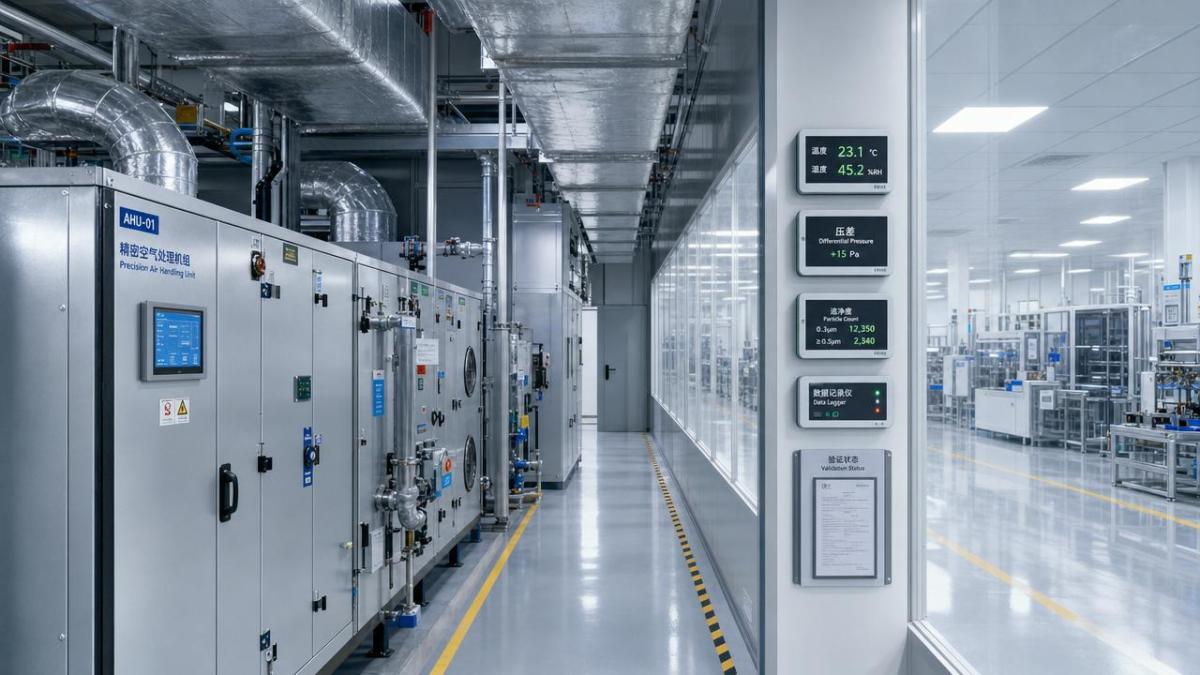
A compliant industrial climate control system is not defined by brochures, brand reputation, or a one-time commissioning report alone. Real compliance means the facility can repeatedly maintain environmental parameters within a defined range under actual process conditions. These parameters usually include temperature, relative humidity, differential pressure, particle concentration, airflow volume, air change rate, filtration efficiency, recovery time, and alarm response.
For business evaluators, the first distinction is between design compliance and operational compliance. Design compliance refers to whether the proposed system matches the target standard on paper. Operational compliance asks whether the system still meets those targets after 6 months, 12 months, or 24 months of production, maintenance cycles, filter loading, occupancy changes, and seasonal shifts. The second question is often where financial risk appears.
Key Proof Points Beyond Certificates
When reviewing Industrial Climate Control standards, evaluators should look for at least 5 categories of proof: validated design criteria, commissioning and requalification records, calibrated monitoring data, maintenance traceability, and deviation management. If a supplier can only show a certificate but not trend logs, balancing reports, or recalibration intervals, the compliance picture is incomplete.
Core documents that should be available
- Basis of design with target setpoints, tolerances, and process load assumptions
- Airflow balancing and pressure cascade reports
- Temperature and humidity trend data covering at least 30–90 days
- Filter integrity, replacement, and differential pressure records
- Sensor calibration logs, often on a 6-month or 12-month cycle
- Alarm history, excursion response, and corrective action records
This documentation matters because climate systems in critical facilities are dynamic. A cleanroom that meets particle counts at low occupancy may fail recovery targets after a shift change. A chilled water loop that holds 20°C at 50% load may drift when process heat spikes by 15% to 20%. Compliance should therefore be verified under representative conditions, not ideal ones.
Design Standard vs. Performance Standard
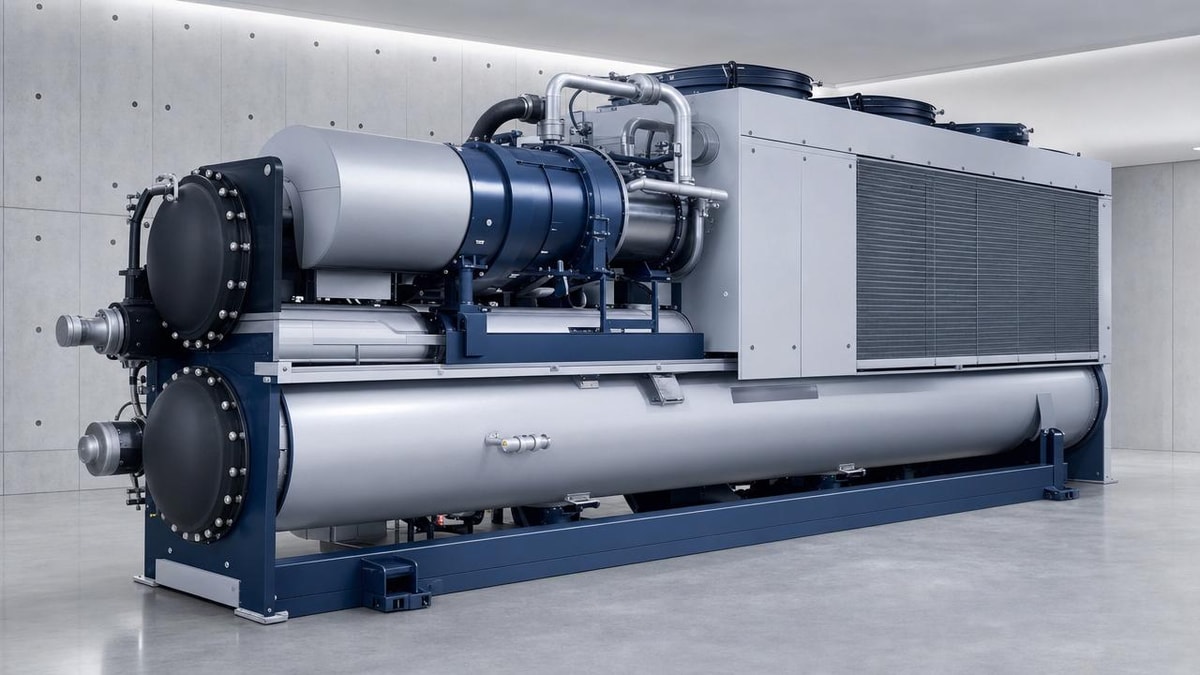
Many procurement teams confuse installed hardware quality with environmental performance. Premium chillers, FFUs, HEPA or ULPA filtration, and advanced building management systems are important, but they are only enabling assets. The standard that matters commercially is whether the space reaches its required class, thermal stability band, and process continuity target with measurable consistency.
The table below shows a practical way to separate formal claims from real operating evidence when reviewing Industrial Climate Control standards across suppliers or facilities.
The main takeaway is that compliance must be demonstrated across time, load, and documentation depth. For evaluators, the safest decision is rarely the vendor with the longest certificate list. It is usually the one with the clearest performance evidence, the most transparent control logic, and the most disciplined service records.
How Business Evaluators Should Audit Suppliers and Facilities
A practical audit framework helps buyers compare proposals on equal terms. In climate-critical industries, this is especially important because two systems may have similar capital cost but very different lifecycle outcomes over 3–7 years. One may consume 12% to 18% more energy, require more frequent filter changes, or expose operations to longer recovery time after excursions. These differences often become visible only when the evaluation method is structured.
The 4-Layer Evaluation Model
A useful method is to score each supplier or facility across 4 layers: standards alignment, engineering suitability, operational verification, and service resilience. This creates a balanced view between technical compliance and commercial reliability.
- Standards alignment: Does the design reference the correct benchmark set for the application, such as ISO 14644, ASHRAE, SEMI, or biosafety guidance?
- Engineering suitability: Are airflow strategy, thermal loads, filtration stages, control accuracy, and redundancy matched to the process risk?
- Operational verification: Are there FAT, SAT, commissioning, trend logging, and requalification plans with clear acceptance criteria?
- Service resilience: Can the supplier support calibration, emergency response, spare parts, and digital monitoring over 12–36 months?
Questions that reveal weak compliance claims
- What was the peak thermal load assumed in the design, and how was it validated?
- What is the recovery time after a door event or occupancy disturbance?
- How often are sensors recalibrated, and who owns that responsibility?
- What percentage of monitored points are continuously trended rather than spot-checked?
- What are the response times for critical alarms: 15 minutes, 1 hour, or next business day?
These questions are commercially useful because weak suppliers often speak broadly about performance but become vague on thresholds, intervals, and accountability. Strong suppliers are comfortable discussing acceptance ranges, escalation workflows, and specific maintenance frequency.
Red Flags During Proposal Review
In Industrial Climate Control standards assessment, certain proposal patterns should trigger caution. Examples include missing redundancy logic for critical spaces, no explanation of control stability at part load, unclear sensor placement, and no connection between environmental monitoring and alarm management. Another warning sign is when performance guarantees are generic while exclusions are highly specific.
The next table can be used as a commercial screening tool before site visits or contract negotiation.
This kind of matrix helps procurement, operations, and compliance teams speak a common language. Instead of debating brand preference, they can compare evidence quality, response capability, and long-term stability in a measurable format.
Technical Benchmarks That Matter Most in High-Control Environments
The right benchmark depends on the facility type, but a strong evaluation always links environmental targets to process consequences. Semiconductor areas may prioritize particle control, airflow uniformity, and ultra-stable temperature. Pharmaceutical environments may focus more on pressure cascades, humidity control, contamination containment, and audit traceability. Data-driven monitoring is increasingly expected in both cases.
Parameters That Deserve Special Attention
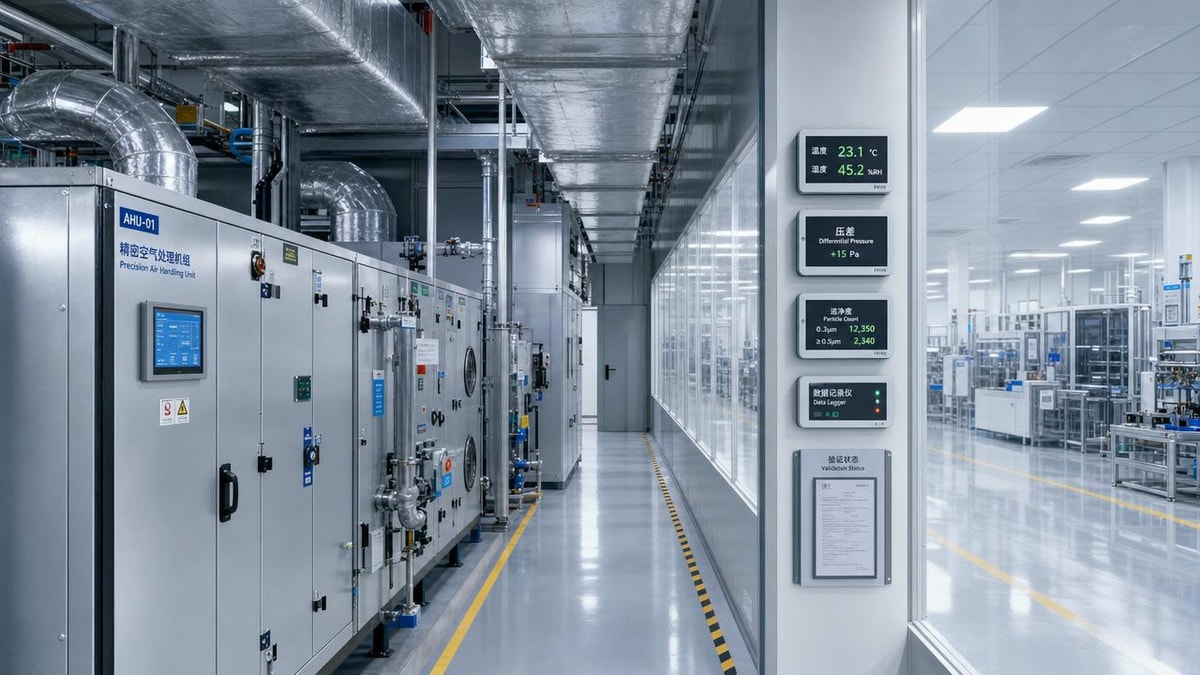
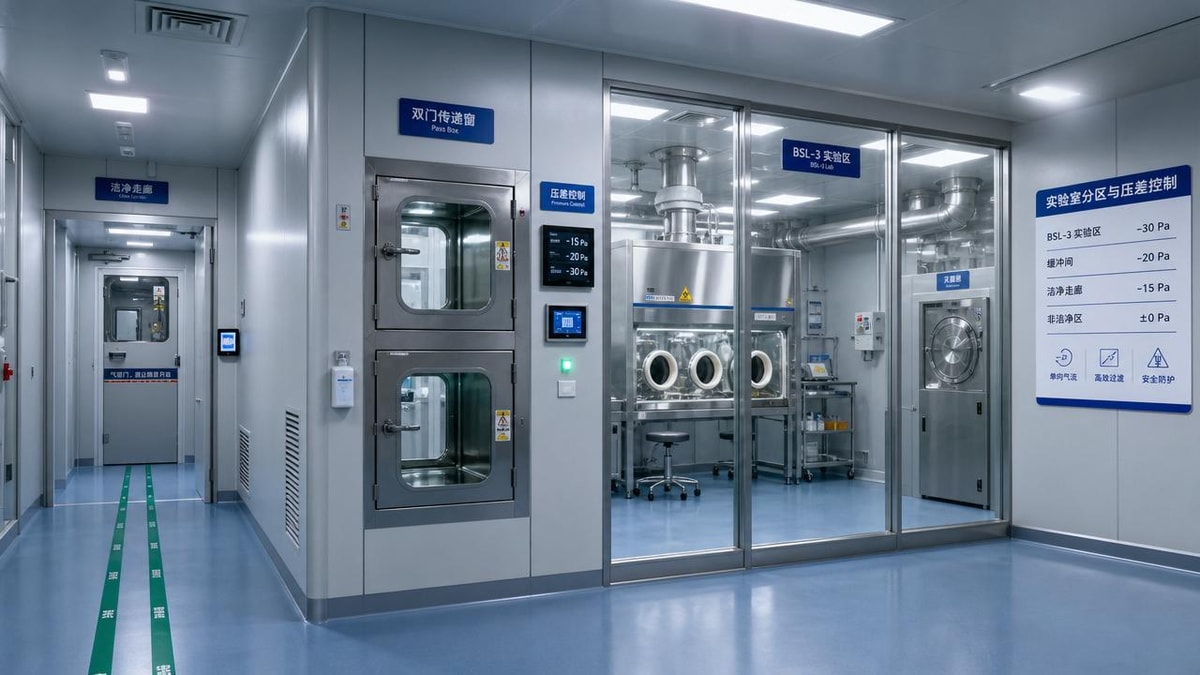
For most industrial applications, 6 parameters deserve close review: temperature stability, relative humidity, pressure differential, particle control, filtration condition, and energy performance. For example, a pressure differential may be designed around 10–15 Pa between adjacent spaces, while a humidity band may be set at 45%–55% RH depending on process sensitivity. The exact figures vary, but the method of proving control should always be clear.
In cleanroom or biosafety-adjacent projects, the evaluator should also review air change strategy, sensor redundancy, and excursion handling. If a system cannot show how it behaves during maintenance bypass, door cycling, or utility interruption, the Industrial Climate Control standards claim is only partial.
Typical evidence package for critical environments
- Commissioning records with pass/fail criteria
- Particle count or room classification results where applicable
- Airflow visualization or balancing confirmation
- BMS or EMS dashboard screenshots with timestamped trends
- Maintenance SOPs and training records for operators
- Defined requalification frequency, often annual or risk-based
Why Digital Monitoring Is Becoming a Compliance Requirement
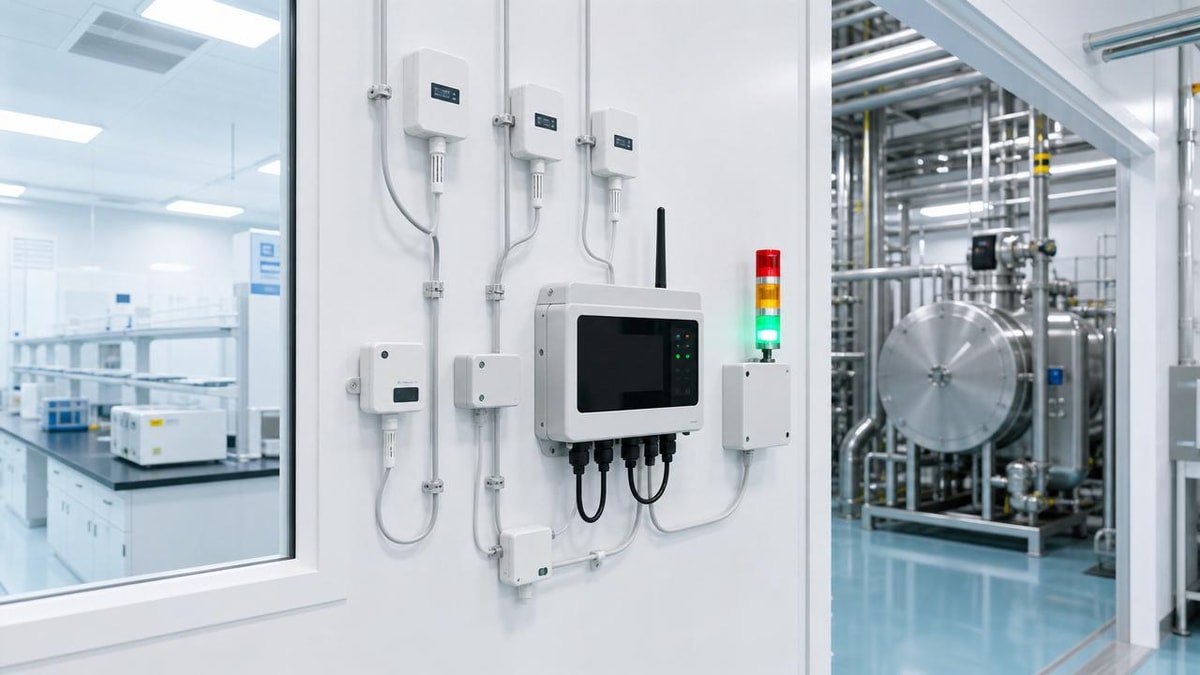
Increasingly, compliance is judged not only by whether a room is controlled, but by whether deviations can be detected, traced, and corrected quickly. Smart environmental monitoring and digital twin logic are moving from a premium feature to a strategic requirement in complex facilities. Continuous monitoring can reduce blind spots compared with manual spot checks and gives evaluators better visibility into seasonal drift, maintenance effects, and recurring alarms.
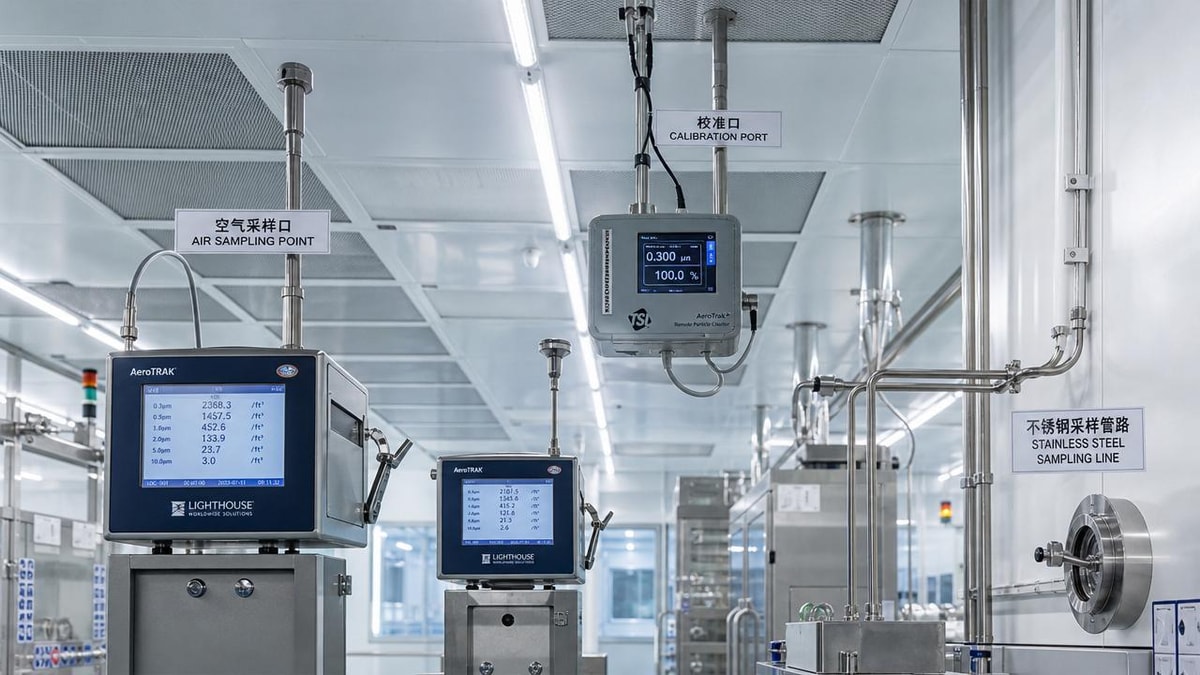
A useful benchmark is whether the system can provide actionable data at the right frequency. In many critical spaces, 1-minute to 5-minute logging intervals are more useful than daily summaries. Over a 12-month period, this creates a robust record for audit defense, root-cause analysis, and CAPEX planning.
Common Mistakes in Commercial Assessments and How to Avoid Them
One common mistake is evaluating only acquisition cost. In industrial climate control, a lower initial price can be offset by higher utility consumption, more frequent recalibration, short filter life, weaker alarm integration, or slower support response. Over a 5-year ownership period, these operational costs can materially change supplier value.
Another mistake is assuming that one standard applies equally across all use cases. Industrial Climate Control standards must be interpreted in context. A dry electronics assembly space, a biologics production suite, and a high-risk laboratory do not require identical control architecture. Procurement language should therefore reference application-specific performance criteria rather than generic environmental claims.
Three Practical Ways to Reduce Selection Risk
- Request evidence from comparable operating conditions, not only laboratory or factory-test conditions.
- Include a compliance verification schedule at 30 days, 90 days, and 12 months after handover.
- Ask for a documented service scope that covers calibration, parts availability, and escalation timing.
These three steps improve decision quality because they extend compliance review beyond installation day. They also help align engineering, finance, QA, and ESG stakeholders around measurable operational outcomes.
FAQ for Business Evaluators
How often should compliance be rechecked?
The frequency depends on criticality, but annual requalification is common for many controlled spaces. High-risk or highly dynamic environments may require more frequent checks, especially after process changes, layout changes, filter replacement, or control software modification.
Is a monitoring dashboard enough to prove compliance?
No. Dashboards are valuable, but they must be supported by calibrated instruments, traceable records, alarm handling procedures, and formal acceptance criteria. A visual display without verification discipline does not fully support Industrial Climate Control standards claims.
What matters more: hardware brand or control strategy?
Both matter, but control strategy and validation discipline often have greater impact on sustained compliance. Strong hardware installed without proper balancing, sequencing, sensor placement, and maintenance control may still underperform.
Judging real compliance requires a shift from marketing language to operating evidence. The most reliable assessments combine standards mapping, technical validation, trend analysis, service readiness, and risk-based requalification. For organizations benchmarking industrial environments against demanding global references, that approach protects both capital investment and production continuity.
If you are reviewing suppliers, planning a facility upgrade, or comparing environmental control strategies for high-spec operations, now is the right time to turn Industrial Climate Control standards into a measurable decision framework. Contact us to discuss your evaluation criteria, request a tailored compliance review, or explore more solutions for cleanroom, HVAC, UPW, biosafety, and smart monitoring environments.
Get weekly intelligence in your inbox.
No noise. No sponsored content. Pure intelligence.
 May 06, 2026Magnetic Levitation Chillers vs Conventional Systems: Is the Energy Payback Real?Magnetic levitation chillers: discover when energy savings, lower maintenance, and part-load efficiency truly deliver ROI over conventional systems.
 May 06, 2026High-Tech Industrial Complex Design: Where Early Planning Saves the MostHigh-Tech Industrial Complex design starts delivering value in early planning—cutting lifecycle costs, improving compliance, and boosting uptime through smarter zoning, utilities, and monitoring.
 May 06, 2026Ultra-Pure Water Treatment Certification: What to Check Before ApprovalUltra-Pure Water Treatment certification: learn what financial approvers must verify before approval, from compliance and performance data to lifecycle cost and supplier accountability.
 May 06, 2026Industrial Climate Control Standards: How to Judge Real ComplianceIndustrial Climate Control standards explained: learn how to verify real compliance through performance data, documentation, and audits to reduce risk and choose the right supplier.
 May 06, 2026High-Performance Thermodynamic Hardware Maintenance Without Unplanned DowntimeHigh-Performance Thermodynamic Hardware maintenance strategies to reduce downtime, protect precision, and improve compliance with proactive, data-driven service planning.
 May 06, 2026Biosafety Containment for High-Risk Lab: Common Design Mistakes to AvoidBiosafety Containment for high-risk lab projects often fail at the design stage. Discover the most common mistakes, key review checkpoints, and practical ways to improve safety, compliance, and workflow.
 May 06, 2026Smart Environmental Monitoring for Data Center: Key Features Worth ComparingSmart Environmental Monitoring for data center buyers: compare alerts, accuracy, integration, scalability, and lifecycle cost to choose a platform that protects uptime and delivers long-term value.
 May 06, 2026ISO Class 1 Cleanroom for Pharmaceutical: When Does It Make Sense?ISO Class 1 Cleanroom for pharmaceutical projects can boost contamination control—but is the cost justified? Explore when ultra-clean design makes sense, key risks, and smarter alternatives.
 May 06, 2026Cleanroom Architecture for Quantum Computing: Design Choices That Matter EarlyCleanroom Architecture for quantum computing starts with early design choices that shape vibration, thermal stability, contamination control, and scalable performance—learn what to get right first.
 May 06, 2026Sub-Micron Contamination Measurement: What Really Affects Accuracy?Sub-Micron Contamination measurement accuracy depends on airflow, calibration, sampling points, and protocol discipline. Learn what truly affects trustworthy data.
 May 05, 2026High-Tech Industrial Complex Requirements: What to Lock In Before Site PlanningHigh-Tech Industrial Complex requirements must be locked in before site planning. Learn what to define first to reduce risk, control costs, ensure compliance, and build resilient advanced facilities.
 May 05, 2026Ultra-Pure Water Treatment Equipment: Key Signs of Reliable Long-Term PerformanceUltra-Pure Water Treatment equipment that delivers stable purity, real-time monitoring, and long-term compliance. Learn the key signs of reliable performance before you invest.
 May 05, 2026How to Judge a Biosafety Containment Supplier Beyond the Basic QuoteBiosafety Containment supplier selection should go beyond price. Learn how to compare compliance, engineering, validation, and service to reduce risk and lifecycle cost.
 May 05, 2026Smart Environmental Monitoring System: What to Check Before Daily UseSmart Environmental Monitoring system daily-use guide: learn what to check before startup, from sensor health and alarms to data integrity and compliance, to keep operations reliable.
 May 05, 2026High-Performance Thermodynamic Hardware Specifications That Matter Before ApprovalHigh-Performance Thermodynamic Hardware specifications explained for pre-approval review—compare stability, compliance, efficiency, and risk factors to make smarter investment decisions.
 May 05, 2026Precision Temperature Control for Semiconductor: Where Stability Pays Off MostPrecision Temperature Control for semiconductor shows where thermal stability protects yield, uptime, and process accuracy most—discover the high-impact zones and priorities for smarter fab performance.
 May 05, 2026Industrial Climate Control Solutions: When Energy Savings Start to MatterIndustrial Climate Control solutions help businesses cut energy costs, protect uptime, and improve compliance. Discover where smart climate strategies deliver the highest ROI.
 May 05, 2026Cleanroom Architecture Design Mistakes That Become Expensive LaterCleanroom Architecture design mistakes often stay hidden until they trigger contamination, retrofit costs, and compliance delays. Discover the most expensive planning errors and how to avoid them early.
 May 05, 2026How to Compare Precision Temperature Control Manufacturers Without Missing Critical SpecsPrecision Temperature Control manufacturer comparison guide: learn how to verify stability, response, compliance, and lifecycle support to avoid costly spec gaps and choose with confidence.
 May 05, 2026ISO Class 1 Cleanroom Price: What Actually Drives the Total Cost?ISO Class 1 Cleanroom price depends on far more than equipment alone. Discover the real cost drivers, hidden budget risks, and smart ways to control lifecycle spend.
 May 05, 2026China Customs Launches UPW/TOC/ZLD Export Compliance PortalUPW/TOC/ZLD Export Compliance Portal launched by China Customs — verify supplier certifications (CNAS, FDA, DIN EN, carbon reports) in real time. Essential for global importers & EPC firms.
 May 05, 2026BIS Expands ENC Exemption to Edge AI Air Monitoring SensorsBIS expands ENC exemption to Edge AI air monitoring sensors — enabling license-free exports for IIoT devices with on-device AMC detection & particle prediction, if firmware excludes unauthorized cryptography.
 May 05, 20262026 Foshan Tanzhou Auto Show Adopts Bio-Barrier SystemBio-Barrier system debuts at 2026 Foshan Tanzhou Auto Show—real-time bioaerosol control for NEV paint shops, TÜV-certified & EU supply chain ready.
 May 05, 2026Japan’s METI Launches ±0.01°C Control Device Localization Plan±0.01°C control device localization: METI’s new Japan policy opens tariff cuts & fast-track JET certification for compliant Chinese modules — act now.
 May 05, 2026ASEAN UPW Fast-Track Guidelines Effective June 2026ASEAN UPW Fast-Track Guidelines launch June 2026: Streamline electronic-grade ultra-pure water imports with 48-hour customs clearance — if TOC ≤0.2 ppb is certified by dual-accredited labs.
 May 05, 20262026 China Bike Expo Enforces IIoT Air MonitoringIIoT Air Monitoring is now mandatory at 2026 China Bike Expo — discover how this groundbreaking requirement impacts e-bike, semiconductor & medical device manufacturers.
 May 05, 2026DIN EN 16798-1:2026 Takes Effect in Germany for Maglev ChillersDIN EN 16798-1:2026 now mandates carbon footprint & thermal recovery reports for Maglev Chillers entering Germany — act now to avoid customs delays and secure EU market access.