How to Compare Precision Temperature Control Manufacturers Without Missing Critical Specs
Choosing a Precision Temperature Control manufacturer is not just about price or lead time—it requires a close look at stability, control accuracy, compliance, and long-term reliability. For technical evaluation teams, missing a critical specification can lead to performance gaps, validation risks, and costly redesigns. This guide outlines how to compare manufacturers systematically and identify the metrics that truly matter.
In high-spec environments such as semiconductor fabs, biopharma suites, advanced laboratories, and precision process plants, thermal deviation is rarely an isolated issue. A shift of even ±0.1°C can affect process repeatability, while tighter applications may require ±0.01°C control across 24/7 duty cycles. That is why technical evaluation teams need a comparison framework that goes beyond brochure claims and focuses on measurable engineering capability.
When reviewing a Precision Temperature Control manufacturer, the most useful approach is to compare control architecture, thermal uniformity, load response, materials compatibility, serviceability, and standards alignment as a complete package. For institutions following benchmark-driven selection models similar to those used in G-ICE-aligned infrastructure programs, the goal is not simply buying equipment. It is reducing lifecycle risk across validation, operation, expansion, and compliance.
Define the Application Before Comparing Manufacturers
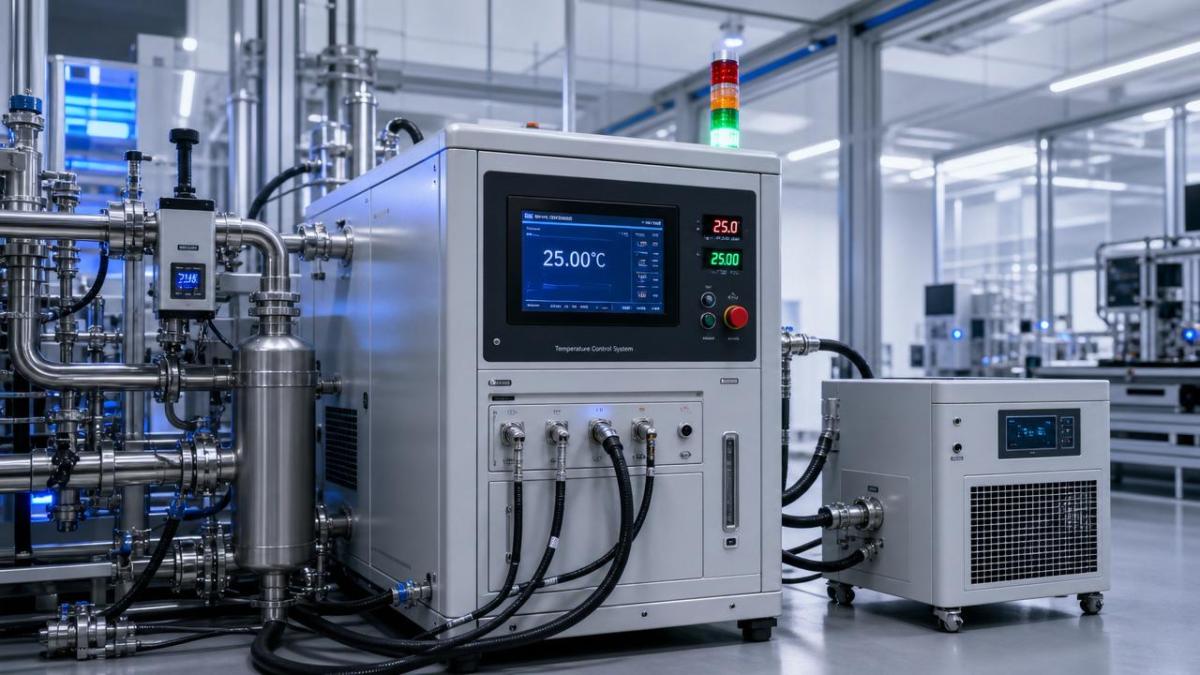
A Precision Temperature Control manufacturer should always be assessed against the actual process envelope. The same supplier may perform well in one duty profile and poorly in another. A recirculating chiller for a laser tool, an air-handling thermal loop for a cleanroom, and a jacketed process skid for pharmaceutical production all have different tolerances, heat loads, and contamination constraints.
Before sending an RFQ, technical teams should lock down at least 6 baseline variables: target temperature range, allowable deviation, ambient conditions, heat load profile, ramp-rate requirement, and facility utility constraints. In many industrial projects, missing even 1 of these variables leads to oversized systems, unstable PID tuning, or acceptance-test disputes during FAT or SAT.
Core application questions to answer first
- What temperature range is required, such as 5°C to 25°C or -20°C to 80°C?
- What control stability is necessary: ±0.5°C, ±0.1°C, or ±0.01°C?
- Is the load steady, cyclical, or subject to short spikes every 10 to 30 seconds?
- Does the environment require ISO cleanroom compatibility, corrosion resistance, or low-vibration operation?
- Will the unit support a single tool, a loop serving 3 to 12 points, or a scalable modular plant?
Why context changes the evaluation outcome
Two manufacturers may both claim “high precision,” yet one may specify ±0.05°C at a stable 50% load, while another maintains ±0.05°C across 20% to 90% load variation and 18°C to 30°C ambient conditions. These are not equivalent capabilities. Technical evaluators should insist on performance curves, not summary claims.
In regulated production, context also includes documentation depth. A suitable Precision Temperature Control manufacturer may need to provide calibration records, sensor traceability, wiring drawings, P&IDs, alarm logic, and recommended IQ/OQ support documentation. This becomes critical in pharmaceutical, biologics, and advanced research environments where system validation can take 2 to 6 weeks.
Compare the Technical Specifications That Actually Drive Performance
The most common mistake in comparing a Precision Temperature Control manufacturer is focusing on nominal cooling or heating capacity without checking the conditions under which that capacity is achieved. A 10 kW unit rated at one inlet temperature and ambient condition may deliver significantly less at another. Always compare like for like, including fluid type, flow rate, setpoint, and environmental conditions.
The critical specification categories
The table below highlights the specification areas that technical teams should score during supplier comparison. It is designed for industrial and high-performance environmental control applications where accuracy, repeatability, and maintainability matter more than headline capacity alone.
A capable Precision Temperature Control manufacturer should be able to explain each parameter with test conditions and control logic. If the supplier cannot show whether stability is measured at the outlet, process return, chamber air point, or average loop condition, the number has limited procurement value.
Check part-load behavior, not just full-load ratings
Many real-world systems operate at 40% to 70% load for most of the year. Part-load control quality often reveals more than full-load capacity. Ask for trend logs over 8 to 24 hours, especially where the process has intermittent operation, tool standby phases, or frequent door openings in controlled environments.
Useful technical evidence to request
- Load-step test data with time stamps
- Temperature trend charts at 1-second to 10-second sampling intervals
- Control loop description including PID or adaptive logic strategy
- Sensor calibration method and recalibration recommendations every 6 or 12 months
- Utility consumption at 25%, 50%, 75%, and 100% load
Evaluate Compliance, Validation Support, and Documentation Depth
For technical evaluation teams, documentation quality is often the dividing line between a merely functional vendor and a reliable Precision Temperature Control manufacturer. In high-consequence facilities, thermal systems must align with site protocols, internal engineering standards, and external frameworks such as ISO 14644, ASHRAE guidance, SEMI-related expectations, or GMP-oriented validation practices depending on the application.
This does not mean every manufacturer needs every certification. It means the supplier should clearly state which standards their design, testing, materials, and controls are built around. A missing document package can delay commissioning by 1 to 3 weeks, even when equipment arrives on time.
Documentation checkpoints during technical review
- General arrangement drawings and utility connection details
- Electrical schematics, alarms, interlocks, and BMS or PLC communication points
- Material contact list for process fluids, including seal and tubing compatibility
- Factory test procedures and acceptance criteria
- Recommended spare parts for the first 12 to 24 months of operation
- Maintenance intervals for filters, pumps, compressors, valves, and sensors
Questions that reveal real compliance maturity
Ask how the Precision Temperature Control manufacturer handles change control after design freeze. If a sensor brand, valve type, or controller firmware changes mid-project, will they issue revised drawings and test references? This matters especially in validated sites, where undocumented substitutions can trigger re-review or partial requalification.
Also ask whether FAT can be witnessed on-site or remotely, what data is logged during FAT, and whether alarm setpoints are verified under simulated fault conditions. A strong supplier typically offers 3-level test evidence: component verification, integrated control test, and performance run test.
Assess Service Capability, Scalability, and Total Lifecycle Risk
Selecting a Precision Temperature Control manufacturer on technical specs alone is not enough. The operating model behind the equipment matters just as much. In mission-critical facilities, the real cost often appears after startup: delayed parts replacement, limited field support, poor fault diagnostics, or a control platform that cannot integrate with site monitoring systems.
Evaluation teams should compare lifecycle support across at least 5 areas: commissioning assistance, preventive maintenance planning, spare parts lead time, remote diagnostics, and upgrade path. For example, a lower-priced system with 10-week spare lead times may create more production risk than a higher-priced system supported locally within 48 to 72 hours.
A practical supplier comparison matrix
The matrix below can help procurement and engineering teams score each Precision Temperature Control manufacturer using weighted criteria. It is especially useful when comparing 3 to 5 shortlisted vendors for a new facility or retrofit program.
This comparison method helps teams avoid overemphasizing purchase price. In environments where process interruption can affect product quality, utility efficiency, or contamination control, lifecycle readiness should carry significant weight alongside thermal precision.
Look for signs of engineering depth
A robust Precision Temperature Control manufacturer usually demonstrates engineering depth in how they discuss failure modes. Ask what happens if a sensor drifts, a pump loses head, a valve sticks, or ambient temperature rises above design by 5°C. Strong suppliers explain fallback logic, alarms, redundancy options, and safe operating envelopes in concrete terms.
If your facility is planning digital twin monitoring or centralized environmental oversight, confirm that the temperature control system can export clean operational data. Trendability, alarm history, and data granularity matter for predictive maintenance and continuous improvement programs.
Common Comparison Mistakes Technical Teams Should Avoid
Even experienced teams can miss critical differences when comparing suppliers. The problem is rarely lack of effort. It is usually that quotations arrive in inconsistent formats, with different assumptions hidden in footnotes or appendices. A disciplined review process reduces that risk.
Five frequent mistakes
- Comparing capacity without matching fluid temperature, ambient condition, and load profile
- Accepting control accuracy claims without test conditions or trend evidence
- Ignoring documentation quality until FAT or SAT preparation begins
- Underestimating spare parts availability and field response times
- Choosing a closed control platform that limits plant integration or future expansion
A simple 4-step review workflow
First, normalize all vendor submissions into one comparison sheet. Second, eliminate any supplier that cannot state test conditions clearly. Third, score technical fit, documentation readiness, and lifecycle support separately. Fourth, hold a final clarification round focused on exceptions, deviations, and post-install support commitments.
This workflow is especially effective when evaluating a Precision Temperature Control manufacturer for cleanrooms, thermal process loops, laboratory systems, or facility-scale environmental control where performance and compliance overlap.
Final Selection Guidance for High-Performance Industrial Environments
The best Precision Temperature Control manufacturer is the one that can prove stable performance under your exact operating conditions, support your documentation and compliance needs, and remain serviceable over the system’s full lifecycle. For technical evaluation teams, the winning supplier is not simply the lowest bidder or the fastest shipper. It is the one with the clearest evidence, the fewest hidden assumptions, and the strongest fit to process risk.
In complex sectors shaped by strict environmental control, contamination management, and thermal repeatability, a structured comparison approach protects both capital investment and operational continuity. If you are reviewing manufacturers for cleanroom thermal management, process cooling, high-stability laboratory control, or advanced industrial HVAC integration, a benchmark-led evaluation will produce better long-term results.
To move from shortlisting to specification-level decision making, gather your process parameters, utility conditions, control requirements, and documentation expectations into one technical brief. Then engage suppliers with targeted questions instead of generic RFQs. If you need help comparing options, refining evaluation criteria, or building a tailored procurement framework, contact us to get a customized solution and explore more precision environmental control strategies.
Get weekly intelligence in your inbox.
No noise. No sponsored content. Pure intelligence.
 May 05, 2026High-Tech Industrial Complex Requirements: What to Lock In Before Site PlanningHigh-Tech Industrial Complex requirements must be locked in before site planning. Learn what to define first to reduce risk, control costs, ensure compliance, and build resilient advanced facilities.
 May 05, 2026Ultra-Pure Water Treatment Equipment: Key Signs of Reliable Long-Term PerformanceUltra-Pure Water Treatment equipment that delivers stable purity, real-time monitoring, and long-term compliance. Learn the key signs of reliable performance before you invest.
 May 05, 2026How to Judge a Biosafety Containment Supplier Beyond the Basic QuoteBiosafety Containment supplier selection should go beyond price. Learn how to compare compliance, engineering, validation, and service to reduce risk and lifecycle cost.
 May 05, 2026Smart Environmental Monitoring System: What to Check Before Daily UseSmart Environmental Monitoring system daily-use guide: learn what to check before startup, from sensor health and alarms to data integrity and compliance, to keep operations reliable.
 May 05, 2026High-Performance Thermodynamic Hardware Specifications That Matter Before ApprovalHigh-Performance Thermodynamic Hardware specifications explained for pre-approval review—compare stability, compliance, efficiency, and risk factors to make smarter investment decisions.
 May 05, 2026Precision Temperature Control for Semiconductor: Where Stability Pays Off MostPrecision Temperature Control for semiconductor shows where thermal stability protects yield, uptime, and process accuracy most—discover the high-impact zones and priorities for smarter fab performance.
 May 05, 2026Industrial Climate Control Solutions: When Energy Savings Start to MatterIndustrial Climate Control solutions help businesses cut energy costs, protect uptime, and improve compliance. Discover where smart climate strategies deliver the highest ROI.
 May 05, 2026Cleanroom Architecture Design Mistakes That Become Expensive LaterCleanroom Architecture design mistakes often stay hidden until they trigger contamination, retrofit costs, and compliance delays. Discover the most expensive planning errors and how to avoid them early.
 May 05, 2026How to Compare Precision Temperature Control Manufacturers Without Missing Critical SpecsPrecision Temperature Control manufacturer comparison guide: learn how to verify stability, response, compliance, and lifecycle support to avoid costly spec gaps and choose with confidence.
 May 05, 2026ISO Class 1 Cleanroom Price: What Actually Drives the Total Cost?ISO Class 1 Cleanroom price depends on far more than equipment alone. Discover the real cost drivers, hidden budget risks, and smart ways to control lifecycle spend.
 May 05, 2026China Customs Launches UPW/TOC/ZLD Export Compliance PortalUPW/TOC/ZLD Export Compliance Portal launched by China Customs — verify supplier certifications (CNAS, FDA, DIN EN, carbon reports) in real time. Essential for global importers & EPC firms.
 May 05, 2026BIS Expands ENC Exemption to Edge AI Air Monitoring SensorsBIS expands ENC exemption to Edge AI air monitoring sensors — enabling license-free exports for IIoT devices with on-device AMC detection & particle prediction, if firmware excludes unauthorized cryptography.
 May 05, 20262026 Foshan Tanzhou Auto Show Adopts Bio-Barrier SystemBio-Barrier system debuts at 2026 Foshan Tanzhou Auto Show—real-time bioaerosol control for NEV paint shops, TÜV-certified & EU supply chain ready.
 May 05, 2026Japan’s METI Launches ±0.01°C Control Device Localization Plan±0.01°C control device localization: METI’s new Japan policy opens tariff cuts & fast-track JET certification for compliant Chinese modules — act now.
 May 05, 2026ASEAN UPW Fast-Track Guidelines Effective June 2026ASEAN UPW Fast-Track Guidelines launch June 2026: Streamline electronic-grade ultra-pure water imports with 48-hour customs clearance — if TOC ≤0.2 ppb is certified by dual-accredited labs.
 May 05, 20262026 China Bike Expo Enforces IIoT Air MonitoringIIoT Air Monitoring is now mandatory at 2026 China Bike Expo — discover how this groundbreaking requirement impacts e-bike, semiconductor & medical device manufacturers.
 May 05, 2026DIN EN 16798-1:2026 Takes Effect in Germany for Maglev ChillersDIN EN 16798-1:2026 now mandates carbon footprint & thermal recovery reports for Maglev Chillers entering Germany — act now to avoid customs delays and secure EU market access.
") May 05, 2026FDA Updates BSL-3 Lab Inspection Checklist (2026 Revision)FDA's 2026 BSL-3 Lab Inspection Checklist mandates strict UPW system requirements — TOC ≤0.1 ppb & dual-resistivity sensors. Act now to ensure compliance and market access.
May 05, 2026FDA Updates BSL-3 Lab Inspection Checklist (2026 Revision)FDA's 2026 BSL-3 Lab Inspection Checklist mandates strict UPW system requirements — TOC ≤0.1 ppb & dual-resistivity sensors. Act now to ensure compliance and market access. May 05, 20262026 Beijing Initiative Calls for Global ZLD Protocol Mutual RecognitionZero Liquid Discharge (ZLD) mutual recognition is coming: The 2026 Beijing Initiative proposes global protocol alignment for UPW equipment — act now to streamline EU, Mexico & Vietnam exports.
 May 05, 20262026 World Intelligent Industry Expo: ISO Cleanrooms & Digital Twin Lab Standards Launch in TianjinISO cleanrooms & Digital Twin Lab standards launch at 2026 WIIE in Tianjin — discover how these new interoperability benchmarks reshape global smart infrastructure procurement.
 May 04, 2026Regulatory Frameworks Implementation Without Slowing Lab Automation ProjectsRegulatory Frameworks implementation made practical: learn how to align compliance, biosafety, and lab automation early to cut delays, reduce risk, and speed project delivery.
 May 04, 2026SEMI Standards Certification: Key Checks Before Expanding Supplier AccessSEMI Standards certification helps distributors verify supplier compliance, traceability, and channel readiness before expansion. Discover the key checks that reduce risk and protect growth.
 May 04, 2026Semiconductor Cleanroom Standards and the Hidden Cost of Getting Them WrongSemiconductor Cleanroom standards directly impact yield, audit readiness, and operating cost. Discover the hidden risks, key checklist items, and smart evaluation tips before costly mistakes happen.
 May 04, 2026Pharmaceutical Cleanroom Validation: A Practical Sequence for Faster ApprovalPharmaceutical Cleanroom validation made practical: learn a faster, risk-based sequence for testing, documentation, and deviation control to speed approval and improve GMP compliance.
 May 04, 2026ESG Compliance Reporting: Where Costs Rise and Where Value Becomes MeasurableESG Compliance reporting reveals where compliance costs erode margins and where measurable value emerges through audit-ready data, stronger governance, lower risk, and smarter capital decisions.
 May 04, 2026ASHRAE Standards Guidelines for Stable Thermal Logic in Sensitive FacilitiesASHRAE Standards guidelines help technical evaluators ensure thermal stability, compliance, and resilience in sensitive facilities. Discover practical benchmarking insights.
 May 04, 2026Fan Filter Units Specifications: What Matters Before You Compare ModelsFan Filter Units specifications explained clearly: compare airflow, filtration, noise, energy use, and maintenance factors before choosing models for reliable cleanroom performance.