Semiconductor Cleanroom Construction: Cost Drivers That Matter Most
Semiconductor Cleanroom construction is one of the largest capital decisions in advanced manufacturing, yet the biggest cost drivers are often misunderstood at the approval stage. For financial decision-makers, knowing how layout complexity, contamination-control targets, HVAC precision, utility integration, and compliance requirements shape total investment is essential to balancing budget discipline with long-term operational performance.
Understanding what drives semiconductor cleanroom investment
At its core, Semiconductor Cleanroom construction is the engineering of a controlled production environment where airborne particles, vibration, pressure, temperature, humidity, and chemical contamination are managed to extremely tight tolerances. In semiconductor manufacturing, these controls are not optional building upgrades; they are production enablers directly tied to yield, uptime, and qualification success. A small deviation in airflow balance or thermal stability can translate into wafer defects, process drift, or tool reliability issues that far exceed the original construction budget.
For finance leaders, the challenge is that cleanroom cost is rarely determined by floor area alone. Two facilities of similar size may have dramatically different capital profiles because of process sensitivity, utility demand, cleanliness class, and future scalability. This is why Semiconductor Cleanroom construction should be evaluated as a system of interdependent cost layers rather than a simple square-foot estimate.
Organizations that benchmark against standards such as ISO 14644, ASHRAE guidance, and SEMI expectations generally achieve more predictable outcomes because they connect technical performance with measurable risk control. That alignment is especially important for approval teams responsible for capex discipline, lifecycle efficiency, and ESG reporting.
Why the industry pays close attention to cost structure
Semiconductor projects sit at the intersection of industrial infrastructure, advanced environmental control, and strategic supply resilience. Unlike conventional industrial buildouts, Semiconductor Cleanroom construction must support not only people and equipment, but also invisible process conditions that influence nanometer-level outcomes. This raises both first-cost intensity and the cost of error.
The current industry focus is shaped by several pressures: more advanced process nodes, higher expectations for contamination control, increased energy scrutiny, and tighter construction schedules. At the same time, many companies are expanding into new geographies where labor expertise, utility reliability, and regulatory interpretation vary. For financial approvers, this means project budgets must account for local execution realities as much as technical specifications.
In practical terms, the most expensive decision is often not selecting a high-performance system. It is under-specifying a critical control area, then paying later through retrofits, delayed tool install, low yield, or utility instability. Effective Semiconductor Cleanroom construction planning therefore requires a balanced view of capital cost, operating cost, and process risk.
The cost drivers that matter most
While every facility has unique process requirements, several cost drivers consistently shape overall investment in Semiconductor Cleanroom construction.
1. Cleanliness and contamination-control targets
Higher cleanliness classes require more air changes, more filtration, tighter sealing, and more disciplined materials selection. Moving from a less critical support clean space to a highly controlled process zone significantly increases equipment density and commissioning demands. The cost impact is not linear because each higher level of control amplifies requirements across ductwork, fan filter units, pressure zoning, sensors, and validation protocols.
2. HVAC precision and thermal stability
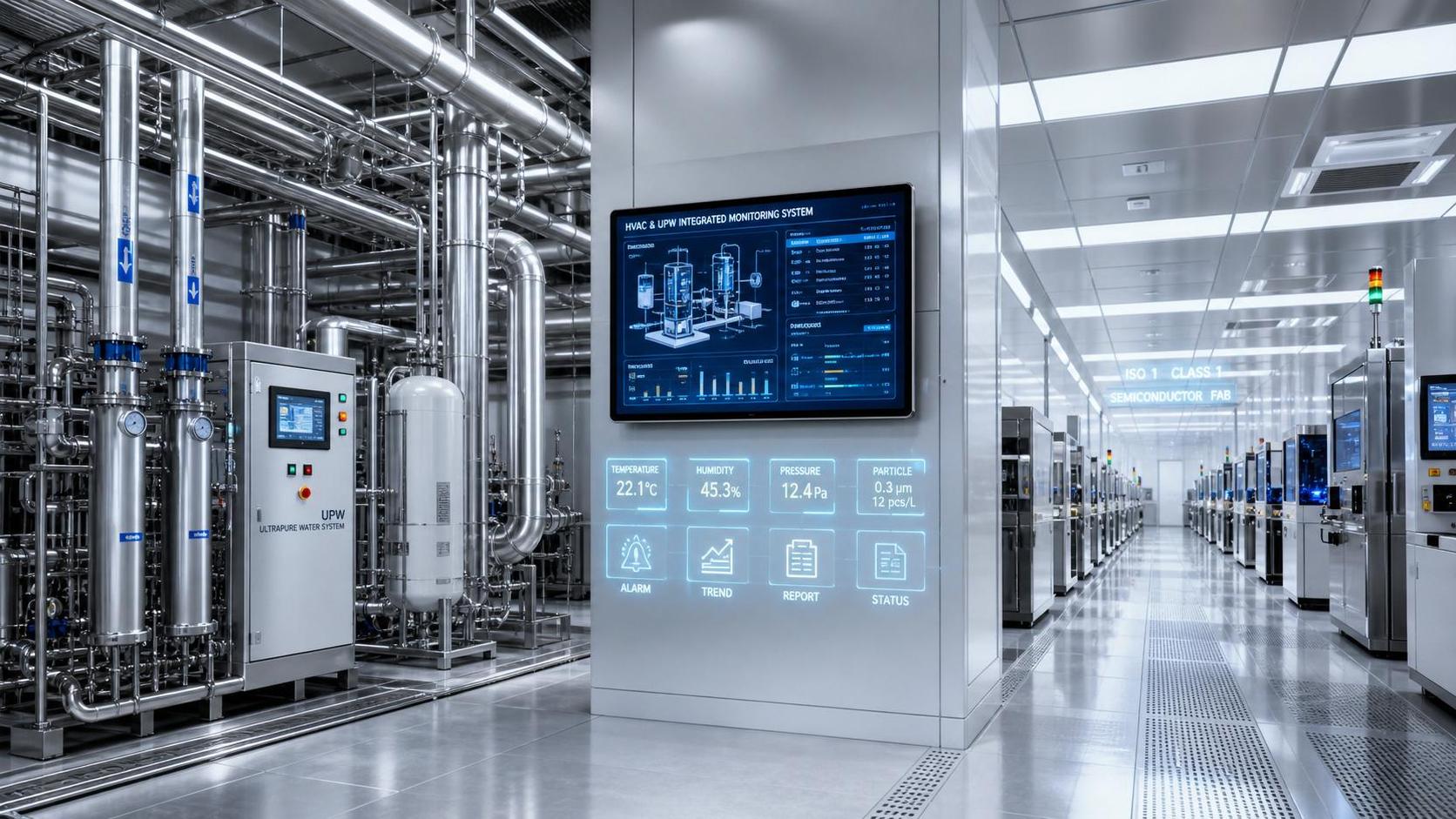
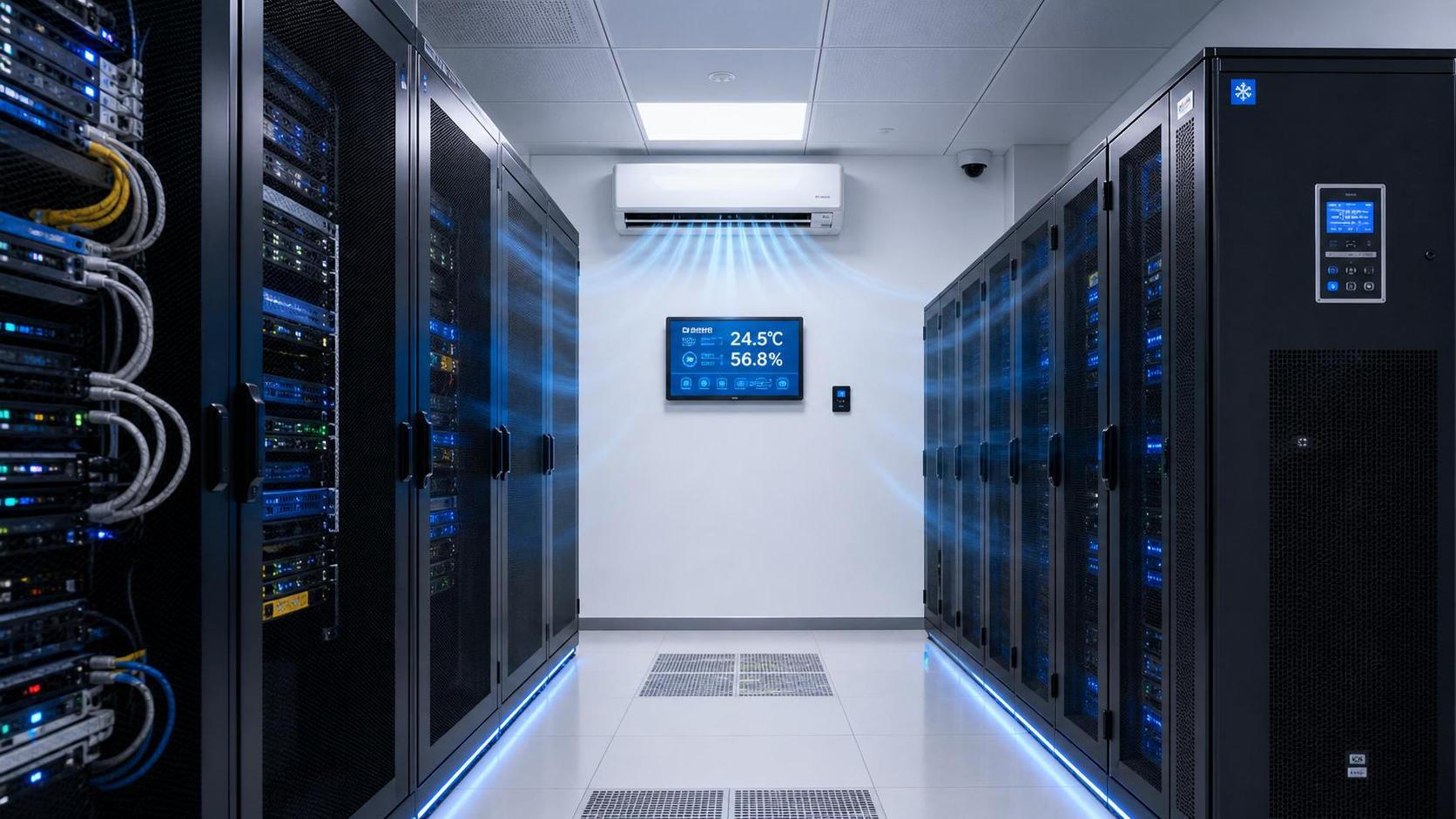
Precision HVAC is one of the largest budget categories in Semiconductor Cleanroom construction. Semiconductor environments often require narrow temperature and humidity tolerances, stable airflow patterns, and rapid recovery after door openings or process disturbances. Achieving that performance may involve advanced air handling units, tight control sequences, energy recovery strategies, high-efficiency chillers, and dense monitoring architecture. The tighter the tolerance band, the higher the engineering, controls, and testing burden.
3. Layout complexity and process adjacency
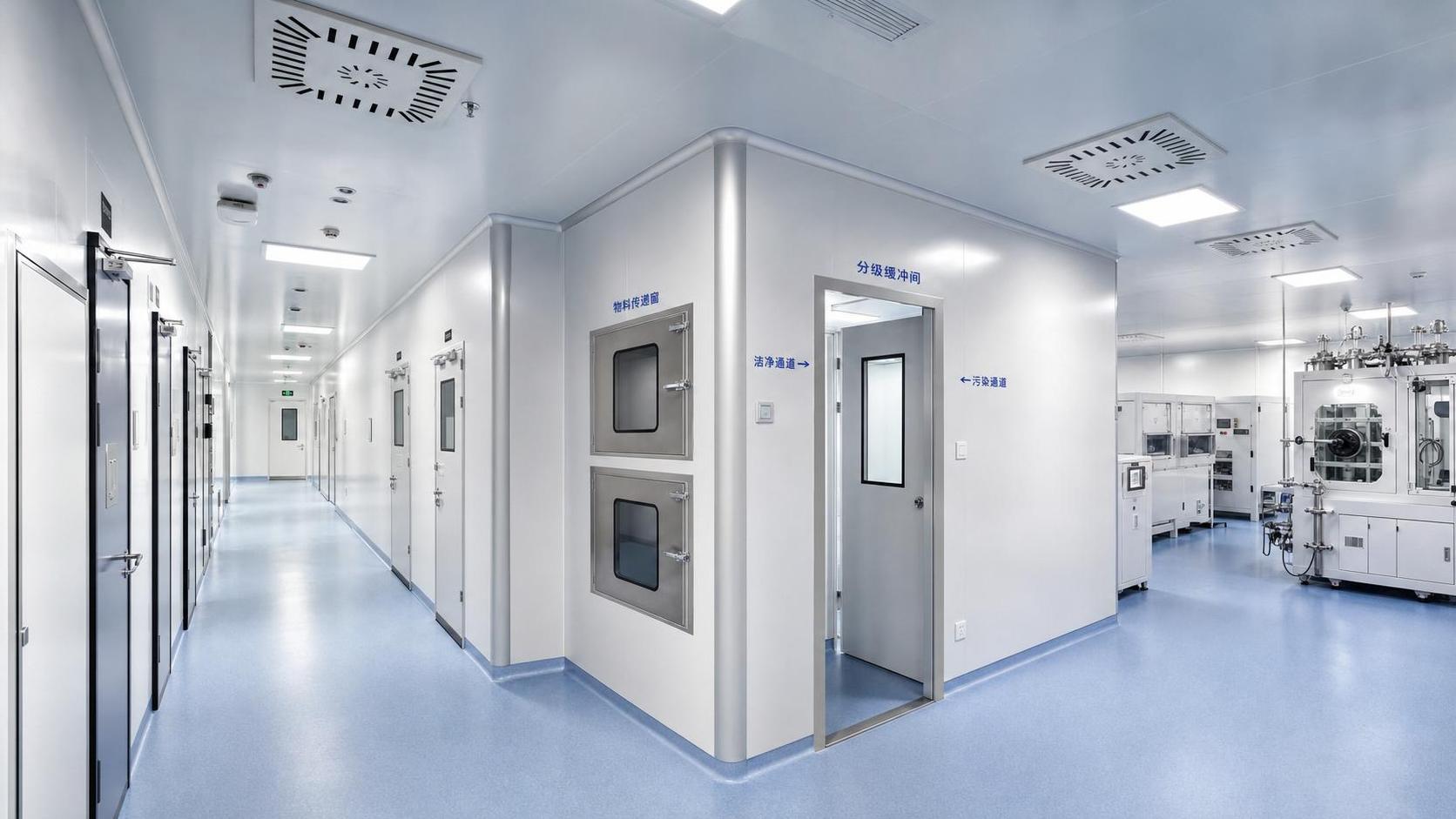
A simple rectangular shell is less expensive than a facility with multiple bays, chases, support corridors, gowning zones, segregated utilities, and phased expansion allowances. Cleanroom geometry affects airflow efficiency, material movement, and maintenance access. Poor layout decisions can increase both upfront build cost and long-term labor cost. For financial reviewers, layout is not just an architectural matter; it is a productivity and operating-risk variable.
4. Utility integration and process infrastructure
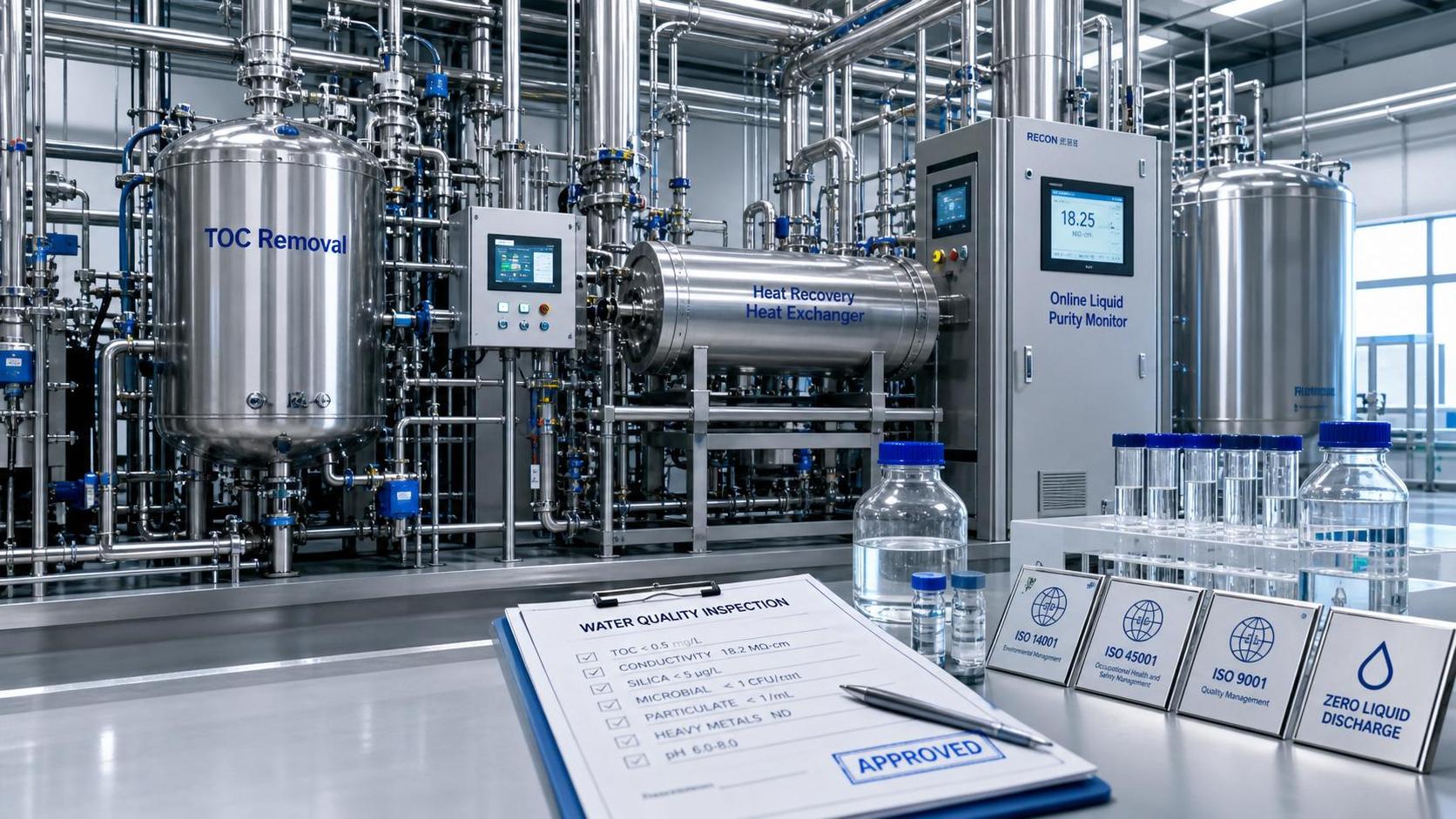
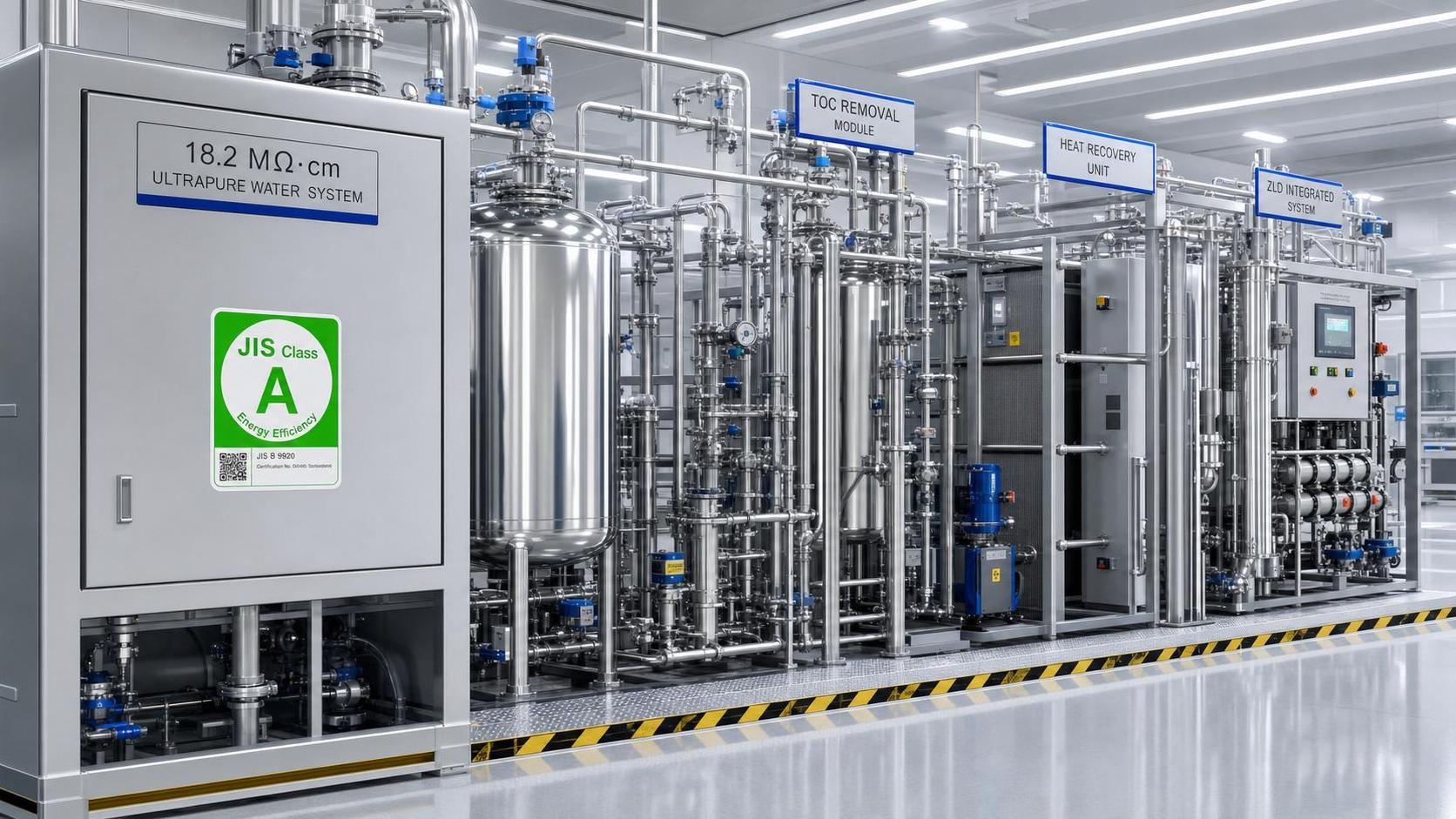
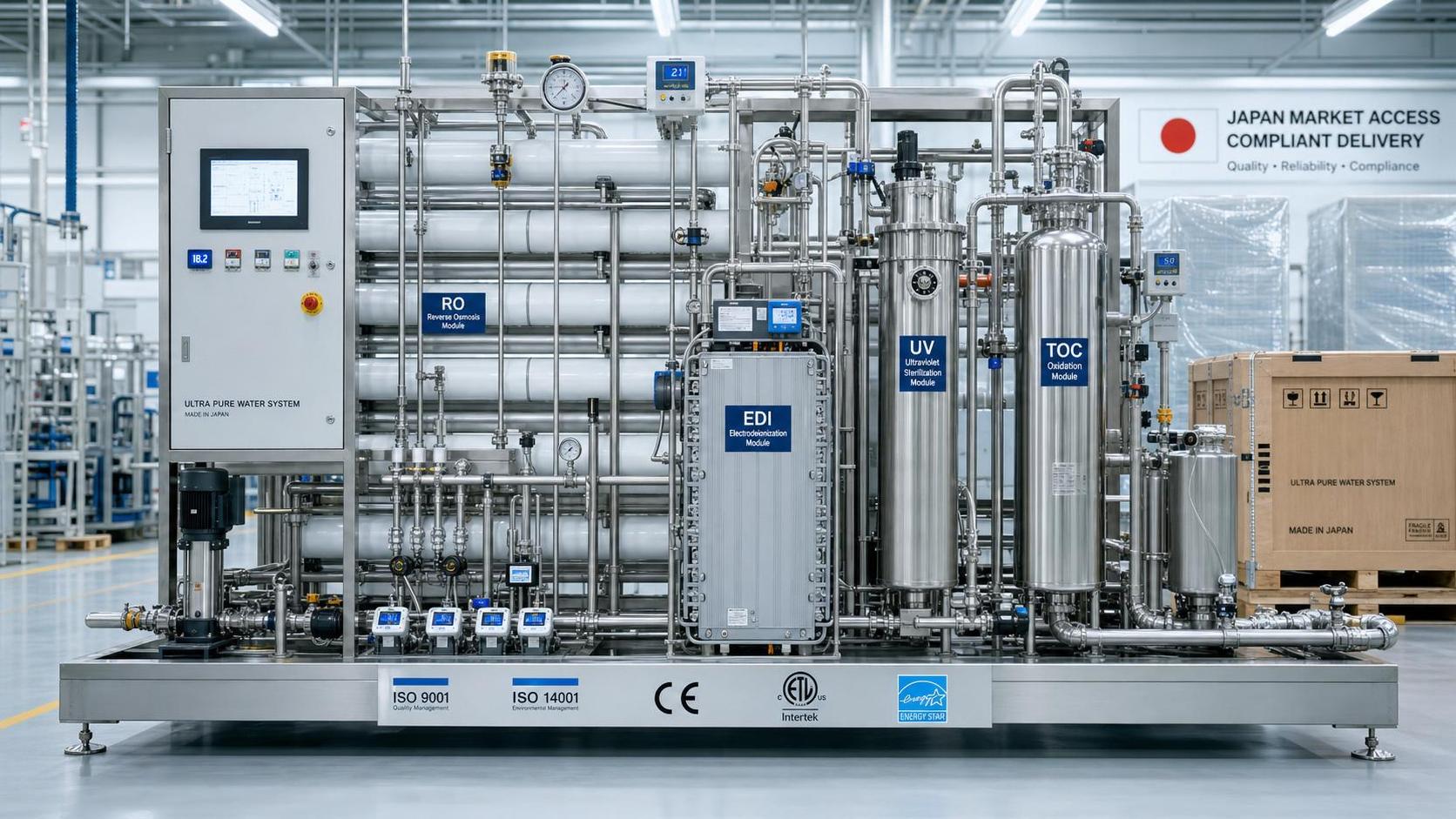
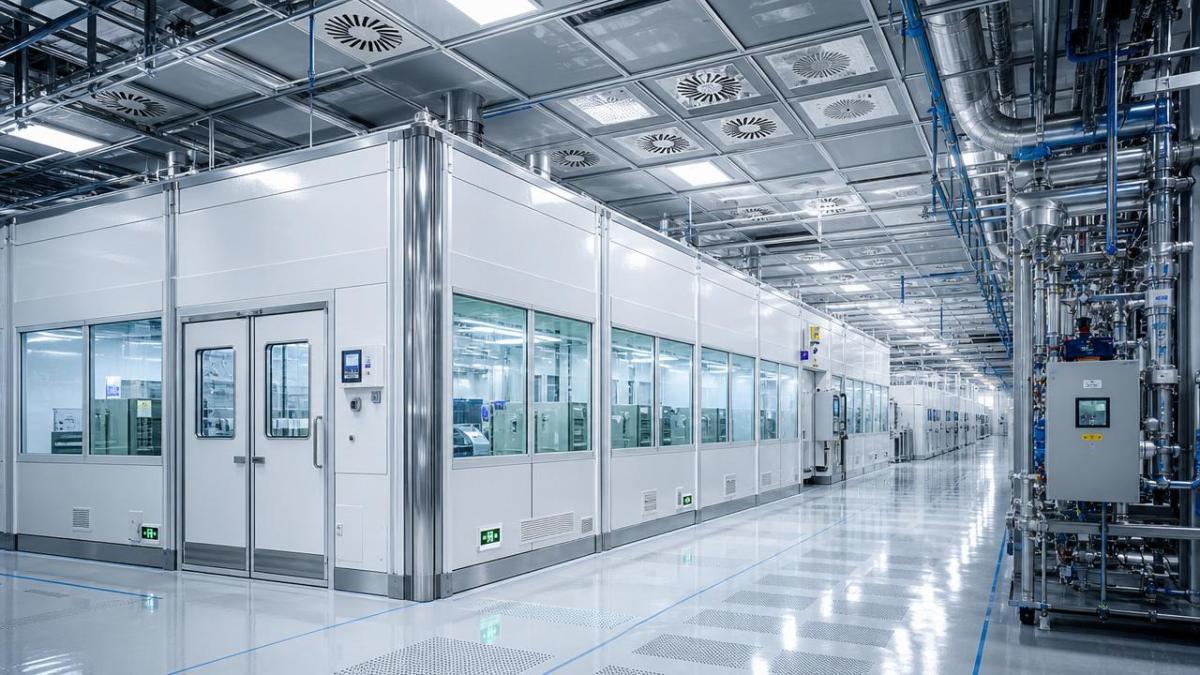
Beyond the clean envelope itself, semiconductor facilities depend on extensive mechanical and process utilities. These may include ultra-pure water systems, process cooling water, specialty gases, exhaust systems, chemical delivery, waste neutralization, backup power, and digital environmental monitoring. In many cases, utility scope rivals or exceeds the visible construction package. Budget approvals that overlook this integration often underestimate true project cost by a significant margin.
5. Compliance, validation, and commissioning depth
Semiconductor Cleanroom construction does not end when physical installation is complete. Qualification, balancing, particle testing, airflow verification, pressure cascade checks, controls tuning, and documentation all contribute to final cost. Projects designed for multinational operators may also need stronger documentation for ESG, safety, and corporate governance frameworks. This “soft infrastructure” is often underestimated despite its importance in achieving production readiness.
Industry overview of major cost categories
For approval teams, it helps to view Semiconductor Cleanroom construction through cost categories that connect technical decisions with financial consequences.
Where the business value appears beyond construction cost
Financial decision-makers should assess Semiconductor Cleanroom construction not only through capex but through its effect on long-term operating economics. The right cleanroom strategy supports yield protection, stable process windows, lower contamination events, and faster time to qualified production. These outcomes have direct value for revenue realization and asset utilization.
Well-designed precision environmental systems can also reduce energy waste. In facilities with high recirculation loads and continuous process demand, incremental efficiency improvements in chilled water systems, variable airflow control, pressure management, and monitoring logic can create substantial savings over the facility life. This is especially relevant for organizations under pressure to align infrastructure investment with ESG objectives and carbon reporting expectations.
Another major value area is flexibility. Semiconductor Cleanroom construction that includes modular zoning, expansion-ready utilities, and data-rich environmental control can support future product changes with less disruption. For capital approvers, adaptability is a hedge against technology shifts and changing market demand.
Typical project profiles and how cost priorities differ
Not all cleanroom investments follow the same logic. The most relevant cost priorities depend on the project profile.
Practical evaluation points for finance approvers
When reviewing Semiconductor Cleanroom construction proposals, finance teams benefit from a structured set of questions that connect engineering scope to commercial impact.
- Is the cleanliness target tied to actual process risk, or is the design over-specified?
- How much of the budget is driven by precision HVAC, and what operating cost does that imply?
- Are utility systems fully captured, including UPW, exhaust, controls, and redundancy?
- What assumptions have been made about local labor capability, installation quality, and commissioning duration?
- Does the design provide room for expansion, process change, or digital monitoring upgrades?
- What are the expected paybacks from energy optimization, stability improvement, or reduced contamination events?
This review approach helps separate justified high-performance spending from avoidable design inflation. It also encourages earlier dialogue between infrastructure teams, process stakeholders, and approval committees.
Common approval-stage blind spots
A recurring issue in Semiconductor Cleanroom construction is treating the cleanroom as an interior fit-out rather than a mission-critical production system. This leads to underestimation of controls integration, qualification time, and supporting utility loads. Another blind spot is focusing only on initial construction cost without examining the cost of unstable operation. A cheaper environmental design that causes higher defect risk can become the more expensive choice within months.
Projects also run into difficulty when expansion is ignored. If future tools, higher recirculation needs, or additional monitoring points are likely, it is usually more economical to plan for them in the original Semiconductor Cleanroom construction scope than to retrofit later under operating conditions.
A disciplined path forward
The strongest Semiconductor Cleanroom construction decisions come from aligning technical performance with business outcomes. For financial approvers, that means asking not only “What will it cost to build?” but also “What will it cost if the environment fails to protect process performance?” In semiconductor settings, invisible conditions often determine visible profitability.
A disciplined investment strategy typically combines standards-based design, realistic utility planning, precision HVAC evaluation, and lifecycle modeling. Organizations that use benchmark-driven technical references and integrated environmental engineering frameworks are better positioned to control both capex and long-term operational risk. If your team is evaluating Semiconductor Cleanroom construction, the most useful next step is a structured scope review that links contamination goals, thermal performance, utility architecture, and compliance obligations to measurable financial outcomes.
Get weekly intelligence in your inbox.
No noise. No sponsored content. Pure intelligence.
 Jun 18, 2026Strategic Intelligence Trends in 2026: Signals That Shape Market DecisionsStrategic Intelligence in 2026 reveals the signals shaping market decisions—from compliance and infrastructure to digital governance. Discover the trends driving smarter, faster business moves.
 Jun 18, 2026TWS Earbuds: 7 Specs That Affect Daily Comfort and Call QualityTWS earbuds buying guide: discover 7 key specs that shape daily comfort and call quality, from fit and weight to ANC, ENC, battery life, and Bluetooth stability.
 Jun 18, 2026Home Automation Systems: What Matters Most Before You UpgradeHome automation systems: learn what to check before you upgrade, from compatibility and security to scalability, costs, and energy savings, so you can choose a smarter, safer setup.
 Jun 18, 2026Server Room Cooling: Split vs Precision AC for Small IT SpacesServer room cooling made simple: compare split AC vs precision AC for small IT spaces, understand cost, uptime, humidity, and risk, and choose the right system with confidence.
 Jun 18, 2026Port Automation Tech: 5 Key Systems Cutting Vessel Turnaround TimePort automation tech is transforming terminal performance. Explore 5 key systems that cut vessel turnaround time, reduce bottlenecks, and boost port efficiency.
 Jun 18, 2026MFDS Tightens ZLD Certification With KOLAS TOC TraceabilityMFDS Tightens ZLD Certification With KOLAS TOC Traceability: learn how the 2026 rule reshapes compliance, testing timelines, and export planning for ZLD system suppliers.
 Jun 18, 2026ASEAN Customs Start IMP Checks for Smart SensorsASEAN customs IMP checks for Smart Sensors start August 1, 2026. Learn how GS1 EPCIS v2.0 firmware compliance affects exports, clearance delays, and supply chain planning.
 Jun 18, 2026EU Tightens REACH for AMC Filters With 72-Hour SCIP RuleAMC Filters face new EU REACH pressure as the 72-hour SCIP rule takes effect. Learn how FFU and Chemical Air Filters importers can avoid customs delays and protect deliveries.
 Jun 18, 2026METI Sets JIS Class A Label Rule for 18.2 MΩ·cm UPWMETI sets JIS Class A label rule for 18.2 MΩ·cm UPW systems entering Japan from Oct 1, 2026. Learn JIS B 8671 testing, fab supply-chain risks, and compliance steps exporters should act on now.
 Jun 18, 2026FDA Digital Twin Rule Sets New Entry Bar for BSL-3/4 EquipmentFDA Digital Twin Rule Sets New Entry Bar for BSL-3/4 Equipment. Learn how the 2026 FDA requirement impacts U.S. market access, compliance, and supplier readiness.
 Jun 17, 2026Cleanroom Architecture Design: 7 Layout Mistakes That Raise Contamination RiskCleanroom Architecture design guide: discover 7 costly layout mistakes that increase contamination risk, weaken airflow control, and threaten compliance—plus practical fixes to protect quality.
 Jun 17, 2026Die Casting Parts for Industrial Machinery: Common Failure Risks to CheckDie casting parts for industrial machinery may look fine but still hide porosity, cracking, and drift risks. Learn what to inspect first to prevent downtime and costly failures.
 Jun 17, 2026Business Intelligence vs Dashboards: What Actually Improves Decisions?Business Intelligence vs dashboards: discover which one truly improves decisions. Learn how Business Intelligence adds context, risk insight, and action-ready clarity beyond simple monitoring.
 Jun 17, 2026Sheet Metal Bending Services Canada: What Affects Lead Time and Price?Sheet metal bending services Canada: learn what drives lead time and price, from material and tooling to tolerances and inspection, so you can compare quotes smarter and avoid costly delays.
 Jun 17, 2026How to Choose Aluminum Extrusions for Load, Finish, and CostAluminum extrusions selection made practical: learn how to match load capacity, surface finish, and total project cost to reduce risk, improve durability, and source with confidence.
 Jun 17, 2026MFDS Tightens ZLD Certification With KOLAS TOC TraceabilityMFDS Tightens ZLD Certification With KOLAS TOC Traceability: learn how South Korea’s new TOC evidence rules reshape ZLD compliance, project timing, and export readiness before Sept. 2026.
 Jun 17, 2026ASEAN Customs Requires EPCIS Data for Air SensorsASEAN Customs now requires GS1 EPCIS 2.0 data for air sensors under SmartPre-Clearance v3.0. Learn which IIoT devices are affected and how to avoid 5–7 day clearance delays.
 Jun 17, 2026METI Starts JIS Class A Label Rule for UPW SystemsMETI starts JIS Class A label rule for UPW systems in Japan. Learn how JIS B 8425:2026, certification, and import deadlines affect exporters, buyers, and compliance planning.
 Jun 17, 2026FDA Requires Digital Twin Interfaces on BSL-3/4 Equipment From July 1, 2026FDA requires digital twin interfaces on BSL-3/4 equipment from July 1, 2026. Learn affected devices, compliance risks, IEC 63278-2:2025 needs, and what exporters, importers, and buyers must do now.
 Jun 17, 2026REACH Update Triggers 72-Hour SCIP Filing for AMC FiltersREACH update triggers a 72-hour SCIP filing for AMC filters entering the EU. Learn how FFU, chemical filter, and cleanroom system suppliers can reduce delay and compliance risk.
 Jun 16, 2026Electronic Health Records Software: Common Setup Mistakes to AvoidElectronic health records software can fail fast when setup is rushed. Learn the most common configuration mistakes to avoid for better compliance, smoother workflows, and safer adoption.
 Jun 16, 2026Smart Home Devices: Which Features Matter Most in 2026?smarthomedevices in 2026 demand more than convenience. Discover the features that truly matter—security, interoperability, energy savings, and long-term value.
 Jun 16, 2026AS9100 Aerospace Machining: Key Quality Risks to Check FirstAS9100 aerospace machining starts with the right risk checks. Learn how to spot process drift, traceability gaps, contamination, and inspection weaknesses before they become costly failures.
 Jun 16, 2026Rapid Prototyping vs Traditional Builds: Cost, Speed, and FitRapid prototyping vs traditional builds: compare cost, speed, and project fit for industrial systems. Learn how early validation reduces risk, rework, and commissioning delays.
 Jun 16, 2026How Healthcare Technology Is Reducing Clinical Workflow DelaysHealthcare Technology is transforming clinical workflows by reducing delays, improving coordination, and boosting patient throughput. Discover how digital tools speed safer, smarter care.
 Jun 16, 2026MFDS Tightens ZLD Certification for Korea ImportsMFDS Tightens ZLD Certification for Korea Imports: learn how the new TOC traceability rule impacts GMP approval, import compliance, and supplier readiness before Nov. 1, 2026.
 Jun 16, 2026ASEAN Customs Adds EPCIS Preload Rule for IIoT SensorsASEAN Customs adds EPCIS preload rule for IIoT sensors from Aug 1, 2026. Learn who is affected, delay risks, and how exporters can stay compliant across Singapore, Malaysia, and Vietnam.