MFDS Tightens ZLD Certification With KOLAS TOC Traceability
On June 12, 2026, South Korea’s Ministry of Food and Drug Safety (MFDS) revised the implementation rules for ZLD system certification, adding a mandatory full-process TOC traceability verification requirement for pharmaceutical and biomanufacturing water systems seeking certification. For exporters, system integrators, laboratories, and buyers involved in ZLD projects for the Korean market, this matters because certification will now depend not only on system design and operation, but also on traceable analytical evidence accepted through KOLAS-recognized testing.
What the revised rule now requires
According to the information provided, MFDS issued the 2026 revised version of the detailed rules for ZLD system certification on June 12, 2026. The revision introduces a compulsory TOC (total organic carbon) end-to-end traceability verification requirement.
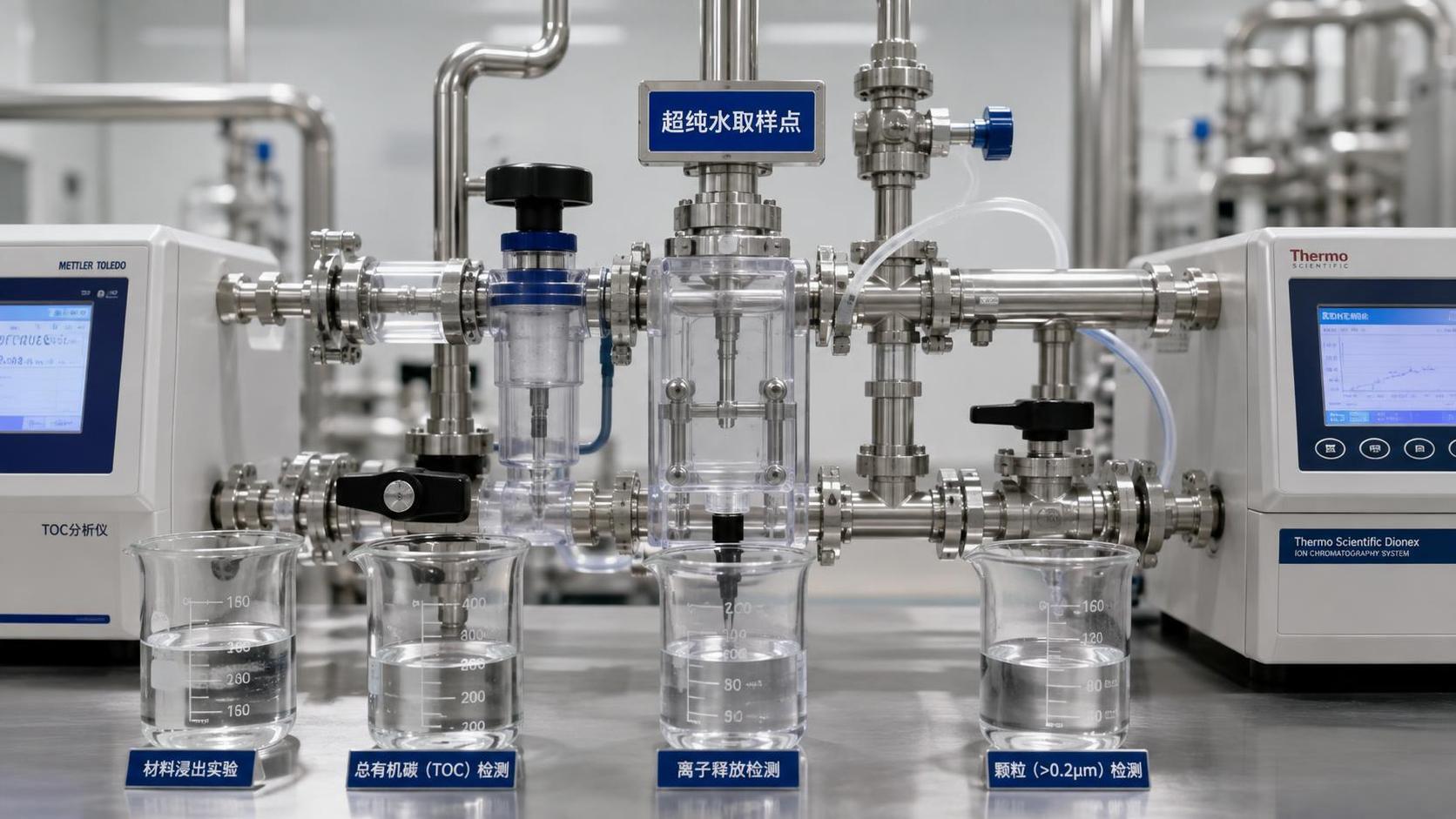
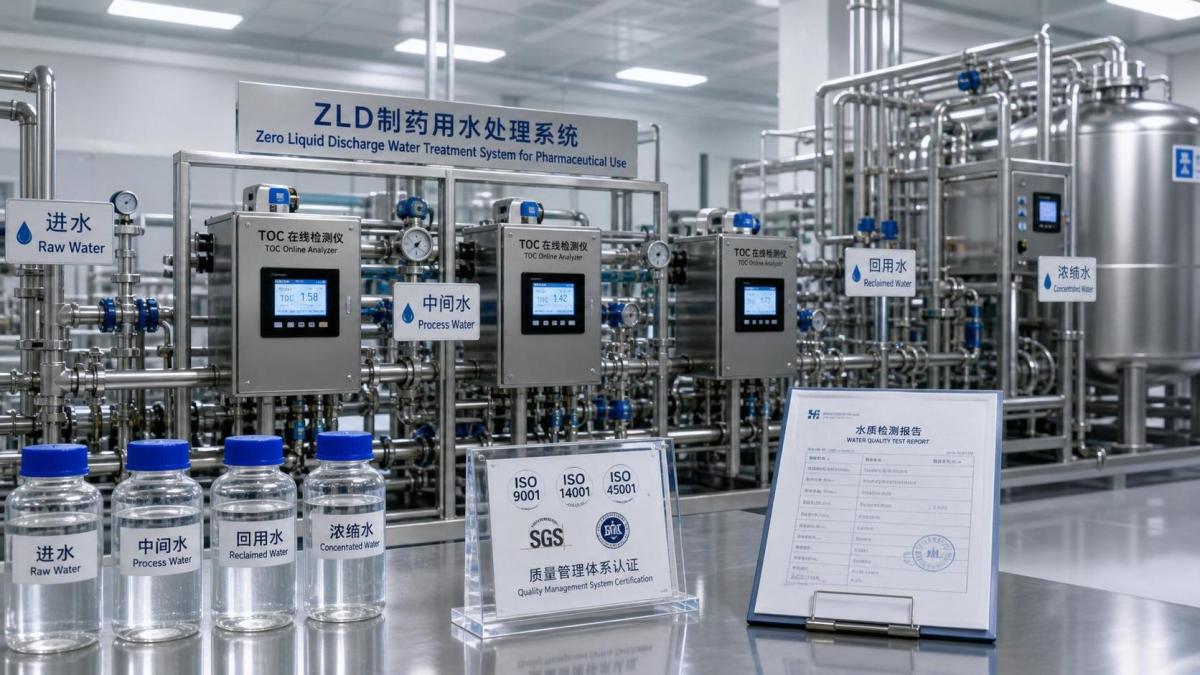
For all pharmaceutical and biomanufacturing water systems applying for ZLD certification, a KOLAS-recognized laboratory must conduct TOC isotopic fingerprint comparison across four points: influent water, intermediate water, reused water, and concentrated water. A traceability analysis report must also be submitted as part of the certification process.
The new requirement will take effect on September 1, 2026. The information provided also indicates that Chinese ZLD equipment exporters need to engage with KOLAS-recognized laboratories in advance.
Where the practical impact is likely to appear
Export-oriented ZLD equipment suppliers face a documentation threshold
Analysis shows that exporters serving the South Korean pharmaceutical and biomanufacturing market may be affected first, because certification readiness now includes laboratory traceability arrangements in addition to equipment delivery. The impact is likely to be felt in pre-sales preparation, project documentation, and certification support provided to customers.
What deserves closer attention is whether exporters can align project timelines with KOLAS laboratory workflows before the September 1, 2026 implementation date.
Project owners and buyers may need to review certification pathways earlier
From an industry perspective, buyers and project owners pursuing ZLD certification in South Korea may need to assess testing and report preparation earlier in the procurement cycle. The rule points to a process in which analytical verification becomes part of certification planning rather than a late-stage formality.
The main area to watch is how the four required sampling nodes are reflected in project execution, acceptance planning, and communication with equipment suppliers and laboratories.
Testing and compliance service providers become more central to delivery
Observably, laboratories and compliance support providers may take on a more central role because the new requirement specifically calls for KOLAS-recognized testing and a traceability analysis report. Their involvement is likely to affect scheduling, sample management, and the completeness of certification files.
For service providers, the key change is not only technical testing, but also how testing outputs are integrated into certification submission packages.
What companies should prioritize now
Track whether official wording changes further before September
Analysis shows that companies should closely follow any additional MFDS clarifications tied to the revised certification rules. The current signal is clear on the need for TOC traceability verification, but actual implementation often depends on how testing scope, reporting expectations, and submission practice are interpreted in the market.
Confirm laboratory pathways before customer commitments
For exporters and project teams, an immediate practical focus is whether a KOLAS-recognized laboratory can be engaged early enough to support sampling, comparison, and report issuance. This is especially relevant for companies already negotiating projects that may move into certification after September 1, 2026.
Review contract, delivery, and submission timing
What deserves closer attention is the difference between a policy requirement and on-site execution. Even where system hardware is ready, certification progress may still depend on whether sampling, isotopic fingerprint comparison, and traceability reporting can be completed within the project schedule. This makes delivery planning and customer communication more sensitive than before.
Prepare customer-facing certification materials more carefully
Companies supporting Korean-market ZLD projects should also review how they present compliance materials to customers. The new rule suggests that supporting documents linked to influent water, intermediate water, reused water, and concentrated water may become more important in technical discussions and certification preparation.
Why this looks like more than a routine procedural edit
Observably, this development is better understood as a concrete compliance tightening rather than a purely formal update. The revised rule does not simply reference TOC as a parameter; it introduces a traceability framework tied to four process nodes and to KOLAS-recognized laboratory verification.
At the same time, it is more appropriate to understand this as an implementation-stage signal rather than a completed market outcome. The rule is confirmed, and the effective date is stated, but the full operational impact on project cycles, customer requirements, and exporter response still needs to be watched after the September 2026 start date.
How the market may need to read this development
From an industry perspective, the immediate meaning of this update is that ZLD certification for pharmaceutical and biomanufacturing water systems in South Korea is becoming more evidence-driven at the testing and reporting level. The change should not be overstated as a broad market reset, but it does raise the compliance threshold for companies participating in certification-related projects.
At this stage, it is more appropriate to understand the news as a near-term operational change with possible longer-term signaling value. The operational change is clear because the effective date and core requirement are already defined. The longer-term significance will depend on how consistently the new traceability requirement is enforced in practice.
Basis of this article and follow-up points
This article is generated based on the user-provided news title, event date, and event summary. The confirmed facts in the article are limited to the provided information about the MFDS revision, the mandatory TOC traceability verification requirement, the role of KOLAS-recognized laboratories, the four required sampling points, the need for a traceability analysis report, and the September 1, 2026 effective date.
For this type of development, commonly relevant source categories may include official regulatory notices, company announcements, industry association updates, authoritative media reporting, and standards-related documents. No specific official source link was provided in the input, so the exact official link remains to be continuously verified. Follow-up attention should focus on any additional MFDS clarification and on how the new requirement is applied in actual certification submissions.
Get weekly intelligence in your inbox.
No noise. No sponsored content. Pure intelligence.
 Sep 15, 2026Smart HVAC investment insights for North American heat recovery projectsSmart HVAC investment insights North America: evaluate heat recovery, lifecycle costs, controls, and performance for resilient project decisions.
 Sep 14, 2026How SEMI standards shape water treatment design for semiconductor fabsSemiconductor water treatment SEMI guidance shapes resilient UPW design, contamination control, monitoring, reclaim strategy, and fab-ready validation.
 Sep 13, 2026What drives Biosafety Containment Systems cost in BSL-3 projects?Biosafety Containment Systems cost in BSL-3 projects depends on HVAC, layout, decontamination, controls, and commissioning. Discover how to build a credible budget.
 Sep 12, 2026How to qualify a fine chemical process solutions supplier for purity controlFine Chemical Process Solutions supplier qualification guide: evaluate purity control, traceability, contamination prevention, and safety for reliable high-purity production.
 Sep 11, 2026What drives cleanroom certification cost for ISO Class 1–9 projects?Cleanroom certification cost depends on ISO Class 1–9 requirements, test scope, HVAC readiness, documentation, and retesting. Explore practical budgeting insights to control project risk.
 Sep 10, 2026When should Procurement Directors prioritize heat recovery payback?Procurement Directors: learn when heat recovery delivers reliable payback, lower lifecycle costs, and safe performance in controlled industrial environments.
 Sep 09, 2026How to select an environmental monitoring system for cleanroomsEnvironmental monitoring system selection for cleanrooms: compare sensors, alarms, data integrity, integration, and installation to ensure reliable control.
 Sep 08, 2026How temperature stability affects semiconductor manufacturing yieldSemiconductor manufacturing temperature stability directly affects yield, overlay, metrology, and process control. Explore practical HVAC, monitoring, and zoning strategies.
 Sep 07, 2026How to prepare for a Regulatory Frameworks audit of cleanroom controlsRegulatory Frameworks audit readiness for cleanroom controls: build traceable evidence, verify alarms and monitoring, and close compliance gaps with confidence.
 Sep 07, 2026How to choose reverse osmosis systems with the right recovery rateReverse osmosis systems: learn how to select the right recovery rate for reliable water quality, lower scaling risk, efficient concentrate control, and stable long-term performance.
 Sep 05, 2026How does a negative pressure room work to contain airborne contaminants?How does a negative pressure room work? Discover how inward airflow, controlled exhaust, monitoring, and room design help contain airborne contaminants safely.
 Sep 04, 2026What TOC Limits Should Be Set and Monitored for a UPW Loop?What are our TOC limits for the UPW loop? Learn how to set defensible TOC thresholds, monitor trends, protect critical processes, and improve water-quality control.
 Sep 04, 2026What Are the Best Retrofit Options for Upgrading Existing Pharmaceutical Cleanrooms?What are the best retrofit options to upgrade existing pharma cleanrooms? Explore FFUs, HVAC modernization, pressure cascades, monitoring, and sealed finishes for compliant performance.
 Sep 04, 2026How Does a Negative Air Pressure Room Protect Adjacent Areas?What is a negative air pressure room? Learn how controlled airflow contains airborne hazards, protects adjacent spaces, and supports safer facility operations.
 Sep 04, 2026What Is ISO Class 1 Cleanroom Classification, and Where Is It Used?What is ISO Class 1? Explore its ultra-low particle limits, critical cleanroom design factors, verification methods, and uses in semiconductor, optics, and quantum manufacturing.
 Sep 04, 2026How Long After a UPW Deviation Does Yield Impact Typically Appear?What is the typical time lag from UPW deviation to yield impact? Learn how contamination, process sensitivity, exposure windows, and testing stages shape detection timing.
 Sep 04, 2026What Testing Data Should Engineers Review Before Approving a UPW Material?What testing data should be reviewed before approving a UPW material? Explore extractables, TOC, particle release, ionic leaching, corrosion, and reliability data for confident approval.
 Sep 04, 2026How Should Pharmaceutical Cleanrooms Choose Climate Control Systems?Which climate control systems are recommended for pharmaceutical cleanroom environments? Explore HVAC, humidity, pressure, HEPA filtration, and GMP-ready monitoring strategies.
 Sep 04, 2026Airtight Door Problems in Medical Spaces and How Buyers Prevent ThemA problem-solving guide for airtight door procurement, covering sealing performance, sensors, wall coordination, cleaning, maintenance, and acceptance risk.
 Sep 04, 2026What drives cleanroom design cost for ISO Class 7 projects?Cleanroom design cost for ISO Class 7 projects depends on HVAC, filtration, utilities, validation, and lifecycle strategy. Learn how to control budgets without compromising compliance or performance.
 Sep 03, 2026When do heat pipe heat exchangers suit pharmaceutical cleanrooms?Heat Pipe Heat Exchangers for pharmaceutical plants: discover when they support cleanroom energy recovery, airflow separation, humidity control, and GMP-ready HVAC design.
 Sep 02, 2026What determines biosafety cabinets price across different modelsBiosafety cabinets price varies by class, airflow design, filtration, size, certification, and installation. Compare models confidently to choose safe, cost-effective containment.
 Sep 01, 2026When does thermal energy storage cut peak-demand costs in plants?Thermal energy storage for industrial plants can cut peak-demand costs when tariffs, load profiles, and controls align. Explore practical savings, resilience, and integration factors.
 Aug 31, 2026How a digital environmental monitoring system supports audit-ready cleanroomsDigital environmental monitoring system strategies for audit-ready cleanrooms: improve traceability, alarm response, data integrity, and compliance confidence.
 Aug 30, 2026When does next-gen thermal management closed loop reduce chiller energy use?Next-gen thermal management closed loop systems can cut chiller energy by reducing lift, optimizing flows, enabling heat recovery, and improving controls. Discover when savings are real.
 Aug 29, 2026How chilled water piping layout affects pump energy useChilled water piping layout directly affects pump energy, control stability, and lifecycle costs. Explore practical design insights for efficient, reliable systems.
 Aug 28, 2026When thermal energy storage systems cut peak cooling costs in pharma plantsThermal Energy Storage Systems for pharmaceutical plants cut peak cooling costs, support compliance, and strengthen resilience. Explore the business case.