Pharmaceutical Cleanroom Design Mistakes That Delay Validation
Pharmaceutical Cleanroom design errors rarely fail during construction. They usually appear during validation, when airflow instability, process clashes, and contamination risks become measurable and expensive. In regulated projects, these mistakes can delay qualification, consume capital, and disrupt production launch. A stronger design review, built around real operating scenarios, helps prevent validation from becoming the critical path.
When early-stage Pharmaceutical Cleanroom design looks correct but fails in validation
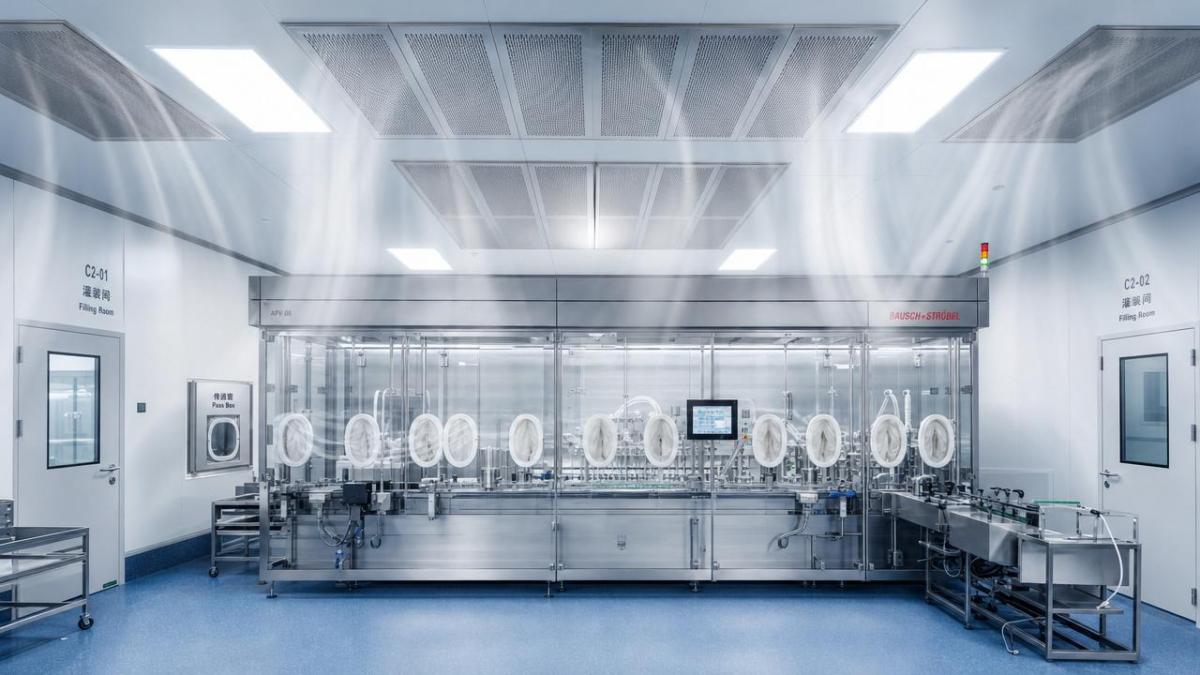
Many projects pass drawing reviews because layouts appear compliant on paper. Validation exposes what drawings often hide: unstable pressure cascades, dead zones, poor access logic, and maintenance conflicts.
In Pharmaceutical Cleanroom design, the real test is not visual neatness. It is whether the room performs under operating conditions, with people, equipment, doors, heat loads, and cleaning routines.
This challenge affects sterile filling suites, oral solid dosage plants, biologics facilities, and high-containment laboratories differently. That is why scenario-based design decisions matter more than generic compliance checklists.
Why validation delays vary across pharmaceutical production scenarios
Not every cleanroom faces the same risk profile. A design that works for secondary packaging may fail badly in aseptic compounding. Validation criteria depend on process sensitivity, operator activity, and contamination consequences.
Effective Pharmaceutical Cleanroom design starts by separating process scenarios. Airflow strategy, room classification, material transfer, and environmental monitoring should follow product risk, not architectural convenience.
Scenario 1: Aseptic filling areas with unidirectional airflow
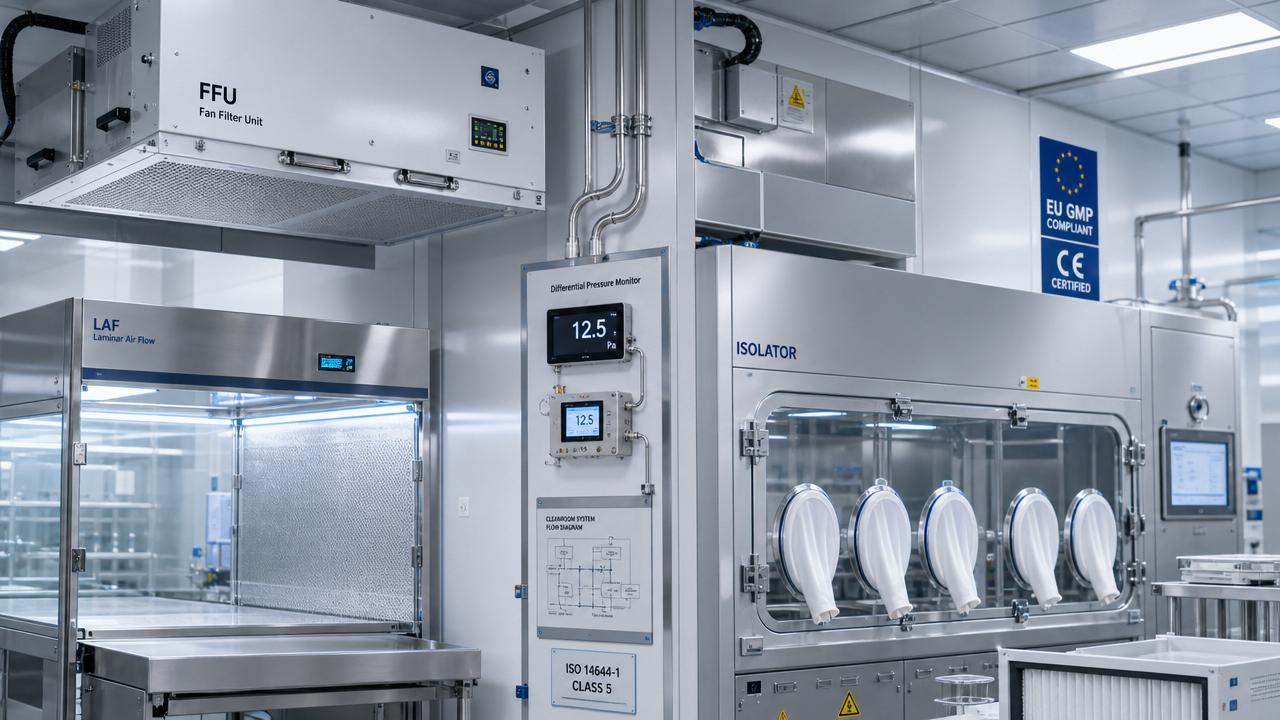
In aseptic filling, minor airflow distortion can stop validation. Equipment height, overhead obstructions, and operator reach patterns often interrupt first air at critical exposure points.
A common Pharmaceutical Cleanroom design mistake is placing utility drops, lighting, or access panels where they create turbulence above filling lines. Smoke studies reveal these issues quickly.
Scenario 2: Oral solid dosage spaces with dust-generating operations
Tableting and granulation rooms need containment as much as cleanliness. Validation delays often come from weak room segregation, poor pressure zoning, and dust accumulation around transfer points.
In this scenario, Pharmaceutical Cleanroom design must balance product protection, cross-contamination control, and worker safety. Overemphasis on one goal can compromise the others.
Scenario 3: Biologics and temperature-sensitive processing suites
Biologics spaces often face validation trouble from thermal instability. Temperature mapping may fail because equipment loads, door openings, and recovery times were underestimated during design.
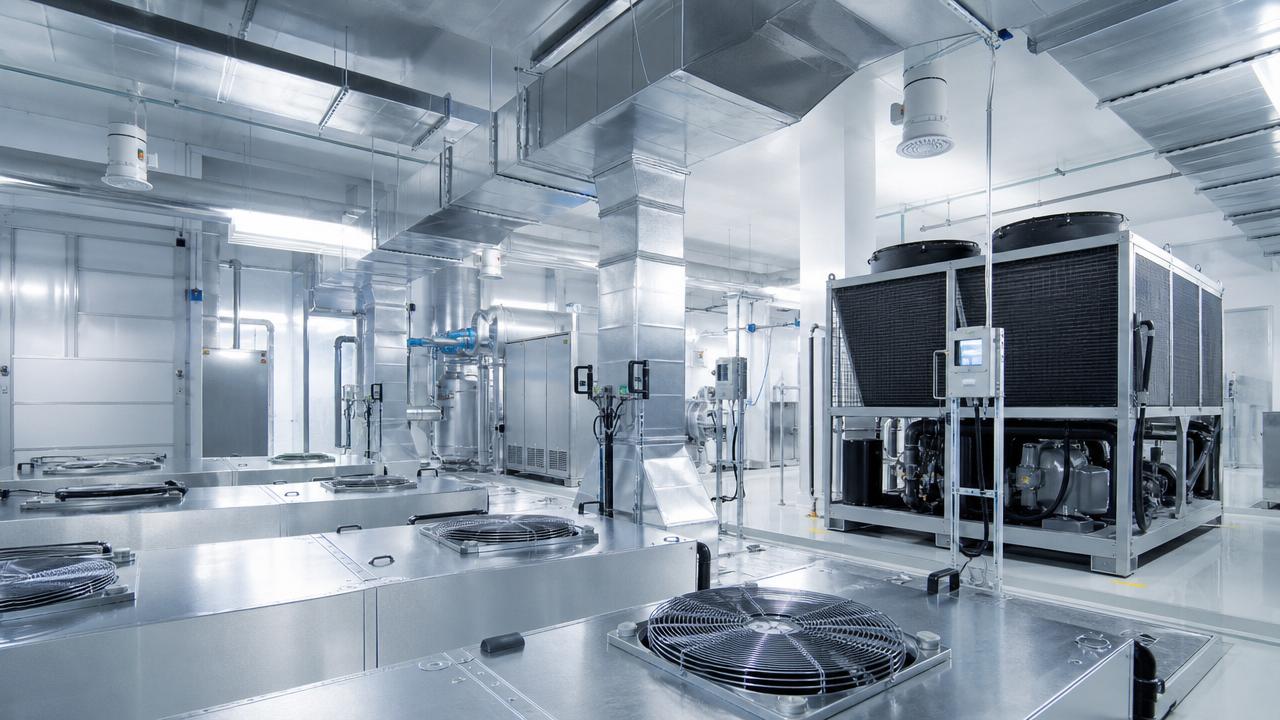
Here, Pharmaceutical Cleanroom design should integrate airflow, cooling capacity, humidity control, and automation logic from the start. Mechanical oversimplification creates long commissioning cycles.
The most common Pharmaceutical Cleanroom design mistakes behind delayed qualification
Several recurring issues appear across projects, regardless of product category. These problems are usually preventable when design teams review operation, maintenance, and validation together.
- Incorrect pressure cascade assumptions between rooms with frequent door movement.
- Insufficient return air paths, causing airflow short-circuiting or stagnant corners.
- Poor material and personnel flow separation, creating contamination crossover risk.
- Uncoordinated equipment layout that blocks airflow visualization and smoke study acceptance.
- Underdesigned HVAC control sequences, leading to unstable recovery after door openings.
- Maintenance access placed inside critical zones, increasing intervention-related contamination events.
- Environmental monitoring points selected for convenience instead of contamination risk relevance.
Each item reflects a Pharmaceutical Cleanroom design gap between regulatory intent and operational reality. Validation teams do not approve assumptions. They approve proven performance.
How different production scenarios change design priorities
The table below shows why one standard layout rarely works across all pharmaceutical environments. The correct Pharmaceutical Cleanroom design response depends on process behavior and validation risk.
Scenario-based design actions that reduce validation risk
A reliable Pharmaceutical Cleanroom design process should convert risk into clear engineering actions before procurement and installation begin.
- Model airflow around actual equipment geometry, not placeholder blocks.
- Verify door-opening effects on pressure recovery for each room interface.
- Map personnel, material, waste, and maintenance flows separately.
- Align HVAC control sequences with operating modes, cleaning, and shutdown conditions.
- Reserve service access outside critical zones whenever possible.
- Define monitoring locations through contamination risk assessment, not drawing symmetry.
- Test worst-case occupancy, not only nominal production conditions.
These actions strengthen Pharmaceutical Cleanroom design because they connect architecture, HVAC, process engineering, automation, and qualification planning into one review path.
Frequent misjudgments that teams overlook until commissioning
One major mistake is assuming compliance equals performance. A room can meet material specifications yet still fail airflow visualization or environmental recovery expectations.
Another issue is late equipment change. When process tools shift after HVAC balancing assumptions are fixed, the original Pharmaceutical Cleanroom design may no longer support qualification targets.
Teams also underestimate cleaning behavior. Hose use, disinfection cycles, and operator staging can alter airflow patterns, moisture loads, and route congestion.
A final blind spot is fragmented responsibility. When architects, MEP engineers, and validation specialists review separately, no one fully owns performance at the room level.
A practical next step for stronger Pharmaceutical Cleanroom design outcomes
The most effective next step is a structured pre-validation design audit. Review layouts, airflow paths, pressure logic, thermal loads, access routes, and monitoring plans against actual operating scenarios.
For complex facilities, integrated benchmarking adds value. G-ICE supports this approach by connecting cleanroom engineering, precision HVAC, biosafety logic, and environmental control standards into a unified technical framework.
A disciplined Pharmaceutical Cleanroom design review does more than reduce delays. It improves compliance confidence, shortens qualification cycles, and protects the long-term reliability of regulated production environments.
When validation is treated as a design outcome rather than a final checkpoint, hidden risks become visible earlier. That shift is often the difference between a smooth startup and a costly redesign.
Get weekly intelligence in your inbox.
No noise. No sponsored content. Pure intelligence.
 Jun 14, 2026Digital Freight Matching for Logistics Companies: ROI, Risks, and Adoption TrendsDigital freight matching for logistics companies: explore ROI, hidden risks, and adoption trends. Learn how to improve visibility, control costs, and strengthen resilient logistics operations.
 Jun 14, 2026How to Choose Ophthalmic Equipment for Diagnostic Accuracy and WorkflowOphthalmic equipment buying guide: learn how to compare image quality, workflow fit, integration, and total cost to choose systems that improve diagnostic accuracy and clinic efficiency.
 Jun 14, 2026Industrial Climate Control: How to Cut Energy Use Without Losing PrecisionIndustrial Climate Control strategies that cut energy use without sacrificing precision. Learn how cleanrooms, pharma, and high-stability facilities reduce waste while protecting compliance and process performance.
 Jun 14, 2026TMS Software vs Custom Development: Cost, Speed, and Integration TradeoffsTMS software vs custom development: compare cost, deployment speed, integration depth, and long-term control to choose the best-fit solution for complex operations.
 Jun 14, 2026How to Evaluate a Bluetooth Speakers Distributor for Stable Supply and MarginBluetooth speakers distributor selection affects supply stability and profit. Learn how to assess lead times, margin structure, service, and channel control to choose a reliable partner.
 Jun 14, 2026Southeast Asia Tightens IIoT Air Monitor Import RulesSoutheast Asia Tightens IIoT Air Monitor Import Rules: learn how ASEAN’s new CCI pre-clearance, GS1 EPCIS v2.3, and cloud registration rules could impact shipments before August 1, 2026.
 Jun 14, 2026South Korea MFDS Tightens UPW Rules for TOC TraceabilitySouth Korea MFDS tightens UPW rules for TOC traceability in imported 18.2 MΩ·cm systems. Learn the 2026 compliance deadline, KOLAS report needs, and supplier risks.
 Jun 14, 2026Japan Enforces JIS T 0601-2026 for BSL-3/4 LabsJapan Enforces JIS T 0601-2026 for BSL-3/4 Labs: learn how OPC UA, Digital Twin Lab, and IEC 62443-4-2 rules reshape compliance, imports, and procurement in Japan.
 Jun 14, 2026EPA Expands VOCs Controls to AMC Filter Media ImportsEPA expands VOCs controls to AMC filter media imports under TSCA Section 5. Learn how PMN filings, TOC verification, and October 2026 rules could raise costs, delay customs, and reshape cleanroom supply planning.
 Jun 14, 2026EU Rule Tightens Access for ISO Class 1-9 Cleanroom SystemsEU Rule Tightens Access for ISO Class 1-9 Cleanroom Systems: learn how EN 1822-5:2026, AMC grading, and pressure traceability could reshape CE compliance, sourcing, and delivery plans.
 Jun 13, 2026Industry Intelligence Tools: How to Spot Market Shifts EarlyIndustry Intelligence helps you spot market shifts early by tracking weak signals, standards, and project trends. Learn how to turn early insight into smarter, faster industrial decisions.
 Jun 13, 2026Strategic Hub Models That Improve Cross-Site CoordinationStrategic Hub models help multi-site teams standardize critical decisions, reduce compliance risk, and speed execution. Learn how to improve cross-site coordination with smarter hub design.
 Jun 13, 2026Energy Management Systems: What Delivers ROI in 2026?Energy management systems in 2026 deliver ROI through uptime protection, HVAC optimization, compliance support, and lower operating costs. Learn what truly drives value.
 Jun 13, 2026How to Compare Ambulance Equipment for Safety and ReadinessAmbulance equipment comparison starts with safety and readiness. Learn a practical framework to evaluate compliance, cleanability, usability, and lifecycle cost.
 Jun 13, 2026Solar Panels Wholesale USA: Cost, MOQ, and Supplier RisksSolar panels wholesale USA guide covering landed cost, MOQ, certifications, delivery delays, and supplier risks. Compare quotes smarter and avoid costly bulk-buy mistakes.
 Jun 13, 2026Mexico Tariff Move Hits 185 Chinese Tech ProductsMexico tariff move hits 185 Chinese tech products, adding 15%–25% duties from June 15, 2026. See how Maglev Chillers, Digital Twin Lab systems, pricing, and delivery to Mexico may change.
 Jun 13, 2026New Zealand Adds IIoT Air Monitoring to Import Compliance ListNew Zealand import compliance now covers IIoT air monitoring in food plant clean areas. Learn how this MPI update affects calibration, traceability, market access, and supplier readiness.
 Jun 13, 2026Thai sealed-food rule now covers biosafety packagingThai sealed-food rule now covers biosafety packaging, impacting BSL-3/4 sealed bags, sterile trays, and transport containers. Learn the compliance risks, document checks, and import actions for Thailand.
 Jun 13, 2026K-REACH Change Hits UPW Chemical Pre-RegistrationK-REACH change impacts UPW chemical pre-registration in South Korea. Learn how new import-stage compliance rules may affect semiconductor supply chains, sourcing, and delivery timelines.
 Jun 13, 2026Pakistan Requires Forced-Labor-Free Proof for Cleanroom ImportsPakistan requires forced-labor-free proof for cleanroom imports from June 1, 2026. Learn how ISO Class 1-9 systems, AMC filtration, and ESD shipments can avoid customs delays.
 Jun 12, 2026Digital Freight Matching: When Does It Lower Empty Miles?Digital freight matching lowers empty miles when lanes are dense, visible, and flexible. Learn where it truly works, where constraints limit gains, and how to improve logistics performance.
 Jun 12, 2026Shipping Rates in 2026: What’s Driving Volatility and Surcharges?Shipping rates in 2026 are turning more volatile as fuel, carbon rules, rerouting, and surcharges reshape freight costs. Discover what’s driving the shifts and how to plan smarter.
 Jun 12, 2026Factory Automation for Electronics Manufacturing: Key System ChoicesFactory automation for electronics manufacturing starts with system fit. Learn how to balance automation, environmental control, utilities, and data integration for higher yield and smarter scaling.
 Jun 12, 2026Solar Grid Systems: What Impacts ROI and Maintenance Costs?solargridsystems ROI depends on tariffs, load profile, storage, and maintenance planning. Learn what truly drives payback, hidden costs, and smarter investment decisions.
 Jun 12, 2026Supply Chain Trends 2026: Cost, Risk, and Resilience SignalsSupply Chain Trends 2026 reveal how cost, risk, and resilience are reshaping industrial operations. Explore key signals, hidden risks, and smarter strategies to protect uptime and compliance.
 Jun 12, 2026NRC Issues Part 53 Framework for Advanced ReactorsNRC Issues Part 53 Framework for Advanced Reactors: learn how the new rule may reshape import compliance, digital twin audits, and supplier readiness for nuclear cleanrooms, BSL labs, and UPW systems.
 Jun 12, 2026Italy-China Forum Highlights Waste Traceability ShiftItaly-China Forum Highlights Waste Traceability Shift: explore how blockchain traceability, wastewater recovery, and cross-border compliance could reshape supplier readiness, audits, and industrial delivery.