Solar Grid Systems: What Impacts ROI and Maintenance Costs?
Why do solargridsystems ROI numbers vary so much from one project to another?
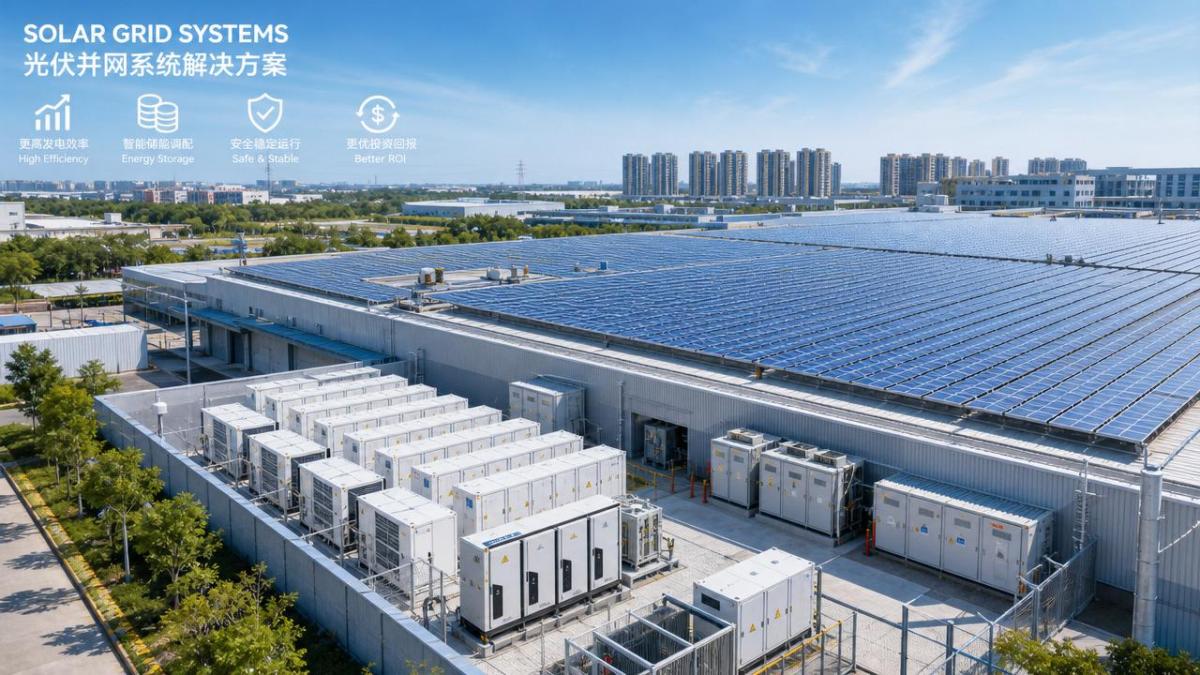
The short answer is simple: not every kilowatt-hour has the same value.
Two sites can install similar solargridsystems and report very different payback periods.
That gap usually comes from operating profile, tariff design, uptime requirements, and financing terms.
In complex facilities, energy savings are only one layer of the business case.
Power quality, resilience, and environmental reporting can matter just as much.
This is especially true in high-control environments associated with G-ICE benchmarks.
Facilities tied to cleanrooms, precision HVAC, UPW treatment, or biosafety operations cannot treat energy as a generic utility line.
They need stable power for filtration, thermal balance, monitoring, and compliance systems.
So when evaluating solargridsystems, the more useful question is not “How much do panels save?”
It is “How does the system change total operating cost and risk over time?”
Which project variables have the biggest effect on returns?
Most ROI models improve when they move beyond panel output estimates.
In practice, five variables usually shape returns more than expected.
- Load profile: daytime-heavy operations often capture more direct value from solargridsystems.
- Utility tariff: demand charges, time-of-use pricing, and export credits can change payback materially.
- System design: orientation, inverter selection, storage integration, and shading losses affect usable output.
- Capital structure: cash purchase, lease, or PPA changes both risk allocation and internal rate of return.
- Policy support: tax credits, accelerated depreciation, and local grid programs can shorten payback dramatically.
A common mistake is assuming the highest generation estimate creates the best investment case.
That is not always true.
For example, a site with strict thermal tolerances may benefit more from peak shaving and backup integration.
That can outperform a larger system designed only for annual energy volume.
The stronger approach is to model solargridsystems against real interval data.
Fifteen-minute or hourly load curves reveal whether generation aligns with costly consumption windows.
That alignment often decides whether a project looks average or compelling.
A quick comparison of what usually moves ROI
The table below helps separate attractive assumptions from reliable ones.
When do maintenance costs become a hidden problem?
Maintenance costs are often underestimated because solargridsystems appear mechanically simple.
Yet total upkeep depends heavily on site conditions and system architecture.
Dust loading, chemical exposure, salt air, roof access, and inverter redundancy all matter.
In industrial campuses, maintenance planning should also account for operational sensitivity.
A shutdown window acceptable for an office building may be unacceptable near controlled manufacturing lines.
That point is easy to miss in spreadsheet-only reviews.
For facilities aligned with G-ICE priorities, monitoring integration is a major cost variable.
If solargridsystems must interface with building management systems, digital twins, or ESG reporting tools, service scope expands.
The upside is better visibility.
The tradeoff is that software, sensors, and analytics support must be budgeted properly.
A more reliable maintenance estimate usually includes these categories:
- Panel cleaning frequency based on local contamination conditions.
- Inverter inspection, replacement cycle, and spare strategy.
- Electrical testing, protection checks, and thermal scanning.
- Monitoring platform licensing and data integration support.
- Roof or ground access controls, safety compliance, and labor premiums.
If these items are missing, the project may still work financially.
But the forecast is probably incomplete.
Is battery storage always worth adding to solargridsystems?
Not always, and that is where disciplined evaluation matters.
Storage can improve the economics of solargridsystems, but only under certain operating conditions.
If the site faces high demand charges, unstable grid service, or costly outage exposure, batteries may create clear value.
If export compensation is weak, storage can also improve self-consumption.
However, storage adds capex, controls complexity, replacement planning, and fire safety review.
In highly regulated environments, that review can be extensive.
For precision industrial operations, the key issue is not generic backup duration.
It is whether storage protects the right loads.
That may include FFU support, chilled water controls, monitoring servers, pressure cascades, or biosafety exhaust continuity.
A battery serving noncritical loads may look impressive on paper but weak in practice.
A smaller storage package targeted at sensitive systems can sometimes deliver better risk-adjusted returns.
Questions worth settling before adding storage
- Which loads are financially or operationally critical during a disturbance?
- How often do tariff peaks occur, and how long do they last?
- What battery replacement cost is assumed in year eight, ten, or twelve?
- Does the local code environment add enclosure, suppression, or permitting costs?
What purchasing mistakes usually weaken the investment case?
The most common mistake is buying solargridsystems on installed price alone.
Low upfront numbers can hide weaker yield assumptions, limited monitoring, or thin service obligations.
Another issue is comparing proposals with inconsistent modeling boundaries.
One bid may include interconnection upgrades, while another excludes them.
One may model degradation conservatively, while another assumes almost ideal output for too long.
A better review process asks for the same input assumptions across all bidders.
That makes the commercial comparison far more meaningful.
It also helps to test proposals against site-specific control standards.
Where G-ICE-type environments depend on precise thermal and environmental stability, integration quality matters.
The lowest-price installer may not be prepared for that requirement.
Watch for these red flags before approval:
- Savings models based on annual utility totals instead of interval data.
- No clear division between warranted performance and estimated performance.
- Omitted maintenance escalation over the asset life.
- Unclear responsibility for software integration or cybersecurity support.
- Incentive assumptions presented before eligibility is confirmed.
How should the final decision be framed before moving ahead?
A strong decision frame combines finance, operations, and risk in one model.
That is usually more useful than asking solargridsystems to justify themselves through energy savings alone.
In actual review meetings, the most credible business cases answer four points clearly.
- How much grid electricity is displaced, and at what real tariff value?
- How much maintenance and replacement cost appears over the full asset life?
- Which operational risks are reduced, especially for sensitive infrastructure?
- Which assumptions are fixed, and which remain exposed to policy or market change?
If those answers are documented, the project becomes easier to compare with other capital uses.
It also becomes easier to defend later, when performance is reviewed against forecast.
The practical next step is to build a site-specific checklist.
Use interval load data, utility tariffs, maintenance assumptions, incentive status, and integration requirements.
Then compare solargridsystems proposals on the same basis.
That approach produces fewer surprises and a more durable investment decision.
Get weekly intelligence in your inbox.
No noise. No sponsored content. Pure intelligence.
 Sep 15, 2026Smart HVAC investment insights for North American heat recovery projectsSmart HVAC investment insights North America: evaluate heat recovery, lifecycle costs, controls, and performance for resilient project decisions.
 Sep 14, 2026How SEMI standards shape water treatment design for semiconductor fabsSemiconductor water treatment SEMI guidance shapes resilient UPW design, contamination control, monitoring, reclaim strategy, and fab-ready validation.
 Sep 13, 2026What drives Biosafety Containment Systems cost in BSL-3 projects?Biosafety Containment Systems cost in BSL-3 projects depends on HVAC, layout, decontamination, controls, and commissioning. Discover how to build a credible budget.
 Sep 12, 2026How to qualify a fine chemical process solutions supplier for purity controlFine Chemical Process Solutions supplier qualification guide: evaluate purity control, traceability, contamination prevention, and safety for reliable high-purity production.
 Sep 11, 2026What drives cleanroom certification cost for ISO Class 1–9 projects?Cleanroom certification cost depends on ISO Class 1–9 requirements, test scope, HVAC readiness, documentation, and retesting. Explore practical budgeting insights to control project risk.
 Sep 10, 2026When should Procurement Directors prioritize heat recovery payback?Procurement Directors: learn when heat recovery delivers reliable payback, lower lifecycle costs, and safe performance in controlled industrial environments.
 Sep 09, 2026How to select an environmental monitoring system for cleanroomsEnvironmental monitoring system selection for cleanrooms: compare sensors, alarms, data integrity, integration, and installation to ensure reliable control.
 Sep 08, 2026How temperature stability affects semiconductor manufacturing yieldSemiconductor manufacturing temperature stability directly affects yield, overlay, metrology, and process control. Explore practical HVAC, monitoring, and zoning strategies.
 Sep 07, 2026How to prepare for a Regulatory Frameworks audit of cleanroom controlsRegulatory Frameworks audit readiness for cleanroom controls: build traceable evidence, verify alarms and monitoring, and close compliance gaps with confidence.
 Sep 07, 2026How to choose reverse osmosis systems with the right recovery rateReverse osmosis systems: learn how to select the right recovery rate for reliable water quality, lower scaling risk, efficient concentrate control, and stable long-term performance.
 Sep 05, 2026How does a negative pressure room work to contain airborne contaminants?How does a negative pressure room work? Discover how inward airflow, controlled exhaust, monitoring, and room design help contain airborne contaminants safely.
 Sep 04, 2026What TOC Limits Should Be Set and Monitored for a UPW Loop?What are our TOC limits for the UPW loop? Learn how to set defensible TOC thresholds, monitor trends, protect critical processes, and improve water-quality control.
 Sep 04, 2026What Are the Best Retrofit Options for Upgrading Existing Pharmaceutical Cleanrooms?What are the best retrofit options to upgrade existing pharma cleanrooms? Explore FFUs, HVAC modernization, pressure cascades, monitoring, and sealed finishes for compliant performance.
 Sep 04, 2026How Does a Negative Air Pressure Room Protect Adjacent Areas?What is a negative air pressure room? Learn how controlled airflow contains airborne hazards, protects adjacent spaces, and supports safer facility operations.
 Sep 04, 2026What Is ISO Class 1 Cleanroom Classification, and Where Is It Used?What is ISO Class 1? Explore its ultra-low particle limits, critical cleanroom design factors, verification methods, and uses in semiconductor, optics, and quantum manufacturing.
 Sep 04, 2026How Long After a UPW Deviation Does Yield Impact Typically Appear?What is the typical time lag from UPW deviation to yield impact? Learn how contamination, process sensitivity, exposure windows, and testing stages shape detection timing.
 Sep 04, 2026What Testing Data Should Engineers Review Before Approving a UPW Material?What testing data should be reviewed before approving a UPW material? Explore extractables, TOC, particle release, ionic leaching, corrosion, and reliability data for confident approval.
 Sep 04, 2026How Should Pharmaceutical Cleanrooms Choose Climate Control Systems?Which climate control systems are recommended for pharmaceutical cleanroom environments? Explore HVAC, humidity, pressure, HEPA filtration, and GMP-ready monitoring strategies.
 Sep 04, 2026Airtight Door Problems in Medical Spaces and How Buyers Prevent ThemA problem-solving guide for airtight door procurement, covering sealing performance, sensors, wall coordination, cleaning, maintenance, and acceptance risk.
 Sep 04, 2026What drives cleanroom design cost for ISO Class 7 projects?Cleanroom design cost for ISO Class 7 projects depends on HVAC, filtration, utilities, validation, and lifecycle strategy. Learn how to control budgets without compromising compliance or performance.
 Sep 03, 2026When do heat pipe heat exchangers suit pharmaceutical cleanrooms?Heat Pipe Heat Exchangers for pharmaceutical plants: discover when they support cleanroom energy recovery, airflow separation, humidity control, and GMP-ready HVAC design.
 Sep 02, 2026What determines biosafety cabinets price across different modelsBiosafety cabinets price varies by class, airflow design, filtration, size, certification, and installation. Compare models confidently to choose safe, cost-effective containment.
 Sep 01, 2026When does thermal energy storage cut peak-demand costs in plants?Thermal energy storage for industrial plants can cut peak-demand costs when tariffs, load profiles, and controls align. Explore practical savings, resilience, and integration factors.
 Aug 31, 2026How a digital environmental monitoring system supports audit-ready cleanroomsDigital environmental monitoring system strategies for audit-ready cleanrooms: improve traceability, alarm response, data integrity, and compliance confidence.
 Aug 30, 2026When does next-gen thermal management closed loop reduce chiller energy use?Next-gen thermal management closed loop systems can cut chiller energy by reducing lift, optimizing flows, enabling heat recovery, and improving controls. Discover when savings are real.
 Aug 29, 2026How chilled water piping layout affects pump energy useChilled water piping layout directly affects pump energy, control stability, and lifecycle costs. Explore practical design insights for efficient, reliable systems.
 Aug 28, 2026When thermal energy storage systems cut peak cooling costs in pharma plantsThermal Energy Storage Systems for pharmaceutical plants cut peak cooling costs, support compliance, and strengthen resilience. Explore the business case.