Industrial Dehumidification: How to Cut Moisture Without Overcooling
Industrial dehumidification is essential when excess moisture threatens product quality, equipment reliability, and worker safety—but lowering humidity should not mean wasting energy through overcooling.
For operators and facility users, the real challenge is achieving stable moisture control while maintaining precise temperature conditions. This guide explains how to reduce humidity efficiently, protect critical environments, and improve overall process performance without unnecessary cooling loads.
Why does moisture control often lead to overcooling in industrial spaces?
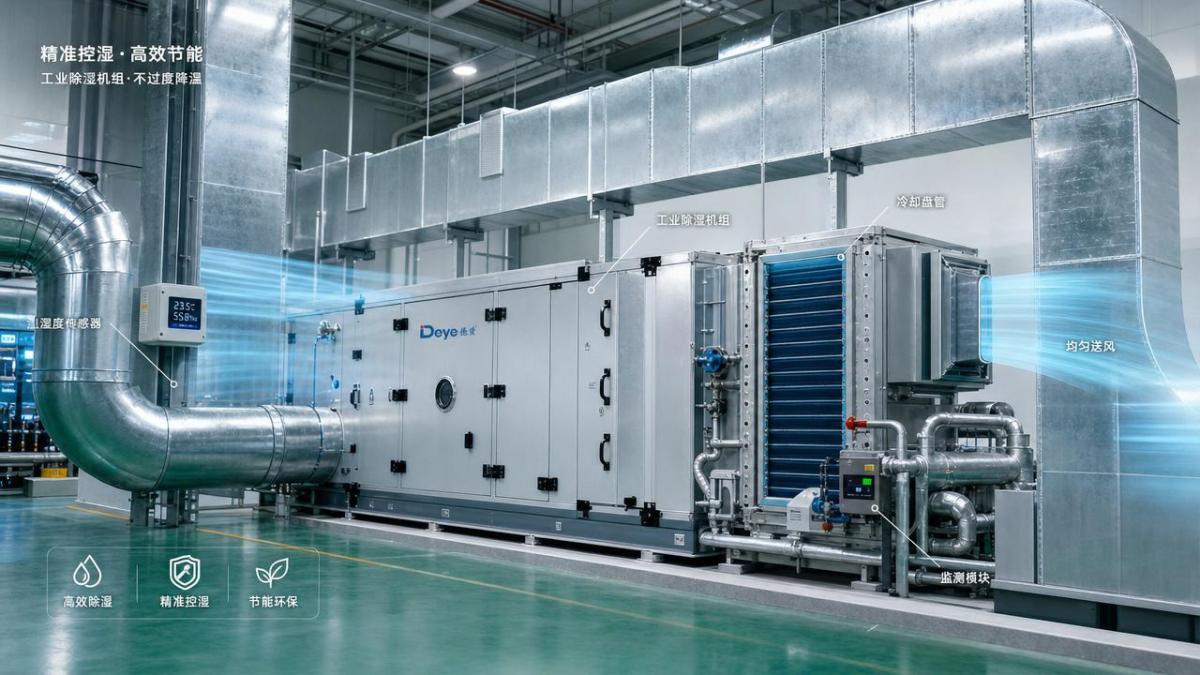
The core search intent behind industrial dehumidification is practical: users want to remove moisture effectively without creating temperature problems, energy waste, or unstable process conditions.
Operators usually face a familiar issue. Humidity rises, the cooling system works harder, supply air gets colder, and the room becomes uncomfortable or process temperatures drift below target.
This happens because many facilities still rely on sensible cooling to achieve latent moisture removal. In simple terms, air is cooled below its dew point so water condenses out.
That method works, but it often removes more heat than the process actually requires. The result is overcooling, followed by reheating, which adds complexity and operating cost.
In production environments, this is more than an efficiency problem. Excessively cold air can affect adhesives, coatings, powders, electronics assembly, packaging performance, and worker comfort.
In cleanrooms, labs, and precision manufacturing areas, temperature control may be as critical as humidity control. A space cannot simply be dried at the expense of thermal stability.
So the overall judgment is clear: good industrial dehumidification is not just about hitting a lower relative humidity value. It is about balancing dew point, room temperature, airflow, and load variation.
What do operators care about most when humidity becomes a production risk?
Most users are not looking for textbook psychrometrics. They want answers to practical questions that affect daily operations, product quality, alarms, maintenance work, and utility bills.
First, they want to know whether moisture is truly the root cause of the problem. Condensation, corrosion, clumping, microbial growth, fogging, and static imbalance can all point to humidity-related instability.
Second, they want stable conditions, not short-term fixes. A room that swings between too humid and too cold is often worse than a room that stays slightly above target.
Third, they care about response speed. If doors open frequently, wet products enter the space, or outdoor air changes quickly, the system must recover without long delays.
Fourth, they need a solution that operators can actually manage. If a system requires constant manual adjustment, bypassing, or seasonal setpoint changes, performance usually drifts over time.
Finally, they care about energy. Running compressors harder than necessary, then reheating air to restore room temperature, is one of the most common hidden inefficiencies in moisture control.
For this audience, the most valuable content is not broad theory. It is guidance that helps them diagnose the source of humidity, compare control strategies, and understand trade-offs.
How can you remove moisture without driving room temperature too low?
The best approach is to separate moisture control from unnecessary sensible cooling as much as possible. That means focusing on dew point control instead of relying only on room temperature reduction.
One proven strategy is dedicated outdoor air treatment. If ventilation air brings in a high moisture load, drying that air before it reaches the conditioned space reduces strain on the main HVAC system.
Another strategy is using dehumidification equipment designed for latent load removal rather than comfort cooling alone. Desiccant systems are a common example, especially in low-humidity processes.
Unlike standard cooling coils, desiccant dehumidifiers remove moisture directly from the air stream. This can reduce or eliminate the need to overcool the room just to achieve humidity targets.
Reheat is also important when cooling-based dehumidification cannot be avoided. If air must be cooled deeply for condensation, controlled reheat can restore supply temperature more efficiently.
However, not all reheat methods are equal. Heat recovery reheat, hot-gas reheat, or waste-heat reuse is usually better than adding electric resistance heating after aggressive overcooling.
Airflow management matters as well. If air is short-circuiting, bypassing wet zones, or poorly distributed, the system may overwork even when installed capacity seems adequate on paper.
In many facilities, the answer is not one technology alone. It is a combination of better ventilation drying, tighter envelope control, targeted dehumidification, and smarter control logic.
Which sources of moisture should you check before changing equipment?
Before upgrading hardware, operators should identify where moisture is entering or being generated. Otherwise, a larger system may simply mask the real problem while increasing energy use.
Outdoor air is often the biggest latent load, especially in humid climates. Economizer logic, damaged dampers, or excessive ventilation rates can push large amounts of moisture indoors.
Open doors, dock traffic, and personnel movement also matter. In warehouses, packaging rooms, and process corridors, infiltration can cause humidity spikes that look like equipment failure.
Process-generated moisture is another major factor. Washing, boiling, drying, curing, sanitation cycles, and even product off-gassing can raise humidity faster than the existing system can remove it.
Building envelope leakage should not be ignored. Small gaps around penetrations, doors, service chases, or ceiling interfaces can continuously introduce warm, wet air into controlled areas.
Drainage and condensate management are equally important. Blocked drains, standing water, or poorly insulated cold surfaces can create secondary moisture problems inside the space.
Sensor placement is another common issue. If humidity sensors sit near supply diffusers, doors, or localized heat sources, readings may not reflect true room conditions.
Checking these sources first helps users decide whether they need more dehumidification capacity, better control, or simply better moisture containment around the process.
What system types work best for different industrial dehumidification needs?
There is no universal design for industrial dehumidification because moisture loads, temperature tolerances, and cleanliness requirements differ widely across facilities.
Cooling-coil dehumidification works well when target humidity is moderate and cooling demand already exists. It is common in general manufacturing, storage, and standard conditioned process spaces.
Desiccant dehumidification is often the better choice when very low humidity is required or when room temperature must remain stable. It is widely used in batteries, pharmaceuticals, and sensitive electronics.
Hybrid systems combine mechanical cooling and desiccant drying to balance efficiency and flexibility. These systems can handle varying loads while avoiding excessive room overcooling during humid periods.
Dedicated make-up air units are useful when the main issue comes from ventilation or infiltration. Drying incoming air at the source protects downstream zones from repeated moisture surges.
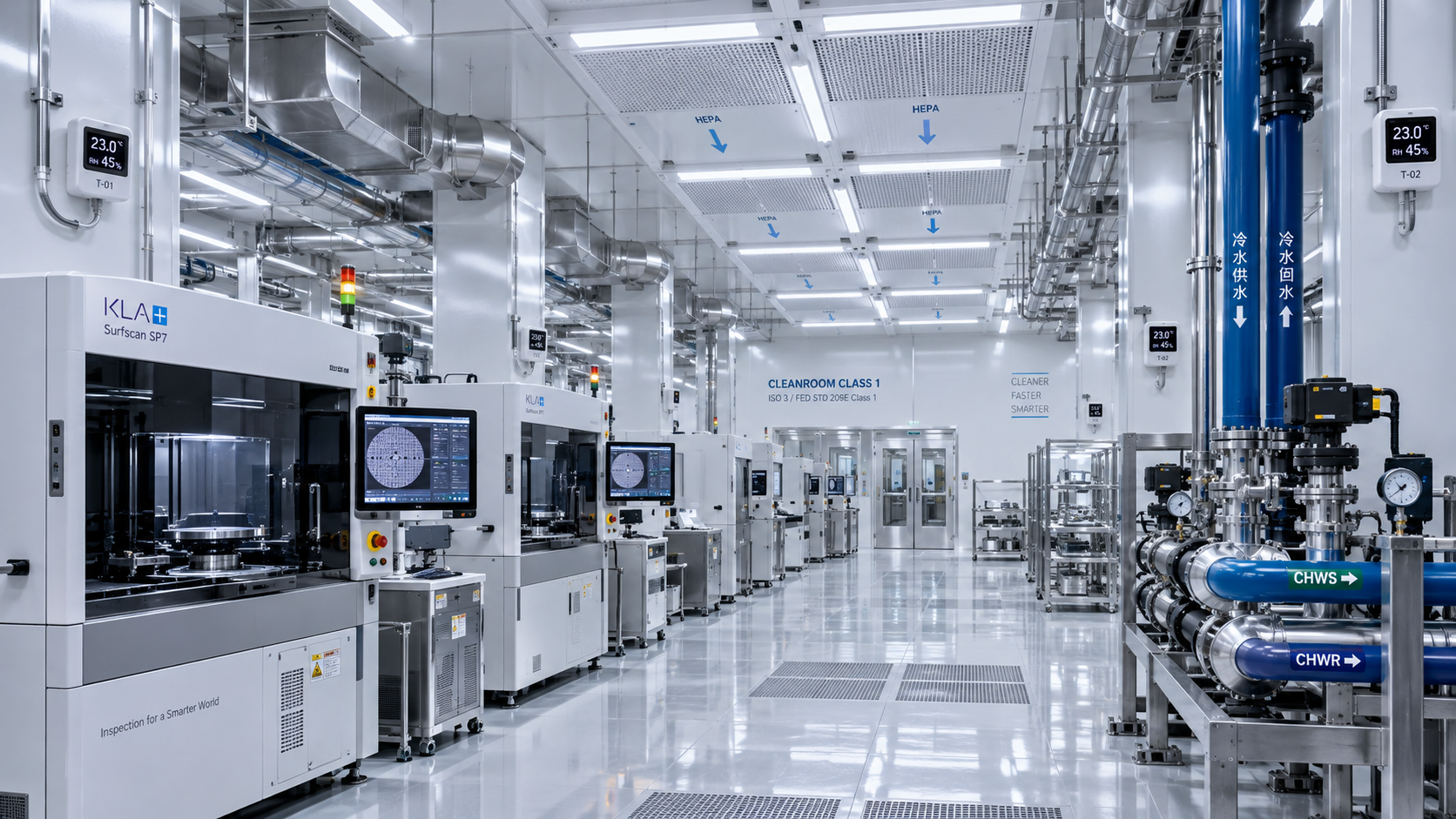
In clean or precision environments, integrated control between air handlers, chilled water systems, reheats, and room sensors is often more important than raw dehumidifier capacity alone.
For operators, the key question is not which technology sounds most advanced. It is which method matches the humidity target, process sensitivity, operating schedule, and maintenance capability.
How should operators evaluate performance beyond relative humidity readings?
Relative humidity is useful, but it can be misleading when temperature shifts. A room may show acceptable relative humidity while still carrying too much moisture for the process.
Dew point is often the better performance metric because it measures actual moisture content in the air. It helps operators understand whether the system is truly drying the space.
Trend data is also essential. Single-point readings cannot reveal whether humidity spikes occur during shift changes, door openings, sanitation cycles, or outdoor weather transitions.
Useful indicators include room dew point, supply air dew point, return air condition, reheat energy use, coil leaving temperature, compressor cycling, and recovery time after disturbances.
If product quality is the concern, correlate environmental data with defect rates, spoilage, clumping, corrosion events, static discharge incidents, or microbial findings.
When operators review moisture control through both environmental and process outcomes, it becomes easier to justify changes in settings, maintenance priorities, or equipment upgrades.
What control strategies reduce energy waste while keeping humidity stable?
Stable industrial dehumidification depends heavily on controls. Even capable equipment will underperform if sequencing, setpoints, or sensor feedback are poorly configured.
One important step is controlling to dew point or absolute moisture where appropriate, instead of depending only on relative humidity. This reduces false responses caused by temperature changes.
Another is staging equipment based on actual latent load. Running all cooling or drying capacity continuously can overshoot conditions and create repeated overcooling and reheating cycles.
Variable-speed fans and compressors can improve part-load performance. In many facilities, humidity issues occur during changing conditions, not just at design peak load.
Reset strategies can help too. If outdoor air is dry enough, the system may not need maximum dehumidification intensity. If occupancy or process moisture drops, airflow and cooling can also adjust.
Control integration is especially valuable in high-performance environments. Coordinating dehumidification with chilled water temperature, reheat availability, pressurization, and filtration improves consistency.
Alarm logic should be practical rather than excessive. Operators need alerts that distinguish between brief operational disturbances and sustained moisture excursions that threaten production.
What maintenance issues commonly undermine humidity control?
Many moisture problems are caused by maintenance drift rather than undersized equipment. This is good news because corrective action may be faster and less expensive than replacement.
Dirty coils reduce heat transfer and limit moisture removal. Fouled filters can alter airflow, while clogged drains can cause water carryover or local re-evaporation into the air stream.
Leaking valves, failed actuators, and damper calibration errors often change coil performance or outside air intake without obvious visual warning. These faults can persist for months.
Sensor calibration is another high-impact issue. If humidity or temperature sensors are inaccurate, the control system may overcool or under-dry the space while appearing to operate normally.
Desiccant systems need attention too. Rotor condition, purge performance, regeneration temperature, and seal integrity all affect drying efficiency and long-term reliability.
Routine maintenance should therefore include not only component inspection, but also trend review and functional verification under real operating conditions.
When is it time to upgrade your industrial dehumidification approach?
Operators should consider system changes when humidity-related quality risks continue despite maintenance, when rooms require frequent manual correction, or when energy use is disproportionately high.
Repeated condensation, unstable product behavior, slow recovery after door openings, or constant reheating are strong signs that the current strategy is not well matched to the load.
An upgrade may involve adding dedicated outdoor air drying, converting part of the load to desiccant dehumidification, improving envelope sealing, or modernizing controls and sensors.
In critical environments, even small improvements in moisture stability can protect yield, compliance, uptime, and equipment life. That often creates more value than energy savings alone.
The right decision starts with load analysis and operating evidence. Users should look at actual moisture sources, process limits, recovery behavior, and utility trends before selecting a solution.
Conclusion: what is the smartest way to cut moisture without overcooling?
The smartest approach to industrial dehumidification is to control moisture directly instead of forcing the entire space colder than necessary. That usually means focusing on dew point, latent load, and air path quality.
For operators and facility users, the priority should be stable performance: dry enough for the process, warm enough for the room, and efficient enough for long-term operation.
When moisture sources are identified clearly, controls are tuned properly, and the right dehumidification method is matched to the application, overcooling becomes avoidable rather than inevitable.
In short, effective industrial dehumidification is not about making air colder. It is about making environmental control more precise, more resilient, and more useful to the process it supports.
Get weekly intelligence in your inbox.
No noise. No sponsored content. Pure intelligence.
 Oct 21, 2026How often is cleanroom certification required under ISO 14644-2?Cleanroom Certification is generally recommended annually under ISO 14644-2. Learn when risk-based extensions apply and which changes trigger earlier testing to plan with confidence.
 Oct 21, 2026FASEB Comments on NIH Draft Policy for Research Involving BiohazardsFASEB comments on NIH’s draft biohazard research policy call for risk-based biosafety oversight. Explore potential implications for laboratories, suppliers, and compliance teams.
 Oct 20, 2026How to disinfect ultrasound machines without damaging surfacesLearn how to disinfect ultrasoundmachines without surface damage. Explore compatible products, wet contact times, and probe care to protect patients and equipment.
 Oct 20, 2026Ultrapure Water in Semiconductor Manufacturing: Reuse and Quality Control InsightsExplore ultrapure water reuse in semiconductor manufacturing, key UPW quality benchmarks and analytical insights to help evaluate suppliers and protect process purity.
 Oct 19, 2026How cooling affects warpage in injection-molded consumer electronics housingsOptimize plastic injection molding for consumer electronics with cooling strategies to reduce housing warpage and improve assembly fit. Discover practical checks for stable, efficient production.
 Oct 18, 2026Can air leaks prevent a dehumidifier from holding its target dew point?Why can't our dehumidifier maintain the target dew point? Discover how air leaks increase moisture loads, spot hidden faults, and find practical fixes to restore reliable dew-point control.
 Oct 17, 2026How semiconductor process water treatment removes trace organicsSee how semiconductor process water treatment removes trace organics with RO, UV oxidation, and polishing. Learn how TOC monitoring helps verify purity and pinpoint contamination.
 Oct 16, 2026How to choose ultra pure water piping materials to limit leachingChoose ultra pure water piping with confidence. Compare PVDF, PFA, and stainless steel, assess leaching risks, and learn how to qualify your system for reliable purity.
 Oct 15, 2026How to size a skid-mounted deionized water system for peak demandCompare deionized water systems skid configurations for peak demand. Learn how to balance production, storage, and pump capacity to prevent shortages and avoid costly oversizing.
 Oct 14, 2026When is collaborative laboratory robotics suitable for sample sorting?Explore when collaborative laboratory robotics suits sample sorting. Discover key checks for safety, traceability, container compatibility, and throughput before choosing your solution.
 Oct 13, 2026How sandwich panel joints affect airtightness in cleanroom systemsCleanroom Systems sandwich panels need reliable joints for airtightness. Discover how gaskets, sealants, and testing help reduce leakage and protect cleanroom pressure control.
 Oct 12, 2026How to verify USP compliance for ultra pure water systemsUltra Pure Water Systems USP compliance: learn how to verify water quality, sampling, sanitization, trends, and validation controls at every point of use.
 Oct 11, 2026How tight temperature control prevents cleanroom process driftCleanroom process temperature control systems prevent costly drift by stabilizing critical conditions, improving repeatability, and protecting sensitive production workflows.
 Oct 10, 2026When does organic contaminant removal require TOC treatment?Organic contaminant removal requires TOC treatment when dissolved organics threaten product quality, equipment reliability, or process control. Learn how to assess risks and choose the right solution.
 Oct 08, 2026What affects lead times for sheet metal bending services in Canada?Sheet metal bending services Canada: discover how material supply, tooling, tolerances, finishing, documentation, and freight affect lead times for reliable project delivery.
 Oct 07, 2026How HVAC design for semiconductor fabs prevents airborne contaminationHVAC design for semiconductor fabs prevents airborne contamination through advanced filtration, pressure cascades, airflow control, and real-time monitoring. Explore key strategies for cleaner, more reliable wafer production.
 Oct 06, 2026How photovoltaic modules waterproof technology prevents moisture damagephotovoltaic modules waterproof technology prevents moisture damage with durable seals, drainage, and junction-box protection. Explore practical selection and testing insights.
 Oct 05, 2026How ISO 14644 Europe requirements affect cleanroom qualificationISO 14644 Europe requirements shape cleanroom qualification, from particle classification and recovery testing to monitoring, GMP alignment, and change control.
 Oct 04, 2026How to assess a pharmaceutical cleanroom solutions supplier’s ISO capabilityPharmaceutical Cleanroom Solutions supplier assessment guide: evaluate ISO 14644 capability, validation evidence, airflow design, documentation, and long-term GMP readiness.
 Oct 03, 2026What EU standards govern the design of BSL-3 laboratories in Europe?BSL-3 laboratories Europe: explore EU directives, EN standards, HVAC containment, commissioning, and practical design strategies for compliant, resilient high-containment facilities.
 Oct 02, 2026How EN 1822 defines HEPA filtration efficiency for cleanroomsHEPA filtration EN 1822 explained: learn how MPPS testing, local leakage limits, and filter classes support reliable cleanroom decisions.
 Oct 01, 2026How pharmaceutical process water systems control microbial riskProcess water systems pharmaceutical teams rely on can control microbial risk through hygienic design, monitoring, and validated sanitization. Explore practical compliance strategies.
 Sep 30, 2026When does a negative pressure laboratory need BSL-3 containment?Negative pressure laboratory or BSL-3? Discover the risk factors, engineering controls, and containment requirements needed for safe, compliant laboratory planning.
 Sep 29, 2026How to evaluate a TOC-zero water treatment supplier for UPW systemsChoose a TOC-zero water treatment supplier with confidence. Compare UPW performance, monitoring, validation, materials, service capability, and lifecycle cost.
 Sep 28, 2026What drives sustainable cooling cost in high-precision facilities?Sustainable cooling cost in high-precision facilities depends on thermal stability, energy, water, controls, and resilience. Explore smarter lifecycle strategies.
 Sep 27, 2026How to compare freight forwarding services for time-critical shipmentsCompare freight forwarding services for time-critical shipments with practical insights on routing, customs, visibility, specialized handling, and contingency planning.
 Sep 26, 2026How environmental integrity in laboratories supports reliable test resultsEnvironmental Integrity in laboratories safeguards samples, instruments, and staff. Discover practical controls for contamination, monitoring, and reliable test results.