Southeast Asia EMA Expansion Drives ISO Class 1–3 Cleanroom Demand
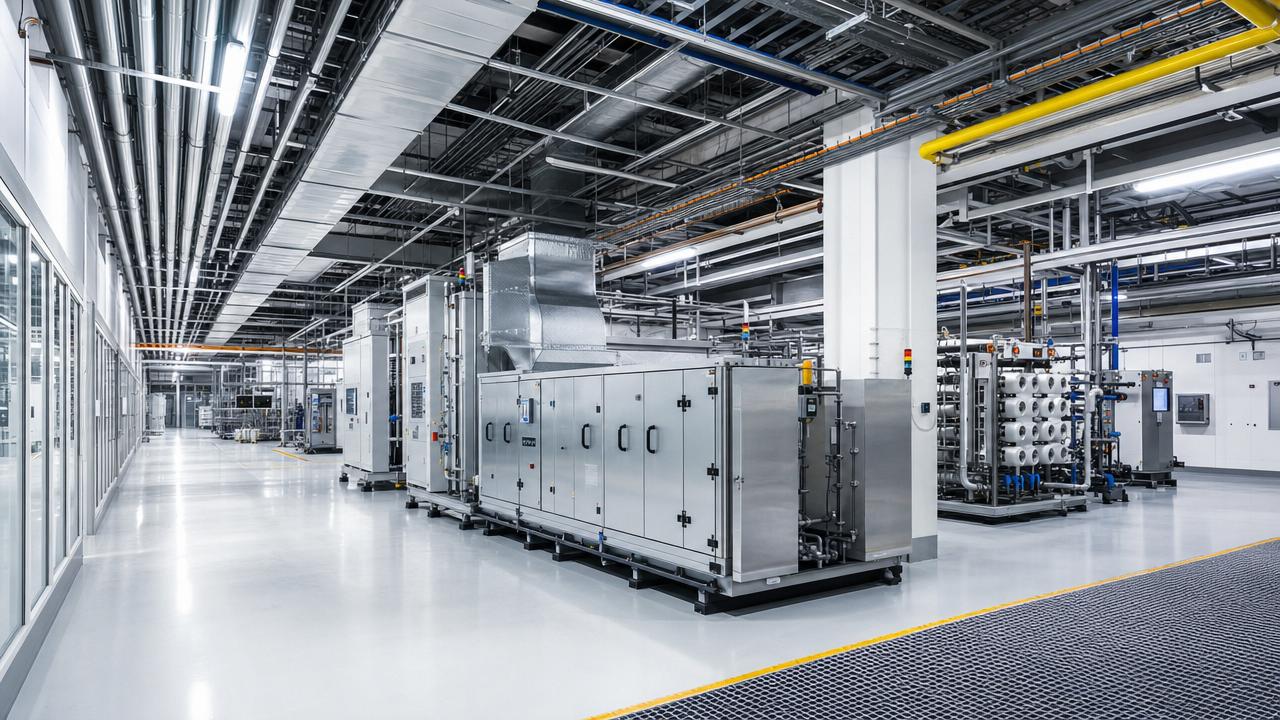
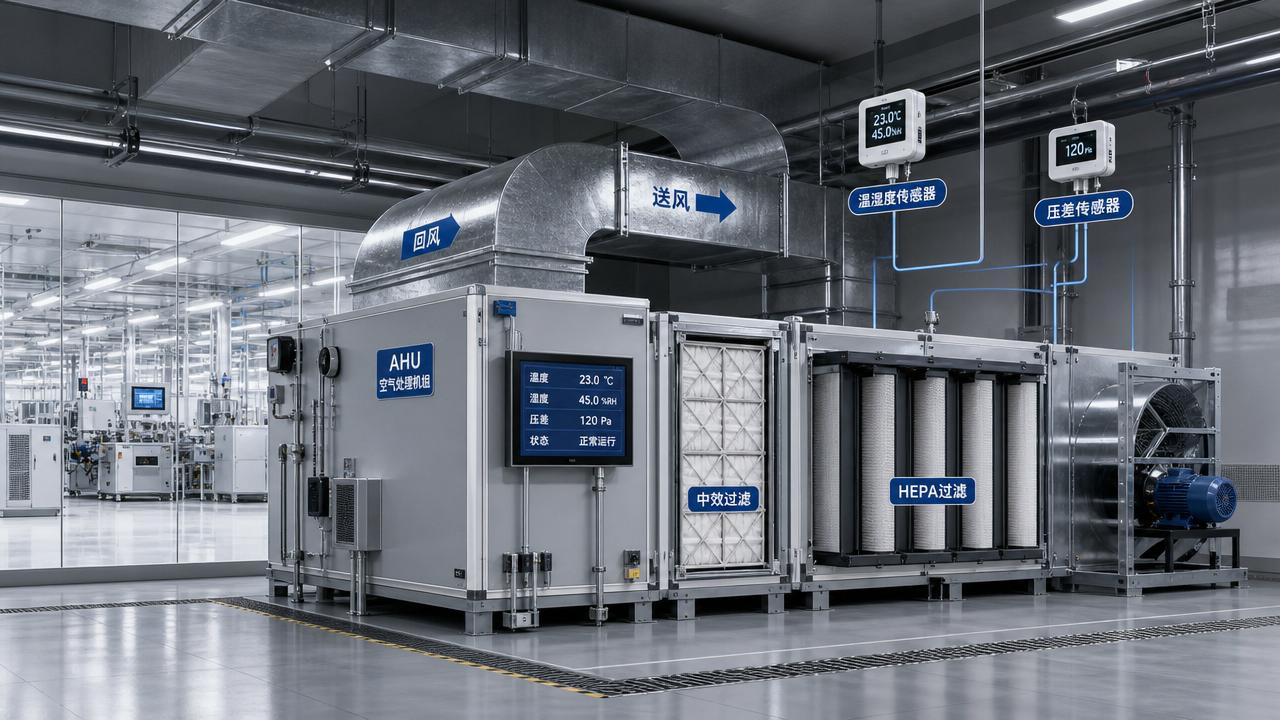
Major electronic manufacturing expansion in Southeast Asia — including Samsung Hanoi Phase II, Luxshare Qinzhou Hai Phong facility, and Pegatron Ho Chi Minh City plant — has triggered a surge in demand for high-precision cleanroom systems, with confirmed order lead times now extending to Q1 2027. Announced on April 29, 2026, this development directly impacts suppliers of ISO Class 1–3 FFUs, filtration components, and integrated air shower systems — particularly those engaged in cross-border trade, precision component manufacturing, and cleanroom integration services.
Event Overview
According to the Vietnam Ministry of Industry and Trade’s April 29, 2026 notification, 12 key electronics manufacturing projects — including Samsung’s Hanoi Phase II, Luxshare Precision’s Hai Phong base, and Pegatron’s new Ho Chi Minh City facility — entered mass production in Q2 2026. This accelerated ramp-up drove a 68% year-on-year increase in demand for cleanroom systems. Of ISO Class 1–3 FFU (Fan Filter Unit) and associated air shower system orders, over 73% were placed with Chinese suppliers. However, constrained high-precision FFU filter media capacity has extended average delivery lead times across major vendors to Q1 2027; some customers have shifted to air-freighted components combined with local assembly to mitigate delays.
Industries Affected by Segment
Direct Exporters of FFUs and Cleanroom Subsystems
Chinese manufacturers supplying ISO Class 1–3 FFUs and integrated air shower systems face direct pressure from extended order cycles. The 73% share of such orders originating from China indicates concentrated exposure: revenue recognition is delayed, working capital turnover slows, and contract renegotiation risk rises where fixed-delivery clauses apply.
Suppliers of High-Precision Filter Media and Core Components
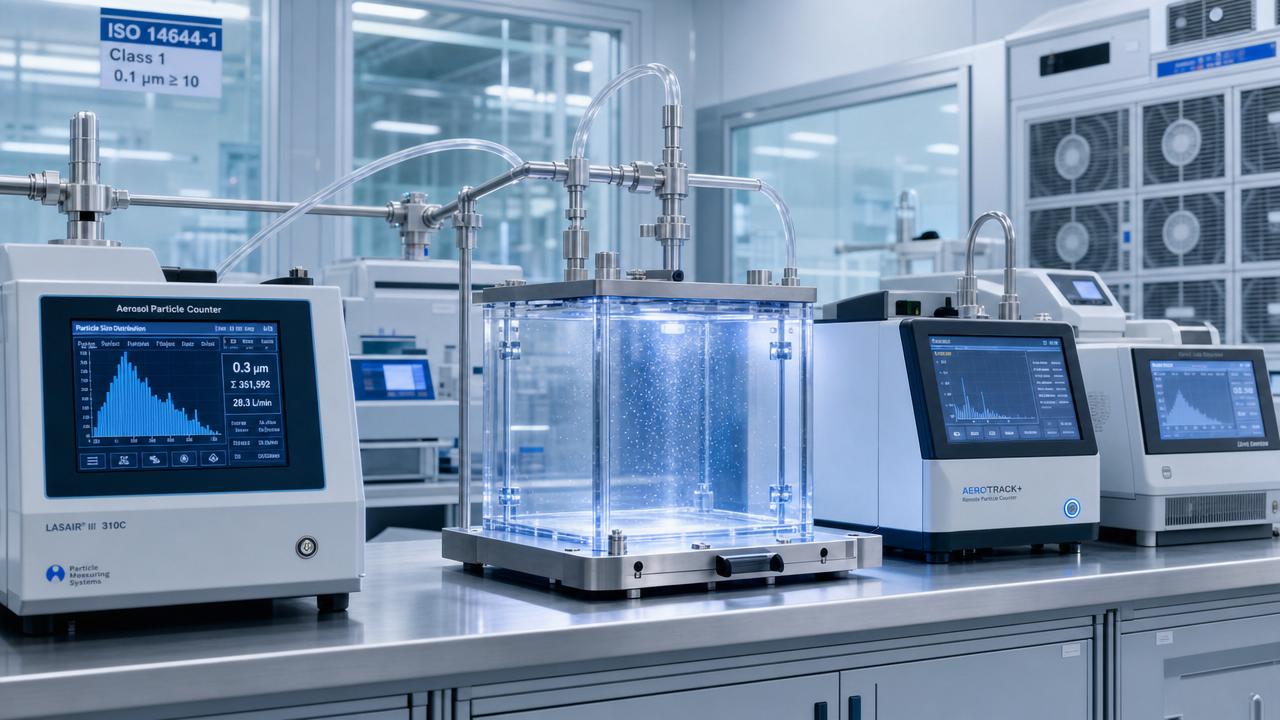
The bottleneck is explicitly attributed to limited output of high-precision FFU filter elements. Component makers supplying ultra-low-particle-count HEPA/ULPA media, frame assemblies, or motorized fan modules experience intensified demand but also heightened scrutiny on yield rates, certification compliance (e.g., ISO 14644-1), and traceability documentation required for Class 1–3 validation.
Cleanroom System Integrators and EPC Contractors
Integrators deploying turnkey洁净室 (cleanroom) solutions in Vietnam and other ASEAN markets must adjust project timelines and contractual milestones. With FFU lead times now exceeding 12 months, integrators face cascading delays in commissioning, testing, and client handover — especially for semiconductor-adjacent or medical-grade electronics lines requiring full ISO Class 1–3 validation.
Logistics and Cross-Border Supply Chain Service Providers
Air freight utilization for FFU subcomponents is rising as clients adopt ‘air freight + local assembly’ workarounds. Forwarders and customs brokers handling sensitive filtration hardware must prepare for increased volume of time-critical, temperature- and humidity-controlled shipments, along with tighter documentation requirements for ASEAN import classification (e.g., HS Code 8421.39 for air filtration units).
What Relevant Enterprises or Practitioners Should Monitor and Do
Track official updates from Vietnamese regulatory and industrial authorities
Monitor further announcements from the Vietnam Ministry of Industry and Trade or provincial industrial zones (e.g., Hai Phong, Bac Ninh) regarding incentives, infrastructure readiness, or revised timelines for the 12 announced projects — as these may affect near-term cleanroom deployment sequencing.
Assess exposure to ISO Class 1–3 FFU and filter media categories specifically
Review current order books and supplier contracts for dependencies on Class 1–3-rated FFUs (not broader Class 5–8 systems). Prioritize visibility into filter media sourcing — especially whether supply originates from domestic or third-country sources subject to export controls or quality audits.
Distinguish between policy signals and actual construction/commissioning progress
While Q2 2026 ‘concentrated投产’ (commissioning) was reported, actual cleanroom validation and volume production ramp may lag by quarters. Avoid assuming immediate demand pull-through; instead, align procurement and staffing plans with verified equipment installation and qualification schedules.
Prepare contingency protocols for air-freighted component workflows
For firms supporting the ‘air freight + local assembly’ model, pre-qualify ASEAN-based assembly partners, verify local calibration and testing capabilities for FFU performance validation, and update logistics SLAs to reflect higher-cost, lower-volume air shipment parameters.
Editorial Perspective / Industry Observation
Observably, this is not merely a short-term supply chain delay but a structural inflection point signaling accelerated capacity build-out in ASEAN’s high-end electronics manufacturing tier. Analysis shows the concentration of orders among Chinese suppliers reflects existing technical capability and cost positioning — yet the filter media bottleneck reveals an underdeveloped upstream segment critical for Class 1–3 compliance. From an industry perspective, this event functions less as a completed outcome and more as an early indicator: it highlights where certification depth, material science capability, and regional logistics agility converge as decisive competitive factors. Sustained monitoring is warranted — not only for delivery timelines, but for shifts in vendor qualification standards and ASEAN-local content requirements emerging from new factory certifications.
Conclusion
This development underscores a tightening linkage between electronics manufacturing geography and precision environmental infrastructure readiness. It does not represent broad-based cleanroom market growth, but rather a focused, high-stakes demand spike in the most stringent ISO classes — driven by specific multinational and Tier-1 EMS investments in Vietnam. Current understanding should center on constrained upstream capacity and its operational ripple effects, rather than generalized sectoral optimism.
Source Attribution
Main source: Vietnam Ministry of Industry and Trade — Official Notification dated April 29, 2026.
Points requiring ongoing observation: Actual commissioning dates of the 12 projects; evolution of Vietnamese import regulations for cleanroom components; potential policy responses from Chinese industrial authorities regarding filter media capacity expansion.
Get weekly intelligence in your inbox.
No noise. No sponsored content. Pure intelligence.
 May 26, 2026Smart Building Management BMS Upgrade GuideSmart building management (BMS) upgrade guide covering checklists, risk control, compliance, HVAC optimization, and scalable execution to improve efficiency and long-term facility performance.
 May 26, 2026HVAC Digital Twin Use Cases in 2026HVAC digital twin use cases in 2026: discover how cleanrooms, labs, pharma, and industrial sites cut risk, improve uptime, and optimize energy with smarter data-driven control.
 May 26, 2026ASHRAE Standards Compliance Risk ChecklistASHRAE standards compliance risk checklist for manufacturing, labs, and commercial facilities—spot hidden HVAC gaps early, reduce audit risk, and protect safety, quality, and uptime.
 May 26, 2026When HVAC System Redundancy Pays OffHVAC system redundancy pays off when downtime, compliance risk, and asset loss cost more than backup capacity. Learn where N+1 or 2N delivers real ROI.
 May 26, 2026Air Flow Visualization for Cleaner HVAC TuningAir flow visualization helps reveal hidden turbulence, leakage, and pressure drift for cleaner HVAC tuning. Learn how to improve control, compliance, and efficiency.
 May 26, 2026IEA:2025年甲烷排放未降,Carbon Tracking成出口必备模块Carbon Tracking is now essential for exporters amid IEA’s 2025 methane emissions warning—ensure compliance, reduce risk, and gain competitive edge today.
 May 26, 2026中国启动氢能源应用试点:TOC Removal技术成绿氢电解槽标配TOC Removal technology is now standard in green hydrogen electrolyzers as China launches nationwide hydrogen energy application pilots—discover how this breakthrough boosts efficiency and sustainability.
 May 26, 2026海南昌江核电3、4号机组环评获批:Bio-Barrier集成标准升级Bio-Barrier集成标准升级!海南昌江核电3、4号机组环评正式获批,标志着中国核电绿色安全新标杆落地,速看技术突破与项目进展。
 May 26, 2026中国完成全球最大可再生能源系统:18.2MΩ·cm UPW制备技术出海加速China's 18.2 MΩ·cm UPW preparation technology—key to the world’s largest renewable energy system—is accelerating global deployment. Discover how this breakthrough enables ultra-pure water for cutting-edge green infrastructure.
 May 26, 2026世界核协报告:2050年全球核电装机或达1446GWe,Digital Twin Lab需求激增Digital Twin Lab demand surges as World Nuclear Association forecasts global nuclear capacity to reach 1446 GWe by 2050—explore growth opportunities now.
 May 26, 2026中国发布新版《危险废物排除管理清单》:ESD Control材料跨境运输豁免扩容China's new Hazardous Waste Exclusion List expands ESD Control materials' cross-border transport exemptions—boost compliance & cut logistics costs. Learn how your business benefits now!
 May 26, 2026EU Launches SMR Strategy: Mobile Decon Systems and Modular BSL-3/4 Infrastructure Prioritized for Joint ProcurementEU prioritizes mobile decon systems & modular BSL-3/4 infrastructure for SMR joint procurement—key opportunity for certified global suppliers.
 May 26, 2026中国核安全局批准太平岭2号机组运行许可:Maglev Chillers获核电级验证背书Maglev Chillers achieve nuclear-grade validation as China’s NNSA approves Taipingling Unit 2 operation—cutting-edge, energy-efficient cooling for critical infrastructure.
 May 26, 2026IEA Warns on Persistent Methane Emissions: Stricter Carbon Footprint Verification for BSL-3/4 Infrastructure ExportsIEA's methane warning triggers stricter carbon footprint verification for BSL-3/4 infrastructure exports—get CBAM Phase II compliance insights now.
 May 26, 2026中国发布《废光伏设备回收处理污染控制规范》:ZLD Protocols出口合规新增强制要求China's new 'Pollution Control Specifications for Waste PV Equipment Recycling' mandates ZLD protocols—key for exporters ensuring compliance and market access.
 May 25, 2026When Thermodynamic Hardware Maintenance Cuts DowntimeHigh-Performance Thermodynamic Hardware maintenance helps cut downtime, improve thermal stability, and support compliance—discover how disciplined service protects uptime and long-term asset value.
 May 25, 2026High-Tech Industrial Complex Design Cost PrioritiesHigh-Tech Industrial Complex design cost priorities explained: learn how to balance compliance, uptime, energy efficiency, and lifecycle value for smarter approvals.
 May 25, 2026Industrial Climate Control Standards: What Fails First?Industrial Climate Control standards fail first in airflow, thermal precision, filtration, and controls. Discover early warning signs, reduce compliance risk, and plan smarter upgrades.
 May 25, 2026How to Measure Sub-Micron Contamination AccuratelySub-Micron Contamination measurement made practical: learn accurate methods, key parameters, and smart workflow tips to improve cleanroom control, compliance, and product quality.
 May 25, 20262026 Guide to 18.2MΩ·cm UPW Certification RisksUltra-Pure Water Treatment certification risks in 2026: learn how 18.2MΩ·cm compliance can fail after approval, and how to protect audits, uptime, yield, and validation confidence.
![]() May 25, 2026UKCA Transition Ends for FFU and Lab Automation DevicesUKCA transition ends 23 May 2026 for FFU and lab automation devices — ensure full UKCA, RoHS & EMC compliance now to avoid UK market access delays.
May 25, 2026UKCA Transition Ends for FFU and Lab Automation DevicesUKCA transition ends 23 May 2026 for FFU and lab automation devices — ensure full UKCA, RoHS & EMC compliance now to avoid UK market access delays.![]() May 25, 2026Hormuz Strait Traffic Drops Below 10%: Cleanroom Equipment Shipments Delayed, Freight Up 35%Cleanroom equipment shipments delayed as Hormuz Strait traffic drops below 10%—freight up 35%. Critical FFUs, UPW skids & BSL-3 units impacted. Act now.
May 25, 2026Hormuz Strait Traffic Drops Below 10%: Cleanroom Equipment Shipments Delayed, Freight Up 35%Cleanroom equipment shipments delayed as Hormuz Strait traffic drops below 10%—freight up 35%. Critical FFUs, UPW skids & BSL-3 units impacted. Act now.![]() May 25, 2026China Customs Launches Clean Tech Export Compliance PlatformClean tech export compliance made simple: China Customs’ new platform helps global buyers verify certifications for UPW systems, BSL-3/4 labs, ESD solutions & FFUs—fast, free, and official.
May 25, 2026China Customs Launches Clean Tech Export Compliance PlatformClean tech export compliance made simple: China Customs’ new platform helps global buyers verify certifications for UPW systems, BSL-3/4 labs, ESD solutions & FFUs—fast, free, and official.![]() May 25, 2026EU CBAM Fully Enforced: FFUs and Maglev Chillers Require Carbon Footprint ReportsEU CBAM now fully enforces carbon footprint reports for FFUs and Maglev Chillers—key for exporters, suppliers & HVAC manufacturers. Act now to avoid delays & penalties.
May 25, 2026EU CBAM Fully Enforced: FFUs and Maglev Chillers Require Carbon Footprint ReportsEU CBAM now fully enforces carbon footprint reports for FFUs and Maglev Chillers—key for exporters, suppliers & HVAC manufacturers. Act now to avoid delays & penalties.![]() May 25, 2026DIN EN ISO 14644-3:2026 Introduces Digital Twin Lab ValidationDIN EN ISO 14644-3:2026 mandates Digital Twin Lab validation for cleanrooms—transforming compliance in pharma, biotech & semiconductors. Act now!
May 25, 2026DIN EN ISO 14644-3:2026 Introduces Digital Twin Lab ValidationDIN EN ISO 14644-3:2026 mandates Digital Twin Lab validation for cleanrooms—transforming compliance in pharma, biotech & semiconductors. Act now!![]() May 25, 2026FDA Updates Purified Water Guidance: TOC ≤100 ppb in 18.2 MΩ·cm UPWFDA updates UPW guidance: TOC ≤100 ppb now required for 18.2 MΩ·cm ultrapure water — critical for pharma suppliers, TOC analyzers & validation services.
May 25, 2026FDA Updates Purified Water Guidance: TOC ≤100 ppb in 18.2 MΩ·cm UPWFDA updates UPW guidance: TOC ≤100 ppb now required for 18.2 MΩ·cm ultrapure water — critical for pharma suppliers, TOC analyzers & validation services. May 24, 2026Cleanroom Architecture for Quantum Computing: What Fails First?Cleanroom Architecture for quantum computing: discover what fails first—from vibration and thermal drift to airflow and contamination—and how to prevent costly downtime.