FDA Updates Purified Water Guidance: TOC ≤100 ppb in 18.2 MΩ·cm UPW
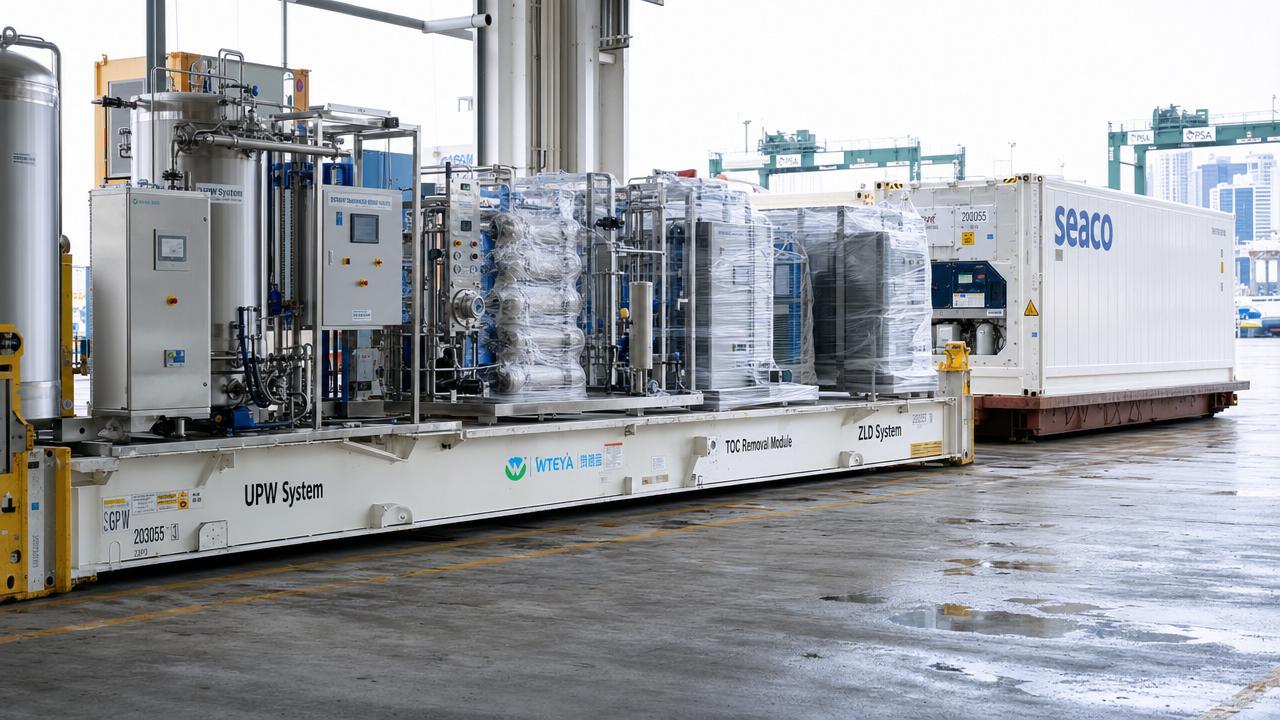
On May 24, 2026, the U.S. Food and Drug Administration (FDA) issued an updated Guidance for Industry: Process Water for Pharmaceutical Manufacturing, tightening the total organic carbon (TOC) limit for ultrapure water (UPW) used in pharmaceutical and biomanufacturing processes to ≤100 ppb — applicable immediately. This change directly affects Chinese suppliers of UPW systems, TOC removal equipment, online TOC sensors, and associated validation services exporting to the U.S. market.
Event Overview
The U.S. FDA formally updated its Guidance for Industry: Process Water for Pharmaceutical Manufacturing on May 24, 2026. The revision specifies that ultrapure water (UPW) with resistivity of 18.2 MΩ·cm — commonly used in sterile drug manufacturing and bioprocessing — must now meet a maximum TOC concentration of 100 ppb. This replaces the previous unspecified or less stringent expectation under prior guidance. The update takes effect immediately upon publication.
Industries Affected by This Update
Direct Exporters of UPW Systems and Components
Companies supplying complete UPW generation systems, point-of-use polishing units, or integrated TOC abatement modules to U.S.-based pharmaceutical facilities are affected because system performance validation must now demonstrate consistent TOC ≤100 ppb under operational conditions — not just at commissioning. Impact includes extended IQ/OQ/PQ timelines and potential requalification of legacy installations.
Manufacturers of Online TOC Analyzers and Sensors
Suppliers of real-time TOC monitoring instruments face revised calibration and verification expectations. Devices deployed in U.S.-regulated facilities must support detection down to ≤100 ppb with documented accuracy, traceability, and data integrity per 21 CFR Part 11 — increasing demand for audit-ready firmware and secure data logging features.
Validation and Compliance Service Providers
Firms offering water system qualification, ongoing monitoring program design, or regulatory documentation support must align new protocols with the updated TOC threshold. This includes revising acceptance criteria for TOC trending, alarm setpoints, and excursion investigation triggers — affecting scope, duration, and pricing of service engagements.
What Relevant Enterprises or Practitioners Should Focus On — And How to Respond
Monitor Official FDA Communications for Clarification
Analysis shows the guidance does not specify measurement methodology (e.g., high-temperature catalytic oxidation vs. UV-persulfate), nor define sampling frequency or location requirements for compliance demonstration. Stakeholders should track FDA’s Q&A updates or upcoming webinars for interpretive clarity before finalizing protocol revisions.
Prioritize Review of Active Submissions and Ongoing Projects
For Chinese suppliers with pending premarket notifications, 510(k)-equivalent submissions, or EUA-style letters of conformance related to UPW systems destined for U.S. users, current documentation may require supplementation to explicitly address the 100 ppb TOC limit — particularly where older validation reports reference higher historical thresholds.
Distinguish Between Regulatory Signal and Enforceable Requirement
Observably, this is a guidance-level update — not a codified regulation. While FDA inspections will increasingly assess alignment with the 100 ppb benchmark, enforcement remains risk-based and context-dependent. Companies should avoid overreacting with wholesale system retrofits unless tied to specific customer commitments or facility upgrades already underway.
Update Internal Technical Specifications and Customer Communications
Manufacturers should revise datasheets, installation manuals, and validation templates to reflect the 100 ppb TOC performance claim — including test conditions, uncertainty statements, and supporting evidence. Sales and technical support teams need aligned messaging to proactively address customer inquiries without implying guaranteed compliance across all site-specific conditions.
Editorial Perspective / Industry Observation
From an industry perspective, this update is best understood as a formalization of an emerging quality benchmark — one already reflected in many leading biopharma firms’ internal water specifications since 2023–2025. It signals FDA’s intent to harmonize expectations around organic contamination control in critical process water, especially as continuous manufacturing and single-use technologies increase sensitivity to low-level TOC-related leachables and biofilm precursors. However, it does not yet constitute a de facto regulatory mandate enforceable outside the context of inspection observations or submission reviews. Continued attention is warranted as FDA may issue complementary draft annexes or case studies later in 2026–2027.
Conclusion: This guidance update represents a targeted refinement in water quality expectations — not a systemic overhaul. Its primary significance lies in elevating TOC from a secondary monitoring parameter to a defined pass/fail criterion for UPW in high-risk applications. For affected stakeholders, the most pragmatic interpretation is that it reinforces existing best practices rather than introducing wholly new technical barriers — provided verification approaches remain scientifically sound and well-documented.
Source: U.S. FDA, Guidance for Industry: Process Water for Pharmaceutical Manufacturing, Revision dated May 24, 2026. Note: Interpretation of implementation scope and methodological expectations remains subject to ongoing observation.
Get weekly intelligence in your inbox.
No noise. No sponsored content. Pure intelligence.
 Jun 11, 2026Smart Warehousing Trends in 2026: What Actually Improves ROISmartwarehousing in 2026 is driven by measurable control, not hype. Discover how smarter inventory, energy, compliance, and uptime strategies deliver stronger ROI.
 Jun 11, 2026Warehouse Pallet Racking Mistakes That Reduce Storage EfficiencyWarehouse pallet racking mistakes can quietly reduce capacity, slow picking, and increase risk. Discover 7 common errors and practical fixes to improve storage efficiency fast.
 Jun 11, 2026Rapid Prototyping for Consumer Electronics: Speed vs. CostRapid prototyping for consumer electronics: learn when speed cuts costs, when it adds risk, and how to validate smarter before tooling, compliance, and pilot builds.
 Jun 11, 2026Custom Metal Fabrication for Renewable Energy: Key Design FactorsCustom metal fabrication for renewable energy: discover key design factors in materials, corrosion control, tolerances, and thermal performance to improve reliability, compliance, and lifecycle value.
 Jun 11, 2026How to Choose Corrugated Plastic Boxes for Reusable ShippingCorrugated plastic boxes for reusable shipping: learn how to compare durability, handling efficiency, cleanability, and lifecycle cost to choose a smarter, lower-risk packaging solution.
 Jun 11, 2026METI Opens 72-Hour Green Customs Track for Maglev ChillersMETI opens a 72-hour green customs track for Maglev Chillers in Japan. Learn eligibility, COP 7.2 and ±0.01°C requirements, supplier impact, and how faster clearance can improve import planning.
 Jun 11, 2026FDA Makes BSL-4 Durability Report Mandatory for U.S. ImportsFDA Makes BSL-4 Durability Report Mandatory for U.S. Imports. Learn how the new FDA rule affects BSL-4 equipment, import compliance, testing timelines, and supplier readiness before 2026.
 Jun 11, 2026VDE Rule Adds Data Sovereignty Audit for Digital Twin LabsDigital Twin Lab compliance in Germany is changing fast. Learn how VDE-AR-E 2600-100:2026 adds a data sovereignty audit and what it means for exports, deployment, and market access.
 Jun 11, 2026PSA Opens UPW Inspection Lane, Cuts Import Lead Time 40%PSA opens a dedicated UPW inspection lane, cutting import lead time 40% for ultra-pure water systems. Learn how exporters, chip suppliers, and logistics teams can speed compliant deliveries.
 Jun 11, 2026China RoHS 2026 List Takes Effect for AMC ImportsChina RoHS 2026 list takes effect for AMC imports on July 1, 2026, bringing new compliance rules for AMC filtration modules, precision sensors, and IIoT air terminals—see what importers must prepare now.
 Jun 10, 2026CNC Machining for Automotive Industry: When Precision Improves ThroughputCNC machining for automotive industry boosts more than precision—it improves throughput, reduces rework, and supports faster, more stable vehicle production. Learn how.
 Jun 10, 2026CNC Machining for Medical Devices: Tolerance, Traceability, and Material RisksCNC machining for medical devices demands more than tight tolerances. Learn how traceability, material risk, and clean process control protect quality, compliance, and patient safety.
 Jun 10, 2026Sheet Metal Bending Machine Price: What Drives Total Cost in 2026Sheet metal bending machine price in 2026 depends on more than the quote. Learn what drives total cost, hidden expenses, energy use, and smart ways to compare offers.
 Jun 10, 2026Smart Home Hubs Compared: Matter Support, Range, and Automation LimitsSmart home hubs compared for Matter support, real-world range, and automation limits. Discover what to check before you buy and choose a hub that fits your home.
 Jun 10, 2026Semiconductor Cleanroom Standards: ISO Classes, AMC, and ESD BasicsSemiconductor Cleanroom standards explained: compare ISO classes, AMC control, and ESD basics to improve yield protection, reduce hidden risks, and benchmark fab performance with confidence.
 Jun 10, 2026PSA Opens Dedicated UPW Import Inspection LanePSA Opens Dedicated UPW Import Inspection Lane, cutting average clearance from 5.2 to 3.1 days. See what it means for semiconductor imports, compliance, and delivery planning.
 Jun 10, 2026VDE Rule Tightens Digital Twin Lab Data ControlVDE Rule Tightens Digital Twin Lab Data Control in Germany: learn how the 2026 audit reshapes data sovereignty, cloud use, and compliance choices for vendors and research labs.
 Jun 10, 2026Japan Opens 72-Hour Maglev Chiller Import LaneJapan opens a 72-hour Maglev chiller import lane tied to JIS B 8341-2:2025, PSE/JQA certification, and ±0.01°C proof—see what importers, buyers, and suppliers must do now.
 Jun 10, 2026FDA Makes Durability Reports Mandatory for BSL-4 Bio-Barrier ImportsFDA makes durability reports mandatory for BSL-4 Bio-Barrier imports. Learn how the 10,000-cycle ISO 17025 test rule may impact compliance, shipments, suppliers, and delivery timelines.
 Jun 10, 2026EU ZLD Imports Face Carbon Footprint Disclosure From JulyEU ZLD imports face carbon footprint disclosure from July 2026. Learn how the new EU rule may affect customs compliance, market access, and supply chain readiness.
![]() Jun 09, 2026Energy Storage Battery Selection: Safety, Cycle Life, and Total Cost ComparedEnergy storage battery selection explained: compare safety, cycle life, and total cost to find the best fit for industrial uptime, resilience, and smarter long-term value.
Jun 09, 2026Energy Storage Battery Selection: Safety, Cycle Life, and Total Cost ComparedEnergy storage battery selection explained: compare safety, cycle life, and total cost to find the best fit for industrial uptime, resilience, and smarter long-term value.![]() Jun 09, 2026Plastic Injection Molding Defects: Root Causes, Fixes, and Process Control TipsPlastic injection molding defects explained: discover root causes, practical fixes, and process control tips to reduce scrap, improve part quality, and keep production stable.
Jun 09, 2026Plastic Injection Molding Defects: Root Causes, Fixes, and Process Control TipsPlastic injection molding defects explained: discover root causes, practical fixes, and process control tips to reduce scrap, improve part quality, and keep production stable.![]() Jun 09, 2026Strategic Intelligence in 2026: Signals That Matter for Faster Market DecisionsStrategic Intelligence in 2026 focuses on the few signals that drive faster market decisions. Discover how sharper filtering improves resilience, compliance, and investment confidence.
Jun 09, 2026Strategic Intelligence in 2026: Signals That Matter for Faster Market DecisionsStrategic Intelligence in 2026 focuses on the few signals that drive faster market decisions. Discover how sharper filtering improves resilience, compliance, and investment confidence.![]() Jun 09, 2026Custom Metal Fabrication for Construction: Cost Drivers, Lead Times, and Quality ChecksCustom metal fabrication for construction explained: compare cost drivers, realistic lead times, and critical quality checks to reduce project risk and choose suppliers with confidence.
Jun 09, 2026Custom Metal Fabrication for Construction: Cost Drivers, Lead Times, and Quality ChecksCustom metal fabrication for construction explained: compare cost drivers, realistic lead times, and critical quality checks to reduce project risk and choose suppliers with confidence.![]() Jun 09, 2026High-Tech Industrial Complex Design: Key Planning Risks and Performance PrioritiesHigh-Tech Industrial Complex design starts with early risk visibility. Discover key planning risks, performance priorities, and resilient strategies to improve uptime, compliance, and future scalability.
Jun 09, 2026High-Tech Industrial Complex Design: Key Planning Risks and Performance PrioritiesHigh-Tech Industrial Complex design starts with early risk visibility. Discover key planning risks, performance priorities, and resilient strategies to improve uptime, compliance, and future scalability.![]() Jun 09, 2026EU Starts ZLD Carbon Footprint Disclosure PilotEU Starts ZLD Carbon Footprint Disclosure Pilot: learn how new EU carbon disclosure and CE mark rules may affect ZLD equipment exports, compliance timelines, and market access from Q3 2026.
Jun 09, 2026EU Starts ZLD Carbon Footprint Disclosure PilotEU Starts ZLD Carbon Footprint Disclosure Pilot: learn how new EU carbon disclosure and CE mark rules may affect ZLD equipment exports, compliance timelines, and market access from Q3 2026.![]() Jun 09, 2026FDA Tightens Import Filing for Bio-Barrier PartsFDA Tightens Import Filing for Bio-Barrier Parts: learn how the new ASTM E2996-22 report impacts U.S. shipments, compliance files, certification, and BSL-3/4 project delivery.
Jun 09, 2026FDA Tightens Import Filing for Bio-Barrier PartsFDA Tightens Import Filing for Bio-Barrier Parts: learn how the new ASTM E2996-22 report impacts U.S. shipments, compliance files, certification, and BSL-3/4 project delivery.