SEMI F57-2026 Tightens UPW Metal Ion Detection to 0.1 ppt
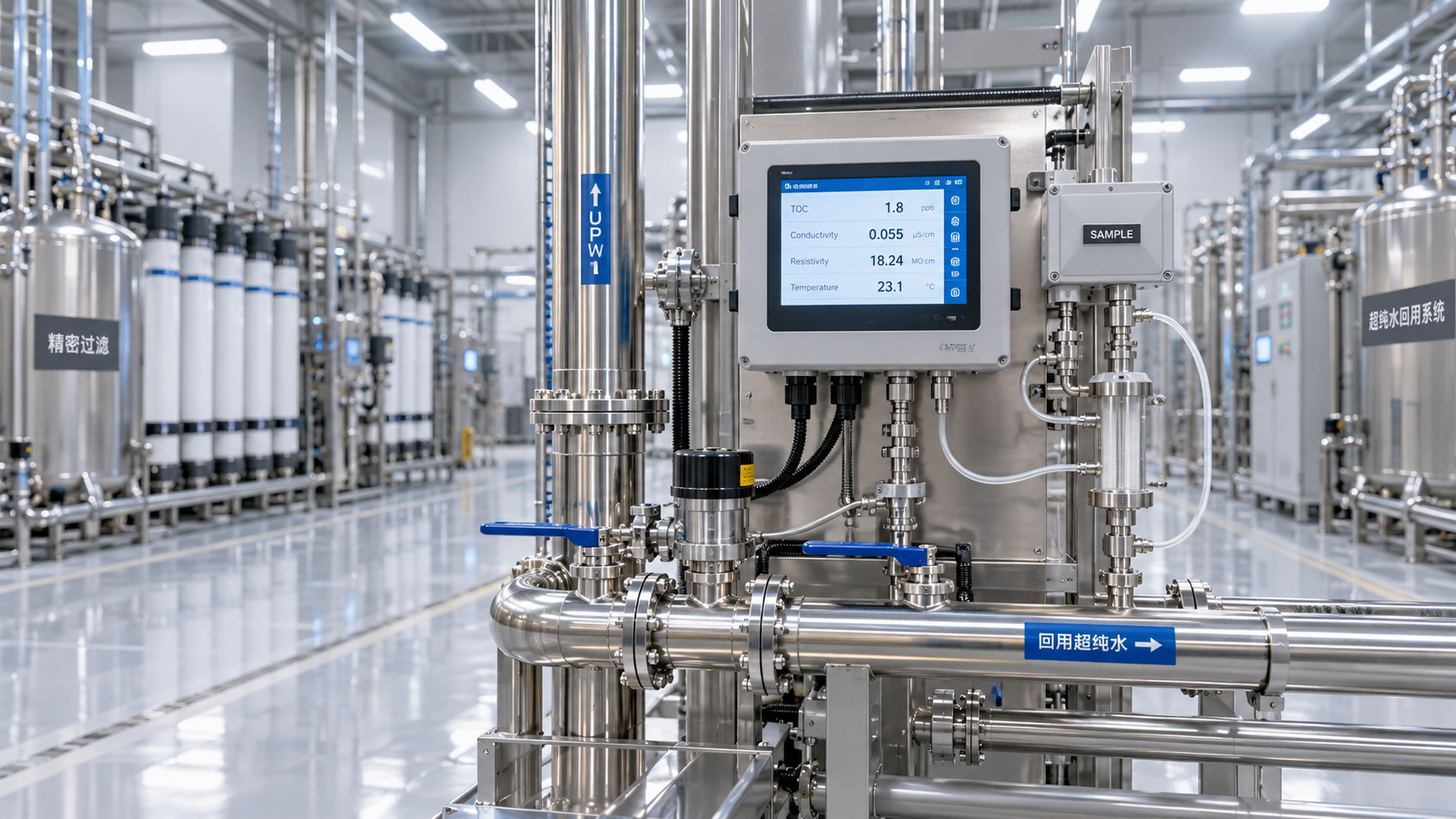
On May 15, 2026, SEMI released the revised F57-2026 standard in Tokyo, significantly tightening the detection limit for critical metal ions—including Ni, Cu, and Fe—in ultrapure water (UPW) used in advanced semiconductor manufacturing from 1 part per trillion (ppt) to 0.1 ppt. The change takes mandatory effect globally beginning Q1 2027, directly impacting UPW system suppliers serving 12-inch and larger wafer fabs, particularly those engaged in sub-7 nm process nodes.
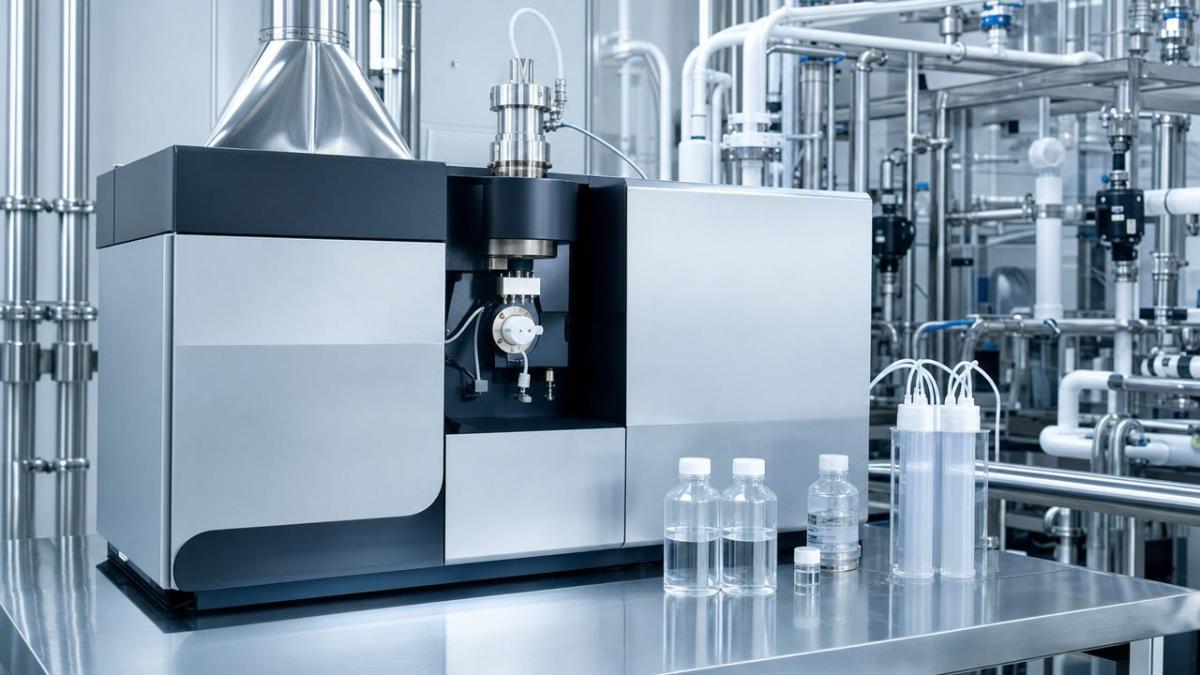
Event Overview
SEMI officially published F57-2026 on May 15, 2026, in Tokyo. The revision lowers the permissible detection threshold for Ni, Cu, Fe, and other regulated transition metals in UPW from 1 ppt to 0.1 ppt. Compliance becomes mandatory for all new UPW system validations and facility certifications starting January 1, 2027. The update applies specifically to UPW used in front-end-of-line (FEOL) processes for 12-inch wafer fabrication.
Industries Affected
Direct Export Enterprises: Chinese UPW equipment manufacturers exporting to global foundries and IDMs must now demonstrate trace-metal detection capability at 0.1 ppt—requiring upgraded ICP-MS instrumentation, triple-stage calibration protocols, and revalidation of entire TOC removal and resistivity (18.2 MΩ·cm) production lines. Pre-2026 third-party test reports will no longer satisfy buyer due diligence without evidence of post-revision retesting.
Raw Material Procurement Firms: Companies sourcing high-purity piping, gaskets, filters, or ion-exchange resins for UPW systems face stricter material certification requirements. Suppliers must now provide batch-level leachate testing data validated against the 0.1 ppt threshold—not just bulk purity specs—adding verification steps to procurement workflows and increasing lead time for qualified component approval.
Manufacturing & System Integration Firms: UPW system integrators and OEMs must revise their design validation protocols to include real-time monitoring of low-femtogram metal accumulation across polishing loops and distribution networks. This entails recalibrating sensor response curves, updating failure mode analysis (FMEA) for sub-ppt contamination events, and redesigning sample handling procedures to avoid adsorption or leaching artifacts.
Supply Chain Service Providers: Third-party testing labs, calibration service providers, and audit consultants must upgrade their ICP-MS platforms to meet the 0.1 ppt sensitivity requirement—including installation of collision/reaction cell technology, ultra-low blank sample introduction systems, and rigorous matrix-matched calibration standards. Labs without such capabilities risk losing accreditation for F57-related certification services.
Key Focus Areas and Recommended Actions
Revalidate UPW production lines with ICP-MS三级 calibration
Manufacturers must implement a three-tiered ICP-MS calibration framework: (i) primary calibration using NIST-traceable 0.05–0.2 ppt reference standards; (ii) secondary verification via spike recovery in full UPW matrix; and (iii) ongoing blank monitoring at ≤0.03 ppt background. Legacy single-point calibration is insufficient under F57-2026.
Reassess third-party test report validity and on-site retest readiness
Overseas buyers should require explicit confirmation that existing Chinese supplier test reports were generated using F57-2026–compliant methods—including documented instrument detection limits, procedural blanks, and matrix interference corrections. Suppliers must also commit to
Update material qualification dossiers for wet-process components
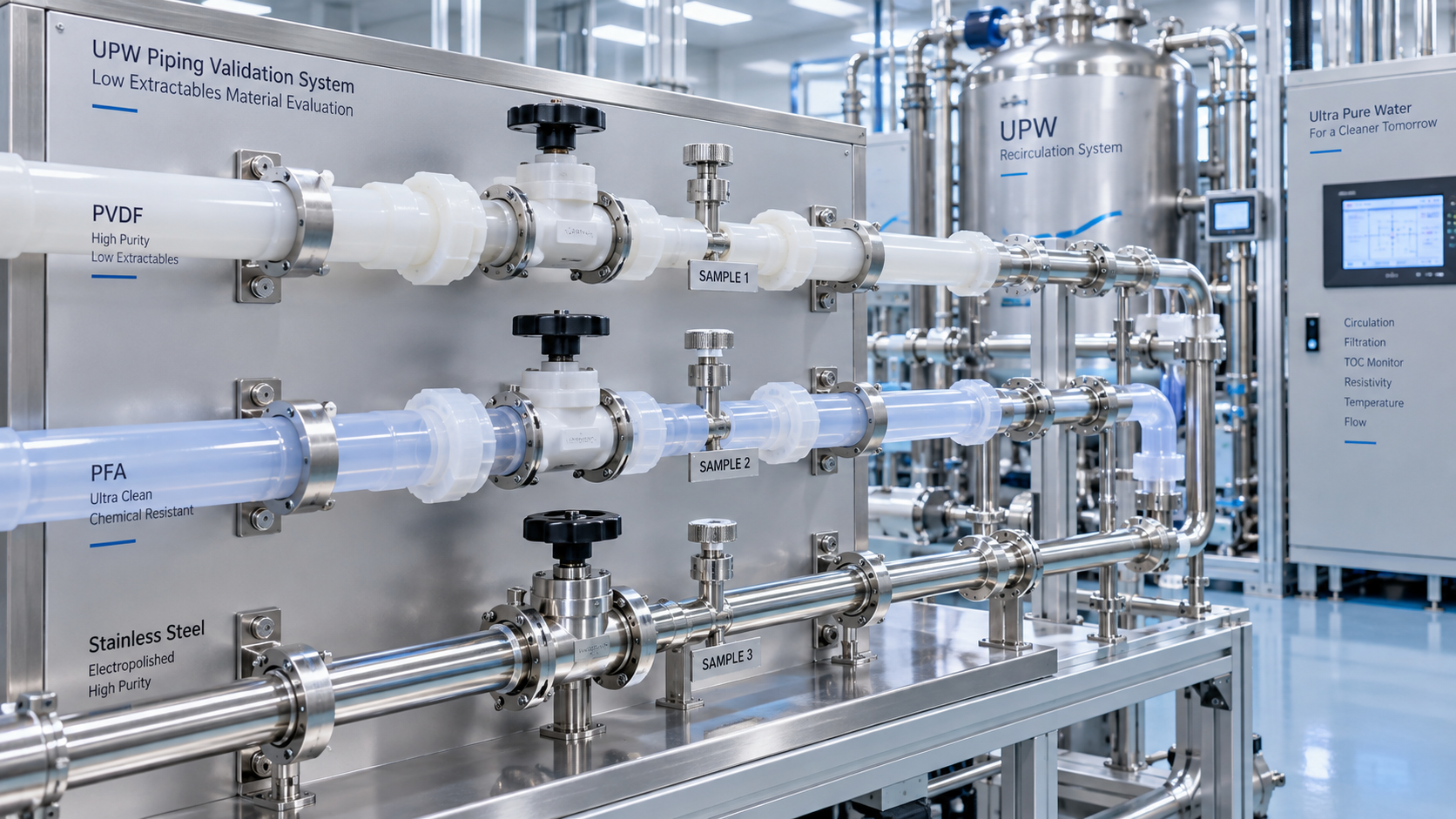
All wetted materials—including stainless steel grades, PFA tubing, and ceramic filter housings—must undergo leach testing in simulated UPW at 25°C for ≥168 hours, with final rinse analysis meeting the 0.1 ppt limit. Historical ASTM F2129 or ISO 10993–12 data are not acceptable substitutes.
Editorial Perspective / Industry Observation
Analysis shows this revision marks a strategic shift—not merely a technical increment—from ‘detectability’ toward ‘process predictability’. At 0.1 ppt, detection approaches the theoretical noise floor of current-generation ICP-MS, implying that measurement uncertainty itself becomes a dominant yield factor. Observably, the burden of proof is shifting upstream: equipment vendors can no longer rely on ‘system-level pass/fail’ results but must now document traceability down to individual component contributions. From an industry perspective, F57-2026 functions less as a specification and more as a forcing function for metrology maturity across the UPW supply chain.
Conclusion
This revision underscores how metrological rigor—once confined to wafer-level defect analytics—is now cascading into utility infrastructure standards. It does not signal an immediate capacity bottleneck, but rather highlights a growing divergence between ‘compliant’ and ‘confidently compliant’ UPW provision. For the industry, the long-term implication is clearer: reliability in semiconductor manufacturing increasingly hinges on verifiable certainty in foundational utilities—not just in lithography or etch tools.
Source Attribution
Official publication: SEMI F57-2026 Standard, released May 15, 2026, Tokyo. Available via SEMI Standards Portal (members-only access). Note: Implementation guidance documents, regional enforcement timelines (e.g., EU vs. US EPA alignment), and approved ICP-MS platform lists remain pending and are under active review by the SEMI Global UPW Committee—status to be monitored through Q3 2026 updates.
Get weekly intelligence in your inbox.
No noise. No sponsored content. Pure intelligence.
 Oct 22, 2026How to stabilize humidity control in a precision AHU at low loadsStabilize humidity control in precision AHU systems at low loads. Discover sensor checks, dew-point strategies, and reheat coordination to reduce cycling and maintain reliable conditions.
 Oct 22, 2026Malaysia’s EcoSys Plans to Nearly Double Cleanroom Capacity by End-2026Malaysia’s EcoSys plans to nearly double cleanroom capacity by end-2026. Discover how the expansion could ease UHP component bottlenecks and support semiconductor customer demand.
 Oct 21, 2026How often is cleanroom certification required under ISO 14644-2?Cleanroom Certification is generally recommended annually under ISO 14644-2. Learn when risk-based extensions apply and which changes trigger earlier testing to plan with confidence.
 Oct 21, 2026FASEB Comments on NIH Draft Policy for Research Involving BiohazardsFASEB comments on NIH’s draft biohazard research policy call for risk-based biosafety oversight. Explore potential implications for laboratories, suppliers, and compliance teams.
 Oct 20, 2026How to disinfect ultrasound machines without damaging surfacesLearn how to disinfect ultrasoundmachines without surface damage. Explore compatible products, wet contact times, and probe care to protect patients and equipment.
 Oct 20, 2026Ultrapure Water in Semiconductor Manufacturing: Reuse and Quality Control InsightsExplore ultrapure water reuse in semiconductor manufacturing, key UPW quality benchmarks and analytical insights to help evaluate suppliers and protect process purity.
 Oct 19, 2026How cooling affects warpage in injection-molded consumer electronics housingsOptimize plastic injection molding for consumer electronics with cooling strategies to reduce housing warpage and improve assembly fit. Discover practical checks for stable, efficient production.
 Oct 18, 2026Can air leaks prevent a dehumidifier from holding its target dew point?Why can't our dehumidifier maintain the target dew point? Discover how air leaks increase moisture loads, spot hidden faults, and find practical fixes to restore reliable dew-point control.
 Oct 17, 2026How semiconductor process water treatment removes trace organicsSee how semiconductor process water treatment removes trace organics with RO, UV oxidation, and polishing. Learn how TOC monitoring helps verify purity and pinpoint contamination.
 Oct 16, 2026How to choose ultra pure water piping materials to limit leachingChoose ultra pure water piping with confidence. Compare PVDF, PFA, and stainless steel, assess leaching risks, and learn how to qualify your system for reliable purity.
 Oct 15, 2026How to size a skid-mounted deionized water system for peak demandCompare deionized water systems skid configurations for peak demand. Learn how to balance production, storage, and pump capacity to prevent shortages and avoid costly oversizing.
 Oct 14, 2026When is collaborative laboratory robotics suitable for sample sorting?Explore when collaborative laboratory robotics suits sample sorting. Discover key checks for safety, traceability, container compatibility, and throughput before choosing your solution.
 Oct 13, 2026How sandwich panel joints affect airtightness in cleanroom systemsCleanroom Systems sandwich panels need reliable joints for airtightness. Discover how gaskets, sealants, and testing help reduce leakage and protect cleanroom pressure control.
 Oct 12, 2026How to verify USP compliance for ultra pure water systemsUltra Pure Water Systems USP compliance: learn how to verify water quality, sampling, sanitization, trends, and validation controls at every point of use.
 Oct 11, 2026How tight temperature control prevents cleanroom process driftCleanroom process temperature control systems prevent costly drift by stabilizing critical conditions, improving repeatability, and protecting sensitive production workflows.
 Oct 10, 2026When does organic contaminant removal require TOC treatment?Organic contaminant removal requires TOC treatment when dissolved organics threaten product quality, equipment reliability, or process control. Learn how to assess risks and choose the right solution.
 Oct 08, 2026What affects lead times for sheet metal bending services in Canada?Sheet metal bending services Canada: discover how material supply, tooling, tolerances, finishing, documentation, and freight affect lead times for reliable project delivery.
 Oct 07, 2026How HVAC design for semiconductor fabs prevents airborne contaminationHVAC design for semiconductor fabs prevents airborne contamination through advanced filtration, pressure cascades, airflow control, and real-time monitoring. Explore key strategies for cleaner, more reliable wafer production.
 Oct 06, 2026How photovoltaic modules waterproof technology prevents moisture damagephotovoltaic modules waterproof technology prevents moisture damage with durable seals, drainage, and junction-box protection. Explore practical selection and testing insights.
 Oct 05, 2026How ISO 14644 Europe requirements affect cleanroom qualificationISO 14644 Europe requirements shape cleanroom qualification, from particle classification and recovery testing to monitoring, GMP alignment, and change control.
 Oct 04, 2026How to assess a pharmaceutical cleanroom solutions supplier’s ISO capabilityPharmaceutical Cleanroom Solutions supplier assessment guide: evaluate ISO 14644 capability, validation evidence, airflow design, documentation, and long-term GMP readiness.
 Oct 03, 2026What EU standards govern the design of BSL-3 laboratories in Europe?BSL-3 laboratories Europe: explore EU directives, EN standards, HVAC containment, commissioning, and practical design strategies for compliant, resilient high-containment facilities.
 Oct 02, 2026How EN 1822 defines HEPA filtration efficiency for cleanroomsHEPA filtration EN 1822 explained: learn how MPPS testing, local leakage limits, and filter classes support reliable cleanroom decisions.
 Oct 01, 2026How pharmaceutical process water systems control microbial riskProcess water systems pharmaceutical teams rely on can control microbial risk through hygienic design, monitoring, and validated sanitization. Explore practical compliance strategies.
 Sep 30, 2026When does a negative pressure laboratory need BSL-3 containment?Negative pressure laboratory or BSL-3? Discover the risk factors, engineering controls, and containment requirements needed for safe, compliant laboratory planning.
 Sep 29, 2026How to evaluate a TOC-zero water treatment supplier for UPW systemsChoose a TOC-zero water treatment supplier with confidence. Compare UPW performance, monitoring, validation, materials, service capability, and lifecycle cost.
 Sep 28, 2026What drives sustainable cooling cost in high-precision facilities?Sustainable cooling cost in high-precision facilities depends on thermal stability, energy, water, controls, and resilience. Explore smarter lifecycle strategies.