Chilled Water Piping Sizing Mistakes That Increase Energy Use
Why do chilled water piping sizing errors matter so much?
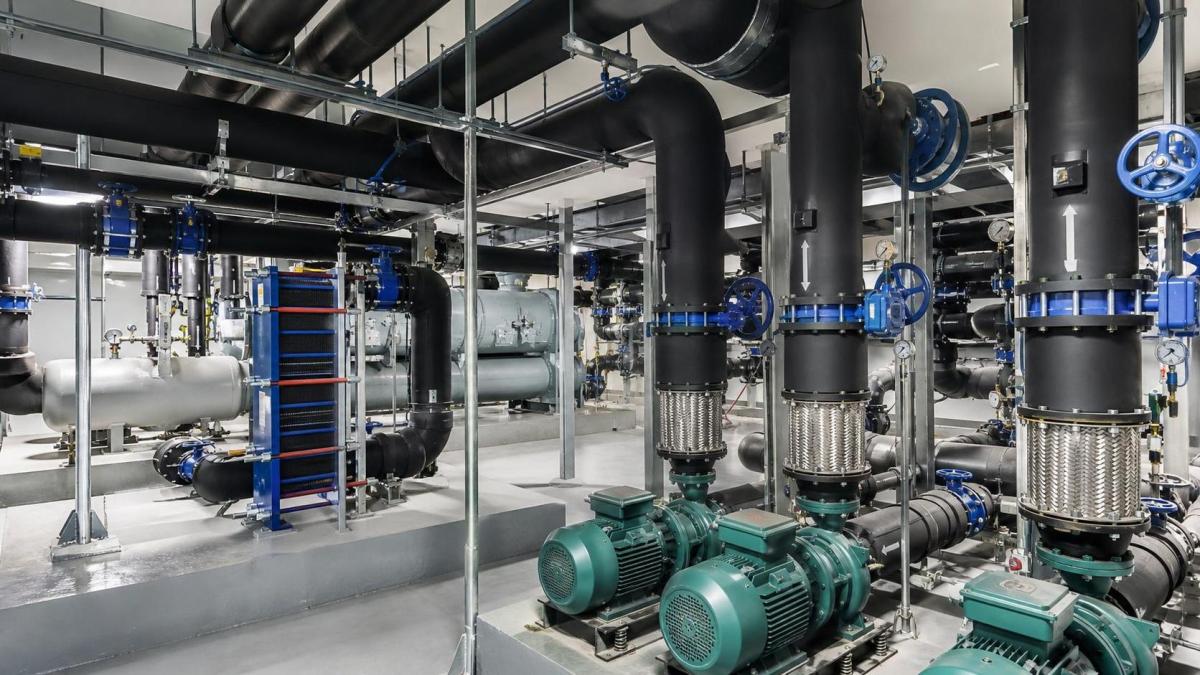
A cooling plant can look efficient on paper and still waste power every hour.
In many facilities, the hidden issue is chilled water piping that was sized for convenience, not for stable system performance.
That mistake affects more than pump energy.
It can also disturb coil control, weaken temperature stability, and create balancing problems across critical zones.
This becomes more serious in semiconductor, pharmaceutical, biosafety, and precision research environments.
There, thermal drift and pressure variation may affect production yield, compliance, or process repeatability.
G-ICE benchmarking work often highlights a simple pattern.
When chilled water piping is oversized, undersized, or poorly distributed, the plant rarely operates at its intended control logic.
The result is quiet inefficiency rather than obvious failure.
That is why piping review should sit beside chiller COP, valve authority, and digital control strategy during technical evaluation.
Is the biggest mistake choosing pipe size by rule of thumb?
Very often, yes.
A common shortcut is to size chilled water piping from legacy standards, familiar branch diameters, or early concept drawings.
That seems harmless, but it disconnects pipe diameter from real flow requirements and pressure losses.
If piping is too small, water velocity rises.
Higher velocity means more friction, more pump head, more noise, and often more erosion risk at fittings and valves.
If piping is too large, the penalty is different.
Velocity drops, air removal becomes harder, response slows, and part-load control can become less predictable.
In practical terms, chilled water piping should be tied to design flow, acceptable velocity range, and realistic diversity across operating modes.
Peak load alone is not enough.
Facilities with cleanrooms, UPW support spaces, or high-risk labs often experience uneven load profiles throughout the day.
A better judgment method is to compare full-load and part-load hydraulic behavior before finalizing the network.
That review usually reveals whether a “safe” diameter is actually expensive over the system life.
A quick check helps catch early sizing bias
This kind of review is especially useful before procurement packages are frozen.
Can velocity and pressure drop tell you more than pipe diameter alone?
They usually tell you much more.
A pipe size by itself says very little unless it is linked to velocity, pressure loss, branch behavior, and valve interaction.
Many chilled water piping problems appear when one parameter is optimized in isolation.
For example, reducing pressure drop sounds efficient.
Yet very low pressure gradients can make distant coils harder to control when loads swing quickly.
On the other hand, aggressively compact piping may force pumps to work harder every year of operation.
The more reliable approach is to evaluate chilled water piping as a hydraulic control system.
That means reviewing:
- design and minimum flow conditions;
- acceptable velocity at mains, risers, and branches;
- pressure available at the most remote coils;
- control valve authority during part-load operation;
- interaction with variable speed pumping logic.
In precise thermal environments, this matters because stable water delivery supports stable room control.
That is one reason ASHRAE-aligned hydraulic review remains important even when digital twins and advanced BAS analytics are available.
Why do distribution layout mistakes keep raising energy use?
Because the layout decides how hard the whole network must work.
Some projects focus on main pipe sizing but ignore branch symmetry, routing length, or the number of fittings.
That creates uneven resistance between zones.
When this happens, the pump often compensates for the worst path, while easier paths get excess flow.
The energy penalty stays in the system every day.
More importantly, critical areas may still receive unstable flow despite higher pumping effort.
In G-ICE-style high-performance facilities, this can show up as hunting control valves, delayed recovery after load changes, or persistent delta-T degradation.
A few layout-related mistakes appear again and again:
- long detours added to avoid structural clashes;
- too many elbows, strainers, and reducers near coil connections;
- poorly planned reverse-return or direct-return arrangements;
- branch sizing that ignores simultaneous process loads.
None of these errors looks dramatic during drawing review.
Together, they can push the plant away from design delta-T and increase both pumping and chiller energy.
How does poor chilled water piping sizing affect control accuracy and reliability?
This is where the issue becomes operational, not just hydraulic.
Chilled water piping that is badly sized often produces unstable differential pressure across terminals.
Then valves no longer behave as expected.
Some circuits starve, others overflow, and control loops start correcting noise instead of real load.
In office cooling, that may mean comfort complaints.
In high-spec manufacturing or biosafety spaces, it can mean temperature drift beyond acceptable limits.
More subtle symptoms are often missed during handover.
Examples include low coil delta-T, frequent valve repositioning, unstable secondary pump speed, and slow response after production shifts.
Needle-sharp thermal targets, such as near ±0.01°C support environments, leave little tolerance for hydraulic inconsistency.
That is why chilled water piping should be reviewed together with sensor placement, balancing strategy, and control sequences.
If those checks are separated, the plant may be commissioned into a stable-looking but inefficient operating window.
Warning signs during evaluation or retro-commissioning
- Pump speed remains high even during moderate load periods.
- Remote coils need manual balancing adjustments repeatedly.
- Measured delta-T stays below design for long periods.
- Control valves operate near fully open or fully closed too often.
- Expansion phases trigger unexpected pressure instability.
What is the smartest way to evaluate chilled water piping before a project is locked in?
The most effective approach is not to ask for a single “correct” diameter.
It is to test whether the chilled water piping design stays efficient and controllable across realistic scenarios.
In actual review practice, that means checking the network against present load, future capacity, and part-load behavior.
A focused checklist usually works better than a broad narrative report.
- Confirm design flow assumptions for each critical branch.
- Review velocity bands, not only nominal pipe sizes.
- Include fittings, valves, strainers, and future tie-ins in head calculations.
- Check valve authority at low and medium load conditions.
- Compare direct-return and reverse-return logic where balancing risk is high.
- Validate pressure strategy against BAS and VFD control philosophy.
Where cleanroom HVAC, containment labs, or precision process spaces are involved, benchmarking against ISO 14644, ASHRAE, and relevant SEMI expectations adds discipline.
The value is not in adding paperwork.
The value is in catching a piping decision that will otherwise lock in years of excess energy use.
What should be done next if energy waste is already suspected?
Start with evidence, not assumptions.
Measure flow, differential pressure, pump speed, and coil delta-T across representative operating periods.
Then compare those readings with the original chilled water piping intent.
If the system never reaches expected hydraulic balance, the issue may be sizing, layout, or both.
The practical next step is to map the highest-loss routes and the least stable branches first.
That usually shows where resizing, valve correction, branch rework, or control retuning will have the best return.
Chilled water piping is easy to overlook because it hides behind equipment specifications.
Yet it often decides whether a high-performance cooling plant behaves like one.
For projects that demand thermal precision, biosafety continuity, or clean production stability, the smarter move is to build a piping evaluation standard early.
That standard should connect hydraulic sizing, controllability, operating energy, and future expansion in one decision framework.
When that happens, chilled water piping stops being a background detail and becomes a measurable part of lifecycle performance.
Get weekly intelligence in your inbox.
No noise. No sponsored content. Pure intelligence.
 Oct 22, 2026How to stabilize humidity control in a precision AHU at low loadsStabilize humidity control in precision AHU systems at low loads. Discover sensor checks, dew-point strategies, and reheat coordination to reduce cycling and maintain reliable conditions.
 Oct 22, 2026Malaysia’s EcoSys Plans to Nearly Double Cleanroom Capacity by End-2026Malaysia’s EcoSys plans to nearly double cleanroom capacity by end-2026. Discover how the expansion could ease UHP component bottlenecks and support semiconductor customer demand.
 Oct 21, 2026How often is cleanroom certification required under ISO 14644-2?Cleanroom Certification is generally recommended annually under ISO 14644-2. Learn when risk-based extensions apply and which changes trigger earlier testing to plan with confidence.
 Oct 21, 2026FASEB Comments on NIH Draft Policy for Research Involving BiohazardsFASEB comments on NIH’s draft biohazard research policy call for risk-based biosafety oversight. Explore potential implications for laboratories, suppliers, and compliance teams.
 Oct 20, 2026How to disinfect ultrasound machines without damaging surfacesLearn how to disinfect ultrasoundmachines without surface damage. Explore compatible products, wet contact times, and probe care to protect patients and equipment.
 Oct 20, 2026Ultrapure Water in Semiconductor Manufacturing: Reuse and Quality Control InsightsExplore ultrapure water reuse in semiconductor manufacturing, key UPW quality benchmarks and analytical insights to help evaluate suppliers and protect process purity.
 Oct 19, 2026How cooling affects warpage in injection-molded consumer electronics housingsOptimize plastic injection molding for consumer electronics with cooling strategies to reduce housing warpage and improve assembly fit. Discover practical checks for stable, efficient production.
 Oct 18, 2026Can air leaks prevent a dehumidifier from holding its target dew point?Why can't our dehumidifier maintain the target dew point? Discover how air leaks increase moisture loads, spot hidden faults, and find practical fixes to restore reliable dew-point control.
 Oct 17, 2026How semiconductor process water treatment removes trace organicsSee how semiconductor process water treatment removes trace organics with RO, UV oxidation, and polishing. Learn how TOC monitoring helps verify purity and pinpoint contamination.
 Oct 16, 2026How to choose ultra pure water piping materials to limit leachingChoose ultra pure water piping with confidence. Compare PVDF, PFA, and stainless steel, assess leaching risks, and learn how to qualify your system for reliable purity.
 Oct 15, 2026How to size a skid-mounted deionized water system for peak demandCompare deionized water systems skid configurations for peak demand. Learn how to balance production, storage, and pump capacity to prevent shortages and avoid costly oversizing.
 Oct 14, 2026When is collaborative laboratory robotics suitable for sample sorting?Explore when collaborative laboratory robotics suits sample sorting. Discover key checks for safety, traceability, container compatibility, and throughput before choosing your solution.
 Oct 13, 2026How sandwich panel joints affect airtightness in cleanroom systemsCleanroom Systems sandwich panels need reliable joints for airtightness. Discover how gaskets, sealants, and testing help reduce leakage and protect cleanroom pressure control.
 Oct 12, 2026How to verify USP compliance for ultra pure water systemsUltra Pure Water Systems USP compliance: learn how to verify water quality, sampling, sanitization, trends, and validation controls at every point of use.
 Oct 11, 2026How tight temperature control prevents cleanroom process driftCleanroom process temperature control systems prevent costly drift by stabilizing critical conditions, improving repeatability, and protecting sensitive production workflows.
 Oct 10, 2026When does organic contaminant removal require TOC treatment?Organic contaminant removal requires TOC treatment when dissolved organics threaten product quality, equipment reliability, or process control. Learn how to assess risks and choose the right solution.
 Oct 08, 2026What affects lead times for sheet metal bending services in Canada?Sheet metal bending services Canada: discover how material supply, tooling, tolerances, finishing, documentation, and freight affect lead times for reliable project delivery.
 Oct 07, 2026How HVAC design for semiconductor fabs prevents airborne contaminationHVAC design for semiconductor fabs prevents airborne contamination through advanced filtration, pressure cascades, airflow control, and real-time monitoring. Explore key strategies for cleaner, more reliable wafer production.
 Oct 06, 2026How photovoltaic modules waterproof technology prevents moisture damagephotovoltaic modules waterproof technology prevents moisture damage with durable seals, drainage, and junction-box protection. Explore practical selection and testing insights.
 Oct 05, 2026How ISO 14644 Europe requirements affect cleanroom qualificationISO 14644 Europe requirements shape cleanroom qualification, from particle classification and recovery testing to monitoring, GMP alignment, and change control.
 Oct 04, 2026How to assess a pharmaceutical cleanroom solutions supplier’s ISO capabilityPharmaceutical Cleanroom Solutions supplier assessment guide: evaluate ISO 14644 capability, validation evidence, airflow design, documentation, and long-term GMP readiness.
 Oct 03, 2026What EU standards govern the design of BSL-3 laboratories in Europe?BSL-3 laboratories Europe: explore EU directives, EN standards, HVAC containment, commissioning, and practical design strategies for compliant, resilient high-containment facilities.
 Oct 02, 2026How EN 1822 defines HEPA filtration efficiency for cleanroomsHEPA filtration EN 1822 explained: learn how MPPS testing, local leakage limits, and filter classes support reliable cleanroom decisions.
 Oct 01, 2026How pharmaceutical process water systems control microbial riskProcess water systems pharmaceutical teams rely on can control microbial risk through hygienic design, monitoring, and validated sanitization. Explore practical compliance strategies.
 Sep 30, 2026When does a negative pressure laboratory need BSL-3 containment?Negative pressure laboratory or BSL-3? Discover the risk factors, engineering controls, and containment requirements needed for safe, compliant laboratory planning.
 Sep 29, 2026How to evaluate a TOC-zero water treatment supplier for UPW systemsChoose a TOC-zero water treatment supplier with confidence. Compare UPW performance, monitoring, validation, materials, service capability, and lifecycle cost.
 Sep 28, 2026What drives sustainable cooling cost in high-precision facilities?Sustainable cooling cost in high-precision facilities depends on thermal stability, energy, water, controls, and resilience. Explore smarter lifecycle strategies.