Enthalpy Recovery Wheels: When Energy Savings Justify the Retrofit
For finance leaders weighing capital upgrades, enthalpy recovery wheels offer a measurable path to lower HVAC energy costs without compromising environmental control. The key question is not whether the technology works, but when the projected savings, payback period, and compliance benefits justify the retrofit—especially in facilities where air quality, thermal stability, and operating efficiency directly affect risk and return.
What are enthalpy recovery wheels, and why are they getting renewed attention?
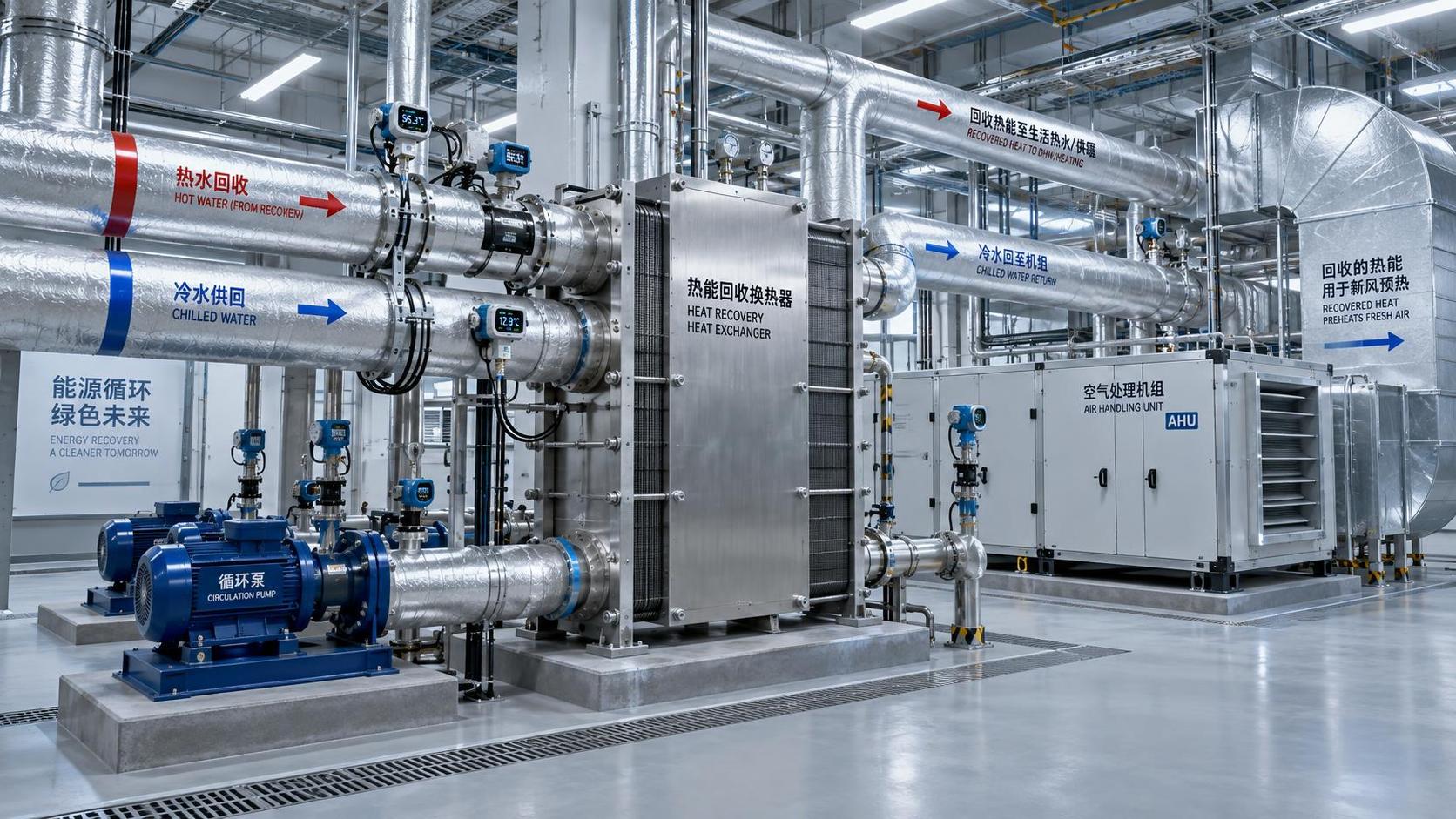
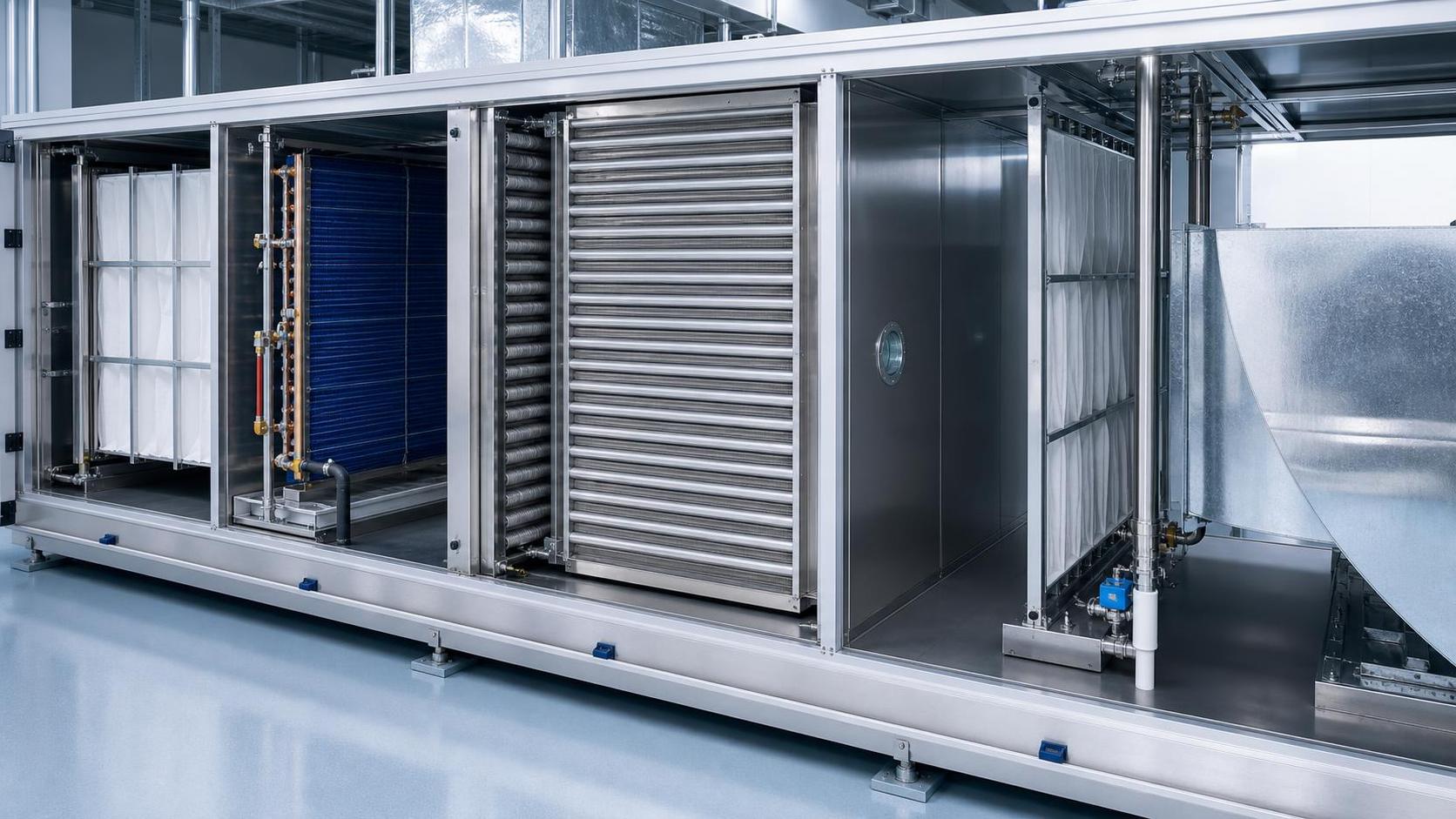
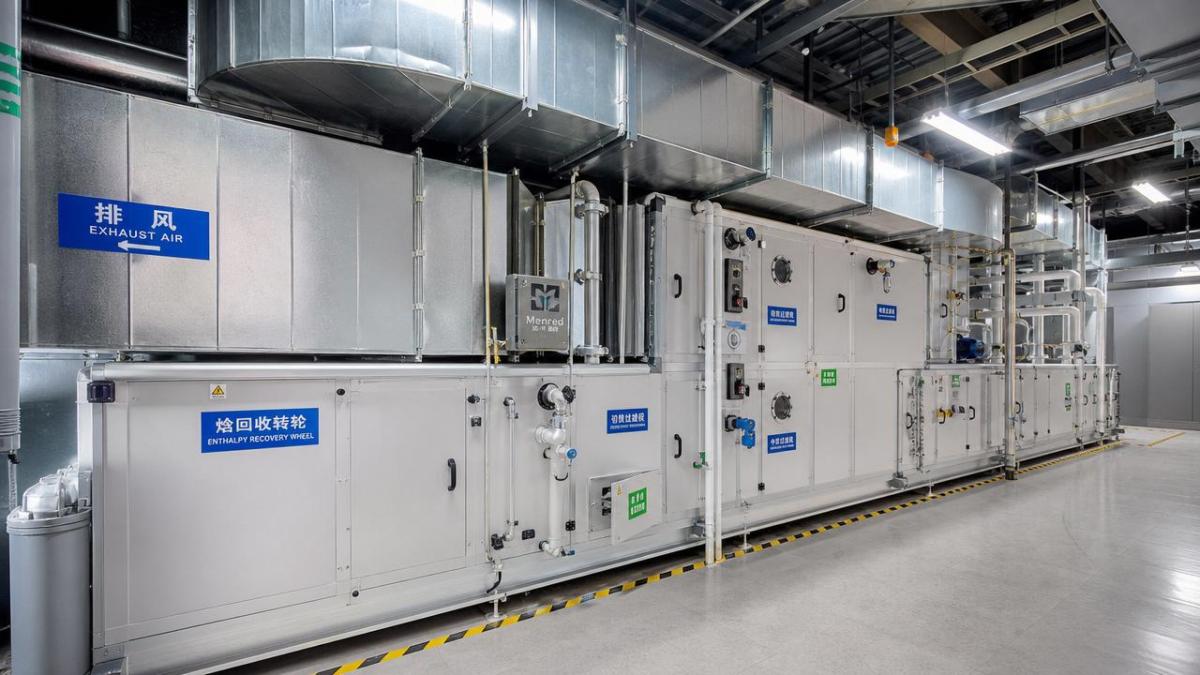
Enthalpy recovery wheels are rotating heat and moisture exchange devices installed in air handling systems to transfer sensible and latent energy between exhaust air and incoming outdoor air. In practical terms, they help pre-cool and dehumidify hot, humid outside air in summer, and preheat and humidify cold, dry air in winter. That reduces the load on chillers, boilers, reheats, and humidification systems.
They are getting renewed attention because capital allocators now face a tighter mix of energy price volatility, carbon reporting pressure, aging HVAC infrastructure, and stricter environmental control expectations. In advanced manufacturing, laboratories, healthcare spaces, and institutional buildings, ventilation is not optional. Once a facility must move large volumes of conditioned outdoor air for safety, cleanliness, or code compliance, recovering energy from exhaust air becomes financially compelling.
For financial approvers, the appeal is straightforward: enthalpy recovery wheels can convert a compliance-driven air movement cost into a predictable efficiency gain. Instead of treating ventilation as a permanent energy penalty, the retrofit reframes it as an opportunity to lower operating expense while supporting ESG targets and resilience planning.
When do enthalpy recovery wheels make the most financial sense?
The strongest business case usually appears where three conditions overlap: high outdoor air volumes, long operating hours, and significant heating or cooling differentials between indoor and outdoor air. Facilities with 24/7 or near-continuous operation often benefit most because savings accumulate every hour the system runs.
Typical high-value retrofit candidates include cleanrooms, pharmaceutical production suites, hospitals, biosafety labs, large institutional buildings, semiconductor support areas, and commercial sites in hot-humid or cold climates. In these environments, ventilation rates are often fixed by process, safety, or code requirements, leaving fewer opportunities to reduce airflow. That makes energy recovery one of the more direct levers available.
From a finance perspective, enthalpy recovery wheels tend to justify investment faster when the existing system is already spending heavily on dehumidification, reheating, or winter humidification. If a site consistently pays to condition outdoor air that is then exhausted, the retrofit may recover value that is currently being lost every day.
Another good trigger is planned equipment renewal. If an air handling unit is due for overhaul, a fan wall upgrade, controls modernization, or ductwork changes, adding enthalpy recovery wheels during that project can reduce installation disruption and improve total project economics. In some cases, recovered energy may even support downsizing of future mechanical capacity, which improves the life-cycle return.
How should finance teams evaluate payback instead of relying on vendor claims?
The best evaluations begin with a disciplined baseline. Finance teams should ask for current outdoor air volume, annual runtime, seasonal design conditions, utility tariffs, fan energy impact, and existing heating and cooling loads associated with ventilation. Without that baseline, projected savings can look precise while actually being weakly grounded.
A sound analysis of enthalpy recovery wheels should include both gross and net savings. Gross savings come from reduced coil loads and lower humidification demand. Net savings must subtract added fan power, wheel motor power, maintenance cost, and any controls integration expense. This distinction matters because some proposals overemphasize thermal recovery while understating pressure drop and lifecycle service needs.
Decision-makers should also separate simple payback from strategic return. A retrofit with a moderate payback may still be justified if it improves compliance performance, stabilizes indoor conditions, lowers peak demand exposure, or supports decarbonization commitments. In highly regulated facilities, reduced environmental drift and lower HVAC stress can have operational value beyond utility savings.
Useful finance questions include:
- What is the modeled annual energy reduction by heating, cooling, and humidity control category?
- How sensitive is payback to changes in occupancy, airflow, or utility pricing?
- Does the retrofit create measurable carbon reduction or reporting benefits?
- Will downtime, commissioning, or structural modifications materially affect the return?
- Is there a rebate, tax incentive, or sustainability financing mechanism available?
Which facilities are strong candidates, and which ones should be more cautious?
Not every building is equally suited to enthalpy recovery wheels. Strong candidates usually have balanced or near-balanced supply and exhaust streams, sufficient physical space for wheel sections, and a process environment that benefits from recovering both heat and moisture. They also tend to have significant ventilation-driven conditioning cost.
Facilities should be more cautious when cross-contamination risk is exceptionally sensitive, when exhaust contaminants could challenge transfer media suitability, or when existing air handling layouts make retrofit integration complex. In mission-critical environments, engineering review must confirm whether purge sections, seal quality, filtration strategy, and pressure relationships are compatible with the application.
This is especially relevant in high-performance sectors benchmarked against standards such as ISO 14644 and ASHRAE guidance. For clean process spaces, biocontainment-adjacent areas, or precision thermal environments, the question is not simply whether enthalpy recovery wheels save energy. It is whether they do so while preserving contamination control, thermal stability, maintenance access, and validation confidence.
Quick evaluation table for retrofit suitability
What are the most common mistakes in evaluating enthalpy recovery wheels?
One common mistake is assuming all energy recovery options perform the same. Plate heat exchangers, run-around coils, and enthalpy recovery wheels each have different recovery effectiveness, moisture transfer capability, pressure drop, contamination considerations, and maintenance profiles. A fair comparison must reflect the site’s actual climate, airflow pattern, and environmental control objectives.
Another mistake is focusing only on the percentage effectiveness value. Even a high nominal efficiency figure does not guarantee the best financial outcome if installation complexity is high or if fan energy penalties erode net savings. Finance teams should insist on annualized results rather than headline percentages.
A third mistake is ignoring controls and commissioning. Enthalpy recovery wheels depend on proper sequencing, frost control strategy where relevant, sensor calibration, bypass logic, and maintenance discipline. A poorly commissioned system can underperform enough to distort the entire investment thesis.
There is also a governance mistake: evaluating the retrofit only as a facilities project. In many organizations, the better lens is enterprise risk and operating efficiency. If HVAC instability affects product yield, room recovery time, biosafety performance, or audit readiness, then the savings case should be considered alongside exposure reduction and continuity value.
How do enthalpy recovery wheels compare with other retrofit priorities competing for budget?
Budget committees often compare this retrofit with variable frequency drives, chiller upgrades, building automation improvements, high-efficiency filtration strategies, or airflow optimization. The right choice depends on what drives utility spend and operational risk at the site.
Enthalpy recovery wheels are often most attractive when ventilation loads are structurally unavoidable. Unlike occupancy-based optimization measures, their savings can remain durable even in fully utilized facilities because they reduce the energy intensity of required air exchange. That makes them particularly relevant in sectors where air changes, pressurization, and outside air treatment are embedded in the operating model.
That said, they are not automatically the first dollar to spend. If a system suffers from obvious control failures, leaking dampers, unstable setpoints, or oversized simultaneous heating and cooling, those issues may deserve correction first. Energy recovery performs best when inserted into a disciplined HVAC framework rather than used as a substitute for basic system optimization.
FAQ decision guide for financial approvers
What should be confirmed before approving a retrofit project?
Before approval, ask for five forms of evidence. First, a climate-specific energy model based on actual operating schedules, not generic assumptions. Second, a contamination and airflow review that confirms the selected enthalpy recovery wheels are suitable for the exhaust stream and facility classification. Third, a mechanical integration study covering footprint, duct modifications, service access, and fan implications. Fourth, a commissioning plan with measurable acceptance criteria. Fifth, a lifecycle view that includes maintenance intervals, cleanability, spare parts, and expected performance persistence.
It is also wise to ask whether the project aligns with broader capital strategy. For example, if a site is moving toward digital twin control, central plant modernization, or high-precision environmental monitoring, the retrofit may gain strategic value by feeding better operating data into a larger optimization roadmap. In institutions focused on environmental integrity and operational supremacy, this wider alignment often matters as much as the first-year utility reduction.
So, when do energy savings truly justify the retrofit?
The answer is not a universal payback threshold. Energy savings justify enthalpy recovery wheels when the facility has mandatory ventilation demand, enough runtime to convert recovery into material annual savings, and an installation pathway that does not compromise contamination control or uptime. They become even more compelling when compliance, carbon, and thermal stability benefits can be documented alongside utility savings.
For finance leaders, the strongest approvals are usually based on a blended value case: lower operating cost, reduced exposure to energy inflation, support for ESG commitments, and improved confidence in environmental control. If the model is site-specific, the net savings are transparent, and the engineering constraints are openly addressed, enthalpy recovery wheels can move from “interesting efficiency upgrade” to “strategic retrofit with defendable returns.”
If you need to confirm a specific direction, scope, payback range, implementation cycle, or supplier discussion path, start by clarifying these points: current outside air volume, annual HVAC runtime, humidity-control burden, contamination sensitivity, available shutdown window, and whether the project is being judged on simple payback alone or on total risk-adjusted value. Those questions usually determine whether enthalpy recovery wheels belong in the next budget cycle or in a broader infrastructure modernization plan.
Get weekly intelligence in your inbox.
No noise. No sponsored content. Pure intelligence.
 Sep 19, 2026When does heat recovery make sustainable cooling worth the investment?Sustainable cooling technology heat recovery: learn when reliable heat demand, temperature matching, and lifecycle savings make recovery a smart investment.
 Sep 18, 2026How to set alarm limits for semiconductor cleanroom monitoringSemiconductor cleanroom monitoring: learn how to set risk-based alarm limits for particles, humidity, pressure, and airflow to protect yield and reduce nuisance alerts.
 Sep 17, 2026How plastic injection molding affects ESD protection in cleanroomsPlastic injection molding affects ESD protection in cleanrooms. Learn how resin choice, molding consistency, grounding, and particle control support reliable compliance.
 Sep 16, 2026What to verify before choosing an industrial air quality monitoring supplierIndustrial air quality monitoring supplier checklist: verify measurement accuracy, calibration traceability, data integration, compliance support, and lifecycle service before you buy.
 Sep 15, 2026Smart HVAC investment insights for North American heat recovery projectsSmart HVAC investment insights North America: evaluate heat recovery, lifecycle costs, controls, and performance for resilient project decisions.
 Sep 14, 2026How SEMI standards shape water treatment design for semiconductor fabsSemiconductor water treatment SEMI guidance shapes resilient UPW design, contamination control, monitoring, reclaim strategy, and fab-ready validation.
 Sep 13, 2026What drives Biosafety Containment Systems cost in BSL-3 projects?Biosafety Containment Systems cost in BSL-3 projects depends on HVAC, layout, decontamination, controls, and commissioning. Discover how to build a credible budget.
 Sep 12, 2026How to qualify a fine chemical process solutions supplier for purity controlFine Chemical Process Solutions supplier qualification guide: evaluate purity control, traceability, contamination prevention, and safety for reliable high-purity production.
 Sep 11, 2026What drives cleanroom certification cost for ISO Class 1–9 projects?Cleanroom certification cost depends on ISO Class 1–9 requirements, test scope, HVAC readiness, documentation, and retesting. Explore practical budgeting insights to control project risk.
 Sep 10, 2026When should Procurement Directors prioritize heat recovery payback?Procurement Directors: learn when heat recovery delivers reliable payback, lower lifecycle costs, and safe performance in controlled industrial environments.
 Sep 09, 2026How to select an environmental monitoring system for cleanroomsEnvironmental monitoring system selection for cleanrooms: compare sensors, alarms, data integrity, integration, and installation to ensure reliable control.
 Sep 08, 2026How temperature stability affects semiconductor manufacturing yieldSemiconductor manufacturing temperature stability directly affects yield, overlay, metrology, and process control. Explore practical HVAC, monitoring, and zoning strategies.
 Sep 07, 2026How to prepare for a Regulatory Frameworks audit of cleanroom controlsRegulatory Frameworks audit readiness for cleanroom controls: build traceable evidence, verify alarms and monitoring, and close compliance gaps with confidence.
 Sep 07, 2026How to choose reverse osmosis systems with the right recovery rateReverse osmosis systems: learn how to select the right recovery rate for reliable water quality, lower scaling risk, efficient concentrate control, and stable long-term performance.
 Sep 05, 2026How does a negative pressure room work to contain airborne contaminants?How does a negative pressure room work? Discover how inward airflow, controlled exhaust, monitoring, and room design help contain airborne contaminants safely.
 Sep 04, 2026How Should Semiconductor Facilities Select Vibration Isolation Systems?Vibration isolation semiconductor guide: learn how to match tool limits, site vibration, utilities, and cleanroom needs for stable, high-yield fab performance.
 Sep 04, 2026What TOC Limits Should Be Set and Monitored for a UPW Loop?What are our TOC limits for the UPW loop? Learn how to set defensible TOC thresholds, monitor trends, protect critical processes, and improve water-quality control.
 Sep 04, 2026What Are the Best Retrofit Options for Upgrading Existing Pharmaceutical Cleanrooms?What are the best retrofit options to upgrade existing pharma cleanrooms? Explore FFUs, HVAC modernization, pressure cascades, monitoring, and sealed finishes for compliant performance.
 Sep 04, 2026How Does a Negative Air Pressure Room Protect Adjacent Areas?What is a negative air pressure room? Learn how controlled airflow contains airborne hazards, protects adjacent spaces, and supports safer facility operations.
 Sep 04, 2026What Is ISO Class 1 Cleanroom Classification, and Where Is It Used?What is ISO Class 1? Explore its ultra-low particle limits, critical cleanroom design factors, verification methods, and uses in semiconductor, optics, and quantum manufacturing.
 Sep 04, 2026How Long After a UPW Deviation Does Yield Impact Typically Appear?What is the typical time lag from UPW deviation to yield impact? Learn how contamination, process sensitivity, exposure windows, and testing stages shape detection timing.
 Sep 04, 2026What Testing Data Should Engineers Review Before Approving a UPW Material?What testing data should be reviewed before approving a UPW material? Explore extractables, TOC, particle release, ionic leaching, corrosion, and reliability data for confident approval.
 Sep 04, 2026How Should Pharmaceutical Cleanrooms Choose Climate Control Systems?Which climate control systems are recommended for pharmaceutical cleanroom environments? Explore HVAC, humidity, pressure, HEPA filtration, and GMP-ready monitoring strategies.
 Sep 04, 2026Airtight Door Problems in Medical Spaces and How Buyers Prevent ThemA problem-solving guide for airtight door procurement, covering sealing performance, sensors, wall coordination, cleaning, maintenance, and acceptance risk.
 Sep 04, 2026What drives cleanroom design cost for ISO Class 7 projects?Cleanroom design cost for ISO Class 7 projects depends on HVAC, filtration, utilities, validation, and lifecycle strategy. Learn how to control budgets without compromising compliance or performance.
 Sep 03, 2026When do heat pipe heat exchangers suit pharmaceutical cleanrooms?Heat Pipe Heat Exchangers for pharmaceutical plants: discover when they support cleanroom energy recovery, airflow separation, humidity control, and GMP-ready HVAC design.
 Sep 02, 2026What determines biosafety cabinets price across different modelsBiosafety cabinets price varies by class, airflow design, filtration, size, certification, and installation. Compare models confidently to choose safe, cost-effective containment.