Which Refrigerant Leak Detection Method Works Best in Server Rooms?
In server rooms, choosing the right refrigerant leak detection method is critical for server room cooling, Contamination Control, and compliance with Regulatory Frameworks and SEMI Standards. From fixed sensors to advanced monitoring integrated with heat pipe exchangers, adiabatic cooling systems, and vibration isolation mounts, the best solution depends on risk, accuracy, and operational demands. This guide helps technical teams and decision-makers compare practical options for safer, more resilient Semiconductor Cleanroom and data infrastructure environments.
For operators, a refrigerant leak is not only an HVAC maintenance issue. In a high-density server room, even a small leak can reduce cooling efficiency, increase compressor runtime, disrupt temperature stability, and create avoidable compliance and safety concerns. In facilities supporting semiconductor tools, edge data nodes, pharmaceutical digital infrastructure, or precision control rooms, the tolerance for hidden thermal risk is often measured in minutes rather than days.
For procurement teams and decision-makers, the challenge is practical: which leak detection method offers the right mix of detection speed, false alarm resistance, installation cost, maintenance effort, and integration value? The answer depends on room size, refrigerant type, occupancy pattern, cooling architecture, and whether the organization needs basic code compliance or a more advanced environmental monitoring framework aligned with mission-critical operations.
Why Refrigerant Leak Detection Matters More in Server Rooms Than in Standard Mechanical Spaces
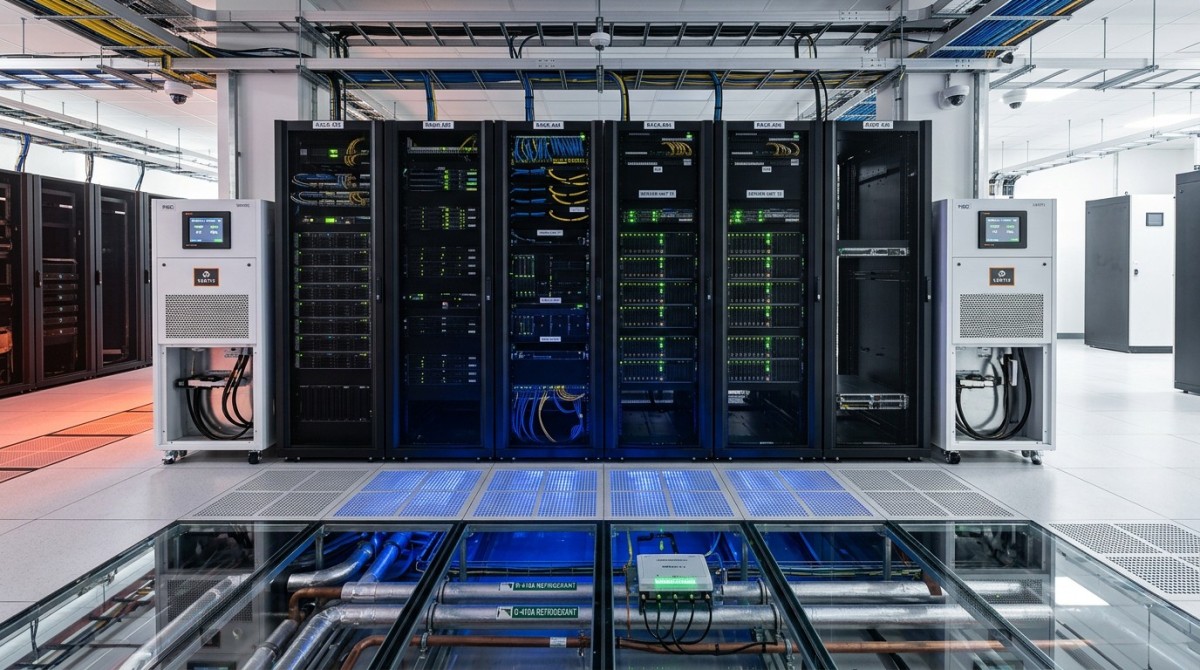
Server rooms operate with narrower thermal margins than many conventional commercial spaces. While an office can tolerate short-term drift, server environments often target stable conditions such as 18°C to 27°C for inlet air, with tighter internal operational targets depending on rack density, equipment load, and process sensitivity. A refrigerant leak can weaken capacity long before the cooling unit fully fails, making early detection essential.
The risk profile also changes when server rooms are tied to clean production or controlled technical environments. In facilities influenced by ISO 14644, ASHRAE guidance, or SEMI-related operational discipline, cooling reliability and contamination control are linked. A poorly managed leak can trigger emergency service entry, unplanned shutdowns, airflow disturbance, and more maintenance activity inside controlled areas, all of which increase operational exposure.
Another factor is refrigerant behavior. Some refrigerants are heavier than air and tend to accumulate in low points, trenches, or enclosed underfloor voids. Others disperse differently depending on airflow velocity, return path design, and room pressurization. A detector that performs well in a large plant room may miss the earliest warning signs in a small server room with hot aisle containment, raised floors, or localized cooling modules.
For businesses evaluating risk, three consequences usually matter most: first, thermal instability that can affect IT uptime within 10 to 30 minutes in dense rooms; second, maintenance escalation that turns a small service event into a system outage; and third, compliance exposure where alarm records, response logs, and environmental monitoring history are expected to be auditable.
Core operational impacts to assess
- Cooling performance degradation before total unit failure, especially in close-control or precision HVAC systems.
- Higher compressor energy use, often rising noticeably over a 2 to 8 week period before maintenance teams identify the cause.
- Potential safety concerns in occupied rooms, particularly in smaller spaces below 100 m² with limited air changes.
- Increased unplanned intervention in contamination-sensitive environments where service activity must be minimized.
The Main Refrigerant Leak Detection Methods and Where Each One Performs Best
There is no single method that is always best. In server rooms, the most common options include fixed point gas detectors, aspirated or sampling-based systems, portable handheld detectors, pressure trend monitoring through the cooling system, and integrated building management or digital monitoring analytics. Each method offers a different balance between direct leak sensing and indirect condition monitoring.
Fixed point sensors are the most widely used baseline solution. They are installed near likely leak points, return air paths, or low-level accumulation zones. In a 24/7 room, they provide continuous monitoring and can trigger local alarms, BMS notifications, or staged shutdown logic. Their effectiveness depends heavily on placement, calibration interval, and compatibility with the refrigerant type in use.
Aspirated systems sample air from multiple points through tubing and route it to a central sensor. These systems are valuable where airflow is complex, where several cooling units serve one space, or where the organization wants higher sensitivity across underfloor, ceiling void, and room-level zones. They typically cost more upfront, but they reduce blind spots in rooms with containment or segmented airflow patterns.
Portable handheld detectors remain useful for maintenance verification, commissioning, and pinpointing leak sources during service, but they should not be treated as the primary protection strategy in critical rooms. Pressure trend monitoring and control analytics can also reveal slow refrigerant loss, yet they are best viewed as secondary indicators because they usually detect consequences of a leak rather than the leak plume itself.
Method comparison for technical and procurement teams
The table below compares the most practical detection methods used in server rooms and adjacent precision cooling spaces. It focuses on monitoring behavior, deployment fit, and operational limitations rather than marketing claims.
In most server rooms, fixed point detection is the minimum practical starting point, while aspirated detection becomes more attractive when airflow complexity, risk sensitivity, or uptime requirements increase. Portable tools and trend analytics are valuable additions, but they rarely replace continuous room monitoring in mission-critical environments.
Which method usually works best?
For a standard server room with one to three precision cooling units, fixed point sensors usually deliver the best value-to-protection ratio. For high-density rooms, semiconductor support spaces, or sites using underfloor supply plus containment, aspirated detection often works better because it can monitor 4 to 12 sampling points through one coordinated system. The “best” method is therefore a function of room geometry, airflow architecture, and acceptable response time.
How to Choose the Right Detection Strategy by Room Layout, Cooling Design, and Risk Level
Selection should start with the actual cooling configuration rather than the detector catalog. A room served by split systems, CRAC/CRAH units with refrigerant circuits, in-row direct expansion cooling, or rear-door heat exchangers presents different leak paths and detection zones. If heat pipe exchangers or adiabatic cooling systems reduce compressor runtime seasonally, teams must still evaluate where refrigerant remains present and how alarms should behave during mode changes.
Next, define the risk category. A small telecom room with periodic human occupancy may need a straightforward alarm and maintenance workflow. A server room supporting fab automation, pharmaceutical data integrity, or cleanroom building controls usually needs faster notification, alarm logging, escalation rules, and possibly dual-layer monitoring. In these cases, the detector becomes part of a broader environmental risk management architecture rather than a standalone accessory.
Sensor placement is often the difference between useful detection and expensive underperformance. Heavy refrigerants may require low-level mounting near equipment bases, trenches, or underfloor voids. Rooms with ceiling return may need additional points near return paths. A rule-of-thumb review should include leak source mapping, airflow mapping, and at least one simulation or practical smoke-path assessment before final installation.
Maintenance requirements also matter. A detector that needs calibration every 6 months may be reasonable in a staffed critical facility, but less suitable for distributed edge sites. Procurement teams should compare not only hardware cost, but sensor life, calibration gas requirements, service access needs, spare parts availability, and integration effort with BMS, DCIM, or site alarm platforms.
A practical 5-step selection workflow
- Map cooling assets, refrigerant type, pipe routes, and likely leak points across indoor and adjacent service zones.
- Classify the room by criticality, occupancy, and acceptable response time, such as immediate alarm under 60 seconds or trend alert within 15 minutes.
- Review airflow behavior, including raised floor plenum, ceiling void, hot aisle containment, and return air location.
- Compare continuous detection options against maintenance capacity, integration needs, and total 3-year operating cost.
- Validate placement and alarm logic during commissioning with controlled tests, staff training, and documented response procedures.
Recommended selection criteria
A strong specification usually includes at least 6 criteria: refrigerant compatibility, response time, false alarm resistance, calibration interval, BMS/DCIM integration, and maintainability. For higher-tier projects, add event logging depth, multi-threshold alarms, remote diagnostics, and compatibility with sitewide smart environmental monitoring or digital twin frameworks.
The table below can help buyers align room conditions with the most suitable detection strategy.
For many projects, the most balanced answer is not one device type but a layered approach: direct leak sensing for immediate alarms, control analytics for trend visibility, and handheld verification for maintenance execution. That combination supports both uptime and operational discipline.
Implementation, Commissioning, and Maintenance: What Determines Real-World Performance
Even the best leak detector will underperform if commissioning is weak. In practice, performance depends on 4 factors: correct sensor technology, correct placement, correct alarm logic, and correct maintenance routine. Many false negatives come from poor zoning decisions, while many false positives come from calibration drift, cleaning chemicals, or installation too close to abnormal airflow turbulence.
Commissioning should include more than a power-on check. A strong process verifies sensor communication, threshold settings, alarm handoff to BMS or DCIM, local annunciation, event logging, and response workflow. For critical rooms, operators should conduct at least one documented response drill so staff know who acts within the first 5 minutes, what gets checked, and when cooling redundancy or escalation protocols begin.
Maintenance intervals vary by technology, but many facilities review detector function monthly, perform formal inspections quarterly, and complete calibration every 6 to 12 months depending on sensor design, duty cycle, and manufacturer guidance. In contamination-sensitive environments, service planning should be synchronized with access controls and clean maintenance procedures to limit unnecessary disturbance.
Integration also adds long-term value. When leak alarms are linked to smart environmental monitoring platforms, teams can correlate refrigerant events with temperature drift, humidity anomalies, fan speed changes, compressor loading, and vibration signatures from cooling equipment mounted on isolation supports. This wider view is especially useful in advanced industrial facilities where thermal control and environmental integrity are operationally inseparable.
Common implementation mistakes
- Using one sensor to cover a room with multiple leak sources and separated airflow paths.
- Ignoring low-level accumulation zones in raised floor or cable trench configurations.
- Setting alarms without escalation logic, such as warning, urgent intervention, and shutdown review levels.
- Buying continuous monitors but relying on ad hoc maintenance, which often reduces accuracy after 6 to 18 months.
Typical project timeline
For a single server room, specification review and site assessment may take 3 to 7 days, installation 1 to 3 days, and commissioning another 1 to 2 days. Multi-room facilities or sites requiring BMS/DCIM integration typically need 2 to 4 weeks depending on cable routes, sample pipe layout, control logic, and maintenance access constraints.
FAQ for Buyers, Engineers, and Facility Managers
The questions below reflect common search intent from technical evaluators, procurement teams, project managers, and operations staff comparing refrigerant leak detection options for server rooms and precision environmental spaces.
How many detectors does a server room usually need?
There is no universal number, but a small room may need 2 to 3 fixed sensors, while a larger room with raised floor, ceiling return, and multiple cooling units may need 4 to 8 monitored points or one aspirated system with several sample inlets. The correct number depends on leak source distribution, airflow segmentation, and acceptable detection speed.
Are portable detectors enough for compliance and risk control?
Usually no. Portable detectors are valuable for maintenance and repair confirmation, but they do not provide continuous protection. In a 24/7 server room, relying only on handheld testing means a leak may remain undetected for hours or days between inspections. Continuous monitoring is generally the safer choice for critical infrastructure.
What should procurement teams prioritize besides purchase price?
Look at total cost over 3 years: detector count, installation complexity, calibration frequency, spare parts, integration work, staff training, and false alarm burden. A lower-cost device can become more expensive if it needs frequent recalibration, causes nuisance alarms, or lacks clear interoperability with site systems.
Can leak detection integrate with broader facility monitoring?
Yes. Many facilities connect refrigerant alarms to BMS, DCIM, or environmental monitoring platforms. This allows cross-checking with temperature, humidity, airflow, power, and equipment condition data. In advanced facilities, this integration supports faster diagnosis, better incident records, and more informed maintenance planning.
Which method works best in high-risk rooms?
In high-risk or high-density rooms, aspirated detection often performs best because it covers multiple zones and can detect leaks across underfloor, rack aisle, and return paths. However, some sites still combine aspirated monitoring with fixed sensors near major equipment for layered visibility. The best result usually comes from system design, not a single product choice.
The most effective refrigerant leak detection method in server rooms is the one matched to real operating conditions. Fixed point sensors are often the best practical choice for standard rooms, while aspirated systems offer stronger coverage in complex, high-density, or contamination-sensitive environments. Portable detectors and performance analytics remain useful, but mainly as supporting tools rather than primary safeguards.
If your team is evaluating server room cooling resilience, contamination control, or compliance-focused environmental monitoring, a structured assessment of room layout, refrigerant path, alarm integration, and maintenance workload will produce a better result than comparing hardware on price alone. To discuss a tailored detection strategy for server rooms, semiconductor support spaces, or precision industrial environments, contact us to get a customized solution, review implementation options, and learn more about practical leak detection and thermal risk control solutions.
Get weekly intelligence in your inbox.
No noise. No sponsored content. Pure intelligence.
 Jun 07, 2026How to Evaluate a Die Casting Parts Supplier in China for Stable QualityDie casting parts supplier China evaluation guide: learn how to verify stable quality, traceability, porosity control, and audit readiness before choosing a reliable manufacturing partner.
 Jun 07, 2026Healthcare Market Trends 2026: Growth Signals, Cost Pressure, and Risk ShiftsHealthcare Market trends in 2026 reveal selective growth, rising cost pressure, and hidden infrastructure risks. Explore where healthcare leaders can improve resilience, compliance, and performance.
: Key Features Worth Comparing in 2026") Jun 07, 2026Smart Building Management (BMS): Key Features Worth Comparing in 2026Smart building management (BMS) in 2026 goes beyond energy savings. Compare the key features that improve control, data integrity, compliance, and resilience in critical facilities.
Jun 07, 2026Smart Building Management (BMS): Key Features Worth Comparing in 2026Smart building management (BMS) in 2026 goes beyond energy savings. Compare the key features that improve control, data integrity, compliance, and resilience in critical facilities. Jun 07, 2026How to Improve HVAC Supply Chain Resilience Without OverstockingHVAC supply chain resilience starts with smarter planning—not overstocking. Learn practical ways to reduce risk, improve supplier visibility, and protect mission-critical projects.
 Jun 07, 2026Procurement Analytics: 7 Metrics That Expose Hidden Supplier CostsProcurement Analytics uncovers 7 hidden supplier cost metrics—from defects and lead-time volatility to compliance and downtime—so you can make smarter sourcing decisions faster.
 Jun 07, 2026EN 1822-5:2026 Takes Effect for AMC Filter ExportsEN 1822-5:2026 reshapes AMC filter exports to the EU with new lifecycle adsorption proof requirements. Learn the compliance risks, testing needs, and market-access steps for semiconductor cleanroom suppliers.
 Jun 07, 2026Japan Opens Fast-Track Imports for Maglev ChillersJapan opens fast-track imports for Maglev Chillers meeting IEC 61800-9-2 Tier 3. See how faster customs clearance can impact exporters, procurement, compliance, and project delivery.
 Jun 07, 2026FDA Adds Pressure-Cycle Reports for BSL-4 Bio-Barrier ImportsFDA adds new pressure-cycle report rules for BSL-4 Bio-Barrier imports. Learn what the June 2026 alert means for compliance, testing costs, delivery timelines, and exporters.
 Jun 07, 2026VDE Rule Adds Audit Gate for Digital Twin LabsVDE Rule adds an audit gate for Digital Twin Lab platforms in Germany. Learn how the real-time data sovereignty audit impacts compliance, IIoT suppliers, bids, and EU lab market access.
 Jun 07, 2026PSA Launches Dedicated UPW Inspection Line at Jurong IslandPSA Launches Dedicated UPW Inspection Line at Jurong Island, introducing 72-hour clearance, strict cold-chain control, and digital traceability for compliant semiconductor and biopharma shipments.
 Jun 06, 2026Smart Thermostats in 2026: Energy Savings, Limits, and Best-Fit Use Casessmartthermostats in 2026: discover real energy savings, key limits, and the best-fit use cases to choose smarter comfort, cut waste, and buy with confidence.
 Jun 06, 2026Process Fluid Treatment: How to Reduce Fouling and Unplanned DowntimeProcess Fluid Treatment helps reduce fouling, stabilize heat transfer, and prevent unplanned downtime. Learn practical methods to improve reliability, cut maintenance risk, and protect critical systems.
 Jun 06, 2026Medical PPE Standards Explained: What to Check Before You Buymedicalppe standards explained in a practical buyer’s guide. Learn what certifications, test reports, and compliance checks to verify before you buy for safer, smarter sourcing.
 Jun 06, 2026Supply Chain Software Checklist: ERP Fit, Visibility, and Integration RisksSupply chain software checklist for enterprise buyers: assess ERP fit, real-time visibility, and integration risks to avoid costly gaps and choose a platform that supports resilience, compliance, and growth.
 Jun 06, 2026Commercial Energy Storage ROI: Cost Drivers and Payback BenchmarksCommercial energy storage ROI explained: uncover key cost drivers, realistic 4–10 year payback benchmarks, and how tariffs, resilience, and incentives shape smarter investment decisions.
![]() Jun 06, 2026VDE Sets Data Sovereignty Audit for Digital Twin LabsVDE Sets Data Sovereignty Audit for Digital Twin Labs in the EU. Learn how the 2026 rule affects compliance, edge storage, API traceability, and Sino-German smart lab delivery.
Jun 06, 2026VDE Sets Data Sovereignty Audit for Digital Twin LabsVDE Sets Data Sovereignty Audit for Digital Twin Labs in the EU. Learn how the 2026 rule affects compliance, edge storage, API traceability, and Sino-German smart lab delivery.![]() Jun 06, 2026Japan Opens Fast-Track for Tier 3 Maglev ChillersJapan opens a fast-track for Tier 3 Maglev Chillers, cutting duplicate testing and speeding customs. See what METI’s new rule means for compliance, procurement, and delivery planning.
Jun 06, 2026Japan Opens Fast-Track for Tier 3 Maglev ChillersJapan opens a fast-track for Tier 3 Maglev Chillers, cutting duplicate testing and speeding customs. See what METI’s new rule means for compliance, procurement, and delivery planning.![]() Jun 06, 2026PSA Opens UPW Inspection Lane, Cuts Clearance to 72 HoursPSA opens a dedicated UPW inspection lane at Jurong Island Port, cutting clearance to 72 hours. See what this means for semiconductor logistics, importers, and wafer fabs in Southeast Asia.
Jun 06, 2026PSA Opens UPW Inspection Lane, Cuts Clearance to 72 HoursPSA opens a dedicated UPW inspection lane at Jurong Island Port, cutting clearance to 72 hours. See what this means for semiconductor logistics, importers, and wafer fabs in Southeast Asia. Jun 06, 2026FDA Tightens Import Data for BSL-4 Bio-Barrier PartsFDA tightens import data for BSL-4 Bio-Barrier parts. Learn the new ISO 10993-1 and 10,000 pressure-cycle document rules, risks, and actions importers should take now.
![]() Jun 06, 2026Revised EN 1822-5:2026 Raises AMC Filter Export RequirementsRevised EN 1822-5:2026 raises AMC filter export requirements for the EU, highlighting stricter life-cycle verification, CE marking risks, and urgent compliance steps for manufacturers and buyers.
Jun 06, 2026Revised EN 1822-5:2026 Raises AMC Filter Export RequirementsRevised EN 1822-5:2026 raises AMC filter export requirements for the EU, highlighting stricter life-cycle verification, CE marking risks, and urgent compliance steps for manufacturers and buyers. Jun 05, 2026IIoT Air Monitoring Set as New Satellite Calibration BenchmarkIIoT Air Monitoring becomes a new satellite calibration benchmark, signaling faster EN 17355:2026 alignment. See how this shift may impact certification, exports, procurement, and market readiness.
 Jun 05, 2026ECHA Rule Takes Effect for AMC Filtration AdsorbentsECHA rule for AMC Filtration adsorbents is now in effect. Learn how REACH Annex XVII, SCIP filing, and batch-level customs data impact EU imports, compliance risk, and delivery.
 Jun 05, 2026FDA Tightens Decon System Import Rules for BSL-3/4FDA Tightens Decon System Import Rules for BSL-3/4: learn the new six-month ISO/IEC 17025 validation requirement, key compliance risks, and what manufacturers, importers, and labs must do now.
 Jun 05, 2026IEC Draft Adds Dynamic Particle Test for FFUsIEC Draft Adds Dynamic Particle Test for FFUs: learn how the new 0.8-second response-time rule may affect cleanroom certification, exports, and market access before Dec. 1, 2026.
 Jun 05, 2026China Opens UPW Export Fast Track for RCEP PortsChina opens a fast-track customs channel for UPW exports at RCEP ports. Learn how 18.2MΩ·cm compliance, third-party testing, and 12–15 day faster clearance can improve delivery planning.
 Jun 05, 2026Supply Chain SaaS for Carbon Tracking: Cost, Risk, and Data GapsSupply Chain SaaS helps expose carbon data gaps, hidden costs, and compliance risks across suppliers. Learn how to compare platforms and choose one built for real industrial complexity.
 Jun 05, 2026SMT Assembly Services: How ESD Control Impacts Defect RatesSMT assembly services perform best when ESD control is built into every step. Learn how humidity, handling, grounding, and packaging directly affect defect rates and long-term reliability.