Low Volume Manufacturing: When Smaller Runs Save More
Low volume manufacturing: why do smaller runs sometimes cost less overall?
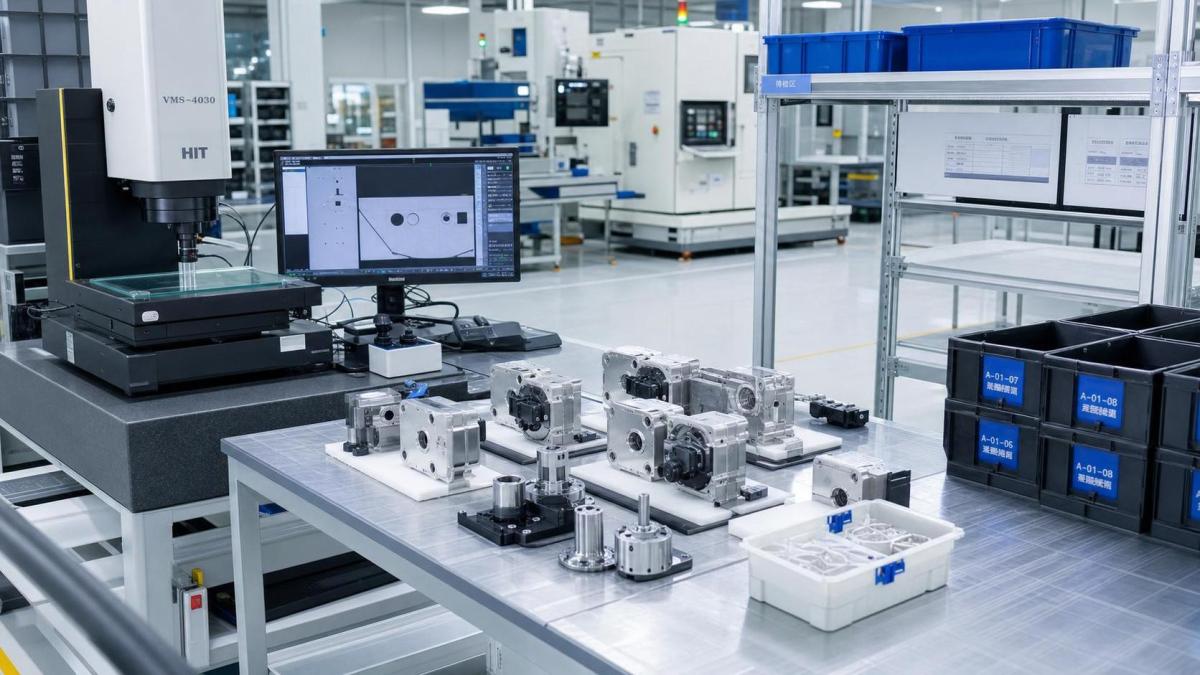
Low volume manufacturing sounds expensive at first glance. Unit prices often rise when order quantities fall. Yet total project cost can move in the opposite direction.
That matters when a project involves regulated environments, precision hardware, or systems that must be validated before wider deployment.
In practice, low volume manufacturing reduces exposure where demand is still uncertain, design changes remain likely, or qualification data is incomplete.
A smaller run can prevent excess inventory, shorten feedback loops, and reveal hidden integration problems before they multiply across a full rollout.
This is especially relevant in sectors shaped by contamination control, thermal stability, biosafety, and process compliance.
For example, facilities guided by G-ICE benchmark practices often need proof that equipment will perform under ISO 14644, ASHRAE, SEMI, or internal validation criteria.
When that proof is still being built, low volume manufacturing is less a compromise and more a disciplined way to buy certainty.
So what exactly counts as low volume manufacturing?
There is no universal quantity threshold. The definition depends on product complexity, tooling intensity, lead time, and the cost of design revisions.
For a simple enclosure, a few hundred units may be low volume manufacturing. For a high-spec environmental control module, twenty units may already qualify.
A more useful definition is operational. Low volume manufacturing is production sized for validation, pilot deployment, regional testing, or phased procurement.
It sits between prototyping and full-scale production. The parts are real, the tolerances matter, and documentation usually needs to be production-ready.
That distinction is important. Prototype work proves basic feasibility. Low volume manufacturing tests whether the product can be built repeatedly with stable quality.
In cleanroom HVAC, UPW skids, digital monitoring assemblies, and containment subsystems, repeatability often matters more than pure output volume.
When does low volume manufacturing make the strongest business case?
The strongest case appears when the cost of being wrong is higher than the cost of making fewer units.
That usually happens in projects with technical uncertainty, strict compliance requirements, or fast-changing demand assumptions.
More specifically, low volume manufacturing fits situations like these:
- A new facility needs pilot installation before network-wide standardization.
- A thermal or airflow design must be verified under real operating loads.
- A regulated process needs material traceability and change control before scale-up.
- Forecast demand is uncertain across geographies, clients, or approval stages.
- Design revisions are likely after first-site commissioning.
In these cases, smaller batches help preserve flexibility. They also generate field data that improves later sourcing decisions.
That is why low volume manufacturing appears frequently in advanced industrial projects, even when eventual demand is expected to be large.
A quick judgment table helps clarify the tradeoff
Rather than focusing only on piece price, compare the full procurement picture.
Is low volume manufacturing only for startups or niche products?
Not at all. Established industrial programs use it regularly, especially in staged capital projects and high-spec infrastructure upgrades.
A semiconductor support system, for instance, may require low volume manufacturing during qualification, even if future deployment spans multiple fabs.
The same pattern appears in pharmaceutical clean utilities, biosafety retrofits, and digital twin sensor packages.
The common thread is risk concentration. A single design flaw in these environments can trigger rework, validation delays, or compliance review.
That is why low volume manufacturing often supports phased standardization. One site proves the concept. Later batches scale with better data.
Under a framework like G-ICE, benchmarking performance against international standards turns small runs into practical evidence, not just limited output.
What costs are easy to miss when comparing small runs with large runs?
The obvious comparison is unit cost. The more revealing comparison is total landed decision cost.
Large runs may look efficient on paper while hiding costs in storage, rework, engineering changes, and delayed acceptance.
Low volume manufacturing can lower these hidden costs by keeping exposure contained during the learning phase.
Several cost items deserve closer review:
- Non-recurring engineering spread across too many unproven units.
- Inventory holding for specialized components with limited interchangeability.
- Scrap or retrofit expense after late-stage specification changes.
- Qualification delays caused by documentation gaps or unstable process control.
- Opportunity cost when a full rollout waits on unresolved field issues.
In actual sourcing reviews, the better question is not “Which option is cheaper per unit?”
It is “Which option buys the right level of certainty at this project stage?” That is where low volume manufacturing often wins.
How should you evaluate suppliers for low volume manufacturing work?
Supplier evaluation changes when runs are smaller. Capacity still matters, but responsiveness and process discipline matter more.
A capable low volume manufacturing partner should handle revisions without losing traceability, quality control, or documentation consistency.
This becomes critical in environmental control systems and other precision assemblies where each change can affect compliance or performance margins.
Look closely at these evaluation points:
- Can the supplier manage configuration changes without confusion between revisions?
- Are inspection plans aligned with required tolerances, contamination limits, or thermal targets?
- Is material traceability available for regulated or sensitive applications?
- Can documentation support FAT, SAT, validation, or internal governance reviews?
- How quickly can engineering feedback be incorporated into the next batch?
When a program touches ISO-classified spaces, biosafety zones, or ultra-pure process environments, these controls are rarely optional.
Low volume manufacturing works best when procurement, engineering, and compliance expectations are aligned before the first release.
What are the most common mistakes in low volume manufacturing decisions?
One common mistake is treating low volume manufacturing as nothing more than a temporary price penalty.
That view misses its role in validation, learning, and staged risk reduction.
Another mistake is assuming a prototype supplier can automatically support low volume manufacturing. The two capabilities are related, but not identical.
A third mistake is scaling too early. If specifications are still moving, larger orders can lock expensive uncertainty into the supply chain.
There is also a documentation trap. Smaller runs do not reduce the need for formal records when the application is regulated or performance-critical.
In G-ICE-aligned environments, missing evidence around airflow behavior, water purity, thermal stability, or monitoring accuracy can erase any apparent savings.
A better approach is to define clear exit criteria. Decide what the small run must prove before larger commitments are released.
A practical checkpoint list before placing the order
- Confirm whether the batch is for pilot deployment, validation, or interim demand coverage.
- Set measurable acceptance criteria for quality, performance, and documentation.
- Define what changes are allowed after the first units are reviewed.
- Map which standards, approvals, or internal gates must be satisfied before scaling.
- Compare total exposure, not just quoted piece price.
Where does this leave your next decision?
Low volume manufacturing makes the most sense when flexibility, proof, and timing carry real financial value.
It is particularly effective in complex industrial environments where performance must be demonstrated, not merely specified.
If the project touches cleanroom systems, precision HVAC, UPW treatment, containment engineering, or digital monitoring, smaller runs often support better decisions.
The next step is straightforward. Define what uncertainty still exists, what evidence the first batch must deliver, and what triggers later scale-up.
Once those conditions are clear, low volume manufacturing becomes easier to judge on business value rather than unit price alone.
That is usually the point where smaller runs save more.
Get weekly intelligence in your inbox.
No noise. No sponsored content. Pure intelligence.
 Oct 21, 2026How often is cleanroom certification required under ISO 14644-2?Cleanroom Certification is generally recommended annually under ISO 14644-2. Learn when risk-based extensions apply and which changes trigger earlier testing to plan with confidence.
 Oct 21, 2026FASEB Comments on NIH Draft Policy for Research Involving BiohazardsFASEB comments on NIH’s draft biohazard research policy call for risk-based biosafety oversight. Explore potential implications for laboratories, suppliers, and compliance teams.
 Oct 20, 2026How to disinfect ultrasound machines without damaging surfacesLearn how to disinfect ultrasoundmachines without surface damage. Explore compatible products, wet contact times, and probe care to protect patients and equipment.
 Oct 20, 2026Ultrapure Water in Semiconductor Manufacturing: Reuse and Quality Control InsightsExplore ultrapure water reuse in semiconductor manufacturing, key UPW quality benchmarks and analytical insights to help evaluate suppliers and protect process purity.
 Oct 19, 2026How cooling affects warpage in injection-molded consumer electronics housingsOptimize plastic injection molding for consumer electronics with cooling strategies to reduce housing warpage and improve assembly fit. Discover practical checks for stable, efficient production.
 Oct 18, 2026Can air leaks prevent a dehumidifier from holding its target dew point?Why can't our dehumidifier maintain the target dew point? Discover how air leaks increase moisture loads, spot hidden faults, and find practical fixes to restore reliable dew-point control.
 Oct 17, 2026How semiconductor process water treatment removes trace organicsSee how semiconductor process water treatment removes trace organics with RO, UV oxidation, and polishing. Learn how TOC monitoring helps verify purity and pinpoint contamination.
 Oct 16, 2026How to choose ultra pure water piping materials to limit leachingChoose ultra pure water piping with confidence. Compare PVDF, PFA, and stainless steel, assess leaching risks, and learn how to qualify your system for reliable purity.
 Oct 15, 2026How to size a skid-mounted deionized water system for peak demandCompare deionized water systems skid configurations for peak demand. Learn how to balance production, storage, and pump capacity to prevent shortages and avoid costly oversizing.
 Oct 14, 2026When is collaborative laboratory robotics suitable for sample sorting?Explore when collaborative laboratory robotics suits sample sorting. Discover key checks for safety, traceability, container compatibility, and throughput before choosing your solution.
 Oct 13, 2026How sandwich panel joints affect airtightness in cleanroom systemsCleanroom Systems sandwich panels need reliable joints for airtightness. Discover how gaskets, sealants, and testing help reduce leakage and protect cleanroom pressure control.
 Oct 12, 2026How to verify USP compliance for ultra pure water systemsUltra Pure Water Systems USP compliance: learn how to verify water quality, sampling, sanitization, trends, and validation controls at every point of use.
 Oct 11, 2026How tight temperature control prevents cleanroom process driftCleanroom process temperature control systems prevent costly drift by stabilizing critical conditions, improving repeatability, and protecting sensitive production workflows.
 Oct 10, 2026When does organic contaminant removal require TOC treatment?Organic contaminant removal requires TOC treatment when dissolved organics threaten product quality, equipment reliability, or process control. Learn how to assess risks and choose the right solution.
 Oct 08, 2026What affects lead times for sheet metal bending services in Canada?Sheet metal bending services Canada: discover how material supply, tooling, tolerances, finishing, documentation, and freight affect lead times for reliable project delivery.
 Oct 07, 2026How HVAC design for semiconductor fabs prevents airborne contaminationHVAC design for semiconductor fabs prevents airborne contamination through advanced filtration, pressure cascades, airflow control, and real-time monitoring. Explore key strategies for cleaner, more reliable wafer production.
 Oct 06, 2026How photovoltaic modules waterproof technology prevents moisture damagephotovoltaic modules waterproof technology prevents moisture damage with durable seals, drainage, and junction-box protection. Explore practical selection and testing insights.
 Oct 05, 2026How ISO 14644 Europe requirements affect cleanroom qualificationISO 14644 Europe requirements shape cleanroom qualification, from particle classification and recovery testing to monitoring, GMP alignment, and change control.
 Oct 04, 2026How to assess a pharmaceutical cleanroom solutions supplier’s ISO capabilityPharmaceutical Cleanroom Solutions supplier assessment guide: evaluate ISO 14644 capability, validation evidence, airflow design, documentation, and long-term GMP readiness.
 Oct 03, 2026What EU standards govern the design of BSL-3 laboratories in Europe?BSL-3 laboratories Europe: explore EU directives, EN standards, HVAC containment, commissioning, and practical design strategies for compliant, resilient high-containment facilities.
 Oct 02, 2026How EN 1822 defines HEPA filtration efficiency for cleanroomsHEPA filtration EN 1822 explained: learn how MPPS testing, local leakage limits, and filter classes support reliable cleanroom decisions.
 Oct 01, 2026How pharmaceutical process water systems control microbial riskProcess water systems pharmaceutical teams rely on can control microbial risk through hygienic design, monitoring, and validated sanitization. Explore practical compliance strategies.
 Sep 30, 2026When does a negative pressure laboratory need BSL-3 containment?Negative pressure laboratory or BSL-3? Discover the risk factors, engineering controls, and containment requirements needed for safe, compliant laboratory planning.
 Sep 29, 2026How to evaluate a TOC-zero water treatment supplier for UPW systemsChoose a TOC-zero water treatment supplier with confidence. Compare UPW performance, monitoring, validation, materials, service capability, and lifecycle cost.
 Sep 28, 2026What drives sustainable cooling cost in high-precision facilities?Sustainable cooling cost in high-precision facilities depends on thermal stability, energy, water, controls, and resilience. Explore smarter lifecycle strategies.
 Sep 27, 2026How to compare freight forwarding services for time-critical shipmentsCompare freight forwarding services for time-critical shipments with practical insights on routing, customs, visibility, specialized handling, and contingency planning.
 Sep 26, 2026How environmental integrity in laboratories supports reliable test resultsEnvironmental Integrity in laboratories safeguards samples, instruments, and staff. Discover practical controls for contamination, monitoring, and reliable test results.