CNC Machining Tolerances: Common Errors and Fixes
Why do small CNC machining tolerance errors create big production problems?
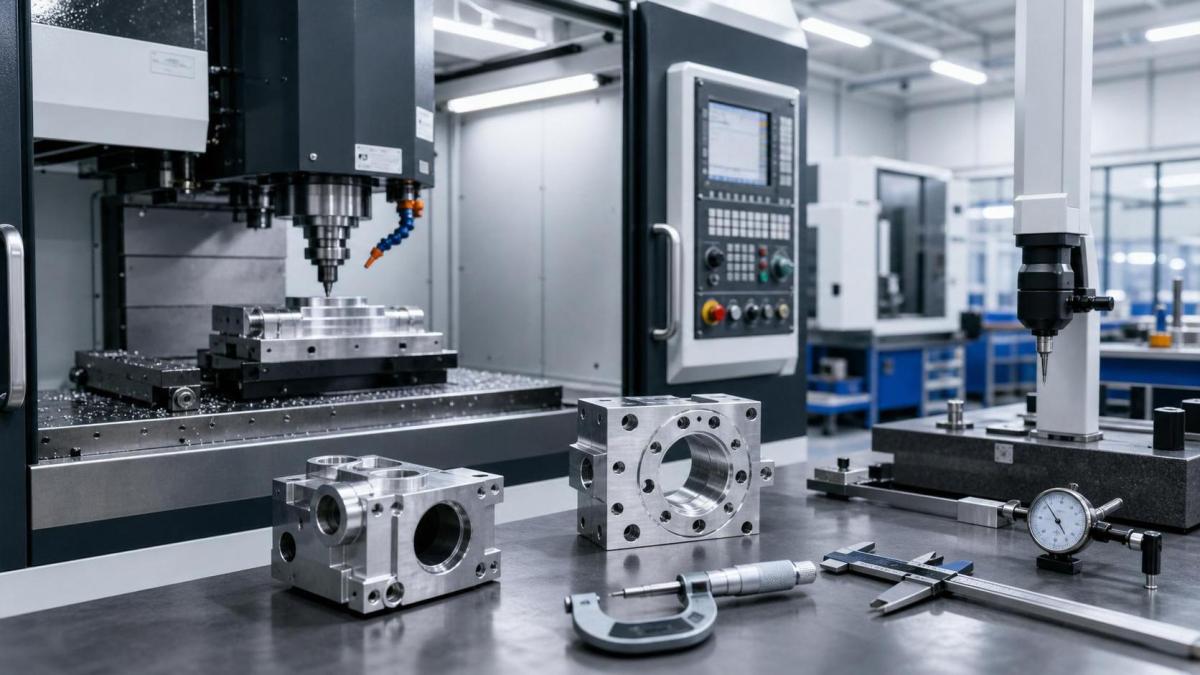
In CNC machining, tolerance trouble rarely starts as a dramatic failure.
More often, it begins with a bore that feels slightly tight, a face that sits unevenly, or a part that drifts during assembly.
That is why tolerance control matters far beyond the machine itself.
A few microns of deviation can trigger rework, unstable sealing, vibration, or inconsistent thermal behavior.
In precision facilities, those effects become even more expensive.
Semiconductor tools, pharmaceutical skids, HVAC assemblies, UPW modules, and biosafety hardware all depend on predictable fit.
When geometry shifts, environmental performance can shift with it.
That link is familiar across G-ICE benchmarked environments, where contamination control, thermal stability, and compliance depend on mechanical consistency.
So the practical question is not whether CNC machining tolerances matter.
It is which errors appear most often, how to spot them early, and what correction actually works on the shop floor.
Which CNC machining tolerance mistakes show up most often?
The common pattern is simple: the drawing is correct, but the process cannot hold it consistently.
In actual CNC machining, five mistakes appear again and again.
- Using a tolerance tighter than the function really needs.
- Referencing dimensions from unstable or poorly chosen datums.
- Ignoring heat growth in the spindle, tool, workpiece, or room.
- Assuming tool wear affects only surface finish, not size drift.
- Checking dimensions too late, after an entire batch is already cut.
Tightening every dimension may feel safer, but it often does the opposite.
Cycle time increases, scrap rises, and process capability drops.
A better approach is to separate critical fits from noncritical features.
For example, sealing faces, bearing seats, and alignment holes deserve close control.
External cosmetic edges usually do not.
In regulated or high-purity systems, that distinction matters because unnecessary corrections can also increase handling risk.
A quick troubleshooting view helps before full root-cause analysis
When a CNC machining dimension starts moving, this table is a useful first filter.
Is the problem coming from the machine, the tool, or the environment?
This is usually where CNC machining troubleshooting becomes more realistic.
A tolerance error is not always a machine accuracy problem.
Sometimes the machine is stable, but the tool path, cutter condition, or room environment is not.
Thermal movement is a strong example.
If the machine starts cold and the part is inspected warm, readings can be misleading.
The same risk appears when a shop runs near doors, process heat, or unstable HVAC zones.
In sectors tied to G-ICE priorities, environmental control is not a background issue.
Stable air temperature, filtered airflow, and controlled humidity help parts hold size more consistently.
That matters when machined parts later support cleanroom envelopes, fluid purity systems, or thermally sensitive equipment.
Another frequent source is tool deflection.
Long-reach tools, small diameters, and aggressive stepovers can move enough to miss profile or bore targets.
If size changes only on specific features, tool behavior is often the better suspect than machine alignment.
The most reliable diagnosis checks three things together:
- Does the error drift over time or stay fixed?
- Does it affect all features or only one geometry type?
- Does the result change between setups, operators, or ambient conditions?
What is the best way to fix tolerance drift without slowing everything down?
The answer is usually process discipline, not constant manual correction.
In CNC machining, the fastest stable process is often the one with fewer surprises.
A useful fix starts with control points inside the run, not only at final inspection.
That means measuring the feature most likely to drift before the whole batch is complete.
Wear offsets then become preventive, not reactive.
If parts show movement after unclamping, look at workholding before changing code.
If bores trend in one direction with runtime, check insert life and spindle temperature first.
If assembly fit fails while inspection passes, review the drawing logic and stack-up path.
Several fixes produce quick results in everyday CNC machining:
- Warm the machine to a repeatable thermal state before critical work.
- Set scheduled wear checks based on cut length, not guesswork.
- Use fixtures that locate from functional datums, not convenient surfaces.
- Reduce clamping distortion on thin walls and wide faces.
- Match metrology method to tolerance level and feature geometry.
That last point is easy to overlook.
A poor measurement method can create false alarms and false confidence at the same time.
When should you tighten CNC machining tolerances, and when is that a mistake?
Not every precision problem is solved by specifying a tighter number.
In fact, overly tight CNC machining tolerances often increase cost without improving function.
The better question is whether the feature directly affects sealing, flow, alignment, motion, or safety.
If it does, tighter control may be justified.
If it does not, wider tolerance may protect throughput and reduce scrap.
This matters in integrated systems.
A bracket inside a contamination-control assembly may need accurate hole position, but not mirror-level surface finish everywhere.
A UPW manifold may need strict sealing geometry, while non-contact external faces can stay looser.
A practical decision rule is to ask four questions before tightening a CNC machining tolerance:
- Does the feature control assembly fit or leak risk?
- Will variation affect thermal, fluid, or vibration performance?
- Can the current process hold the number with reasonable capability?
- Is the inspection method accurate enough to verify it repeatedly?
If two of those answers are weak, the tolerance likely needs redesign rather than enforcement.
How can CNC machining teams prevent repeat tolerance errors across different jobs?
Prevention is less about one perfect setup and more about repeatable control habits.
In mixed-industry work, repeat issues usually come from missing feedback between programming, setup, machining, and inspection.
A stable CNC machining workflow should document what drifted, when it drifted, and which correction held.
That turns isolated fixes into process knowledge.
It also supports traceability expectations seen in high-specification environments aligned with ISO 14644, ASHRAE, and SEMI-driven operations.
The most effective prevention plan usually includes these actions:
- Tag critical features on the setup sheet, not only on the print.
- Define first-piece and in-process measurement intervals by risk level.
- Record thermal conditions for parts with tight geometric requirements.
- Track tool life against dimensional change, not only visual wear.
- Review tolerance stack-ups whenever assemblies or mating parts change.
When these controls are in place, CNC machining accuracy becomes more predictable and easier to scale.
That is especially valuable where mechanical precision supports environmental integrity.
The next practical step is to map your highest-risk dimensions, compare them with current process capability, and adjust tooling, datums, and inspection timing before the next production run.
Get weekly intelligence in your inbox.
No noise. No sponsored content. Pure intelligence.
 Oct 21, 2026How often is cleanroom certification required under ISO 14644-2?Cleanroom Certification is generally recommended annually under ISO 14644-2. Learn when risk-based extensions apply and which changes trigger earlier testing to plan with confidence.
 Oct 21, 2026FASEB Comments on NIH Draft Policy for Research Involving BiohazardsFASEB comments on NIH’s draft biohazard research policy call for risk-based biosafety oversight. Explore potential implications for laboratories, suppliers, and compliance teams.
 Oct 20, 2026How to disinfect ultrasound machines without damaging surfacesLearn how to disinfect ultrasoundmachines without surface damage. Explore compatible products, wet contact times, and probe care to protect patients and equipment.
 Oct 20, 2026Ultrapure Water in Semiconductor Manufacturing: Reuse and Quality Control InsightsExplore ultrapure water reuse in semiconductor manufacturing, key UPW quality benchmarks and analytical insights to help evaluate suppliers and protect process purity.
 Oct 19, 2026How cooling affects warpage in injection-molded consumer electronics housingsOptimize plastic injection molding for consumer electronics with cooling strategies to reduce housing warpage and improve assembly fit. Discover practical checks for stable, efficient production.
 Oct 18, 2026Can air leaks prevent a dehumidifier from holding its target dew point?Why can't our dehumidifier maintain the target dew point? Discover how air leaks increase moisture loads, spot hidden faults, and find practical fixes to restore reliable dew-point control.
 Oct 17, 2026How semiconductor process water treatment removes trace organicsSee how semiconductor process water treatment removes trace organics with RO, UV oxidation, and polishing. Learn how TOC monitoring helps verify purity and pinpoint contamination.
 Oct 16, 2026How to choose ultra pure water piping materials to limit leachingChoose ultra pure water piping with confidence. Compare PVDF, PFA, and stainless steel, assess leaching risks, and learn how to qualify your system for reliable purity.
 Oct 15, 2026How to size a skid-mounted deionized water system for peak demandCompare deionized water systems skid configurations for peak demand. Learn how to balance production, storage, and pump capacity to prevent shortages and avoid costly oversizing.
 Oct 14, 2026When is collaborative laboratory robotics suitable for sample sorting?Explore when collaborative laboratory robotics suits sample sorting. Discover key checks for safety, traceability, container compatibility, and throughput before choosing your solution.
 Oct 13, 2026How sandwich panel joints affect airtightness in cleanroom systemsCleanroom Systems sandwich panels need reliable joints for airtightness. Discover how gaskets, sealants, and testing help reduce leakage and protect cleanroom pressure control.
 Oct 12, 2026How to verify USP compliance for ultra pure water systemsUltra Pure Water Systems USP compliance: learn how to verify water quality, sampling, sanitization, trends, and validation controls at every point of use.
 Oct 11, 2026How tight temperature control prevents cleanroom process driftCleanroom process temperature control systems prevent costly drift by stabilizing critical conditions, improving repeatability, and protecting sensitive production workflows.
 Oct 10, 2026When does organic contaminant removal require TOC treatment?Organic contaminant removal requires TOC treatment when dissolved organics threaten product quality, equipment reliability, or process control. Learn how to assess risks and choose the right solution.
 Oct 08, 2026What affects lead times for sheet metal bending services in Canada?Sheet metal bending services Canada: discover how material supply, tooling, tolerances, finishing, documentation, and freight affect lead times for reliable project delivery.
 Oct 07, 2026How HVAC design for semiconductor fabs prevents airborne contaminationHVAC design for semiconductor fabs prevents airborne contamination through advanced filtration, pressure cascades, airflow control, and real-time monitoring. Explore key strategies for cleaner, more reliable wafer production.
 Oct 06, 2026How photovoltaic modules waterproof technology prevents moisture damagephotovoltaic modules waterproof technology prevents moisture damage with durable seals, drainage, and junction-box protection. Explore practical selection and testing insights.
 Oct 05, 2026How ISO 14644 Europe requirements affect cleanroom qualificationISO 14644 Europe requirements shape cleanroom qualification, from particle classification and recovery testing to monitoring, GMP alignment, and change control.
 Oct 04, 2026How to assess a pharmaceutical cleanroom solutions supplier’s ISO capabilityPharmaceutical Cleanroom Solutions supplier assessment guide: evaluate ISO 14644 capability, validation evidence, airflow design, documentation, and long-term GMP readiness.
 Oct 03, 2026What EU standards govern the design of BSL-3 laboratories in Europe?BSL-3 laboratories Europe: explore EU directives, EN standards, HVAC containment, commissioning, and practical design strategies for compliant, resilient high-containment facilities.
 Oct 02, 2026How EN 1822 defines HEPA filtration efficiency for cleanroomsHEPA filtration EN 1822 explained: learn how MPPS testing, local leakage limits, and filter classes support reliable cleanroom decisions.
 Oct 01, 2026How pharmaceutical process water systems control microbial riskProcess water systems pharmaceutical teams rely on can control microbial risk through hygienic design, monitoring, and validated sanitization. Explore practical compliance strategies.
 Sep 30, 2026When does a negative pressure laboratory need BSL-3 containment?Negative pressure laboratory or BSL-3? Discover the risk factors, engineering controls, and containment requirements needed for safe, compliant laboratory planning.
 Sep 29, 2026How to evaluate a TOC-zero water treatment supplier for UPW systemsChoose a TOC-zero water treatment supplier with confidence. Compare UPW performance, monitoring, validation, materials, service capability, and lifecycle cost.
 Sep 28, 2026What drives sustainable cooling cost in high-precision facilities?Sustainable cooling cost in high-precision facilities depends on thermal stability, energy, water, controls, and resilience. Explore smarter lifecycle strategies.
 Sep 27, 2026How to compare freight forwarding services for time-critical shipmentsCompare freight forwarding services for time-critical shipments with practical insights on routing, customs, visibility, specialized handling, and contingency planning.
 Sep 26, 2026How environmental integrity in laboratories supports reliable test resultsEnvironmental Integrity in laboratories safeguards samples, instruments, and staff. Discover practical controls for contamination, monitoring, and reliable test results.