Chilled Water Piping Design Mistakes That Hurt System Efficiency
Why does chilled water piping design decide whether an efficient plant actually performs well?
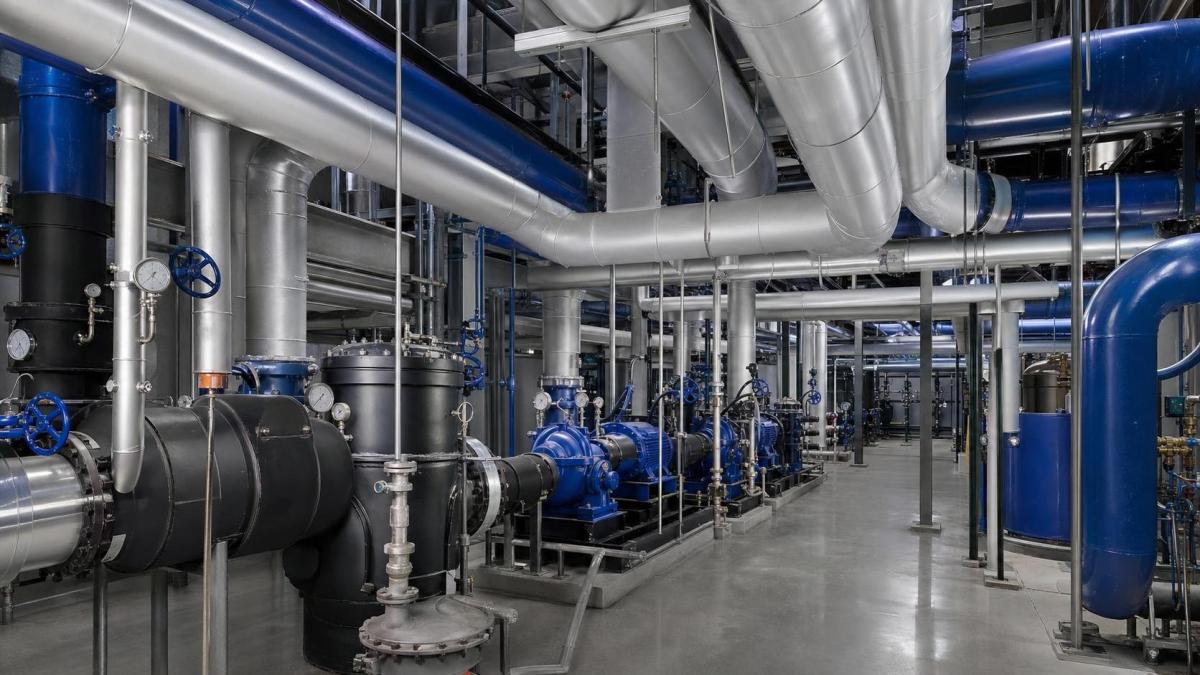
A high-efficiency chiller plant can still waste energy when the distribution side is poorly planned.
That is why chilled water piping design deserves the same attention as chillers, pumps, and control sequences.
In complex facilities, the piping network determines flow stability, pump head, controllability, and maintenance access.
Small errors rarely stay small.
They often show up later as high delta-T loss, hunting control valves, uneven cooling, and difficult commissioning.
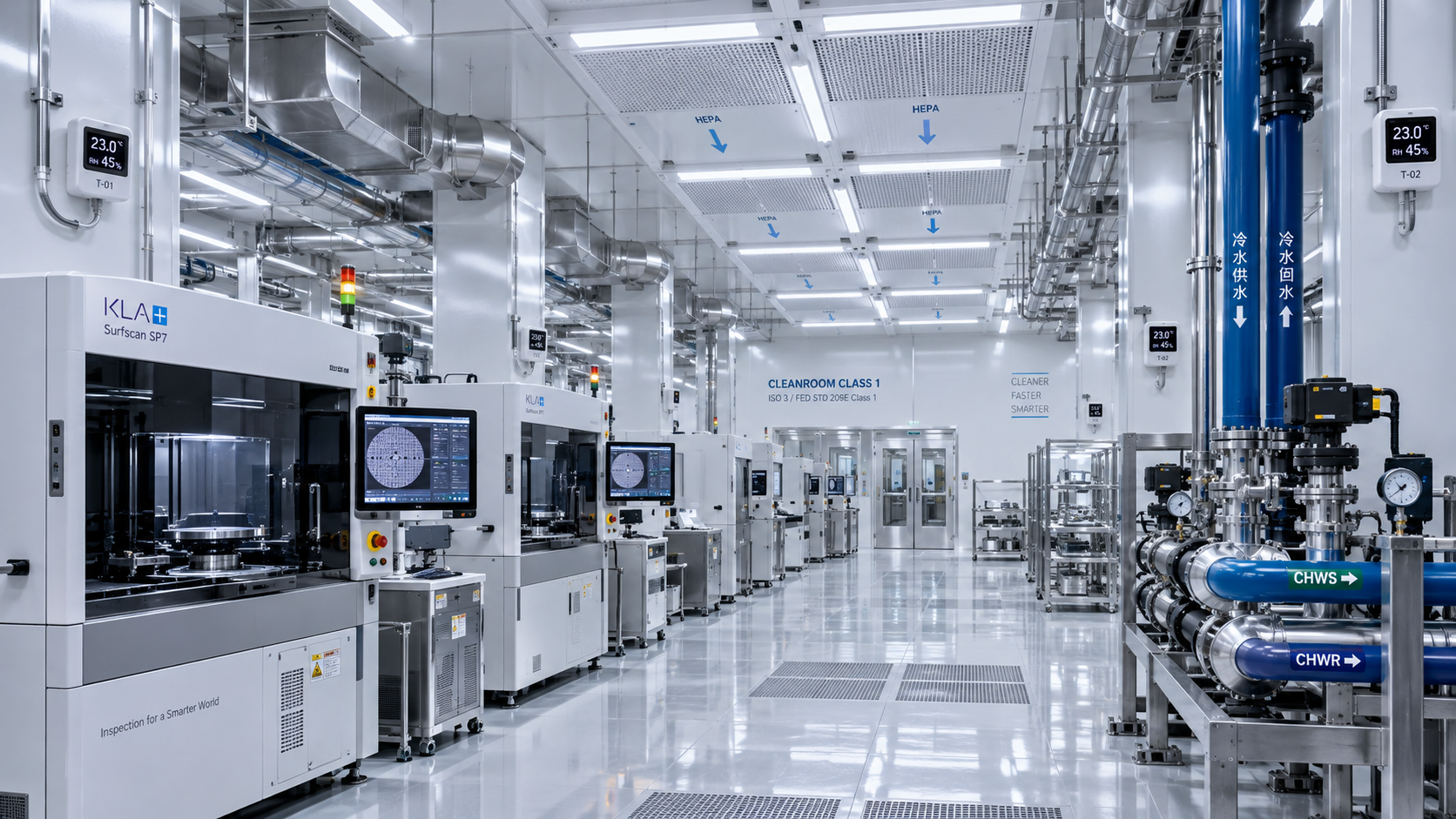
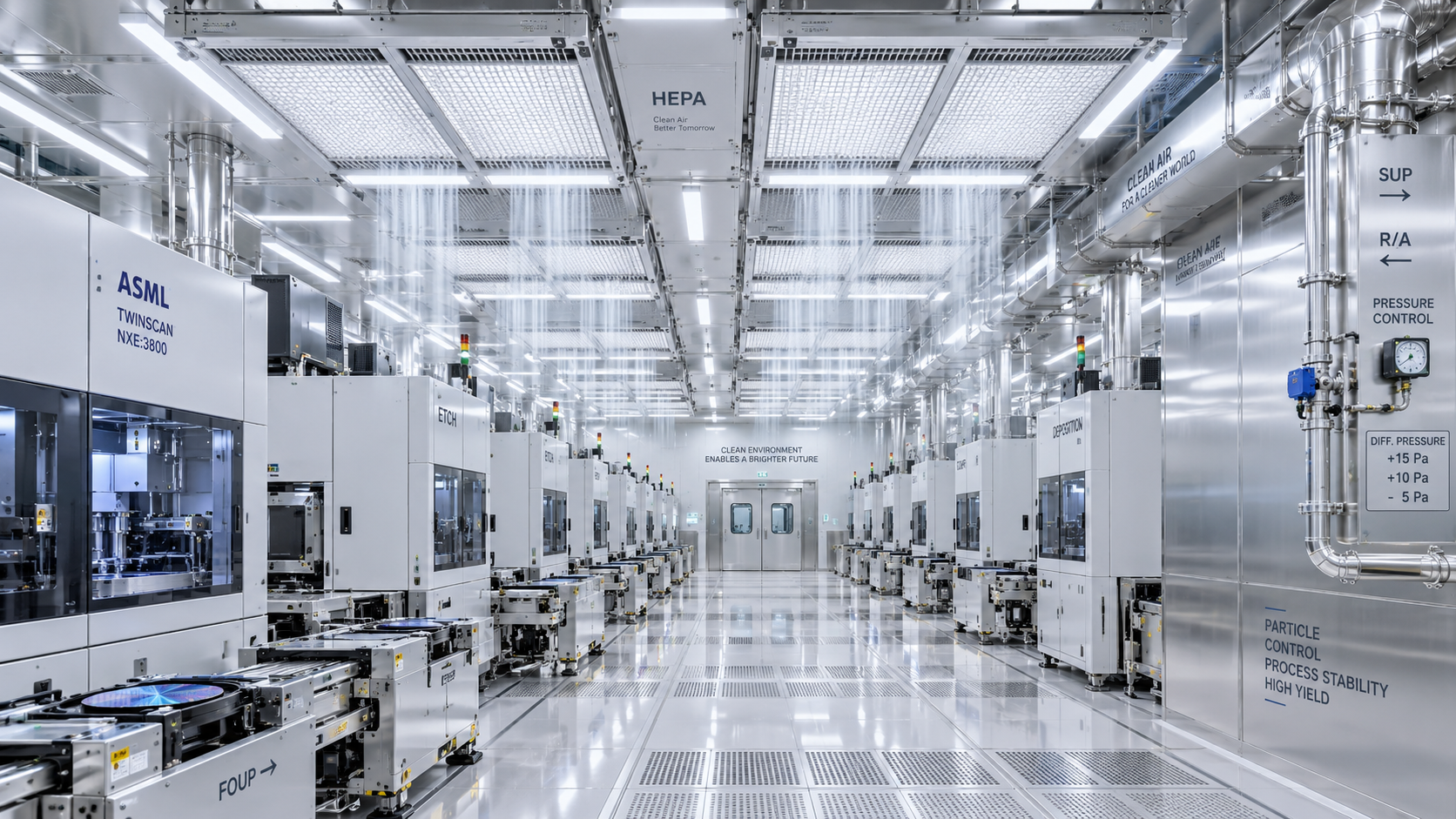
This matters even more in environments tied to ISO 14644, ASHRAE, or SEMI expectations.
Facilities handling semiconductors, pharmaceuticals, advanced labs, or precision thermal processes cannot tolerate casual layout decisions.
Within G-ICE benchmarking practice, piping is treated as an operational risk point, not a background utility.
The common question is not whether chilled water piping design matters.
The real question is which mistakes quietly erode performance before anyone notices the cost.
Are oversized or undersized pipes really a major efficiency problem?
Yes, and the damage works in both directions.
Undersized piping raises friction loss, increases pump energy, and makes future capacity changes harder.
Oversized piping looks safer on paper, yet it can reduce velocity too much.
When velocity drops, air removal becomes less reliable, heat exchange may become less stable, and water quality issues can grow.
A weak sizing decision also affects control authority at coils and branches.
In practice, many teams size for peak load only and ignore part-load behavior.
That is where chilled water piping design often drifts away from real operating conditions.
A better approach is to evaluate:
- expected operating hours at part load
- required coil delta-T and valve rangeability
- acceptable pressure drop across the longest path
- future expansion without overbuilding the first phase
This is especially important in phased industrial campuses.
The first buildout should not lock the site into inefficient pumping for the next decade.
Why do layout choices and branch routing create so many hidden losses?
Many losses come from geometry rather than equipment quality.
Long detours, unnecessary fittings, poorly placed tees, and abrupt transitions all add resistance.
The plant still runs, but the pump curve shifts in the wrong direction.
Another common issue is routing supply and return for construction convenience rather than hydraulic clarity.
That decision may save coordination time early, yet it can complicate balancing and access later.
In cleanrooms, containment spaces, and precision process zones, routing also affects maintainability.
If a valve or strainer sits above critical equipment with poor service clearance, routine work becomes operationally risky.
A disciplined chilled water piping design usually checks three things together:
- hydraulic directness
- service access
- future isolation during maintenance
Where digital twin review is available, it helps expose branch conflicts before installation starts.
That is one of the practical lessons often reinforced in G-ICE thermal management assessments.
What causes low delta-T syndrome, and why is piping design often part of the problem?
Low delta-T is usually blamed on controls, but piping decisions are frequently involved.
When bypass paths are poorly managed, water returns too cold and the plant must move more flow than expected.
That means more pump energy and weaker chiller loading efficiency.
The issue becomes more severe when decouplers, common headers, or secondary loops are oversized or mislocated.
Short-circuit flow is then easier to create, especially during low-load conditions.
Another source is poor coil branch design.
If valves cannot control smoothly, coils may receive excess flow and fail to extract the intended temperature rise.
The quick diagnostic table below helps connect symptoms to likely piping-related causes.
A strong chilled water piping design does not chase only nominal flow.
It protects temperature difference across real operating scenarios.
Is balancing still a problem when the control system is advanced?
Very much so.
Modern controls can optimize only the system they are given.
If the chilled water piping design lacks balance authority, sensors and algorithms will spend their time reacting to instability.
This often happens when designers skip commissioning valves, sensor points, or differential pressure planning.
The result is familiar: one branch floods, another starves, and the BAS keeps chasing noise.
Pressure-independent control valves can help, but they do not solve every layout problem.
They still depend on reasonable upstream conditions and thoughtful circuit design.
In mission-critical facilities, it is wise to define balancing philosophy during design, not during startup.
Useful checks include:
- where the index circuit will sit after full occupancy
- how differential pressure reset will be measured
- which branches need manual verification points
- how temporary startup conditions differ from steady production loads
That last point matters in facilities that ramp production over time.
A system that appears stable during initial occupancy may drift once full process loads arrive.
Which design details are usually cut for budget, then paid back through operating cost?
The expensive mistakes are rarely dramatic.
They are the small omissions that force workarounds for years.
Examples include missing isolation valves, poor air management, limited drains, and inaccessible strainers.
Insulation quality also belongs in this discussion.
A technically correct chilled water piping design can still underperform when vapor barriers fail or supports create condensation bridges.
In precision environments, that can affect both energy use and contamination risk.
Another underestimated issue is expansion planning.
If future tie-ins require shutdown of critical zones, the original savings were not real savings.
A practical review before procurement should ask:
- Can each major branch be isolated without stopping the whole plant?
- Are vents, drains, and test points placed for actual field use?
- Will insulation remain intact after routine maintenance?
- Is the layout ready for future redundancy or process expansion?
This is where lifecycle thinking separates a cheap drawing from a durable system plan.
How should teams review chilled water piping design before construction starts?
The most effective review is cross-functional and specific.
It should not stop at line sizes and equipment schedules.
Review the hydraulic path, control logic, constructability, maintainability, and future operating envelope together.
In high-performance industrial settings, that often means comparing the design against benchmarked operating criteria, not only code minimums.
A concise preconstruction checklist can prevent months of correction later:
- verify flow assumptions for peak and part-load conditions
- confirm index run pressure drop with all fittings included
- check branch balancing and valve authority at coils
- review bypass risks in primary-secondary or decoupled arrangements
- protect access for strainers, sensors, valves, and insulation repairs
- test future expansion scenarios before final freeze of the layout
When chilled water piping design is reviewed this way, efficiency is no longer left to chance.
It becomes a predictable outcome of good engineering decisions.
The next step is straightforward.
Map the current design against operating priorities, identify any delta-T, routing, or balancing weaknesses, and resolve them before procurement locks them in.
That single review step often protects efficiency, stability, and maintenance cost far better than late-stage fixes ever can.
Get weekly intelligence in your inbox.
No noise. No sponsored content. Pure intelligence.
 Oct 21, 2026How often is cleanroom certification required under ISO 14644-2?Cleanroom Certification is generally recommended annually under ISO 14644-2. Learn when risk-based extensions apply and which changes trigger earlier testing to plan with confidence.
 Oct 21, 2026FASEB Comments on NIH Draft Policy for Research Involving BiohazardsFASEB comments on NIH’s draft biohazard research policy call for risk-based biosafety oversight. Explore potential implications for laboratories, suppliers, and compliance teams.
 Oct 20, 2026How to disinfect ultrasound machines without damaging surfacesLearn how to disinfect ultrasoundmachines without surface damage. Explore compatible products, wet contact times, and probe care to protect patients and equipment.
 Oct 20, 2026Ultrapure Water in Semiconductor Manufacturing: Reuse and Quality Control InsightsExplore ultrapure water reuse in semiconductor manufacturing, key UPW quality benchmarks and analytical insights to help evaluate suppliers and protect process purity.
 Oct 19, 2026How cooling affects warpage in injection-molded consumer electronics housingsOptimize plastic injection molding for consumer electronics with cooling strategies to reduce housing warpage and improve assembly fit. Discover practical checks for stable, efficient production.
 Oct 18, 2026Can air leaks prevent a dehumidifier from holding its target dew point?Why can't our dehumidifier maintain the target dew point? Discover how air leaks increase moisture loads, spot hidden faults, and find practical fixes to restore reliable dew-point control.
 Oct 17, 2026How semiconductor process water treatment removes trace organicsSee how semiconductor process water treatment removes trace organics with RO, UV oxidation, and polishing. Learn how TOC monitoring helps verify purity and pinpoint contamination.
 Oct 16, 2026How to choose ultra pure water piping materials to limit leachingChoose ultra pure water piping with confidence. Compare PVDF, PFA, and stainless steel, assess leaching risks, and learn how to qualify your system for reliable purity.
 Oct 15, 2026How to size a skid-mounted deionized water system for peak demandCompare deionized water systems skid configurations for peak demand. Learn how to balance production, storage, and pump capacity to prevent shortages and avoid costly oversizing.
 Oct 14, 2026When is collaborative laboratory robotics suitable for sample sorting?Explore when collaborative laboratory robotics suits sample sorting. Discover key checks for safety, traceability, container compatibility, and throughput before choosing your solution.
 Oct 13, 2026How sandwich panel joints affect airtightness in cleanroom systemsCleanroom Systems sandwich panels need reliable joints for airtightness. Discover how gaskets, sealants, and testing help reduce leakage and protect cleanroom pressure control.
 Oct 12, 2026How to verify USP compliance for ultra pure water systemsUltra Pure Water Systems USP compliance: learn how to verify water quality, sampling, sanitization, trends, and validation controls at every point of use.
 Oct 11, 2026How tight temperature control prevents cleanroom process driftCleanroom process temperature control systems prevent costly drift by stabilizing critical conditions, improving repeatability, and protecting sensitive production workflows.
 Oct 10, 2026When does organic contaminant removal require TOC treatment?Organic contaminant removal requires TOC treatment when dissolved organics threaten product quality, equipment reliability, or process control. Learn how to assess risks and choose the right solution.
 Oct 08, 2026What affects lead times for sheet metal bending services in Canada?Sheet metal bending services Canada: discover how material supply, tooling, tolerances, finishing, documentation, and freight affect lead times for reliable project delivery.
 Oct 07, 2026How HVAC design for semiconductor fabs prevents airborne contaminationHVAC design for semiconductor fabs prevents airborne contamination through advanced filtration, pressure cascades, airflow control, and real-time monitoring. Explore key strategies for cleaner, more reliable wafer production.
 Oct 06, 2026How photovoltaic modules waterproof technology prevents moisture damagephotovoltaic modules waterproof technology prevents moisture damage with durable seals, drainage, and junction-box protection. Explore practical selection and testing insights.
 Oct 05, 2026How ISO 14644 Europe requirements affect cleanroom qualificationISO 14644 Europe requirements shape cleanroom qualification, from particle classification and recovery testing to monitoring, GMP alignment, and change control.
 Oct 04, 2026How to assess a pharmaceutical cleanroom solutions supplier’s ISO capabilityPharmaceutical Cleanroom Solutions supplier assessment guide: evaluate ISO 14644 capability, validation evidence, airflow design, documentation, and long-term GMP readiness.
 Oct 03, 2026What EU standards govern the design of BSL-3 laboratories in Europe?BSL-3 laboratories Europe: explore EU directives, EN standards, HVAC containment, commissioning, and practical design strategies for compliant, resilient high-containment facilities.
 Oct 02, 2026How EN 1822 defines HEPA filtration efficiency for cleanroomsHEPA filtration EN 1822 explained: learn how MPPS testing, local leakage limits, and filter classes support reliable cleanroom decisions.
 Oct 01, 2026How pharmaceutical process water systems control microbial riskProcess water systems pharmaceutical teams rely on can control microbial risk through hygienic design, monitoring, and validated sanitization. Explore practical compliance strategies.
 Sep 30, 2026When does a negative pressure laboratory need BSL-3 containment?Negative pressure laboratory or BSL-3? Discover the risk factors, engineering controls, and containment requirements needed for safe, compliant laboratory planning.
 Sep 29, 2026How to evaluate a TOC-zero water treatment supplier for UPW systemsChoose a TOC-zero water treatment supplier with confidence. Compare UPW performance, monitoring, validation, materials, service capability, and lifecycle cost.
 Sep 28, 2026What drives sustainable cooling cost in high-precision facilities?Sustainable cooling cost in high-precision facilities depends on thermal stability, energy, water, controls, and resilience. Explore smarter lifecycle strategies.
 Sep 27, 2026How to compare freight forwarding services for time-critical shipmentsCompare freight forwarding services for time-critical shipments with practical insights on routing, customs, visibility, specialized handling, and contingency planning.
 Sep 26, 2026How environmental integrity in laboratories supports reliable test resultsEnvironmental Integrity in laboratories safeguards samples, instruments, and staff. Discover practical controls for contamination, monitoring, and reliable test results.