Chilled Water Piping Design Mistakes That Raise Energy Loss
Why does chilled water piping decide whether an efficient cooling plant actually performs?
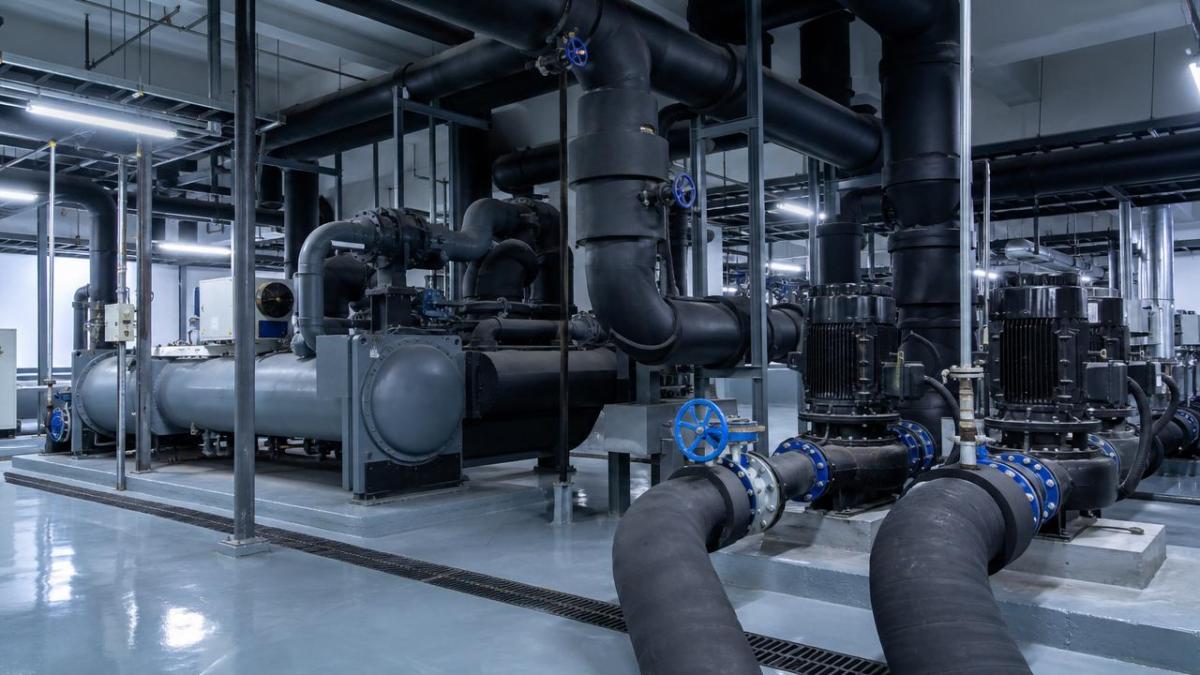
A high-efficiency chiller does not guarantee low energy use. The chilled water piping layout often determines whether that efficiency survives daily operation.
In performance-critical facilities, small piping mistakes can quietly increase pump head, reduce heat transfer, and create unstable control behavior.
That matters even more where temperature drift, contamination control, and uptime are tightly managed under ASHRAE, ISO 14644, or SEMI-aligned practices.
G-ICE repeatedly highlights the same lesson across advanced HVAC and thermal management projects: chilled water piping is not just a transport path.
It is part of the energy system, the control system, and the risk profile of the facility.
When the piping network is oversized, poorly balanced, or hydraulically confusing, the plant pays for it every hour through extra pumping and weaker thermal stability.
So the real question is not whether chilled water piping matters. It is where design decisions most often go wrong.
Which chilled water piping mistakes raise energy loss first?
The biggest losses usually come from a few repeat issues rather than one dramatic error. Most of them are preventable during design review.
A useful way to see them is to compare the mistake with its operating symptom.
In actual projects, these issues often overlap. A plant may show high pumping cost, but the root cause is usually a combination of routing, control, and balancing choices.
Is oversized or undersized chilled water piping the bigger problem?
Both create waste, but they do it differently. That is why pipe sizing should not be treated as a simple safety margin exercise.
Undersized chilled water piping raises water velocity and friction loss. Pumps then need more head, and noise or erosion risk may appear in critical branches.
Oversized chilled water piping looks safer on paper, yet it can weaken control authority and increase installation cost without real operating value.
Lower velocity is not automatically better. If velocity drops too far, air removal becomes harder, temperature response slows, and some circuits become difficult to commission.
More common is selective oversizing. Main headers may be generous, while terminal branches are compressed to save space. That imbalance often damages hydraulic consistency.
A better approach is to size chilled water piping by lifecycle performance, not just first-pass pressure drop. Review flow diversity, future load phasing, and control valve authority together.
- Check velocity targets for mains, risers, and coil branches separately.
- Model partial-load conditions, not only peak design flow.
- Confirm that available pump head matches the real index circuit.
- Avoid adding pipe size only to compensate for uncertain routing.
In facilities requiring tight thermal tolerance, stable response is often as important as low friction loss.
Why do low delta-T problems often start with piping decisions rather than the chiller?
Low delta-T is frequently blamed on plant equipment. In many cases, the chilled water piping arrangement is the hidden trigger.
When bypass paths are poorly located, or distribution circuits are not balanced, too much water returns without absorbing enough heat.
The result is familiar: return temperature stays too low, pump flow rises, and chillers must move more water for the same cooling duty.
This becomes especially expensive in high-load cleanrooms, biopharma utilities, and precision process areas where cooling demand shifts by zone and by time.
Several piping-related causes appear again and again:
- Decouplers that are too short or poorly positioned
- Three-way valve arrangements that sustain unnecessary bypass flow
- Reverse-return assumptions without real balancing verification
- Coil branches with unstable differential pressure
The practical fix is not only hydraulic calculation. It also requires a control sequence that respects how the piping network behaves at low load.
That is one reason digital twin monitoring is gaining attention. It helps reveal where flow is circulating without delivering useful cooling.
What layout details usually get missed during design review?
Many energy losses come from details that look minor in drawings. Later, they become fixed operating penalties.
One frequent issue is routing chilled water piping around structural or process constraints without recalculating the new pressure profile.
Another is placing strainers, valves, and sensors where they are accessible but hydraulically awkward. Service convenience then adds permanent resistance.
Support strategy also matters. Poor support spacing can distort alignment, increase vibration transfer, and complicate commissioning over time.
Insulation details are often underestimated as well. Gaps at valves, flanges, and hangers can create measurable heat gain and persistent condensation risk.
Where facilities pursue strict environmental control, those losses affect more than utility bills. They can disrupt room stability, moisture management, and maintenance planning.
A sharper review checklist usually includes layout questions like these:
- Does the shortest route also preserve maintainability?
- Are branch takeoffs arranged for predictable balancing?
- Do air vents and drains support real startup conditions?
- Are insulation continuity and vapor barriers detailed at fittings?
- Will future expansion disturb hydraulic separation?
How can chilled water piping be evaluated before energy waste becomes permanent?
The best time to improve chilled water piping is before procurement and installation lock in the design.
A practical review should combine thermal intent, hydraulic logic, and operational reality. Looking at one dimension alone usually misses the true risk.
The table below works well as a quick judgment tool during concept or detailed design.
In more complex sites, benchmarking against G-ICE-style performance criteria can help connect piping choices with contamination control, thermal precision, and ESG reporting goals.
That broader view is useful because energy loss in chilled water piping rarely stays isolated. It often spreads into uptime, maintenance, and compliance outcomes.
What should be done next if a system already shows high pumping energy or unstable temperatures?
Start with evidence, not assumptions. Measure differential pressure, supply and return temperature, branch flow, and valve position trends under several load conditions.
If the system struggles at low load, look for bypassing, poor decoupling, or control valves operating outside their stable range.
If energy use is high at full load, review actual head loss against the original chilled water piping basis. Field routing changes are often the missing explanation.
The most effective next step is usually a focused audit rather than a full redesign. That keeps attention on the circuits creating the biggest penalty.
Useful actions often include rebalancing branches, removing unnecessary bypasses, correcting insulation defects, and tuning pump and valve sequences together.
Where future expansion is planned, it is worth updating the chilled water piping model now instead of repeating the same hidden losses later.
The main point is simple. Energy-efficient cooling depends on more than efficient equipment. Chilled water piping has to support the same performance standard.
A careful review of routing, sizing, balancing, insulation, and control interaction usually reveals where losses begin and how they can be reduced with practical effort.
When the next design or retrofit is evaluated, define the acceptable pressure drop, target delta-T, control stability range, and expansion logic before finalizing the layout.
That approach makes chilled water piping a performance asset instead of a long-term energy liability.
Get weekly intelligence in your inbox.
No noise. No sponsored content. Pure intelligence.
 Sep 15, 2026Smart HVAC investment insights for North American heat recovery projectsSmart HVAC investment insights North America: evaluate heat recovery, lifecycle costs, controls, and performance for resilient project decisions.
 Sep 14, 2026How SEMI standards shape water treatment design for semiconductor fabsSemiconductor water treatment SEMI guidance shapes resilient UPW design, contamination control, monitoring, reclaim strategy, and fab-ready validation.
 Sep 13, 2026What drives Biosafety Containment Systems cost in BSL-3 projects?Biosafety Containment Systems cost in BSL-3 projects depends on HVAC, layout, decontamination, controls, and commissioning. Discover how to build a credible budget.
 Sep 12, 2026How to qualify a fine chemical process solutions supplier for purity controlFine Chemical Process Solutions supplier qualification guide: evaluate purity control, traceability, contamination prevention, and safety for reliable high-purity production.
 Sep 11, 2026What drives cleanroom certification cost for ISO Class 1–9 projects?Cleanroom certification cost depends on ISO Class 1–9 requirements, test scope, HVAC readiness, documentation, and retesting. Explore practical budgeting insights to control project risk.
 Sep 10, 2026When should Procurement Directors prioritize heat recovery payback?Procurement Directors: learn when heat recovery delivers reliable payback, lower lifecycle costs, and safe performance in controlled industrial environments.
 Sep 09, 2026How to select an environmental monitoring system for cleanroomsEnvironmental monitoring system selection for cleanrooms: compare sensors, alarms, data integrity, integration, and installation to ensure reliable control.
 Sep 08, 2026How temperature stability affects semiconductor manufacturing yieldSemiconductor manufacturing temperature stability directly affects yield, overlay, metrology, and process control. Explore practical HVAC, monitoring, and zoning strategies.
 Sep 07, 2026How to prepare for a Regulatory Frameworks audit of cleanroom controlsRegulatory Frameworks audit readiness for cleanroom controls: build traceable evidence, verify alarms and monitoring, and close compliance gaps with confidence.
 Sep 07, 2026How to choose reverse osmosis systems with the right recovery rateReverse osmosis systems: learn how to select the right recovery rate for reliable water quality, lower scaling risk, efficient concentrate control, and stable long-term performance.
 Sep 05, 2026How does a negative pressure room work to contain airborne contaminants?How does a negative pressure room work? Discover how inward airflow, controlled exhaust, monitoring, and room design help contain airborne contaminants safely.
 Sep 04, 2026What TOC Limits Should Be Set and Monitored for a UPW Loop?What are our TOC limits for the UPW loop? Learn how to set defensible TOC thresholds, monitor trends, protect critical processes, and improve water-quality control.
 Sep 04, 2026What Are the Best Retrofit Options for Upgrading Existing Pharmaceutical Cleanrooms?What are the best retrofit options to upgrade existing pharma cleanrooms? Explore FFUs, HVAC modernization, pressure cascades, monitoring, and sealed finishes for compliant performance.
 Sep 04, 2026How Does a Negative Air Pressure Room Protect Adjacent Areas?What is a negative air pressure room? Learn how controlled airflow contains airborne hazards, protects adjacent spaces, and supports safer facility operations.
 Sep 04, 2026What Is ISO Class 1 Cleanroom Classification, and Where Is It Used?What is ISO Class 1? Explore its ultra-low particle limits, critical cleanroom design factors, verification methods, and uses in semiconductor, optics, and quantum manufacturing.
 Sep 04, 2026How Long After a UPW Deviation Does Yield Impact Typically Appear?What is the typical time lag from UPW deviation to yield impact? Learn how contamination, process sensitivity, exposure windows, and testing stages shape detection timing.
 Sep 04, 2026What Testing Data Should Engineers Review Before Approving a UPW Material?What testing data should be reviewed before approving a UPW material? Explore extractables, TOC, particle release, ionic leaching, corrosion, and reliability data for confident approval.
 Sep 04, 2026How Should Pharmaceutical Cleanrooms Choose Climate Control Systems?Which climate control systems are recommended for pharmaceutical cleanroom environments? Explore HVAC, humidity, pressure, HEPA filtration, and GMP-ready monitoring strategies.
 Sep 04, 2026Airtight Door Problems in Medical Spaces and How Buyers Prevent ThemA problem-solving guide for airtight door procurement, covering sealing performance, sensors, wall coordination, cleaning, maintenance, and acceptance risk.
 Sep 04, 2026What drives cleanroom design cost for ISO Class 7 projects?Cleanroom design cost for ISO Class 7 projects depends on HVAC, filtration, utilities, validation, and lifecycle strategy. Learn how to control budgets without compromising compliance or performance.
 Sep 03, 2026When do heat pipe heat exchangers suit pharmaceutical cleanrooms?Heat Pipe Heat Exchangers for pharmaceutical plants: discover when they support cleanroom energy recovery, airflow separation, humidity control, and GMP-ready HVAC design.
 Sep 02, 2026What determines biosafety cabinets price across different modelsBiosafety cabinets price varies by class, airflow design, filtration, size, certification, and installation. Compare models confidently to choose safe, cost-effective containment.
 Sep 01, 2026When does thermal energy storage cut peak-demand costs in plants?Thermal energy storage for industrial plants can cut peak-demand costs when tariffs, load profiles, and controls align. Explore practical savings, resilience, and integration factors.
 Aug 31, 2026How a digital environmental monitoring system supports audit-ready cleanroomsDigital environmental monitoring system strategies for audit-ready cleanrooms: improve traceability, alarm response, data integrity, and compliance confidence.
 Aug 30, 2026When does next-gen thermal management closed loop reduce chiller energy use?Next-gen thermal management closed loop systems can cut chiller energy by reducing lift, optimizing flows, enabling heat recovery, and improving controls. Discover when savings are real.
 Aug 29, 2026How chilled water piping layout affects pump energy useChilled water piping layout directly affects pump energy, control stability, and lifecycle costs. Explore practical design insights for efficient, reliable systems.
 Aug 28, 2026When thermal energy storage systems cut peak cooling costs in pharma plantsThermal Energy Storage Systems for pharmaceutical plants cut peak cooling costs, support compliance, and strengthen resilience. Explore the business case.