Tibet Tianlu Chengguan Renovation Enforces UPW & ESD Standards
On April 30, 2026, Tibet Construction Group mandated strict洁净 (clean) construction protocols across its Chengguan District old residential renovation project in Lhasa — requiring TOC removal pre-treatment at concrete batching plants, ESD control in rebar processing zones, and ISO 14644-1 Class 8 environmental controls for pipeline welding. This development signals growing relevance for suppliers of ultra-pure water (UPW) systems and electrostatic discharge (ESD) control solutions — particularly those targeting infrastructure EPC projects in South Asia and Africa.
Event Overview
On April 30, 2026, Tibet Construction Group implemented mandatory clean construction standards for its urban renewal project in Chengguan District, Lhasa. Confirmed requirements include: installation of TOC Removal pre-treatment units at concrete mixing stations; enforcement of ESD Control measures in steel reinforcement processing areas; and adherence to ISO 14644-1 Class 8 cleanroom environmental specifications during pipeline welding operations.
Which Subsectors Are Affected
Direct Trade Enterprises
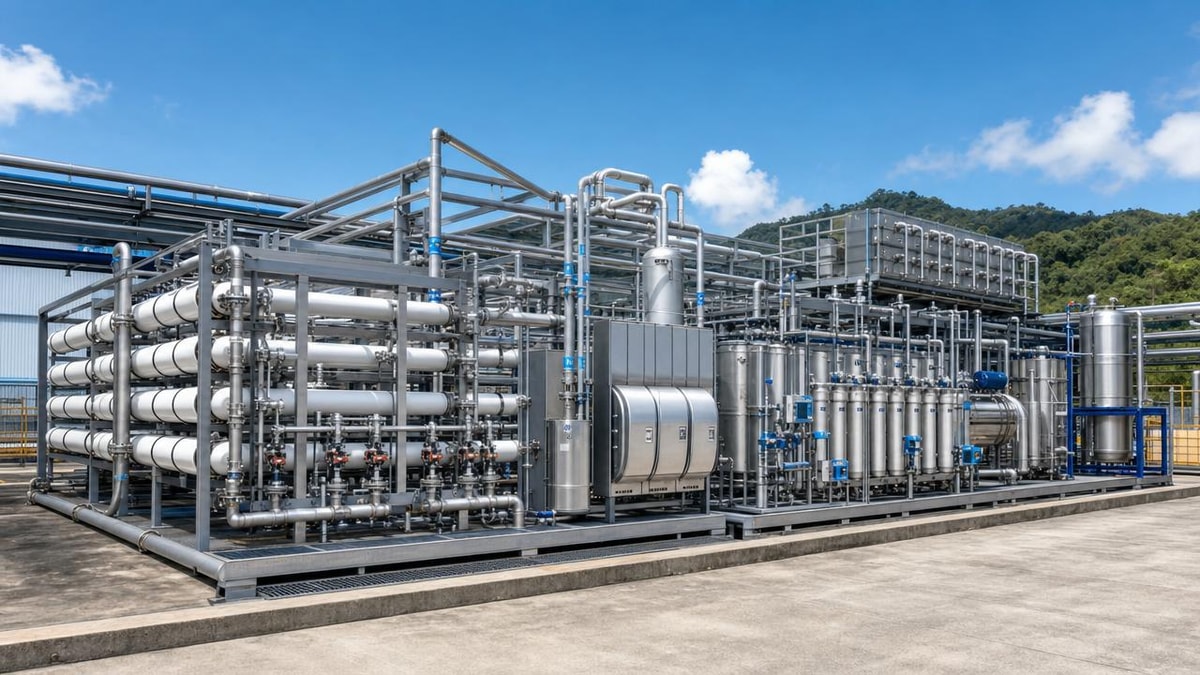
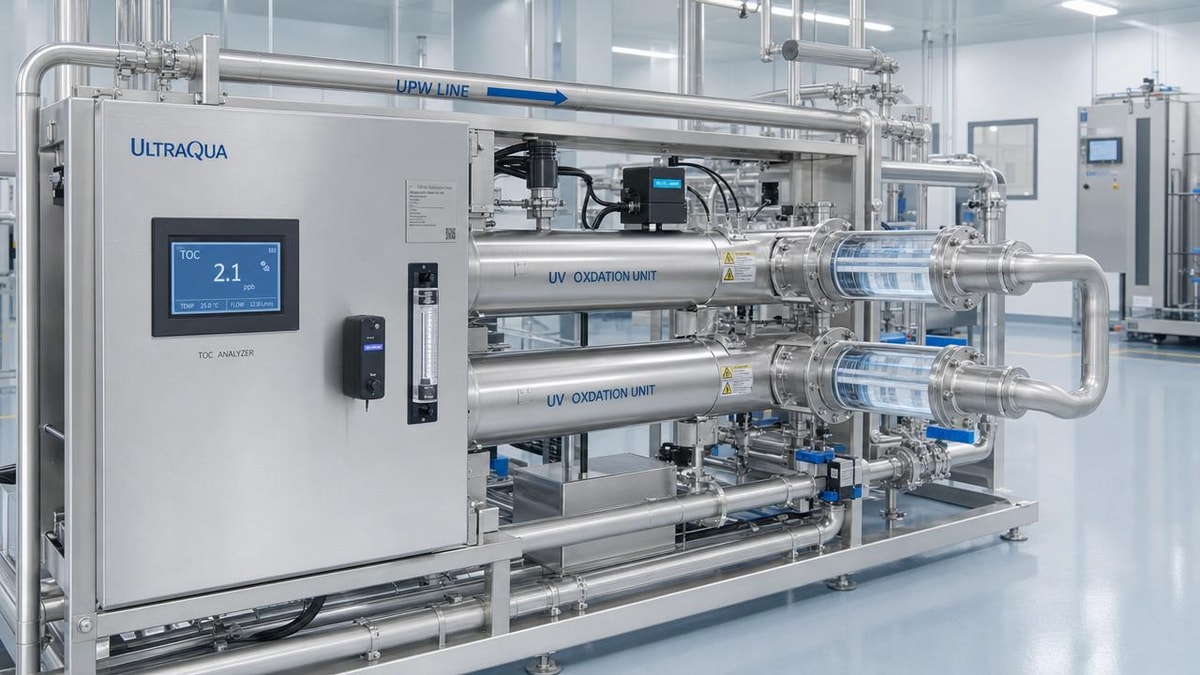
Export-oriented firms supplying UPW treatment modules or ESD flooring/grounding kits may face new tender eligibility criteria when bidding on Chinese-led EPC infrastructure contracts in emerging markets. The requirement for TOC Removal units — a niche subsystem within UPW trains — introduces technical qualification thresholds previously uncommon in civil infrastructure tenders.
Manufacturers of Cleanroom-Grade Components
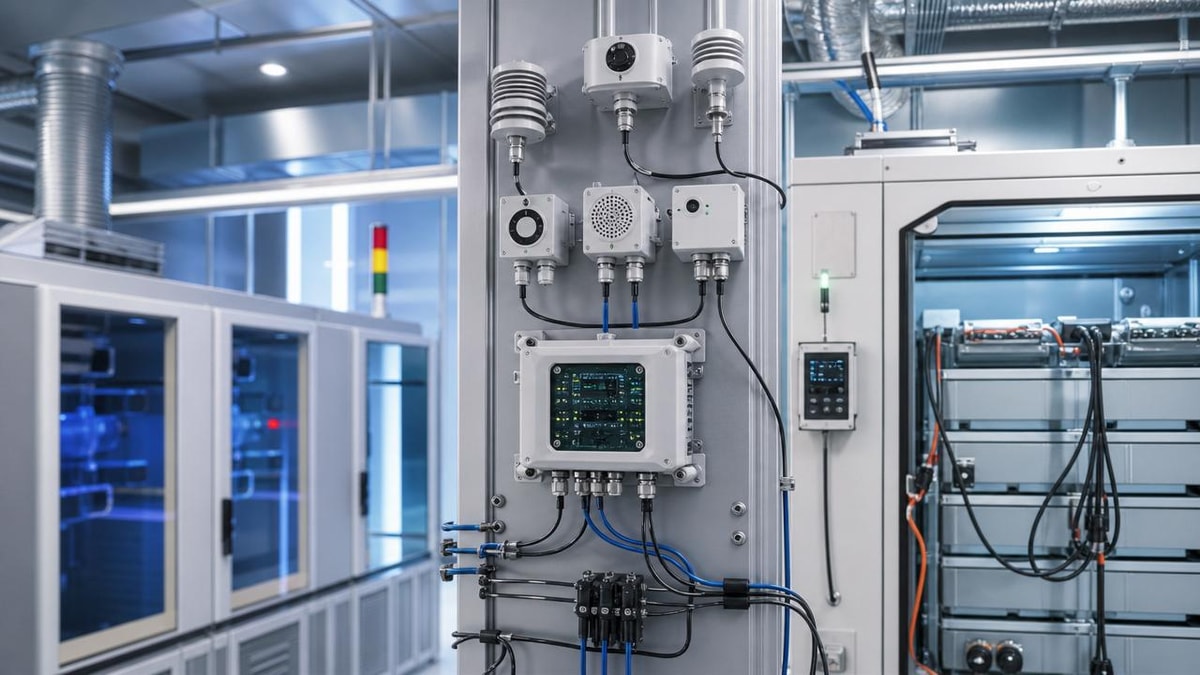
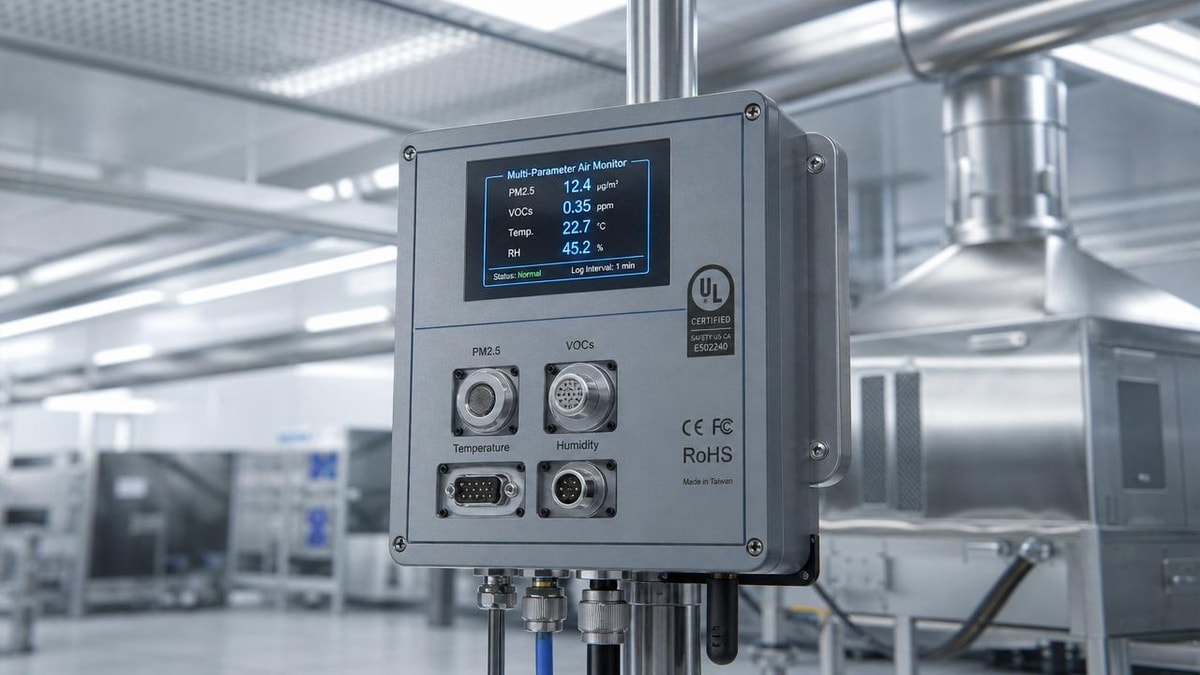
Producers of ISO 14644-compliant air filtration, monitoring sensors, or weld purge equipment used in Class 8 environments may see increased specification alignment demands. Unlike pharmaceutical or semiconductor applications, this use case applies cleanroom logic to field-based pipeline welding — implying need for ruggedized, portable, and site-deployable versions of existing products.
Supply Chain Service Providers
Logistics and customs compliance specialists supporting cross-border delivery of clean-tech hardware must now account for evolving documentation expectations — including third-party verification of TOC reduction performance or ESD resistance certification — which may not be routinely required under standard construction material import regimes.
What Relevant Companies or Practitioners Should Monitor and Do Now
Track official updates on national or provincial clean construction guidance documents
The Chengguan project appears to be an early implementation test rather than a codified regulation. Observably, it precedes any formal revision to China’s Technical Code for Urban Renewal Projects (JGJ/T 498). Stakeholders should monitor whether the Ministry of Housing and Urban-Rural Development issues pilot program notices or technical bulletins referencing ‘clean construction’ in Q3–Q4 2026.
Assess applicability of current UPW/ESD product certifications to civil infrastructure contexts
Many TOC Removal units are certified for semiconductor-grade UPW (e.g., ASTM D5127), but lack validation for intermittent, low-flow, field-deployed concrete admixture water treatment. Similarly, ESD flooring specs often assume indoor, static-load environments — not outdoor rebar yards with dust, moisture, and mechanical abrasion. Current more suitable is evaluating real-world durability testing reports, not just lab-based certification marks.
Prepare for extended lead-time planning in procurement and commissioning
Integrating TOC removal or Class 8 environmental controls into civil works requires coordination across structural, MEP, and specialty subcontractors — a departure from traditional linear scheduling. Analysis shows that early engagement with general contractors on interface management (e.g., power supply for TOC units, temporary clean enclosures for welding) reduces schedule risk more effectively than post-tender technical addenda.
Editorial Perspective / Industry Observation
This initiative is best understood as a policy signal — not yet an operational standard. Observably, it reflects a broader shift where ‘cleanliness’ transitions from a sector-specific requirement (e.g., microelectronics, biopharma) toward a cross-cutting infrastructure quality attribute. From an industry perspective, it does not indicate immediate nationwide rollout, but rather signals that clean fluid handling and static control are entering the scope definition phase of public-sector EPC procurement — especially where Chinese contractors operate abroad. Continued attention is warranted because such pilot implementations often inform subsequent technical annexes in Belt and Road-related infrastructure financing frameworks.
Conclusion: The Chengguan project does not establish a new regulatory benchmark, but it does mark a tangible inflection point — where UPW and ESD capabilities begin appearing in non-traditional infrastructure procurement language. It is more accurately interpreted as an early indicator of evolving technical expectations in export-oriented civil engineering contracts, rather than evidence of mature market demand.
Information Sources: Official announcement by Tibet Construction Group (April 30, 2026); publicly disclosed technical specifications for the Chengguan District renovation project; ISO 14644-1:2015 and IEC 61340-5-1 standards. Note: Implementation scale beyond Chengguan District remains unconfirmed and requires ongoing observation.
Get weekly intelligence in your inbox.
No noise. No sponsored content. Pure intelligence.
 May 02, 2026How to Evaluate a Fan Filter Units Manufacturer Beyond Unit PriceFan Filter Units manufacturer selection goes beyond unit price. Learn how to compare compliance, performance, lifecycle cost, and support to protect margins and win long-term channel growth.
 May 02, 2026When Magnetic-Levitation Centrifugal Chillers Pay Off in Real FacilitiesMagnetic-Levitation Centrifugal Chillers pay off when facilities need uptime, part-load efficiency, and low-risk cooling. See where they deliver real ROI in cleanrooms, biopharma, hospitals, and advanced manufacturing.
 May 02, 2026Industrial Climate Control Upgrades That Cut Drift and Energy WasteIndustrial Climate Control upgrades that reduce drift, improve compliance, and cut energy waste. Explore practical checklists and high-impact retrofit strategies.
 May 02, 2026ASHRAE Standards Certification: What to Verify Before Final ApprovalASHRAE Standards certification: learn what to verify before final approval, from scope and commissioning proof to lifecycle cost and hidden risk, so you can approve with confidence.
 May 02, 2026Designing a High-Tech Industrial Complex for Stable Air and Utility PerformanceHigh-Tech Industrial Complex design starts with stable air, precise thermal control, and resilient utilities—discover how to protect uptime, compliance, and long-term efficiency.
 May 02, 2026Regulatory Frameworks for Cleanrooms: Common Mistakes to Avoid EarlyRegulatory Frameworks for cleanrooms: avoid early compliance mistakes in ISO, documentation, airflow, and biosafety to reduce audit risk and costly redesigns.
 May 02, 2026SEMI Standards Compliance Gaps That Delay Cleanroom ProjectsSEMI Standards compliance gaps can derail cleanroom projects with rework, delays, and cost overruns. Learn where risks arise early and how to keep delivery on track.
 May 02, 2026Contamination Control Equipment: What Matters Before You Compare QuotesContamination Control equipment: learn what to check before comparing quotes, from ISO compliance and airflow performance to lifecycle cost and cleanroom integration.
 May 02, 2026ESG Compliance Supplier Checklist for Lower Vendor RiskESG Compliance supplier checklist for lower vendor risk: learn how to verify governance, safety, sustainability, and technical reliability before contract award.
 May 02, 2026How to Reduce Sub-Micron Contamination Without Slowing ThroughputSub-Micron Contamination control without slowing output: discover practical cleanroom strategies to cut particle risk, protect yield, and keep high-throughput operations stable.
 May 02, 2026electronica China 2026 Expands Cleanroom Tech Zone by 50%electronica China 2026 expands Cleanroom Tech Zone by 50% — spotlight on Precision Temperature Control & Smart Sensor Integration for semiconductor, quantum, and mRNA applications.
 May 02, 2026EU CBAM Extends to ESD Control Manufacturing from 2027EU CBAM extends to ESD control manufacturing in 2027—anti-static flooring, wrist straps & more now require verified production-line carbon footprints. Act now to avoid border taxes.
 May 02, 2026MFDS Expands Digital Twin Lab Certification to Semiconductors & Battery TestingMFDS Digital Twin Lab certification now covers semiconductors & battery testing — unlock Korean cleanroom tenders, boost interoperability, and future-proof your lab automation.
 May 02, 2026UL 867E:2026 Update Requires EMC + Cybersecurity Certification for IIoT Air MonitorsUL 867E:2026 now mandates EMC + cybersecurity certification for IIoT air monitors — critical for cleanroom & lab deployments. Act before Oct 1, 2026!
 May 02, 2026First ZLD-Compatible 18.2 MΩ·cm UPW System Operational at CATL IndonesiaFirst ZLD-compatible 18.2 MΩ·cm UPW system now live at CATL Indonesia — setting a new global benchmark for battery materials, semiconductor, and nuclear-grade industrial water systems.
 May 02, 2026JIS T 0101:2026 Enforced: UPW TOC ≤0.15 ppb for Semiconductor Equipment in JapanJIS T 0101:2026 enforced: UPW TOC ≤0.15 ppb now mandatory for semiconductor equipment in Japan — critical for exporters, integrators & component suppliers.
 May 02, 2026SABIC BSL-3 Vaccine Plant Launches with Chinese Decon SystemsSABIC BSL-3 Vaccine Plant launches with Chinese decon systems — a milestone for GMP-compliant, WHO PQ-aligned biomanufacturing infrastructure in the Middle East.
 May 02, 2026Germany’s New Green Tariff List: Maglev Chillers at 0%, Oil-Cooled Units +12.5%Germany’s new green tariff list: Maglev chillers at 0%, oil-cooled units +12.5% — key implications for HVAC exporters, OEMs & integrators in the EU market.
 May 02, 2026Southeast Asia EMA Expansion Drives ISO Class 1–3 Cleanroom DemandISO Class 1–3 cleanroom demand surges in Southeast Asia amid EMA expansion—FFUs, filtration components & air shower systems in high demand with lead times now extending to Q1 2027.
 May 02, 2026US/EU Tighten AMC Controls for Cleanrooms, UPW Filter Export Path NarrowsUS/EU tighten AMC controls for cleanrooms—UPW filter exporters face stricter SEMI F57/IEC 63209-2 mandates. Act now to secure market access.
 May 01, 2026HVAC Maintenance AI Reports: How to Spot Useful Insights Instead of NoiseHVAC maintenance AI reports help teams spot real faults, energy waste, and early warnings. Learn how to filter noise, protect uptime, and act faster with confidence.
 May 01, 2026ISO Class 1 Cleanroom: When the Extra Precision Is Worth the InvestmentISO Class 1 Cleanroom: discover when ultra-precision truly pays off. Learn the key business, compliance, and ROI signals before investing in the highest cleanroom standard.
 May 01, 2026What Makes a Quantum Computing Cleanroom Different From a Standard Fab SpaceQuantum Computing Cleanroom requirements go far beyond standard fab space design. Discover how vibration, thermal stability, EMI control, and smart monitoring shape quantum-ready infrastructure.
 May 01, 2026Pharmaceutical Cleanroom Upgrades That Improve Compliance Without RebuildingPharmaceutical Cleanroom upgrades can improve GMP compliance without a full rebuild. Discover retrofit strategies that reduce downtime, control contamination, and protect production.
 May 01, 2026High-Risk Lab Engineering: Design Choices That Reduce Containment RiskHigh-Risk Lab Engineering design choices can reduce containment risk, improve biosafety, and strengthen compliance readiness. Discover practical strategies for safer, more resilient labs.
 May 01, 2026ISO 14644 Compliance Mistakes That Delay Cleanroom ApprovalISO 14644 Compliance mistakes can derail cleanroom approval with costly rework, failed testing, and missing documentation. Learn the most common risks and how to prevent delays.
 May 01, 2026High-Performance Thermodynamic Hardware: How to Compare Real EfficiencyHigh-Performance Thermodynamic Hardware comparison starts with real efficiency, not just ratings. Discover how to evaluate lifecycle energy use, control stability, compliance fit, and long-term risk.