2026 Bio-based Raw Material Supply Guide Released
On May 1, the 2026 Bio-based Raw Material Supply Selection Guide was published, introducing new technical thresholds for long-term supplier qualification — notably ‘compatibility with clean fluid handling systems’, ‘UPW-grade aqueous stability verification’, and ‘TOC migration risk assessment’. The guide signals heightened scrutiny for suppliers serving high-purity downstream sectors, particularly in Europe’s packaging industry and Japan’s electronic adhesives import sector.
Event Overview
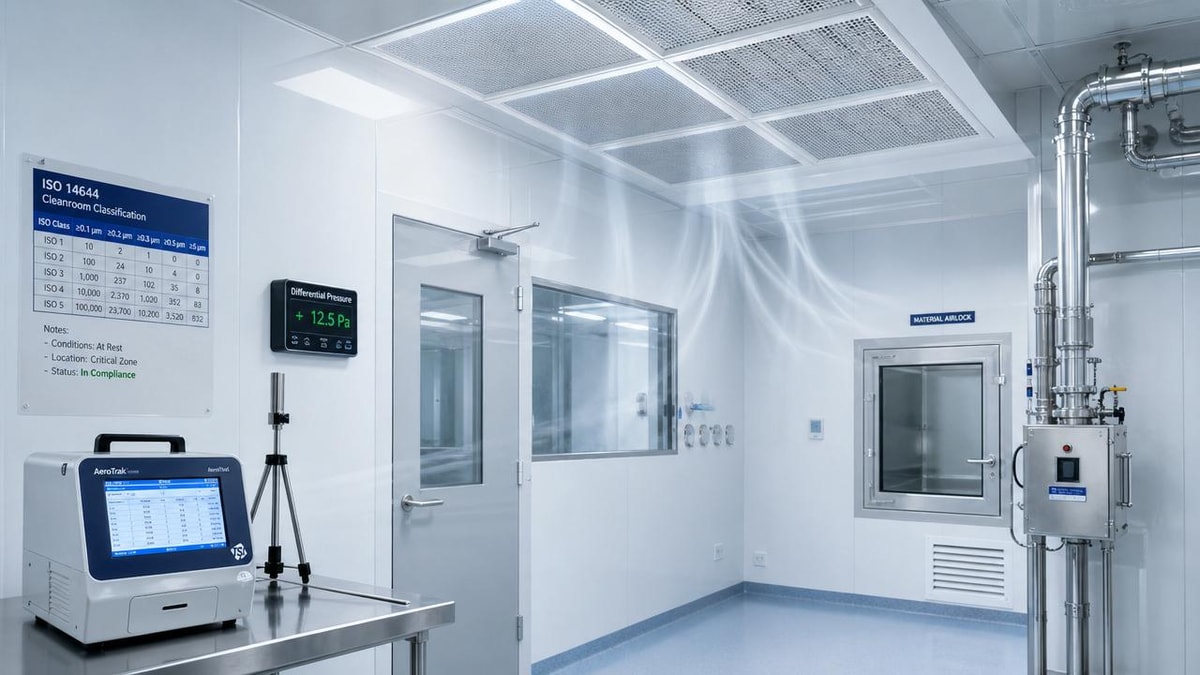
The 2026 Bio-based Raw Material Supply Selection Guide was released on May 1. It explicitly requires suppliers to provide AMC (Airborne Molecular Contamination) monitoring data collected in ISO 14644-1 Class 5 or cleaner environments, along with documented capability to supply ultrapure water (UPW) meeting 18.2 MΩ·cm resistivity specifications. This has triggered a new round of qualification audits among European packaging converters and Japanese electronic adhesive importers targeting Chinese manufacturers of clean piping systems and UPW treatment equipment.
Impact on Specific Industry Segments
Direct Trading Enterprises
Trading firms exporting bio-based polymers or clean-fluid components to EU or Japanese markets are now subject to stricter pre-shipment technical validation. Their role as intermediaries means they must verify supplier compliance with AMC and UPW documentation — not just product specifications — before contract finalization.
Raw Material Procurement Entities
Procurement teams at end-user companies (e.g., packaging OEMs, electronics material formulators) must now assess upstream vendors against three newly codified criteria: fluid system compatibility, UPW-phase stability, and TOC leaching potential. These are no longer optional quality considerations but formalized entry requirements.
Processing & Manufacturing Firms
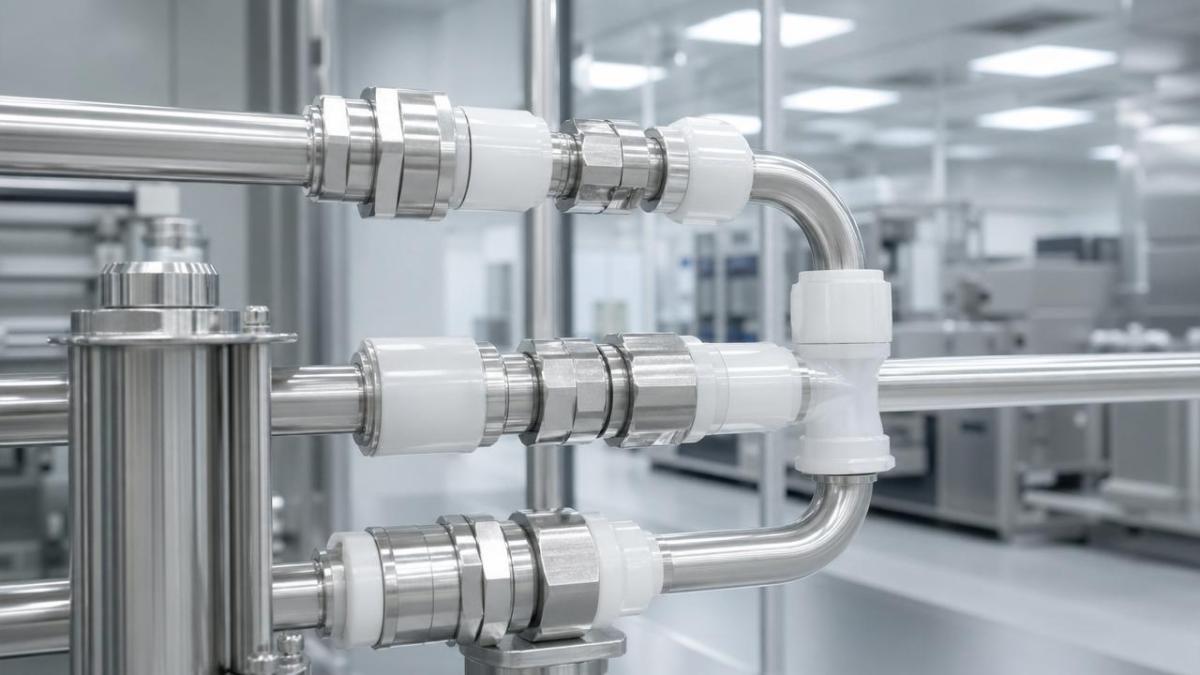
Manufacturers of bio-based polymers — especially those supplying into regulated applications — face revised process validation expectations. Demonstrating compatibility with stainless steel or fluoropolymer fluid paths under UPW conditions, and quantifying organic extractables, is now part of baseline qualification dossiers.
Supply Chain Service Providers
Third-party testing labs, certification bodies, and logistics providers supporting clean-material transport must align their service offerings with the guide’s technical framing — e.g., offering AMC monitoring per ISO 14644-8, UPW stability testing per ASTM D5127, or TOC migration protocols traceable to USP <87>/<88>.
Key Focus Areas and Practical Responses
Monitor official updates from standard-setting bodies
While the guide is currently issued as a selection framework (not a regulation), its alignment with ISO/IEC and ICH Q5-related principles suggests possible future harmonization. Stakeholders should track revisions from ISO TC 209 (cleanrooms) and SEMI (for UPW standards in electronics).
Prioritize validation for UPW-compatible material contact surfaces
Suppliers should prioritize third-party testing of polymer or elastomer components used in fluid contact — especially seals, gaskets, and tubing — under 18.2 MΩ·cm UPW exposure at elevated temperature and duration. Data must reflect real-world operational conditions, not just static immersion.
Distinguish between policy signal and commercial implementation
Analysis shows the guide functions primarily as a procurement benchmark rather than a regulatory mandate. Its immediate impact is strongest in bilateral contracts involving European or Japanese buyers — not across all global bio-based material trade. Companies should map current customer contracts against the three new criteria to identify exposure points.
Prepare technical documentation packages proactively
Suppliers should assemble standardized dossiers including: (1) AMC logs from certified cleanroom environments, (2) UPW resistivity test reports from accredited labs, and (3) TOC migration studies conducted per relevant pharmacopeial or semiconductor protocols — even if not yet requested by customers.
Editorial Perspective / Industry Observation
Observably, this guide represents a convergence point between biopolymer advancement and legacy high-purity infrastructure requirements. It does not introduce novel science, but rather formalizes and elevates existing best practices from semiconductor and pharmaceutical manufacturing into bio-based materials sourcing. From an industry perspective, it is less a sudden regulatory shift and more a signal of maturing buyer sophistication — where purity assurance is no longer delegated solely to end-process steps, but embedded upstream in raw material selection. Continued attention is warranted because adoption patterns among Tier-1 buyers may catalyze broader supply chain alignment over the next 12–24 months.
Conclusion
The release of the 2026 Bio-based Raw Material Supply Selection Guide marks a structural recalibration in how purity-critical industries evaluate bio-based feedstocks. Rather than indicating imminent regulatory enforcement, it reflects an emerging consensus among leading importers that material compatibility with clean fluid systems and UPW-grade environments is now foundational — not ancillary — to long-term supply partnership. Current interpretation should focus on contractual and technical preparedness, not compliance panic.
Information Source
Main source: Official publication of the 2026 Bio-based Raw Material Supply Selection Guide, released May 1.
Note: Ongoing observation is recommended regarding potential adoption by industry associations (e.g., European Bioplastics, JAPET) or integration into upcoming revisions of ISO 16128 or ASTM D6400.
Get weekly intelligence in your inbox.
No noise. No sponsored content. Pure intelligence.
 May 02, 2026How to Evaluate a Fan Filter Units Manufacturer Beyond Unit PriceFan Filter Units manufacturer selection goes beyond unit price. Learn how to compare compliance, performance, lifecycle cost, and support to protect margins and win long-term channel growth.
 May 02, 2026When Magnetic-Levitation Centrifugal Chillers Pay Off in Real FacilitiesMagnetic-Levitation Centrifugal Chillers pay off when facilities need uptime, part-load efficiency, and low-risk cooling. See where they deliver real ROI in cleanrooms, biopharma, hospitals, and advanced manufacturing.
 May 02, 2026Industrial Climate Control Upgrades That Cut Drift and Energy WasteIndustrial Climate Control upgrades that reduce drift, improve compliance, and cut energy waste. Explore practical checklists and high-impact retrofit strategies.
 May 02, 2026ASHRAE Standards Certification: What to Verify Before Final ApprovalASHRAE Standards certification: learn what to verify before final approval, from scope and commissioning proof to lifecycle cost and hidden risk, so you can approve with confidence.
 May 02, 2026Designing a High-Tech Industrial Complex for Stable Air and Utility PerformanceHigh-Tech Industrial Complex design starts with stable air, precise thermal control, and resilient utilities—discover how to protect uptime, compliance, and long-term efficiency.
 May 02, 2026Regulatory Frameworks for Cleanrooms: Common Mistakes to Avoid EarlyRegulatory Frameworks for cleanrooms: avoid early compliance mistakes in ISO, documentation, airflow, and biosafety to reduce audit risk and costly redesigns.
 May 02, 2026SEMI Standards Compliance Gaps That Delay Cleanroom ProjectsSEMI Standards compliance gaps can derail cleanroom projects with rework, delays, and cost overruns. Learn where risks arise early and how to keep delivery on track.
 May 02, 2026Contamination Control Equipment: What Matters Before You Compare QuotesContamination Control equipment: learn what to check before comparing quotes, from ISO compliance and airflow performance to lifecycle cost and cleanroom integration.
 May 02, 2026ESG Compliance Supplier Checklist for Lower Vendor RiskESG Compliance supplier checklist for lower vendor risk: learn how to verify governance, safety, sustainability, and technical reliability before contract award.
 May 02, 2026How to Reduce Sub-Micron Contamination Without Slowing ThroughputSub-Micron Contamination control without slowing output: discover practical cleanroom strategies to cut particle risk, protect yield, and keep high-throughput operations stable.
 May 02, 2026electronica China 2026 Expands Cleanroom Tech Zone by 50%electronica China 2026 expands Cleanroom Tech Zone by 50% — spotlight on Precision Temperature Control & Smart Sensor Integration for semiconductor, quantum, and mRNA applications.
 May 02, 2026EU CBAM Extends to ESD Control Manufacturing from 2027EU CBAM extends to ESD control manufacturing in 2027—anti-static flooring, wrist straps & more now require verified production-line carbon footprints. Act now to avoid border taxes.
 May 02, 2026MFDS Expands Digital Twin Lab Certification to Semiconductors & Battery TestingMFDS Digital Twin Lab certification now covers semiconductors & battery testing — unlock Korean cleanroom tenders, boost interoperability, and future-proof your lab automation.
 May 02, 2026UL 867E:2026 Update Requires EMC + Cybersecurity Certification for IIoT Air MonitorsUL 867E:2026 now mandates EMC + cybersecurity certification for IIoT air monitors — critical for cleanroom & lab deployments. Act before Oct 1, 2026!
 May 02, 2026First ZLD-Compatible 18.2 MΩ·cm UPW System Operational at CATL IndonesiaFirst ZLD-compatible 18.2 MΩ·cm UPW system now live at CATL Indonesia — setting a new global benchmark for battery materials, semiconductor, and nuclear-grade industrial water systems.
 May 02, 2026JIS T 0101:2026 Enforced: UPW TOC ≤0.15 ppb for Semiconductor Equipment in JapanJIS T 0101:2026 enforced: UPW TOC ≤0.15 ppb now mandatory for semiconductor equipment in Japan — critical for exporters, integrators & component suppliers.
 May 02, 2026SABIC BSL-3 Vaccine Plant Launches with Chinese Decon SystemsSABIC BSL-3 Vaccine Plant launches with Chinese decon systems — a milestone for GMP-compliant, WHO PQ-aligned biomanufacturing infrastructure in the Middle East.
 May 02, 2026Germany’s New Green Tariff List: Maglev Chillers at 0%, Oil-Cooled Units +12.5%Germany’s new green tariff list: Maglev chillers at 0%, oil-cooled units +12.5% — key implications for HVAC exporters, OEMs & integrators in the EU market.
 May 02, 2026Southeast Asia EMA Expansion Drives ISO Class 1–3 Cleanroom DemandISO Class 1–3 cleanroom demand surges in Southeast Asia amid EMA expansion—FFUs, filtration components & air shower systems in high demand with lead times now extending to Q1 2027.
 May 02, 2026US/EU Tighten AMC Controls for Cleanrooms, UPW Filter Export Path NarrowsUS/EU tighten AMC controls for cleanrooms—UPW filter exporters face stricter SEMI F57/IEC 63209-2 mandates. Act now to secure market access.
 May 01, 2026HVAC Maintenance AI Reports: How to Spot Useful Insights Instead of NoiseHVAC maintenance AI reports help teams spot real faults, energy waste, and early warnings. Learn how to filter noise, protect uptime, and act faster with confidence.
 May 01, 2026ISO Class 1 Cleanroom: When the Extra Precision Is Worth the InvestmentISO Class 1 Cleanroom: discover when ultra-precision truly pays off. Learn the key business, compliance, and ROI signals before investing in the highest cleanroom standard.
 May 01, 2026What Makes a Quantum Computing Cleanroom Different From a Standard Fab SpaceQuantum Computing Cleanroom requirements go far beyond standard fab space design. Discover how vibration, thermal stability, EMI control, and smart monitoring shape quantum-ready infrastructure.
 May 01, 2026Pharmaceutical Cleanroom Upgrades That Improve Compliance Without RebuildingPharmaceutical Cleanroom upgrades can improve GMP compliance without a full rebuild. Discover retrofit strategies that reduce downtime, control contamination, and protect production.
 May 01, 2026High-Risk Lab Engineering: Design Choices That Reduce Containment RiskHigh-Risk Lab Engineering design choices can reduce containment risk, improve biosafety, and strengthen compliance readiness. Discover practical strategies for safer, more resilient labs.
 May 01, 2026ISO 14644 Compliance Mistakes That Delay Cleanroom ApprovalISO 14644 Compliance mistakes can derail cleanroom approval with costly rework, failed testing, and missing documentation. Learn the most common risks and how to prevent delays.
 May 01, 2026High-Performance Thermodynamic Hardware: How to Compare Real EfficiencyHigh-Performance Thermodynamic Hardware comparison starts with real efficiency, not just ratings. Discover how to evaluate lifecycle energy use, control stability, compliance fit, and long-term risk.