How Environmental Integrity Policies Shape Practical Carbon Tracking Programs
For enterprise leaders navigating high-stakes industrial environments, Environmental Integrity policies are no longer abstract ESG principles—they are becoming the foundation of practical carbon tracking programs. From cleanrooms and precision HVAC to biosafety and digital monitoring, these policies help translate regulatory pressure into measurable operational control, risk reduction, and credible climate performance.
Understanding Environmental Integrity policies in an operational context
At a strategic level, Environmental Integrity policies define how an organization ensures that environmental claims, carbon data, and sustainability actions are accurate, traceable, and aligned with recognized standards. For business leaders, this is not only about public reporting. It is about creating a disciplined system in which emissions data can be trusted, operational boundaries are clearly defined, and decisions on energy, process design, and compliance are based on evidence rather than assumptions.
In practical carbon tracking programs, Environmental Integrity policies act as governance architecture. They determine what gets measured, how it is verified, which data sources are acceptable, how baselines are established, and how improvement claims are substantiated. Without this policy layer, even advanced monitoring platforms can produce fragmented or misleading carbon information.
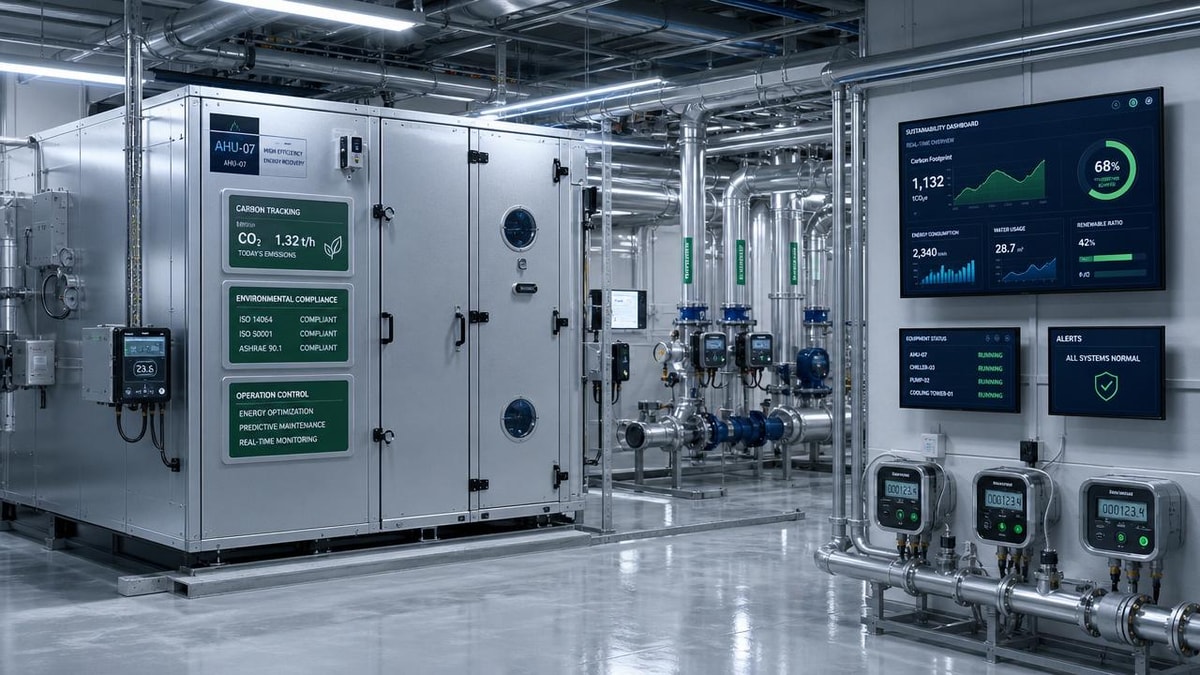
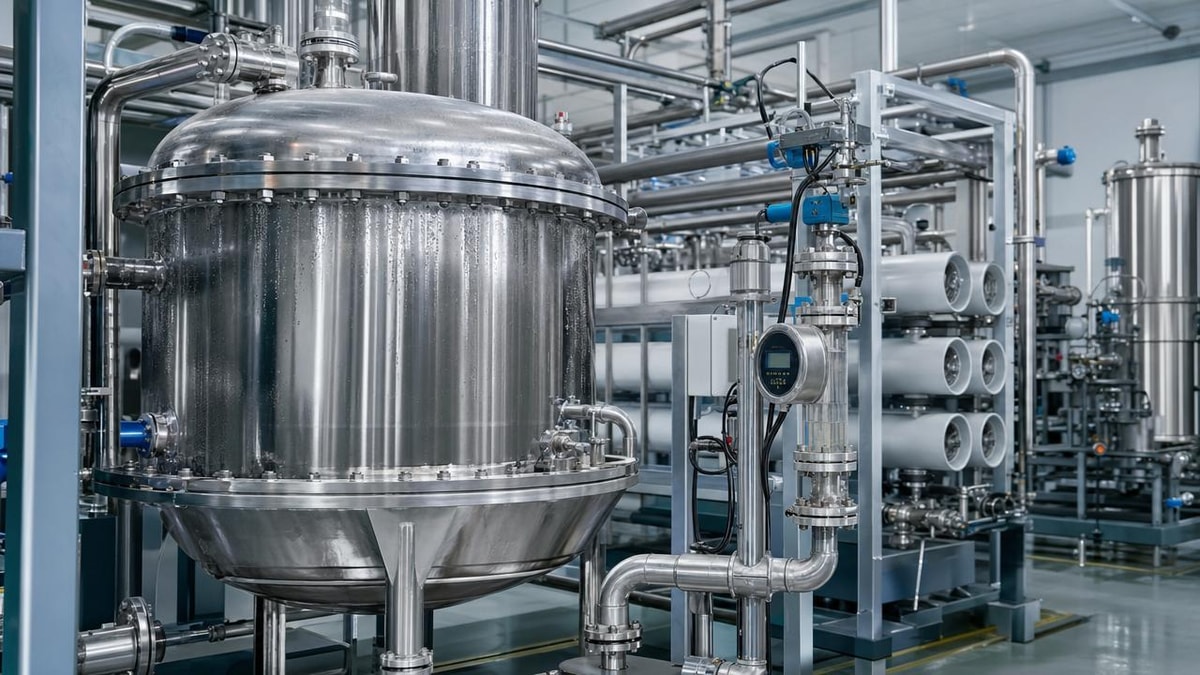
This matters especially in complex industrial environments where emissions are influenced by precision HVAC, clean utilities, ultra-pure water systems, chilled water loops, filtration loads, containment pressure control, and variable production schedules. Carbon tracking in such facilities is not a simple meter-reading exercise. It requires policy-driven consistency across engineering, operations, finance, and ESG reporting.
Why the broader industrial market is paying closer attention
Across the comprehensive industrial landscape, climate expectations have shifted from broad sustainability statements to auditable performance. Regulators, customers, investors, and supply-chain partners increasingly want emissions numbers that connect to real operating conditions. As a result, Environmental Integrity policies are becoming essential for companies that need to demonstrate both compliance and technical credibility.
The pressure is particularly strong in advanced manufacturing and controlled environments. Semiconductor fabs, pharmaceutical production sites, biotech labs, and data-intensive facilities all depend on highly stable environmental parameters. A temperature drift of fractions of a degree, contamination excursions, or airflow imbalance can affect yield, safety, and uptime. Carbon reductions cannot be pursued in a way that compromises these priorities. Environmental Integrity policies help organizations balance decarbonization with operational reliability by defining what “credible improvement” actually means.
For decision-makers, the key shift is that carbon tracking is no longer separate from infrastructure strategy. It is tied to asset modernization, utility optimization, environmental monitoring, and resilience planning. This is where institutions such as G-ICE add value: by connecting high-performance thermodynamic systems and environmental controls with international benchmarking frameworks such as ISO 14644, ASHRAE, and SEMI-related operational discipline.
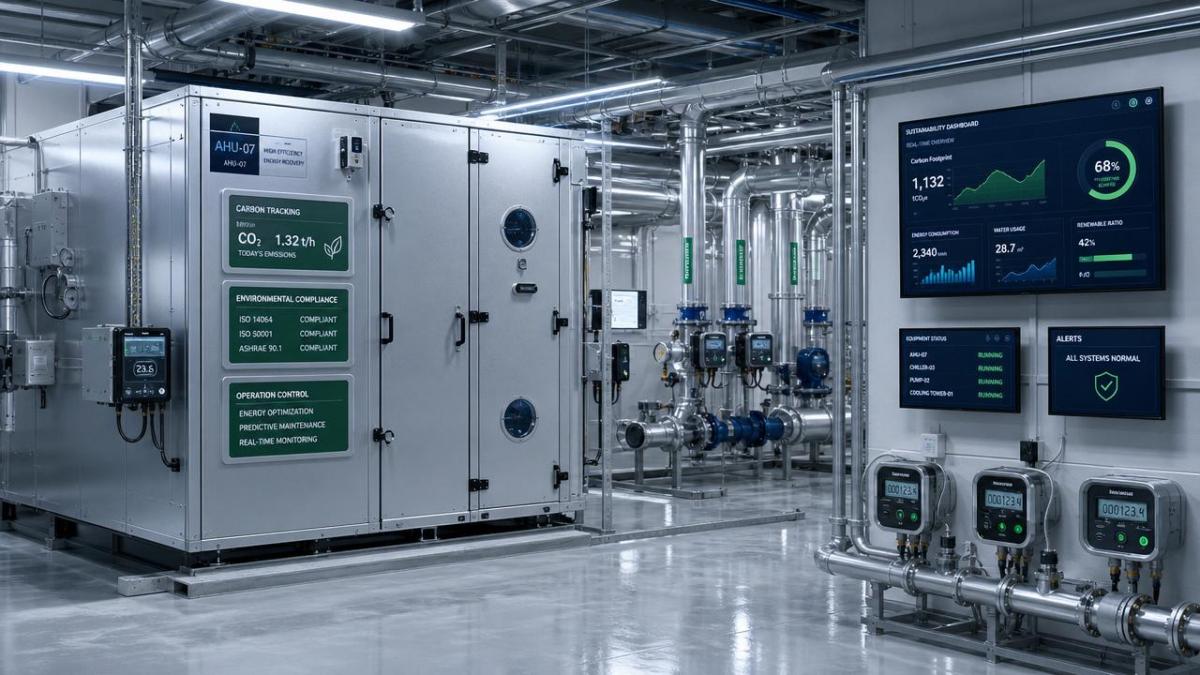
How Environmental Integrity policies shape practical carbon tracking programs
A robust carbon tracking program does not begin with dashboards. It begins with policy choices. Environmental Integrity policies shape programs in five direct ways.
First, they establish measurement boundaries. In industrial settings, emissions may come from direct fuel use, purchased electricity, process-support systems, water treatment, backup systems, and outsourced operations. A policy framework clarifies what is included and prevents selective reporting.
Second, they improve data quality. Policies define accepted instruments, calibration expectations, source hierarchy, data retention, and exception handling. This is critical where environmental monitoring systems, building management systems, and production platforms generate large volumes of data with different time resolutions.
Third, they connect carbon metrics to operational reality. Instead of reporting emissions only at a facility total level, organizations can link them to airflow rates, chilled water performance, pressure cascades, cleanroom occupancy, process utility demand, and unit output. That creates more useful insight for enterprise leaders.
Fourth, Environmental Integrity policies support verification and defensibility. Whether the audience is a regulator, board committee, major customer, or investor, a documented policy framework allows the organization to explain how reductions were achieved and why the numbers should be trusted.
Fifth, they reduce strategic risk. Poorly governed carbon tracking can lead to overclaimed reductions, failed audits, reputational exposure, and bad capital allocation. A credible policy foundation lowers the chance that energy projects, offset use, or operational changes are later questioned.
Industry overview: where policy-driven carbon tracking creates the most value
Not every industrial environment faces the same carbon tracking challenge. The table below shows how Environmental Integrity policies translate into practical value across common high-control operating contexts.
Business significance for enterprise decision-makers
For enterprise leaders, Environmental Integrity policies should be viewed as business infrastructure rather than reporting language. They create value in at least four dimensions: governance, capital planning, customer trust, and operational resilience.
From a governance perspective, these policies provide a common framework across engineering, sustainability, finance, quality, and compliance teams. This reduces internal friction and helps leadership teams compare performance across sites using a consistent logic.
From a capital allocation perspective, better carbon tracking improves the quality of investment decisions. Companies can identify which upgrades actually reduce emissions per unit of output, which merely shift energy demand, and which protect both compliance and throughput. That distinction is especially important in facilities considering upgrades such as magnetic-levitation chillers, advanced filtration retrofits, variable-speed fan optimization, or digital twin deployment.
From a market perspective, policy-backed data strengthens customer confidence. Many global buyers increasingly require emissions transparency across critical supply chains. If a supplier can show that its environmental claims follow credible Environmental Integrity policies, it is better positioned in qualification, procurement, and long-term account management.
From a resilience perspective, the same systems that improve carbon visibility often improve fault detection, utility management, and performance benchmarking. In other words, a sound carbon tracking program can become a practical control layer for wider operational excellence.
Typical application directions in controlled industrial environments
In practice, Environmental Integrity policies are most useful when translated into specific operational applications rather than remaining at the corporate policy level alone. Common directions include:
- Establishing site-level carbon baselines that reflect actual production modes, seasonal utility profiles, and environmental control requirements.
- Segmenting emissions by system type, such as air handling, cooling, process water, containment ventilation, and clean utility support.
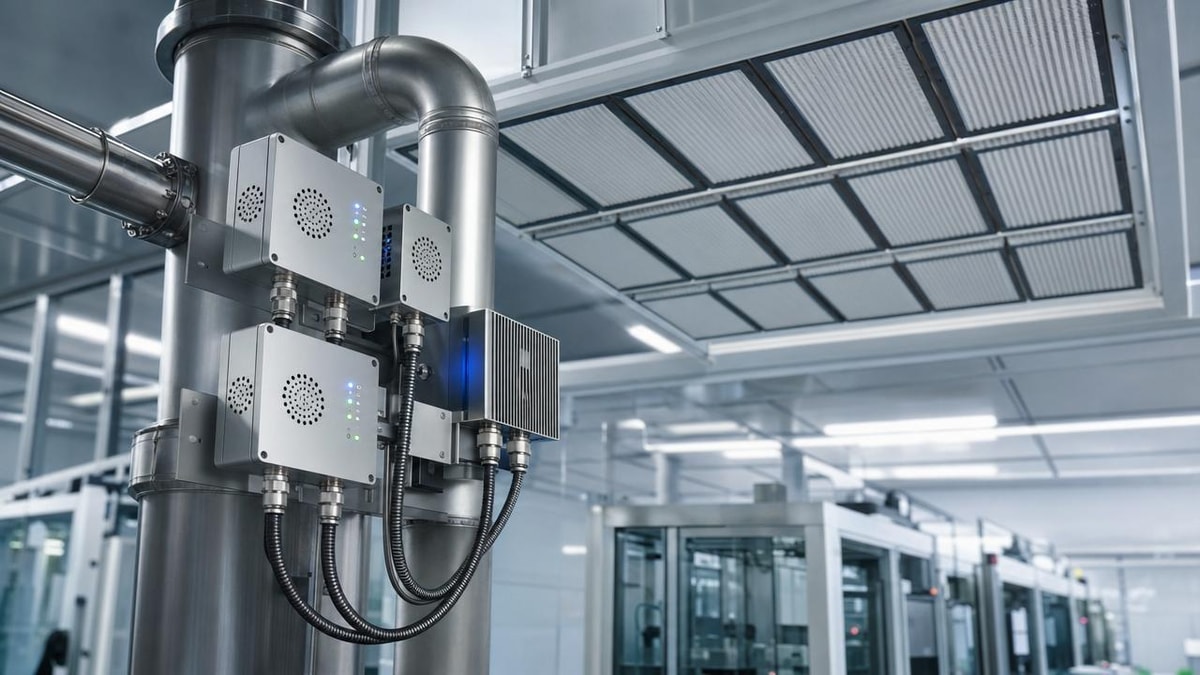
- Integrating environmental monitoring with energy and emissions data so operators can see how control-setpoint changes affect both risk and carbon outcomes.
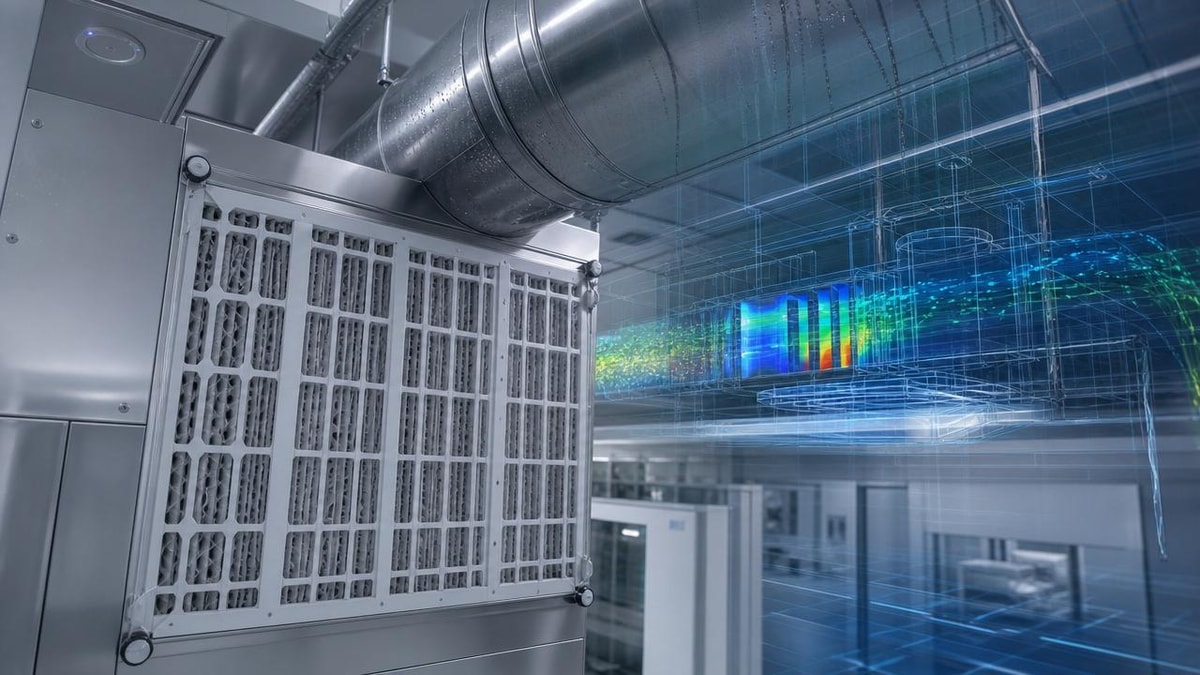
- Using digital twin logic to test low-carbon optimization scenarios before implementing them in mission-critical spaces.
- Supporting audit readiness through documented assumptions, version control, and traceable data lineage.
These application directions are highly relevant to organizations managing sensitive manufacturing or research conditions. The more technically demanding the facility, the more valuable policy-led carbon tracking becomes.
What to evaluate before building or upgrading a program
Leaders considering stronger carbon management should assess whether their current systems are ready to support Environmental Integrity policies in a meaningful way. Several questions are especially important.
Is there a clear emissions boundary that matches the operational structure of the site? Many organizations still report in broad categories that do not reflect how environmental systems actually perform.
Are data sources technically reliable? Metering gaps, calibration inconsistency, manual data handling, and poor integration between BAS, EMS, and process platforms can undermine program credibility.
Do optimization initiatives protect mission-critical conditions? In precision industries, a carbon reduction project that threatens contamination control, temperature stability, or biosafety integrity may create more risk than value.
Are reporting claims linked to recognized frameworks and internal accountability? Environmental Integrity policies should specify review responsibilities, change management, and validation criteria before results are published externally.
Finally, does the organization have a benchmarking reference? Comparative insight matters. Technical repositories and multidisciplinary guidance, such as those associated with G-ICE, help enterprise teams judge whether a carbon metric reflects true improvement or only local variance.
A practical roadmap for leadership teams
A strong starting point is to treat Environmental Integrity policies as a cross-functional operating standard. Leadership teams can begin by aligning sustainability goals with facility engineering realities, then move toward deeper measurement and control.
Step one is policy definition: clarify scope, terminology, evidence standards, and escalation rules. Step two is infrastructure mapping: identify carbon-relevant assets across HVAC, utilities, water, containment, and monitoring systems. Step three is data integration: connect meters, sensors, and operational systems into a defensible reporting model. Step four is scenario analysis: evaluate how efficiency measures affect environmental integrity, production performance, and compliance exposure. Step five is ongoing verification: maintain audit trails, compare against benchmark standards, and refine the model as site conditions evolve.
This roadmap is especially effective when organizations combine engineering expertise with ESG governance instead of treating them as separate workstreams. That integration is often what turns a basic reporting exercise into a practical carbon tracking program with strategic value.
Moving from policy language to measurable control
Environmental Integrity policies matter because they convert climate ambition into measurable operating discipline. For enterprise decision-makers, their value lies not in rhetoric but in execution: trusted data, defensible reporting, smarter capital decisions, and lower operational risk. In advanced industrial environments, where environmental conditions are inseparable from productivity and compliance, policy-led carbon tracking is becoming a core management capability.
Organizations that want credible climate performance should begin by asking a simple question: can our carbon data stand up to the same scrutiny as our quality, safety, and process-control data? If the answer is uncertain, strengthening Environmental Integrity policies is the logical next step. With the right framework, carbon tracking becomes more than a sustainability requirement—it becomes a practical foundation for operational excellence and long-term industrial competitiveness.
Get weekly intelligence in your inbox.
No noise. No sponsored content. Pure intelligence.
 May 04, 2026Regulatory Frameworks Implementation Without Slowing Lab Automation ProjectsRegulatory Frameworks implementation made practical: learn how to align compliance, biosafety, and lab automation early to cut delays, reduce risk, and speed project delivery.
 May 04, 2026SEMI Standards Certification: Key Checks Before Expanding Supplier AccessSEMI Standards certification helps distributors verify supplier compliance, traceability, and channel readiness before expansion. Discover the key checks that reduce risk and protect growth.
 May 04, 2026Semiconductor Cleanroom Standards and the Hidden Cost of Getting Them WrongSemiconductor Cleanroom standards directly impact yield, audit readiness, and operating cost. Discover the hidden risks, key checklist items, and smart evaluation tips before costly mistakes happen.
 May 04, 2026Pharmaceutical Cleanroom Validation: A Practical Sequence for Faster ApprovalPharmaceutical Cleanroom validation made practical: learn a faster, risk-based sequence for testing, documentation, and deviation control to speed approval and improve GMP compliance.
 May 04, 2026ESG Compliance Reporting: Where Costs Rise and Where Value Becomes MeasurableESG Compliance reporting reveals where compliance costs erode margins and where measurable value emerges through audit-ready data, stronger governance, lower risk, and smarter capital decisions.
 May 04, 2026ASHRAE Standards Guidelines for Stable Thermal Logic in Sensitive FacilitiesASHRAE Standards guidelines help technical evaluators ensure thermal stability, compliance, and resilience in sensitive facilities. Discover practical benchmarking insights.
 May 04, 2026Fan Filter Units Specifications: What Matters Before You Compare ModelsFan Filter Units specifications explained clearly: compare airflow, filtration, noise, energy use, and maintenance factors before choosing models for reliable cleanroom performance.
 May 04, 2026Pharmaceutical Cleanroom Design Mistakes That Raise Validation RiskPharmaceutical Cleanroom design mistakes can delay validation and raise GMP risk. Discover the key checklist project leaders use to prevent rework, control costs, and improve compliance.
 May 04, 2026How Environmental Integrity Policies Shape Practical Carbon Tracking ProgramsEnvironmental Integrity policies shape practical carbon tracking programs by improving data accuracy, compliance, and operational control—discover how leaders turn ESG pressure into measurable value.
 May 04, 2026Contamination Control Strategies That Actually Reduce Drift in Clean EnvironmentsContamination Control strategies that reduce drift in clean environments—learn practical ways to improve airflow stability, source control, zoning, and compliance performance.
 May 04, 2026SABIC Mandates Digital Twin Lab for Cleanroom Validation from Q3 2026SABIC mandates Digital Twin Lab for cleanroom validation from Q3 2026 — critical for semiconductor & biopharma EPCs, HVAC suppliers, and digital engineering firms.
 May 04, 2026US BIS Adds IIoT Air Monitoring Sensors to Export ControlsUS BIS now controls IIoT air monitoring sensors with edge AI, ≥10 Hz sampling & dual-contaminant detection—key for semiconductor, cleanroom & export compliance teams.
 May 04, 2026Global First ZLD Protocol Certification Launched, 3 Chinese Firms in Initial Audit ListZero Liquid Discharge Protocol Certification launched globally—first-of-its-kind ZLD standard by IWA & UNEP. 3 Chinese firms in initial audit list. Learn implications for EPC, suppliers & industrial users.
 May 04, 2026JIS B 8401-2026 Revision: Digital Twin Verification for ±0.01°C Thermal ControllersJIS B 8401-2026 mandates digital twin verification for ±0.01°C thermal controllers — critical for semiconductor & quantum exporters to Japan. Act now.
 May 04, 2026Germany Enforces Dual-Label Rule for Maglev Chillers ImportGermany's new dual-label rule for maglev chillers mandates SCOP ≥5.8 and carbon footprint ≤120 kg CO₂e/kW·yr—act now to avoid 22% green tariffs.
 May 04, 2026Southeast Asia Tightens UPW Import Rules: TOC ≤0.2 ppb from May 2026Southeast Asia tightens UPW import rules: TOC ≤0.2 ppb required from May 2026. Key for Chinese suppliers, logistics & semiconductor OEMs — act now to avoid 14-day customs delays.
 May 04, 2026FDA Updates BSL-3 Lab Guidance: ASSE 1080 Certification Now Required for Chinese EPC FirmsASSE 1080 certification now mandatory for Chinese EPC firms on U.S. BSL-3/4 lab projects—learn how FDA’s May 2026 guidance impacts compliance, bids & validation.
 May 04, 2026ISO 14644-1:2026 Enforced in EU: Impact on Chinese UPW & FFU ExportsISO 14644-1:2026 is now enforced in the EU — discover how it impacts Chinese UPW & FFU exports, compliance deadlines, and CE marking risks.
 May 03, 2026Thermal Management for Data Centers: What to Fix Before Energy Bills ClimbThermal Management for data centers starts with the fixes that matter most. Discover a practical checklist to cut energy waste, protect uptime, and prevent rising cooling costs.
 May 03, 2026Regulatory Frameworks for ESG: What to Review Before Expansion PlansRegulatory Frameworks for ESG shape permits, costs, and resilience before market expansion. Learn what leaders must review to reduce risk, protect investment, and scale with confidence.
 May 03, 2026Contamination Control in Cleanrooms: Common Mistakes That Raise RiskContamination Control in cleanrooms starts with preventing hidden maintenance mistakes. Discover the top risk points, why they matter, and how to protect compliance, uptime, and product quality.
 May 03, 2026Choosing Fan Filter Units for Semiconductor Lines Without OverbuyingFan Filter Units for semiconductor lines: learn how to match airflow, filtration, and lifecycle cost to each cleanroom zone—avoiding overbuying while protecting yield and energy efficiency.
 May 03, 2026ESG Compliance Consulting: How to Compare Firms Without GuessworkESG Compliance consulting comparison made simple: learn how to evaluate firms by industry fit, regulatory depth, data rigor, and implementation strength for confident selection.
 May 03, 2026Environmental Integrity Monitoring: When Manual Checks Stop Being EnoughEnvironmental Integrity monitoring reveals where manual checks fall short in cleanrooms, labs, and precision facilities. Learn how continuous monitoring improves compliance, safety, and control.
 May 03, 2026Semiconductor Cleanroom Construction: Cost Drivers That Matter MostSemiconductor Cleanroom construction cost depends on HVAC precision, contamination control, utilities, and compliance. Discover the biggest cost drivers and smarter ways to protect yield and ROI.
 May 03, 2026How Environmental Integrity Assessment Supports Better Site DecisionsEnvironmental Integrity assessment helps leaders reduce hidden site risks, improve permitting certainty, and make smarter investment decisions with greater confidence.
 May 03, 2026ASHRAE Standards for Cleanrooms Explained for New Facility ProjectsASHRAE Standards for cleanrooms explained for new facility projects—learn how to improve compliance, energy efficiency, and long-term reliability while avoiding costly design mistakes.