SEMI Launches Global Cleanroom Carbon Tracking Pilot in China
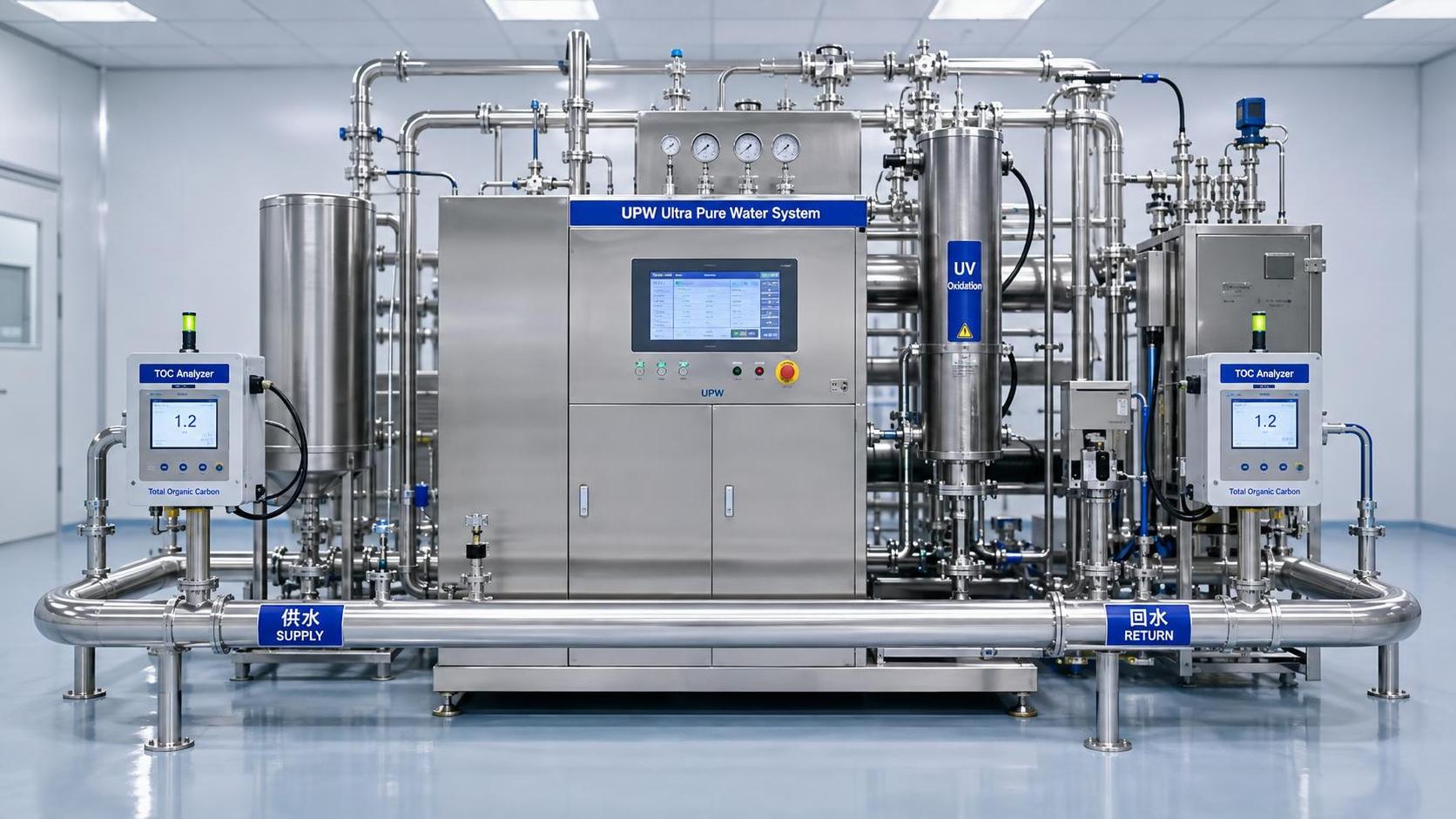
On May 6, 2026, SEMI launched the world’s first pilot program for carbon tracking across the cleanroom supply chain (CT-Clean), with initial participation from three leading Chinese manufacturers of ultrapure water (UPW) systems and airborne molecular contamination (AMC) filtration equipment. This initiative directly impacts semiconductor capital equipment suppliers, cleanroom subsystem vendors, and upstream material providers — particularly those engaged in high-purity fluid handling and contamination control — as it introduces standardized, real-time carbon data reporting requirements that feed into future green procurement frameworks.
Event Overview
On May 6, 2026, SEMI announced the launch of the ‘Carbon Tracking in Cleanroom Supply Chain’ (CT-Clean) pilot program. Three Chinese companies specializing in UPW systems and AMC filtration were selected as inaugural participants. They are required to connect to the SEMI Carbon Cloud platform and submit verified data on raw material carbon intensity, manufacturing process emissions, and logistics-related carbon footprint. The collected data will inform the development of SEMI’s 2027 Green Procurement White List, which will influence secondary supplier qualification decisions by major end customers including TSMC and SK hynix.
Industries Affected
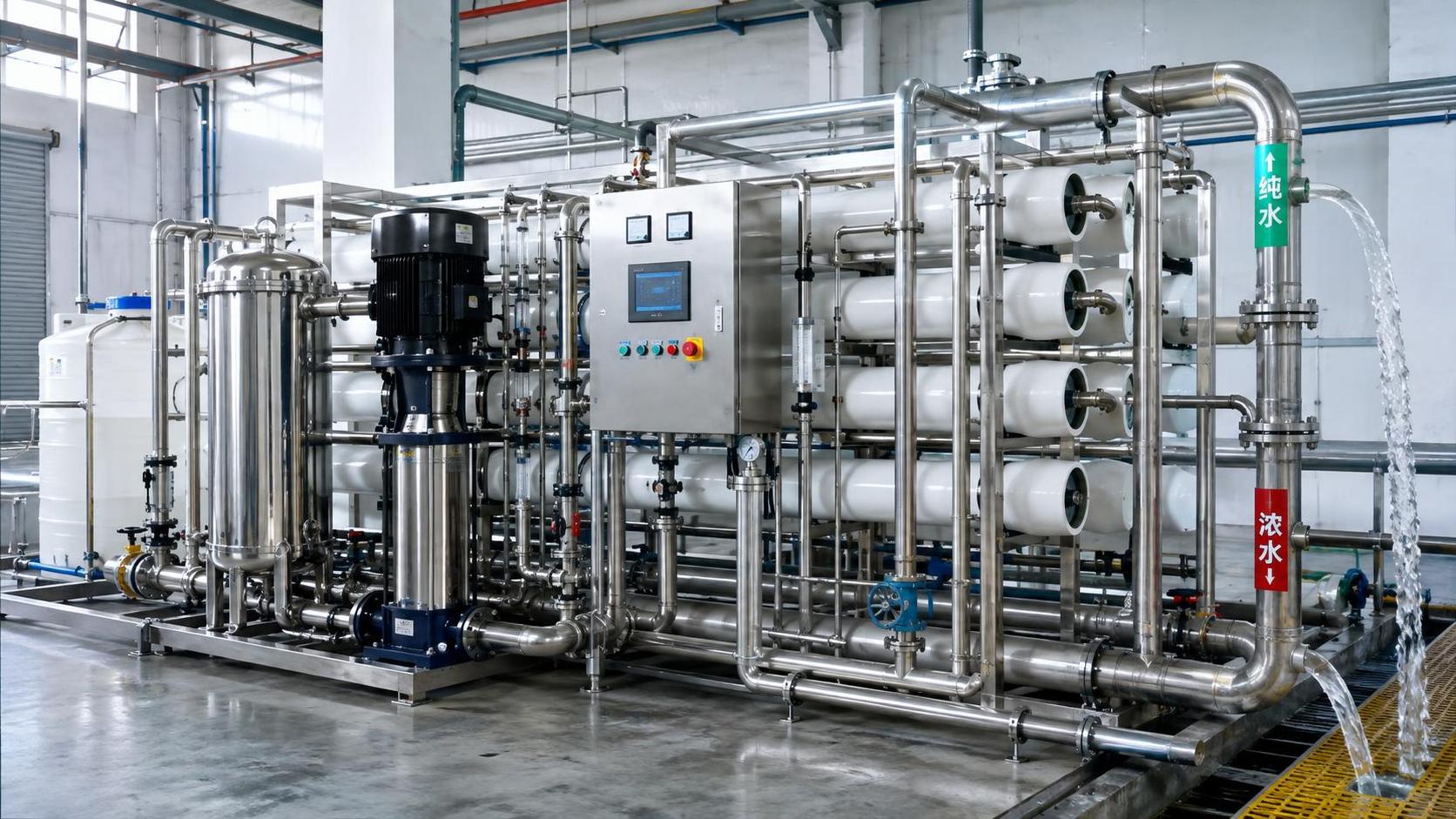
UPW System Manufacturers
These firms face new operational transparency requirements: carbon-intensity data must now be tracked per material batch and production lot, not just aggregated annually. Impact includes revised internal data collection protocols, potential recalibration of supplier selection criteria, and increased scrutiny during customer audits.
AMC Filtration Equipment Suppliers
Filtration component makers — especially those supplying multi-layer composite media or chemically impregnated filters — are affected due to the carbon intensity variability of specialty adsorbents and binders. Their impact manifests in extended technical documentation requests, tighter traceability mandates for substrate materials (e.g., activated carbon, ion-exchange resins), and possible revalidation of lifecycle assessment (LCA) models.
Raw Material Suppliers to Cleanroom Subsystems
Suppliers of high-purity stainless steel, fluoropolymers (e.g., PTFE, PVDF), and ultra-low-outgassing elastomers now face upstream data demands. Buyers may begin requiring certified Environmental Product Declarations (EPDs) or primary carbon intensity values — not estimates — for specific grades used in UPW or AMC applications.
Semiconductor Equipment Integrators & Tier-1 Subsystem Providers
Companies integrating UPW skids or AMC monitoring modules into broader fab tools must now assess carbon data lineage across their bill-of-materials. This affects tender responses, compliance documentation packages, and long-term contract terms where sustainability KPIs are increasingly embedded.
What Relevant Companies or Practitioners Should Focus On
Monitor official updates to SEMI Carbon Cloud integration specifications
The pilot is currently limited to three participants, but SEMI has indicated that API documentation, data schema definitions, and validation rules for carbon intensity reporting will be published in Q3 2026. Early review of these documents helps identify gaps in current ERP or MES carbon data capture capabilities.
Identify and prioritize high-impact material categories for carbon baseline measurement
Analysis shows that for UPW systems, stainless steel 316L piping, high-purity weld fittings, and deionization resin account for >65% of embodied carbon in typical skid assemblies. For AMC filters, activated carbon and specialty polymer substrates dominate. Firms should begin collecting primary supplier data for these items ahead of formal white list rollout.
Distinguish between policy signal and enforceable requirement
Observably, the CT-Clean pilot itself does not yet carry contractual enforcement weight. However, its linkage to the 2027 Green Procurement White List means that non-participation or incomplete reporting may result in delayed qualification timelines — not automatic disqualification. Companies should treat this as a pre-compliance readiness phase, not a compliance deadline.
Prepare internal alignment between procurement, EHS, and engineering teams
Current more suitable understanding is that carbon data submission requires cross-functional coordination: procurement provides supplier carbon declarations; EHS validates scope 1/2 emission factors; engineering confirms material usage ratios and process energy inputs. Establishing an internal working group now reduces friction during future platform onboarding.
Editorial Perspective / Industry Observation
This initiative is best understood not as an immediate regulatory mandate, but as a structured signal of procurement-driven decarbonization accelerating along the semiconductor manufacturing value chain. From industry perspective, CT-Clean reflects a shift from voluntary ESG reporting toward standardized, interoperable carbon data exchange — anchored not by government regulation, but by collective action among major chipmakers via SEMI. It signals growing expectation that environmental performance will be treated as a technical specification, comparable to particle count or resistivity tolerance. Continued observation is warranted on whether carbon intensity thresholds will eventually become pass/fail criteria — or remain relative ranking metrics within the white list framework.
Conclusion: The CT-Clean pilot marks the operationalization of carbon accountability in semiconductor cleanroom infrastructure supply chains. Its significance lies less in immediate compliance obligations and more in establishing the data infrastructure, reporting norms, and stakeholder expectations that will shape procurement practices beyond 2027. For now, it is more accurately interpreted as a readiness benchmark than a binding requirement — but one whose methodology and outcomes will likely cascade across global fab construction and upgrade cycles.
Source: SEMI official announcement, May 6, 2026. Note: Details regarding full-scale rollout timeline, eligibility criteria for future participants, and final white list weighting methodology remain under development and require ongoing observation.
Get weekly intelligence in your inbox.
No noise. No sponsored content. Pure intelligence.
 Sep 19, 2026When does heat recovery make sustainable cooling worth the investment?Sustainable cooling technology heat recovery: learn when reliable heat demand, temperature matching, and lifecycle savings make recovery a smart investment.
 Sep 18, 2026How to set alarm limits for semiconductor cleanroom monitoringSemiconductor cleanroom monitoring: learn how to set risk-based alarm limits for particles, humidity, pressure, and airflow to protect yield and reduce nuisance alerts.
 Sep 17, 2026How plastic injection molding affects ESD protection in cleanroomsPlastic injection molding affects ESD protection in cleanrooms. Learn how resin choice, molding consistency, grounding, and particle control support reliable compliance.
 Sep 16, 2026What to verify before choosing an industrial air quality monitoring supplierIndustrial air quality monitoring supplier checklist: verify measurement accuracy, calibration traceability, data integration, compliance support, and lifecycle service before you buy.
 Sep 15, 2026Smart HVAC investment insights for North American heat recovery projectsSmart HVAC investment insights North America: evaluate heat recovery, lifecycle costs, controls, and performance for resilient project decisions.
 Sep 14, 2026How SEMI standards shape water treatment design for semiconductor fabsSemiconductor water treatment SEMI guidance shapes resilient UPW design, contamination control, monitoring, reclaim strategy, and fab-ready validation.
 Sep 13, 2026What drives Biosafety Containment Systems cost in BSL-3 projects?Biosafety Containment Systems cost in BSL-3 projects depends on HVAC, layout, decontamination, controls, and commissioning. Discover how to build a credible budget.
 Sep 12, 2026How to qualify a fine chemical process solutions supplier for purity controlFine Chemical Process Solutions supplier qualification guide: evaluate purity control, traceability, contamination prevention, and safety for reliable high-purity production.
 Sep 11, 2026What drives cleanroom certification cost for ISO Class 1–9 projects?Cleanroom certification cost depends on ISO Class 1–9 requirements, test scope, HVAC readiness, documentation, and retesting. Explore practical budgeting insights to control project risk.
 Sep 10, 2026When should Procurement Directors prioritize heat recovery payback?Procurement Directors: learn when heat recovery delivers reliable payback, lower lifecycle costs, and safe performance in controlled industrial environments.
 Sep 09, 2026How to select an environmental monitoring system for cleanroomsEnvironmental monitoring system selection for cleanrooms: compare sensors, alarms, data integrity, integration, and installation to ensure reliable control.
 Sep 08, 2026How temperature stability affects semiconductor manufacturing yieldSemiconductor manufacturing temperature stability directly affects yield, overlay, metrology, and process control. Explore practical HVAC, monitoring, and zoning strategies.
 Sep 07, 2026How to prepare for a Regulatory Frameworks audit of cleanroom controlsRegulatory Frameworks audit readiness for cleanroom controls: build traceable evidence, verify alarms and monitoring, and close compliance gaps with confidence.
 Sep 07, 2026How to choose reverse osmosis systems with the right recovery rateReverse osmosis systems: learn how to select the right recovery rate for reliable water quality, lower scaling risk, efficient concentrate control, and stable long-term performance.
 Sep 05, 2026How does a negative pressure room work to contain airborne contaminants?How does a negative pressure room work? Discover how inward airflow, controlled exhaust, monitoring, and room design help contain airborne contaminants safely.
 Sep 04, 2026How Should Semiconductor Facilities Select Vibration Isolation Systems?Vibration isolation semiconductor guide: learn how to match tool limits, site vibration, utilities, and cleanroom needs for stable, high-yield fab performance.
 Sep 04, 2026What TOC Limits Should Be Set and Monitored for a UPW Loop?What are our TOC limits for the UPW loop? Learn how to set defensible TOC thresholds, monitor trends, protect critical processes, and improve water-quality control.
 Sep 04, 2026What Are the Best Retrofit Options for Upgrading Existing Pharmaceutical Cleanrooms?What are the best retrofit options to upgrade existing pharma cleanrooms? Explore FFUs, HVAC modernization, pressure cascades, monitoring, and sealed finishes for compliant performance.
 Sep 04, 2026How Does a Negative Air Pressure Room Protect Adjacent Areas?What is a negative air pressure room? Learn how controlled airflow contains airborne hazards, protects adjacent spaces, and supports safer facility operations.
 Sep 04, 2026What Is ISO Class 1 Cleanroom Classification, and Where Is It Used?What is ISO Class 1? Explore its ultra-low particle limits, critical cleanroom design factors, verification methods, and uses in semiconductor, optics, and quantum manufacturing.
 Sep 04, 2026How Long After a UPW Deviation Does Yield Impact Typically Appear?What is the typical time lag from UPW deviation to yield impact? Learn how contamination, process sensitivity, exposure windows, and testing stages shape detection timing.
 Sep 04, 2026What Testing Data Should Engineers Review Before Approving a UPW Material?What testing data should be reviewed before approving a UPW material? Explore extractables, TOC, particle release, ionic leaching, corrosion, and reliability data for confident approval.
 Sep 04, 2026How Should Pharmaceutical Cleanrooms Choose Climate Control Systems?Which climate control systems are recommended for pharmaceutical cleanroom environments? Explore HVAC, humidity, pressure, HEPA filtration, and GMP-ready monitoring strategies.
 Sep 04, 2026Airtight Door Problems in Medical Spaces and How Buyers Prevent ThemA problem-solving guide for airtight door procurement, covering sealing performance, sensors, wall coordination, cleaning, maintenance, and acceptance risk.
 Sep 04, 2026What drives cleanroom design cost for ISO Class 7 projects?Cleanroom design cost for ISO Class 7 projects depends on HVAC, filtration, utilities, validation, and lifecycle strategy. Learn how to control budgets without compromising compliance or performance.
 Sep 03, 2026When do heat pipe heat exchangers suit pharmaceutical cleanrooms?Heat Pipe Heat Exchangers for pharmaceutical plants: discover when they support cleanroom energy recovery, airflow separation, humidity control, and GMP-ready HVAC design.
 Sep 02, 2026What determines biosafety cabinets price across different modelsBiosafety cabinets price varies by class, airflow design, filtration, size, certification, and installation. Compare models confidently to choose safe, cost-effective containment.