China Customs Launches UPW Export Compliance Check
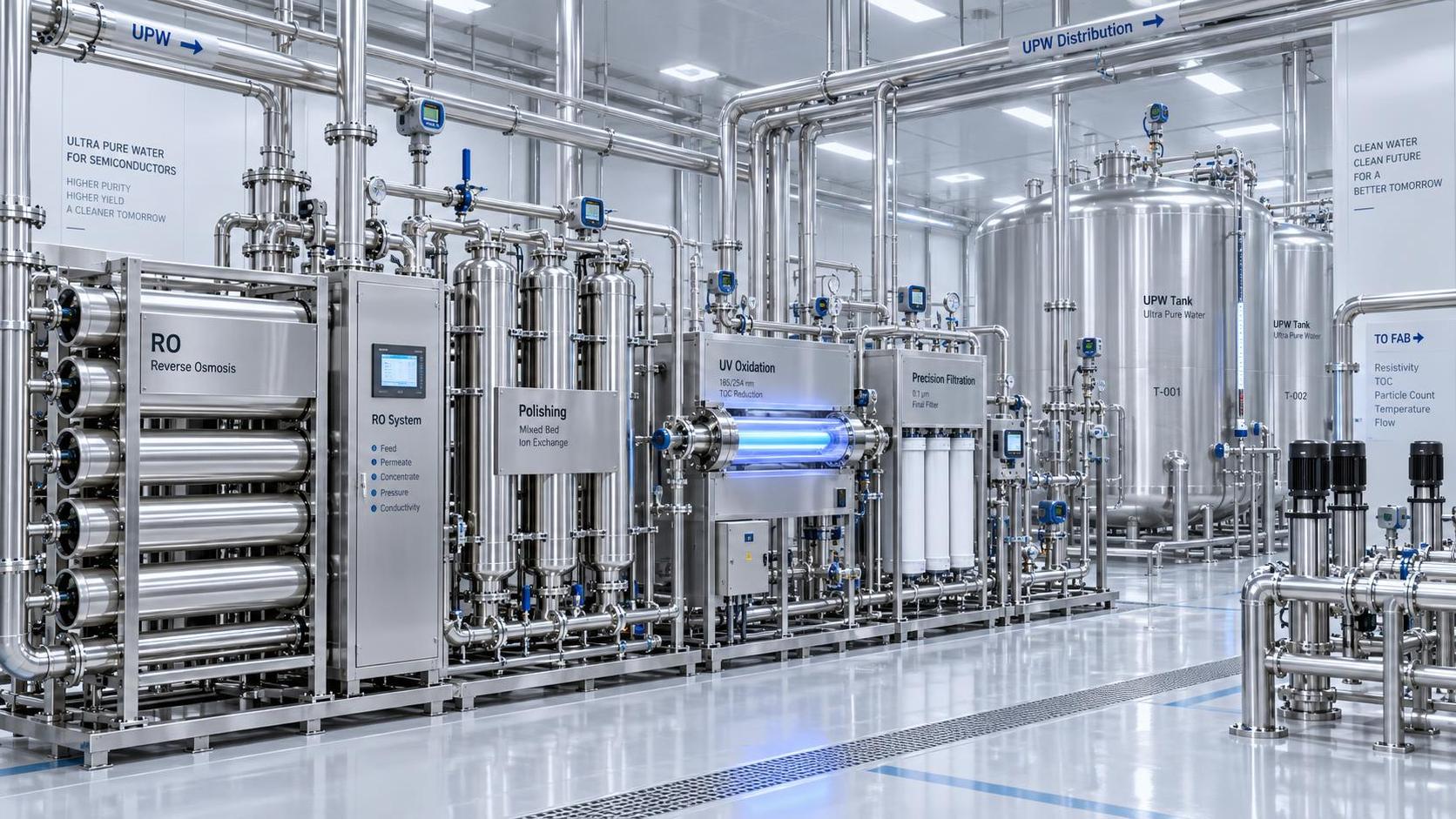
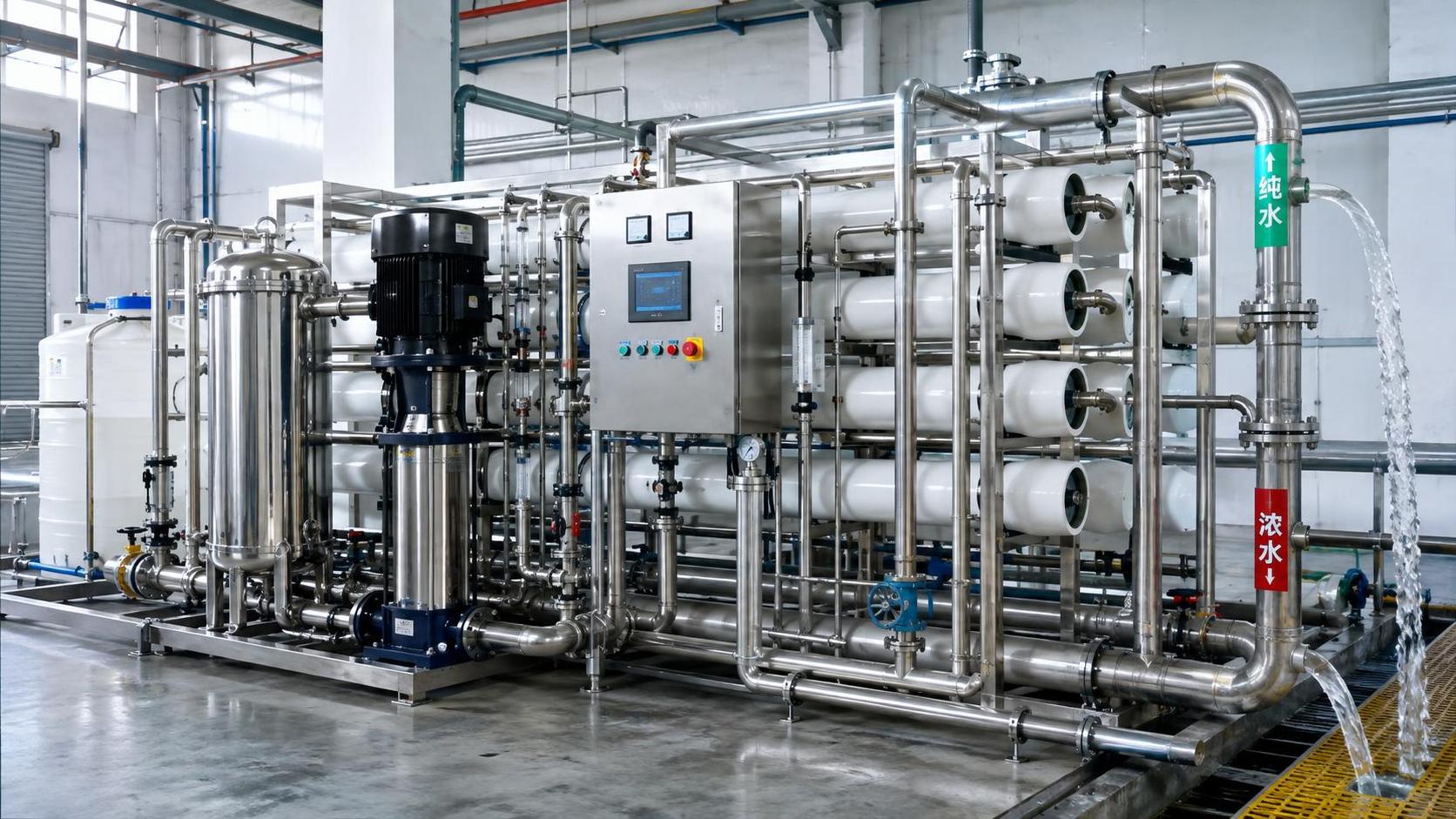
On May 6, 2026, China Customs General Administration launched a targeted compliance verification for export-bound ultra-pure water (UPW) systems—specifically those delivering 18.2 MΩ·cm resistivity—impacting semiconductor equipment exporters, wafer fabs’ overseas suppliers, and advanced packaging equipment integrators. This regulatory step signals heightened technical oversight at the export control interface for critical process fluids infrastructure.
Event Overview
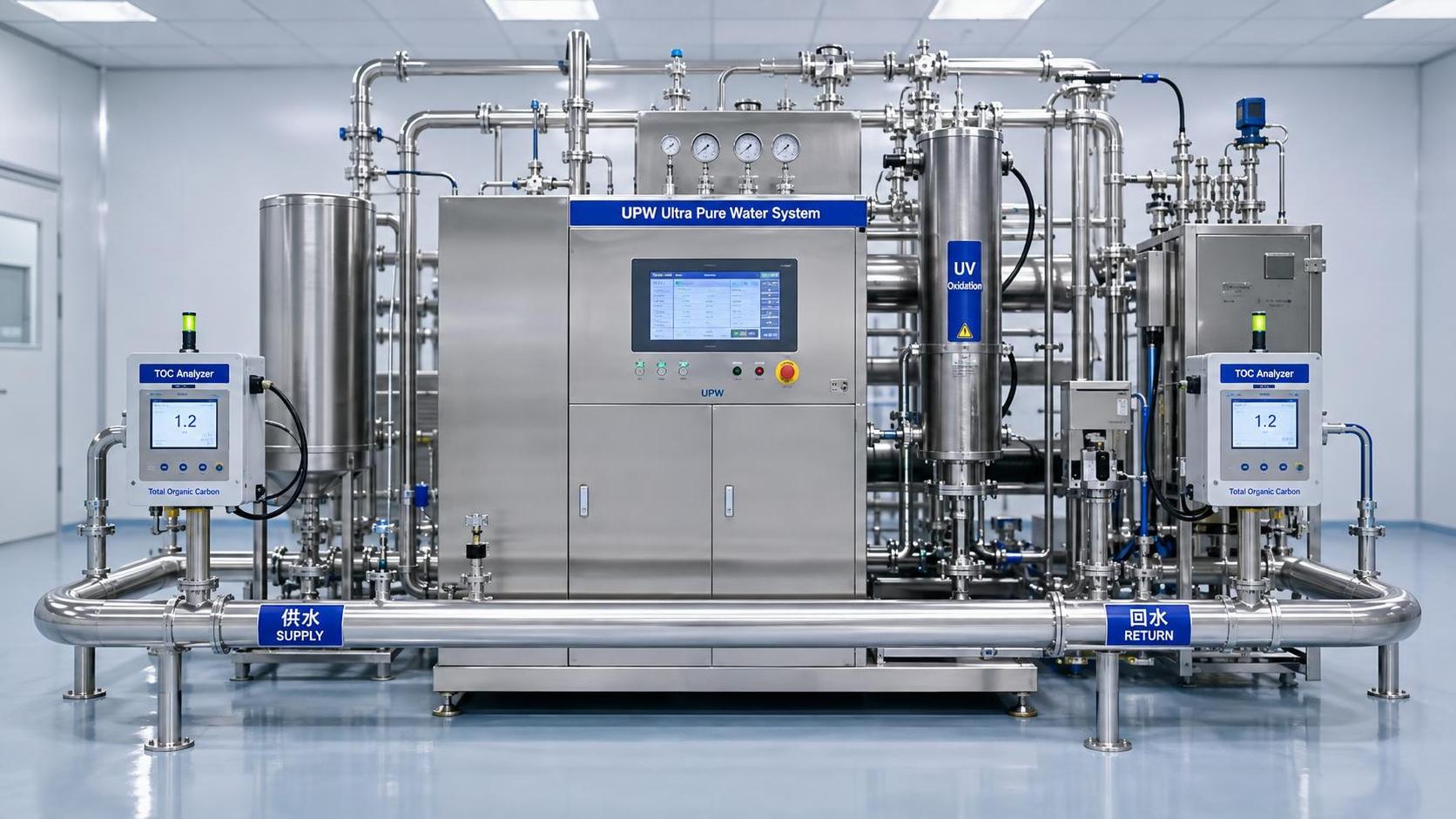
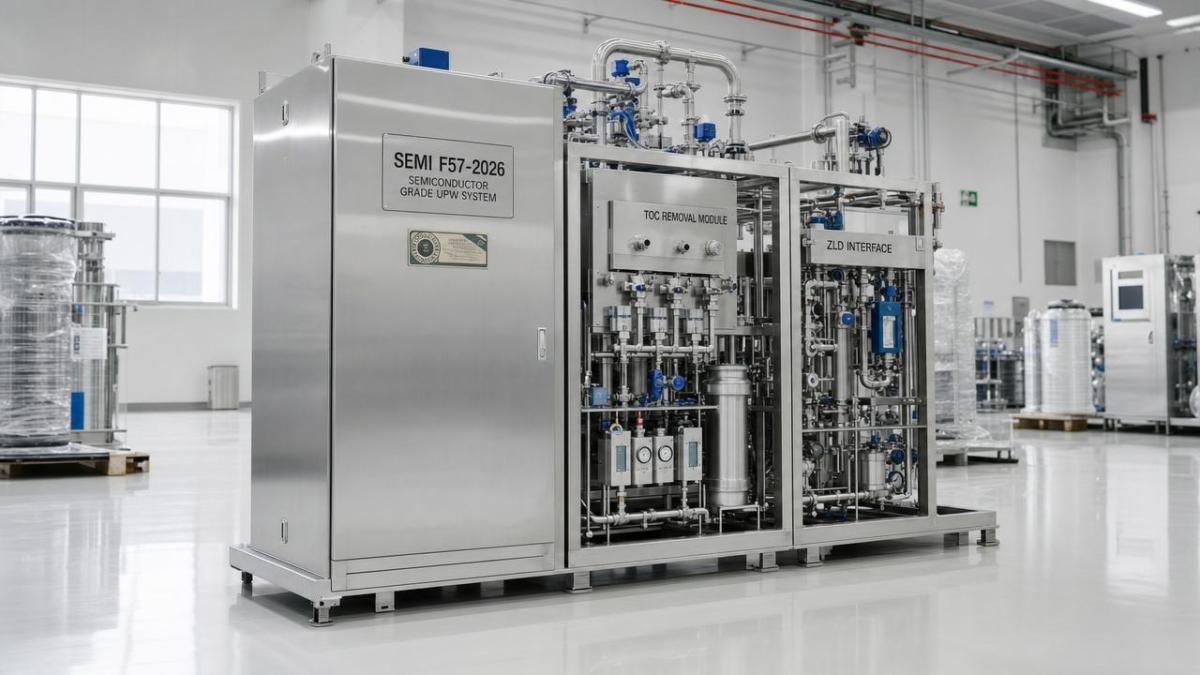
On May 6, 2026, the General Administration of Customs of the People’s Republic of China and the Ministry of Industry and Information Technology jointly issued the Notice on Strengthening Export Supervision of Semiconductor-Grade Ultra-Pure Water (UPW) Equipment. Effective June 1, 2026, all UPW production systems, TOC removal modules, and ZLD protocols-integrated equipment exported to overseas wafer fabrication plants or advanced packaging facilities must undergo conformity verification against SEMI F57-2026 and bear an anti-counterfeiting label on their nameplates. Non-compliant units will not receive the Export Commodity Technical Compliance Statement. As of the notice’s release, only 23 Chinese manufacturers have completed official registration.
Industries Affected by Segment
Direct Export Trading Enterprises
These firms—often acting as OEM exporters or contract exporters for UPW system integrators—are directly responsible for customs declaration and technical documentation. They face immediate operational risk: failure to present the validated SEMI F57-2026 label and associated compliance statement will result in clearance refusal. Impact includes shipment delays, rework costs for relabeling or retrofitting, and potential loss of contractual delivery windows with overseas fab customers.
UPW System Integrators & Equipment Manufacturers
Manufacturers assembling 18.2 MΩ·cm UPW systems—including those sourcing pumps, membranes, UV units, or sensors from third parties—must now ensure full bill-of-materials traceability and subsystem-level SEMI F57-2026 alignment. The requirement applies not only to final assemblies but also to TOC removal modules and ZLD protocol-integrated units, meaning modular or configurable designs may require revalidation per configuration variant.
Component Suppliers (Critical Subsystem Providers)
Suppliers of TOC analyzers, degas membranes, low-particulate piping, or recirculation loop instrumentation may see increased technical inquiry from integrators seeking evidence of SEMI F57-2026 relevance—even if their components are not standalone “UPW systems.” While the notice does not mandate direct component-level certification, downstream validation pressure is likely to cascade, particularly for subsystems explicitly named (e.g., TOC Removal modules).
Supply Chain & Compliance Service Providers
Third-party testing labs, certification consultants, and export compliance platforms supporting Chinese exporters now face demand for SEMI F57-2026 verification support. However, only entities authorized under the joint Customs-MIIT framework may issue the official anti-counterfeiting label and compliance statement—limiting service scope to pre-verified participants.
What Enterprises and Practitioners Should Focus On Now
Monitor official implementation guidance and label issuance procedures
The notice confirms the requirement but does not yet detail how the anti-counterfeiting label will be generated, authenticated, or tracked. Enterprises should closely follow updates from Customs’ designated technical verification centers and MIIT’s industrial standards division—especially regarding label format, serialization, and digital verification mechanisms.
Verify current product configurations against the three covered categories
Only equipment falling under (i) 18.2 MΩ·cm UPW production systems, (ii) TOC Removal modules, or (iii) ZLD Protocols-integrated units is subject. Enterprises should audit active export SKUs—not general UPW-related hardware—to determine applicability. Systems rated below 18.2 MΩ·cm or used solely for non-semiconductor applications (e.g., pharmaceutical or power generation) remain outside scope unless explicitly repurposed for wafer/advanced packaging use.
Distinguish between policy signal and enforceable requirement
The June 1, 2026 effective date is confirmed, but enforcement thresholds (e.g., grace periods for pending shipments, transitional labeling options) are not specified. Analysis shows this is a hard compliance gate—not a voluntary best practice—yet real-world rollout may involve phased inspections. Companies should treat it as binding while preparing contingency plans for early-stage verification bottlenecks.
Initiate internal technical alignment and supplier coordination now
Given that only 23 domestic manufacturers are currently registered, verification capacity is constrained. Enterprises should prioritize internal documentation (e.g., electrical schematics, material certifications, calibration records) aligned with SEMI F57-2026 clauses and engage key subsystem suppliers to confirm compatibility—particularly for TOC modules and ZLD logic integration points—well ahead of June 2026.
Editorial Perspective / Industry Observation
Observably, this measure reflects a tightening of technical due diligence at the export interface—not a new export license regime. It targets traceability and standard adherence rather than restricting technology transfer per se. From an industry perspective, it more closely resembles a quality gate than a strategic control tool: the focus is on verifiable conformance to an internationally recognized SEMI standard, not proprietary design review. Current more relevant interpretation is that it serves as both a compliance checkpoint and a de facto market filter—raising the bar for technical documentation rigor among Chinese UPW equipment suppliers. Sustained attention is warranted because future expansions (e.g., inclusion of distribution loop components or sensor-level validation) would follow logically from this foundational step.
Conclusion
This notice formalizes a standardized technical verification requirement for a narrowly defined subset of UPW equipment exports—grounded in SEMI F57-2026 and enforced via labeling and documentation. Its significance lies not in broad restriction, but in institutionalizing measurable, auditable conformance as a prerequisite for customs clearance. For stakeholders, it is best understood as an operational compliance milestone—not a policy shift—and should be approached through technical readiness, not strategic recalibration.
Information Sources
• General Administration of Customs of the PRC and Ministry of Industry and Information Technology: Notice on Strengthening Export Supervision of Semiconductor-Grade Ultra-Pure Water (UPW) Equipment, issued May 6, 2026.
• Status of registered manufacturers: publicly confirmed count of 23 as stated in the Notice.
Note: Implementation details—including label issuance workflow, verification center list, and transitional provisions—remain pending official publication and are subject to ongoing observation.
Get weekly intelligence in your inbox.
No noise. No sponsored content. Pure intelligence.
 Sep 19, 2026When does heat recovery make sustainable cooling worth the investment?Sustainable cooling technology heat recovery: learn when reliable heat demand, temperature matching, and lifecycle savings make recovery a smart investment.
 Sep 18, 2026How to set alarm limits for semiconductor cleanroom monitoringSemiconductor cleanroom monitoring: learn how to set risk-based alarm limits for particles, humidity, pressure, and airflow to protect yield and reduce nuisance alerts.
 Sep 17, 2026How plastic injection molding affects ESD protection in cleanroomsPlastic injection molding affects ESD protection in cleanrooms. Learn how resin choice, molding consistency, grounding, and particle control support reliable compliance.
 Sep 16, 2026What to verify before choosing an industrial air quality monitoring supplierIndustrial air quality monitoring supplier checklist: verify measurement accuracy, calibration traceability, data integration, compliance support, and lifecycle service before you buy.
 Sep 15, 2026Smart HVAC investment insights for North American heat recovery projectsSmart HVAC investment insights North America: evaluate heat recovery, lifecycle costs, controls, and performance for resilient project decisions.
 Sep 14, 2026How SEMI standards shape water treatment design for semiconductor fabsSemiconductor water treatment SEMI guidance shapes resilient UPW design, contamination control, monitoring, reclaim strategy, and fab-ready validation.
 Sep 13, 2026What drives Biosafety Containment Systems cost in BSL-3 projects?Biosafety Containment Systems cost in BSL-3 projects depends on HVAC, layout, decontamination, controls, and commissioning. Discover how to build a credible budget.
 Sep 12, 2026How to qualify a fine chemical process solutions supplier for purity controlFine Chemical Process Solutions supplier qualification guide: evaluate purity control, traceability, contamination prevention, and safety for reliable high-purity production.
 Sep 11, 2026What drives cleanroom certification cost for ISO Class 1–9 projects?Cleanroom certification cost depends on ISO Class 1–9 requirements, test scope, HVAC readiness, documentation, and retesting. Explore practical budgeting insights to control project risk.
 Sep 10, 2026When should Procurement Directors prioritize heat recovery payback?Procurement Directors: learn when heat recovery delivers reliable payback, lower lifecycle costs, and safe performance in controlled industrial environments.
 Sep 09, 2026How to select an environmental monitoring system for cleanroomsEnvironmental monitoring system selection for cleanrooms: compare sensors, alarms, data integrity, integration, and installation to ensure reliable control.
 Sep 08, 2026How temperature stability affects semiconductor manufacturing yieldSemiconductor manufacturing temperature stability directly affects yield, overlay, metrology, and process control. Explore practical HVAC, monitoring, and zoning strategies.
 Sep 07, 2026How to prepare for a Regulatory Frameworks audit of cleanroom controlsRegulatory Frameworks audit readiness for cleanroom controls: build traceable evidence, verify alarms and monitoring, and close compliance gaps with confidence.
 Sep 07, 2026How to choose reverse osmosis systems with the right recovery rateReverse osmosis systems: learn how to select the right recovery rate for reliable water quality, lower scaling risk, efficient concentrate control, and stable long-term performance.
 Sep 05, 2026How does a negative pressure room work to contain airborne contaminants?How does a negative pressure room work? Discover how inward airflow, controlled exhaust, monitoring, and room design help contain airborne contaminants safely.
 Sep 04, 2026How Should Semiconductor Facilities Select Vibration Isolation Systems?Vibration isolation semiconductor guide: learn how to match tool limits, site vibration, utilities, and cleanroom needs for stable, high-yield fab performance.
 Sep 04, 2026What TOC Limits Should Be Set and Monitored for a UPW Loop?What are our TOC limits for the UPW loop? Learn how to set defensible TOC thresholds, monitor trends, protect critical processes, and improve water-quality control.
 Sep 04, 2026What Are the Best Retrofit Options for Upgrading Existing Pharmaceutical Cleanrooms?What are the best retrofit options to upgrade existing pharma cleanrooms? Explore FFUs, HVAC modernization, pressure cascades, monitoring, and sealed finishes for compliant performance.
 Sep 04, 2026How Does a Negative Air Pressure Room Protect Adjacent Areas?What is a negative air pressure room? Learn how controlled airflow contains airborne hazards, protects adjacent spaces, and supports safer facility operations.
 Sep 04, 2026What Is ISO Class 1 Cleanroom Classification, and Where Is It Used?What is ISO Class 1? Explore its ultra-low particle limits, critical cleanroom design factors, verification methods, and uses in semiconductor, optics, and quantum manufacturing.
 Sep 04, 2026How Long After a UPW Deviation Does Yield Impact Typically Appear?What is the typical time lag from UPW deviation to yield impact? Learn how contamination, process sensitivity, exposure windows, and testing stages shape detection timing.
 Sep 04, 2026What Testing Data Should Engineers Review Before Approving a UPW Material?What testing data should be reviewed before approving a UPW material? Explore extractables, TOC, particle release, ionic leaching, corrosion, and reliability data for confident approval.
 Sep 04, 2026How Should Pharmaceutical Cleanrooms Choose Climate Control Systems?Which climate control systems are recommended for pharmaceutical cleanroom environments? Explore HVAC, humidity, pressure, HEPA filtration, and GMP-ready monitoring strategies.
 Sep 04, 2026Airtight Door Problems in Medical Spaces and How Buyers Prevent ThemA problem-solving guide for airtight door procurement, covering sealing performance, sensors, wall coordination, cleaning, maintenance, and acceptance risk.
 Sep 04, 2026What drives cleanroom design cost for ISO Class 7 projects?Cleanroom design cost for ISO Class 7 projects depends on HVAC, filtration, utilities, validation, and lifecycle strategy. Learn how to control budgets without compromising compliance or performance.
 Sep 03, 2026When do heat pipe heat exchangers suit pharmaceutical cleanrooms?Heat Pipe Heat Exchangers for pharmaceutical plants: discover when they support cleanroom energy recovery, airflow separation, humidity control, and GMP-ready HVAC design.
 Sep 02, 2026What determines biosafety cabinets price across different modelsBiosafety cabinets price varies by class, airflow design, filtration, size, certification, and installation. Compare models confidently to choose safe, cost-effective containment.